
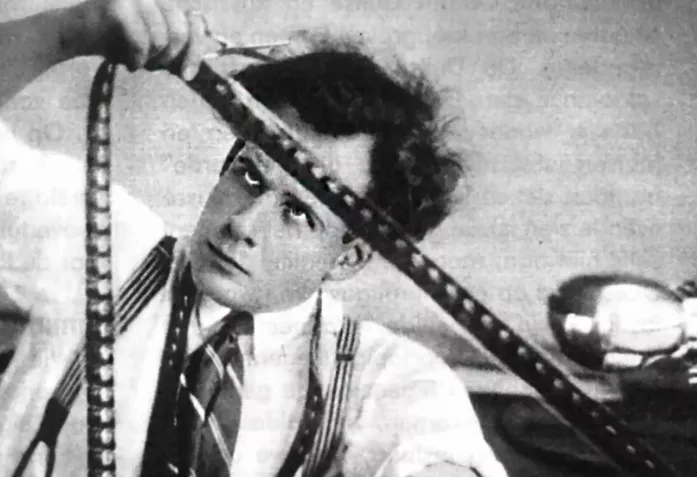
Can one write a novel about Sergei Eisenstein? And if so, why, and how? Why attempt it when dozens of biographies and studies already exist, along with his letters, diaries, drawings, theoretical writings and the recollections of his contemporaries? And how does one write about a man who turned his own life into a meticulously edited film? How can the real person be discerned behind all the ‘material’ Eisenstein left behind?
This was the seemingly impossible task Guzel Yakhina set herself. As she put it: ‘My aim was to weave a work of fiction from all that can now be recovered of the reality of that period, its dates, quotations, figures and so forth, together with my own suppositions about the protagonist’s personality, without visible seams and while remaining as close to the facts as possible. To unfold the action on the boundary between fiction and non-fiction. To create not a scholarly work but a literary one, while treating the truth with the utmost respect.’
Guzel Yakhina’s fourth novel, Eisen, was published in Russia on 5 March 2025, the anniversary of Stalin’s death. I do not believe in chance coincidences. It is hard to imagine a more symbolic date for a book about an artist whose fate became inextricably bound up with Soviet power, its commissions and prohibitions, its favours and humiliations, its rewards and punishments. Much of the novel was written in Almaty, where Guzel Yakhina has lived since 2023 and where Eisenstein, evacuated during the Great Patriotic War (1941–1945) filmed Ivan the Terrible, a masterpiece whose making and subsequent banning ultimately destroyed his health. Another ‘coincidence’?
‘The Kazakh steppe smelt of freedom and sunshine,’ the director thinks in a railway carriage ‘packed with Stalin Prize winners’. ‘An acute sense of freedom, not merely half-forgotten but seemingly long since buried in his consciousness, took possession of him more powerfully with every passing day, every American swing number sung and every new station carrying him farther from Moscow.’ I remember very clearly that, after reading Eisen more than a year ago, I shared my overriding impression with Guzel: this book was written by a writer who was free, who had set herself free.
I have not only read Guzel Yakhina’s three previous novels but also written about them, so I know the texts quite well. When I received a PDF of the new book, I began to worry. Since this novel deals with the same historical period, would I, and other readers too, feel that the author was repeating herself? I did not. Moreover, I would go so far as to say that this fourth novel is her most personal yet. The attentive reader will detect the faint, almost allusive presence of the previous three, as well as four references to Guzel Yakhina’s native Kazan. And this sense of a deeply personal book persists even though her acclaimed debut novel, Zuleikha, was based on the story of her own grandmother.
With all due respect, the writer’s grandmother was not a public figure. Sergei Eisenstein, famous throughout the world, is quite another matter. Yet it seems to me that Guzel Yakhina reveals more of herself in this novel about him than she did in that family story. She does not speak about herself directly. Instead, she seems to place herself in the position of an artist confronting both political power and the judgement of society.
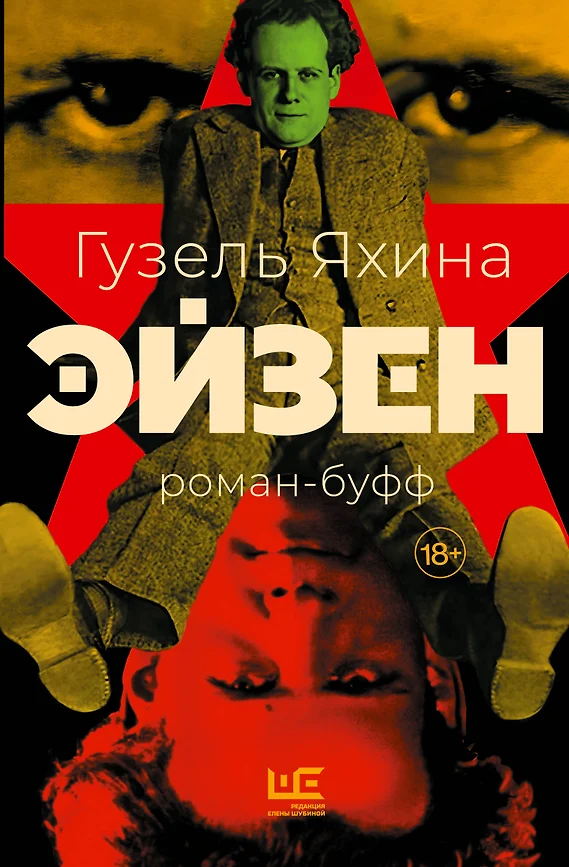
I wrote ‘famous throughout the world’ and stopped to wonder: is that really true? Eisenstein is certainly known across the post-Soviet world, at least among people of my generation and older. But younger people? I am not so sure. Outside the post-Soviet world, less certain still. The author herself has made her protagonist even harder to recognise by shortening his surname on the cover to Eisen. Who is this Eisen, after all? An opera lover might even mistake him for the Bolshoi soloist Arthur Eisen.
Eisen is what the film director’s closest friends called him. The exception was his mother, for whom he was Rorik. But I do not think this alone explains why Guzel Yakhina seized upon this nickname. It is worth remembering that she originally trained as a teacher of German, so a linguistic game may be at work: in German, Eisen means ‘iron’ and Stein means ‘stone’. By discarding the second half of the surname, Yakhina seems to strip away her protagonist’s monumental, ‘stony’ shell. What remains is Eisen, still made of ‘iron’, but no longer a monument: a living man.
Iron is softer than steel, the metal invoked by Iosif Dzhugashvili in his adopted name, Stalin. The novel’s title thus contains its central confrontation: between an ‘iron’ genius with all his human weaknesses and the man of steel who holds his fate in his hands. Eisenstein’s heart gave out first: he died five years before Stalin. In a confrontation with power, the Artist always loses physically, but not spiritually. True art will outlive any political regime.
Yet this does not exhaust the meaning of the title. Eisenstein is a historical figure, a great director surrounded by scholarship and myth. Eisen is the man Guzel Yakhina tries to see behind the famous name: contradictory, earthly, ridiculous, frightened and vain; forever surrounded by crowds yet hopelessly alone; striving for creative power over others while remaining painfully dependent on political power; sacrificing everything on the altar of art: those around him, himself and historical truth.
Historical truth, and its deliberate violation, is one of the novel’s central themes. Sergei Eisenstein had no qualms on that score. For many years, he even took pride in the belief that the image he created of, for example, Alexander Nevsky would enter the minds of millions as the definitive one. Guzel Yakhina, by contrast, has clearly made several factual errors unintentionally. I shall mention two of which I am certain. First, when staging Wagner’s Die Walküre at the Bolshoi Theatre in 1940, Eisenstein did not ‘have to make do with inexperienced performers’: the production featured leading Bolshoi soloists Natalia Shpiller, Vasily Lubentsov and Nikandr Khanaev. Second, nothing like “the entire Bolshoi Theatre” was evacuated to Alma-Ata. Set beside the distortions Eisenstein allowed himself, however, these inaccuracies seem insignificant.
But where does the boundary lie between the real Eisenstein and the Eisen invented by Guzel Yakhina? How much freedom does a novelist have in dealing with the life of a real person, particularly one who spent his entire life creating his own myth? And can we understand the compromises of an artist without either condemning or absolving him, but instead approaching them with compassion, without which, as Guzel Yakhina rightly argues, artistic creation is impossible? These are, to my mind, the questions that give the novel its pulse.
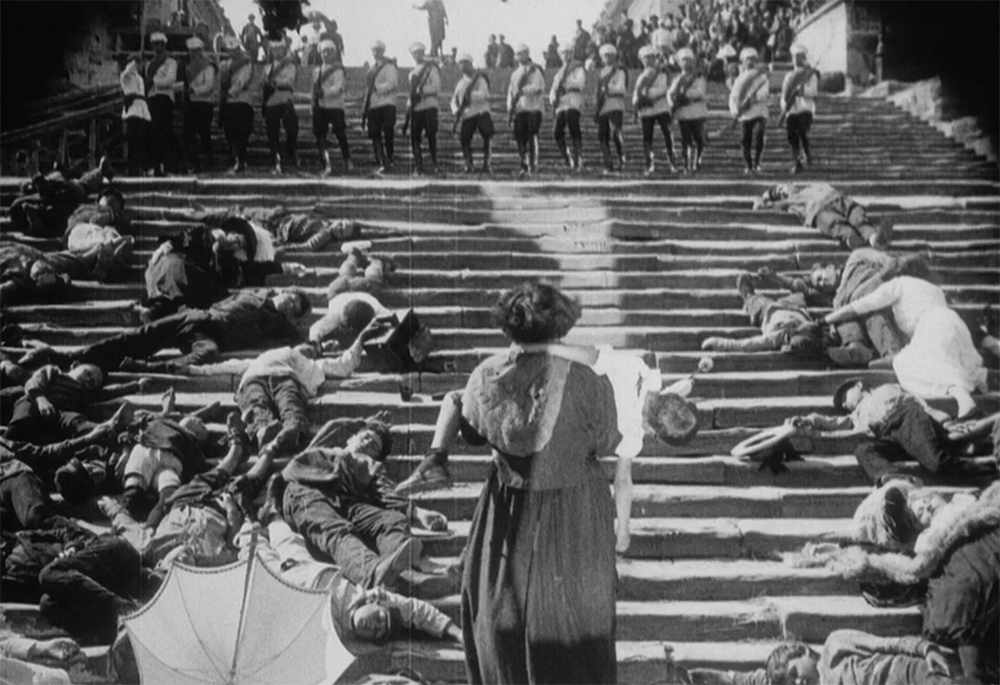
It is perhaps worth recalling that, after studying foreign languages at Kazan State Pedagogical University, Guzel Yakhina also completed the Screenwriting programme at the Moscow Film School. She therefore has a professional command of cinematic language and adores the medium. The reader can sense the delight with which she describes every aspect of Eisenstein’s creative process and revels in his extraordinary inventiveness. At the same time, she writes with ruthless candour about his own ruthlessness in pursuit of the finished film. She rightly gives due prominence to his principal cinematographers, Eduard Tisse and Andrei Moskvin, who somehow managed to realise his sometimes outrageous demands. The description of the famous scene in Battleship Potemkin, in which a pram carrying a baby rolls down the steps, ends as follows: "The hooves had trampled the infant to a pulp. Eisen had wanted to bring in a real child’s corpse from the dissection room, but the millionaires playing the Cossacks refused to work with a dead body. They had to make do with a rag doll, stuffed with ripe tomatoes instead of sawdust to make it look more lifelike."
Believe me, these passages could still serve as an invaluable textbook for aspiring filmmakers today, because artificial intelligence cannot replace the God-given spark of genius. Not yet, at least.
The fates of two people close to Eisen are particularly important to his inner development: his teacher, the great director Vsevolod Meyerhold, and his friend, the great writer Isaac Babel. The account of their arrests and deaths gives us pages that are both beautiful and terrible: a letter from Zinaida Reich received ‘from beyond the grave’, Eisenstein’s unfeigned grief, the ashes of two geniuses mingled in the same unmarked communal grave... All this forces the protagonist to confront not only his own vulnerability but also the agonising arbitrariness of his survival. Why were they exterminated, while he was allowed to live and work?
From this point onwards, fear ceases to be merely an external circumstance. It takes up residence inside Eisenstein, creating a constant sense of confinement. As he continues to accept state commissions and manoeuvre between the demands of the authorities and his own artistic aspirations, Eisen is repeatedly forced to ask himself where the compromise necessary for survival ends and the betrayal of his dead friends, his art and himself begins. How are we to explain his willingness to make a film about Ivan the Terrible and justify the tsar’s crimes as a matter of ‘historical necessity’? And how can we comprehend the journey that led Eisenstein from this starting point to an astonishing portrait of a mad autocrat, an unequivocal denunciation of absolute power? As the Russian edition puts it: ‘Eisen revealed the formula of Power to the viewer, slowly, sketch by sketch and scene by scene, for the first time making no attempt to control that viewer, but simply showing and telling, simply presenting his discoveries and sharing them generously.’
Of course, Eisen is not merely a novel about the history of cinema told through the life of one of the most brilliant practitioners of that ‘most important of the arts’, to quote Lenin. It is, to a very considerable degree, and perhaps even above all else, a psychological novel. Guzel Yakhina is less interested in the sequence of events in Eisenstein’s life, although she does follow its chronology, than in the mystery of his personality. How could one man combine extraordinary artistic courage with an almost childlike dependence on the approval of others; the ability to command an enormous film set with the inability to form intimate relationships; the audacity of the artist with the weakness of a man for whom work became not simply a vocation, but a way to fill an inner void, survive fear and secure the love he could never have enough of?
As a result, even the best-known episodes in Eisenstein’s biography become material for an exploration of his inner make-up. Like Eisenstein himself, who held Freud in high regard, Guzel Yakhina looks for the key to it primarily in Eisen’s relationship with his mother. Until the end of his life, he could not forgive her for leaving him with his father after their divorce. Nor could he ever free himself from the need to please her and prove that he was exceptional.
And since we have come to his mother... Readers encounter women of formidable strength in all Guzel Yakhina’s books. Eisen is no exception, although its protagonist, who eclipses everyone around him, tends to see the women in his life as supporting characters in the grand film of his own existence. They are there to admire him, console him after failures, endure his disappearances, resentments and indifference, create the conditions in which he can work, and retreat into the shadows at the appropriate moment. Their feelings matter to him only insofar as they help or hinder his art.
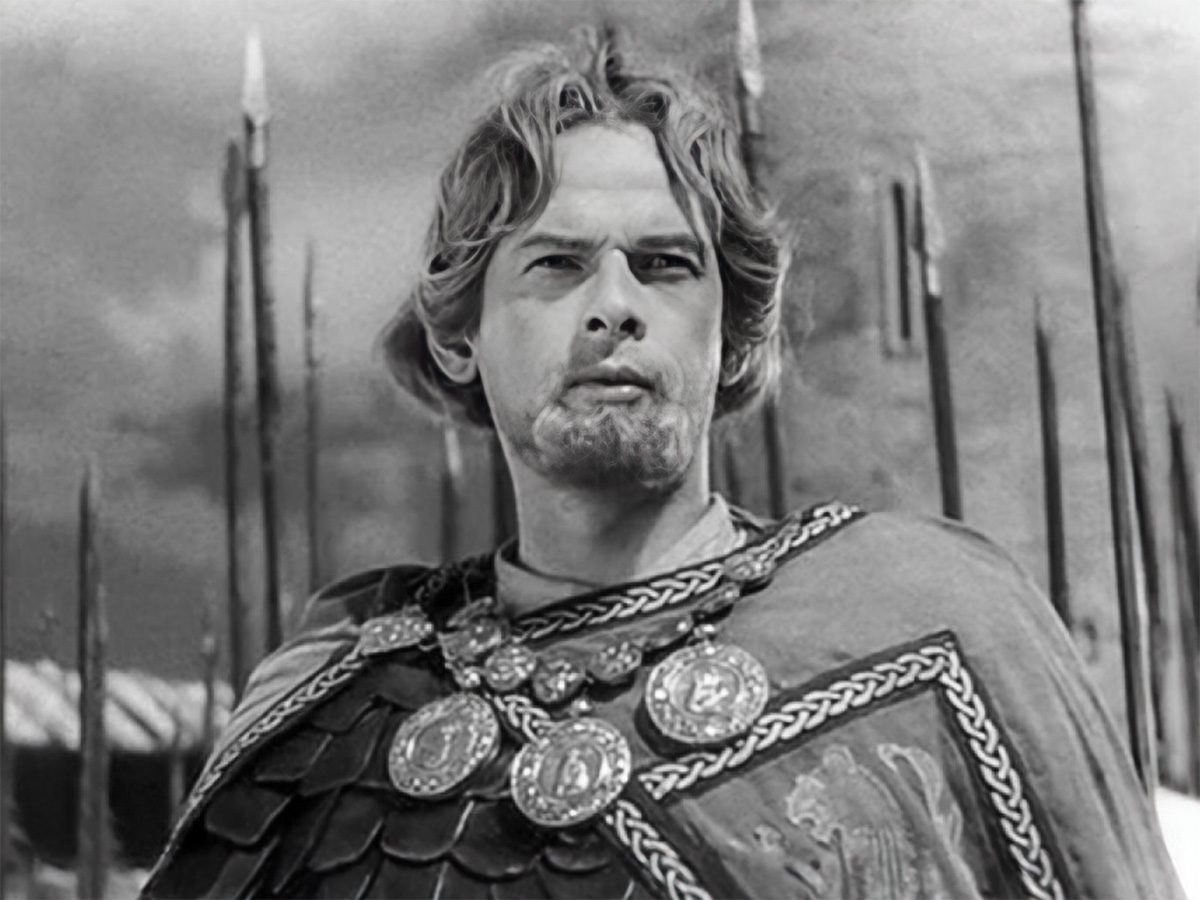
But Yakhina gradually shifts our perspective, revealing that it is these women who possess the inner strength the genius lacks. His mother taught him the art of transformation and instilled in him the need to make an impression; she also had a particular gift for bringing her son to his senses after his fits of hysteria. Esfir Shub did more than help him master editing: she was an independent filmmaker, one of the founders of Soviet documentary cinema, and a legend in her own right.
And Esfir Tobak? On 5 March 1937 – 5 March again! – the Politburo of the Central Committee of the Communist Party ordered Eisenstein’s Bezhin Meadow, that strange mixture of Turgenev’s famous short story and the Soviet cult of the boy martyr Pavlik Morozov, to be banned. An order followed for all the material to be seized and the film stock washed clean. At this point, a ‘tiny woman in a blue work coat and canvas oversleeves’ steps into the frame of History.
‘An inconspicuous editor at Soyuzkino: no beauty, no height, a child’s forty kilos in weight, and a voice no one has ever heard. In short, not so much an Esfir as Firochka, a pale little moth. This very Firochka slips into the Soyuzkino film vault, snips a hundred frames from the seditious reels and smuggles them through the security checkpoint inside her size-zero teenage bra. Close to fainting with emotion and suspecting every passer-by of being an NKVD agent, she jolts all the way across Moscow on a succession of trams.’
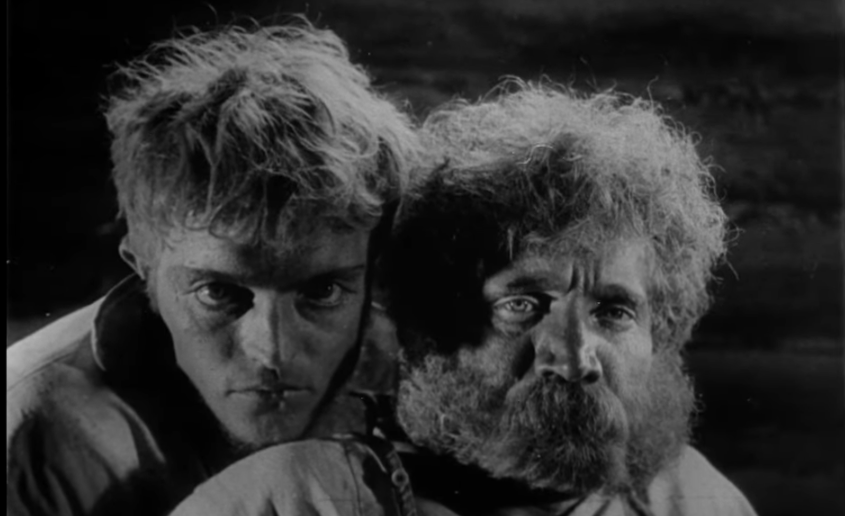
And Pera Atasheva, née Fogelman, the ‘little Jewish mouse’ and the only woman Eisenstein officially married, who accepted the rules of a relationship in which she had been assigned an almost impossible role? After Eisenstein’s death, it was she who preserved not only the director’s vast archive but also his own print of Ivan the Terrible. That, too, could have been washed away!
Eisen conquers crowds, sets thousands of extras in motion and creates a new language of cinema, yet in everyday life he remains in many respects a helpless child. The women around him do not become the protagonists of the myth he created or eclipse his fame. Yet they are the ones who bear the weight of reality: earning a living, caring for others, making decisions, enduring humiliation and continuing to live. They remain secondary only in Eisen’s own mind. Within the novel’s psychological structure, they are perhaps its most mature and resilient characters.
The first, Russian edition of Eisen contains eight chapters. Each title alludes to a film, though none of them is by Eisenstein. All are telling: Circus, Mother, Persona, The Sacrifice, Life Is Beautiful, Father and Son, Enthusiasm: Symphony of Fear and Repentance. All the translated editions, of which there are already a dozen, also include a ninth chapter entitled The Matrix. It begins:
“Ivan the Terrible
A Mosfilm production
Written and directed by Sergei Eisenstein
Cinematography by Andrei Moskvin and Eduard Tisse
O future anointed sovereign! Whether you are Ivan the Terrible, Charlemagne, Louis known as the Sun or Louis known as the Lion. Bourbon, Bonaparte, Valois, or Lancaster and York. Osman, Bayezid, Mehmed, or Jochi and Batu. O ruler almost crowned, with only a moment left before power is yours!”
And so on.
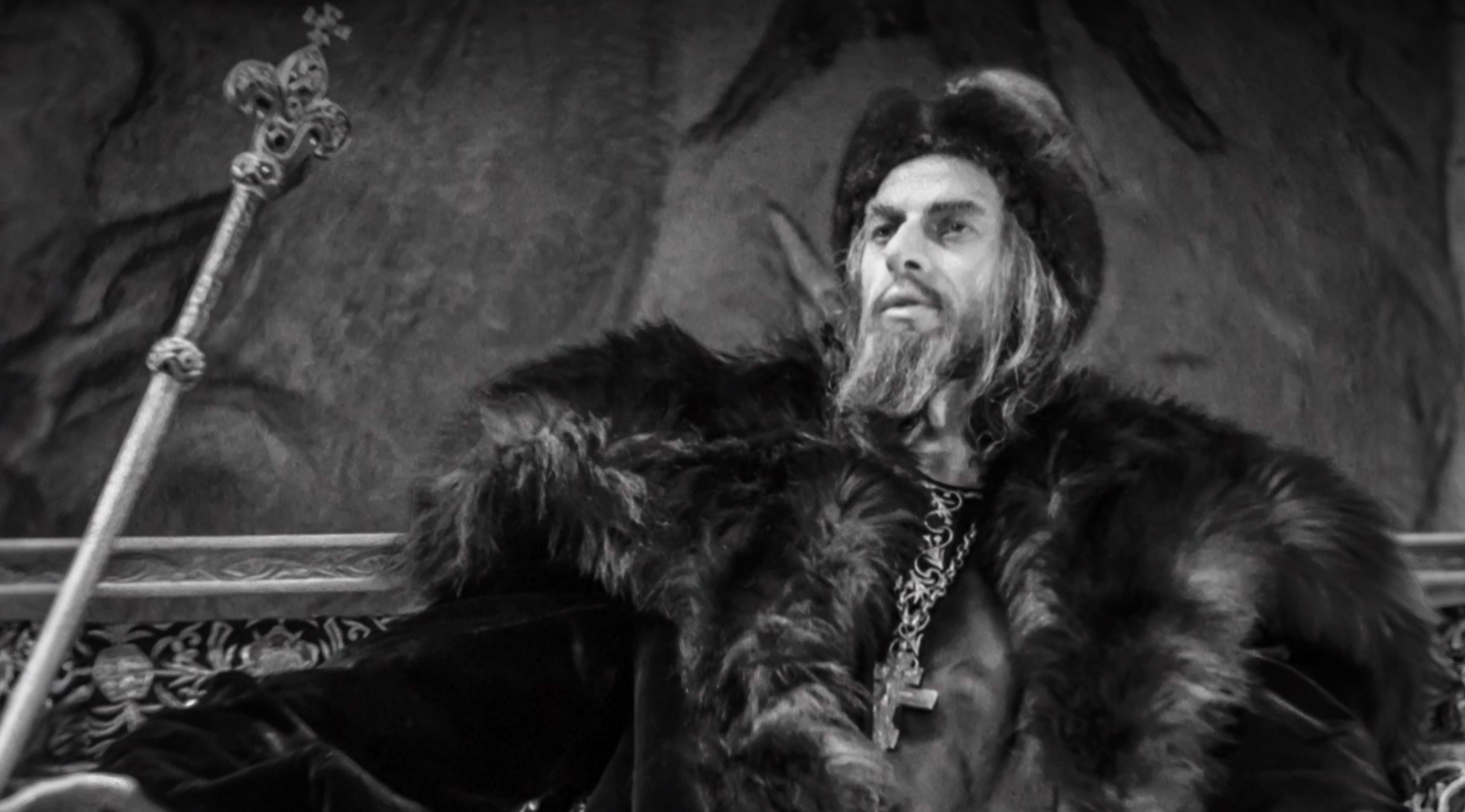
This is not a passage from the screenplay of Ivan the Terrible, or even from Eisenstein’s preparatory materials. It is Guzel Yakhina’s attempt to convey, in imaginative and stylised form, the ideas Sergei Eisenstein embedded in the film. It can be read as a universal manual for the future autocrat: how to acquire power, create enemies, surround oneself with loyal agents, instill fear and justify violence by invoking some higher purpose of the state. The title of the chapter inevitably brings the Wachowskis’ film to mind and suggests another meaning: power creates an artificial reality and forces people to accept it as real. Eisenstein did this through cinema; Stalin and other autocrats do it through state propaganda. History itself has ceased to exist. What remains is an image of history, edited and presented to the people.
Eisen contains numerous passages that cry out to be quoted. Some make one wonder how the novel came to be published in Russia at all. ‘Truth can live only when naked,’ for example.
Like all Guzel Yakhina’s books, Eisen provoked fierce debate on social media, dividing readers sharply into two camps, with almost no one abstaining: those who denounced the author for ‘distorting history’ and those who ‘could not put it down’. The most hostile Russian review appeared on the website Year of Literature, which ‘operates with the financial support of the Ministry of Digital Development, Communications and Mass Media of the Russian Federation’. The Russian-language press outside Russia gave the novel surprising muted coverage overall, although several extremely negative responses came from prominent figures whose names I prefer not to mention. I suspect that many of them were troubled less by the book itself than by the fact that, like all Yakhina’s previous novels, it was published by the thriving Moscow publishing house Elena Shubina Editions. Meanwhile, a Meduza reviewer complained that there was ‘not a word’ in the book about Eisenstein’s possible homosexuality.
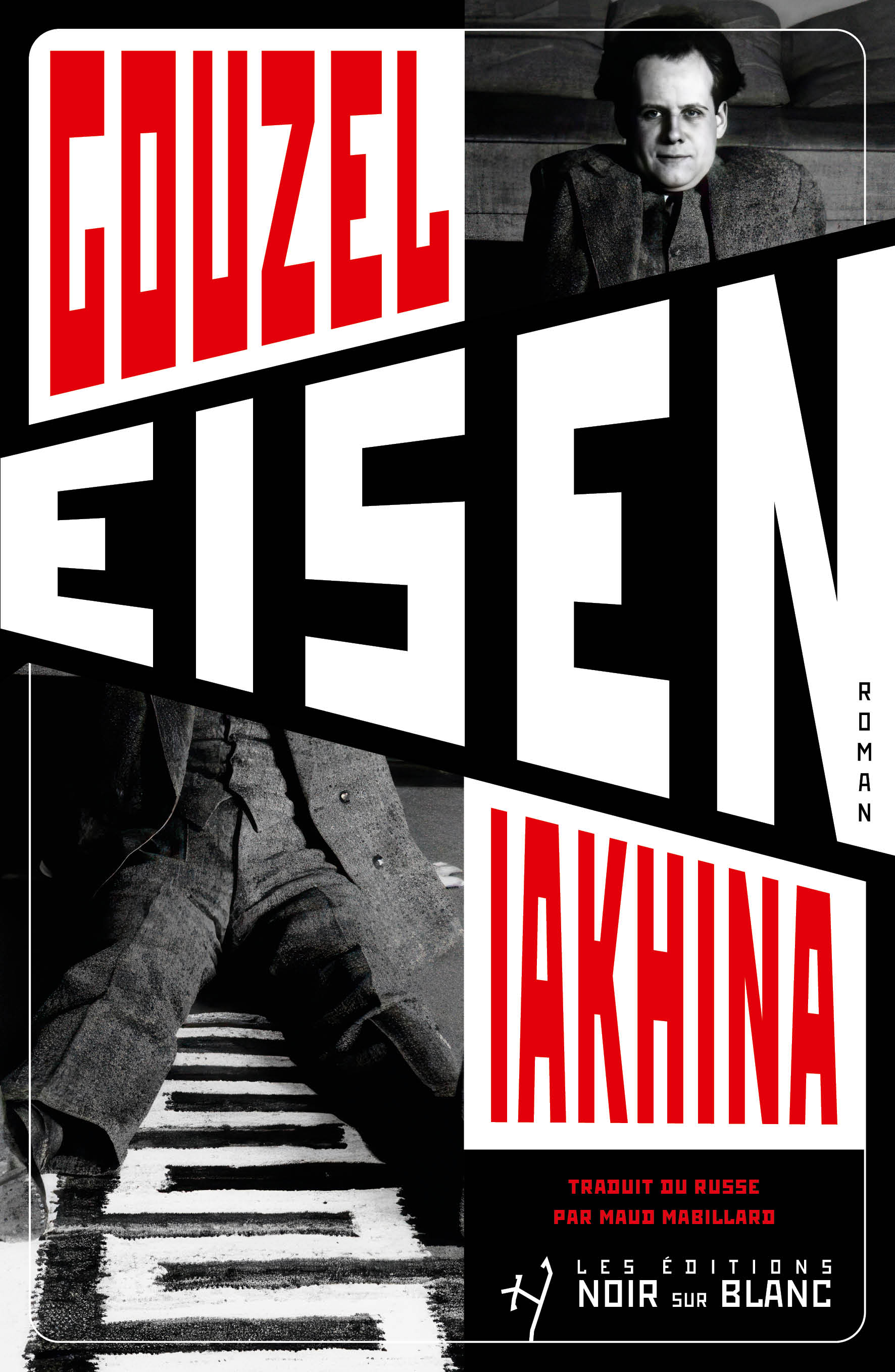
The Russian edition was censored. As Guzel Yakhina explained to me, references to drugs and homosexuality were removed to avoid breaching current Russian law. There is the answer to Meduza. Moreover, ‘in view of the current situation’, the author and publisher decided not to include the ninth chapter: the address to the ‘future anointed sovereign’ inevitably resonates beyond its historical setting. Yet the truth in the novel is, to my mind, no less naked for that.
Yes, Guzel Yakhina made a compromise. For the sake of the book. So that it could be read by those who live in Russia. Should she be condemned for that? I could not bring myself either to do so, whether verbally or in writing. As for you, dear readers, judge for yourselves: read the book in whatever language available to you, or in several languages for comparison, and revisit the Eisenstein films that are still accessible. Before you set off to track all this down, here is the final stanza of Bulat Okudzhava’s wonderful song Historical Novel, in place of a conclusion:
Fiction is no lie,
An idea is not yet an ending.
Let me finish writing my novel
To its very final page.
And while the red rose
Still lives in its bottle,
Let me cry aloud the words
I have hoarded for so long.
P.S. In a few days Guzel Yakhina will present her book at the Livres sur les quais festival in Morges. Come and hear her speak, and bring your questions. This year, the literary festival’s guest of honour will be Éditions Noir sur Blanc, which is celebrating its 40th anniversary. Congratulations to the colleagues!




Anonymous September 01, 2026
Sikorsky September 01, 2026