It has been a while since I wrote about music, from which, as Osip Mandelstam suggested in Silentium, language was born. But the new season has only just begun, so there will be plenty of occasions to catch up.
My own season will begin with an Orchestre de la Suisse Romande programme that is partly uncharted territory for me. I hope to hear it twice, at both venues, especially since, shame on me, I have never been to La Grange au Lac in Évian.
‘Set amid the larches of the Évian Resort park, halfway between a Savoyard barn and a Russian dacha, La Grange au Lac is undoubtedly one of the most beautiful concert halls in the world. This extraordinary venue, which suddenly reveals itself among the trees, owes its existence to the close friendship between Antoine Riboud, then CEO of BSN (later the Danone group), and the great cellist Mstislav Rostropovich. Architect Patrick Bouchain rose to the formidable architectural and acoustic challenge.’ That is how the hall is described on its official website, which also tells us that ‘La Grange au Lac sounds like the inside of a cello, while the 120 birch trees at the back of the stage evoke the homeland of the cellist for whom the hall was created’. Well, Mstislav Leopoldovich was actually born in Baku, where birches are something of a rarity; beeches, hornbeams and oaks are rather more common. But never mind.
The concert is called Horizons finlandais, ‘Finnish Horizons’, and for the first half the title could hardly be more apt. The conductor, Eva Ollikainen, is Finnish; so is the soprano, Anu Komsi; and the composers are Kaija Saariaho and Jean Sibelius. After the interval, however, the Finnish horizons give way to Russian ones: the entire second half belongs to Tchaikovsky’s Sixth Symphony. So geographically, it might be fairer to split the evening down the middle: 50 per cent Finland, 50 per cent Russia. Fifty-fifty.
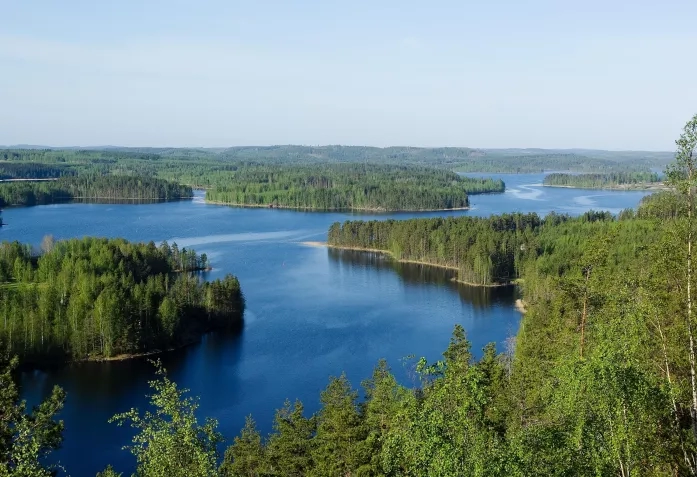
But first we really are heading north, where birches are omnipresent.
The forthcoming concerts also reflect the OSR’s increasingly noticeable emphasis on gender balance in recent years, or at least an effort to achieve it. I confess that if I did not follow the orchestra’s programmes so closely, I might never have realised quite how many female conductors and composers there are in the world!
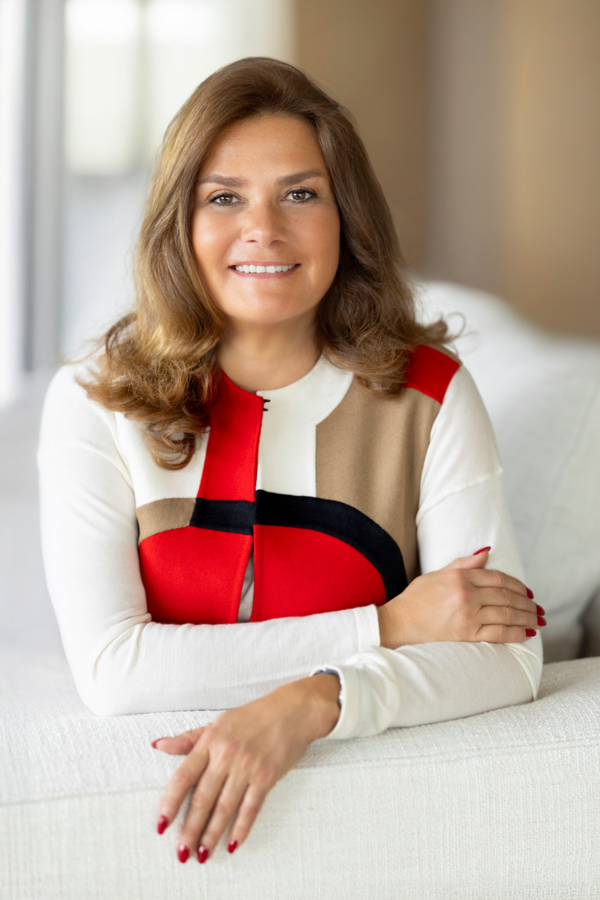
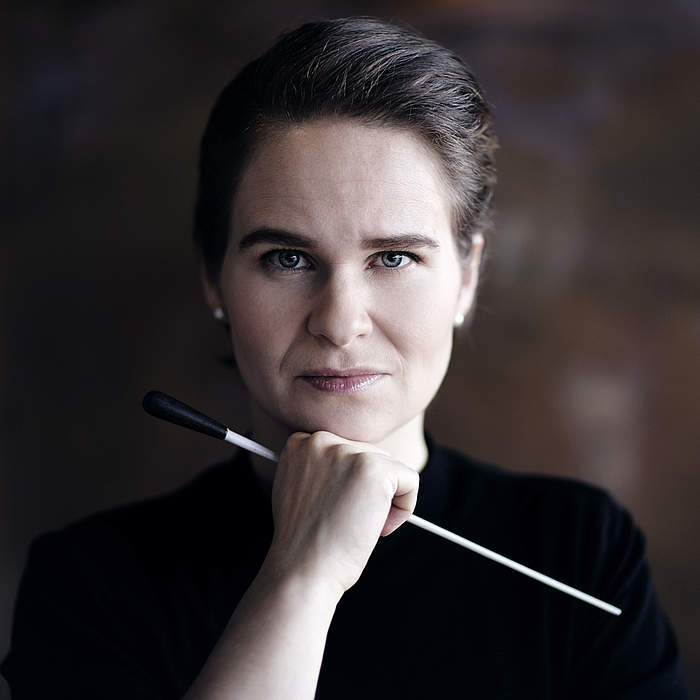
Eva Ollikainen belongs to the Finnish conducting tradition that, over the past few decades, has given this small country a formidable presence on the world’s leading concert stages. In 2003, aged just 21, she won the Jorma Panula International Conducting Competition. She had studied with Panula at the Sibelius Academy, and the victory launched her international career. From 2020 to 2026, she was Chief Conductor of the Iceland Symphony Orchestra, alongside engagements with many other orchestras in Europe, the United States and Canada.
Ollikainen has worked with the Orchestre de la Suisse Romande before. In December 2024, at Victoria Hall, she conducted Mahler’s Sixth Symphony with the combined forces of the OSR and the orchestra of Geneva’s Haute école de musique. For her compatriot Anu Komsi, by contrast, the forthcoming concerts will be her first with the OSR. Komsi is one of Finland’s best-known coloratura sopranos, although her repertoire defies conventional notions of what a coloratura soprano sings. It ranges from Renaissance music and bel canto to jazz and some of the most demanding works of the twentieth and twenty-first centuries. For more than thirty years, she has not only performed contemporary music but also commissioned new works, thereby expanding the repertoire for her voice type.
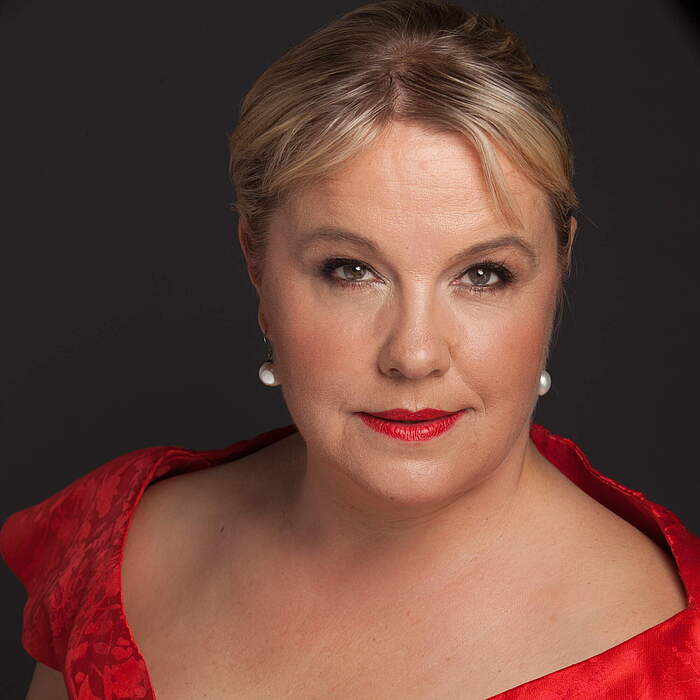
And Mirage by Kaija Saariaho (1952–2023) demands just such a voice. Saariaho, who spent the last forty years of her life in Paris and died of brain cancer in 2023, was firmly established as one of the major composers of our time, yet her music remains relatively unfamiliar to the wider public.
The twelve-minute Mirage was written in 2007 as a joint commission from the Orchestre de Paris, the BBC Symphony Orchestra and the Deutsches Symphonie-Orchester Berlin for the unusual combination of soprano, cello and orchestra. It received its premiere at the Salle Pleyel in Paris in March 2008. You may be surprised to discover who wrote the text, which begins with the words ‘I am a woman who flies’. It is by María Sabina, the Mexican healer and shaman whom people from all over the world travelled to see during her in trances in the 1960s. The text is based on her ritual chants, which were recorded and translated into English. So within minutes, the ‘Finnish horizon’ has already expanded well beyond Finland itself.
Anu Komsi’s partner in this unusual ritual dialogue will be Lionel Cottet, a familiar figure to Geneva audiences and the OSR’s principal cellist since 2022. Born in Geneva, he studied at the Juilliard School and the Mozarteum, as well as in Zurich and Geneva. Before joining the OSR, he was a principal cellist with the Bavarian Radio Symphony Orchestra.
From contemporary Finland, the programme takes us into mythological Finland, into the world of the Kalevala, the Karelian-Finnish poetic epic of fifty runes, compiled by the linguist and physician Elias Lönnrot from the folk poetry he collected. The first version appeared in 1835, the definitive one in 1849.
Here the programme brings together two works by Jean Sibelius, Pohjola’s Daughter and Luonnotar, which have an intriguing connection.
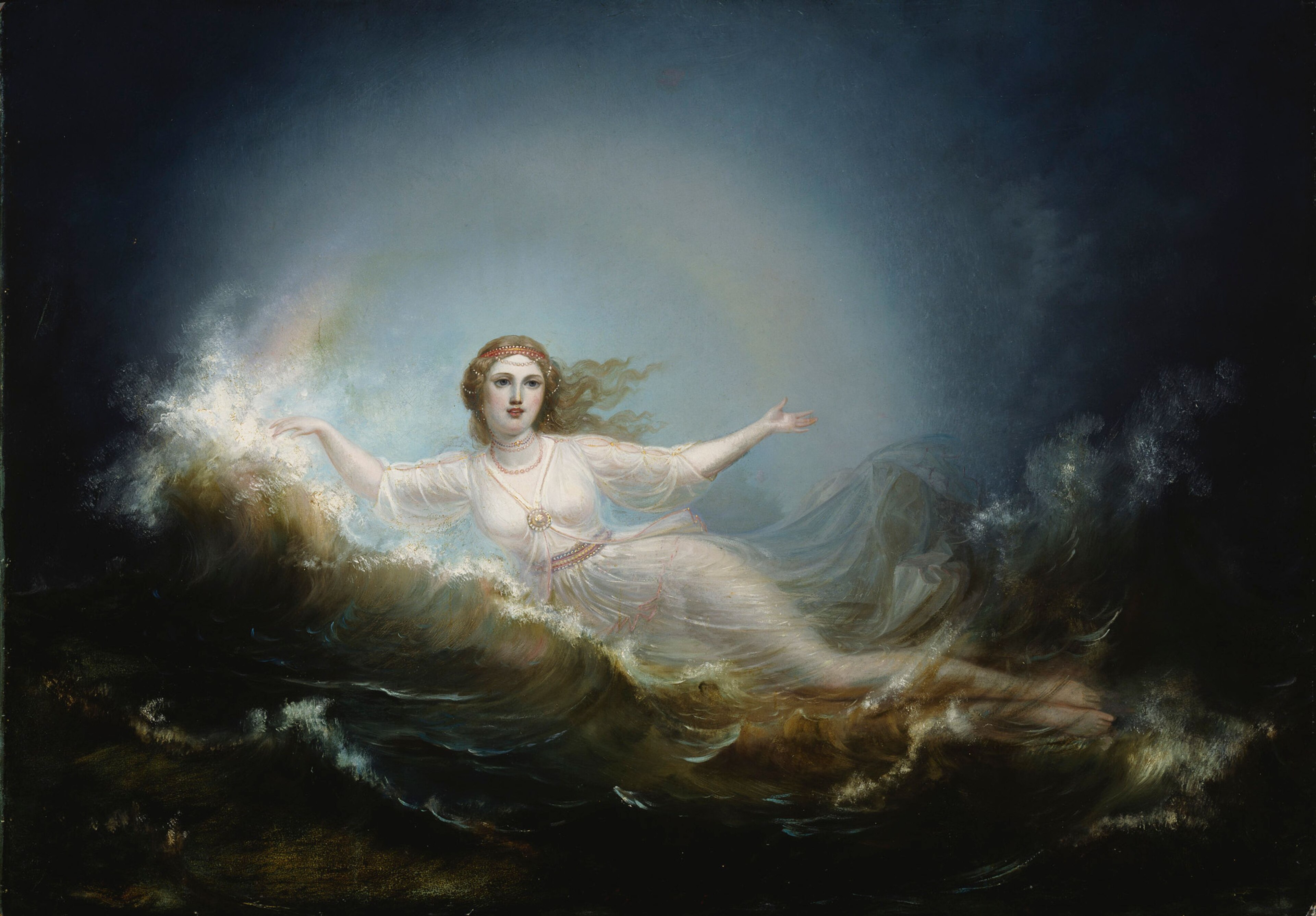
Written in 1906, the symphonic fantasy Pohjola’s Daughter draws on an episode from the eighth rune of the Kalevala. The old sage Väinämöinen catches sight of the beautiful daughter of Pohjola, the northern land, sitting on a rainbow and weaving cloth of gold. He asks her to go with him, but as any self-respecting beauty would, she sets him a series of difficult tasks. Whether he succeeds or not, the music will tell you.
Curiously, while working on what was to become Pohjola’s Daughter, Sibelius called it Luonnotar. The work eventually acquired both a different title and a different story, but he did not forget the name: seven years later came an entirely different Luonnotar, Op. 70, a symphonic poem for soprano and orchestra.
This time there is no hero being put through a fairy-tale trial of love. Instead, we have the creation of the world. Luonnotar, the ‘daughter of the air’, is a primordial female spirit of nature. Sibelius turned to the first rune of the Kalevala, which tells of the birth of earth and sky. The work was written for the celebrated Finnish singer Aino Ackté, to whom Sibelius dedicated it, and was first performed in Gloucester, England, in 1913.
The first half of the programme is thus perfectly constructed: from María Sabina’s mystical trance in Saariaho’s music to the ancient Finnish epic; from a contemporary female voice to the voice of a woman giving birth to the world.
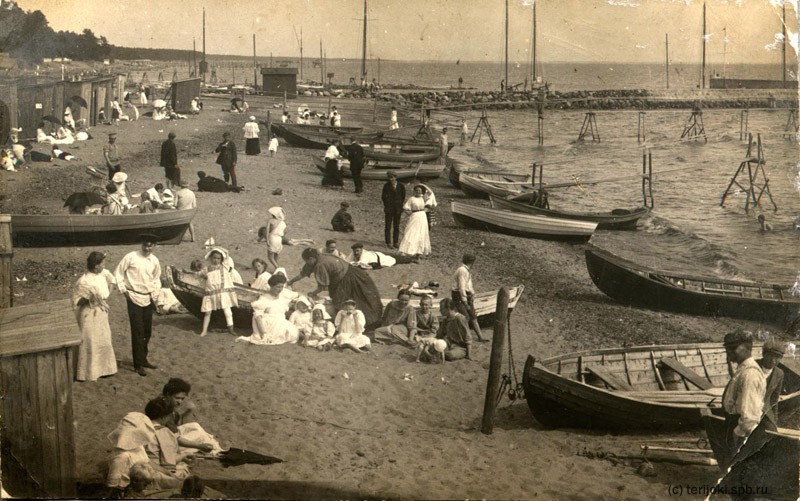
And then comes the interval, after which the Finnish horizons come to an end. The entire second half is given over to Tchaikovsky’s Sixth Symphony, the Pathétique. Geographically, though, we have not travelled very far from Finland. The Sixth was premiered on 16 (28) October 1893 in St Petersburg, with Tchaikovsky himself conducting. The city stands on the shores of the Gulf of Finland and was, one might say, just across the road from Finland, which was then part of the Russian Empire. The Finnish border lay only a few dozen kilometres from the centre of St Petersburg, and the Finnish territories beyond the Sestra River, including Terijoki (now Zelenogorsk), became a favourite summer haunt of Petersburgers. So the horizon was almost the same.
Given the multilingual nature of my readership, I would like to draw attention to the title of Tchaikovsky’s symphony, whose associations change dramatically from one language to another. To modern ears, the Russian Pateticheskaya and the French Pathétique are by no means the same thing. In French, pathétique can readily mean something pitiful, more likely to cause embarrassment than admiration: C’est pathétique ! In Russian, by contrast, patetichesky still suggests pathos, emotional fervour and passion. It was in this sense that Tchaikovsky’s brother Modest proposed the title, and Pyotr Ilyich accepted it.
English takes us even further from the intended meaning. Today, pathetic generally means ‘pitiful’, ‘feeble’ or ‘miserable’ and can easily sound almost insulting: That’s pathetic! No wonder the French form Pathétique is generally retained in the English title of the symphony: Pathetic Symphony would surely have offended Pyotr Ilyich! As early as 1889, Tchaikovsky was contemplating a new symphony that he envisaged as the crowning achievement of his career. As he wrote to Grand Duke Konstantin Romanov: ‘I have an overwhelming desire to write a grand symphony that would, as it were, bring my entire career as a composer to a close... The vague plan of such a symphony has long been in my head, but many favourable circumstances need to come together if I am to bring my idea to fruition. I hope I shall not die without fulfilling this intention.’
Tchaikovsky fulfilled his intention and died nine days after the premiere. The official cause of death was cholera, which was rife in St Petersburg in the autumn of 1893. According to the best-known account, he contracted the disease after drinking unboiled water, although the circumstances surrounding that fateful glass are still disputed.
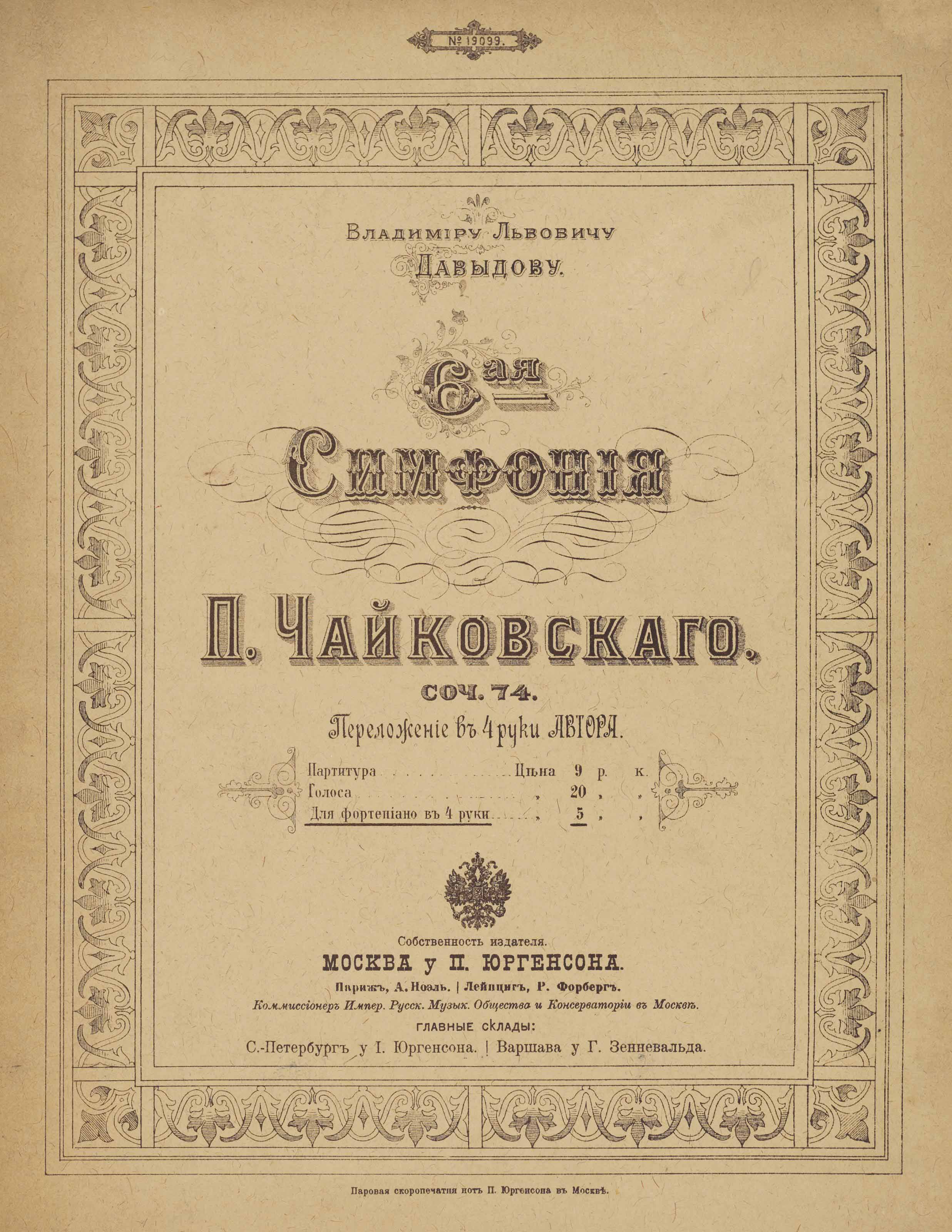
The first edition of Tchaikovsky’s own arrangement of the Sixth Symphony for piano four hands was published in Moscow by Pyotr Jurgenson during the composer’s lifetime. The first complete orchestral score appeared posthumously, from the same publisher, in 1894. A few days before his death, Tchaikovsky wrote to Jurgenson, the original publisher of most of his works, with instructions for the title page: ‘Please, my dear fellow, put the following on the title page of the symphony...’ He then specified, in his own hand, Symphonie Pathétique, No. 6, and the dedication to his nephew Vladimir Davydov. The letter is dated 18/30 October 1893.
It remains to be seen how Eva Ollikainen will bring these two horizons, Finnish and Russian, together in a single musical landscape. See you there? Tickets are easiest to buy on the orchestra’s website.