
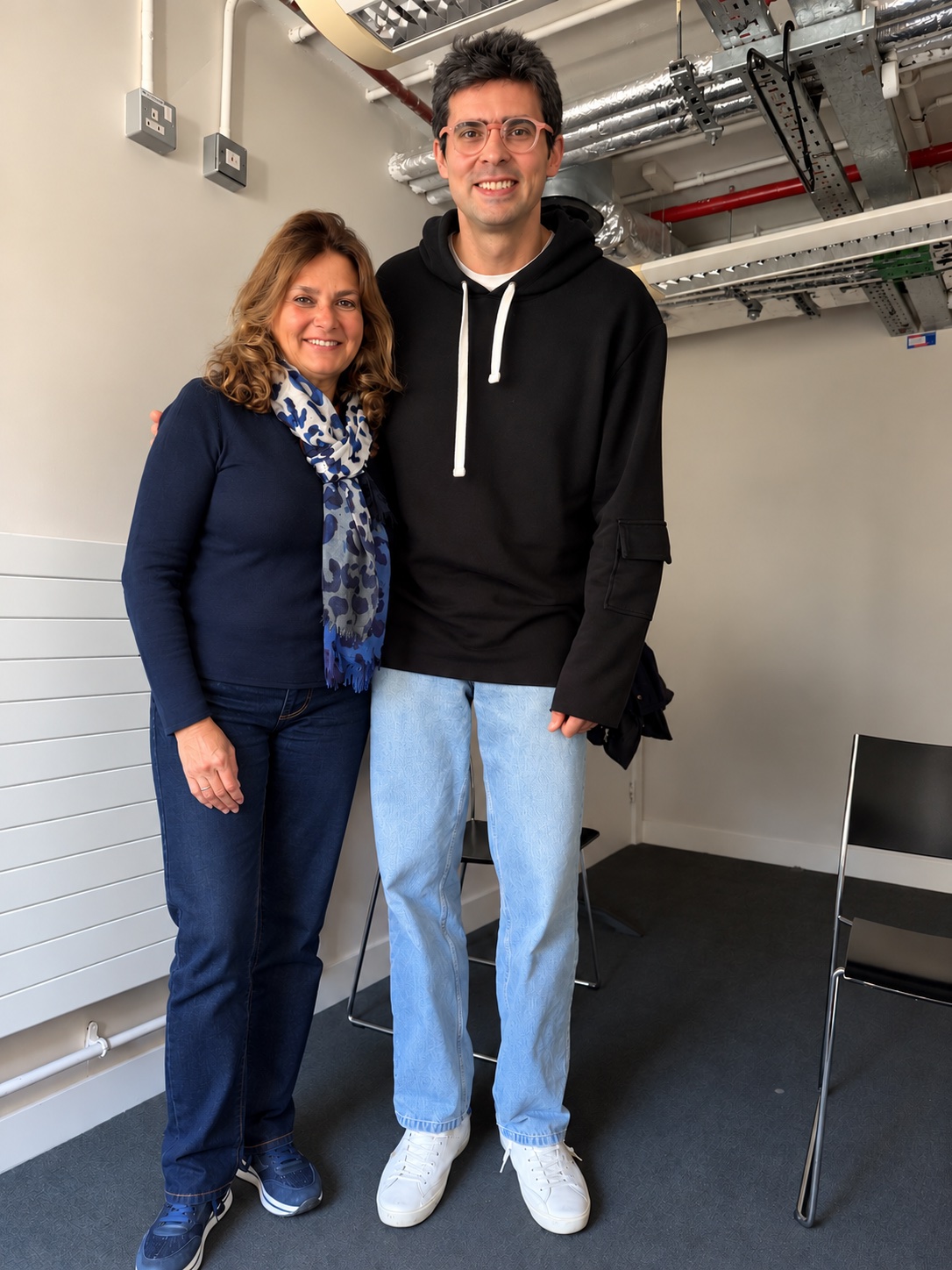
…He is very tall, nearly two metres, I would say. Perhaps that is why he stoops slightly, or rather, leans towards the person he is speaking to. At performances, Valentin Uryupin naturally wears the conductor’s black-and-white ‘uniform’, but if you met him in town, wearing jeans and a jumper, you might mistake him for a student. Admittedly, the inscription on the back of his jumper offers a clue to his profession: ‘You Cannot Begin Without Me’. But I suspect not everyone would get the hint.
Before meeting him in Wexford, all I knew about this musician, whose artistic development took place after I had left Russia, was what I could find in publicly available sources. Born in Lozovaya, in the Kharkiv region of Ukraine, he began his musical education as a clarinettist under Professor Evgeny Petrov at the Central Music School attached to the Moscow Conservatory, continuing at the Conservatory itself and in its postgraduate programme. He went on to win prizes at 25 clarinet competitions, including third prize at the Geneva International Music Competition in 2007. After two years of private conducting lessons with Vladimir Neymer, a professor at the Tashkent Conservatory, Uryupin entered Gennady Rozhdestvensky’s class in Moscow. In 2015, he attended Kurt Masur’s final masterclass and won the Second All-Russian Conducting Competition (the first prize was not awarded), making his debut with the Moscow Philharmonic Orchestra. Third prize at the Gustav Mahler International Conducting Competition in Bamberg followed in 2016, and first prize at the Solti Conducting Competition in Frankfurt am Main in 2017. Anyone with even a passing knowledge of music will need no further details of Valentin Uryupin’s professional training.
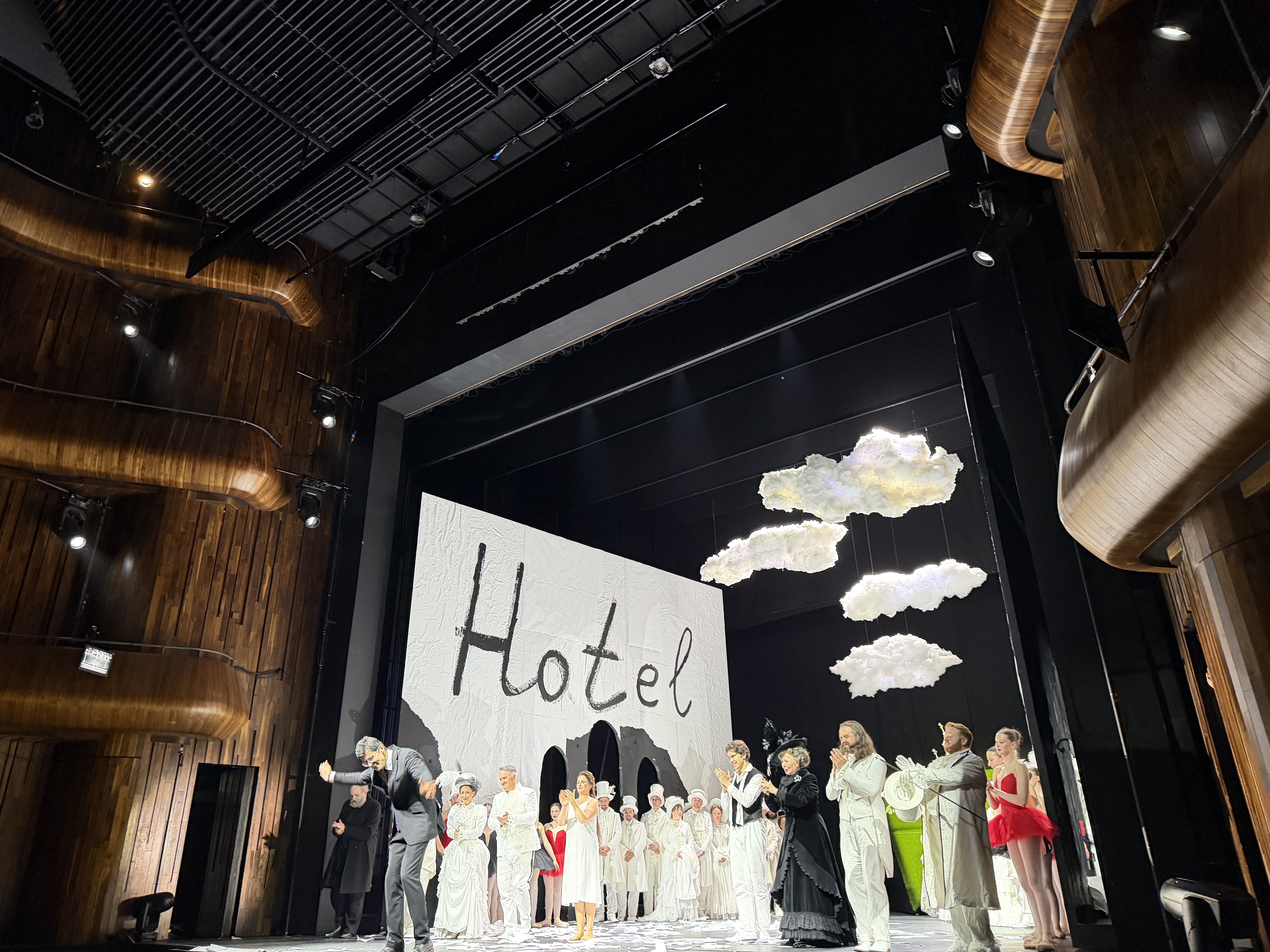
But the main subject of our conversation, held in the modest conductor’s dressing room at the National Opera House in Wexford, was, of course, Sergei Prokofiev’s The Gambler, the opera that had brought Valentin Uryupin to the Irish festival for the first time.
Rereading Dostoevsky’s The Gambler, I was immediately struck by the parallels with Pushkin’s The Queen of Spades: the Grandma and the Countess, Alexei and Hermann, Polina and Lisa, gambling and love. Do you also hear musical parallels between Prokofiev’s The Gambler and Tchaikovsky’s The Queen of Spades? Or did Prokofiev create an entirely different musical world?
I think the musical parallels are quite obvious, but they exist in a distinctly Prokofievian form. Prokofiev liked to spar with his predecessors. He was a rather prickly character in life too, acutely conscious of competition, not only with Stravinsky or Shostakovich, but also with Tchaikovsky. One need only recall that he wrote incidental music for dramatic productions of no less than The Queen of Spades, Eugene Onegin and Boris Godunov.
In The Gambler, too, one can hear a kind of sparring with Tchaikovsky, one-sided, naturally. Mr Astley’s account is something of a shadow of Tomsky’s ballad. One of the General’s leitmotifs recalls, with unmistakable sarcasm, a leitmotif from the scene in the Countess’s bedroom.
Of course, there are parallels on two levels here, and I do not know what Dostoevsky had in mind. Perhaps the theme of gambling is so universal that parallels with The Queen of Spades were difficult to avoid. But in Prokofiev’s case, I think it was a deliberate teasing of his great predecessor.
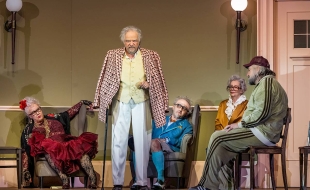
Unlike The Queen of Spades, The Gambler contains virtually no conventional arias or striking solo numbers. The music unfolds as a continuous, nervous dialogue, sometimes even a conversation involving several characters at once. It struck me that this creates a portrait of a society in which everyone is consumed by money and unable to stop. How do you understand this particular feature of the score?
There is not much room for interpretation here, because Prokofiev himself was quite explicit about it. He set out to write an opera without the traditional division into numbers, a kind of declamatory opera. There is a direct reference to this in his diary.
Sergei Sergeyevich was a great pragmatist: he almost always began by consciously setting himself a goal. For example, when composing his Classical Symphony, he decided to write a pleasant-sounding symphony and tease the conservative ‘geese’ who expected something more modernist from him. Instead, he turned to classical forms. With The Gambler, he set himself nothing less than the task of creating a new operatic language.
For Russia at that time, this was a far more innovative undertaking than it might seem today. When Prokofiev was writing the first version of The Gambler, Rimsky-Korsakov, then the last great opera composer, had died only a few years earlier. Evidently, there was a certain demand for a revolution in operatic language. Berg’s Wozzeck did not yet exist. Richard Strauss, admittedly, was already established and known in Russia, but the repertoire of the Imperial Theatres remained moderately conservative. Against that background, Prokofiev was a genuine innovator. And he knew exactly what he was doing.
In the roulette scene, you have an almost physical sense that the protagonist can no longer stop. How does Prokofiev convey this mounting, feverish excitement through music? Can you explain to a non-specialist listener what rhythmic or orchestral principles are at work here?
The roulette scene really is absolutely magnificent. Prokofiev spent a long time writing it; his diary allows us to trace how the work repeatedly stalled and resumed. For him, it was the opera’s climactic moment.
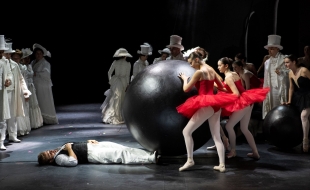
There is an extraordinary synthesis of musical elements here, particularly in the orchestral writing. It is astonishing how he conveys roulette itself through entirely precise, purely musical formulas that are nevertheless instantly recognisable. He also uses and develops a principle associated with Mussorgsky, whereby individual characters emerge from the chorus, from the crowd, and seem to move towards us, as though a film camera were closing in on them. Prokofiev takes this to an extraordinary level of mastery. There are fifteen or sixteen characters in the scene, and each has a distinct personality, even those who sing only a single short phrase.
Yes, it is an extremely difficult scene, both for the orchestra and for the singers. At times it resembles a horn orchestra, in which each musician has only one note to play, but everyone must enter with absolute precision for the melody to emerge. Here, a similar melody may be formed by the contributions of seven or eight singers. The chorus members need exceptional precision.
I think Prokofiev himself realised that he had written a masterpiece. Indeed, he singled out the roulette scene and the character of the Grandma as the most successful elements of the opera.
What proved most difficult in preparing this production of The Gambler: the rhythm, the changes of tempo, the balance between orchestra and singers, or something else? How much experience does the festival orchestra have of performing Prokofiev?
I think the orchestra has limited experience of performing Prokofiev, because it is a festival ensemble. Of course, many of the musicians have played some of his music, but we had quite a few young performers. For many of them, this may have been their first serious immersion in Prokofiev beyond Romeo and Juliet, the Classical Symphony and other popular works.
There are always difficulties, and in this case probably all the ones you have mentioned were present. But what helps most of all is the music itself. As soon as it enters the performers’ consciousness, enthusiasm takes hold, and that is the best leaven for a successful performance. At a certain point, the entire ensemble was caught up in a genuine sense of excitement. And then many difficulties are overcome much faster than one might have expected. That is the power of a collective desire to achieve something. We certainly had that, and without it, a good performance is impossible.
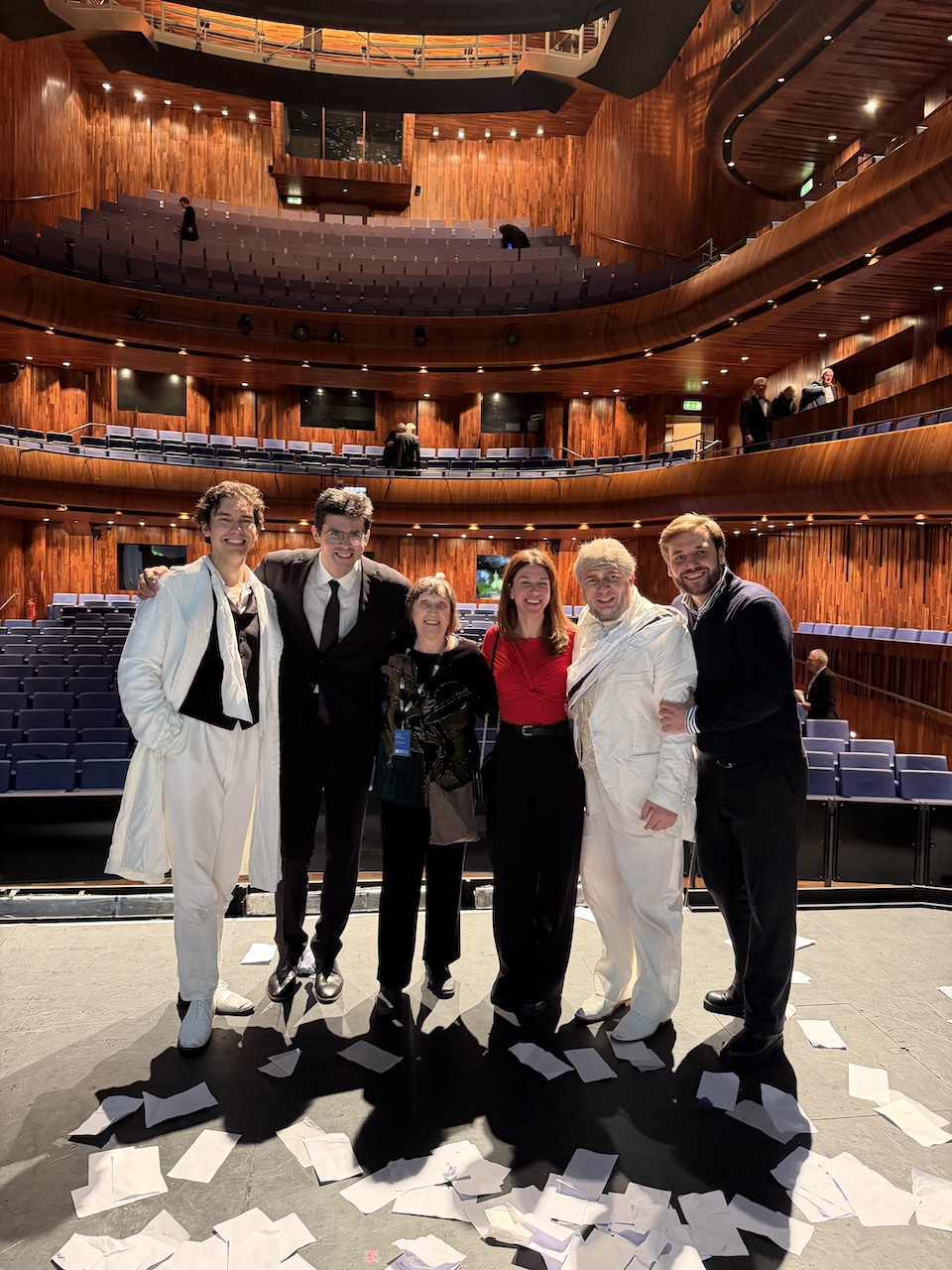
There is a great deal of text in this opera, and it is extremely important. I was pleasantly surprised by the quite clear Russian pronunciation of the foreign singers. How important is it to you that every word should be understood?
Pronunciation difficulties are entirely natural for singers who are not native Russian speakers. They are a normal consequence of performing an opera in its original language. I think the right approach is this: the language coaches and all the Russian-speaking participants in the production do everything possible to help the singers pronounce Russian as accurately as they can. Perfection is generally unattainable. But whatever we have achieved is already ours. Even as an ordinary listener, I find it important to hear that an effort has been made, that the work has been done. That often helps me accept the inevitable shortcomings.
In this respect, The Gambler is somewhat easier than other Russian operas, because a large number of the characters are foreigners. Perfect Russian pronunciation is required of Alexei, the General, Polina, the Grandma and Potapych. That is all. A certain accent is acceptable for the others, since they are foreigners. In a Russian theatre, the singer playing Mr Astley would probably have to invent a British accent. In our production, he already had one. The same applies to the Marquis, Blanche and the participants in the roulette scene.
I think that through our combined efforts, including the work of Lyubov Anatolyevna Orfenova, we managed to make the words intelligible. And, even more importantly, the performers themselves understood what they were singing about.
Dostoevsky’s novel is full of satire, grotesque elements, national stereotypes and almost Gogolian comic situations. But beneath all this lies the tragedy of addiction. What, in your view, does Prokofiev bring to the fore: satire, psychological drama or the destructive power of money?
All these elements exist side by side in his work. I would not even say that they form a synthesis: they really do exist in parallel.
Every great work of art has its shortcomings. I was recently thinking about how none of the screen adaptations of The Master and Margarita pays sufficient attention to the Yeshua and Pontius Pilate storyline. Those scenes are more or less hurried through. When I first read the novel at about fifteen, I myself used to skim those passages to return as quickly as possible to the extraordinary, captivating atmosphere of Moscow.
It is rather similar here. On the one hand, Prokofiev handles the psychological scenes brilliantly, above all the final scene and, to a somewhat lesser extent, the enormous duet in the first act. This is remarkable in itself and demonstrates the many facets of Prokofiev’s talent. He was capable of extraordinarily subtle, sometimes even painful psychological insight. But I would say that satire carries greater weight in this opera, and the satirical scenes are more memorable. At least, that was my impression when I first listened to The Gambler.
This means that we, as performers, must bring out the psychological dimension as fully as possible, since it ultimately remains somewhat in the background. I think we largely succeeded in doing so. And I would not call these proportions a shortcoming. Every great work contains humour, tragedy, drama and satire, simply in different proportions. Just as in life.
Interestingly, the mature Prokofiev sometimes recognised certain imbalances in his early operas. There is evidence that he wanted to revise The Love for Three Oranges, expanding its subtle but relatively minor romantic subplot. But he never managed to do so. In the second version of The Gambler, meanwhile, the proportions are much more balanced. The first version is, in essence, a different work.
In Dostoevsky’s novel, a sickly-looking woman who tries to stop Alexei at the roulette table appears for only a few lines. But Prokofiev gives her a separate vocal passage. Why do you think the composer singled out this warning voice?
I do not know. Composers are not always entirely in control of their own thoughts during the creative process, because it is not purely an analytical or intellectual exercise: ‘I will do this because I want to achieve that.’ Sometimes intuition suggests a solution.
But in general, all the characters in Prokofiev’s roulette scene are much more fully brought to life. That is true.
Is there anything that Prokofiev was able to express through music that Dostoevsky could not convey in words? Does the score reveal a new meaning in the characters or in what happens to them?
I am not particularly fond of comparing works belonging to different art forms. They are different things. Any film or operatic adaptation is already an entirely different story. So the very distinction between ‘could’ and ‘could not’ does not really appeal to me. What does ‘could not’ mean? It implies that the creator was given some kind of task, which they either accomplished or failed to accomplish. But what task can an artist have other than to express themselves as fully as possible through literature or music?
What is truly astonishing is how Dostoevsky managed to write at all under constant pressure of time. He wrote The Gambler literally against the clock. And yet there is no sense of anything being unfinished. Prokofiev, by contrast, began working on the opera without a commission. He simply wanted to write it and only later, while composing it, began offering it to the Mariinsky Theatre. These are entirely different circumstances. When you are rehearsing, you too have to work against the clock. How wonderful it would be to have three months to rehearse… But that is impossible.
What aspects of this early opera anticipate the mature Prokofiev? And why, in your opinion, is The Gambler performed comparatively rarely?
There are many musical echoes of Prokofiev’s own work, both earlier and later. Here one can hear connections with Romeo and Juliet, even with the Seventh Symphony, although the latter example concerns only a very short passage. He was always building such bridges within his own music.
I never entirely understand why some operas become popular and others do not. Here at the festival, for example, they are performing Mascagni’s Iris. I do not understand why that opera is less popular than Cavalleria rusticana. I have a theory that a great deal depends on a work’s initial stage history. In the case of The Gambler, that history was very complicated, troubled and ultimately unsuccessful. Perhaps this created a kind of inertia that prevented the opera from becoming a more regular part of the repertoire.
Moreover, Prokofiev uses a highly modernist musical language here. That is exactly how he intended it. Frequent departures from tonality, an abundance of dissonances that obscure tonal relationships, relatively few long, sustained melodic lines: a kind of anti-Wagnerian approach. All this is built into the work’s DNA.
But we performers are not particularly concerned with why an opera has failed to become popular. We love it, otherwise we would not have agreed to perform it. And once we begin working on it, questions of popularity simply disappear.
Has your attitude towards The Gambler changed during your work on this production? Did you discover anything unexpected?
I would say that my attitude did not so much change as take shape. Before being invited to Wexford, I had listened to the opera two or three times, mainly to broaden my musical knowledge. For me, that is very little. It gives you only a first impression. I can probably say that I know a work only once I have performed it myself, experienced it from within. So, to a large extent, I was starting with a clean slate. And gradually the opera drew me in.
You are conducting a Russian opera based on Dostoevsky at an Irish festival, in a production by Ivan Popovski, who lives and works in Moscow, with an international cast. Has your perception of Russian musical culture, and of your own role in presenting it outside Russia, changed since 2022?
In certain respects, my perception has changed, but only slightly. I believe that any great culture is not subject to the prevailing agenda, even one as dark as the one we have been living through for almost five years now, and which has changed our lives in so many ways. Culture is something very deep, rooted, among other things, in the past, and therefore it is not susceptible to corrosion.
As for those particular changes, spending most of my time, much to my regret, geographically separated from my country, I have become more keenly attuned to everything nostalgic in Russian culture. In particular, to the nostalgia that entered the musical language of Prokofiev or Rachmaninov after they emigrated.
Incidentally, one of the important differences between the first and second versions of The Gambler is precisely this rare but remarkably precise note of nostalgia that appears in the second version, particularly in the themes associated with the Grandma and, to some extent, with Alexei. Being an emotional person, I now feel such things more keenly. Otherwise, nothing has changed.