
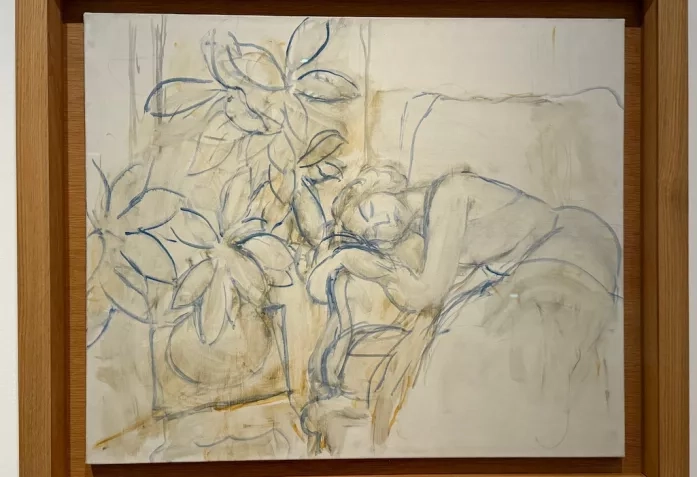
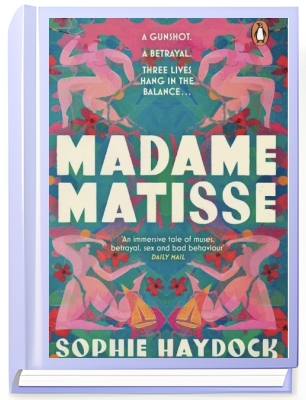
Do you remember the wonderful exhibition at the Matisse Museum in Nice that I wrote about this summer? It brought together two towering figures: the painter Henri Matisse and the couturier Yves Saint Laurent. In that article, I touched on Henri Matisse’s relationship with Lydia Delectorskaya, a native of Tomsk in Siberia, who had ended up in France by a twist of fate and joined the artist’s household after answering an ad. On a recent visit to a little English-language bookshop in Nice, where I always find something interesting, I spotted Madame Matisse, a novel by the English writer Sophie Haydock, published last year. I knew then that I would be returning to this story.
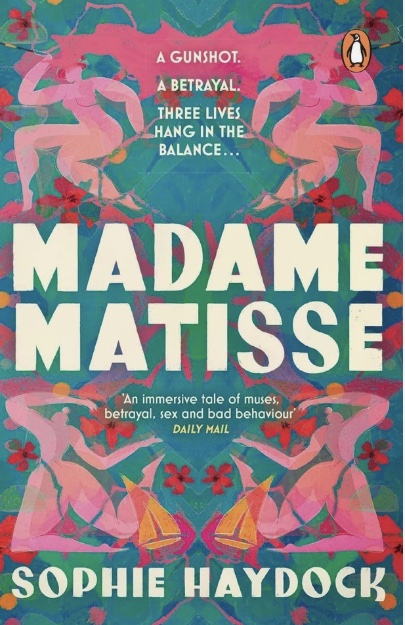
The colourful cover carries a teaser: ‘A gunshot. A betrayal. Three lives hang in the balance…’ I open the book and read the first sentence: ‘Madame Matisse enters Lydia's room, the prongs of the fork sharp in her pocket.’ You must admit, it has the makings of a murder mystery. Then there is Lydia’s little suitcase with the enigmatic initials ND, and a revolver inside. An ultimatum from the artist’s wife follows: her or me. Sophie Haydock’s novel has enough intrigue to fill several books. But I read it as a story about love, or rather several very different kinds of love, and as a rare chance to glimpse the private life of a great artist through a wide-open door rather than a keyhole.
… After the prologue, entitled ‘Ultimatum’, Lydia Delectorskaya disappears from the narrative. For almost the entire first half of the book, we follow Amélie, getting to know her before she becomes Madame Matisse. (Rats scurry through the dirty streets of Paris at the end of the nineteenth century.) Everyone tries to dissuade her from marrying a penniless aspiring artist with a daughter from a previous relationship. Yet he manages to surprise her. There are women, often intelligent and strong, who can only be won over by a surprise. And I understand very well what Amélie saw in ‘this strange pale man, born to the hard cold earth of the north, so in need of light’: an indomitable vitality. It is rare to meet a man whose gift is so evident that you want to stake your own life on him. To Henri’s credit, he warns her from the outset: art will always come first.
Then there is the telling story of the Humberts, the society couple who are Amélie’s ‘benefactors’, with their fabulous wealth and empty safe. When the scandal breaks and Amélie’s father, who worked for the Humberts, ends up in prison, Henri Matisse draws on his legal background and successfully takes up his defence. Reading about how quickly their admirers in high society and the press abandon their former idols, I can easily imagine the same reaction today.
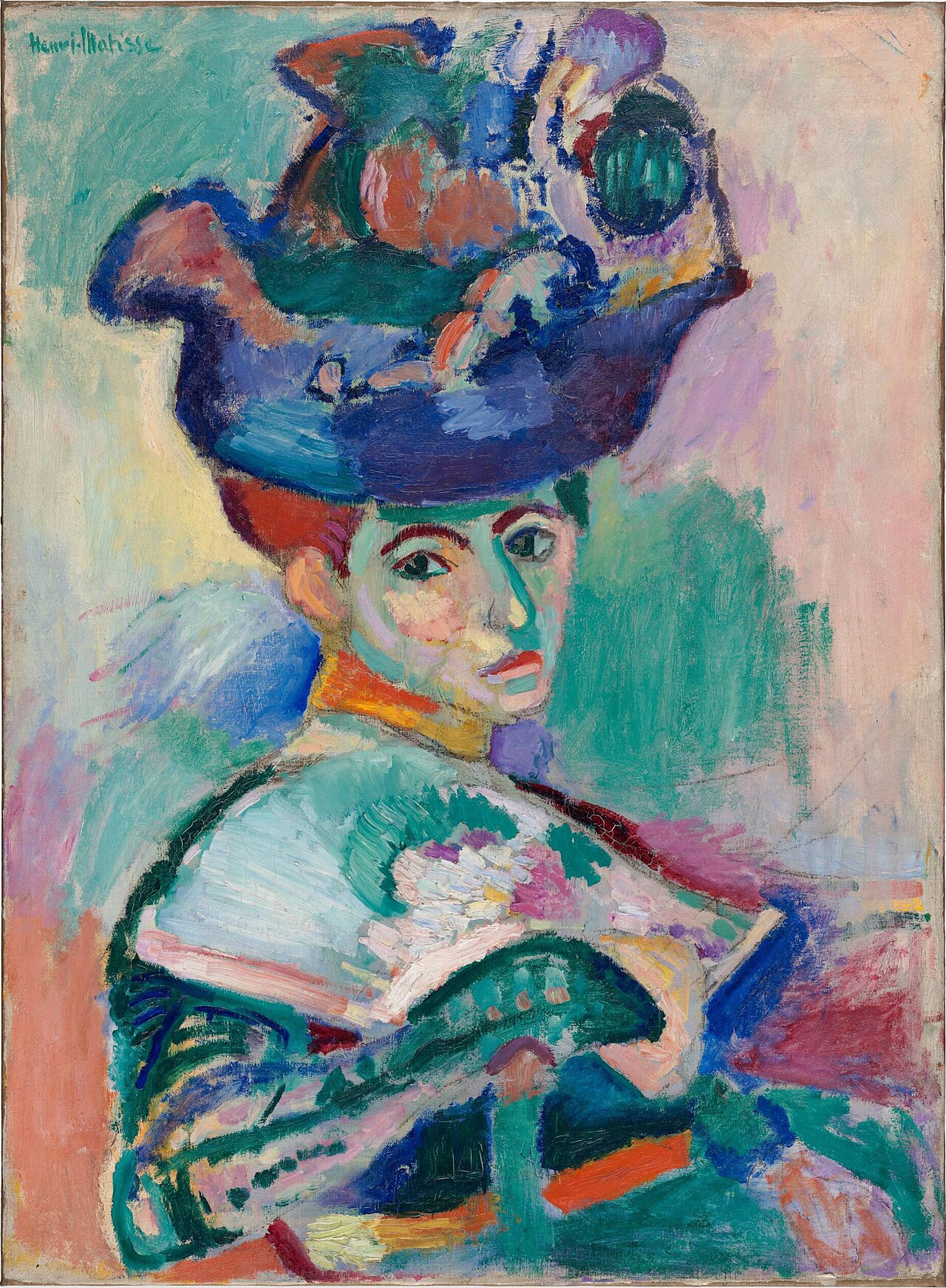
San Francisco Museum of Modern Art (SFMOMA). Bequest of Elise S. Haas, 1991.
… A few years later, Amélie poses, self-consciously at first, then with confidence, for Woman with a Hat, the portrait that causes a scandal at the 1905 Salon d’Automne. The public is outraged, the critics sneer, and the American collectors Leo and Gertrude Stein buy the painting, after the customary haggling: Matisse asks 500 francs, the same sum Amélie paid for the Cézanne, but eventually settles for 400. Amélie, who supported her husband through his years of obscurity, now becomes the face of his success. Quite literally. It was then that the critic Louis Vauxcelles called Matisse and his fellow artists ‘wild beasts’ – les fauves – giving a new movement in painting, Fauvism, its name. (Cézanne’s small masterpiece, measuring 52 × 55 cm, can now be seen at the Petit Palais in Paris. The museum record states that Henri and Amélie Matisse donated the painting in 1936. Woman with a Hat is in the collection of the San Francisco Museum of Modern Art.)
Incidentally, in Haydock’s account, it is the Steins who introduce Matisse to the Russian collector Sergei Shchukin. He becomes one of the artist’s boldest and most devoted patrons at a time when Matisse’s work still provokes ridicule and bewilderment. It is for Shchukin’s Moscow mansion that Matisse creates his celebrated panels Dance and Music. Thus behind the paintings we admire in museums today is also the story of a man who recognised genius and put his trust in it.
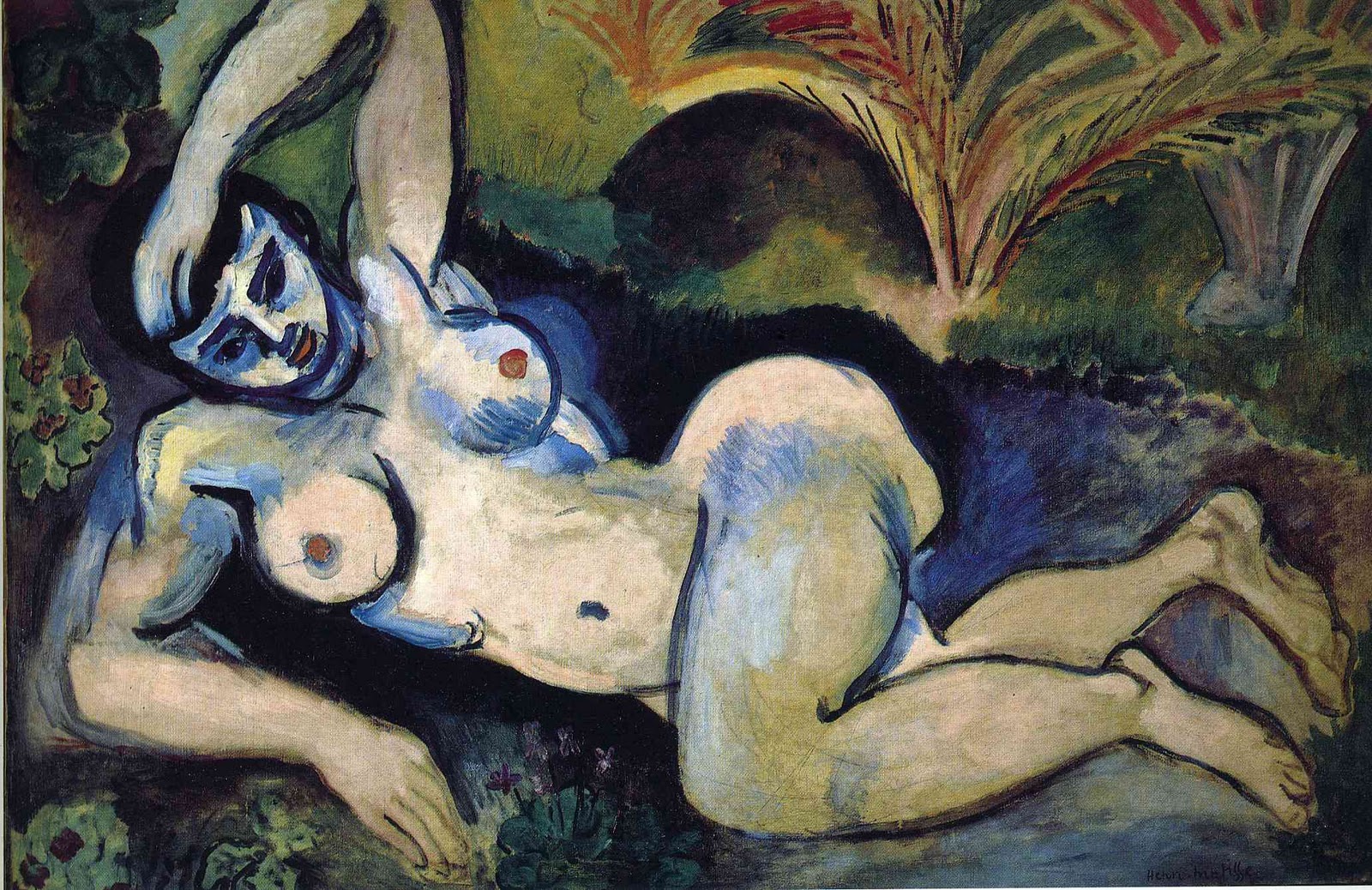
Baltimore Museum of Art. Cone Collection.
Sophie Haydock shows how Amélie, convinced that a woman should be independent, gradually discovers that her life has been reduced to a single role: that of ‘the artist’s wife’. She grows older and weaker, and falls ill. She longs for occupation of her own and is jealous of the young models who gather around her husband: what woman in her position would react any differently? In this sense, Madame Matisse makes useful reading for anyone about to marry, or already married and going through difficult times. How long can two people regard one partner’s vocation as their shared purpose? And what happens when one continues to live for it while the other suddenly realises that their own life is passing them by?
… By the time Lydia Delectorskaya finally returns to the novel, we already know what her arrival in the household means to Amélie. Now Haydock lets us see the same household through Lydia’s eyes. Behind her kindness, diligence and Siberian resourcefulness, we begin to see the childhood of an orphan who learnt early how to survive. Tomsk, the Bolshevik revolution, Harbin, where Russian émigrés ‘cannot afford the luxury of worrying about respect or dignity’; the dream of becoming a doctor like her father; an attempt to enter the Sorbonne, where she cannot afford to study; and then Nice, with its casinos and Russian mafia.
In Nice, Matisse barely notices her at first, yet she already has a whole life behind her of which he knows nothing. It is amusing to read how, in his studio, the artist asks Lydia about the situation in Russia and what she thinks of Stalin’s purges. You must admit, it is easy to imagine the same conversation today, with just a couple of names changed.
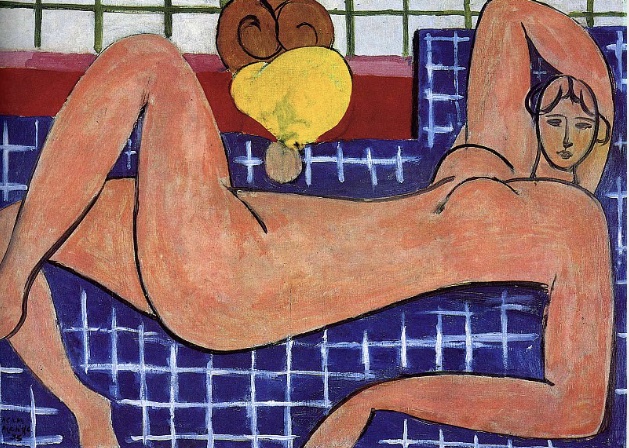
Baltimore Museum of Art. Cone Collection.
When Lydia is in need, Henri Matisse offers her the money to open a tearoom – a modest dream of hers – but her husband Borya, whose time in the role is brief, gambles it away. It is easy, then, to see why Lydia takes such a sober view of the futility of trying to change a man. ‘He's moody, prone to depression and drinking to excess. Of course, she knew all this before she married him, but she thought he might stabilize under her steady influence.’ This is how Haydock describes Lydia’s hope of changing her husband.
Most of all, I enjoyed the glimpses of Matisse’s daily life and creative process: the novel is full of details that make us look afresh at familiar paintings. ‘At the end of the day, this will be known as a painting by Henri Matisse, not a portrait of a woman by the name of Lydia Delektorskaya. Most people will look at it and hardly see a real woman there at all.’ These are Lydia’s thoughts as she wonders whether to pose nude for the painting that will go down in art history as The Pink Nude. You can admire the 1935 painting in the Cone Collection at the Baltimore Museum of Art. The same collection holds Blue Nude (Memory of Biskra), painted in 1907, which caused a scandal at the Salon des Indépendants in Paris. Amélie posed for this painting. In the novel, she asks her husband to keep this quiet, but is secretly proud.
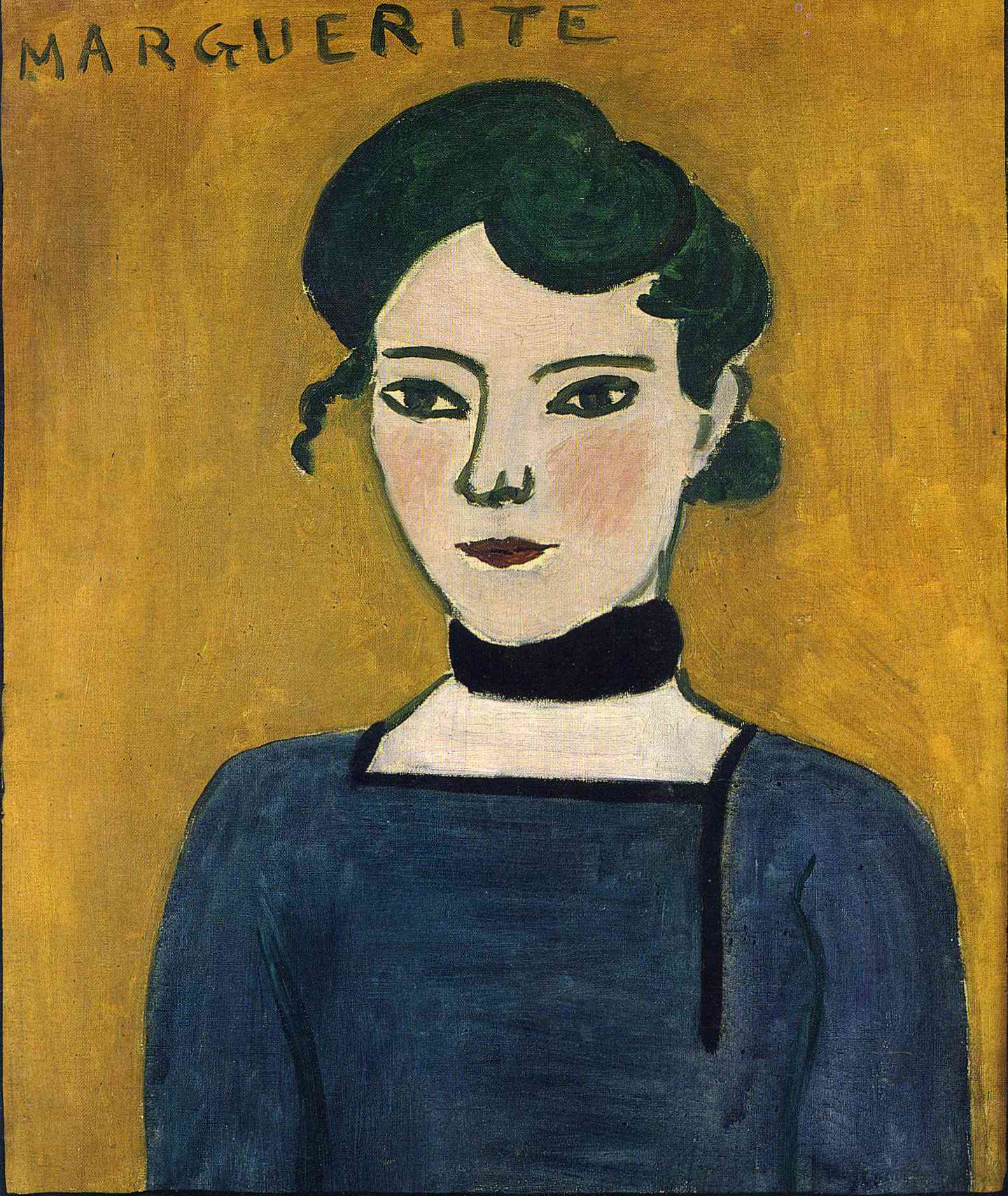
Marguerite, the artist’s daughter from a previous relationship, whom Amélie took in and brought up as her own, underwent an emergency tracheotomy as a child. Haydock describes the scene like this: ‘Henry weeps. His daughter, dissected on the kitchen table, with crumbs from breakfast pressed into her elbows.’ To me, this detail, reminiscent of a still life, conveys more fear and tenderness than some of Haydock’s dialogue, which can sound strained, especially when the characters explain their feelings to one another a little too neatly. For us, the ribbon around Marguerite’s neck in her portraits remains a reminder of that operation. She loved posing for her father.
Were Amélie and Marguerite right to suspect that Henri and Lydia had become lovers? Matisse was over forty years older than Lydia. Haydock leaves the question of their physical intimacy open: we can only speculate. What interests me is a different question. Is tender, platonic love possible between a man and a woman with such an age gap? In the book, Henri Matisse himself answers it in a conversation with his daughter:
‘Papa, tell me the truth now. What is the nature of your relationship with Lydia?’
She holds her breath, waiting for his answer. It feels like a bomb, set to explode.
‘We love each other dearly,’ Henri says eventually, stating the words with great care.
Did her father just say love? The word takes Marguerite’s breath away.
‘There’s nothing wrong with that,’ he affirms. ‘Two people who respect each other, who want the best for the other person. Why must that arouse such suspicion and distortion?’
‘But is there anything more I should know about?’
‘Why does everyone presume that love must be sexual? Or that I’m taking advantage of her?’ he demands. ‘“Old man Matisse and his beautiful young assistant,”’ he mocks. ‘I thought you’d understand that love can blossom in the purest way, beyond desire.’
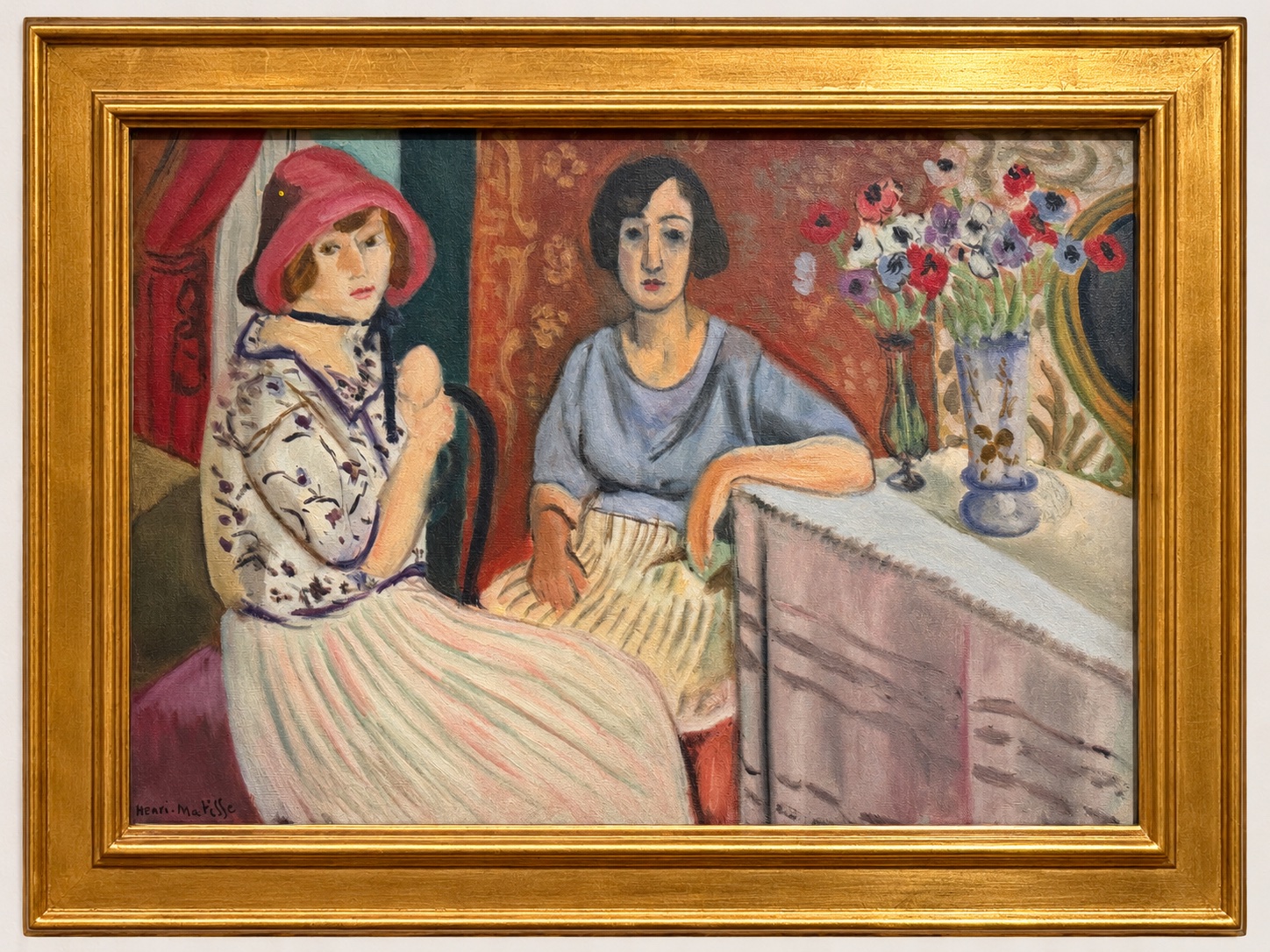
On long-term loan to the Musée de l’Annonciade, Saint-Tropez, since 13 March 1972.
Painted in Nice in 1920, this work depicts Marguerite Matisse and Henriette Darricarrère in the elegant surroundings of the Hôtel de la Méditerranée,
where the artist was staying at the time.
I do not know whether he convinced Marguerite, but Amélie eventually acknowledged his love for Lydia and left him, even though he had chosen her after her ultimatum. Speaking to the daughter she raised as her own, she admits: ‘When I gave your father my ultimatum, I saw how much conflict it caused. I think I finally understood that he loves Lydia, in the purest sense. I may never know for certain if it was more than that,’ she says. ‘But it was clear how tormented he was at the thought of being parted from her. What he feels for me is duty, loyalty. But I knew right then that there was no longer an ounce of love left between us.’
How many women do you know who could step aside for another?
Matisse himself remains the novel’s central character. We come to know him through his relationships with women, their love, hopes, resentments and sacrifices. At the same time, all three women are portrayed with great respect, as each undoubtedly deserves. I suspect not everyone knows that Amélie, Marguerite and her brother Jean were active in the Resistance, risking their lives. Amélie and Marguerite were arrested, and Marguerite narrowly escaped being sent to a concentration camp. Lydia, a Russian refugee in occupied France, also risks her life, nursing Matisse after major surgery in 1941. In this part of the novel, the question Matisse asks himself, ‘Is art worth dying for?’, takes on a very different significance from the one it had when he was still struggling for recognition.
So who is Madame Matisse here? Amélie, who obtained a legal separation but remained his wife and became his widow? Marguerite, his daughter, who kept her father’s name in her hyphenated surname, Duthuit-Matisse? Lydia, his last assistant and muse, whom he dismisses from the household at his wife’s insistence, only to say of her afterwards: ‘We love each other dearly’? Each lays her own claim to this title, and each has sacrificed herself for him in her own way. And the words ‘We love each other dearly’ could apply to any of the three women, for at different stages of his life Matisse did love each of them in his own way, sincerely and tenderly.
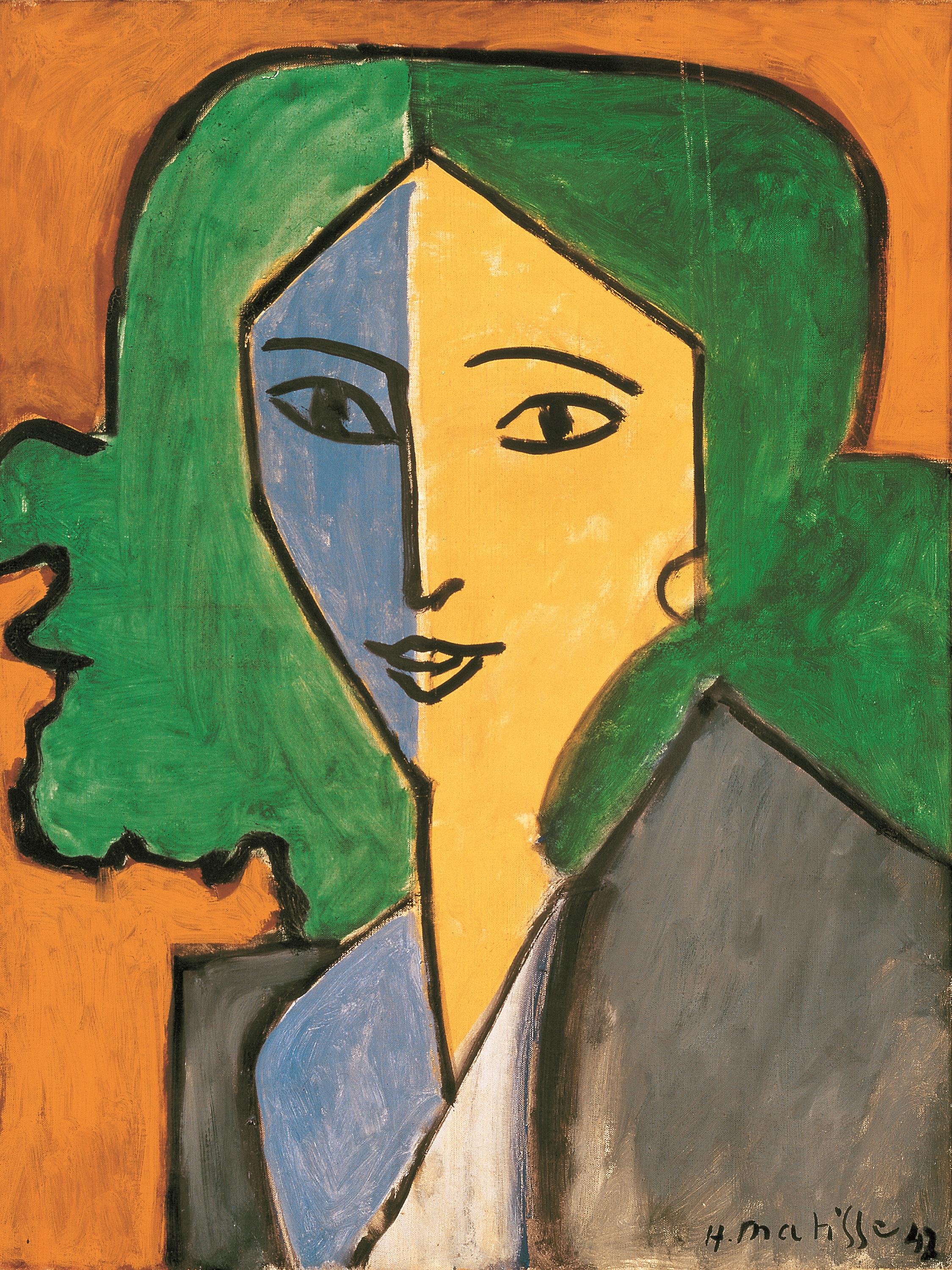
… At the end of the novel, Matisse dies in the arms of Lydia and Marguerite. Lydia is not even invited to the funeral. She understands that there is no place for her there, picks up her little suitcase and leaves. ‘“Goodbye, Lydia Deliktorskaia,” Marguerite says, going to the door to see her off. She can't help but hope that her name will be forgotten, that any association between Lydia and her family will be erased. But whether she likes it or not, she understands that the legacy of Lydia will live on, threaded into the very essence of her father's greatest art.’
Sophie Haydock’s novel seems to confirm this belated understanding. Lydia Delectorskaya outlived Matisse by more than forty years, devoting the rest of her life to preserving his legacy. In 1998, she committed suicide. But she lives on in so many of Henri Matisse’s paintings, and now in the pages of this book too.







Olivia November 17, 2026
Sikorsky November 17, 2026