
The latest Venice Film Festival seems likely to be remembered not only, and perhaps not even primarily, for its films, but for the scandals surrounding its programme. The first began even before the Mostra opened: the inclusion of Ilya Khrzhanovsky’s DAU in competition prompted a protest from the Ukrainian authorities, despite the fact that the director had spoken out against the war as early as February 2022, left Russia in March, and in 2024 was placed on the Russian Ministry of Justice’s list of “foreign agents”. The controversy gradually subsided, however. The film was screened, and Khrzhanovsky ultimately received the Silver Lion for Best Director. A second scandal broke out towards the end of the festival over NAZA by Yuval Abraham and Rachel Szor, which received the Special Jury Prize. The film, described by its makers as a documentary investigation into the Israeli military’s decision-making system in Gaza, provoked a fierce reaction first in Venice and then in Israel. I suspect we will hear much more about it and may well learn some interesting details about how the film was made and financed.
The journey is unusual from the outset because everything we see on screen was captured on film not by Loznitsa, nor even by Soviet cameramen. It consists of archival footage shot by Italian filmmakers during their three journeys through the Soviet Union between 1970 and 1973 for a television project called Mirror of Russia. They travelled through more than twenty regions of that enormous country, from Moscow and the European part of the USSR to Central Asia, the Caucasus, Siberia and the Far East. More than half a century later, Sergei Loznitsa discovered the material in Italian archives and, with his mastery of editing, fashioned it into an entirely new film for twenty-first-century viewers who already know how it all ended. And throughout the film one keeps wondering: what was already there in the footage, what did the Italians behind the camera and later Loznitsa see in it, and what do we read into it ourselves, knowing what happened next?
© Essential Filmproduktion, Kino Produzioni, Société Parisienne de Production, Studio Uljana Kim. Footage courtesy of AAMOD
The title immediately offers a clue to Loznitsa’s own reading of the material. Why the Latin Imperium, rather than the English Empire? Loznitsa himself explains that his choice was intended to emphasise not so much the state as power over a territory. The Latin word does indeed make that distinction possible: imperium originally denoted authority, the exercise of supreme power, and only later came to be associated with empire as a state. To me, then, the film’s title suggests not simply “Empire”, but the very principle on which an empire operates: a vast territory and a power seeking to unite, organise and hold it together.
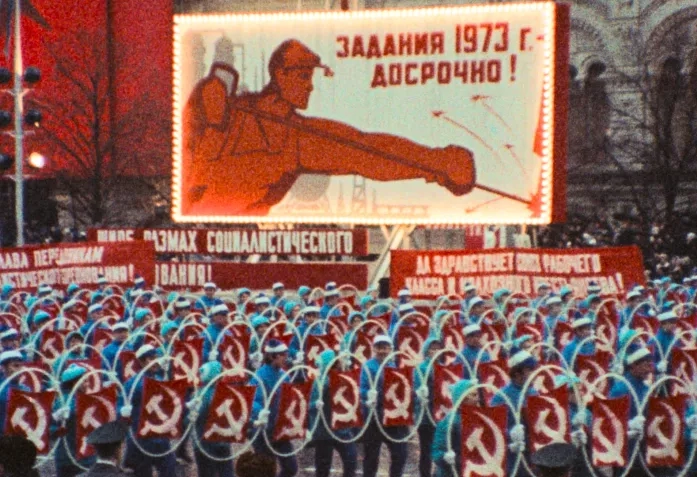
Loznitsa does not keep us guessing for long. The opening images show Red Square in 1973, with a parade of athletes. It is the height of what would later be called the Era of Stagnation: Brezhnev, orderly ranks of young people, red banners, slogans calling for peace, the very slogans that can land you in prison in Russia today. Over this perfectly choreographed cast of thousands we hear one of the most famous Soviet songs, Wide Is My Motherland, by Isaak Dunayevsky to words by Vasily Lebedev-Kumach, sung by the celebrated bass Mark Reizen with the Bolshoi Theatre Chorus and Orchestra. It is hard to imagine a more official, and more officious, image of the state: a soloist and orchestra from the country’s foremost theatre, Red Square, and a song in which geography itself becomes an expression of the state: “From Moscow to the very borderlands, from the southern mountains to the northern seas...”
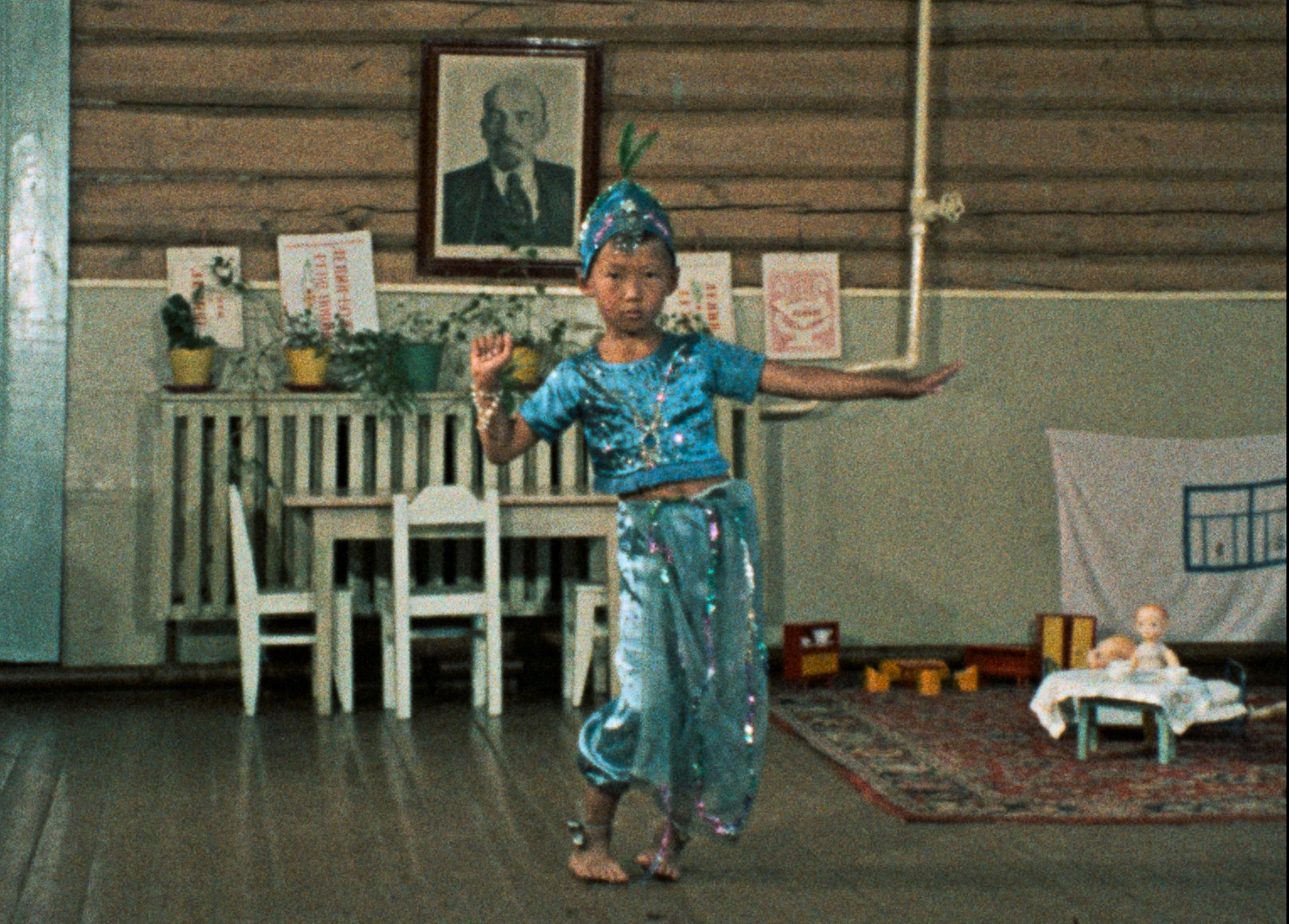
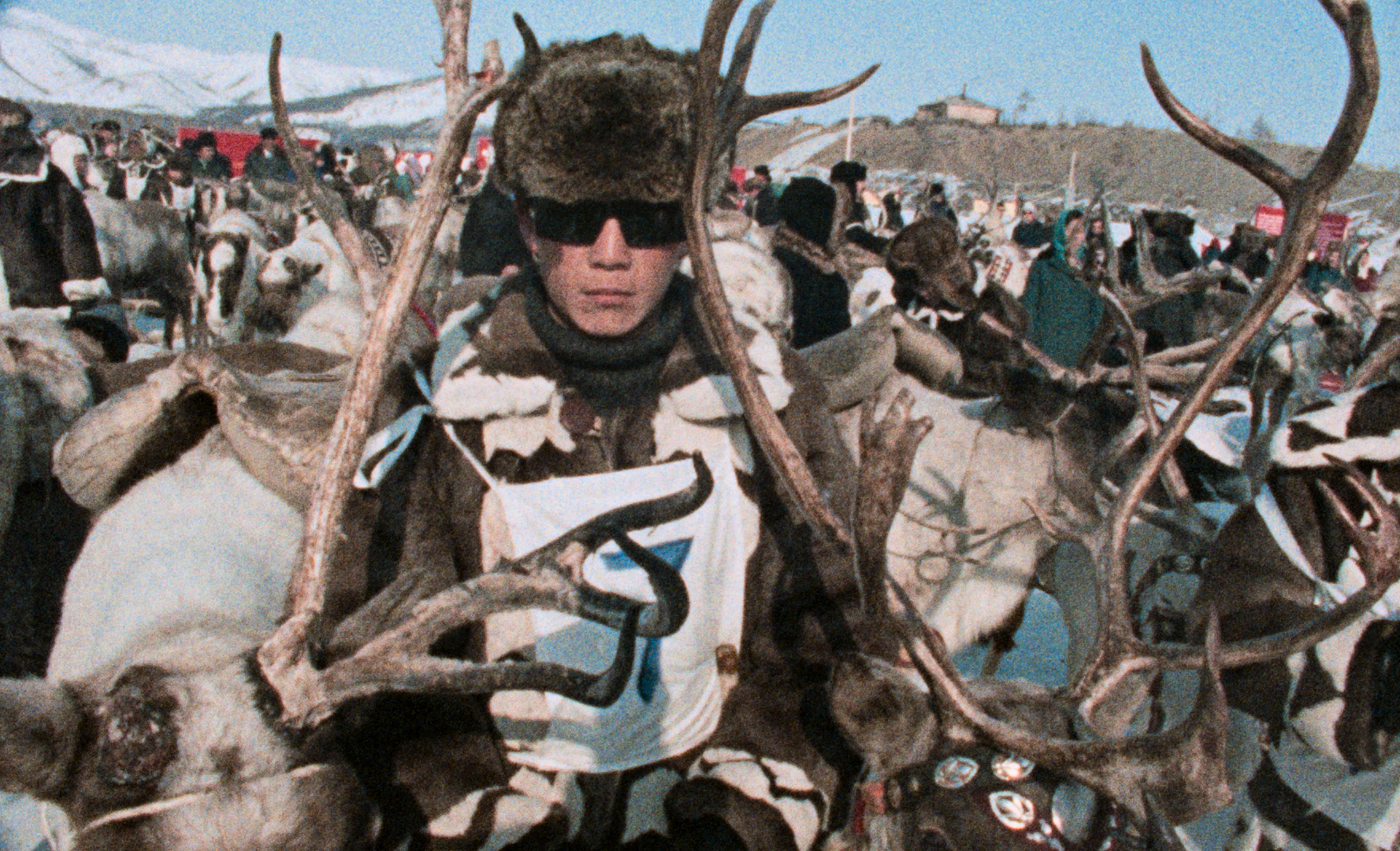
And then the camera sets off from Moscow towards those very borderlands. The Arctic, Ukraine, the Caucasus, the Baltic republics, Central Asia, Siberia, the Far East. Towns and villages, factories and collective farms, national festivals accompanied by traditional music, weddings, sporting competitions, workers, peasants, hunters, children. Different languages are heard; faces, clothes, customs and landscapes change. The country proclaimed as one in the opening song grows more and more diverse before our eyes.
© Essential Filmproduktion, Kino Produzioni, Société Parisienne de Production, Studio Uljana Kim. Footage courtesy of AAMOD
Here, Imperium has an important cinematic precursor, one Loznitsa himself points to: Dziga Vertov’s A Sixth Part of the World, made exactly a hundred years ago, in 1926. The parallel is fundamental. Vertov, too, attempts to take in the immense expanse of the Soviet Union with his camera and to show its many peoples, landscapes and ways of life as parts of a single whole. His camera, too, moves from centre to periphery, from city to steppe, from industry to traditional forms of livelihood, turning geography itself into an image of the state.
A century later, however, the perspective has changed. For Vertov, the diversity of peoples and territories serves as evidence of the grandeur of the new Soviet project. His film makes no attempt to conceal its ideology; on the contrary, ideology is its driving force. Loznitsa presents a similar panorama of this enormous country, but looks at it after the collapse of the USSR. Where Vertov sought to bring this vast territory together as a single whole, Loznitsa invites us to consider how that whole was put together and held together. And if, in Vertov, the endless variety of national costumes, customs and landscapes was meant to demonstrate the unity of the new country, in Loznitsa the display of that same diversity gradually makes us question how solid that unity ever was. There is no voice-over telling us what to see or what conclusion to draw. Loznitsa’s presence is felt in other ways: through his choice of material, the sequence and duration of the shots, their juxtapositions, the sound and, of course, the very title of the film.
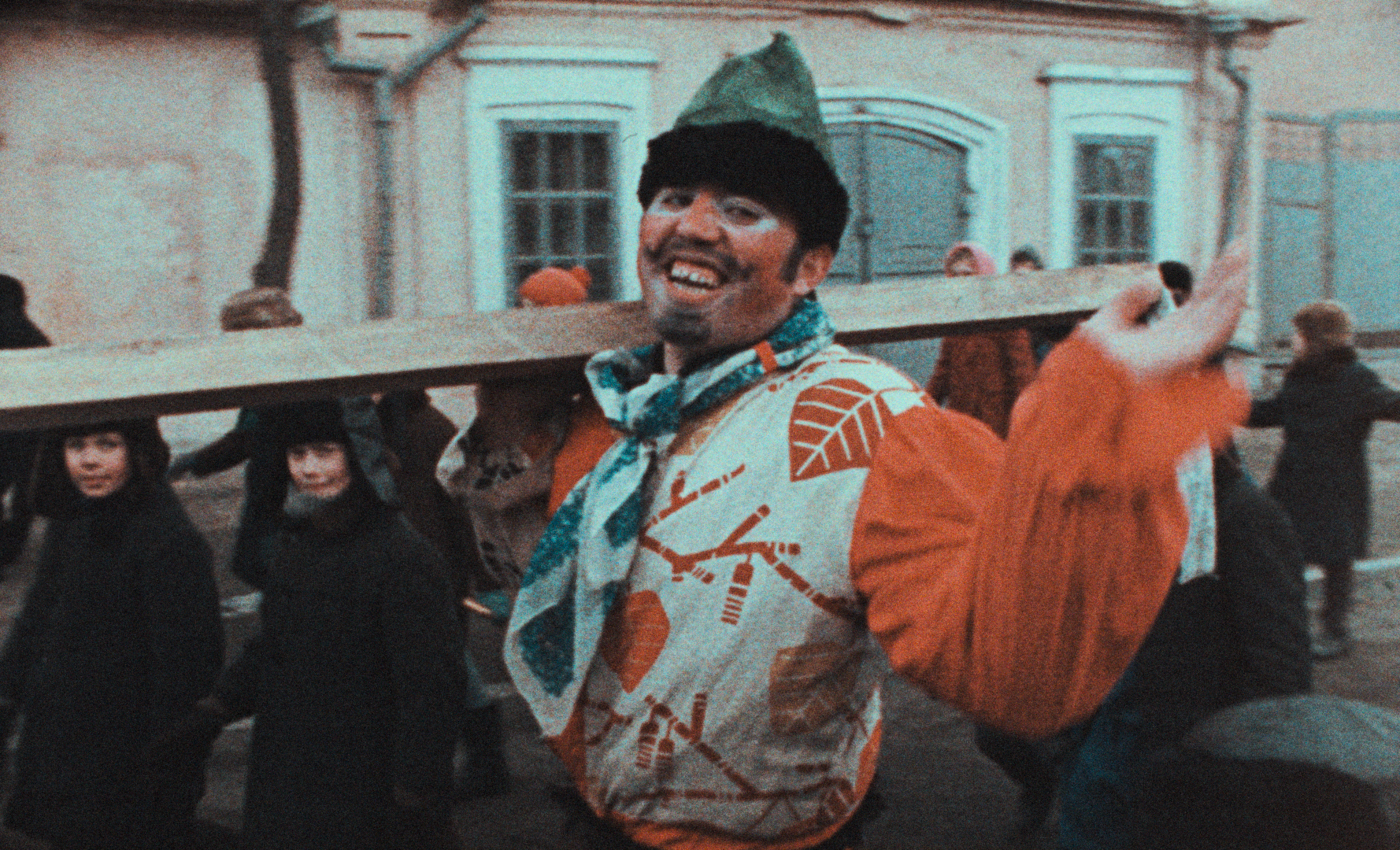
Soviet officialdom sometimes looks almost grotesque: portraits of Politburo members, slogans, ceremonies, state symbols reproduced everywhere. Gradually, however, one begins to notice something more significant. Wherever the camera goes, another performance seems to be staged before it. The scenery, costumes and national melodies change, but the principle remains the same: again and again, this vast country presents the image it wants to project. Festivals, ceremonial welcomes, folk dances, displays of prosperity and of friendship among peoples all merge into an endless performance of unity.
© Essential Filmproduktion, Kino Produzioni, Société Parisienne de Production, Studio Uljana Kim. Footage courtesy of AAMOD
The editing reinforces this sense of theatricality: one episode ends, the screen turns red, and only after this interlude does the next one begin, almost like the next number in a grand concert programme. At one point I found myself thinking of the programmes of the famous Igor Moiseyev Folk Dance Ensemble, which toured the world: one people follows another, each with its own costumes, music, dances and customs, and all this diversity comes together in a single, impeccably organised spectacle. Except that here the stage is the entire territory of the Soviet Union.
Against this background, I was struck by the presence of religion. We see an Orthodox church in Moscow, a mosque in Bukhara, a Buddhist temple in Buryatia... In a film about the Soviet Union of the early 1970s, an officially atheist state, these images are unexpected. Perhaps the Italian cameramen were taken to these places precisely to demonstrate the vast country’s national and cultural diversity and of freedom of religion within it. But today they look different: behind the carefully constructed Soviet scenery, a much older map of the country begins to emerge, with its religions, traditions and identities, which Soviet standardisation never entirely erased. At the same time, some viewers today might even see the wonderful shot of a Kalmyk shepherd listening on a transistor radio to Lensky’s aria sung by Ivan Kozlovsky as evidence of Russian culture’s imposition! As many viewers, so many opinions.
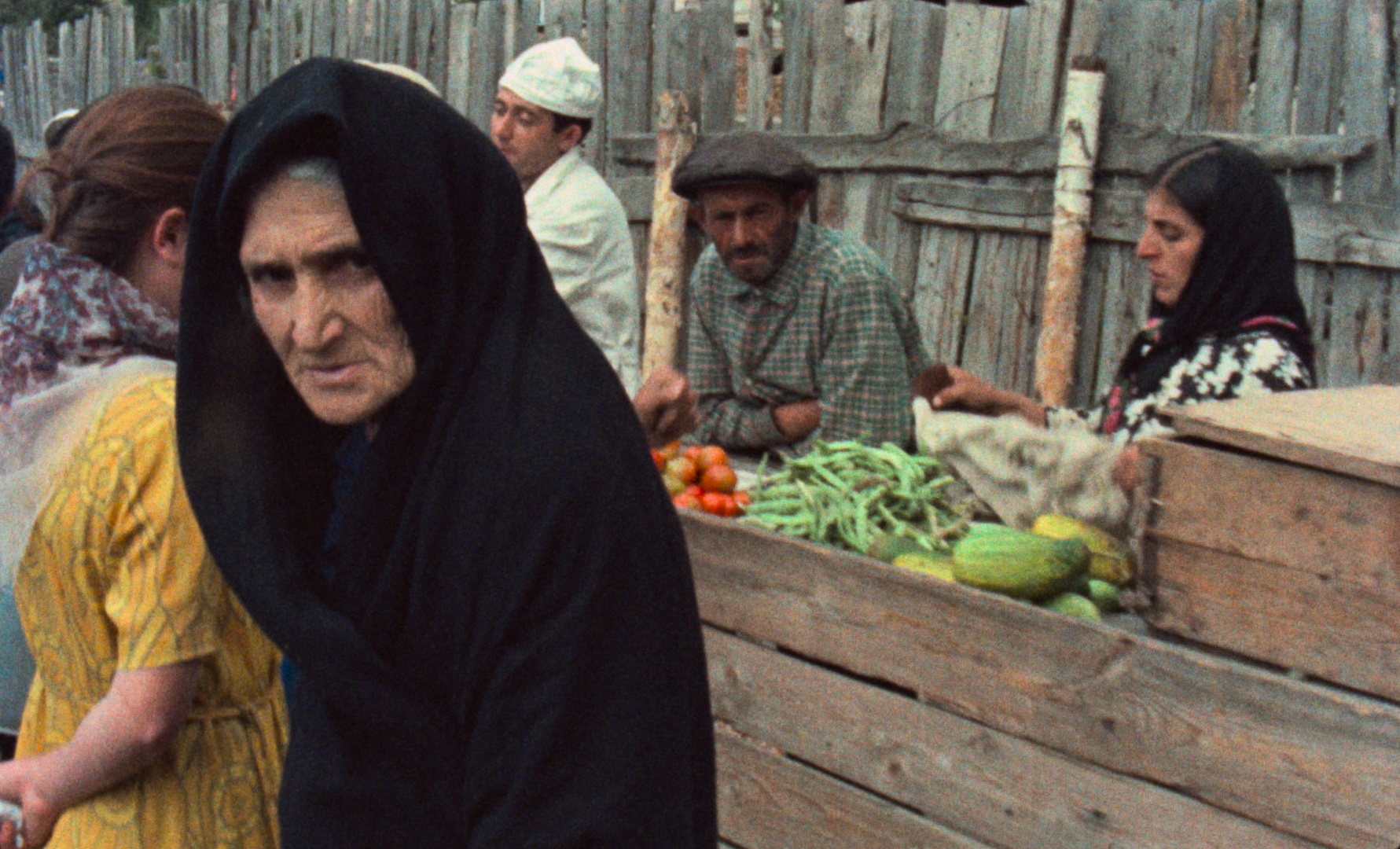
© Essential Filmproduktion, Kino Produzioni, Société Parisienne de Production, Studio Uljana Kim. Footage courtesy of AAMOD
The longer one watches, the clearer the gap between performance and reality becomes. Ceremonial splendour reveals its shabby underside; displays of abundance give way to scarcity; behind the carefully staged display of national identity lies standardisation, and behind the slogans, a lie so habitual that it has become part of the everyday landscape. Perhaps this is one answer to why a state that seemed so vast and unshakeable fell apart with such astonishing ease less than twenty years later. Loznitsa does not explain it; he simply lets three hours of archival footage lead us to the final frame: red letters appear against a black background: “On December 26, 1991 the USSR ceased to exist.”
That is all. No commentary. Nor is any needed.
After what we have seen, the date feels less like a historical footnote than the logical conclusion to the story we have been watching unfold for almost three hours: the empire’s inner fragility has long since become apparent, and so its collapse no longer comes as a surprise.
But what we see is not only a state or a system. There are people too, looking straight into the camera, sometimes with curiosity, sometimes warily, sometimes laughing. They do not yet know that they are living in the “late Soviet Union”, that historians will call their time the Era of Stagnation, or that in less than twenty years their country will disappear from the map. For them, this is neither an archive nor a historical document. It is their present.
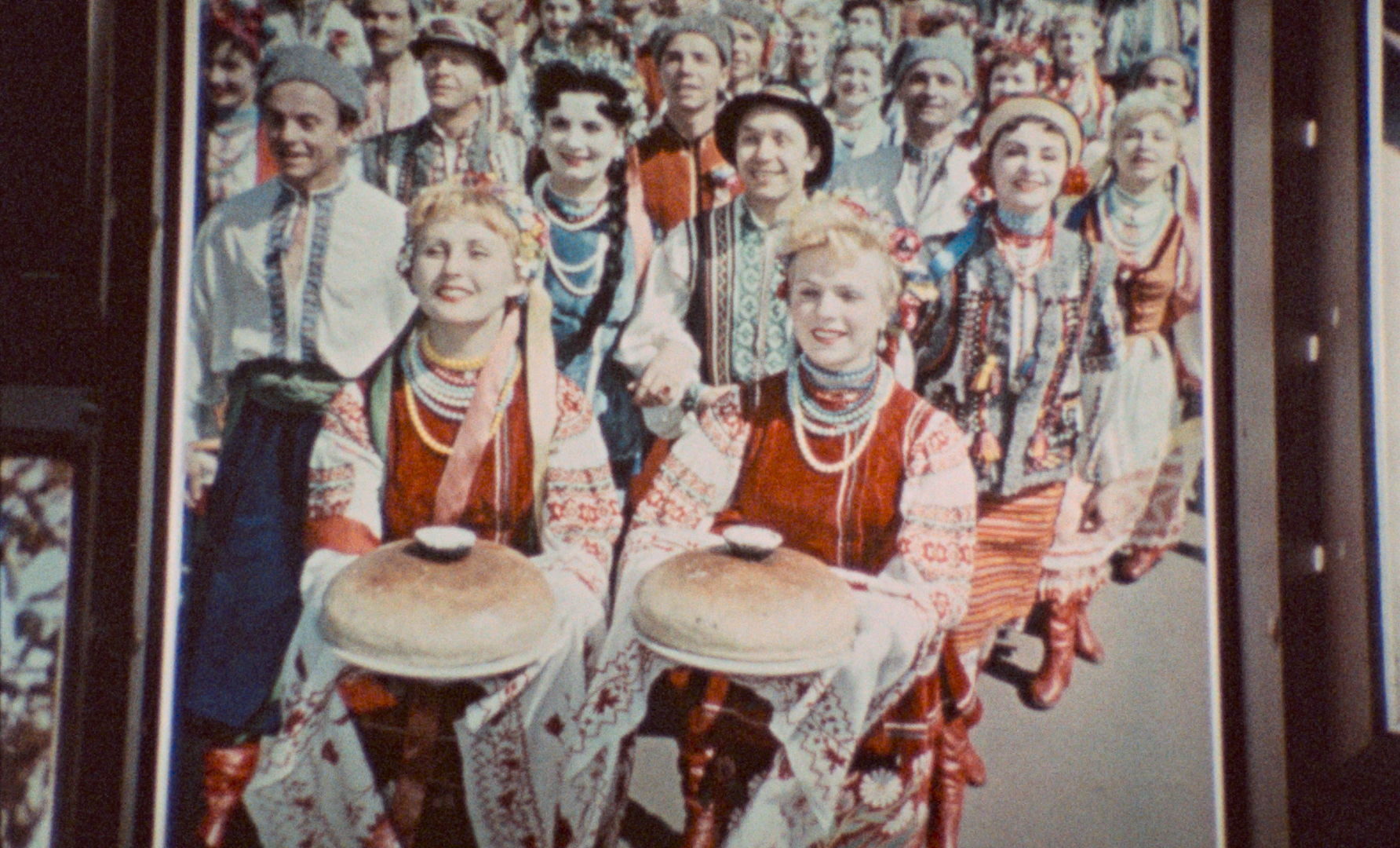
© Essential Filmproduktion, Kino Produzioni, Société Parisienne de Production, Studio Uljana Kim. Footage courtesy of AAMOD
And then Wide Is My Motherland is heard again, the same song with which the film began. Only this time it is sung by Pyotr Leshchenko, one of the most popular Russian émigré singers, whose recordings remained outside official Soviet culture for decades. Leshchenko’s own fate makes the choice particularly poignant: in 1951, he was arrested during the interval of one of his own concerts by the state security services of socialist Romania, and three years later died in the prison hospital at Târgu Ocna. The location of his grave remains unknown.
The circle closes. At the beginning, Mark Reizen, the Bolshoi Theatre, Red Square and the Soviet state in all its official pomp. At the end, Pyotr Leshchenko, a Russian voice from beyond its borders. The song is the same, the words are the same, the country they describe is the same, but the connotation is entirely different.
I do not know whether Sergei Loznitsa expected viewers to recognise the voices of both singers and pick up on the contrast, but for me it became one of the film’s most precise editing choices. What is an empire: a territory, a political system, an idea of unity, a view of the periphery from the centre? And what remains of it when the state itself disappears, leaving behind people, landscapes, songs and kilometres of film?




Лазарь Фрейдгейм October 16, 2026
Sikorsky October 16, 2026
Federica Brunelli October 16, 2026
Sikorsky October 16, 2026
Alexandra Trifler October 16, 2026
Sikorsky October 16, 2026