The life of Jewish entertainer Kurt Gerron is a truly extraordinary and unique story, and Lewinsky does it ample justice in this epic novel. Telling the story from the perspective of Gerron, star of stage and screen in the pre-war years, Lewinsky keeps a balance between the gregarious cynicism of Gerron’s legendary stage persona and an unflinching record of the horrific events unfolding around him. In this way, the author succeeds in viewing the Holocaust through a new and startling lens.
Imprisoned in Theresienstadt, Gerron is asked to direct a propaganda film about this ‘paradise ghetto’. He isn’t accustomed to moral reflection and, to avoid the terrible choice he’s been forced to make, he escapes into his memories. With gusto the entertainer recalls his youth, his rise and fall in show business, and the long, cruel sequence of events that have led to his imprisonment. The horrific world of the concentration camp seeks to reduce him to nothing; he needs to remember that he was once someone, starring opposite Marlene Dietrich in The Blue Angel and premiering ‘Mack the Knife’ in The Threepenny Opera. Eventually, he agrees to make the film, if only to save his wife and the participants in the film from deportation.
Directing, he feels himself once again. But the entire process is full of macabre jokes, which Gerron notes with bitter irony; only, of course, there is nothing funny at all about Theresienstadt. The film is never edited properly, and one day Gerron finds that he has been assigned to a transport: the comedy of his life will reach a horrific end. Gerron’s voice is cynical, wry and warm. Lewinsky has chosen to dispense with the modernist aesthetics often thought appropriate for Holocaust literature in German, instead telling the story in a straightforwardly realist fashion through Gerron’s acerbic voice, which is knowing while also being ignorant of the scale of the genocide around him. As he is tugged back to the reality of his life in the concentration camp again and again, he draws cynical parallels between the scenes of his youth – his snobbish mother, in the trenches, on the stage, performing cabaret in a transit camp – and the bitter absurdities of his current existence. His anecdotes are lively, scurrilous and rambling, and his remarks on Theresienstadt and Nazism perceptive and biting without ever deteriorating into pontification.
A gripping and moving masterpiece.
‘Truly a literary miracle.’– Neue Zürcher Zeitung
‘A love story. Without question. Narrated by Lewinsky as if he were Kurt Gerron, that comedian of banality, standing at the abyss but then growing above and beyond it.’
– Die Welt
‘A wonderful, moving, clever book.’
– Norddeutscher Rundfunk
Рецензия Александра Терехова, лауреата премии "Большая книга", здесь.
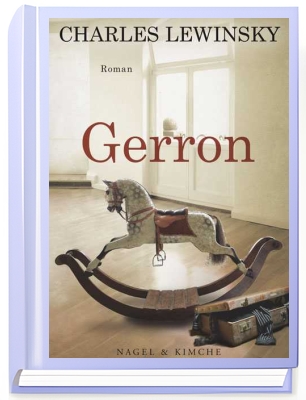
Charles Lewinsky: "Gerron", Nagel & Kimche, 2011
About the author

Nadia Sikorsky grew up in Moscow where she obtained a master's degree in journalism and a doctorate in history from Moscow State University. After 13 years at UNESCO, in Paris and then in Geneva, and having served as director of communications at Green Cross International founded by Mikhail Gorbachev, she developed NashaGazeta.ch, the first online Russian-language daily newspaper, launched in 2007.
In 2022, she found herself among those who, according to Le Temps editorial board, "significantly contributed to the success of French-speaking Switzerland," thus appearing among opinion makers and economic, political, scientific and cultural leaders: the Forum of 100.
After 18 years leading NashaGazeta.ch, Nadia Sikorsky decided to return to her roots and focus on what truly fascinates her: culture in all its diversity. This decision took the form of this trilingual cultural blog (Russian, English, French) born in the heart of Europe – in Switzerland, her adopted country, the country distinguished by its multiculturalism and multilingualism.
Nadia Sikorsky does not present herself as a "Russian voice," but as the voice of a European of Russian origin with the benefit of more than 30 years of professional experience in the cultural world. She positions herself as a cultural mediator between Russian and European traditions; the title of the blog, "The Russian Accent," captures this essence – the accent being not a linguistic barrier, not a political position but a distinctive cultural imprint in the European context.