
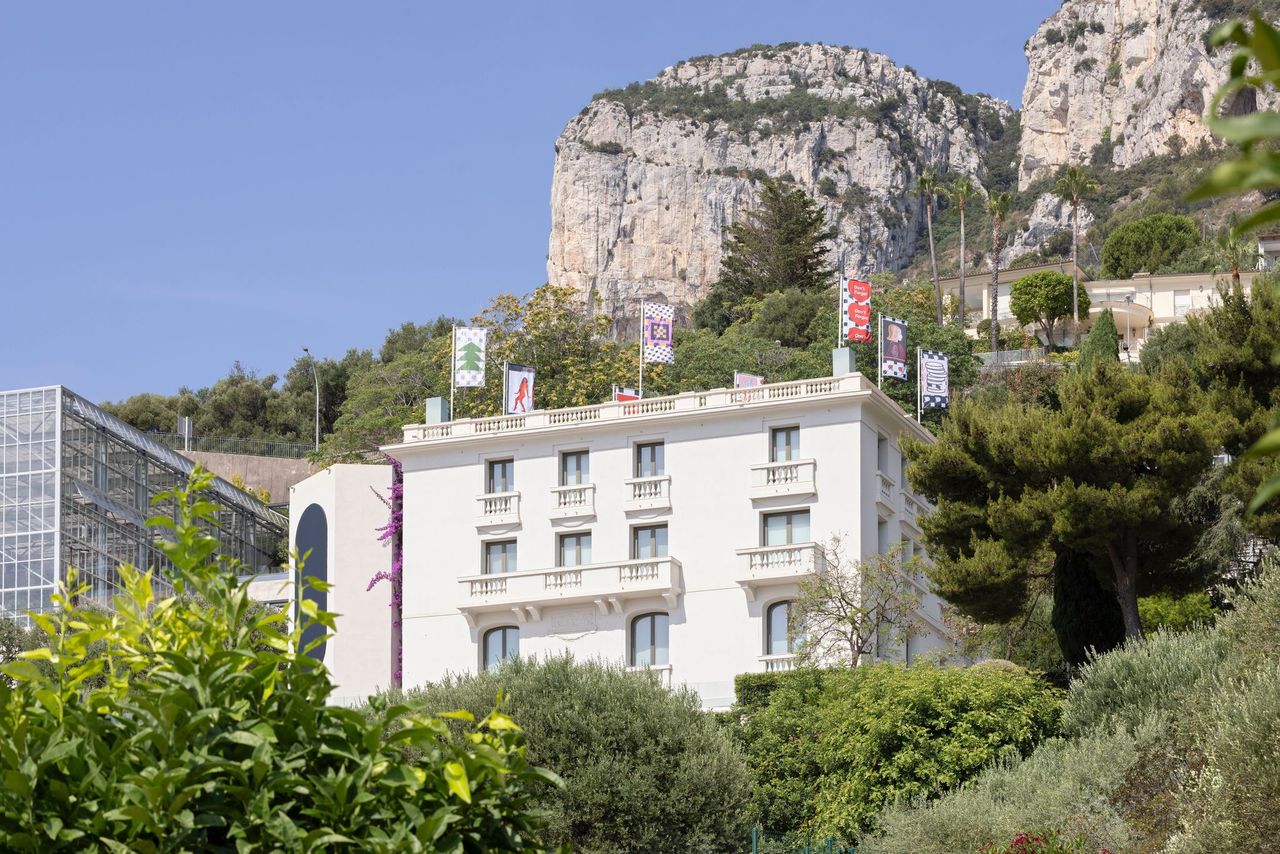
Have you ever visited Villa Paloma, one of the Nouveau Musée National de Monaco’s two venues? Situated not far from the Exotic Garden, this elegant villa was built in 1913 for the American Edward Dickerson and remained a private home for decades, until it was acquired by the Monegasque state in 1995. Following its renovation, it opened as a museum in 2010, while retaining the character of an old residence: its grand staircase, stained-glass windows, mosaics, columns and ceiling cornices. Its three floors provide 520 sq. m of exhibition space, while the garden surrounding the villa, designed by Octave Godard, a pupil of the celebrated French landscape architect Édouard André, descends in terraces towards the city and the sea, as if completing this delightful ensemble. It is here that the Nouveau Musée National de Monaco stages its major exhibitions of modern and contemporary art. (Yes, sixteen years have passed since the museum opened, but to anyone tempted to make a sarcastic remark about its still being called “Nouveau”, I would point out that Paris’s famous Pont Neuf, or New Bridge, is the oldest surviving bridge across the Seine in the French capital. Built in the sixteenth and seventeenth centuries, it has never changed its name!)
It is in this refined setting that the private collection of Patrice Pastor, a member of the third generation of one of Monaco’s leading business families, is being exhibited for the first time. The collection is astonishing: it spans every period of the artist’s career, from the 1920s to the 1960s, and encompasses painting, drawing and sculpture. Serving as a counterpoint to more than 160 works from the collection are ten non-Western art objects that belonged to Victor Brauner himself, on loan from the Musée d’Art Moderne et Contemporain de Saint-Étienne Métropole. They immediately prompted me to imagine a possible collaboration with one of my favourite Geneva museums, the Musée Barbier-Mueller.
In an interview published in the sumptuous catalogue accompanying the exhibition, Patrice Pastor explains that the painting by the Romanian artist was the only non-Impressionist work in his parents’ collection. “The painting intrigued me, so I began looking into the artist and became completely fascinated by his extraordinary life story. I continued researching him and following the auctions, and my interest in his work developed quite naturally. So I began buying his works. At first, I was particularly drawn to certain pieces from particular periods, but gradually my interests broadened: I wanted to explore his entire career and his whole body of work.”
Victor Brauner’s biography can indeed be called extraordinary. It contains enough incident for a gripping film. “Despite the weight of History that bore so heavily on Brauner, as it did on other foreign artists of the early twentieth century – something that unfortunately resonates with contemporary history – the painter continued his creative explorations throughout his life with exemplary tenacity and generous originality,” says the exhibition’s curator, Camille Morando, who is in charge of documentation for the modern collections at the MNAM-CCI/Centre Pompidou, where the Kandinsky Library holds Brauner’s archive.
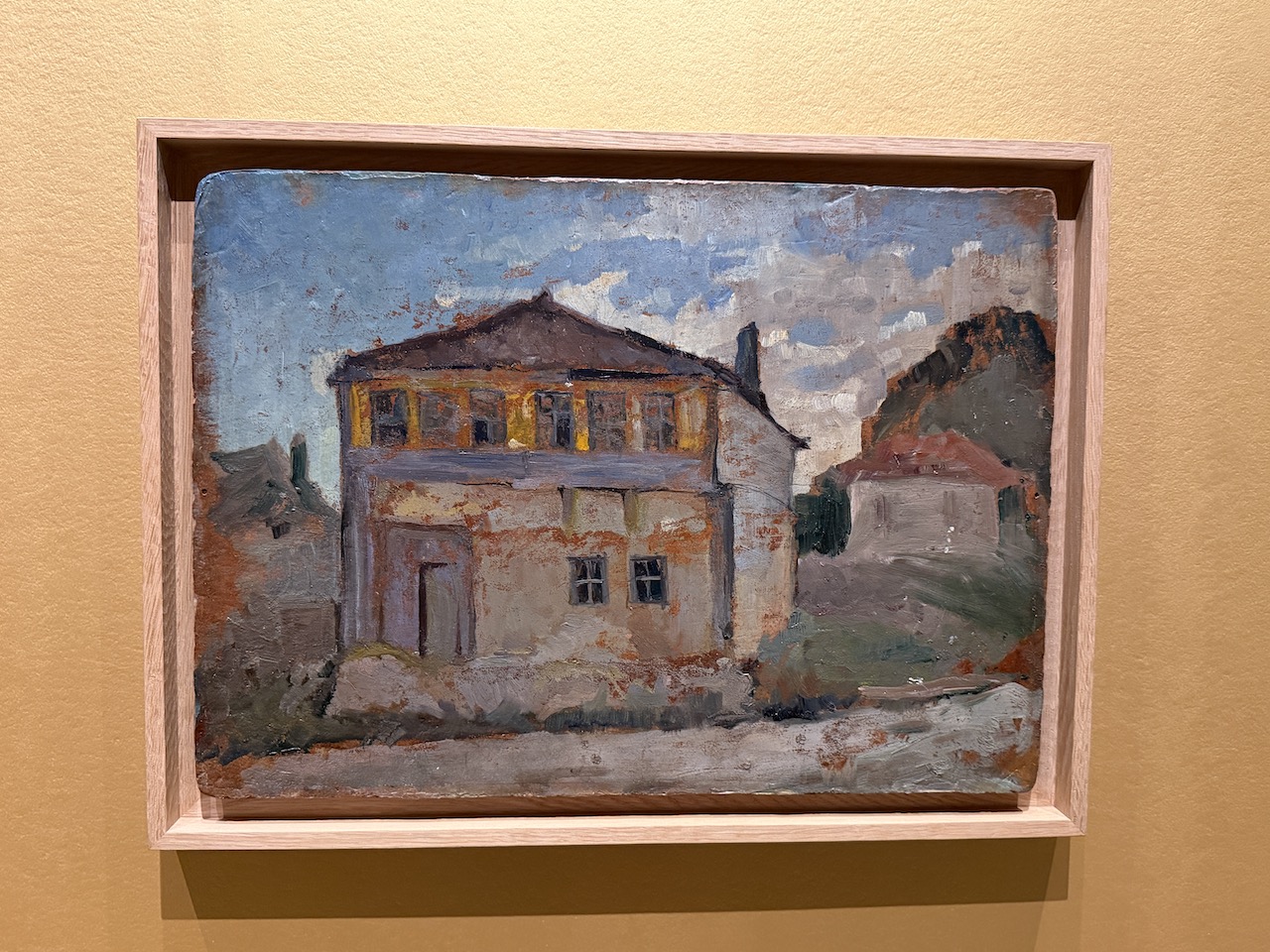
I shall not turn this article into a detailed chronicle of the artist’s life, but I would like to pause over a few episodes without which his art cannot be understood.
Victor Brauner was born into a Jewish family in Piatra Neamț, then part of the Kingdom of Romania, on 15 June 1903. Only two months earlier, one of the most notorious pogroms in the Russian Empire had taken place in Kishinev, some two hundred kilometres away, with the connivance of the authorities. In 1905, the entire family moved to Hamburg for five years. Brauner’s journals contain accounts of the events that made a deep impression on him during this period: the bloody peasant uprising of 1907 in Moldavia and the appearance of Halley’s Comet in 1910, which was interpreted as a portent of the end of the world.
After briefly returning to their homeland, the Brauners were soon forced to set out once again. In 1912, with the outbreak of war in the Balkans, they fled to Vienna, where Victor learnt German. The family settled in Bucharest in 1914. From a documentary shown at the museum in Monaco, I learnt that he did badly at school and repeatedly came close to being expelled. His instinct for going against the current was evidently innate. He was far more interested in the spiritualism that fascinated his father and had felt entirely at ease in an atmosphere of occultism since childhood. Victor Brauner taught himself to draw. According to his brother Harry, his first work, Lampadius in His Laboratory, dates from 1917.
He was expelled from the Bucharest School of Fine Arts, where he had studied for less than three years, for his opposition to academicism and the nonconformity of his own work. During the 1920s, he explored Expressionism, Constructivism and Dada, moving within the radical artistic and literary avant-garde.
Brauner first visited Paris in 1925. There he met Robert Delaunay and Marc Chagall and, according to his biographers, might have visited the exhibition Surrealist Painting, where he saw works by Giorgio de Chirico, Max Ernst, Man Ray, Joan Miró and Pablo Picasso…
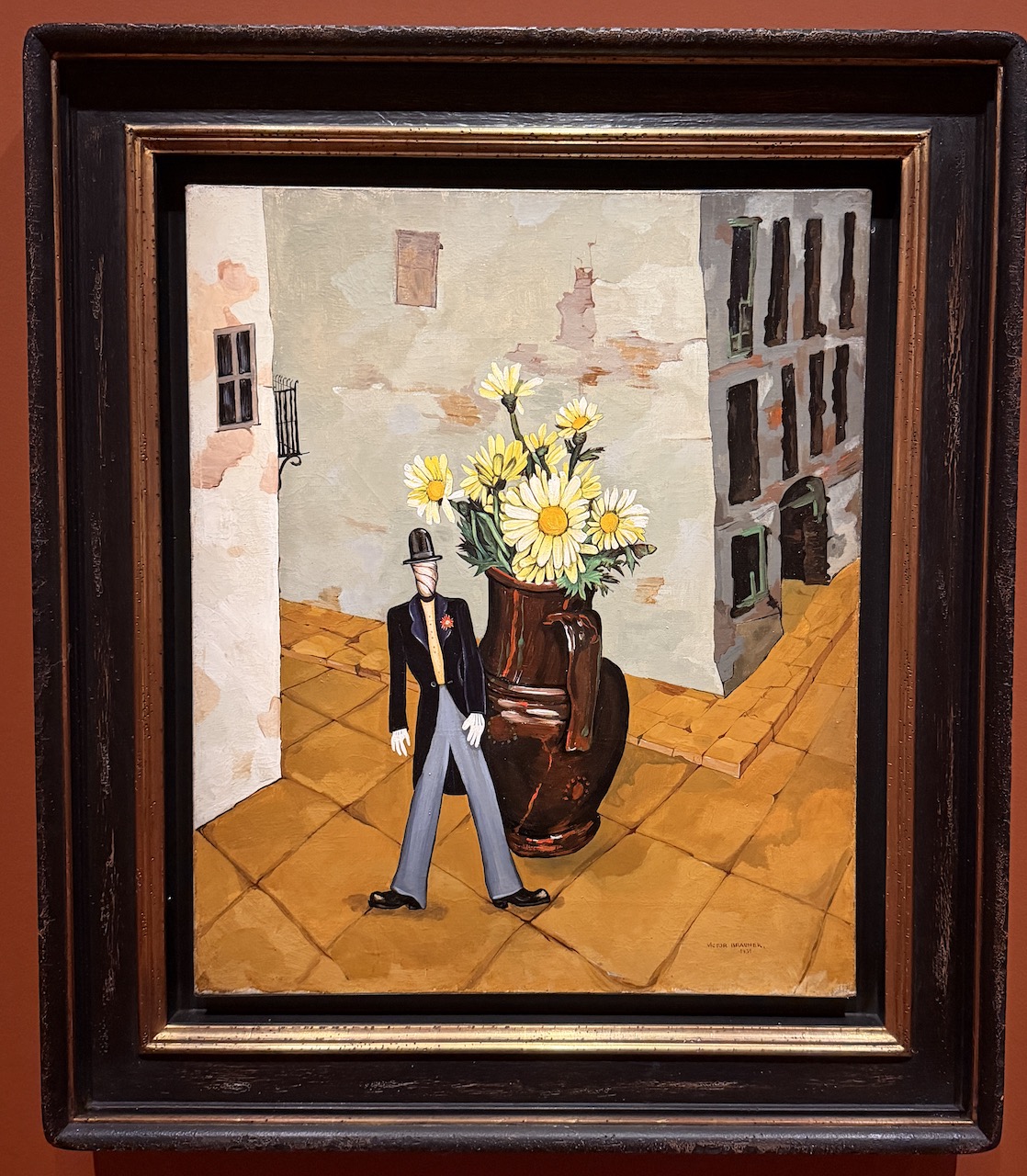
The next twelve years were divided between Paris and Bucharest. It was during this period, in 1931, that he painted the now famous Self-Portrait with an Enucleated Eye, depicting himself without his left eye. What happened seven years later seems almost impossible to believe. In August 1938, Brauner tried to break up a fight between the Spanish artists Óscar Domínguez and Esteban Francés and really did lose his left eye, struck by a glass thrown by Domínguez! From then on, this painting was seen as prophetic, while Brauner himself came to be regarded as a visionary artist, almost a clairvoyant. For the Surrealists, who believed in hidden connections and premonitions, the accident offered almost perfect confirmation of their theories. Brauner had formally joined their group as early as in 1933, and the preface to the catalogue of his first solo exhibition in Paris, in 1934, had been written by André Breton himself, author of the first Manifesto of Surrealism.
I would not venture to claim that Victor Brauner possessed the gift of clairvoyance, but the facts are there: the eye – open, closed, gouged out, single and not always where one would expect to find it – had already served him as a symbol of inner vision in his work. After the accident, the theme acquired a new depth. Physical loss seems to have compelled the artist to seek the ability to see the invisible.
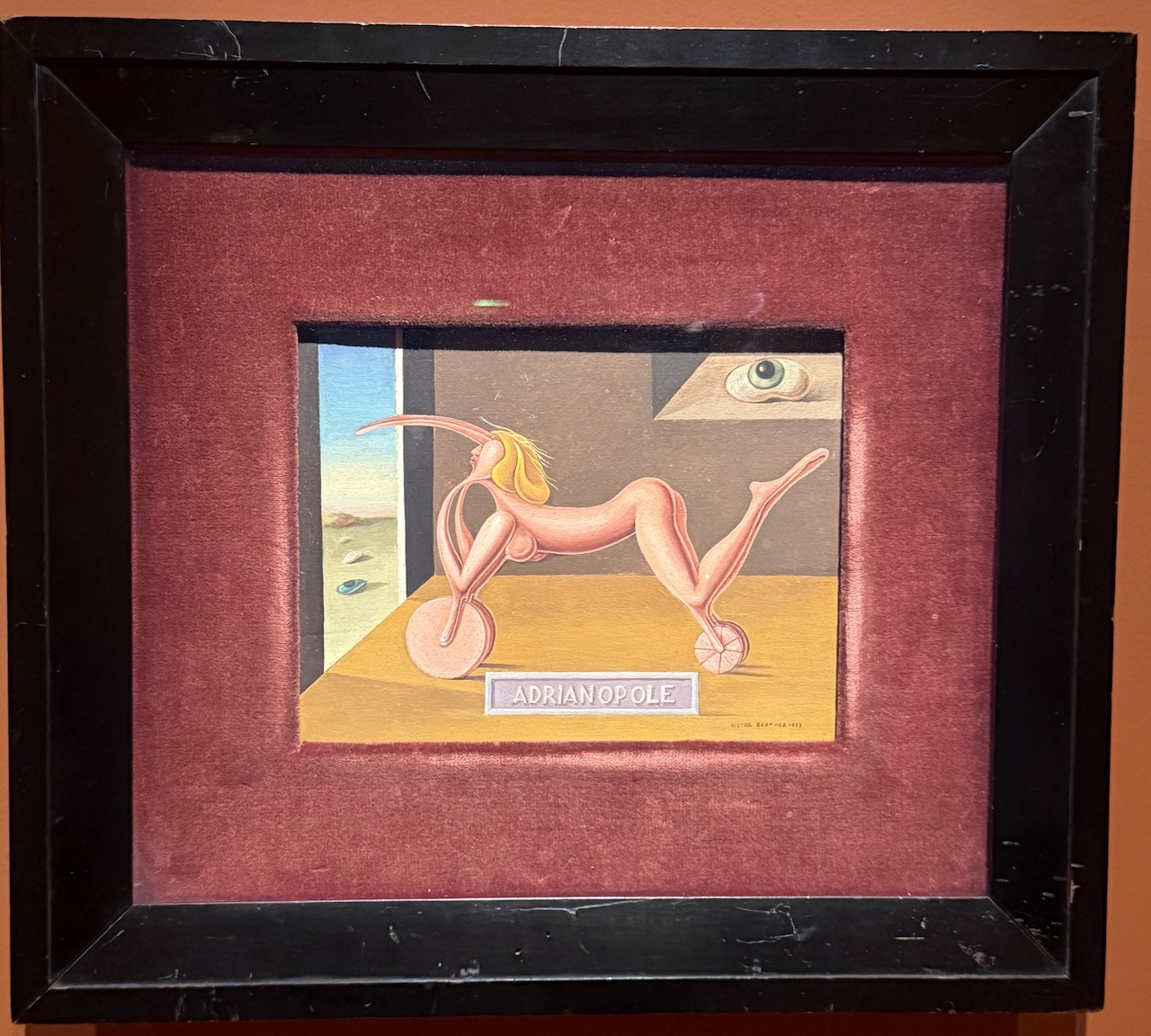
Naturally, my attention was also caught by this detail in the artist’s biography published in the exhibition catalogue: “Outraged by the second Moscow Trial in January, Brauner distances himself from Communism and secretly resumes painting small-format works.” Allow me a brief historical digression. The second Moscow Trial, also known as the Trial of the Seventeen, took place from 23 to 30 January 1937. Its official name was the Trial of the Parallel Anti-Soviet Trotskyist Centre. Seventeen prominent Bolsheviks and Soviet officials found themselves in the dock, among them Yuri Pyatakov, Karl Radek, Grigory Sokolnikov and Leonid Serebryakov. They were accused of acting on the instructions of the exiled Trotsky to organise sabotage and terrorist attacks; plotting to murder Stalin and other leaders; spying for Germany and Japan; and intending to overthrow Soviet rule, restore capitalism and cede parts of Soviet territory to foreign powers.
This show trial rested largely on confessions extracted through coercion, threats and torture. Thirteen defendants were sentenced to death and four to imprisonment; the latter subsequently died in custody as well. Those convicted in the case were not rehabilitated until decades later. The last of them, including Pyatakov, Radek and Sokolnikov, were cleared only in 1988. That same year, the charges were officially acknowledged to have been unfounded, and the evidence fabricated.
For Brauner, who had briefly become involved with the Communist movement in the mid-1930s, the Moscow Trial was a moment of awakening. In Stalin’s Soviet Union he saw not the promised liberation, but another form of totalitarian violence. In this respect, he proved more perceptive than many members of the French left-wing intelligentsia, who continued to believe in Stalin and the Soviet Union for years. Within the Surrealist circle, however, he was not alone. In July 1935, twenty-six Surrealists led by André Breton published the declaration When the Surrealists Were Right (Du temps que les surréalistes avaient raison), directed against Stalinist policy. Moreover, Breton described the staging of the first Moscow Trial in 1936 as “an abject police operation”. As for the “small-format works” created during this period, look out for the mysteriously titled Slightly Warm or Adrianople, painted in 1937 and now displayed in Monaco. It really is something!
Victor Brauner might have continued to divide his life between his homeland and Paris had “external circumstances” not intervened once again: “In response to the political situation (the royal decree of 21 January requires Jews to reapply for Romanian citizenship) and given the state of the artistic scene in Romania, he leaves his country.” In June of the same year, he settled in Paris and took part in the 50th Salon des Indépendants at the Grand Palais with his 1934 painting We Are Betrayed, as well as in other exhibitions. Life seemed to be getting back on track. But then… the Second World War began, and France fell under German occupation.
During the war, Brauner found himself in an exceptionally dangerous position. He was Jewish, a foreigner without reliable papers and an opponent of fascism. He failed to reach the United States despite efforts by the American Emergency Rescue Committee (ERC) and Varian Fry, the American journalist who organised one of the best-known networks for rescuing refugees trapped in Vichy France in Marseille.
Victor Brauner went into hiding in the south of France and obtained a false identity card on 16 January 1941. Now imagine this dizzying succession of events and consider the dates. On 2 April, Brauner celebrated Max Ernst’s fiftieth birthday with Peggy Guggenheim in Marseille. A week earlier, André Breton, Anna Seghers, Claude Lévi-Strauss, Victor Serge and other friends and acquaintances had left the same city for Martinique. On 19 April, under the decree of 4 October 1940 concerning the status of Jews, Brauner was ordered to reside in Saint-Féliu-d’Amont, in the Pyrénées-Orientales. Then, on the night of 23–24 July, a character named Congloméros was born: a fantastical creature invented by Brauner that united a woman and two men in a single body, its name formed from “conglomerate” and “Eros”. Brauner made a sculpture of Congloméros in 1945, now held by the Musée d’Art Moderne de Paris.
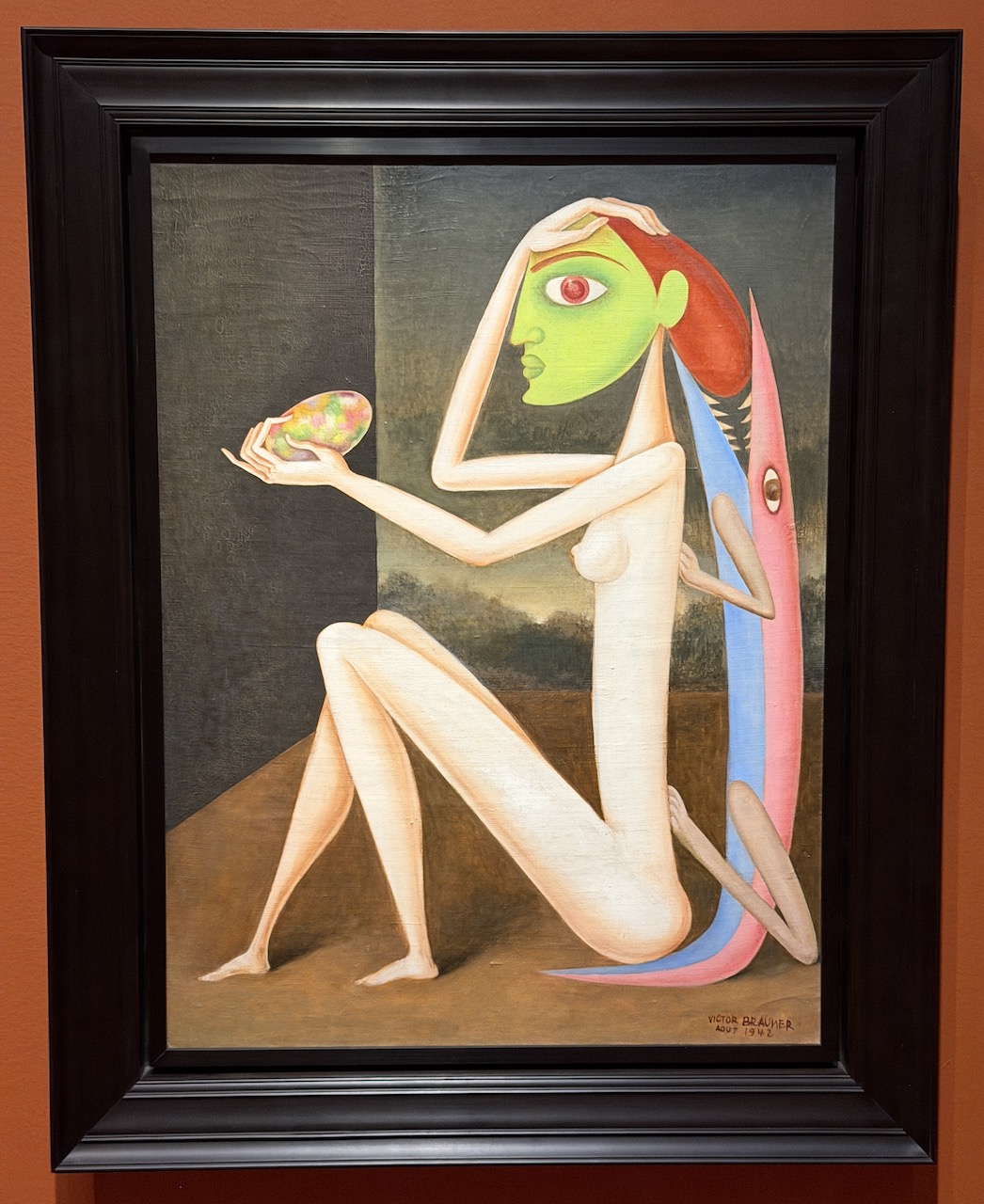
It was during these years that, as if returning to childhood, he became particularly absorbed in alchemy, tarot, the Kabbalah and spiritualism. A shortage of materials led him to work with wax and various found objects. In this way, “external circumstances”, or simply necessity, brought about an important technical renewal in his art. Without knowing the story, one would never guess that the magnificent “wax paintings”, so generously represented in the Monaco exhibition, were created in such straitened circumstances.
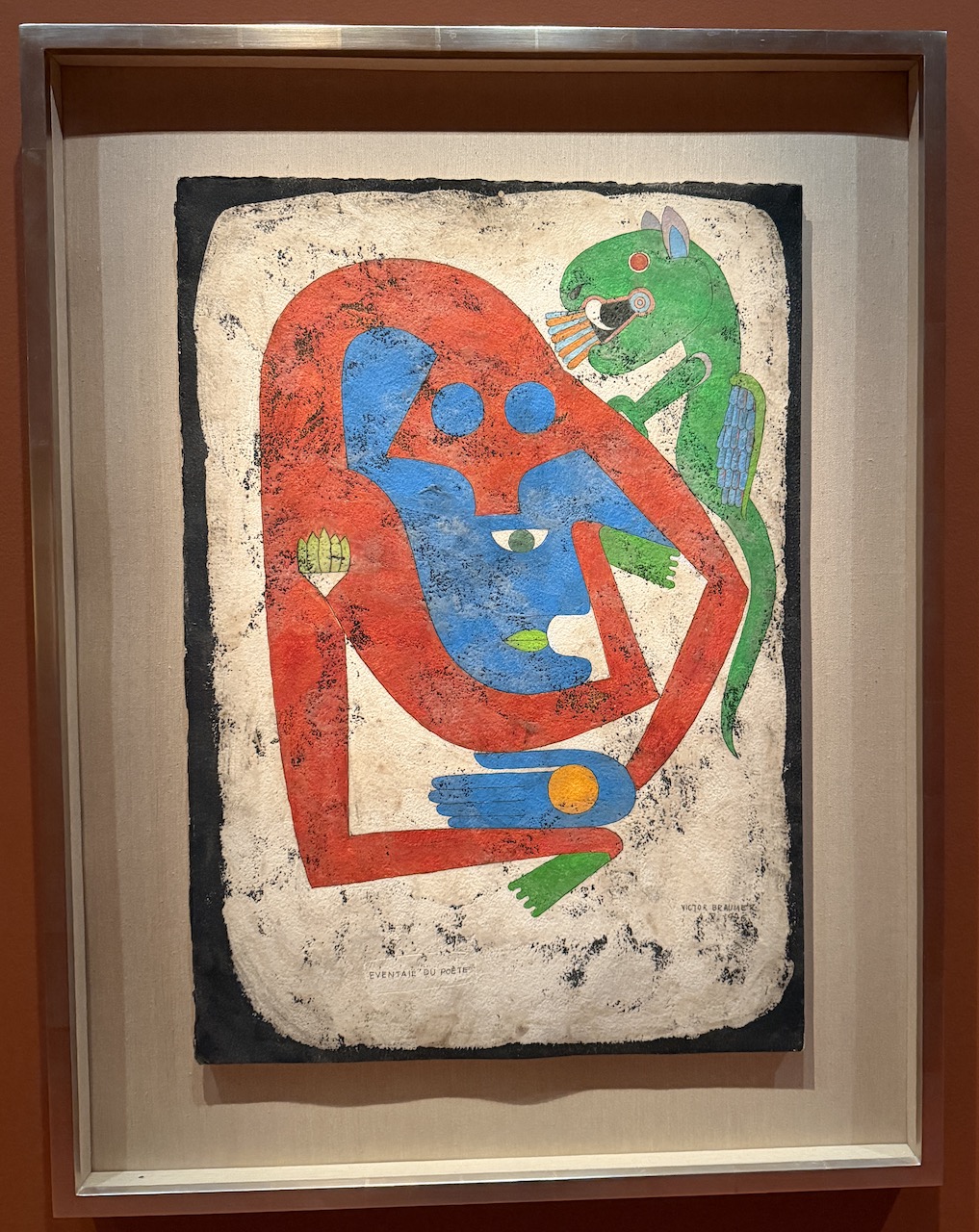
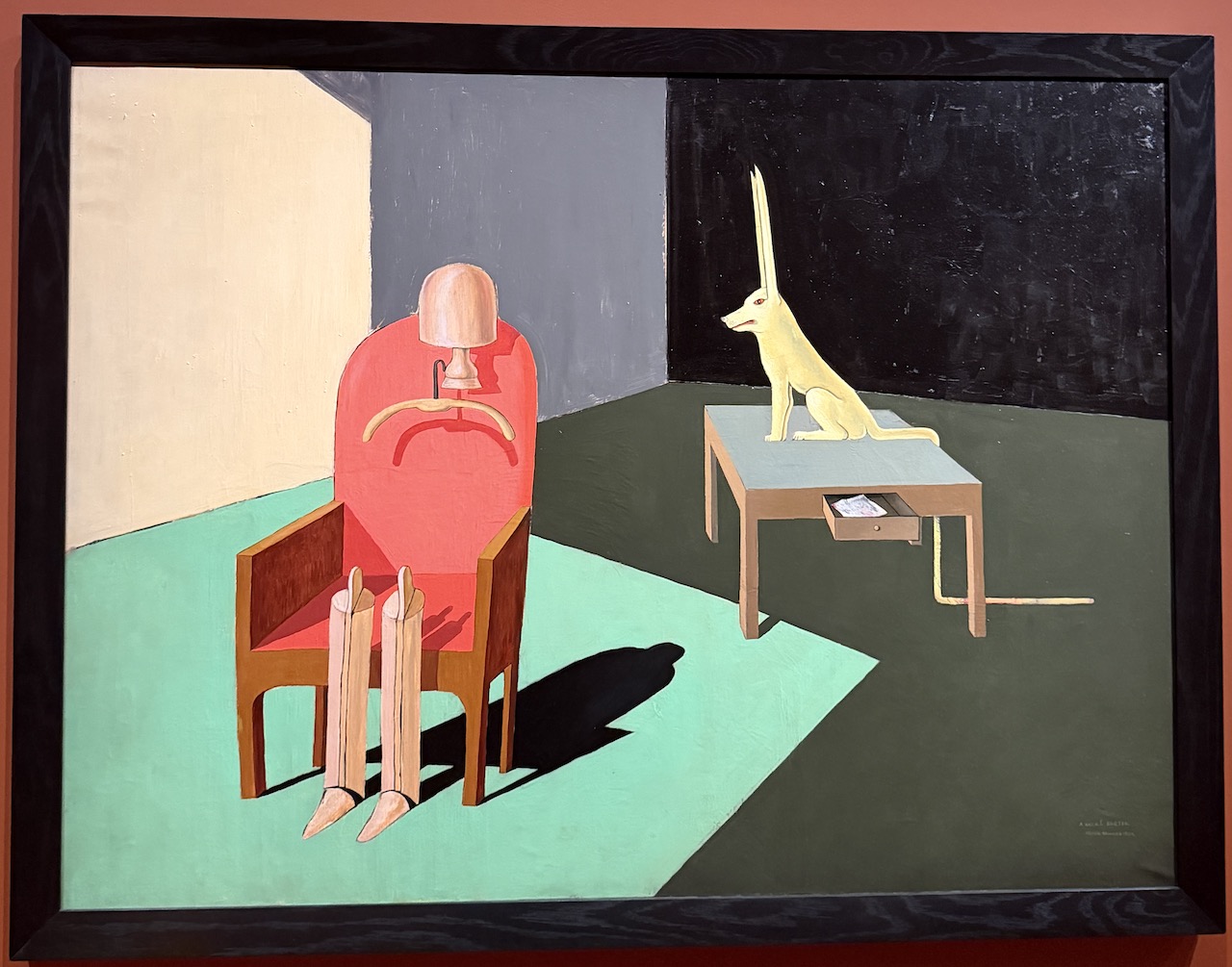
But the renewal of Brauner’s art was not merely technical. The variety of his subjects is astonishing. Human, animal and mechanical hybrids appear in turn or all at once; one-eyed and two-faced creatures; women who are goddesses, witches, mothers and monsters; totemic figures that recall both ancient idols and children’s drawings; strange anatomical constructions in which bodies open up, merge and turn into signs; symbols of the sun, the moon, the eye, the serpent and the double…
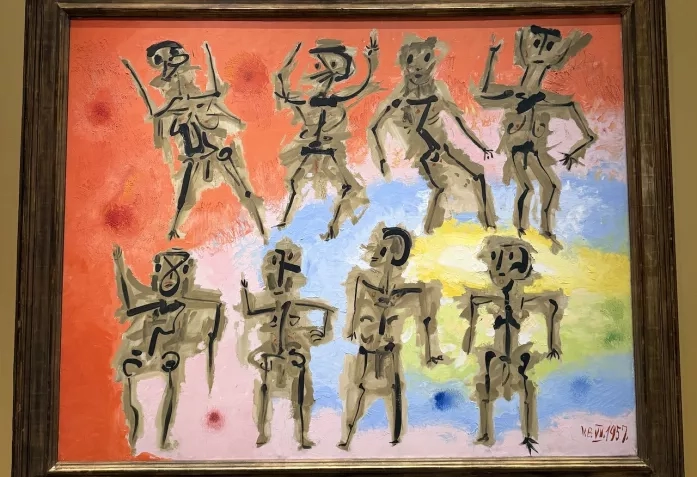
His paintings are by no means always dark. They contain humour, wordplay, deliberate naivety and brilliant colour. Sometimes they resemble an unfamiliar deck of tarot cards, sometimes illustrations to myths of his own invention. But all this magic is not decorative exoticism. It is a means of resisting fear and chaos. In the documentary already mentioned, Brauner says that every artist creates a world of their own in which to hide from the real one. His fantastical creatures sprang not from carefree flights of imagination, but from the real experience of exile, war, physical injury and constant danger. It is no coincidence that the first work to greet visitors to the exhibition is a 1957 painting entitled Panic. Beneath the fairy-tale quality of his paintings, one can almost always sense an undercurrent of anxiety, even when it is expressed with humour, as in the 1951 work Space for Worries. An attentive visitor encountering Brauner for the first time may discern something of Dalí or Magritte, Tanguy or De Chirico in his work, but can hardly doubt that the artist created a visual language entirely his own and instantly recognisable.
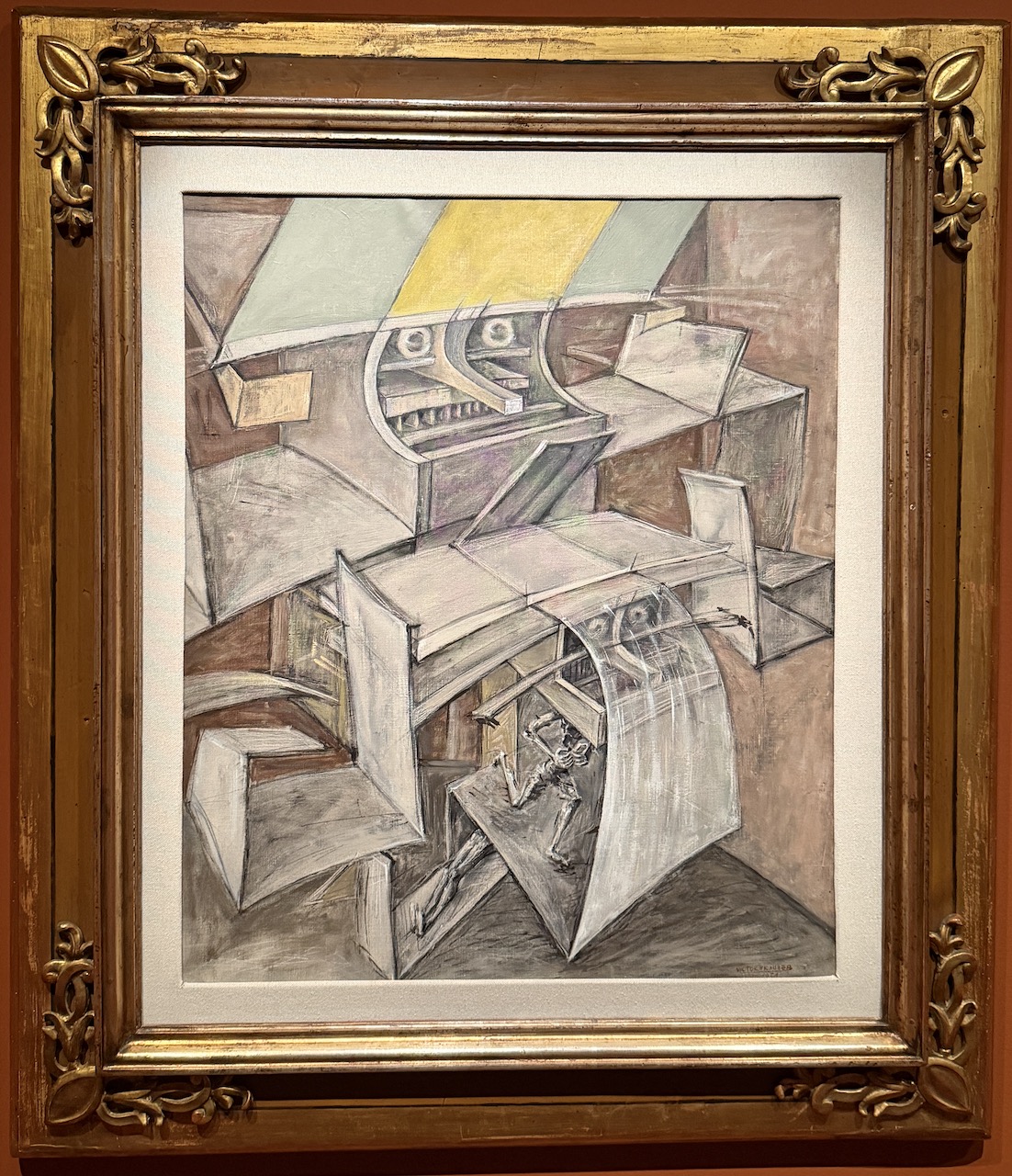
One might have thought that the end of the war and the liberation of France would bring an end to the problems facing an artist whose paintings were by then being shown at prestigious venues throughout the world. But no. “From late May until 27 August, Brauner stays in Switzerland in response to threats of expulsion affecting Romanians living in France without legal status. He resides first in Zurich, then in Ronco sopra Ascona with his friends Sylvie and Hans-Rudy Stauffacher.” How many talented people forced to leave their native countries have endured the humiliation of such “irregular status”, and how many of them have never succeeded in escaping it?
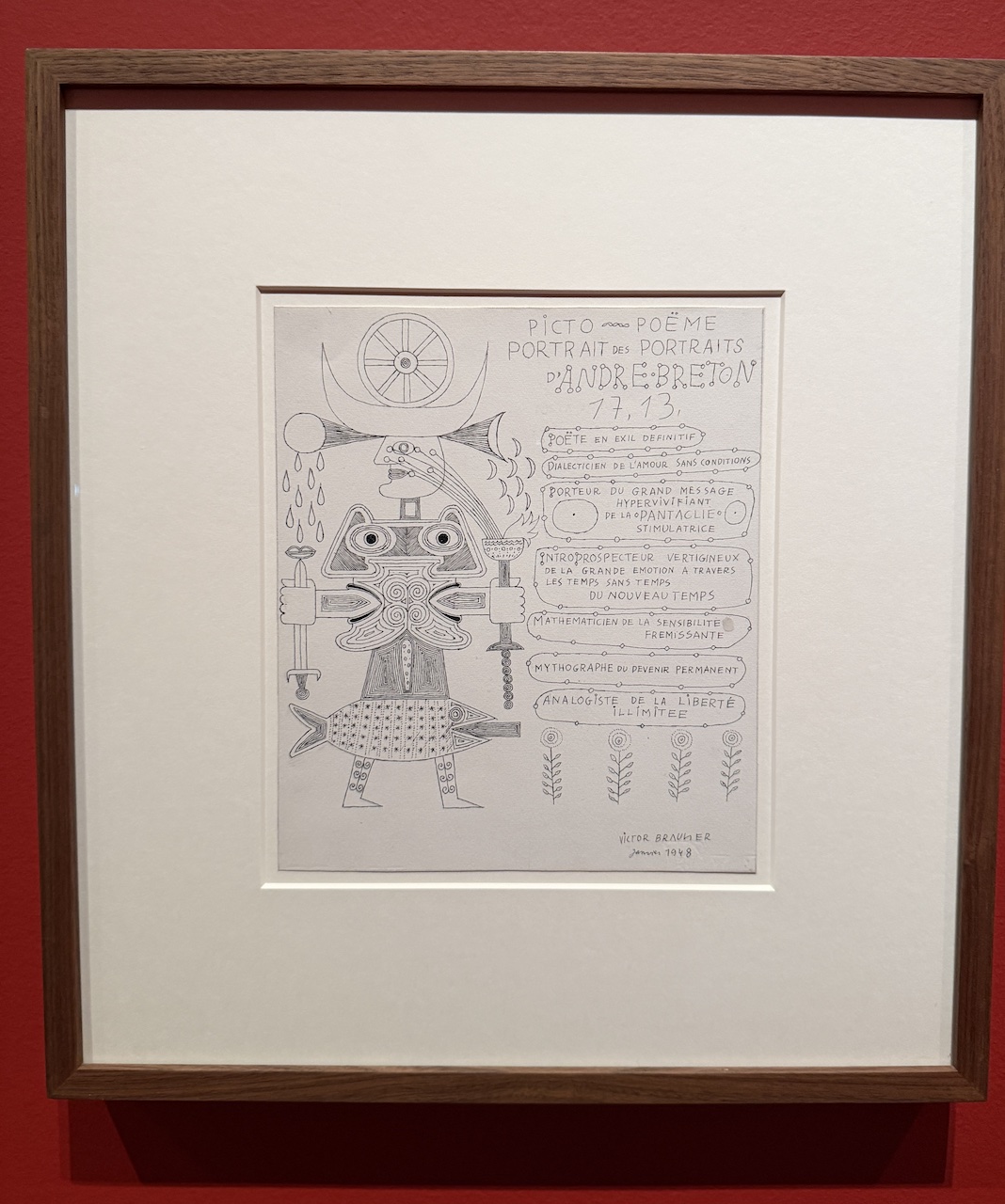
That same year, in 1948, Brauner’s old friend André Breton expelled him from the Surrealist group, ostensibly because of a conflict between other members in which Brauner had taken the “wrong” side. In fact, Brauner had refused to sign the document expelling the Chilean artist Roberto Matta from the group “for intellectual disqualification and moral ignominy”. Matta had had an affair with the wife of the artist Arshile Gorky, and Breton regarded him as indirectly responsible for Gorky’s suicide. Caught between two friends, Brauner chose to defend the one whom the others had rejected. Yet only a few months earlier, in January 1948, he had created an astonishing picto-poem entitled Portrait of the Portraits of André Breton. It is a portrait of extraordinary reverence. Through the invented words Pantaclie and introprospector, Brauner conjures up a man exploring the innermost depths of the self. The handwritten text is easily legible on the sheet:
Poet in final exile.
Dialectician of unconditional love.
Bearer of the great hyper-vivifying message of the stimulating Pantaclie.
Dizzying introprospector of the great emotion, passing through the timeless times of the new time.
Mathematician of quivering sensitivity.
Mythographer of perpetual becoming.
Analogist of limitless freedom.
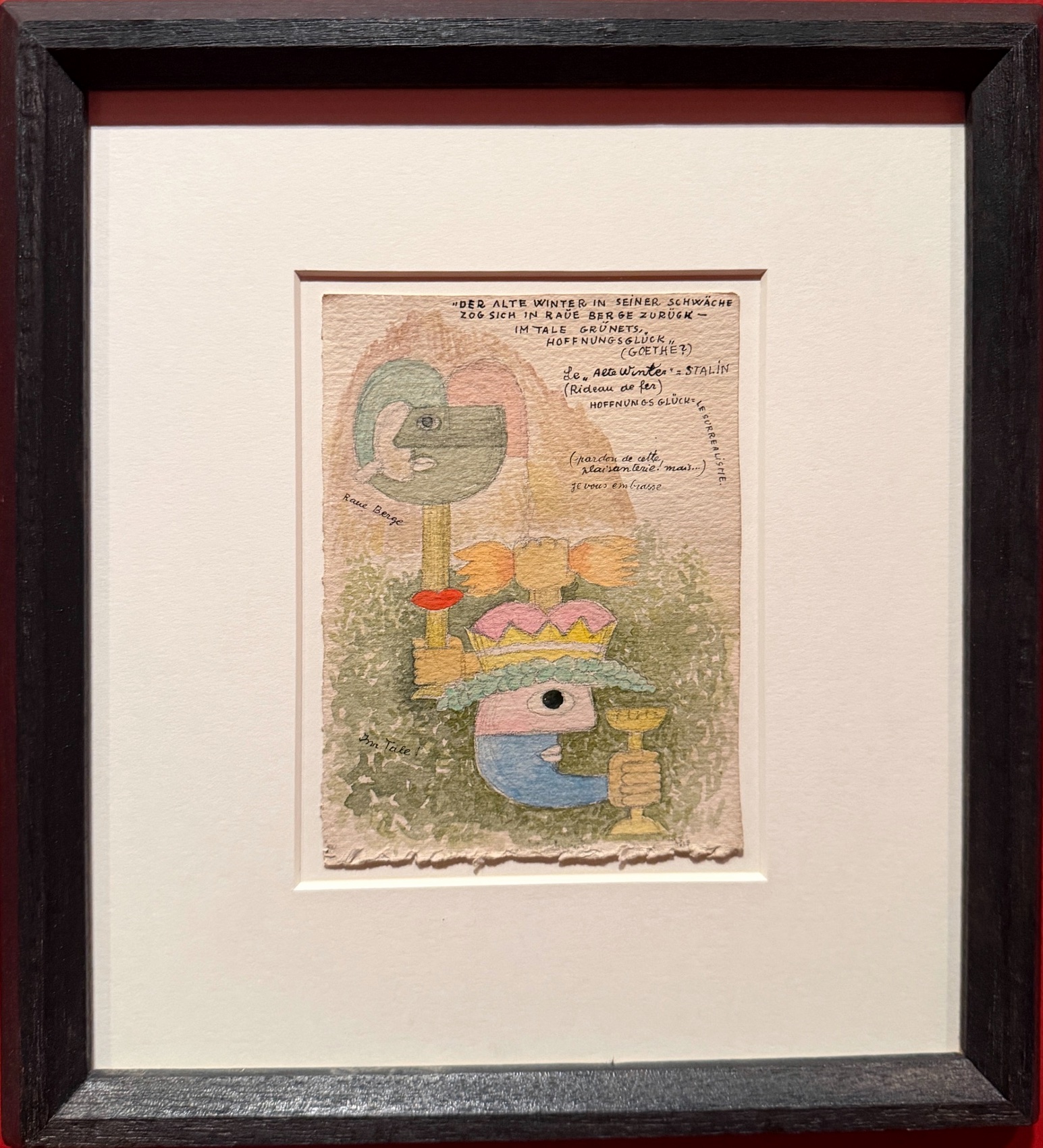
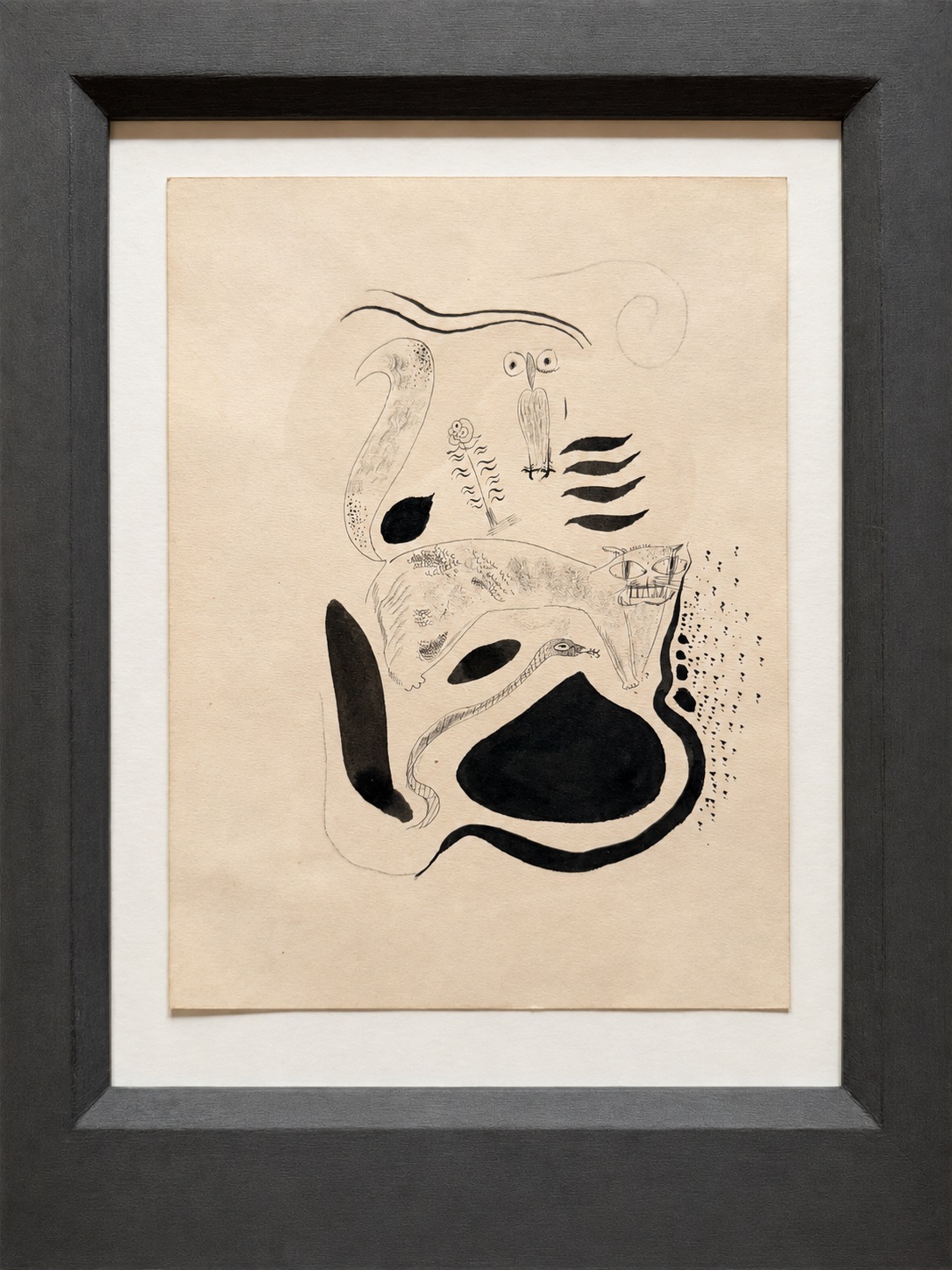
Beside this portrait, the Monaco exhibition presents an untitled work also dating from 1948, the year in which the State of Israel was founded and the Soviet state launched its antisemitic campaign. The creature depicted in it may be seen as a two-faced Janus. In the upper right-hand corner, the artist wrote these lines in German:
“Der alte Winter in seiner Schwäche
zog sich in rauhe Berge zurück –
im Tale grünet’s,
Hoffnungsglück”
(Goethe?)
These are slightly rearranged lines from the “Easter Walk” in Part One of Goethe’s Faust:
Im Tale grünet Hoffnungsglück;
Der alte Winter, in seiner Schwäche,
Zog sich in rauhe Berge zurück.
Literally:
“In the valley, the happiness of hope grows green;
the old winter, weakened,
has retreated into the rugged mountains.”
Below, Brauner supplies his own political interpretation:
Le “Alte Winter” = STALIN
(Rideau de fer)
HOFFNUNGSGLÜCK = LE SURRÉALISME.
In other words:
The “old winter” is STALIN
(the “Iron Curtain”),
while the “happiness of hope” is SURREALISM.
He also labelled individual parts of the image Raue Berge, “rugged mountains”, and Im Tale, “in the valley”.
In the centre, he wrote:
(pardon de cette plaisanterie ! mais…)
je vous embrasse
That is: “Forgive me for this joke! But… I embrace you.”
The inscriptions transform this enigmatic composition into a political allegory and suggest how it may be read. Stalin is identified with an enfeebled old winter; beside him appears the image of the Iron Curtain, while Surrealism is named as hope. And all of it is filtered through Goethe.
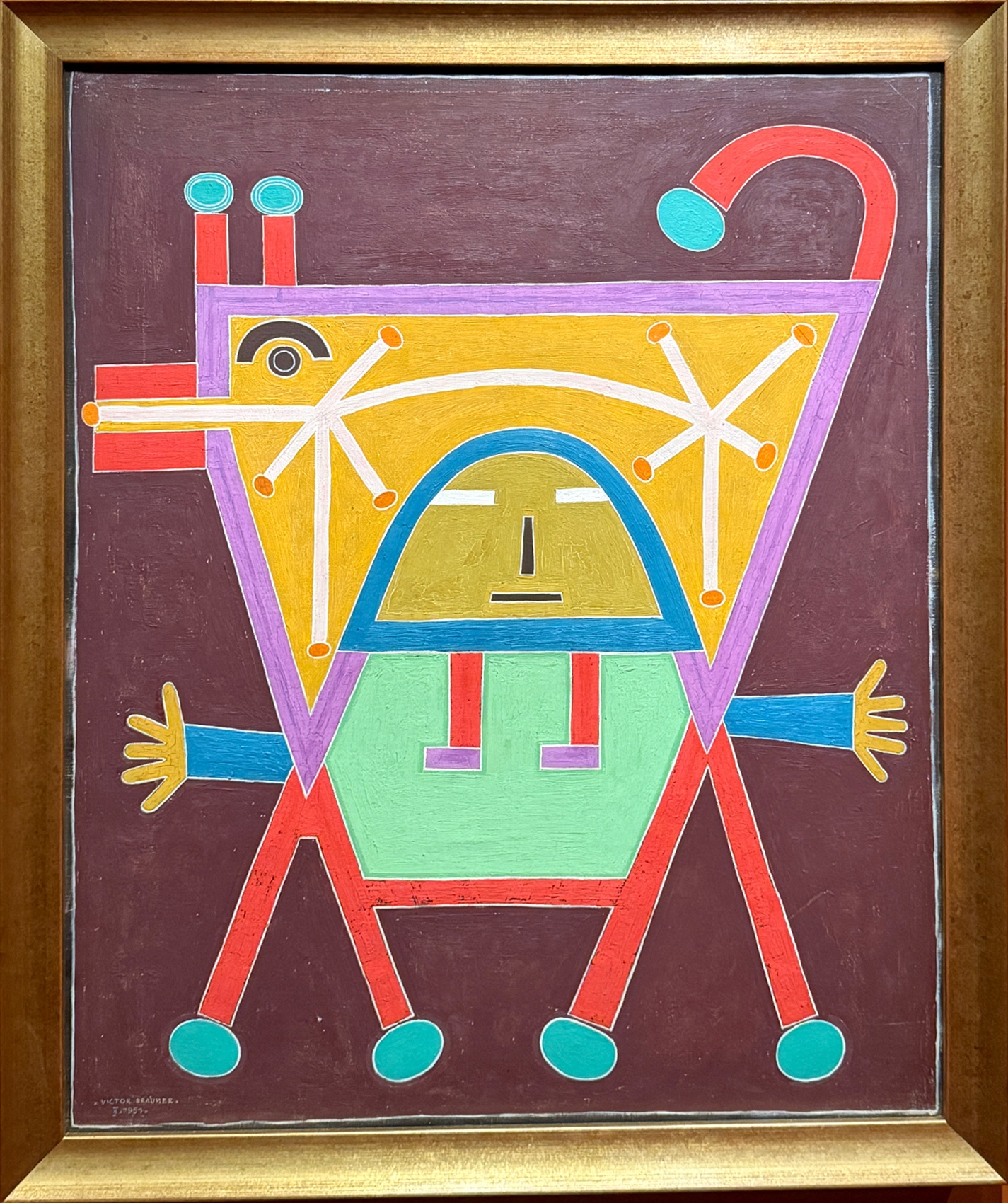
I do not know how deeply Victor Brauner was affected by his exclusion from the Surrealist group: one must admit that the whole affair irresistibly recalls expulsion from the Communist Party of the Soviet Union for “immoral conduct”. Yet the works of the 1950s and 1960s testify to the breadth of his artistic explorations: from The Withdrawn series to drawings made collaboratively with Roberto Matta, from representations of human anatomy to an imaginary bestiary populated by mythical animals reminiscent of ancient totems. It is impossible not to notice that his later works became more decorative, brighter and more monumental.
… It was only on 12 June 1963, less than three years before his death, that Victor Brauner finally obtained French citizenship. His application for naturalisation was supported by René Char (1907–1988), one of the greatest French poets of the twentieth century, who had been close to the Surrealists in the early 1930s, joined the Resistance during the war and helped Brauner while he was in hiding. It was also supported by Jean Cassou (1897–1986), a French writer, art critic, translator and museum administrator, likewise a member of the Resistance, who became the first director of the Musée National d’Art Moderne in Paris after the war.
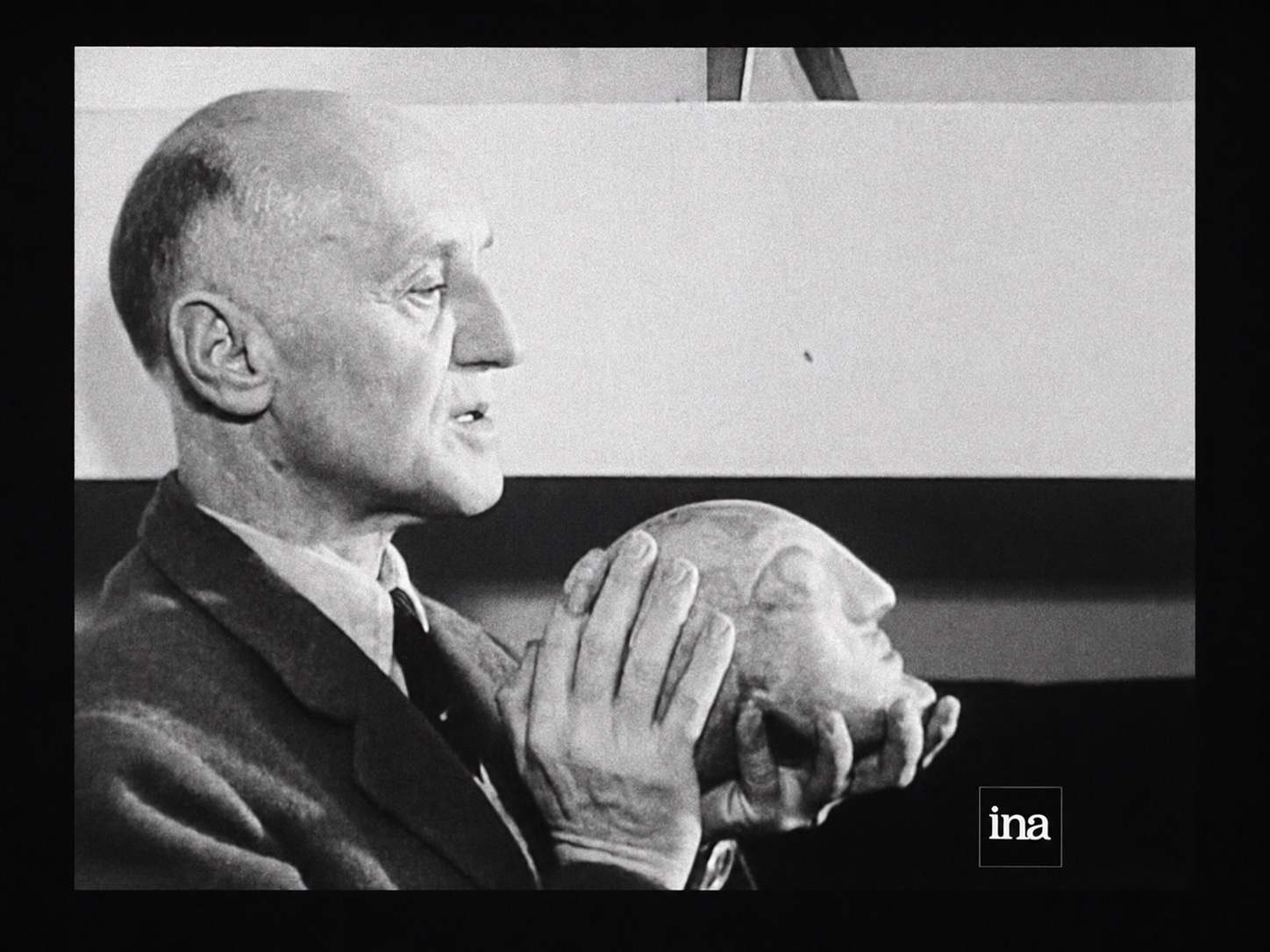
Victor Brauner died in Paris on 12 March 1966 after a long illness. His grave in Montmartre Cemetery is adorned with the sculpture Sign, created during the war, and bears as its epitaph a line from his notebooks: “Painting is life, real life, my life.”
From June to October that same year, at the 33rd Venice Biennale, France, the country whose citizenship he had sought for so long, presented his work posthumously and devoted an entire room to it. Among the paintings on display was this work from 1963, entitled Encounter at the Most Infinitesimal Point in Time.
The title of the exhibition, The Magical Adventure, refers to something Victor Brauner wrote in 1941: “Every drawing and every discovery will be an extraordinary unknown place, every painting will be an adventure.”
You have until 3 January 2027 to embark on this adventure yourself. You can see the photographs that did not make it into the article here. But a virtual gallery is no substitute for a real museum!




Federica Brunelli September 04, 2026
Sikorsky September 04, 2026