
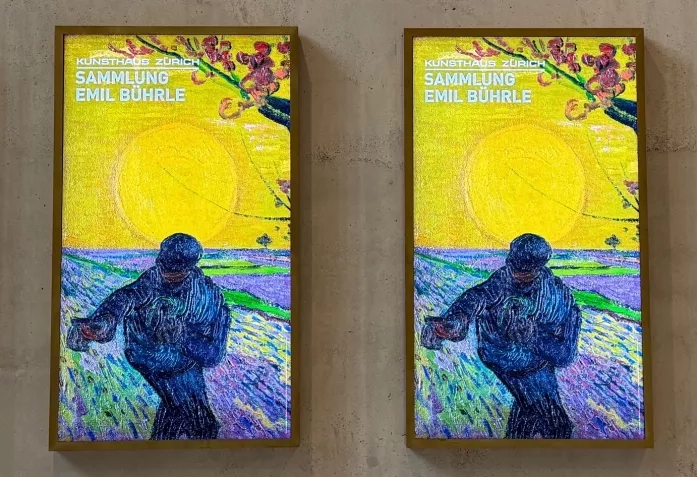
I have been following the story of the Bührle collection for more than fifteen years. I have written about it several times and have admired its masterpieces both in the new building of Kunsthaus Zürich and at the Fondation de l’Hermitage in Lausanne before that. Let me recall that in 1960, Bührle’s heirs transferred around a third of the collection to the E. G. Bührle Foundation and opened it to the public in a villa on Zollikerstrasse in Zurich. Since 2021, these 205 works have been on long-term loan to Kunsthaus Zürich, while the rest have remained in private hands. From 2021 to 2023, the works were displayed in a traditional art-historical presentation. This was followed, from 2023 to 2025, by the critical thematic exhibition A Future for the Past. The Bührle Collection: Art, Context, War and Conflict, which presented a range of perspectives and interpretations.
I had not planned to return to this subject until I received a message from Kunsthaus Zürich announcing that the museum would present almost all of the Bührle treasures in a classical “Petersburg hang”. What exactly is this “Petersburg hang” that caught my attention?
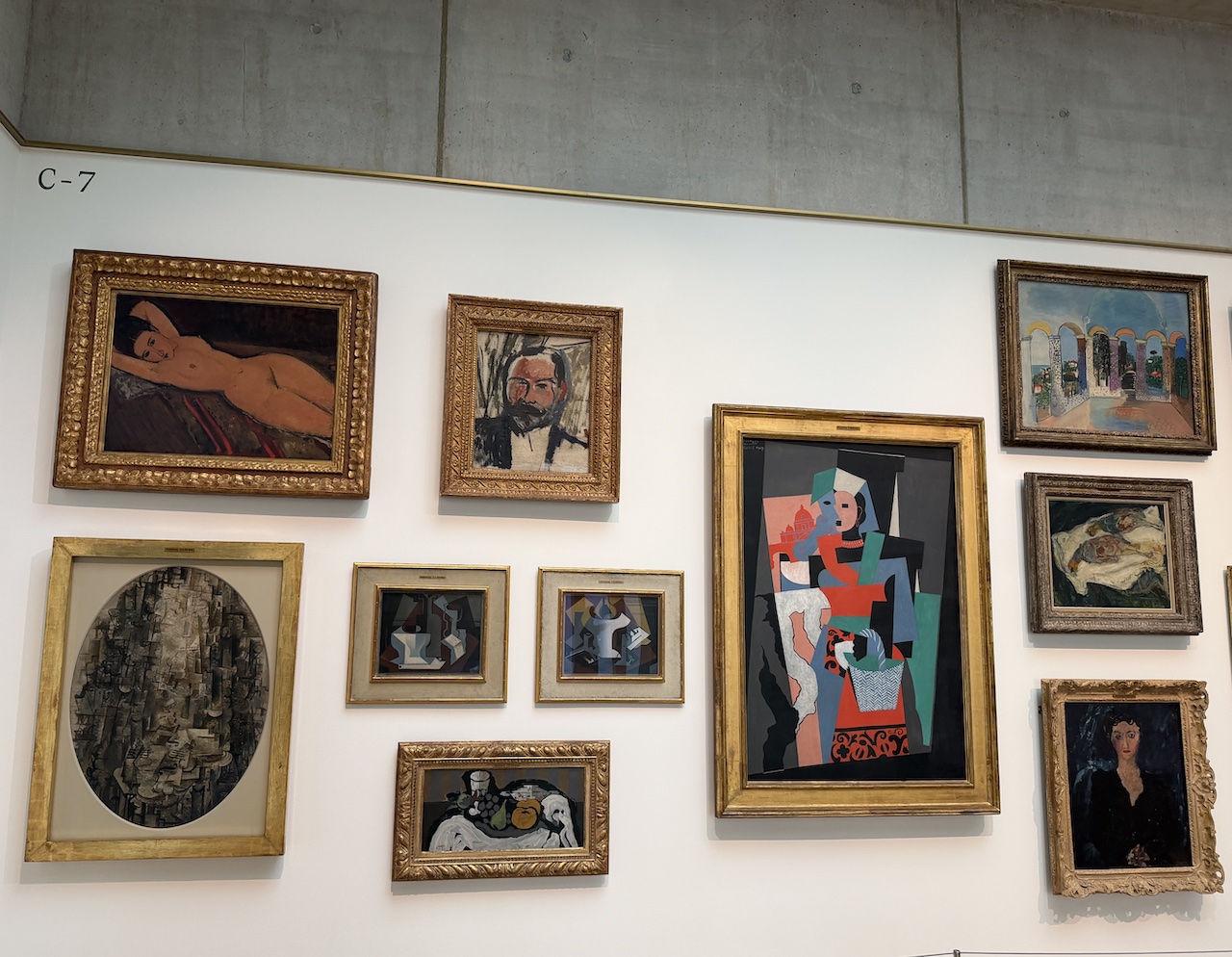
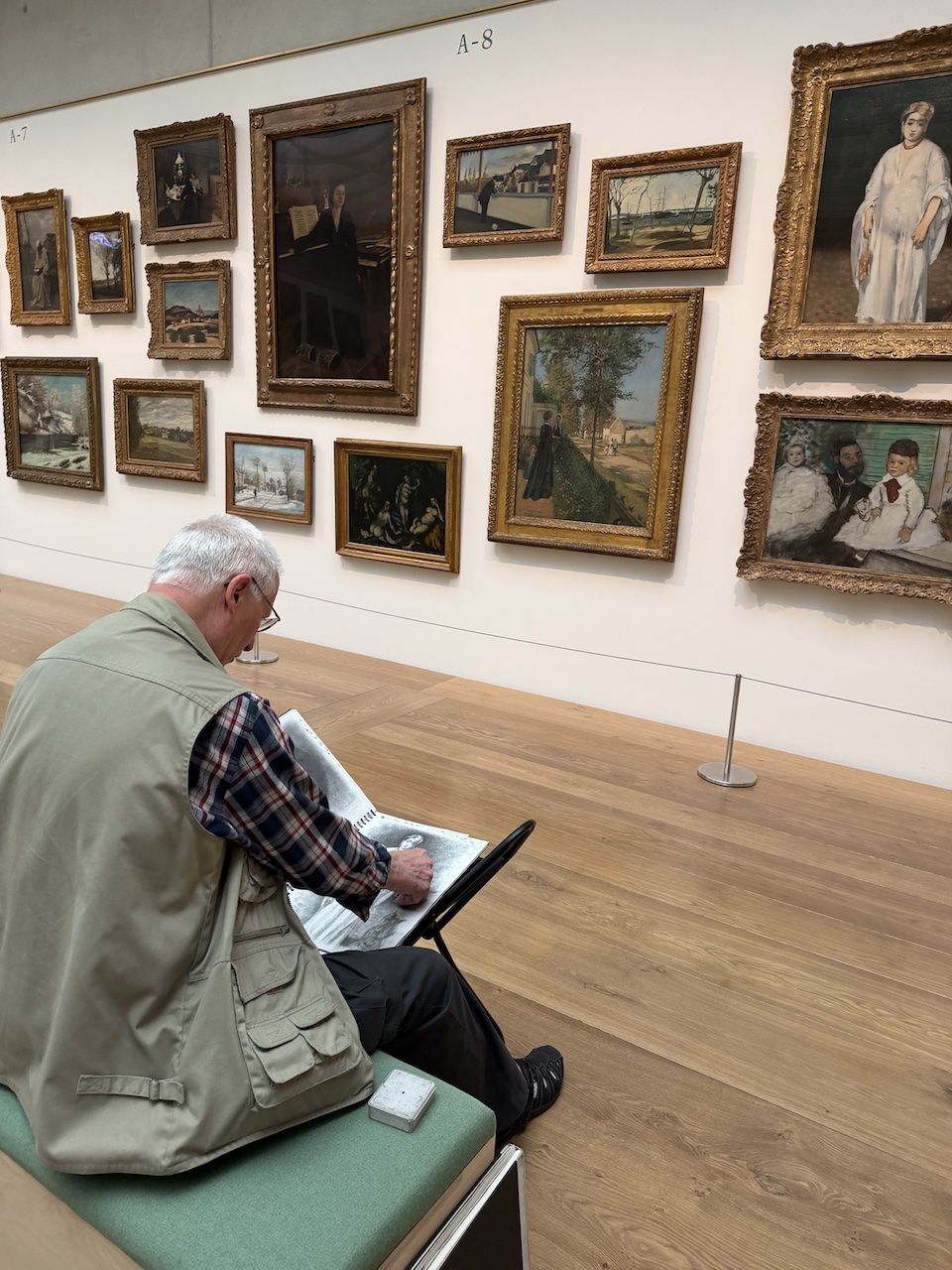
It turns out that this is not a strictly scholarly term, but rather a cultural-historical one linked to exhibition practices in the nineteenth century, above all in imperial Saint Petersburg, notably at the Hermitage. Saint Petersburg was perceived as one of the key centres of academic museum culture and not only established its own visual tradition of this type of display, but also gave rise to a localised term in German- and French-speaking museum practice. It should be noted that this type of hang was not unique to Saint Petersburg. It also existed in Paris, in the Salons of the Academy, which gave rise to the English term “salon hang”, as well as in London, at the Royal Academy, and in Vienna, Berlin and other capitals. In practice, the “Petersburg hang” (fr. accrochage à la pétersbourgeoise) is a way of hanging paintings very densely, often in several rows from floor to ceiling, with almost no space between them, creating the effect of a visual whole rather than encouraging the individual contemplation of each work.
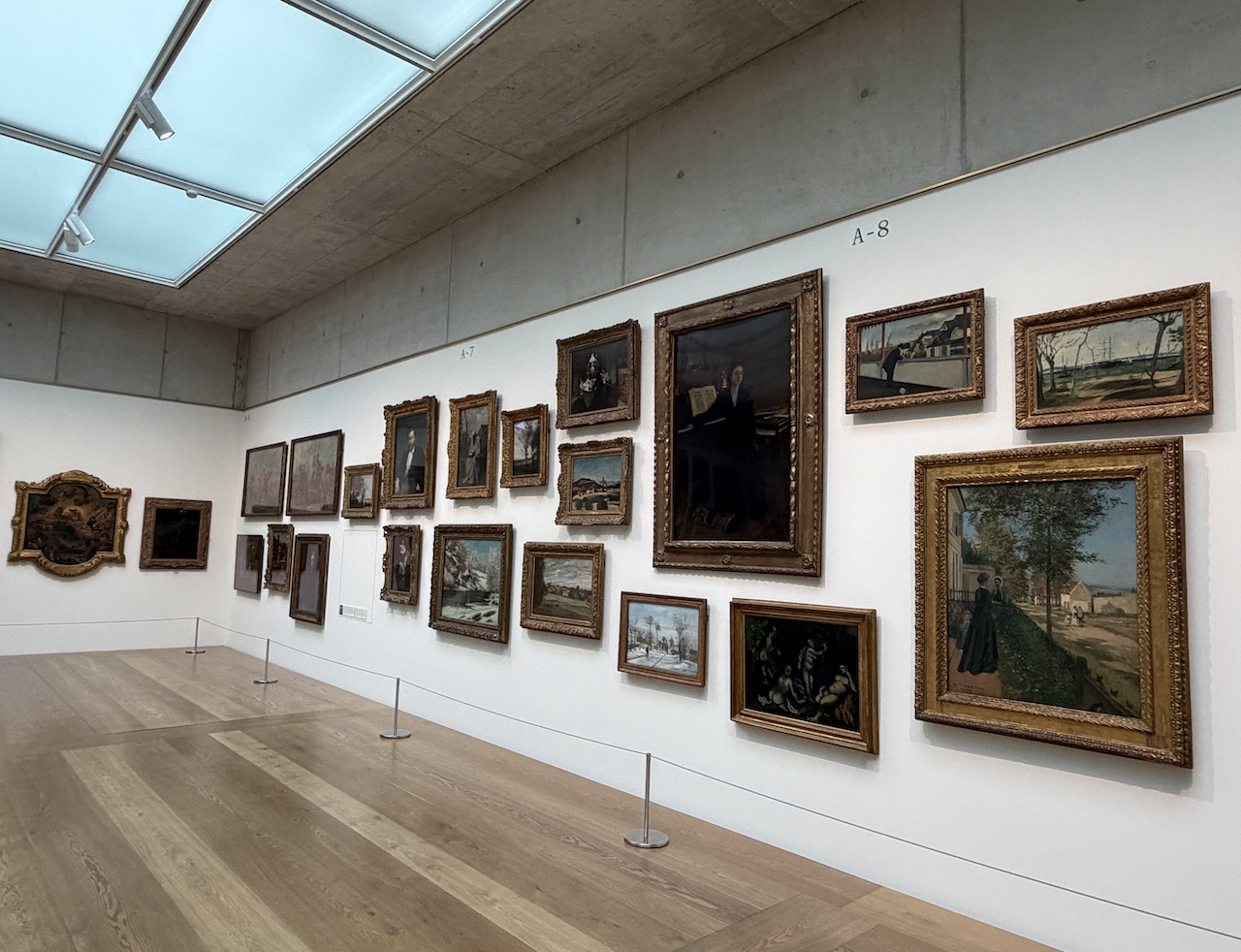
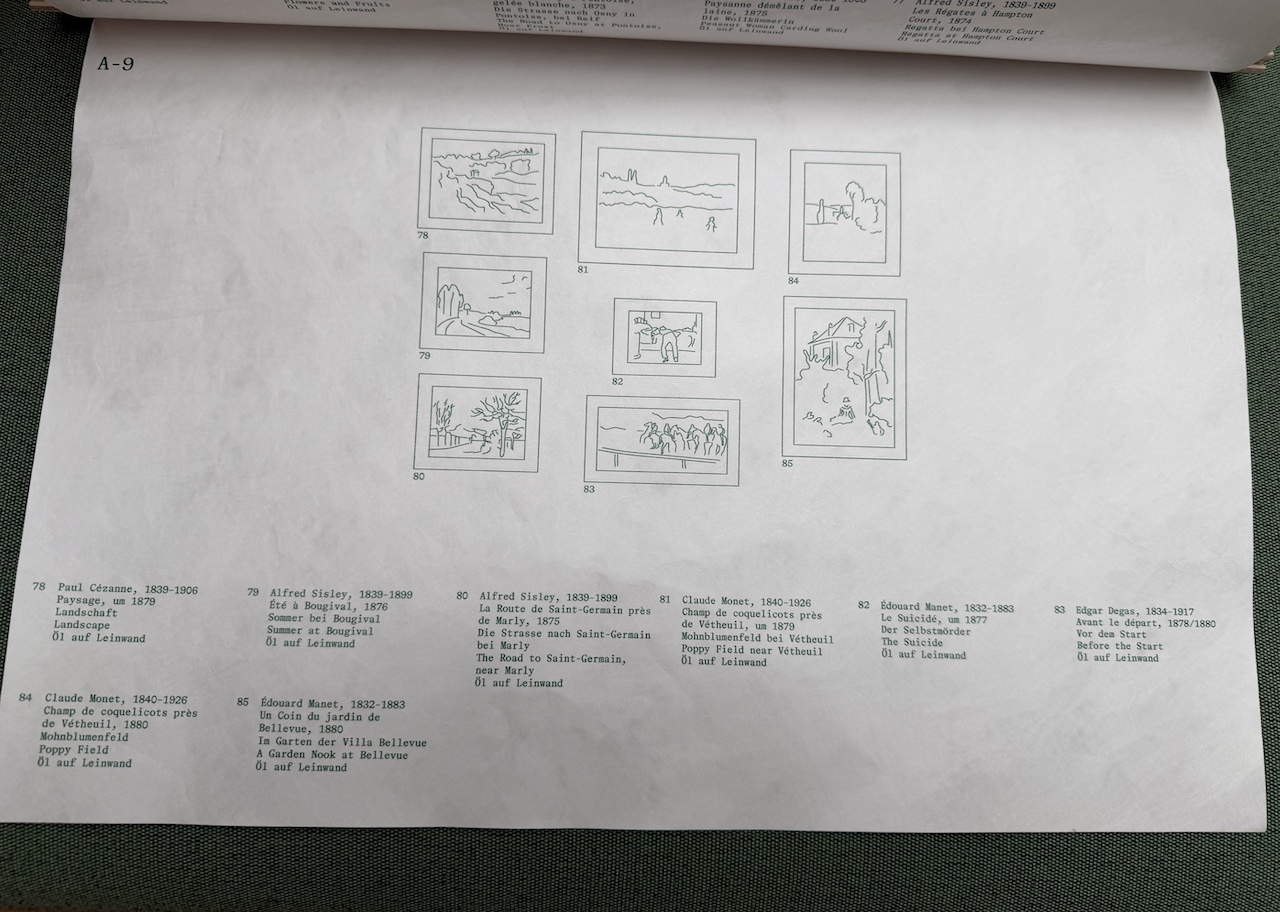
In other words, this is the opposite of contemporary museum practice, where each work is isolated and given its own space. Not everyone appreciates such a display, and I understand those who perceive it as something resembling a storage room, especially as the paintings at Kunsthaus are not accompanied by labels. The names of the artists and the titles of works can only be found on a floor plan with numbered works available in each gallery. Apart from the Hermitage in Saint-Petersburg, the only comparable example that comes to mind is the Barnes Foundation in Philadelphia. In accordance with the wishes of the American collector Albert C. Barnes, his Renoirs, Modiglianis, Picassos, Matisses, Van Goghs and other masterpieces are hung there, pressed closely together. I am, however, ready to forgive this inventor of a silver-based antiseptic a great deal for having been the first “client” of Chaïm Soutine, buying sixty of his paintings at once, even if at just fifty dollars each, thereby significantly improving the artist’s financial situation.
In short, I travelled to Zurich at the first opportunity to see the collection again. It is not every day that 205 masterpieces are brought together in such a relatively compact space! And what masterpieces they are, ranging from seventeenth-century Dutch painting through Impressionism to modernism. One need only mention The Sower by Vincent van Gogh, Little Irene by Pierre-Auguste Renoir and The Offering by Paul Gauguin. And how many Picassos there are! And what a Chagall! Standing there in admiration, I thought that not all of my readers, especially those outside Switzerland, may be familiar with this story, and that it is worth telling, at least briefly.
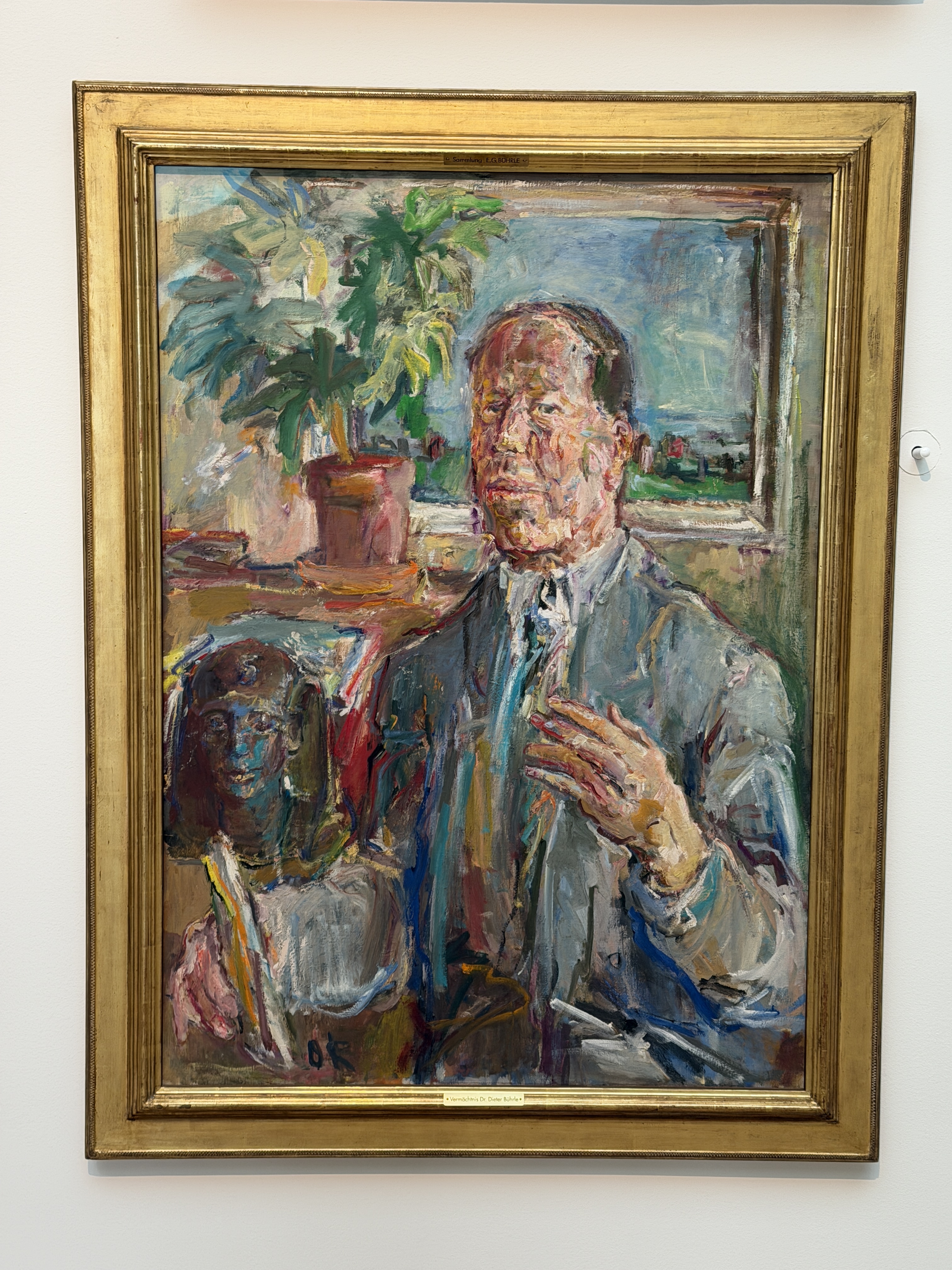
So who was this man, who in a portrait by Oskar Kokoschka bears a certain resemblance to the writer Alexei N. Tolstoy? Emil Georg Bührle was not Swiss by birth. He was born in 1890 in Baden-Württemberg in Germany and studied literature and art history at the universities of Freiburg im Breisgau and Munich. After the First World War, he married Charlotte Schalk, the daughter of a wealthy banker, and began working at a company in which his father in law held a stake. In 1924 he was sent to Zurich to manage a cannon factory in Oerlikon, which under his leadership became one of the largest industrial enterprises in Switzerland. After obtaining Swiss citizenship, Bührle later privatised the company, known as Oerlikon-Bührle, bought a house in Zurich and… turned to collecting paintings.
And this is what followed, as every visitor learns from the detailed wall texts. A significant part of Bührle’s wealth was accumulated through arms production by his company Oerlikon-Bührle. During the war years, at the request and with the approval of the Swiss Federal Council, he supplied weapons to Nazi Germany. As a result, during the Nazi period Bührle became the richest person in Switzerland. He maintained very close ties with Zurich’s business community and with Kunsthaus. He sat on various governing bodies of the museum and financed projects both in Zurich and beyond, including the so-called Pfister building or exhibition wing at Kunsthaus Zürich. He is regarded as one of the most controversial figures in twentieth-century Switzerland, and his prestigious art collection has been the subject of public debate since the 1940s. The main controversies concern works that, during the Nazi period, belonged to Jewish collectors who were persecuted, dispossessed or murdered. Another point of contention is the fact that a significant part of Bührle’s wealth derived from the production and sale of weapons to Nazi Germany.
How can such an outstanding yet deeply controversial private collection be displayed in a museum with a public mission? How can the historical context be conveyed? What is the role of a museum as a space for art and open dialogue? These are the questions the museum has been addressing since 2021 in various forms, and the answers remain far from obvious.
These various forms are clearly visible. Some of the spaces reserved for paintings are empty. In some cases, as the wall texts explain, a work has been loaned to another museum. In others, the issue is light, which may be too harmful for a fragile painting and therefore requires it to be kept out of view for conservation reasons. But there are also cases of a different kind. “The artwork was sold by a previous owner between 1933 and 1945 during their emigration due to Nazi persecution, outside the territory controlled by the Nazis. It is therefore considered cultural property lost as a result of Nazi persecution. The Bührle Foundation, as the current owner, is negotiating with the legal successors in order to find a just and fair solution,” reads the label. One can only imagine the tragedy behind it. I must admit that cases like these, in my view, require a different visual treatment, as in the current display they are indistinguishable from works temporarily absent for purely museum-related reasons.
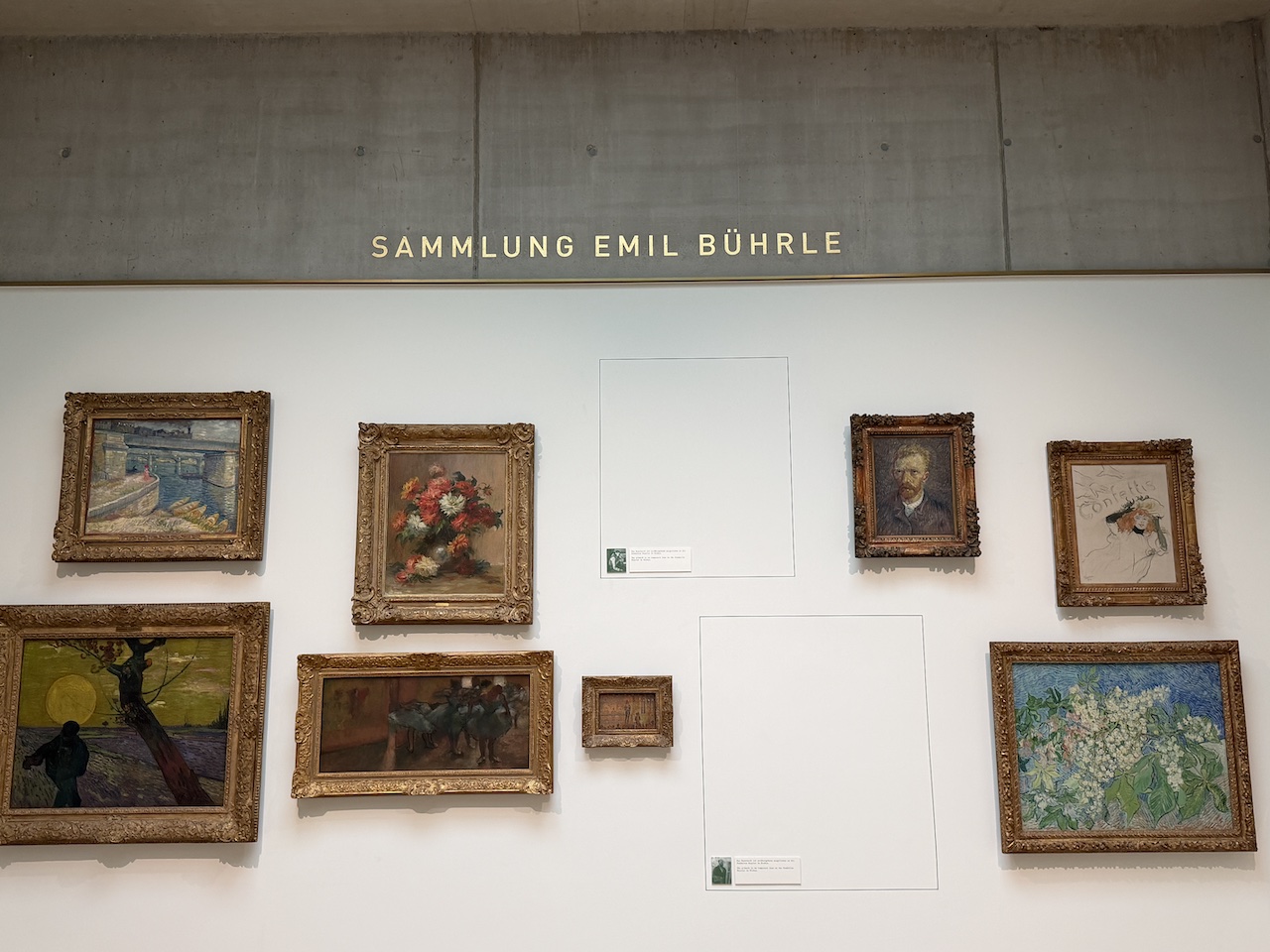
The provenance of all the works on display can also be explored on an interactive screen, which turns the history of the collection into a kind of database at the click of a button. This is a welcome feature, although the information is currently available only in German. Hopefully only for now. A separate room is devoted to showing how the history of the collection has unfolded in the press, in a wide range of languages.
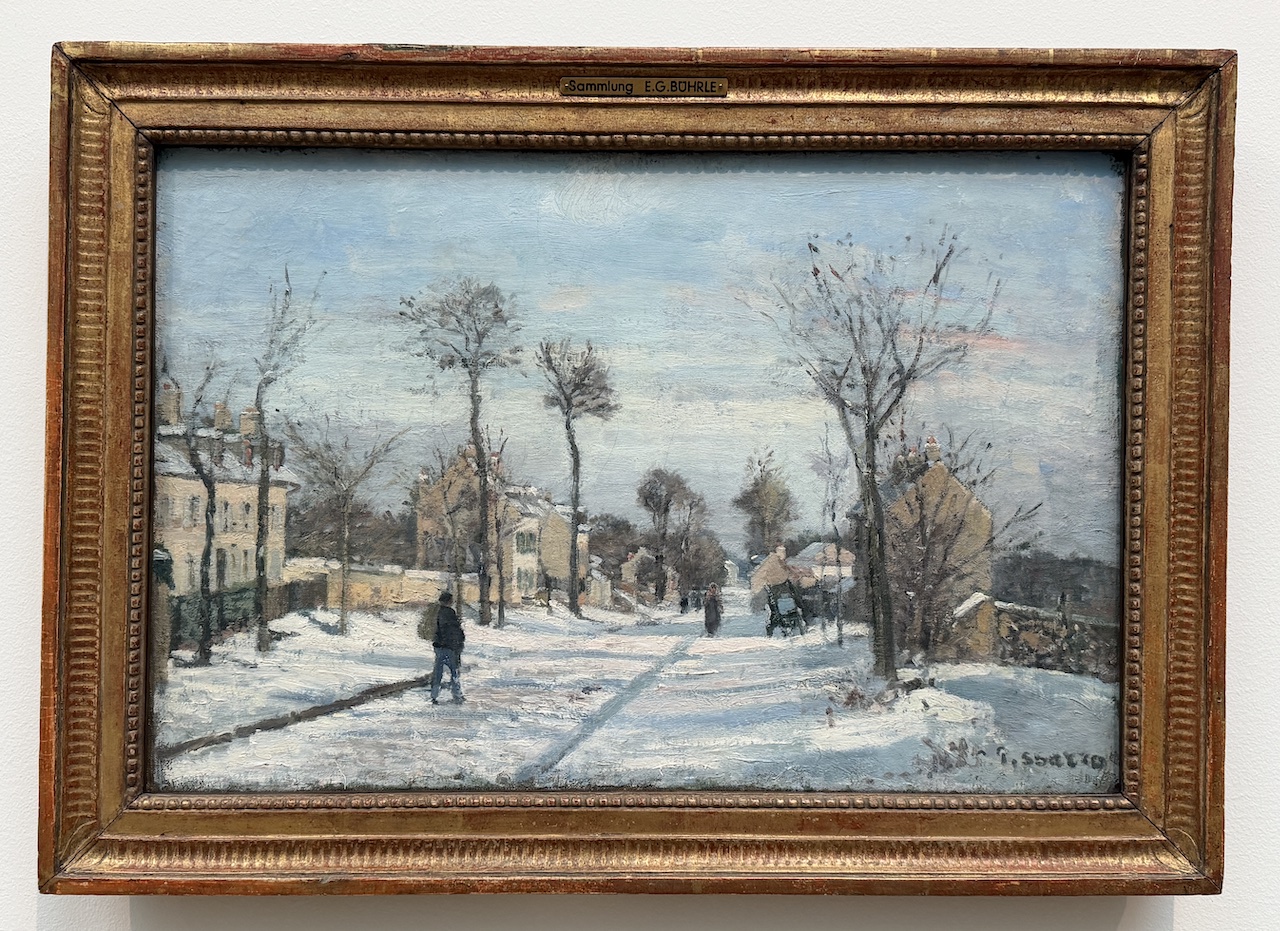
It would be naïve to try to choose a favourite among such splendour, as each work is a masterpiece. And yet, why was I so moved by this modest snowy road to Versailles by Camille Pissarro?
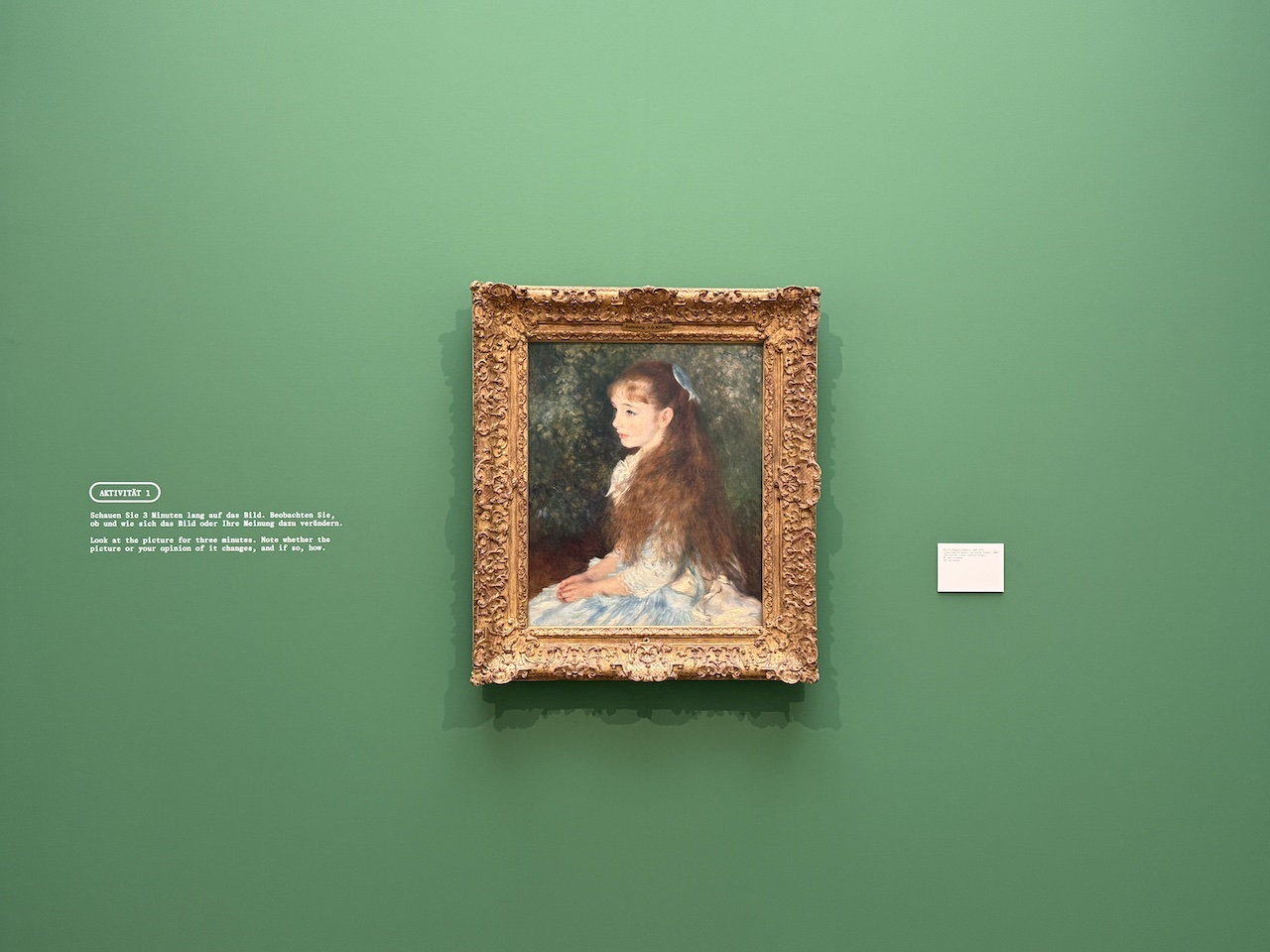
… In the final room of the exhibition, visitors are invited to sit down and spend three minutes looking closely at the charming face of Irène Cahen d’Anvers, painted by Renoir in 1880. I encourage you to accept this invitation. You are bound to discover something. Many discoveries, I am sure, will also come with the new display currently being prepared by Kunsthaus together with an advisory group and external experts. It is due to open in 2027/2028 and will, among other things, focus on the history of the collection and the legacy of Jewish collectors.
Kunsthaus Zürich is not the only museum engaged in provenance research. It was recently announced that the SKKG Foundation in Winterthur will return Ferdinand Hodler’s Lake Thun with the Blüemlisalp and the Niesen to the heirs of its former owner, Martha Adrianna Nathan, née Dreyfus (1874–1958), who was forced to sell the painting in 1941 in order to support herself. The Stiftung für Kunst, Kultur und Geschichte and the heirs have reached an agreement. The painting will be shown in the exhibition Jewish Collectors in Germany, opening in Hamburg in September, and the foundation also plans a publication dedicated to the history of the work and of the Nathan family.
At the Musée d’Orsay in Paris, a new display space has opened devoted to works recovered in Germany after the Second World War, some of which had been looted, in order to preserve the memory of that period. Paintings by Renoir, Degas, Eugène Boudin and lesser-known artists are now shown in a gallery entitled Who Do These Works Belong To?
At the beginning of April this year, the Supreme Court of the State of New York ordered that a work be returned to the sole heir of its former owner, confirming that it had not been relinquished voluntarily but under duress. The case concerns Seated Man with a Cane (1918) by Amedeo Modigliani, which had belonged to the Parisian art dealer of Jewish origin Oscar Stettiner, who fled France in 1939. During the occupation, his property was sold without his consent as part of the Nazi policy of “Aryanisation”. After the war, his ownership rights were recognised by a French court, but the painting disappeared and later re-emerged on the market, eventually entering the collection of the art dealer David Nahmad, who acquired it at auction in 1996. Known for opaque ownership structures and involved in a number of investigations, including the Panama Papers, Nahmad has been a key figure in restitution disputes. For many years the painting remained out of public view and was stored, among other places, in the Geneva freeport, as is often the case for works of this level.
It is good when justice is restored. Better late than never. One can only hope that restituted works will not end up in the Geneva freeport or similar places, but will be placed on deposit in museums, in galleries open to the public, where they belong.




Federica Brunelli June 02, 2026
Sikorsky June 02, 2026
Лазарь Фрейдгейм June 02, 2026
Sikorsky June 03, 2026