The saying that “all art was once contemporary” is attributed to Goethe. It came to mind when, having visited the Alberto Giacometti exhibition, I decided to step into the exhibition of Kerry James Marshall, about whom I knew only that he was a contemporary American artist. More precisely, an African American one. I think in associations, so my thoughts immediately turned to James Baldwin, under whose influence I became interested in “Black” American literature during my student years. From there, to the novel Invisible Man, not by H. G. Wells, whom everyone knows, but by Ralph Waldo Ellison (1914–1994), whose only novel, unfinished at that, brought him the National Book Award in 1953. This book, translated into French as early as 1952, and into Russian only in 2024, was brought to me from America by my professor Yassen Nikolayevich Zassoursky, a distinguished Soviet Americanist. He wanted me to write a dissertation on it and to trace how a writer born in 1914 in Oklahoma City came to teach Russian literature at the prestigious private Bard College in New York State. Together with Professor Zassoursky, I first visited a Methodist church in Dallas and heard live Black gospel, which had such a powerful influence on soul, R&B and rock and roll. And now, so many years later, memories of that remarkable book, told in the voice of a narrator who is not only invisible but nameless and who attempts a compressed history of humanity in search of identity, and of that first encounter with music rooted in biblical texts, came flooding back to me at the Kunsthaus in Zurich.
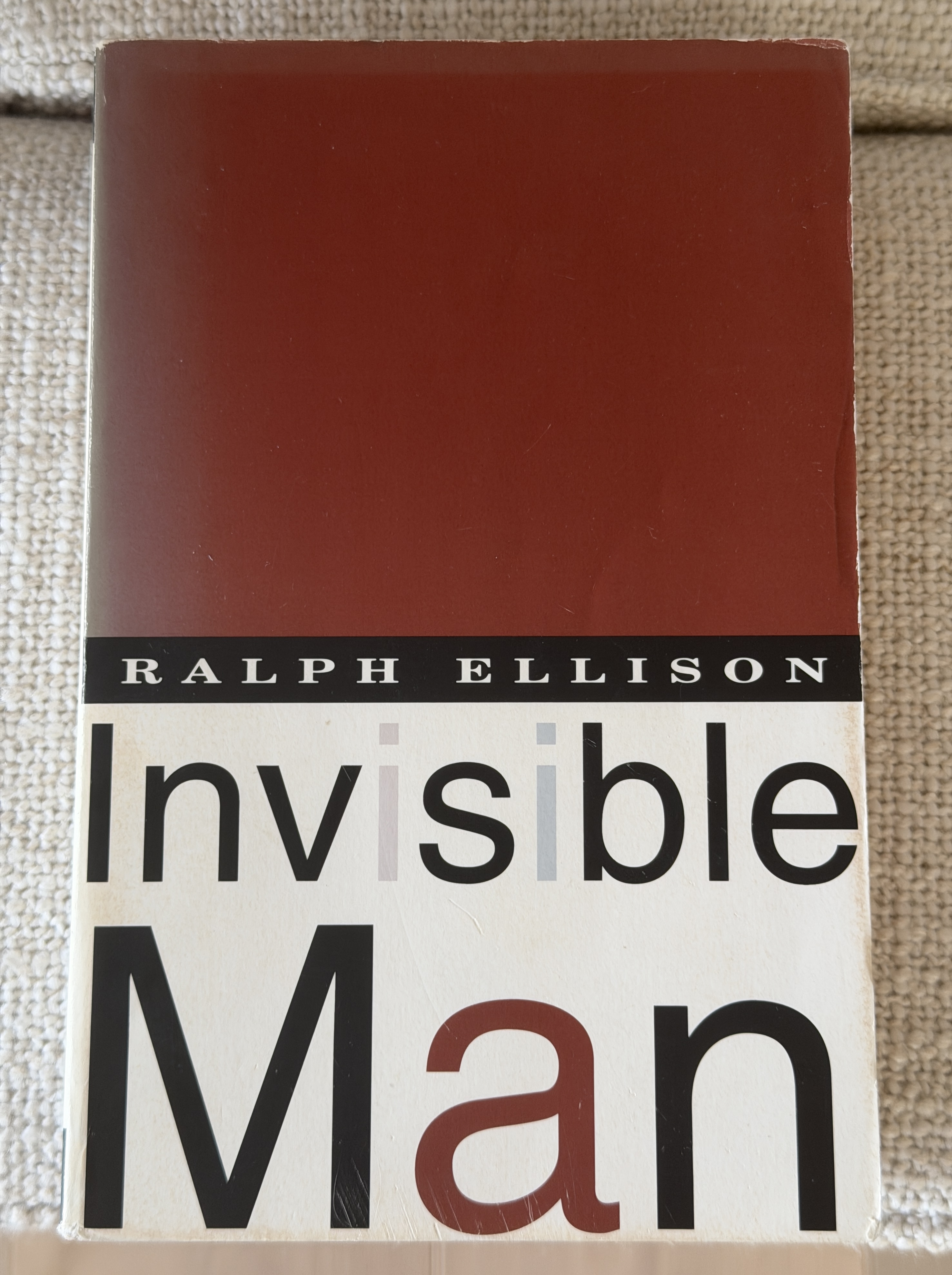
It soon became clear that my thoughts were not original. The wall text in the very first room is titled Invisible Man and, among other things, tells visitors that it was under the influence of Ralph Ellison’s novel that Kerry James Marshall, born in 1955 in Birmingham, Alabama, began creating a series of paintings in which Black figures are depicted against dark backgrounds, making them almost invisible, with only the whites of their eyes and their teeth gleaming. The painting Invisible Man (1986) is on view in Zurich, but it was not included in the museum’s press image selection, and photographing it on my IPhone proved impossible.
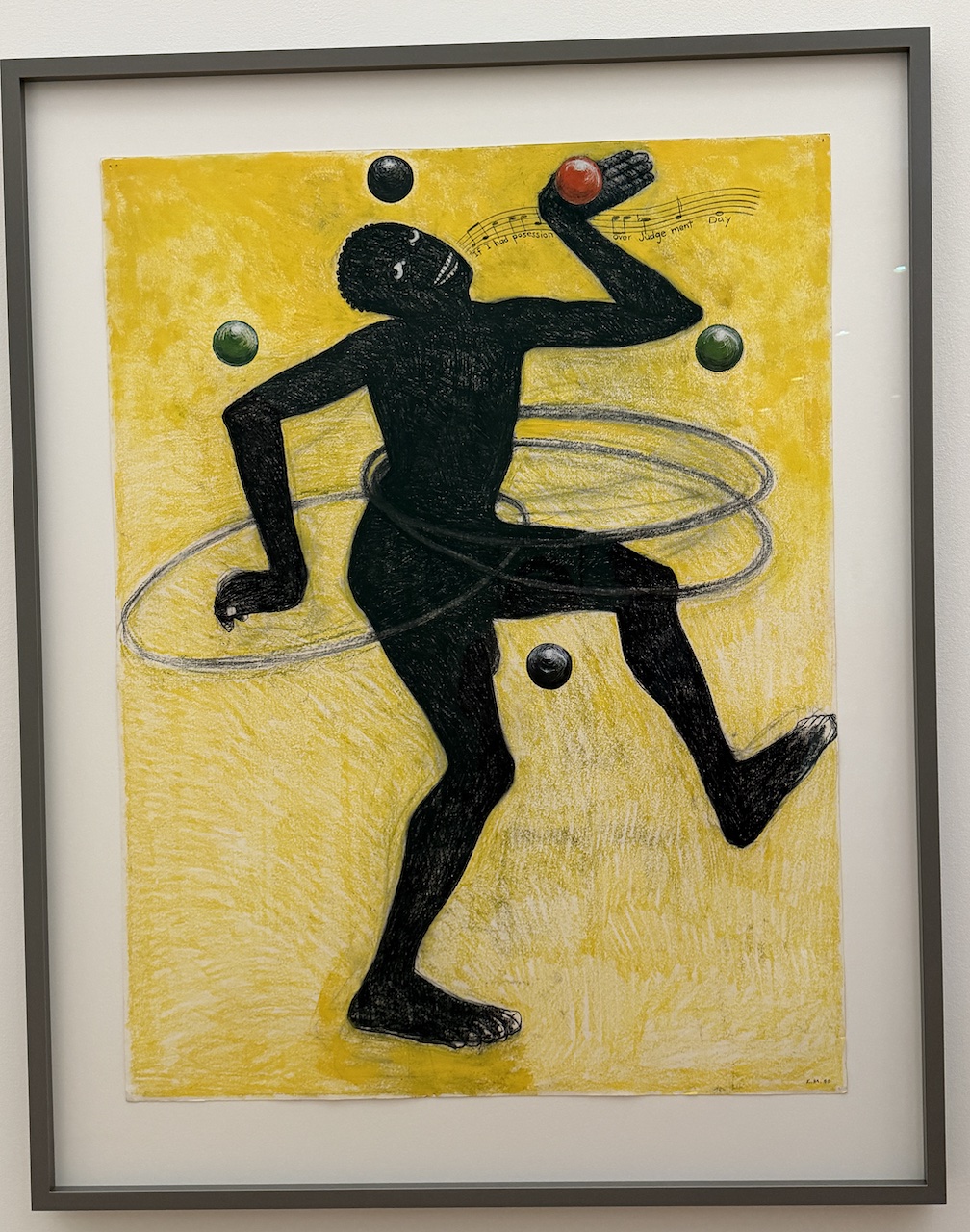
The next painting, in front of which I lingered for a long time, dates from 1988 and depicts a dancing figure crowned with a wreath of musical notes. It is titled If I Had Possession Over Judgment Day. Blues lovers will immediately recognise the opening line of one of Robert Johnson’s most famous songs, recorded in 1936 and later taken up by many artists, including Eric Clapton and Led Zeppelin.
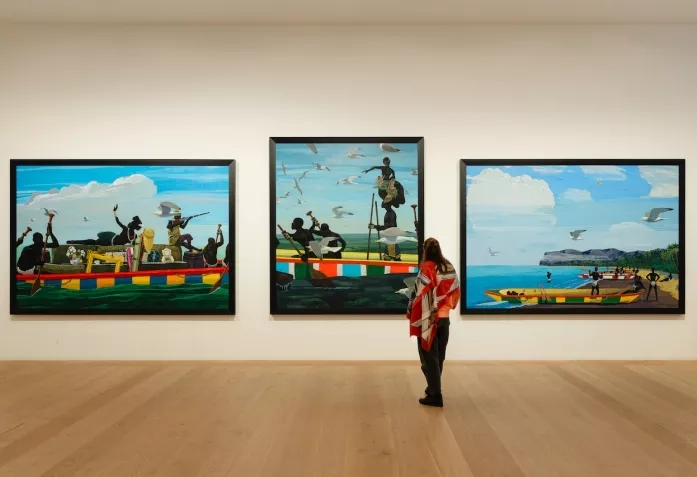
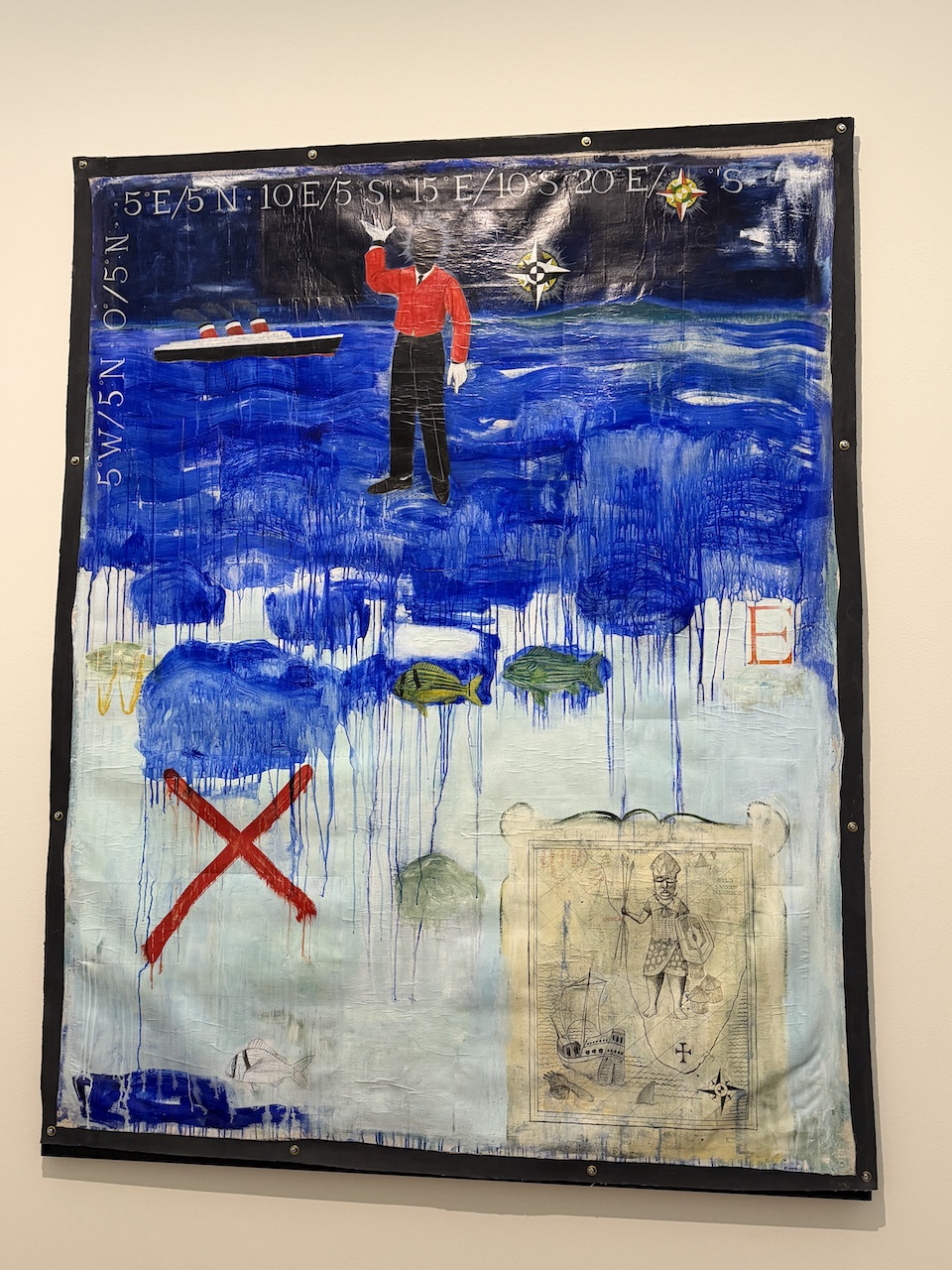
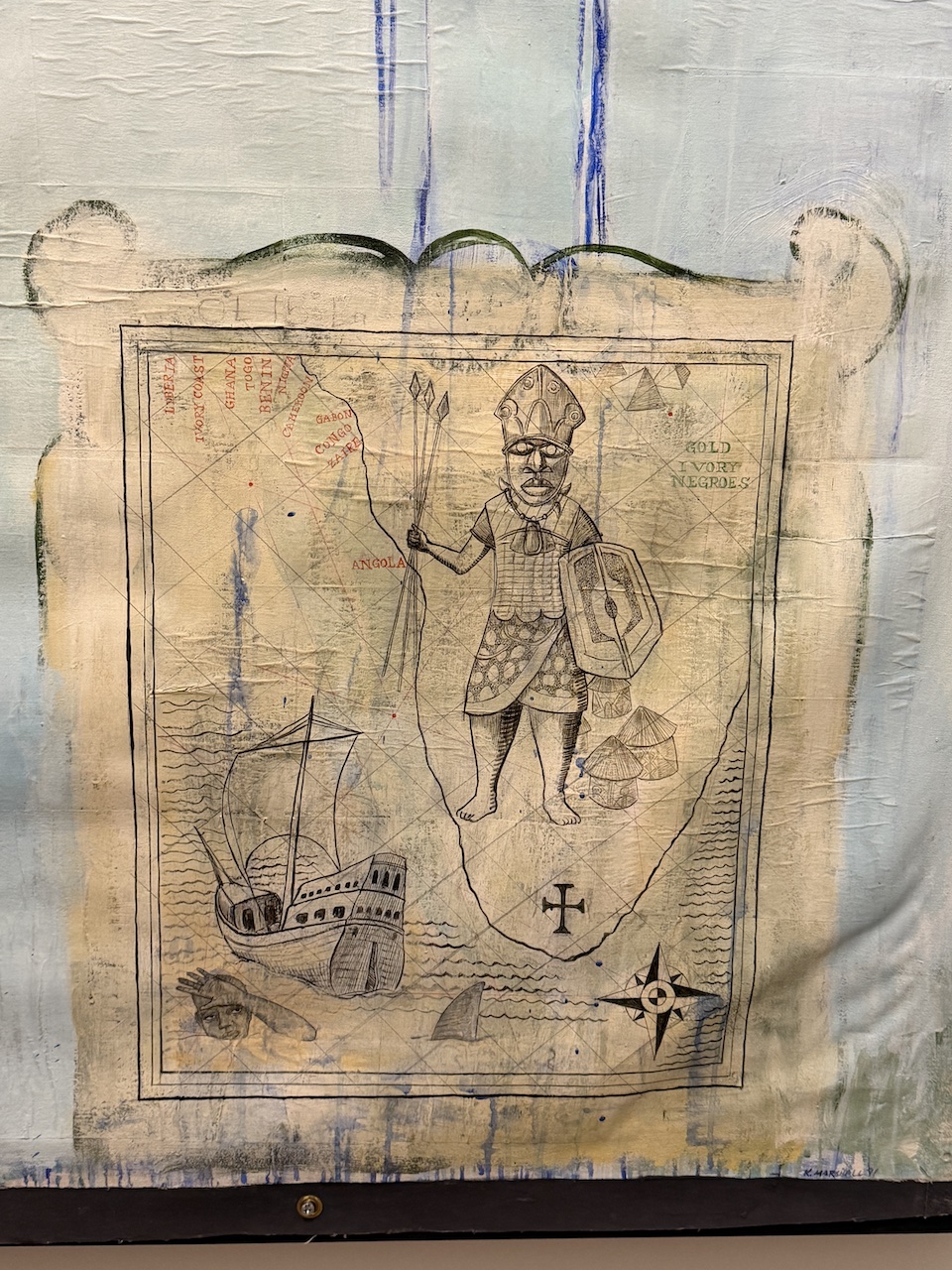
Kerry James Marshall’s canvases, which include portraits, scenes of everyday life and history paintings, are striking above all for their scale, some reaching up to seven metres in width, and for their exuberant use of colour. Yet beneath this outward brightness, which creates an impression of lightness and ease, lie complex artistic narratives devoted to themes of civil rights, transatlantic slavery, cultural exchange and, of course, the history of everyday Black life that is central to the artist. It is no coincidence that the exhibition is titled The Histories, with a capital H. Consider, for example, a detail from the painting Terra incognita (1991), with its list of cargo on a slave ship: “gold, ivory, negroes”. This is one of five works in the exhibition that reflect Marshall’s attempt to address the history of the Middle Passage, the perilous crossing of the Atlantic Ocean during which many captive Africans died before reaching the slave markets of the Americas.
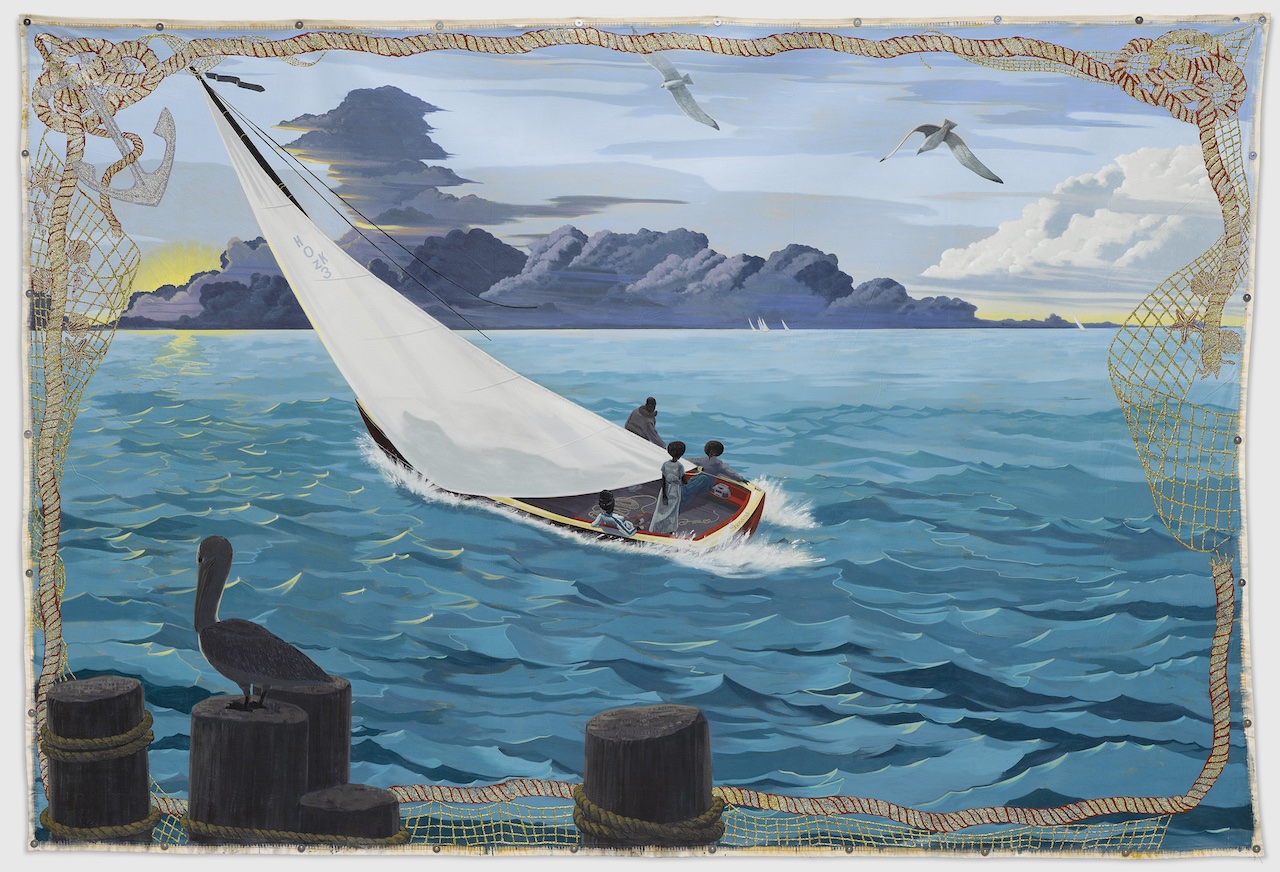
And how full of tension is the painting Gulf Stream, first shown at the Venice Biennale in 2003! The accompanying label explains that here Marshall revisits a painting by the American artist Winslow Homer, also titled The Gulf Stream (1899/1906), depicting a shipwrecked Black sailor surrounded by sharks. In Marshall’s version, however, the scene is shifted to the present-day shores of America. The friends aboard the yacht appear to be enjoying a day at sea, yet storm clouds are already visible on the horizon, signalling unpredictable times ahead.
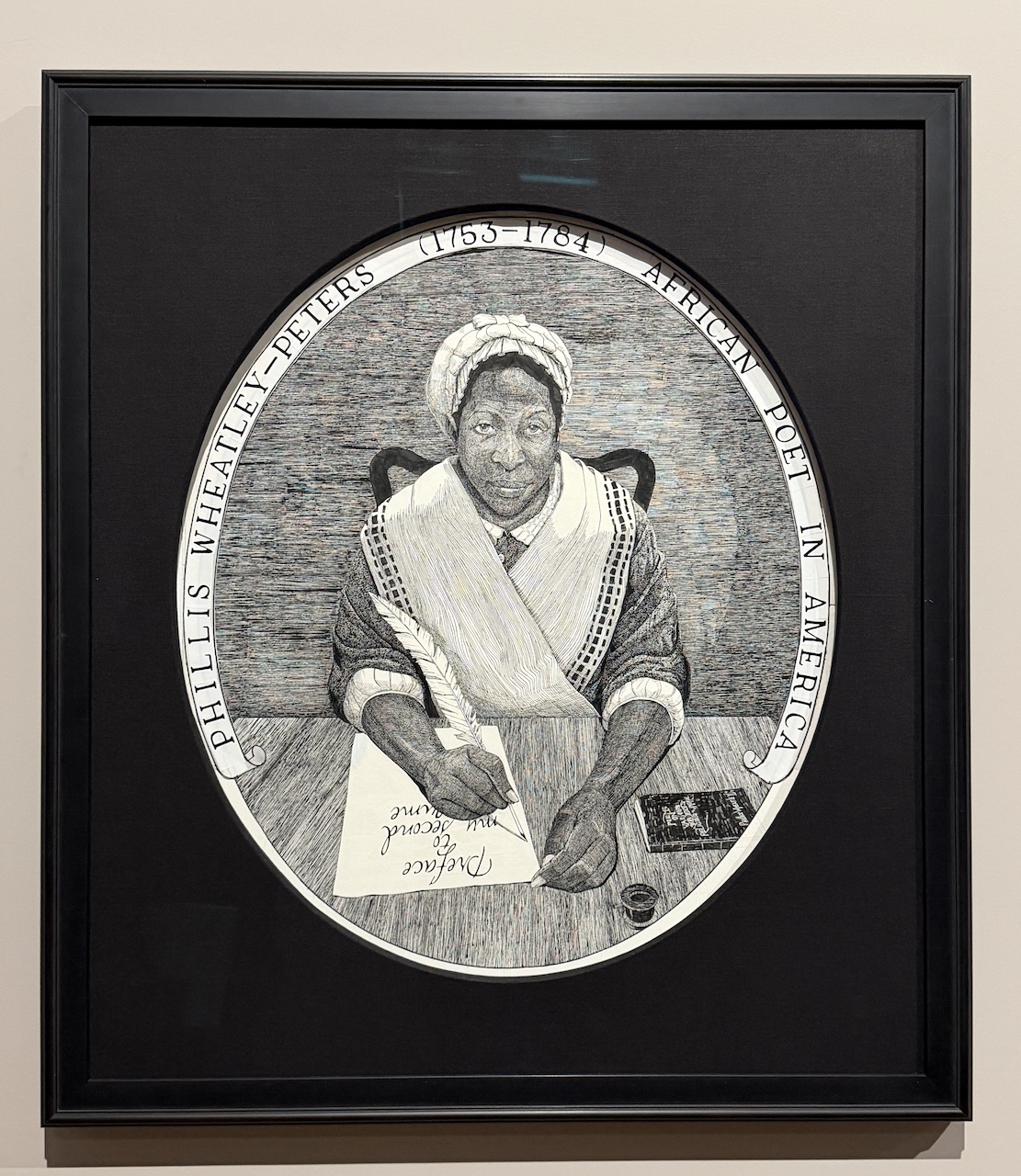
The portrait of Phillis Wheatley (c. 1753–1784), the first author of African descent in the American colonies to publish a book and often called “the mother of African American literature”, created by Kerry James Marshall in 2023, is now familiar even to those Americans who do not visit museums. In 2025, the United States Postal Service issued it as the 49th stamp in the Black Heritage series. “Phillis Wheatley-Peters died, aged 31, a free woman of color, facing forward. The image I made for this stamp sought to memorialize her, as such. That is how I chose to commemorate her legacy,” the artist said of the work.
In the series The Academy, Marshall transforms the Western tradition of devotion to art schools by placing Black figures at the centre of his compositions, as both producers and viewers. These works draw attention to the rich range of black tones, which is immediately explained. Marshall uses various black pigments to depict skin tones, layering them or placing them side by side, ivory black, Mars black and carbon black, mixing in other colours to render black fully chromatic. As he has said, “if you say black, you should see black”. While his blacks are complex, Marshall rarely attempts to depict the browns of real skin tones. His figures are at once individual characters and examples of an emphatic Blackness, real and rhetorical.
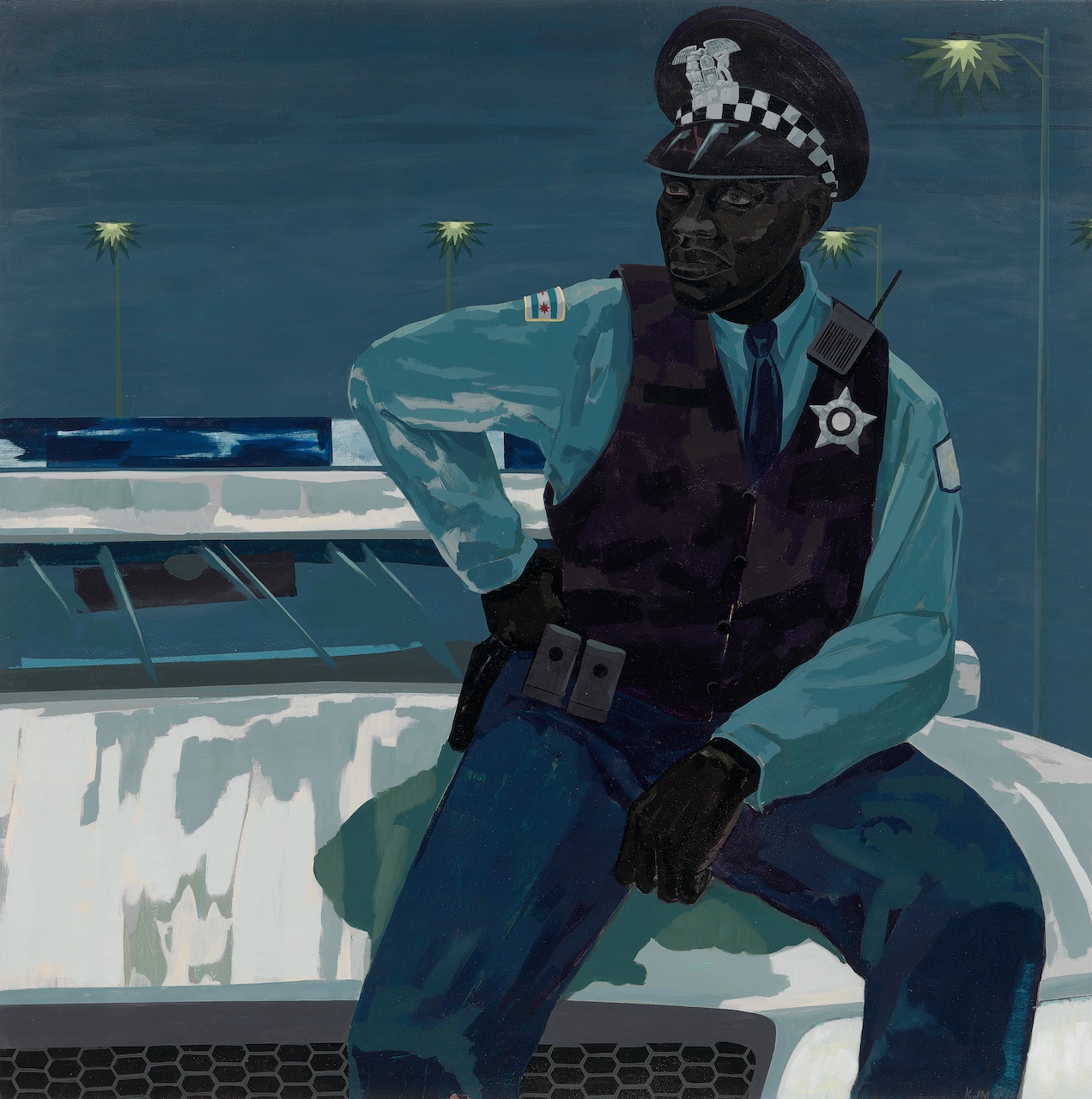
The Black policeman depicted by Marshall in 2015, confidently seated on the bonnet of a patrol car, seems to have stepped straight out of an American film. Anyone who has spent time in the United States will recognise the type. Yet the painting acquires a far less straightforward meaning if one knows that in the late 1970s Marshall created a collage in protest against the mistreatment of Black Americans by the police, and later supported the Black Lives Matter movement, which emerged in 2013 and whose demonstrators often called to defund the police.
The exhibition, which has arrived at Kunsthaus Zürich from London, will remain there until 16 August 2026 and will then travel to Paris, so readers in different countries will have the opportunity to see it. I cannot recommend it highly enough. In the meantime, you might like to listen to a remarkably fine recording of “If I Had Possession Over Judgment Day” by Robert Johnson. I would wager you will start tapping your feet!