
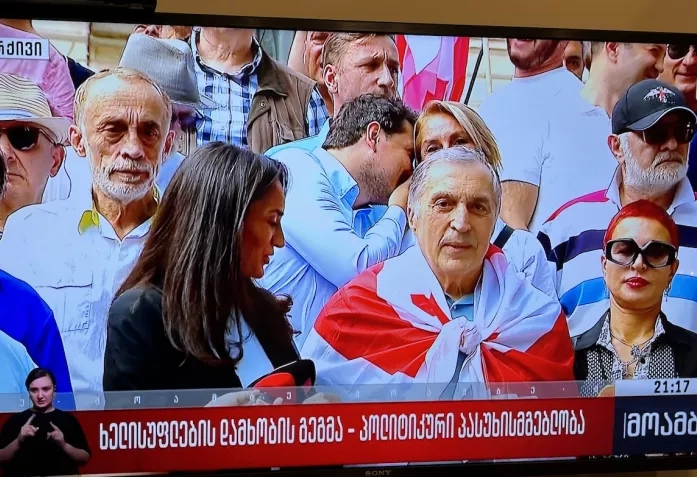
I met Paata Burchuladze when I was 13 years old: in 1982 he won the Tchaikovsky Competition in Moscow, and I helped my father, a music commentator for Moscow Radio, with the interview. We have remained friends ever since. He calls me “little sister”, and I call him my elder brother. In the happiest and the hardest moments of my life, he has always been by my side. Every year, 11 September begins for me with “Happy birthday” sung over the phone in his incomparable bass.
And now Paata, who turned 71 on 12 February, risks spending seven years in prison. Not for murder, not for robbery, not for rape, but solely for his political views. And for his civic stance. I waited for a while, hoping for some kind of miracle. But hope is always naïve, and the miracle did not happen. I have not seen a single word about this story in the Swiss press, although he appeared in a production of Nabucco at Zurich Opera, gave a concert at Zurich’s Tonhalle, performed at festivals in Solothurn and Lucerne, and sang at the St Gallen Opera… Be that as it may, I consider it my duty to tell you this story.
Let me begin with some information for those who may not know who Paata Burchuladze is.
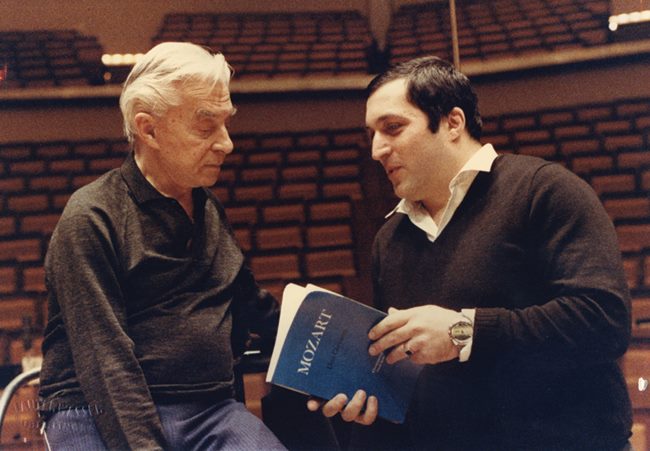
He was born in Tbilisi in 1955. Alongside his studies at the Tbilisi Polytechnic Institute, he attended classes at the Tbilisi Conservatory. He also played rugby. But opera won! In 1978, Paata Burchuladze became one of four singers from the Soviet Union selected for an internship at Milan’s La Scala. In 1981, he emerged on the international opera scene by winning the Voci Verdiane International Competition in Busseto, Italy. The following year he received the Gold Medal and First Prize at the Tchaikovsky Competition in Moscow. In 1984, he caused a sensation at London’s Royal Opera House, Covent Garden, where he made his debut as Ramfis in Aida, alongside Katia Ricciarelli and Luciano Pavarotti under the baton of Zubin Mehta. In 1987, at Herbert von Karajan’s personal invitation, he performed the role of the Commendatore in Mozart’s Don Giovanni at the Salzburg Festival. Since then, he has performed on all the world’s major opera stages.
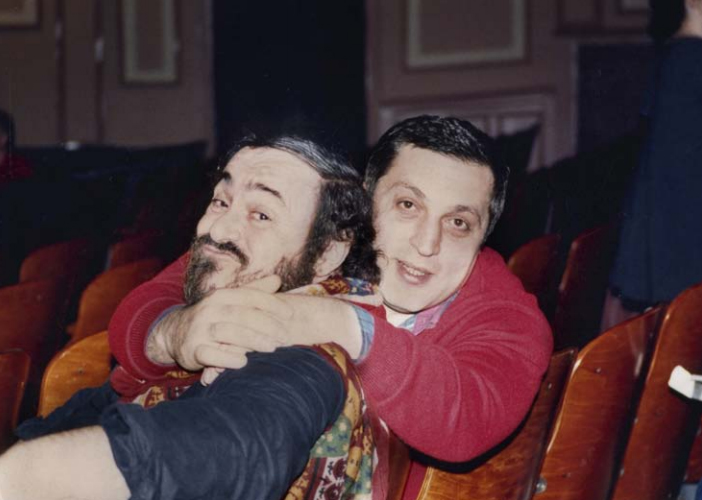
Paata Burchuladze has always combined his professional career with charitable work in Georgia and the promotion of peace and mutual understanding throughout the world. The charitable foundation he created in 2004, “Iavnana” (“Lullaby”), helped numerous orphans and children deprived of parental care to find a home; my children also once sent boxes of toys to their “unknown Georgian friends”. In 2006, Paata Burchuladze was appointed a United Nations Goodwill Ambassador, and in 2010 a UNICEF Goodwill Ambassador. In 1998, the Stuttgart State Opera awarded him the honorary title of Kammersänger. In 2010, he received Georgia’s Presidential Order of Excellence and the Order of Merit of the Italian Republic in the rank of Commendatore. In 2014, the President of the Republic of Austria, of which he is also a citizen, awarded him the First Class Cross of Honour for Science and Art.
Let me remind you that Georgia has been in crisis ever since the ruling Georgian Dream party declared victory in the latest elections. On 28 November 2024, the Prime Minister of Georgia announced the suspension of negotiations with the European Union. In the view of many, this statement violated the Georgian Constitution, whose Article 78 explicitly enshrines the country’s commitment to European integration. It states: “The constitutional bodies shall take all measures within the scope of their competence to ensure the full integration of Georgia into the European Union and the North Atlantic Treaty Organisation.”
For more than three hundred days since then, the world has watched daily protests in Georgia’s capital, Tbilisi, gathering up to 200,000 people of all ages and social backgrounds, but above all young people who felt that their “dream” and future are being taken away from them. Every evening, crowds filled Rustaveli Avenue, the city’s main avenue, named after the legendary 12th century Georgian poet Shota Rustaveli, who celebrated love, friendship, and human equality. The Opera House also stands on this avenue. It was there that the thirtieth anniversary of Paata’s artistic career was celebrated with great pomp, and where he gave a phenomenal performance of Boris’s scene from Boris Godunov, with its famous words about the “bloody boys” in the tsar’s eyes.
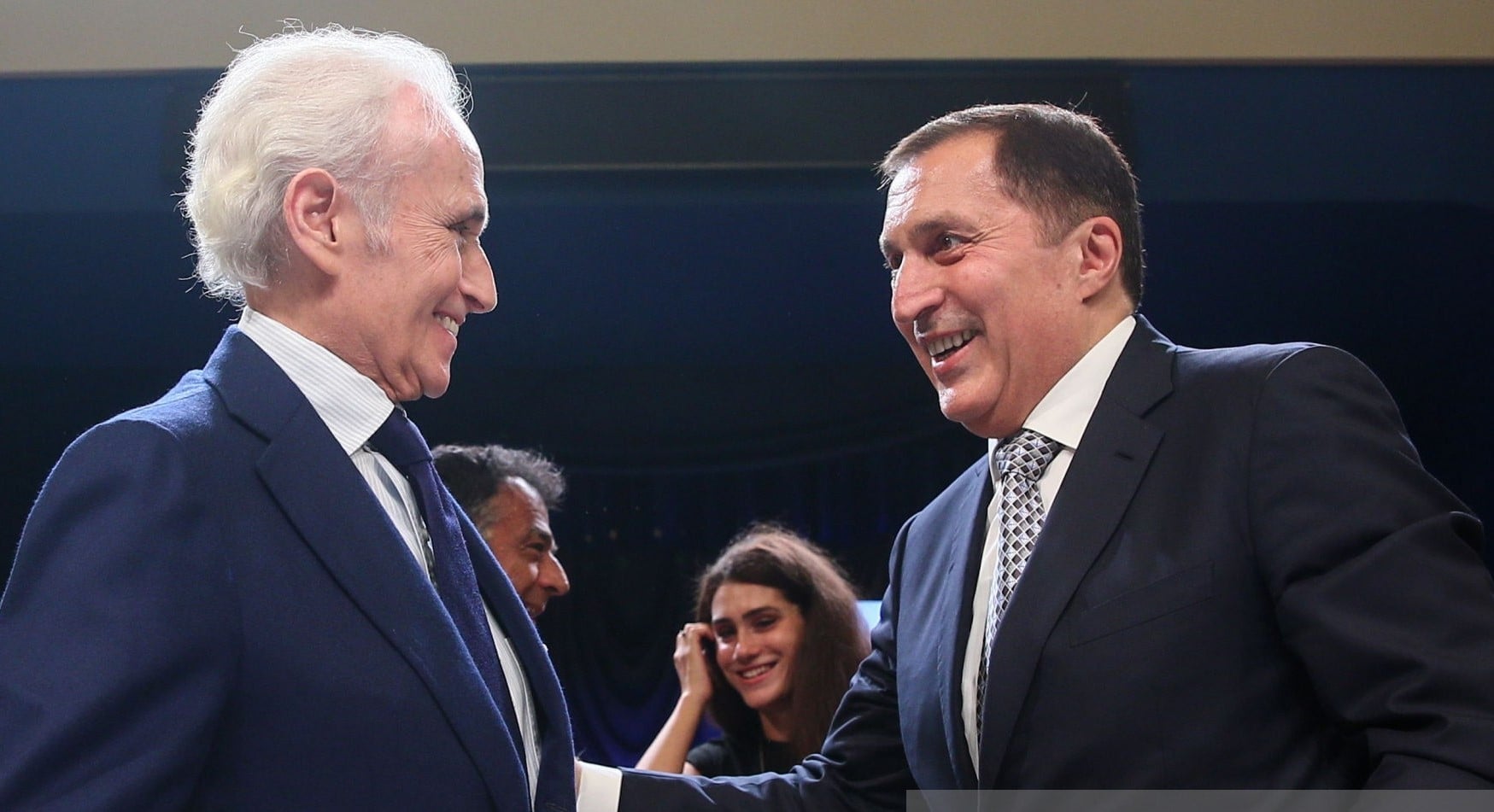
Paata Burchuladze, perhaps the best known Georgian still living in the country, became one of the leaders of this movement and consistently urged the authorities to respect the will of the people in a peaceful and constitutional manner. Despite campaigns to discredit him that began as early as 2017, despite a fruitless investigation into his charitable foundation, despite threats and fines for participating in protests amounting to more than 150,000 euros, he did not leave the country and remained beside the Georgian people. One cannot help recalling the great Russian poet Anna Akhmatova and her famous lines: “I was then with my people / There, where my people, unfortunately, were.”
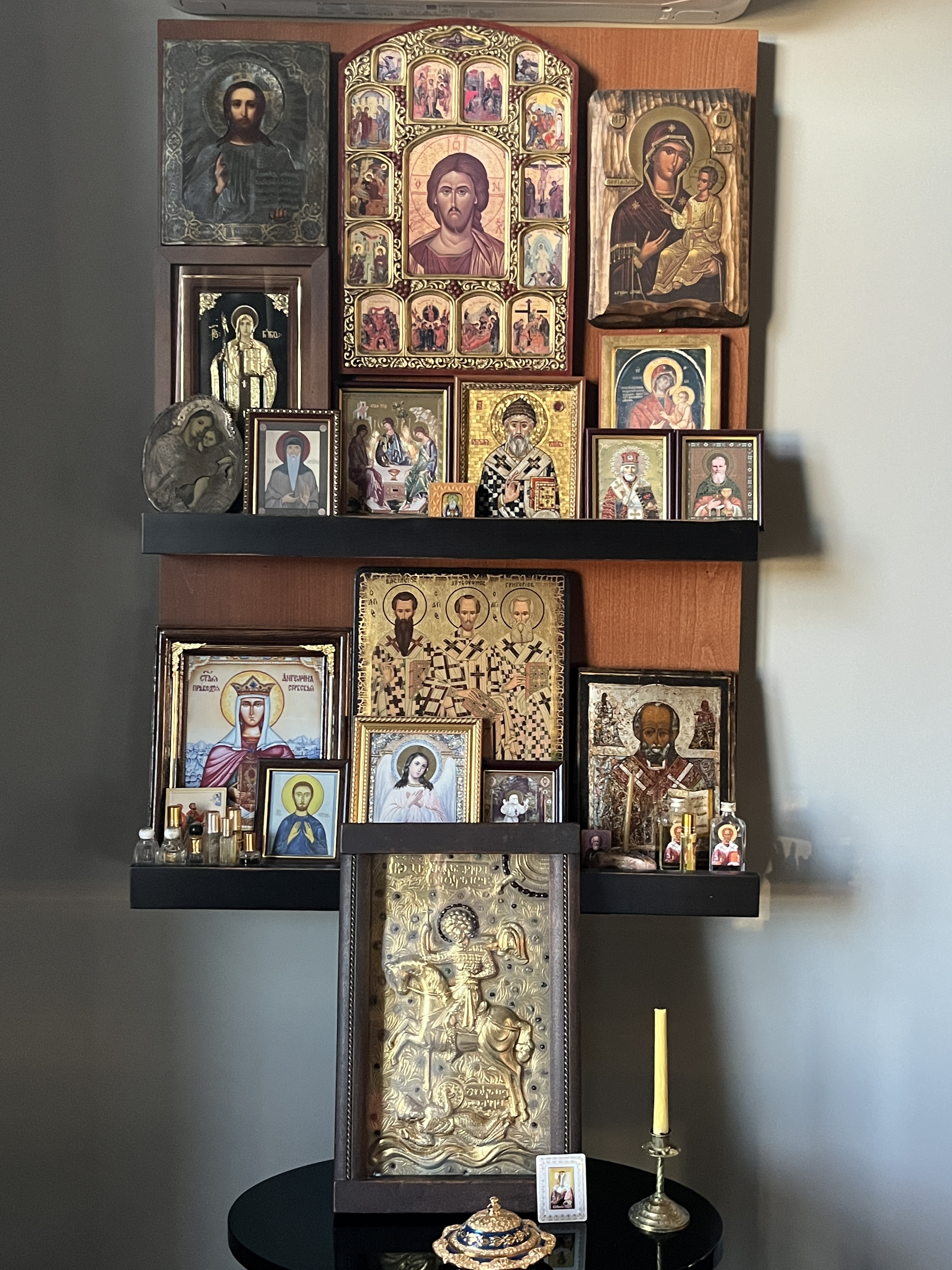
On 4 October 2025, in Tbilisi’s Freedom Square, filled with tens of thousands of his compatriots waving Georgian and European flags, Paata Burchuladze read out a declaration clearly calling on the authorities to obey the will of the people. I find it difficult to imagine that a man of his nature, deeply religious, kind, generous, could ever call for violence. An artist may be naïve, vain, mistaken, capable of becoming enchanted by the wrong people, susceptible to flattery, and inclined to follow false guides, and Paata suffers from all these “professional illnesses”. But calling for violence? No, I do not believe it. Apparently, my opinion is shared by numerous musicians around the world as well as by the directors of leading opera houses who have spoken out in his defence.
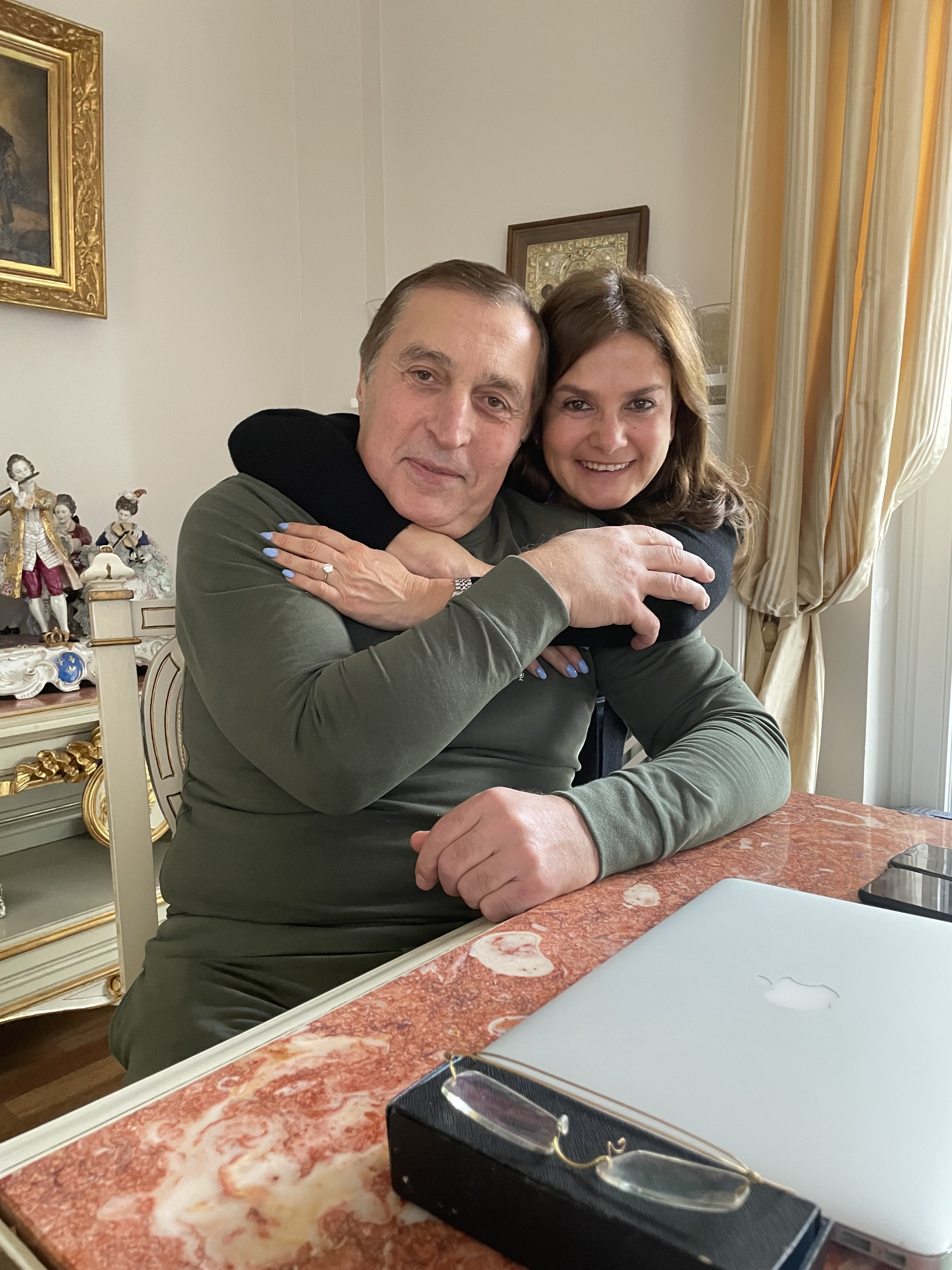
Nevertheless, violence did break out, under circumstances that still remain to be clarified. Demonstrators attempted to enter the grounds of the presidential palace, which had been surprisingly left unguarded, which raises the suspicion of a trap. Video footage clearly shows that Paata Burchuladze arrived at the scene only after other protesters had already entered the compound, and that he urged them neither to clash with the police nor to cause material damage.
Images of Paata Burchuladze, draped in the Georgian flag, spread across social media worldwide at the time. How much he resembled an operatic hero! But the Tbilisi police invented their own ending for this performance: they used tear gas, Paata fell ill, he was taken to hospital and from there to prison, together with other leaders of the pro-European opposition. On 7 October, Paata Burchuladze and his associates were charged with attempting to overthrow the government. A few days later I arrived in Tbilisi and saw with my own eyes, not on television, the crowds on Rustaveli Avenue. The protest movement continues to this day.
…And now, after seven months spent in prison without the right to family visits or correspondence, the Tbilisi City Court has found him guilty under three articles of the Georgian Criminal Code: Article 19-222, Part 2(a), concerning the attempted seizure and blockade of strategic and especially important facilities by a group of persons; Article 225, Part 1, concerning the organisation and leadership of group violence; and Article 317, concerning calls for the violent overthrow of Georgia’s constitutional order and state power. This article provides for a sentence of up to nine years’ imprisonment, and some will no doubt say that he got off lightly.
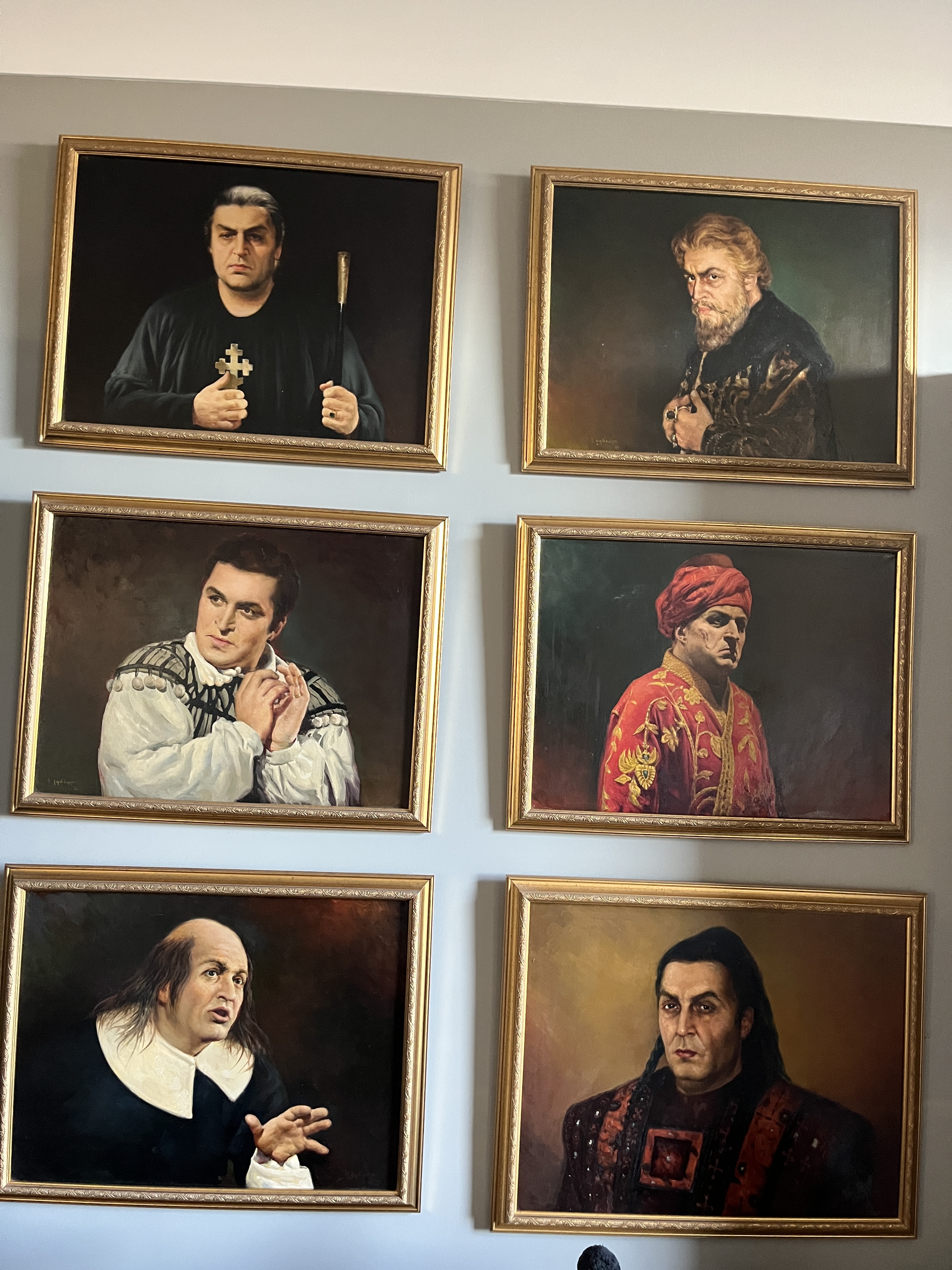
I shall refrain from comment. Instead, I would like to give the floor to Paata Burchuladze himself and share with you his final statement before the court. Here it is.
“Ladies and gentlemen!
The accused is granted the final word in order to justify himself; I have nothing to justify, and I believe I am on the right path. Tell me, Your Honour, had I wanted to, could I not have become a member of the Dream parliament and obtained a high position?!
Those members of this ‘Dream’ were not even visible back then, when Mr Ivanishvili was trying in every possible way to persuade me to enter politics together with him; but both then and now I believe that Georgian Dream is a catastrophe for Georgia, and that it must be got rid of as quickly as possible.
These two great ‘fair’ prosecutors did not say a single word about why people gathered on 4 October; they failed to notice the National Assembly of Georgia and its declaration, unanimously supported by hundreds of thousands of people. But they did notice a useless fence, already destroyed and needed by nobody, and for seven months they could not even bring charges against citizens, because Nodar Meladze and his team of investigative journalists threatened to expose this whole story.
As for me, after seven months of investigation:
- During these seven months, these two ‘respected’ prosecutors completely cut me off from my family; they never once spoke to my wife, my children, or my grandchildren, not to mention my friends.
- During this time, I saw false police witnesses whom I had previously seen only on television, and I became convinced of their worthlessness.
- I met and befriended patriotic citizens of Georgia whom this treacherous regime could not break.
- I am convinced that this protest will not end; the Georgian people, who love freedom and independence, will not surrender and will inevitably prevail!
- I accidentally learned which prosecutor was handling my case, and then everything became clear; for that as well, I thank Mr Nodar Meladze.
From my own example, I can tell you that throughout my life I have always done what my country needed at a given moment: an artistic career, charitable work, building a church, and even politics. During the 2016 elections, I created a political party and tried to warn the Georgian people about the enormous danger represented by Georgian Dream; unfortunately, I did not succeed well enough. The result is obvious, one can see the speed at which our country is degrading.
As for today, I see my place either on Rustaveli Avenue or in prison. Both are fronts in the struggle against these traitors, and I am convinced that well known people, whatever kind of lives we may lead, must stand in the front ranks and set an example for everyone in the struggle to defend the Motherland; the will of the people must be clear, and politicians are obliged to fulfil it.
Your Honour, considering my age, we must assume that these two ‘deeply respected’ prosecutors have already handed you my obituary under Article 225 of the Georgian Criminal Code. They are convinced that I represent a threat to their comfortable lives, and they know that you think so as well. Know this and remember it: no matter what happens to me, Georgia will never surrender, and all of you will answer before the people. The people are wise and patriotic. The crowd of state traitors sitting in power today will soon disappear like a nightmare and scatter throughout Georgia!”
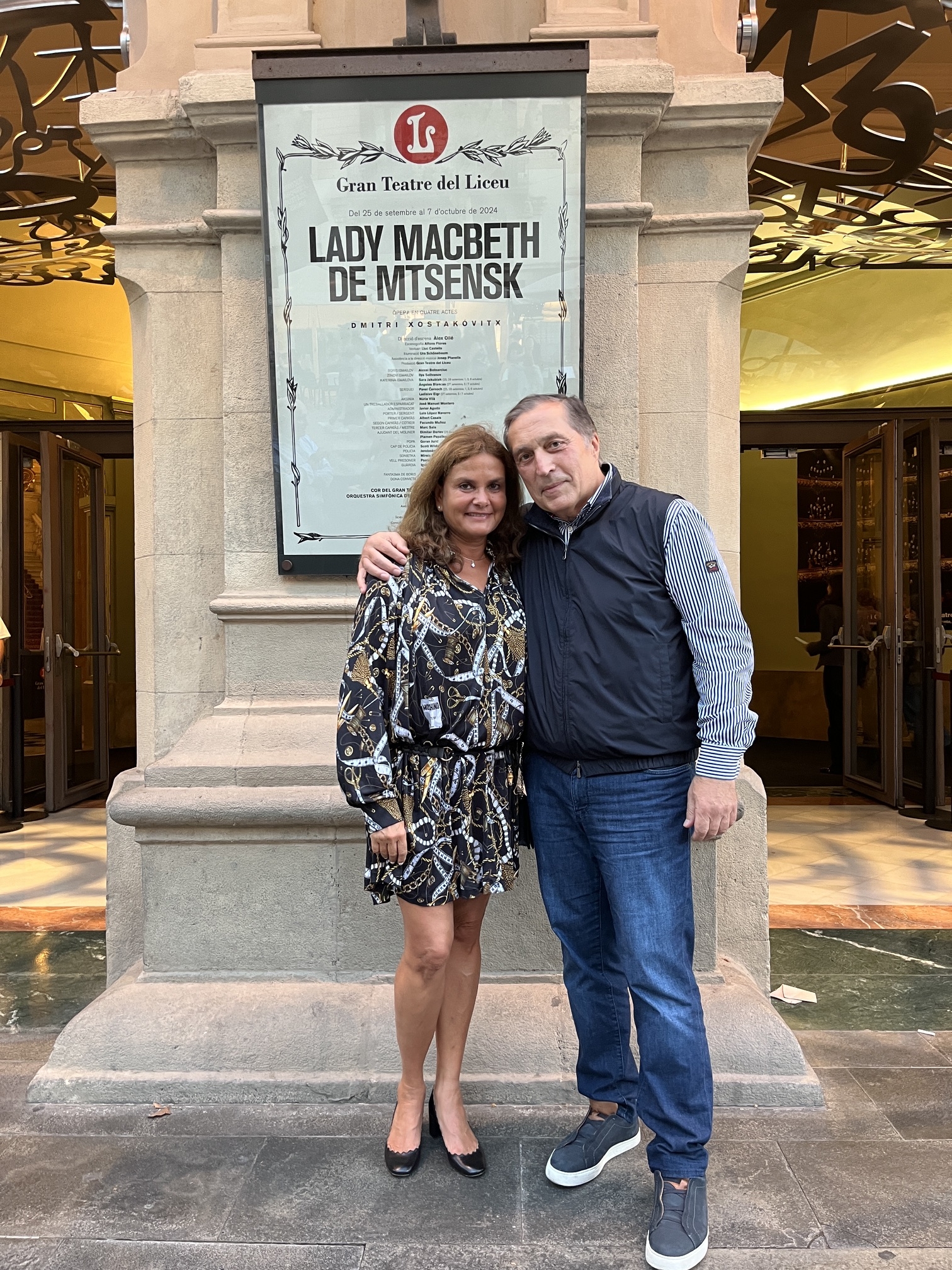
…The last time I saw my friend Paata Burchuladze was exactly one year before his arrest: in Shostakovich’s Lady Macbeth of Mtsensk at the Barcelona Opera House, he performed the role of the Old Prisoner. What bitter irony, what a frightening premonition … Will I hear his “Happy birthday” this year?
I do not know. But in the meantime, let us listen to his performance of Don Basilio’s aria from The Barber of Seville, the one about slander, La Calunnia. This recording was made in 1985 at Moscow’s Tchaikovsky Hall. My grandfather and I were sitting in the sixth row, applauding Paata, performing with his longtime accompanist Lyudmila Ivanova.



Federica Brunelli May 19, 2026
Sikorsky May 19, 2026
Claudio Poloni May 19, 2026
Sikorsky May 19, 2026
Philippe Lüscher May 21, 2026
Sikorsky May 21, 2026