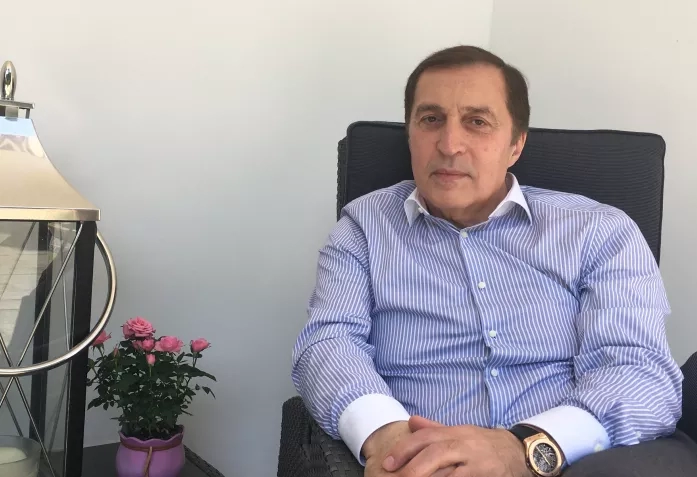
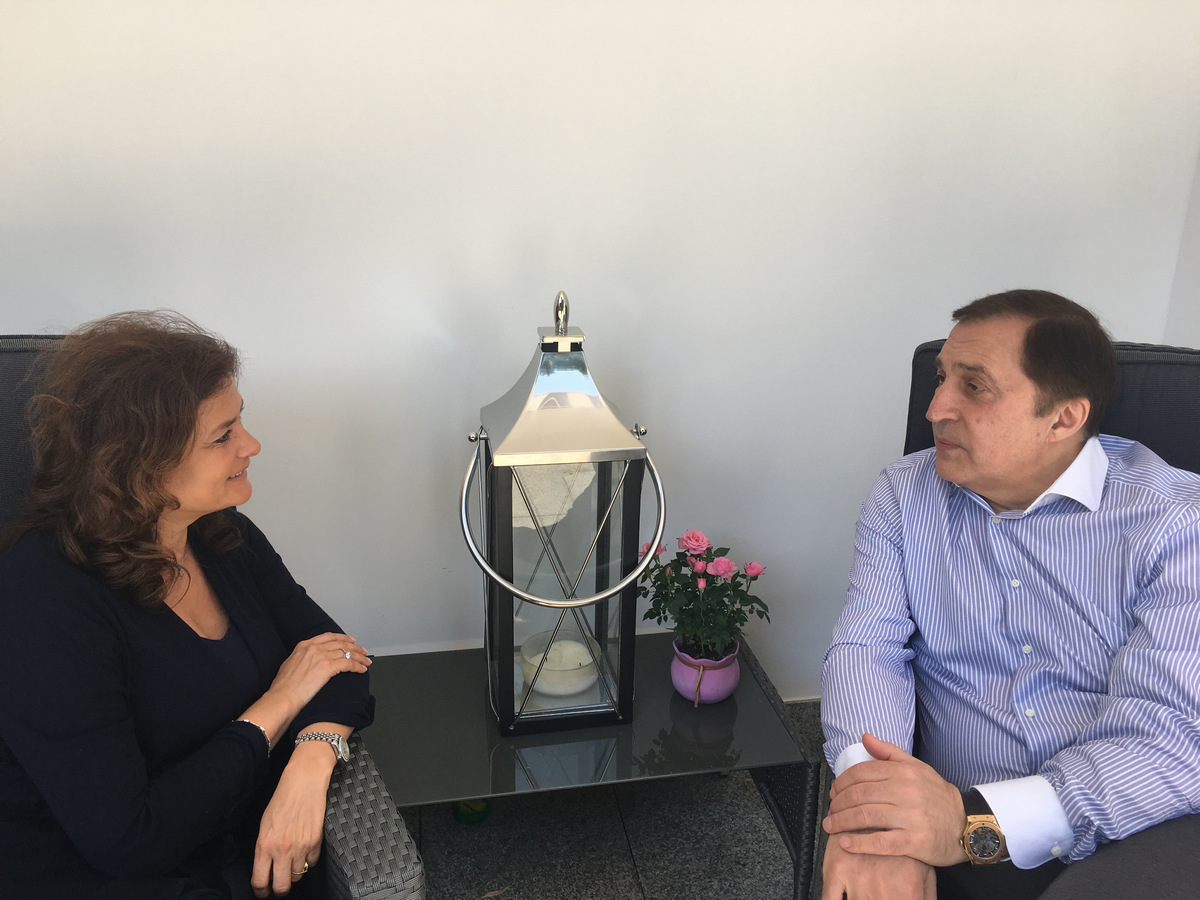
On 29 May, the Mikhailovsky Theatre in St Petersburg will host a gala concert marking the 40th anniversary of the artistic career of the distinguished Georgian singer. I had the opportunity to speak with him shortly before this event.
Paata, you were born in Tbilisi, studied in Milan and Odessa, yet you describe yourself as a representative of the Russian bass school. Why?
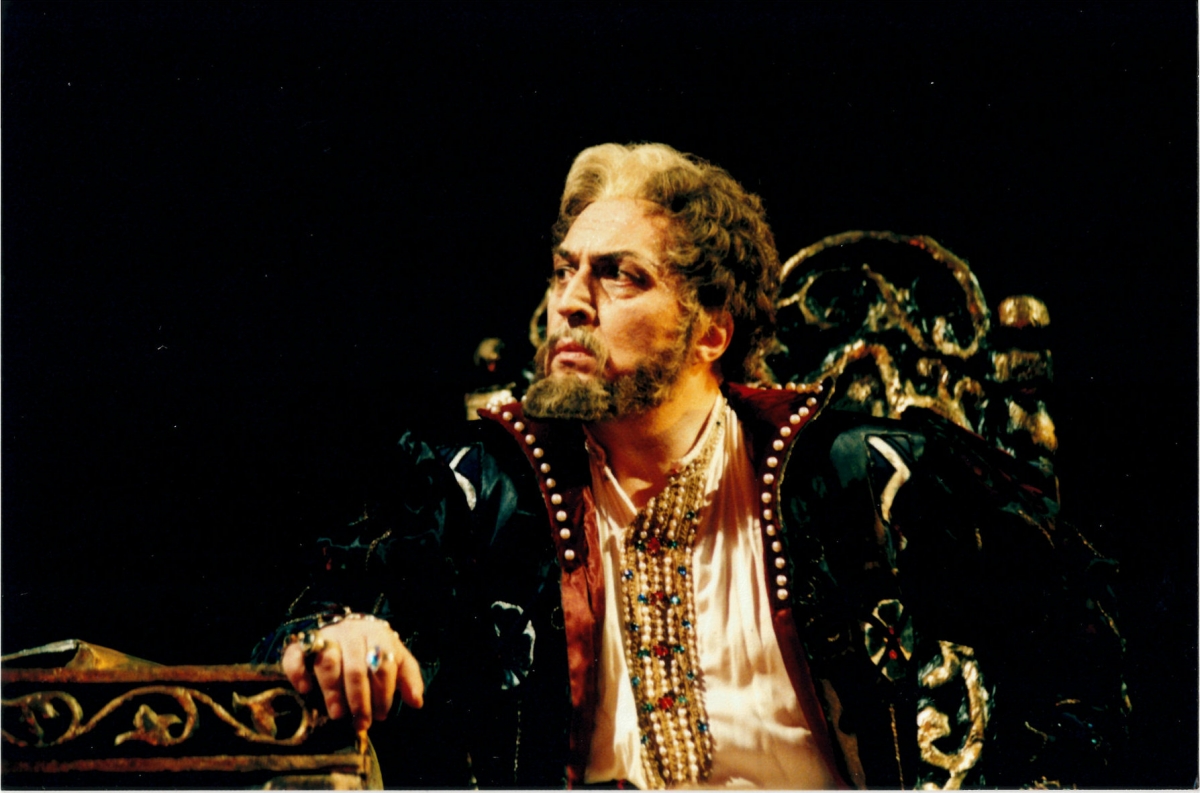
A Russian bass, like an Italian tenor, is a professional term. It refers to a deep, “dark” voice and traditionally dramatic interpretation. Specialists distinguish it from the Verdi bass, which is also dark, but more lyrical. At the same time, Verdi created several roles that cannot truly be sung without a Russian bass, for example the Grand Inquisitor in Don Carlos. And yet, notice that in the same opera there is Philip, also a bass, but a lighter one. These are nuances, of course, but only when they are understood and respected does the listener receive the pleasure the composer intended.
There is certainly plenty of room for a “Russian bass” in the Russian repertoire…
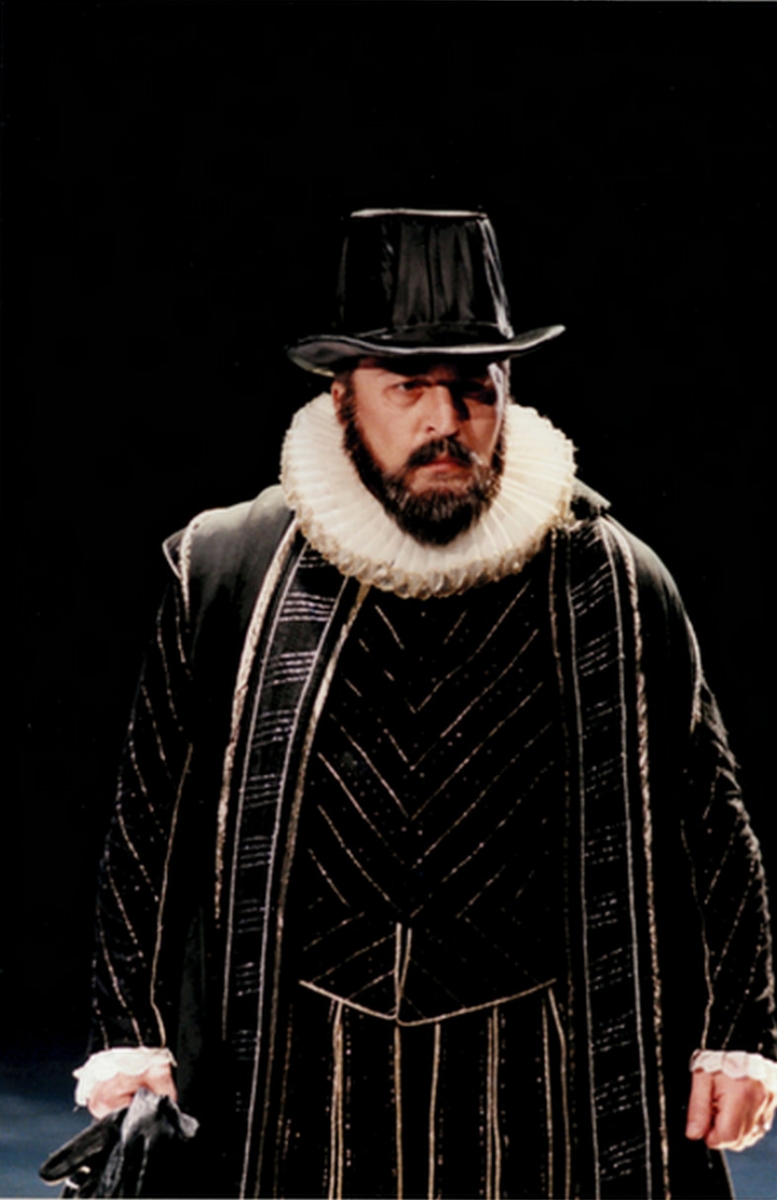
Of course. Magnificent roles have been written for this voice: Boris Godunov, Pimen, Khovansky, Dosifey, Ivan Susanin, Gremin… A Verdi bass would not be sufficient here. At the same time, in Italy people used to call me a Verdi singer, but they meant not the voice itself, rather the style of singing, the cantilena, in other words the voice’s capacity for lyrical melodic phrasing. In general, the Russian, Italian and German schools, the three principal vocal traditions, differ greatly from one another, and a true professional must know all three.
Could you briefly explain the main differences for readers unfamiliar with the subject?
In the Italian school, Verdi, for example, may interrupt a phrase or introduce a pause for the sake of musical line. Mussorgsky, by contrast, places greater importance on meaning and may interrupt the melody for the sake of the text. In the German school, which I know less well, enormous attention is paid to diction and the precise pronunciation of every word. To be honest, I am less fond of the German repertoire and sing it more rarely, preferring Russian, Italian and French music…
People say that becoming a singer is easier than becoming any other kind of musician: one does not need to study as long, and the voice can “open up” at almost any age. Of course, that is an exaggeration…
An exaggeration indeed, although there have been cases of people beginning to sing at 35 or 40 and making careers. My own path was different, more traditional. I sang from childhood, but first I graduated from a ten-year piano school, and only afterwards entered the Tbilisi Conservatory as a vocal student. At the same time, I pursued two higher education degrees: full-time at the conservatory, and evening studies at the Polytechnic Institute.
And why was that?
At my parents’ request. In fact, it was they who persuaded me to enter the conservatory. I did not want to, I was embarrassed.
Embarrassed?!
Yes indeed. People of my generation, myself included, used to laugh at men wearing bow ties. It seemed somehow unmanly. The Polytechnic Institute, on the other hand, was a logical choice: my father, a professional builder, taught there, and I followed in his footsteps by entering the department of industrial and civil engineering. But my father promised to buy me a Zhiguli if I entered the Conservatory, and as you understand, that was serious motivation. Had he not been able to make such a promise, perhaps I would never have become a singer. But both of us kept our word.
I imagine it was not only the car that played a role…
In my third year, I first appeared on stage as Mephistopheles. After the famous couplets, the the audience burst into applause, and I realised there being a singer had its advantages. The bow tie no longer embarrassed me! (laughs)
The turning point in your career was your victory at the International Tchaikovsky Competition in 1982. How did the idea of participating come about? Who prepared you?
Let me point out that it was only the second competition of my life. I won the first in 1978, when four singers from the Soviet Union were selected for an internship at La Scala in Milan. At the time, there was an exchange programme under which Italian students came to us to study ballet, while vocalists were sent there. I was the youngest, only 23. After completing the internship, I won the Voci Verdiane competition in the Italian town of Busseto in 1981. I received the second prize, the first was not awarded. That was what gave me the idea of entering the Moscow competition, but the problem was that I had virtually no Russian repertoire, and that was the foundation of the competition programme. That was when fate brought me together with Evgeny Nikolaevich Ivanov and his wife Lyudmila Ilyinichna…
Let us speak about that in more detail…
Certainly. I was introduced to them as “the makers of competition winners”. I went to Odessa and… they became my family. At first, despite my large build, I slept on a sofa in the sitting room. After winning the competition, I could finally afford to stay in a hotel. On 2 January 1982, I first entered their modest two-room flat, and by the summer of that same year I had won First Prize in Moscow. That is what kind of professionals they were. Sadly, Evgeny Nikolaevich has long since passed away, but Lyudmila Ilyinichna and I remain in constant contact. We are both friends and colleagues, and it is with her that I am preparing for the anniversary concert in St Petersburg.
Please tell us about your first appearance abroad.
The very first, immediately after the Tchaikovsky Competition, was at Rome’s Accademia di Santa Cecilia, in a concert performance of La sonnambula. My first full stage production was Aida in 1984 at Covent Garden. Just imagine: my partners were Luciano Pavarotti and Katia Ricciarelli, and Zubin Mehta was conducting.
How did such a young singer at the time manage to join such a stellar cast?
You know, I am firmly convinced that besides natural gifts and great hard work, every artist also needs luck. And luck, let us knock on wood, has accompanied me. An Englishman, James Robertson, sat on the jury of the Tchaikovsky Competition. After my victory, he telephoned his friend, the impresario Wilfrid Van Wyck, who worked with the USSR. Having received a recording of Gremin’s aria from Gosconcert, he invited me in 1983 to sing Elgar’s The Dream of Gerontius at the Lichfield Festival. Afterwards, he arranged an audition for me at Covent Garden, and then… another stroke of luck: within a year I received an invitation. Pavarotti was singing Radamès for the first time then, and there was a vacancy for the bass role. The whole world came to hear Pavarotti, and at the same time they noticed me too. Herbert von Karajan called me a second Chaliapin in The Times. That phrase opened all doors for me and accompanied my entire subsequent life. The great conductor himself summoned me to Salzburg for an audition and began inviting me to perform. Together we recorded Don Giovanni, Verdi’s Requiem…
You have sung on the world’s greatest stages, but have you also performed in Switzerland?
Yes, I took part in a production of Nabucco at Zurich Opera, gave a concert at the Tonhalle, and in Geneva I replaced an ill singer. I have also appeared at the Solothurn Festival and at the St Gallen Opera. I hope to perform again in the future in this country, where classical music is loved.
I do not know a single Georgian who is not passionately patriotic about their country. Is that a national characteristic?
(smiles) Probably. We are an emotional and hospitable people. You know, they say that even Georgians who are quarrelling with one another will unite when guests arrive, behaving as though nothing had happened.
A few years ago, you, a purely artistic person, decided to enter politics. Why?
But what does “entering politics” actually mean? In my understanding, it means doing something for one’s country, not merely speaking at rallies. And in that sense, I have been involved in politics for a long time already through the charitable foundation I created, “Iavnana” (“Lullaby”). The foundation was established in 2004 in order to provide shelter for orphans and children left without parents. Under its aegis, numerous charity concerts and events have been organised both in Georgia and abroad. As a result of our work, more than a thousand children have returned home, we bought flats for young people, gave them the opportunity to receive an education… I have always called upon my fellow citizens to help one another, and my friends helped me in return: the outstanding musicians Plácido Domingo, Montserrat Caballé, Ramón Vargas, Marcelo Álvarez, Yuri Temirkanov, Olga Borodina, the late Dmitri Hvorostovsky… All of them gave concerts for the benefit of the foundation without any fee whatsoever. At present, with the participation of the foundation, the construction of the Church of the Iberian Mother of God is nearing completion. I began all this because I saw that my country was moving in the wrong direction… Unfortunately, that movement continues today, and the country is ruled single-handedly by a man who has little understanding of real life. But I hope the younger generation will change this tendency.
It is well known that many intelligent, educated and self-sufficient people do not want to engage in politics, considering it a dirty business and not wishing to acquire public status.
I understand them, but someone has to do it. I believe that well-known people who enjoy authority in the world are simply obliged to promote positive ideas, especially when it concerns a small country. Some people dislike what I do, and they also began investigating my foundation, but they found nothing. As of today, I have stepped away from active politics and returned to the stage, which makes me very happy.
After a two-year break, it must be difficult to return to the profession?
Very difficult. But reputation and old connections help. Fortunately, I am still in good professional shape, so I hope I will not disappoint my friends.
I know that recently you have also begun teaching.
Yes, in memory of Evgeny Ivanov, who prepared me for the stage, and of Luciano Pavarotti, who helped me greatly at the beginning of my career. Now it is my turn to help young singers. Vocal culture in Georgia is at a very high level, and many of our singers already perform throughout the world. I would like to make my modest contribution by sharing the experience I have accumulated. There are many people wishing to learn from it, and I try to find the time. As you know, there is no written methodology for teaching singing, which is why so much depends on the teacher. A teacher can either launch a career or destroy it. Moreover, not every good singer teaches well, and not every good teacher suits everyone. When I was an intern at La Scala, Giulietta Simionato worked with us. There were singers from all over the world in the group, but she was truly suited to only two of us: myself and an Italian tenor. I am convinced that a person who has never sung on stage cannot teach singing, because one must know what happens in the throat, in the stomach, even in the knees, how stress affects the voice, in order to explain all this.
You worked for one season at the Mikhailovsky Theatre in St Petersburg as head of the opera company. Why so little?
My contract was originally for only one year, and that year was extremely interesting. I wanted to see how a theatre functions from the inside, from an administrative point of view, because I do not exclude the possibility of working somewhere else in the future.
This year marks the 40th anniversary of your artistic career, meaning that you count it from 1978.
Yes, that was when I sang my very first role, in Otar Taktakishvili’s opera The Abduction of the Moon at the Tbilisi Opera Theatre. At the anniversary concert at the Mikhailovsky Theatre, my friends will once again be with me: Maria Guleghina, Olga Borodina, Ferruccio Furlanetto, Marco Berti, as well as talented young performers already established on the international stage, the Croatian soprano Lana Kos and the Georgian tenor Otar Jorjikia. Marco Paladin, principal conductor of Venice’s La Fenice Opera House, will take the podium. I think the evening will be interesting. During the course of this year I shall also perform in Moscow, Sofia, Yerevan… So the anniversary year is only beginning!
Сongratulations on this anniversary and I hope that Swiss music lovers will soon once again have the opportunity to hear your wonderful voice.