
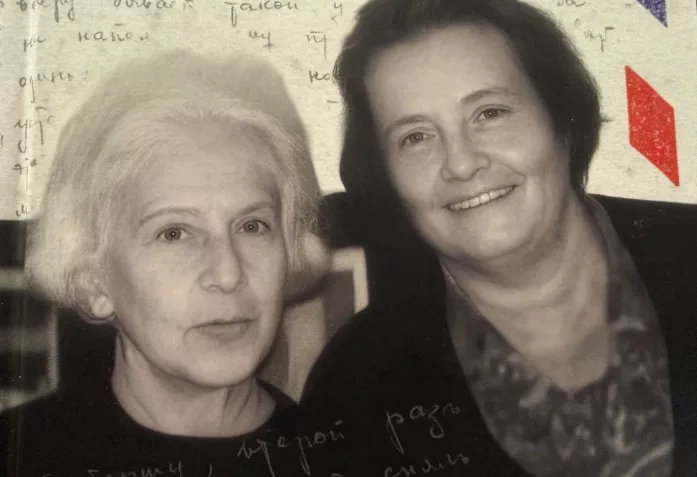
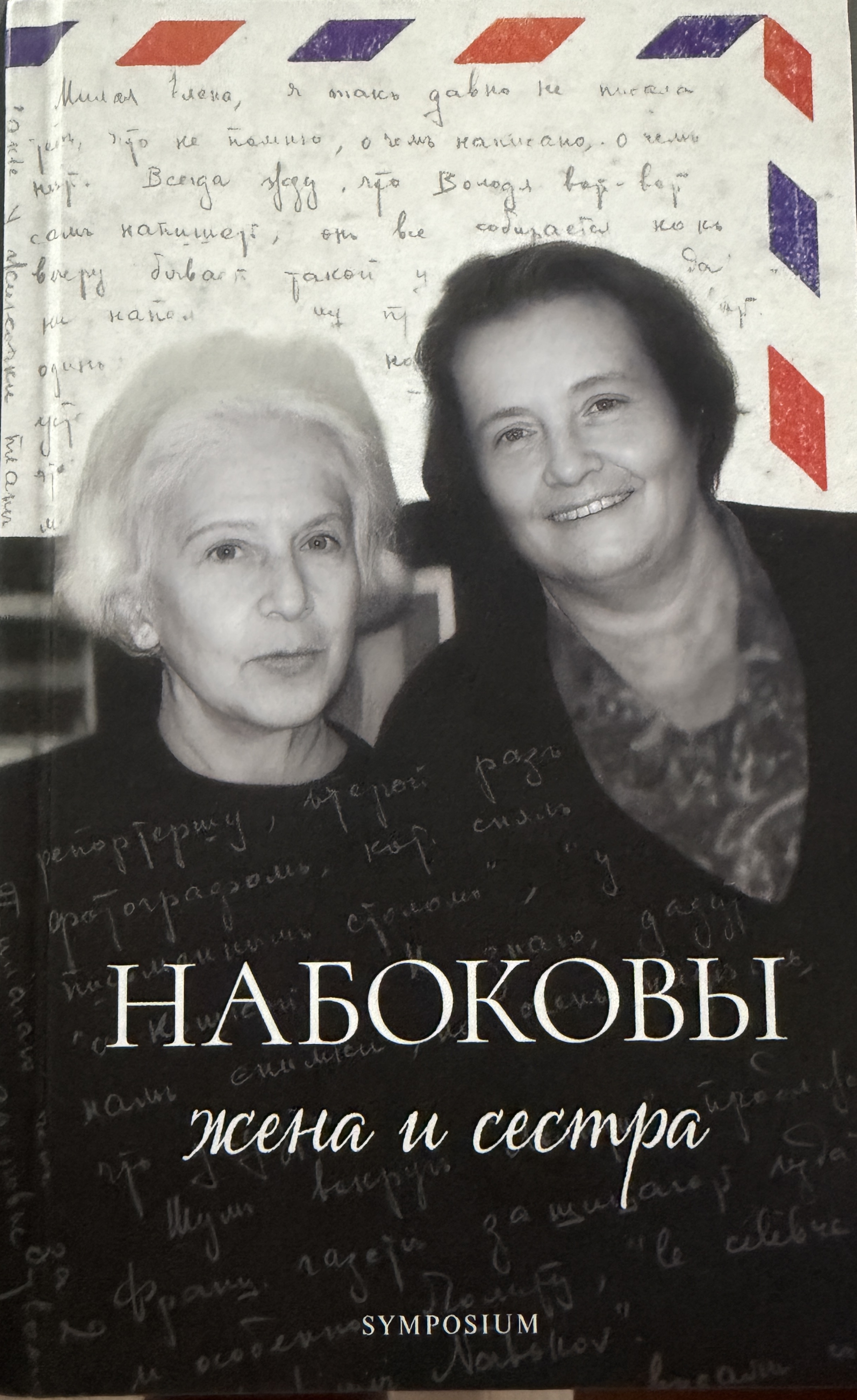
Exactly a year ago, I invited Tatyana Ponomareva, a researcher at the Institute of Russian Literature (Pushkin House) in St Petersburg and head of the “Nabokov Readings” programme, to contribute on my website Nasha Gazeta and present her book that was then still being prepared for publication by Symposium. Since then, the book entitled The Nabokovs: Wife and Sister has been published, and I managed to obtain a copy. I immediately wanted to share what I had read with my readers, all the more so because the previous piece was available only in Russian.
This book consists of several parts of unequal length. The first is a brief autobiography, only ten pages long, by Elena Vladimirovna Sikorskу (1906-2000), the writer’s sister and, perhaps, the person closest to him among all his relatives. This is followed by two letters written by Elena to her elder brother from Prague in 1932 and 1939, serving as a supplement to the edition Vladimir Nabokov. Correspondence with His Sister, published in 1985. Then come numerous letters by Nabokov’s wife, Vera Yevseyevna, née Slonim, addressed mostly to Elena, but also to their nephew Rostik (Rostislav Petkevich), the son of Olga Nabokov; these letters were most often written on behalf of Vladimir Nabokov, who did not have enough time for this, and they often contain postscripts by him and drawings of butterflies. And finally, as an appendix, there are poems by Elena Vladimirovna written between 1933 and 1939.
One can speculate for a long time about whether it is right to read other people’s letters. In my view, those who do not wish their letters to be seen destroy them. Those who preserve them usually do so in the hope of being better understood by posterity, whether their own descendants or in a broader sense. Nabokov’s case clearly belongs to the latter category, as interest in everything connected with his life and work continues to grow year by year. For admirers of the writer, this book is a real treasure trove, for it allows one to look at Vladimir Nabokov from a rare angle, not through his texts and the already established canon of their interpretations, but through those closest to him: his beloved wife and sister. Vera Nabokov appears not only as Nabokov’s wife, but also as an editor, literary agent, keeper of the archive and, in a certain sense, co-author of his biography, at times dissolving into her husband. She is not merely the companion of a genius, but the axis without which the Nabokov project would hardly have been realised in the form in which we know it, yet at the same time Vera Yevseyevna always played down her own role, striving to remain in the background. The sister, meanwhile, turns out to be a less obvious, but no less interesting figure. If Vera is the axis, then Elena is a kind of side mirror in which another version of the family and cultural history is reflected.
For both of them, despite their full awareness of Nabokov’s talent as a writer, he was first and foremost a beloved husband and brother, and their epistolary exchange underscores the human dimension of the “classic”, allowing the reader to see how his “private life” related to his views, in texts and in life, and indeed to his literary myth itself. One simply has to read attentively, sometimes between the lines.
Elena Vladimirovna’s account of her childhood years clearly shows where her brother’s traits came from: the primacy of family values, Anglophilia and a special attitude to Switzerland (through governesses), a strict upbringing, iron discipline, and, from an early age, the cultivation of reading, music and theatre. But here are two further interesting details: the operas featuring Chaliapin that stayed with her all her life (Nabokov’s son Dmitri did try to make a career as an opera singer, specifically as a bass); the viewing of the first screen adaptation of War and Peace (most likely the 1915 film by V. Gardin and Ya. Protazanov, while for Vladimir Nabokov Tolstoy would remain “the unsurpassed Russian prose writer”); and the scent of anemones in the park (on which the butterflies so loved by Nabokov love to settle).
But why does a Russian aristocrat stress that in the school chosen by her father for her and her sister, “one of the most liberal schools in St Petersburg”, Jewish girls were admitted without any restrictions, and that later, already in Berlin, after parting with Russia on board the steamship Nadezhda, which sailed from Sevastopol on 15 April 1919, “almost all the pupils in my class were Jews who had fled from Russia”? There is an explanation for this too, if one recalls the role played by the Nabokovs’ father in the notorious Beilis affair of 1913: Vladimir Vladimirovich was among the defenders of the unfortunate man accused in Kiev of the ritual murder of a twelve-year-old boy and ultimately fully acquitted, as well as the fact that the two most important men in Elena’s life apart from her husband, her brother and her son, married Jewish women.
And how perceptive she proved to be! Describing one day in the Nabokovs’ house in St Petersburg, she remarks in brackets: “now Leningrad, but let us hope that the real name will be restored”. It was.
Elena Vladimirovna’s notes end with the phrase: “In 1945 the Russian army entered Czechoslovakia.” And practically from that very point we move into Vera’s letters to her, initially sent to the address of the library of Geneva’s Palais des Nations, where Nabokov’s sister found work in 1947 and brought with her her son, whom the family called Zhika, and her husband Vsevolod, as it was too dangerous for a former White army officer to remain in Prague.
Strikingly, although only Vera’s letters have survived, preserved by Elena until her death, there is a clear sense of an active and continuous dialogue, permeated with concern for one another and for the other members of the family. The published letters cover the period from 1947 to 1973. At first glance they seem entirely domestic, with almost every letter containing enquiries about health and Zhika’s progress, endless planning of meetings, requests for his and Elena’s sizes for the purpose of sending clothes, sometimes second-hand; reports on Nabokov’s new publications and reviews of his work, for instance John Updike’s review of The Luzhin Defence, as well as on butterflies collected; news of Dmitri, accounts of monthly money transfers to relatives and apologies for occasional delays: it is difficult now to imagine that at times the Nabokovs were barely making ends meet, living from one fee to the next and spending a great deal of time looking for cheaper accommodation. It was precisely for the sake of a stable income that Vladimir Nabokov agreed to teach. “This summer we are to move to Cornell. It is a big university in New York State, but five or six hours from New York City, that is, deep in the provinces. But there V. is getting an Associate Professorship, and we hope that in a year or two he will manage to get a professorship somewhere in a livelier place,” Vera wrote to Elena on 7 March 1948, and on 14 April 1954 she reported: “Volodya has recently been made a full professor from Associate Professor. This is considered an honour, but unfortunately Cornell is very stingy, and apart from the honour has given no other benefits.” The letters frequently express regret that teaching and other ways of earning money, for example editing Anna Karenina in English or contributing articles for The New Yorker, greatly distract her husband from his main work.
Over the course of this correspondence, Nabokov completed the monumental translation of Eugene Onegin with commentary, which took more than five years, translated The Tale of Igor’s Campaign into English, and wrote The Gift, Lolita, Pnin, Speak, Memory, The Real Life of Sebastian Knight, Ada... Amid the ongoing debate surrounding Lolita, it is interesting to read Vera’s opinion of the novel from 12 November 1955: “This is not pornography at all, but a marvellous, subtle analysis ‘from within’ of a terrible maniac, and of the tragic fate of a defenseless girl,” followed by advice to Elena not to show the book to her son, who was sixteen at the time, and not to leave it lying around the house in plain sight. And only eight days later Nabokov himself adds in the next letter to his sister: “A book of mine has appeared in Paris, but I cannot send you. It is good and terrible, but its subject is forbidden here.” Three years later, on 8 December 1958, Vera shares: “Lolita is still a bestseller. And the film rights have been sold, the contract was signed the other day.” It was from the moment when the rights for a screen adaptation of Lolita were sold to Stanley Kubrick that the Nabokovs’ financial situation stabilised, and this was reflected in the amount of the regular transfers to their relatives. On 1 August 1962 Vera reports that “Lolita is on the cover of Schw. Illustrierte”, that is, the Swiss weekly Die Schweizer Illustrierte.
The correspondence also reveals some of Nabokov’s unfiltered opinions, which may surprise or even offend. Thus, on 27 December 1958 he adds at the end of Vera’s letter to Elena: “Mind you are not deceived about Doctor Zhivago. It is vile melodramatic trash, entirely in the spirit of Soviet literature, false and vulgar at the root, despite the gingerbread with cherubs.” And having settled in Florence in April 1966, he writes to his sister: “Fyodor Mikhailovich wrote The Idiot here. I can understand him. A disgustingly noisy, tormenting city.” At the same time, another novel greatly interests the Nabokovs. “Have you read Bulgakov’s The Master and Margarita? It was printed in Moskva, November 1966 and Jan <uary> 1967, and was immediately sold out,” Vera writes to Elena on 22 June 1967, and already on 1 July asks again: “You did not answer me whether you have read The Master and Margarita (old, but printed for the first time) in Moskva. If you have not read it, and if you do not have it there, a friend offers to send me a Xerox copy, she says it is marvellous, and impossible to get, it sold out at once.”
One also senses the Nabokovs’ uneven attitude towards different members of the family. Their shared affection for Elena is obvious: they call her nothing but “darling”, ending each message with kisses to her and her son. Their attitude to another sister, Olga, by contrast, is clearly disapproving: “I am returning Olga’s letter. Apart from her usual rather vulgar, or rather slightly coarse, tone, especially when the subject is affairs of the heart, this time her letter is relatively peaceful. Of course, it is full of Olga, slender, deft, astonishing Olga, thank God she sees herself that way,” Vera writes to Elena on 1 July 1967. Elena Vladimirovna’s husband, however, is not mentioned by name in a single letter, and he receives only greetings. Without kisses. True, there is sincere sympathy for Elena during his illness and at his very early death, in 1958.
I must admit that, having known Elena Vladimirovna when she was already over ninety, I find it difficult to imagine her young, sensitive, in love, and to recognise in her the author of the very personal, lyrical and sensual poems at the end of the book. All of them are devoted to her husband and filled with love for him. But at the same time there is so much sadness, doubt and loneliness in them that one hardly knows what to make of it. Here are two lines written just a year after their marriage:
In my unskilled verse I cannot otherwise praise
the sweetness of your flesh and the coldness of your heart.
It seems not all mysteries have yet been solved.
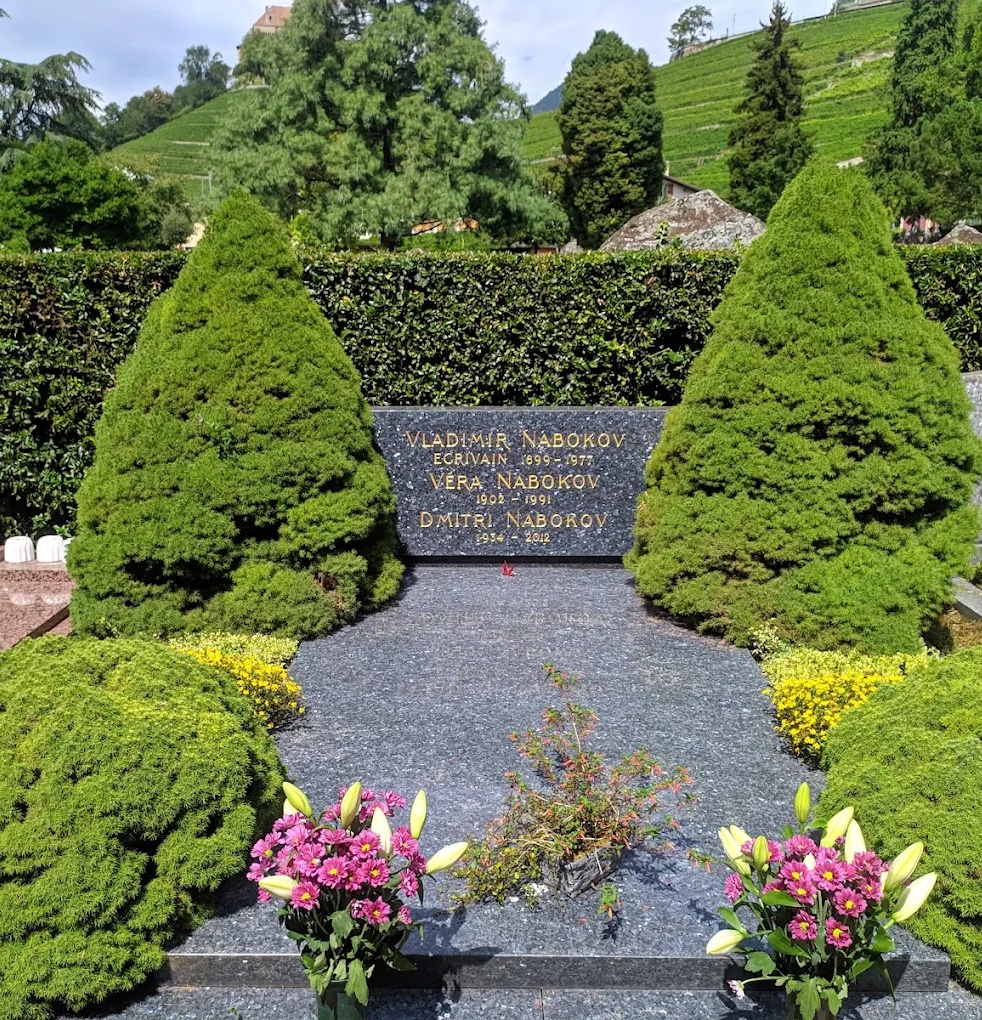
Vera Yevseyevna Nabokov outlived her husband by fourteen years, in her final years she suffered from Parkinson’s disease, but worked tirelessly to preserve Nabokov’s legacy. She died in Vevey on 7 April 1991 at the age of eighty-nine. In accordance with her wishes, her ashes were mixed with Vladimir’s, and they now rest in the cemetery in Montreux together with their son Dmitri, who left this world on 23 February 2012. In front of the Montreux Palace, where the Nabokovs lived for seventeen years, stands a monument to the writer by Filipp Rukavishnikov.
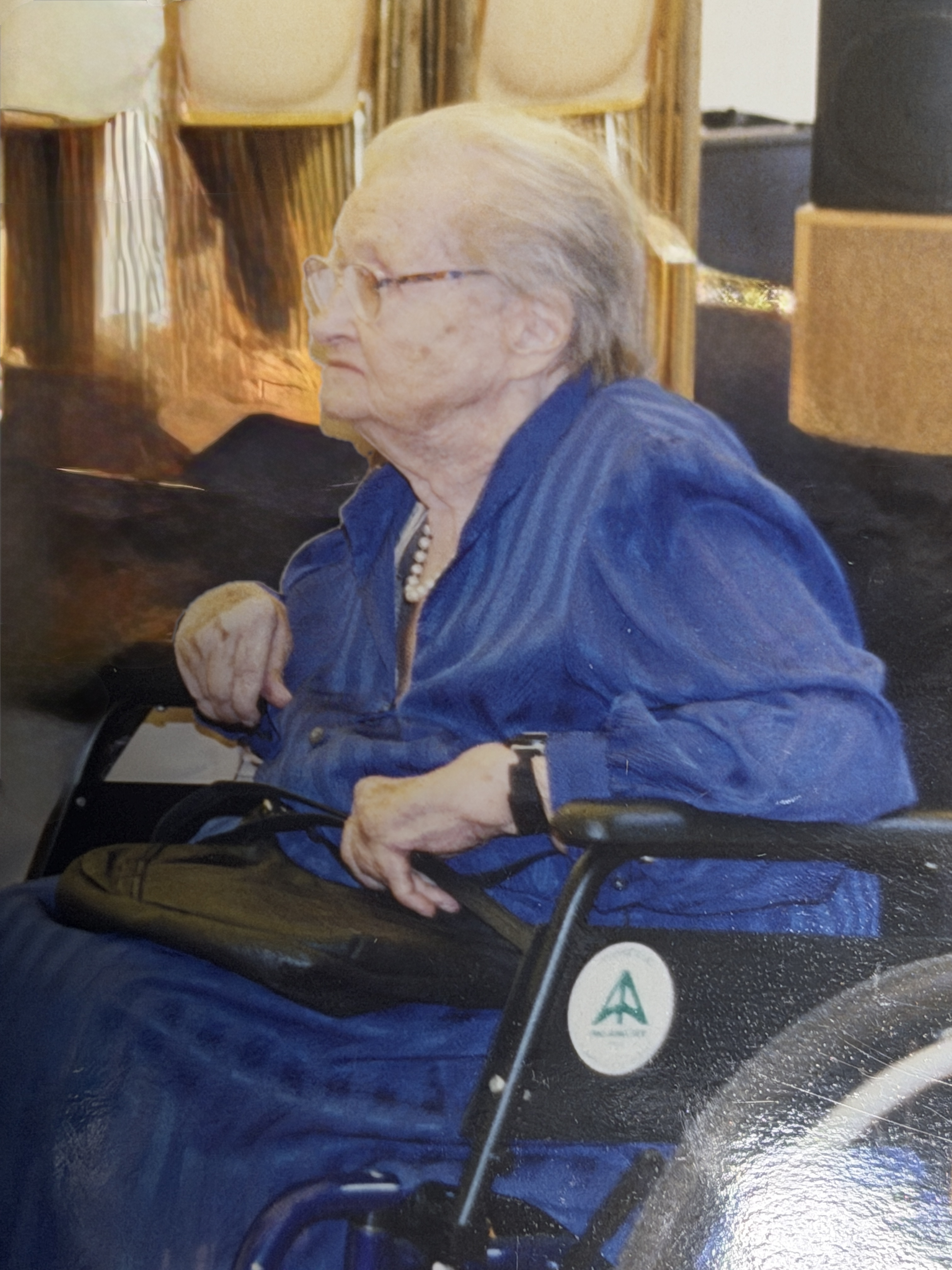
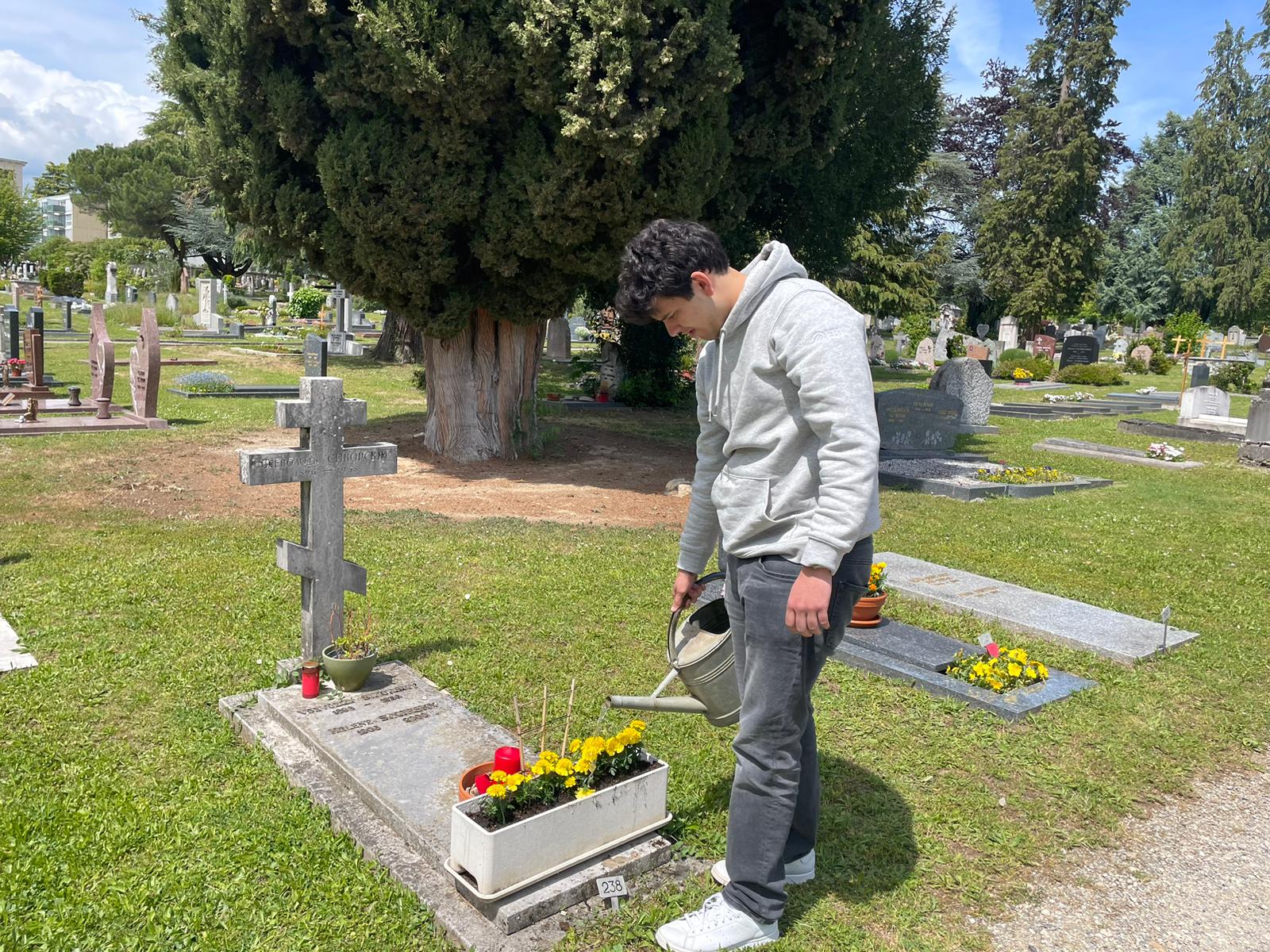
Elena Vladimirovna Sikorsky outlived her husband by forty-two years, in her final years she suffered from arthritis, was obliged to use a wheelchair, but retained clarity of mind and a sense of humour to the very end, and loved playing Scrabble and winning. She died on 9 May 2000, at the age of 94, in a nursing home in a suburb of Geneva, close to the home of her only son, with whose permission all these texts were published. She is buried in the cemetery in Geneva’s Petit-Saconnex district together with her husband; their grave is easy to recognise by the Orthodox cross.




rachel babecoff April 22, 2026
Sikorsky April 22, 2026
Лазарь Фрейдгейм April 22, 2026
Sikorsky April 22, 2026
Federica Brunelli April 22, 2026
Sikorsky April 23, 2026