
Today, on the anniversary of the Hamas attack, which pushed the prospect of peace in the Middle East into an indefinite future, I would like to introduce you to a book by a woman who knows what she is talking about.
Let me begin some way back. In December 2023, I attended a private, invitation-only screening of footage from that terrible day, 7 October 2023. It had been gathered from the mobile phones and body cameras of Hamas terrorists and their accomplices, from the phones and cameras of victims and ambulance crews, and from CCTV cameras. Forty-seven minutes of brutality, and of boasting about it. The screening was organised by the Swiss Press Club, which circulated an invitation from the Geneva branch of the Switzerland–Israel Association. Nasha Gazeta reported on it in detail, but it bears recalling that some figures on Geneva’s political left boycotted the screening and even tried to disrupt it. The Greens boycotted it as a bloc, condemning, to quote them, ‘interference by the Israeli authorities in the canton’s political microcosm’. It also bears recalling that, a year later, six representatives of one party alone, the Greens, voted against designating Hamas a terrorist organisation and banning its activities in Switzerland: Brenzikofer (Basel), Fivaz (Neuchâtel), Klopfenstein Broggini (Geneva), Porchet (Vaud), Walder (Geneva) and Wettstein (Solothurn). Nicolas Walder for Geneva’s cantonal government.
Three thousand Hamas members crossed the border with one purpose alone: to kill Jews, as many Jews as possible.
Almost exactly a year later, on 14 November 2024, I attended another invitation-only screening, this time of Resisting for Peace, at Geneva’s Cine17 cinema. It was organised by B8 of Hope, an association that supports dialogue between Israelis and Palestinians. Say the name aloud, and the explanation on the association’s website becomes clear: ‘“Beit” echoes the word for “home” in both Arabic and Hebrew, building a bridge between languages and cultures. The number 8 in our logo has a special significance, representing the eight co-founders who formed this extraordinary alliance.’
The documentary, as the invitation put it, ‘takes us through Tel Aviv, Jerusalem, Ramallah, Bethlehem, Beit Jala, checkpoints in the West Bank and kibbutzim on the Gaza border. It tells the stories of men and women who, despite their difficult personal histories and the harsh realities of their lives, continue to build connections based on mutual understanding and empathy.’
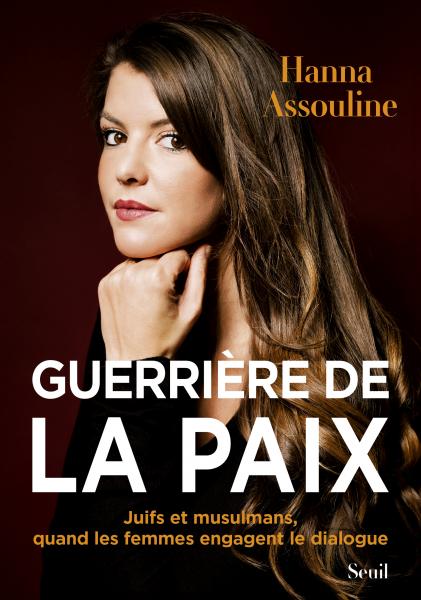
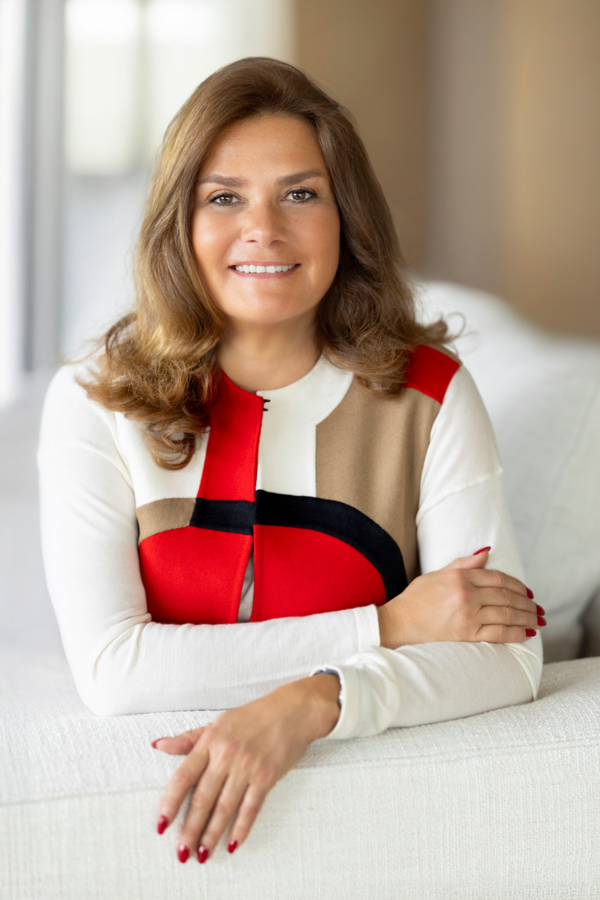
The film’s directors, Hanna Assouline and Sonia Terrab, were present at the screening. And just recently, I received a gift: a book by Hanna Assouline entitled Guerrière de la paix (Warrior for Peace, Éditions du Seuil). It came with a dedication: ‘To another warrior for peace, in the name of hope.’
I certainly do not see myself as a warrior, nor do I regard my work as ‘activism’ (the French word, militantisme, has a distinctly martial ring). Indeed, I approach any form of activism with caution, if not wariness. Yet the word ‘hope’ could hardly leave me unmoved: it is the meaning of my own name, Nadezhda, and of Hatikvah, the title of Israel’s national anthem. So I am used to writing it with a capital H. And today, on the anniversary of that terrible pogrom, when, two years on, 47 people remain in the hands of terrorists and antisemitism in Europe has reached a scale unseen since the 1930s, I want to tell you about this book.
… I read it on the train from Geneva to Zurich and back, looking up from time to time at the beautiful scenery, so utterly at odds with the horrors in its pages, and a reminder that another reality exists.
Hanna is French, born into a family of Jewish immigrants from Morocco who had always held left-wing political views, and brought up in Paris’s 20th arrondissement, a neighbourhood of many nationalities, skin colours and faiths. In her still relatively short life, she has seen her native France change before her eyes: divisions on the left have deepened; antisemitism has gathered momentum, and Islamophobia alongside it; vain politicians and naïve media outlets have steadily added fuel to the fire, to say nothing of social media, which pits communities against one another and spreads hatred.
With great honesty and objectivity, and always grounded in facts, she writes about her own experiences, about the doubts and disappointments that shaped her character and led her, in 2021, to found Les Guerrières de la Paix, ‘Women Warriors for Peace’. Le Monde published a statement by these courageous women: ‘We refuse to let the conflict between Israelis and Palestinians become a war between our communities.’ As we know, their appeal went unheeded on the wider stage, but the association grew. In the first days of October 2023, its members, Muslim and Jewish women, were in Israel, visiting kibbutzim and Palestinian towns to hear with their own ears, to see with their own eyes… Together, they walked through the streets of Tel Aviv alongside the participants in the ‘Women for Peace’ march. On 6 October, they said their goodbyes at a Paris airport, still full of all they had seen and heard…
… The reality Hanna Assouline has lived with since 7 October 2023, when ‘three thousand Hamas members crossed the border with one purpose alone: to kill Jews, as many Jews as possible’, is extraordinarily complex, with far more questions than answers.
‘Since the massacres of 7 October, we have been in mourning. Inconsolable mourning. Mourning compounded by the tens of thousands of deaths in Gaza… From 8 October onwards, all our channels of communication were flooded with aggressive statements, confrontations and insults, demands that we choose a side. So we had to come together: to make another voice heard, a voice insisting on the absolute necessity of dialogue.’ This is how her book begins. But in moments of crisis, no one seeks dialogue, no one wants to listen to reason, and everyone, especially those in the public eye, is forced to choose a camp.
‘The polarisation of the debate puts us in an intolerable position: as soon as we try to express a nuanced view, we are seen as supporters of either Israel’s far right or Hamas. Some accuse us of a “neutrality that makes us complicit” with the enemy. For both sides, speaking of peace is a betrayal.’ Reading Hanna Assouline’s words, I was reminded of a similar situation our small editorial team faced at the beginning of the war in Ukraine, when, having taken a clear stand against the war, we called for dialogue to be kept alive and for people to resist the hatred being stirred up. We continue to do so, increasingly struggling with the feeling that ours is a voice crying in the wilderness. Or rather, not in the wilderness, but in a crowd.
… Hanna Assouline’s book, an anguished cry from the heart, came out last year, and the situation has only worsened since. Hope, as the saying goes, is the last to die. But what happens to it after death? Does it disappear forever, or rise from the ashes like a phoenix? And is it only women, who give life, who can help bring about such a resurrection? It would seem so, since men clearly cannot manage it.
While we wait for hope to rise again, I urge everyone to read this book, currently available only in French. Or rather, no, not everyone: only those who sincerely want to understand.



Laurent Lévi-Strauss October 07, 2025
Sikorsky October 07, 2025
Мария еленевская October 08, 2025
Sikorsky October 08, 2025
Katja Schwob October 12, 2025
Alexandra Trifler October 08, 2026