Bookshelf

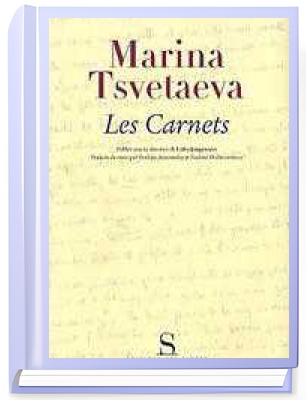
Les Carnets. Editions des Syrtes, 2008, 1136 pages

Inédits jusqu'à ce jours en français, Les Carnets de Marina Tsvetaeva, publiés dans leur intégralité sous la direction de Luba Jurgenson et traduits du russe par Eveline Amoursky et Nadine Dubourvieux, sont les documents les plus spontanés et les plus subjectifs dans l'héritage du poète. Véritable laboratoire d'écriture, ils constituent une œuvre littéraire majeure puisqu'ils offrent au lecteur la possibilité d'accéder aux sources mêmes de la création poétique.

Commencé peu avant la première Guerre mondiale pour prendre fin à la veille de la Seconde (1913-1939). Cet exercice de lucidité, qui livre les clés des secrets tsvetaeviens tout en ouvrant sur la scène de l'Histoire, n'entrave pas son avancée à travers les mondes intimes que le lecteur a appris à côtoyer au gré des poèmes et des proses édités précédemment.


Extraits d’articles parus sur Les Carnets de Marina Tsvetaeva

La Croix – «Ces cahiers, blocs-notes, ou carnets exhumés et aujourd’hui enrichis de documents d’archives, de photographies et de fac-similés de textes sont une porte ouverte sur l’atelier de l’artiste. Une percée dans son quotidien, le biais, intime et routinier, par lequel le lecteur appréhendera plus justement la personnalité libre et complexe du poète».

Nouvel Observateur – «Ces notes parfois courtes, à la fois lyriques et futuristes, rappellent les « fusées » de Baudelaire. Rien n’égale leur lecture, leur mise à feu.»

Le Courrier – «Au-delà de leur intérêt biographique, Les Carnets ouvrent au lecteur l’atelier d’écriture d’un des plus grands poètes du XXème siècle.»

Ouest-France – «Faits de poèmes, notations, réflexions, citations, ils constituent souvent le matériau premier de l’écriture poétique. Le texte est accompagné d’un superbe ensemble de photos, de reproductions de pages de carnets. Une bible.»

Valeurs actuelles – «Tout concourt à faire de ce livre un monument à la piété poétique.»

Le monde des livres – «Mille pages de chantier défilent ainsi, entre écriture et vie quotidienne, au galop d’une phrase qui fait sentir toute l’énergie d’une existence, et que les traductrices savent transposer dans un français d’une remarquable acuité.»

Libération – «Une édition remarquable. Le don, la force, le raffinement, le travail : l’alambic d’un poète génial.»

 

About the author

Nadia Sikorsky

Nadia Sikorsky grew up in Moscow where she obtained a master's degree in journalism and a doctorate in history from Moscow State University. After 13 years at UNESCO, in Paris and then in Geneva, and having served as director of communications at Green Cross International founded by Mikhail Gorbachev, she developed NashaGazeta.ch, the first online Russian-language daily newspaper, launched in 2007.

In 2022, she found herself among those who, according to Le Temps editorial board, "significantly contributed to the success of French-speaking Switzerland," thus appearing among opinion makers and economic, political, scientific and cultural leaders: the Forum of 100.

After 18 years leading NashaGazeta.ch, Nadia Sikorsky decided to return to her roots and focus on what truly fascinates her: culture in all its diversity. This decision took the form of this trilingual cultural blog (Russian, English, French) born in the heart of Europe – in Switzerland, her adopted country, the country distinguished by its multiculturalism and multilingualism.

Nadia Sikorsky does not present herself as a "Russian voice," but as the voice of a European of Russian origin (more than 35 years in Europe, 25 years spent in Switzerland) with the benefit of more than 30 years of professional experience in the cultural world at the international level. She positions herself as a cultural mediator between Russian and European traditions; the title of the blog, "The Russian Accent," captures this essence – the accent being not a linguistic barrier, not a political position but a distinctive cultural imprint in the European context.

Events
Most read

The decision of the Music Society of La Chaux-de-Fonds not to cancel the concert by Elisabeth Leonskaja and The Jerusalem Quartet, scheduled for 22 March, has turned what would have been an ordinary cultural event into a victory of reason and professionalism. I will explain why and present an exclusive interview with the outstanding pianist.

Let me clarify at the outset: this is not about a specific musical composition, but about an ensemble formed just over a year ago which, after a successful debut in Zurich, is now preparing to demonstrate its artistry in Geneva.

The personal relics of the last King of Italy, preserved within the family until today, will be presented to the public in Geneva for the first time. This month, Piguet Hôtel des Ventes will offer at auction a unique collection of orders of chivalry and decorations that belonged to Umberto II (1904-1983). They will be exhibited in the Maison’s salons from 12 to 15 March, before being offered to collectors during the auction week beginning on 16 March.