Bookshelf

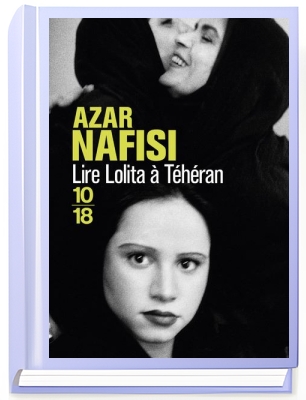
Azar Nafisi: Lire Lolita à Téhéran. Editions Poche, Paris, 2005

Traduction par Marie-Hélène Dumas.

Après avoir démissionné de l'Université de Téhéran sous la pression des autorités iraniennes, Azar Nafisi a réuni pendant deux ans, dans l'intimité de son salon, sept étudiantes pour y lire Nabokov, Fitzgerald, Austen... Ce livre magnifique est le portrait brut et déchirant de la révolution islamique en Iran. La démonstration magistrale que l'imagination bâtit la liberté.

" Un livre captivant. Il explore avec ferveur et conviction le pacte tacite existant entre l'écrivain, le livre et le lecteur. Tous les lecteurs...

Notre critique est disponible ici

About the author

Nadia Sikorsky

Nadia Sikorsky grew up in Moscow where she obtained a master's degree in journalism and a doctorate in history from Moscow State University. After 13 years at UNESCO, in Paris and then in Geneva, and having served as director of communications at Green Cross International founded by Mikhail Gorbachev, she developed NashaGazeta.ch, the first online Russian-language daily newspaper, launched in 2007.

In 2022, she found herself among those who, according to Le Temps editorial board, "significantly contributed to the success of French-speaking Switzerland," thus appearing among opinion makers and economic, political, scientific and cultural leaders: the Forum of 100.

After 18 years leading NashaGazeta.ch, Nadia Sikorsky decided to return to her roots and focus on what truly fascinates her: culture in all its diversity. This decision took the form of this trilingual cultural blog (Russian, English, French) born in the heart of Europe – in Switzerland, her adopted country, the country distinguished by its multiculturalism and multilingualism.

Nadia Sikorsky does not present herself as a "Russian voice," but as the voice of a European of Russian origin (more than 35 years in Europe, 25 years spent in Switzerland) with the benefit of more than 30 years of professional experience in the cultural world at the international level. She positions herself as a cultural mediator between Russian and European traditions; the title of the blog, "The Russian Accent," captures this essence – the accent being not a linguistic barrier, not a political position but a distinctive cultural imprint in the European context.

Events