Bookshelf

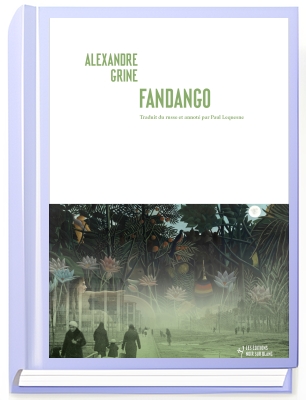
Alexandre Grine : Fandango. Editions Noir sur Blanc,12 janvier 2023, 128 pages • 17 Euros • 22 CHF

Traduit du russe et annoté par Paul Lequesne. Collection La bibliothèque de Dimitri Première édition : L’Âge d’Homme, 2003 Traduction revue et corrigée

Fandango est l’une des plus longues nouvelles d’Alexandre Grine. Si elle ne fut publiée qu’en 1927, la date de sa rédaction remonte certainement à 1924, année de parution de L’Attrapeur de rats, dont l’intrigue est rigoureusement contemporaine. Fandango s’appuie sur la confrontation entre la réalité (Petrograd en 1921, le froid et la faim) et le monde fantasmagorique de la peinture : un homme traverse un tableau pour se retrouver dans un univers imaginaire. On y retrouve, non pas en toile de fond, mais au premier rang, le Pétersbourg affamé et dévasté des années d’après-guerre, un héros famélique, et surtout plusieurs détails qui en font une sorte d’œuvre miroir et la rattachent à L’Attrapeur de rats aussi solidement que si l’auteur y avait écrit le mot « suite ».

Tour à tour apprenti matelot, vagabond, chercheur d’or, bûcheron, flotteur de bois, soldat, déserteur et révolutionnaire, Alexandre Grine (1880-1932) connut la misère la plus noire, la faim, l’exil et la prison. Autodidacte, nourri de littérature populaire, riche d’une étrange érudition construite au hasard de ses lectures, de ses rencontres et de ses voyages, il finit, vers 1905, par se consacrer exclusivement à la littérature, s’imposant peu à peu parmi les auteurs les plus singuliers du xxe siècle.

About the author

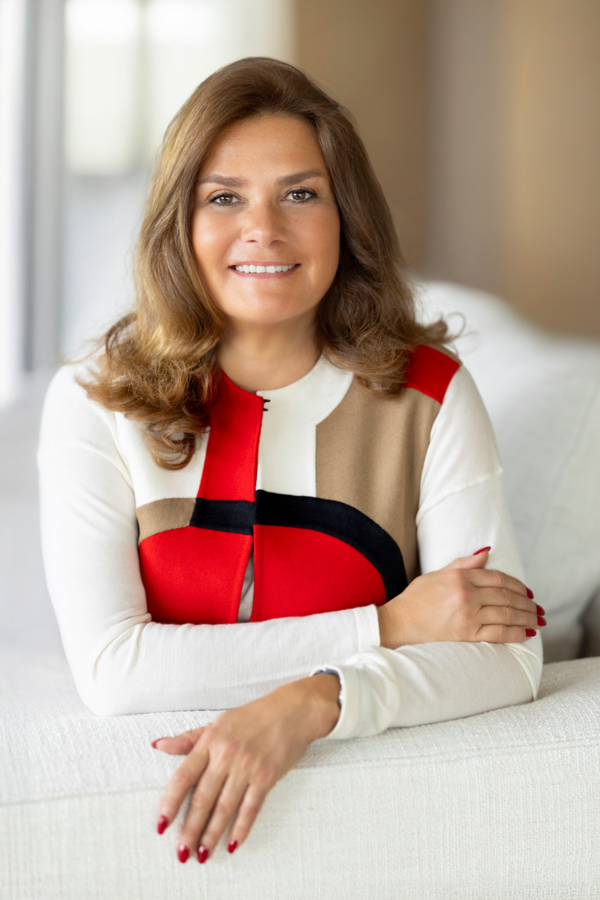
Nadia Sikorsky

Nadia Sikorsky grew up in Moscow where she obtained a master's degree in journalism and a doctorate in history from Moscow State University. After 13 years at UNESCO, in Paris and then in Geneva, and having served as director of communications at Green Cross International founded by Mikhail Gorbachev, she developed NashaGazeta.ch, the first online Russian-language daily newspaper, launched in 2007.

In 2022, she found herself among those who, according to Le Temps editorial board, "significantly contributed to the success of French-speaking Switzerland," thus appearing among opinion makers and economic, political, scientific and cultural leaders: the Forum of 100.

After 18 years leading NashaGazeta.ch, Nadia Sikorsky decided to return to her roots and focus on what truly fascinates her: culture in all its diversity. This decision took the form of this trilingual cultural blog (Russian, English, French) born in the heart of Europe – in Switzerland, her adopted country, the country distinguished by its multiculturalism and multilingualism.

Nadia Sikorsky does not present herself as a "Russian voice," but as the voice of a European of Russian origin (more than 35 years in Europe, 25 years spent in Switzerland) with the benefit of more than 30 years of professional experience in the cultural world at the international level. She positions herself as a cultural mediator between Russian and European traditions; the title of the blog, "The Russian Accent," captures this essence – the accent being not a linguistic barrier, not a political position but a distinctive cultural imprint in the European context.

Events