Bookshelf

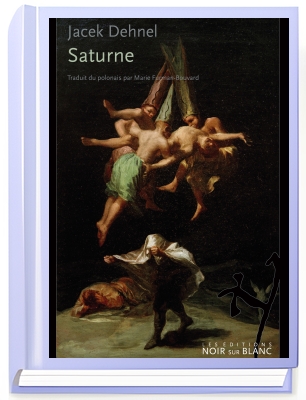
Jacek Dehnel: Saturne. Editions Noir sur Blanc, 2014. 20 € / 240 pages

Traduit du polonais par Marie Furman-Bouvard

En faisant parler tour à tour Francisco Goya, son fils Javier et son petit-fils Mariano, Dehnel nous plonge dans un roman familial d’une tension inouïe. Le grand Goya nous apparaît dominateur et rustre, menteur et impulsif : peintre génial, amant insatiable (il aime les femmes et, en secret, un homme), il est aussi un père cruel et déchiré (sa femme et lui ont perdu plus de douze enfants). Goya tourmente son fils unique, Javier, dont le peu de vigueur l’exaspère. Ce dernier, qui a de l’or dans les mains, renonce à peindre, de même que, peu à peu, obèse et retiré du monde, il semble renoncer à vivre. Le petit-fils, Mariano, dont Goya se targue parfois d’être le véritable père (ayant dû, là encore, pallier la faiblesse de Javier), est en revanche un joyeux sybarite, un homme à femmes qui ne fait rien et que son grand-père adore. À la mort de Goya, Javier laissera jaillir son talent et sa rage en peignant les fameuses « peintures noires », série d’œuvres murales qui culminent en un Saturne dévorant l’un de ses enfants. Ces images folles et cruelles, Mariano les fera attribuer plus tard au vieux Goya, rejetant ainsi le témoignage et la mémoire de son père dans l’oubli.

Un roman à trois voix qui nous plonge dans l’enfer familial du génie Francisco Goya – et dans les mystères de ses célèbres Peintures noires, parmi lesquelles figure le Saturne dévorant son enfant. En suivant tour à tour le grand peintre, son fils unique et humilié, Javier, puis son petit-fils Mariano, un jouisseur heureux de sa vie vaine, Dehnel nous restitue magistralement l’Espagne décadente du début du dix-neuvième siècle, et cette Quinta del Sordo (Ferme du Sourd) en laquelle Goya régna sur les siens en tyran.

Jacek Dehnel (né en 1980) est un poète, romancier, peintre, traducteur, docteur ès lettres et spécialiste de la poésie anglaise. Il a remporté de nombreux prix et est considéré unanimement en Pologne comme l’un des écrivains les plus talentueux de la jeune génération. Son roman Lala (2006) a reçu un formidable accueil en Pologne, mais aussi en Allemagne, en Angleterre, en Italie et en Espagne.

About the author

Nadia Sikorsky

Nadia Sikorsky was born and raised in Moscow. She graduated from the Faculty of Journalism at Moscow State University and went on to complete her postgraduate studies there, earning a PhD in History. She spent 13 years at UNESCO, first in Paris and then in Geneva. After serving as Director of Communications at Green Cross International, founded by Mikhail Gorbachev, she launched NashaGazeta.ch in 2007, Switzerland’s first Russian-language online daily newspaper.

In 2022, Nadia Sikorsky was named to Le Temps’ Forum des 100, which brings together individuals who, in the newspaper’s view, have “significantly contributed to the success of French-speaking Switzerland”, from across public life, business, politics, science and culture.

After 18 years at the helm of NashaGazeta.ch, Nadia Sikorsky decided to devote herself to what had always held a special place in her work as a journalist: culture in all its diversity. This led to the creation of Russian Accent, a trilingual cultural blog in Russian, French and English, born in the heart of Europe, in Switzerland, which has become her second home and whose multiculturalism and multilingualism have helped shape the character of this new project.

At the heart of the project is the perspective of a European of Russian origin, drawing on more than 35 years of professional experience and a deep knowledge of both cultural traditions. Nadia Sikorsky sees her role as that of a cultural mediator between the two. The title of the blog, Russian Accent, reflects this idea: the accent is neither a linguistic barrier nor a political position, but a distinctive cultural imprint within a European context.

Events
Most read

A new book by the Geneva-based Slavist Jean-Philippe Jaccard and his Russian colleague Andrei Ustinov, now living in San Francisco, has been published by the European University at St Petersburg: Vzir Zaumi. Daniil Harms and the Literary Avant-Garde of the 1920s. In the authors' own words, the volume offers a kind of X-ray of Leningrad's "left-wing " circles and their evolution during the period between Harms's poetic debut and the creation of OBERIU, as well as the dynamics that shaped those circles.

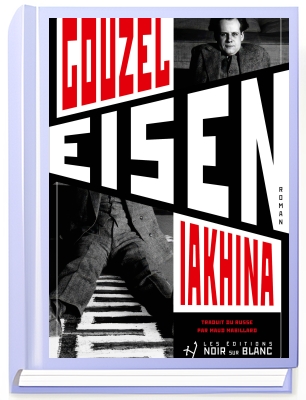
A few days ago, the Lausanne-based publisher Éditions Noir sur Blanc brought out Guzel Yakhina’s novel about the celebrated Soviet film director Sergei Eisenstein. French readers will be able to read it in Maud Mabillard’s translation and, importantly, in full, including the ninth chapter omitted from the Russian edition.