Bookshelf

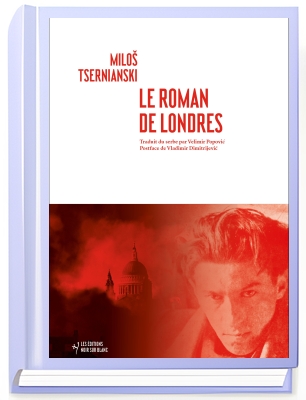
Miloš Tsernianski : Le Roman de Londres

Traduit du serbe par Velimir Popović. Postface de Vladimir Dimitrijević. Première édition : 1992. Traduction revue et corrigée. Collection La bibliothèque de Dimitri

« J’ai écrit ce roman à Finchley, dans la banlieue de Londres, en 1946-1947. À une époque où ma femme et moi étions très proches du suicide. »

Texte d’une modernité étourdissante et au lyrisme enivrant inspiré par l’expérience de son auteur, Le Roman de Londres suit le destin d’un couple russe exilé à Londres après la Seconde Guerre mondiale. Errant dans une ville qui les ignore, le prince Repnine et son épouse Nadia s’efforcent d’exister dans le désespoir de l’inappartenance. Dès le début se dessine la terrible voie que le prince compte emprunter pour échapper au désespoir. Cette fatalité détermine le cours de ce roman épique, rappelant la difficulté de l’homme à vivre dans la confusion de l’époque contemporaine. Livre de toutes les personnes déplacées et portrait d’une ville tentaculaire, Le Roman de Londres est aussi un roman d’amour poignant et une réflexion profonde sur le libéralisme effréné.

Miloš Tsernianski (1883-1977) fut l’un des plus importants poètes et romanciers serbes ainsi que le chef de file de l’avant-garde yougoslave. Diplomate à Berlin et à Rome au début de la Seconde Guerre mondiale, il s’exile à Londres où il réside pendant plus de deux décennies. Il y écrit ses œuvres les plus marquantes (Migrations, Lamento pour Belgrade, Le Roman de Londres). Toute son œuvre est marquée par une vision métaphysique de l’homme et de l’humanité.

About the author

Nadia Sikorsky

Nadia Sikorsky grew up in Moscow where she obtained a master's degree in journalism and a doctorate in history from Moscow State University. After 13 years at UNESCO, in Paris and then in Geneva, and having served as director of communications at Green Cross International founded by Mikhail Gorbachev, she developed NashaGazeta.ch, the first online Russian-language daily newspaper, launched in 2007.

In 2022, she found herself among those who, according to Le Temps editorial board, "significantly contributed to the success of French-speaking Switzerland," thus appearing among opinion makers and economic, political, scientific and cultural leaders: the Forum of 100.

After 18 years leading NashaGazeta.ch, Nadia Sikorsky decided to return to her roots and focus on what truly fascinates her: culture in all its diversity. This decision took the form of this trilingual cultural blog (Russian, English, French) born in the heart of Europe – in Switzerland, her adopted country, the country distinguished by its multiculturalism and multilingualism.

Nadia Sikorsky does not present herself as a "Russian voice," but as the voice of a European of Russian origin (more than 35 years in Europe, 25 years spent in Switzerland) with the benefit of more than 30 years of professional experience in the cultural world at the international level. She positions herself as a cultural mediator between Russian and European traditions; the title of the blog, "The Russian Accent," captures this essence – the accent being not a linguistic barrier, not a political position but a distinctive cultural imprint in the European context.

Events