Bookshelf

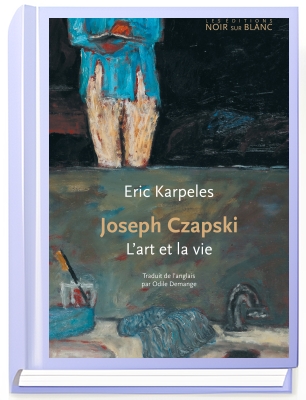
Eric Karpeles: Joseph Czapski. L’art et la vie. Editions Noir sur Blanc, 1 octobre 2020, 155 images en couleur, 576 pages. 34 Euros/39 CHF

Traduit de l’anglais (États-Unis) par Odile Demange.

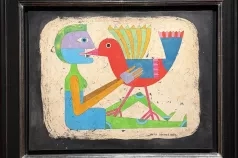
Joseph Czapski (1896-1993) a vécu de nombreuses vies au cours de sa longue existence. Étudiant à Saint-Pétersbourg pendant la Révolution russe, il s’installe à Paris durant les Années folles et devient peintre. Officier de réserve dans l’armée polonaise, il lutte contre l’envahisseur nazi dès les premières semaines de la Seconde Guerre mondiale. Mais il est fait prisonnier par les Soviétiques. Enfermé au camp de Starobielsk, il est l’un des très rares détenus à avoir échappé au massacre de Katyń (Voir Proust contre la déchéance et Souvenirs de Starobielsk, chez Noir sur Blanc et Libretto, ainsi que Terre inhumaine repris dans la « bibliothèque de Dimitri »).
Czapski n’est jamais retourné en Pologne après la guerre. Installé en région parisienne avec sa sœur et les intellectuels de la revue polonaise Kultura, il a travaillé sans relâche à faire connaître le sort de sa patrie soumise au totalitarisme. Personnalité publique de tout premier plan, il a donné sens à sa vie grâce à la peinture. Également peintre, Eric Karpeles révèle ici la complexité de Czapski en assemblant tous les fils de cette vie remarquable.


Né en 1953 dans l’État de New York, Eric Karpeles est peintre, écrivain et traducteur. Diplômé de la New York Art Students League, il est membre du Czesław Miłosz Institute du Claremont McKenna College en Californie. À l’occasion de recherches qu’il mène pour son précédent ouvrage, Le Musée imaginaire de Marcel Proust (Thames & Hudson), il découvre le nom, puis l’œuvre, de Joseph Czapski, pour lequel il se prend d’une passion singulière.

About the author

Nadia Sikorsky

Nadia Sikorsky grew up in Moscow where she obtained a master's degree in journalism and a doctorate in history from Moscow State University. After 13 years at UNESCO, in Paris and then in Geneva, and having served as director of communications at Green Cross International founded by Mikhail Gorbachev, she developed NashaGazeta.ch, the first online Russian-language daily newspaper, launched in 2007.

In 2022, she found herself among those who, according to Le Temps editorial board, "significantly contributed to the success of French-speaking Switzerland," thus appearing among opinion makers and economic, political, scientific and cultural leaders: the Forum of 100.

After 18 years leading NashaGazeta.ch, Nadia Sikorsky decided to return to her roots and focus on what truly fascinates her: culture in all its diversity. This decision took the form of this trilingual cultural blog (Russian, English, French) born in the heart of Europe – in Switzerland, her adopted country, the country distinguished by its multiculturalism and multilingualism.

Nadia Sikorsky does not present herself as a "Russian voice," but as the voice of a European of Russian origin (more than 35 years in Europe, 25 years spent in Switzerland) with the benefit of more than 30 years of professional experience in the cultural world at the international level. She positions herself as a cultural mediator between Russian and European traditions; the title of the blog, "The Russian Accent," captures this essence – the accent being not a linguistic barrier, not a political position but a distinctive cultural imprint in the European context.

Events