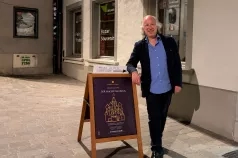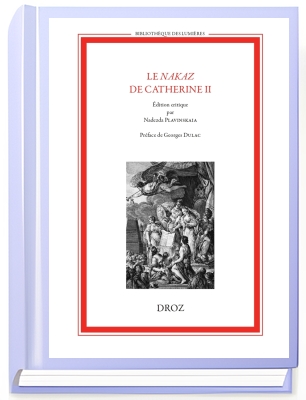
This intriguing title is that of an exhibition which opened last Saturday at the Jan Michalski Foundation in Montricher.
Stefan Zweig needs no introduction to Russian-speaking readers. The Austrian writer, whose life ended in tragedy, was immensely popular in the Soviet Union. Suffice it to say that the foreword to the twelve-volume edition of his collected works, which began appearing in the 1920s, was written by Maxim Gorky himself. Zweig, who dearly loved Russian literature, was delighted. In 1928, he travelled to the Soviet Union for the celebrations marking the centenary of Leo Tolstoy’s birth and met numerous writers. Back then, all was still well. Later, however, his attitude towards the USSR became increasingly critical. On 28 September 1936, he wrote to Romain Rolland:
‘…in your Russia, Zinoviev, Kamenev, veterans of the Revolution, Lenin’s earliest comrades-in-arms, have been shot like rabid dogs… Always the same methods, whether Hitler’s or Robespierre’s: ideological differences are labelled a “conspiracy”.’
This judgement strained his relations not only with Rolland, whom Zweig regarded as the ‘conscience of Europe’, but also, naturally enough, with Soviet publishers.
In 1956, however, the wind changed direction, and the State Publishing House for Literary Fiction brought out a two-volume edition of Zweig’s Selected Works, bound in lilac. This time, the introductory essay was written by the literary scholar Boris Suchkov, who had been released only the previous year from Karlag, the Soviet labour camp where he had been imprisoned since the late 1940s on espionage charges, after having served in the war. He had subsequently become deputy editor-in-chief of the literary journal Znamya.
His essay, all thirty pages of it, remains interesting even today, although it is packed with the vocabulary and rhetoric of the period, particularly about ‘bourgeois writers’, even the best of whom apparently failed to understand everything quite as they should. Yet his main conclusion is entirely sound. He places the Austrian writer’s works among ‘the most significant achievements of Western European literature, which has produced few writers who believed as sincerely and purely in the goodness inherent in humanity as Stefan Zweig’.
As always, time has put everything in its proper place, and one would like to believe that our compatriots are still engrossed in his novellas Amok, Letter from an Unknown Woman and Confusion of Feelings, as well as his deeply moving autobiography, The World of Yesterday: Memoirs of a European, published posthumously. This elegiac, profoundly affecting work almost demands to be described by a musical term: a requiem.
We shall not recount Stefan Zweig’s biography here. Let us merely recall that he was born in Vienna in 1881 into a wealthy Jewish family and died in Petrópolis, near Rio de Janeiro. He had settled there after several years of wandering, which began with Hitler’s rise to power. Nowhere did he feel safe; everywhere he felt a stranger.
On 22 February 1942, Stefan Zweig and his wife Charlotte took their own lives by swallowing a fatal dose of the powerful sleeping drug Veronal. They were found dead in their home, holding hands. Thus, ‘of his own free will’, the writer became another victim of the catastrophe that was engulfing European Jewry. One cannot escape oneself, nor can one escape fate.
The exhibition at the Jan Michalski Foundation is devoted to Zweig, but not to Zweig the writer. Instead, it presents Zweig the collector. And what he collected was no ordinary assortment of objects, but manuscripts by other writers whom he admired.
Literary preferences, like love itself, are irrational. There is therefore little point in looking for a systematic approach to this collection. It is simply a reflection of Zweig’s tastes and his genuine interest in European literature, with all its rich diversity.
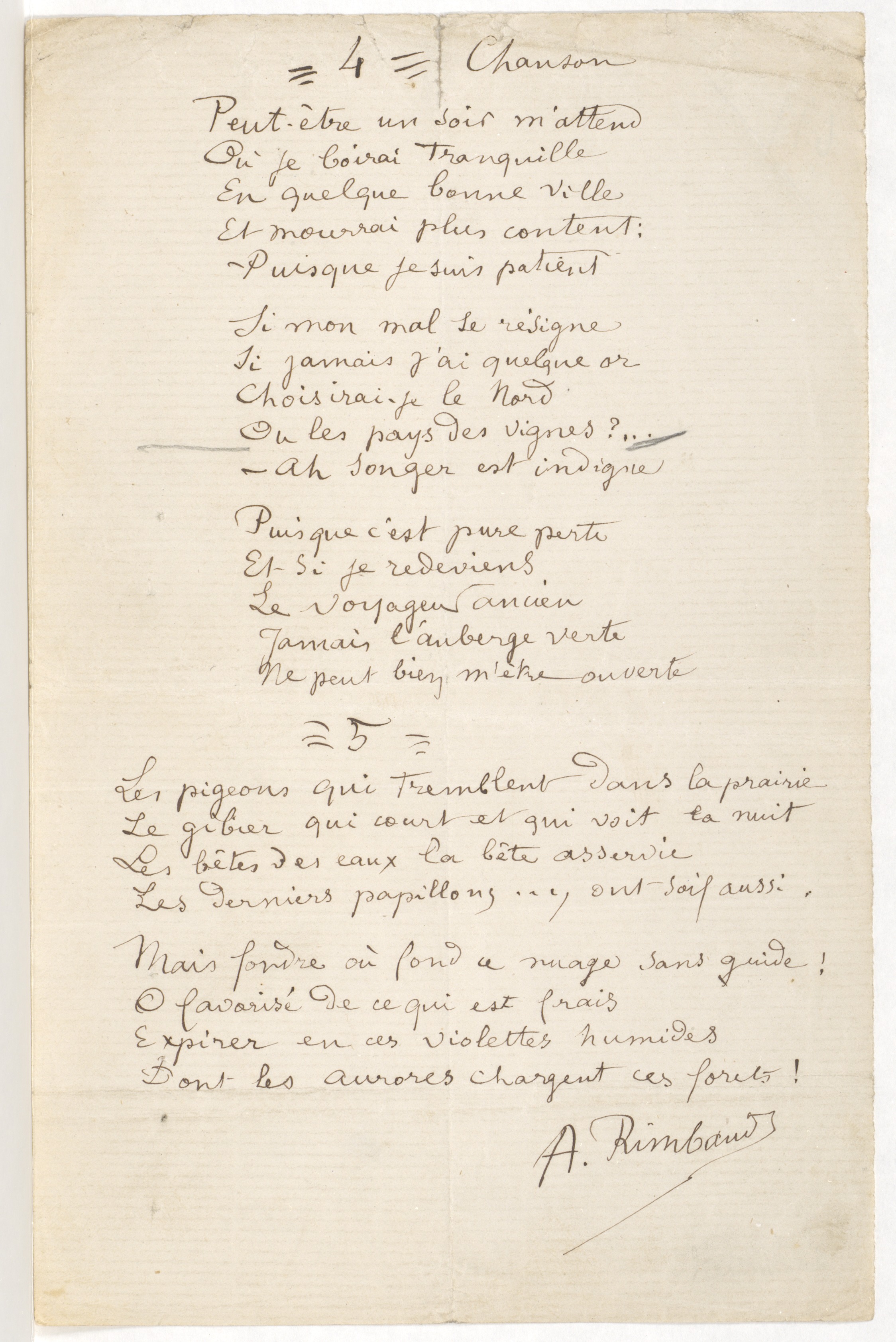
Visitors encounter sketches of famous works and others that never saw the light of day, drafts, diaries and manuscripts ready to be sent to the printer, spanning the period from the Renaissance to Zweig’s own contemporaries. As you study the handwriting of Goethe, Balzac, Rimbaud, Casanova or Wilde, you cannot help regretting the absence of a graphologist nearby. There is something almost sacred about the experience, as though you had been admitted behind the scenes, not of a theatre, but of the literary creative process.
Indeed, this was the very purpose of Zweig’s collecting, as he explained in his lecture The Secret of Artistic Creation, delivered in New York in 1939:
‘In order to bring this supreme joy to as many people as possible, I believe it would be wonderful if museums exhibited not only published works, but also the sketches, drafts and plans that preceded them, so that people would not dismissively imagine that a literary work falls from heaven, but would realise what miracles their fellow human beings, people just like themselves, create through anguish, suffering and joy, wresting the raw material from life at an enormous emotional cost.’
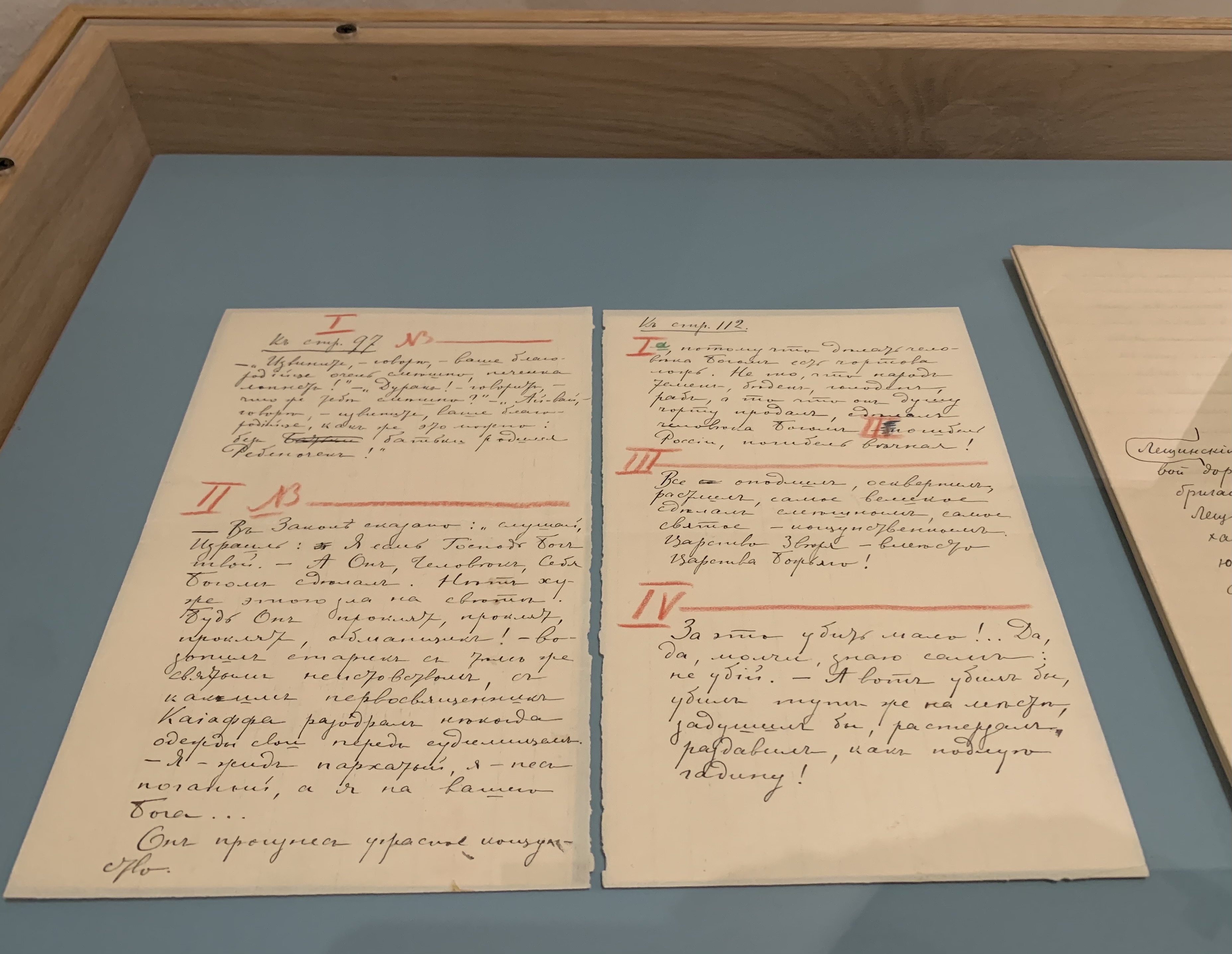
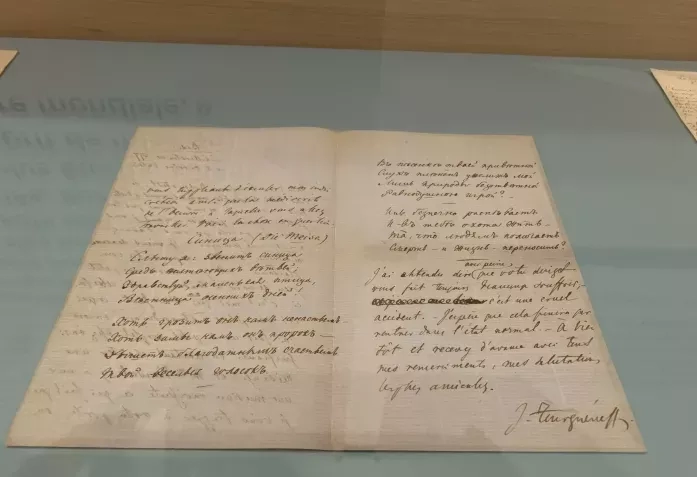
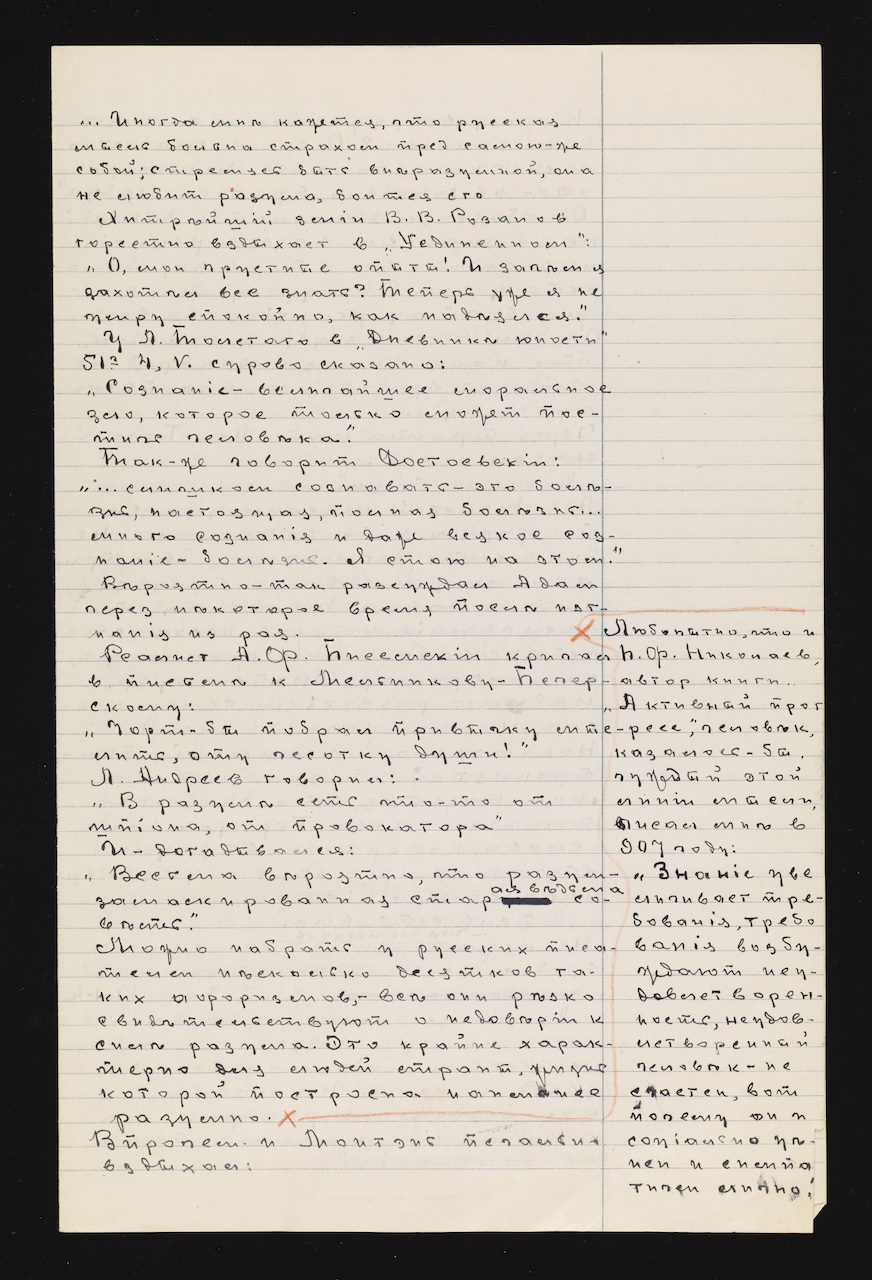
To my immense delight, Russian authors are very well represented in the exhibition! What a pleasure it is to read, in the original, even if through glass, Maxim Gorky’s Notes from a Diary, an extract from Pyotr Kropotkin’s article The Influence of Leo Tolstoy in Russia, Ivan Krylov’s fable The Cornflower, Dmitry Merezhkovsky’s notes for his novel Alexander I, a letter from Ivan Turgenev to his German translator (written in French, but containing the poem The Titmouse in Russian), and a fragment of a ‘philosophical dialogue’ by Vladimir Solovyov.
The opportunity for such direct contact with these writers takes one’s breath away and makes one’s head spin.
But what connects Stefan Zweig with Martin Bodmer, the Geneva-based bibliophile and founder of the Foundation?
When Zweig learnt that his own books had been burnt in the square outside Berlin University on 10 May 1933, he decided to part with his unique collection. As he later wrote in The World of Yesterday, he believed it was more deserving of survival than his own writings. Remarkable modesty for such a successful author, would you not agree?
To achieve this, he enlisted the help of the well-known Viennese antiquarian bookseller Heinrich Hinterberger, with whom he organised the sale from London. Fortunately for all of us, most of the collection was acquired by Bodmer, ensuring its preservation for future generations.
We know that Zweig had not met Bodmer personally at the time. Bodmer was seventeen years his junior, but Zweig knew of his reputation as a serious bibliophile. Perhaps he had heard of him during his Swiss years, or, more precisely, his time in Zurich. Between 1917 and 1920, Zweig lived in the city on the River Limmat, where his play Jeremiah was staged on 27 February 1917. An anti-war drama based on the biblical Book of Jeremiah, it ends with the words: ‘A man can be chained, but not his spirit.’
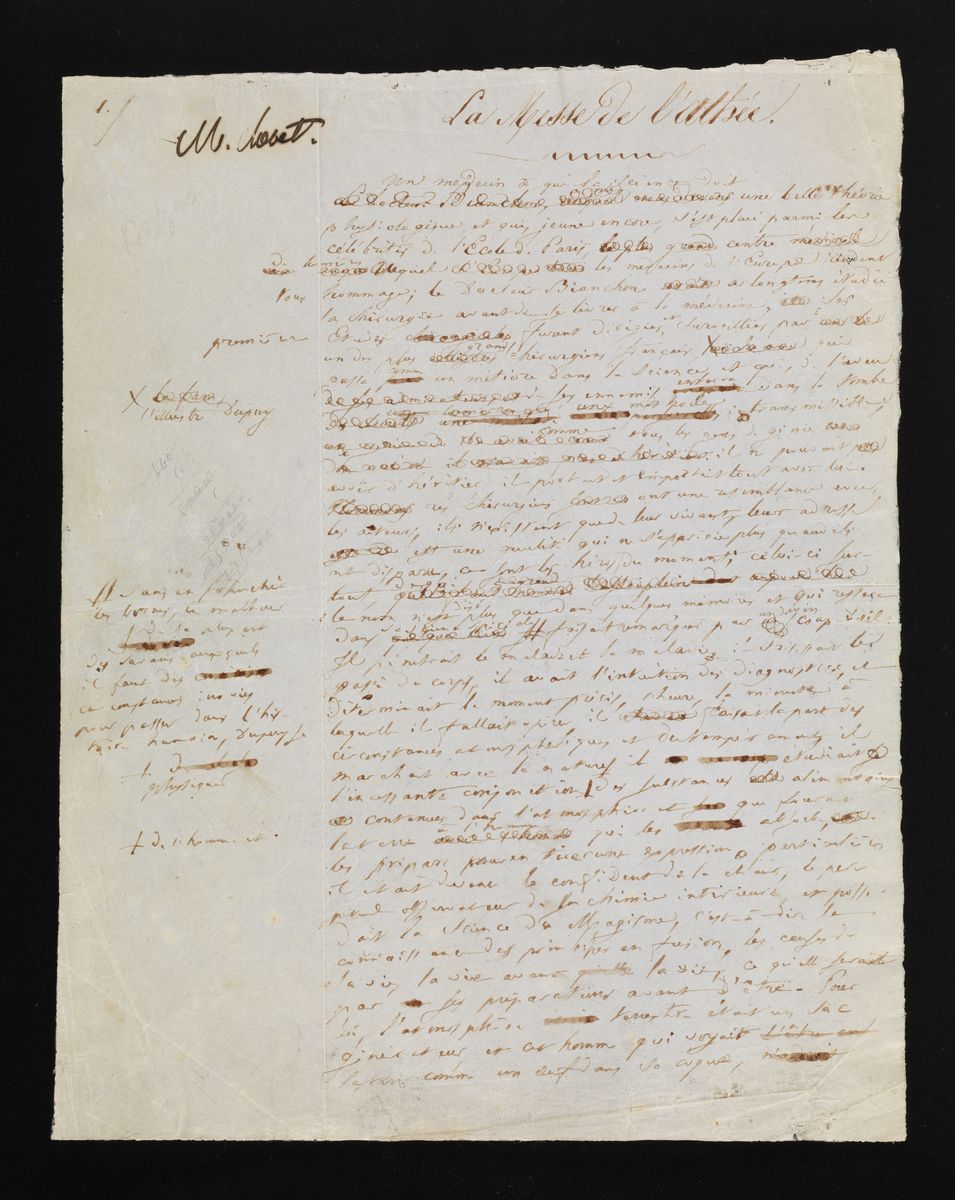
The exhibition’s curators have skilfully presented the parallels between the lives of Zweig and Bodmer, revealing some remarkable coincidences despite their obvious differences.
Take 1914, for example, the year the First World War broke out. For a long time, Zweig regarded the conflict as a tragic misunderstanding and believed it would be the last war in the world. Firm in this conviction, he substantially expanded his collection in that terrible year, acquiring the galley proofs of Balzac’s A Murky Business, complete with the author’s corrections; a fragment of a sermon by Jacques-Bénigne Bossuet, the seventeenth-century French preacher, theologian and writer; Diderot’s reflections on education in a letter to Madame de Forbach; an extract from Jean Racine’s biblical commentaries; twenty-three poems by Rimbaud; and a manuscript fragment of Bernardin de Saint-Pierre’s Journey to the Amazon.
Also in 1914, Zweig wrote his first substantial essay on collecting, The Manuscript Collection as a Work of Art, which was published in the Viennese journal Deutscher Bibliophilen-Kalender.
Martin Bodmer, meanwhile, was just fifteen years old. That same year, he bought a copy of August Wilhelm von Schlegel’s German translation of Shakespeare’s The Tempest, published two years earlier with illustrations by Edmund Dulac. He also received a gift from his mother, who hosted a literary salon in Zurich frequented by Paul Valéry and Hugo von Hofmannsthal: a collector’s edition of Goethe’s Faust, published in 1909.
These two books became the foundation of his future collection.
Both Zweig and Bodmer considered themselves heirs to Goethe. Both regarded every author’s manuscript as a miracle and world literature as a bright horizon against the relentless advance of nationalism.
After visiting the exhibition in Montricher, one cannot help but agree with them.