
Pavel Kushnir died on 27 July 2024 in a pre-trial detention centre in Birobidzhan, less than two months before his fortieth birthday. He was born in September, which made him a Virgo. If astrologers are to be believed, Virgos are analytical, practical, attentive to detail, orderly and inclined towards perfectionism. To my mind, Pavel did not fit that mould in every respect – practicality, for one, was hardly his defining trait. In other ways, however, he went far beyond what practicality would ever consider reasonable.
Pavel Kushnir was born on 19 September 1984 in Tambov, a town of around 300,000 inhabitants – small by Russian standards. Born into a musical family, he began studying the piano at an early age in one of the Tambov's music schools. After graduating from the Sergei Rachmaninoff Music College in Tambov, he entered the Moscow Conservatory, Russia's most prestigious music academy, whose diploma normally opens the door to a brilliant career.
He obtained this diploma in 2007 but, instead of pursuing such a career, chose to return to the Russian provinces, where he devoted himself to teaching and performing music. He worked in Yekaterinburg, Kursk and Kurgan, although, as later emerged, his relationships with management never lasted. Friends attribute this to his uncompromising nature, a quality that rarely advances anyone's career.
Eventually, entirely by chance rather than from any ideological conviction, he ended up in Birobidzhan, the administrative centre of Russia's Jewish Autonomous Region. Fewer than 80,000 people live there today, and Jews account for less than two per cent of the population. (If you would like to know more about the town, I recommend Marek Halter's novel The Woman from Birobidzhan.) There, it seemed, Pavel had finally found his place. In a provincial town, a Moscow-trained philharmonic soloist who also hosted a programme called Mazurkas on Wednesdays, offering detailed analyses of every Chopin mazurka, was a figure of some standing.
Long before moving to this remote corner on the banks of the Amur River, Pavel had launched a YouTube channel in 2011. It attracted little attention: over the next thirteen years, it gained just five subscribers. Five.
Then, after unequivocally rejecting Russia’s aggression against Ukraine, he uploaded four videos between November 2022 and January 2023 in which he criticised the policies of the Russian authorities and the laws they enacted. An audience of five proved sufficient for those same authorities to perceive a threat to national security. In May 2024, Pavel Kushnir was arrested on charges of publicly inciting terrorist activities.
Thin, pale and with glasses, he began a hunger strike on the very day of his arrest. It was not the first time he had resorted to such a protest. Earlier that year, he had already endured one lasting one hundred days. This time, however, he embarked on a "dry" hunger strike, refusing not only food but water as well. Doctors estimate that such a strike can last between eight and ten days. His lasted five. And he died.
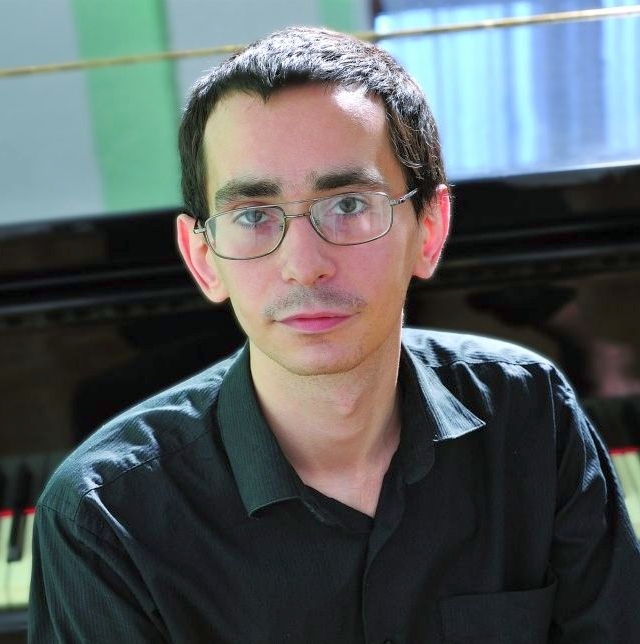
At the time of his death, Pavel Kushnir's entry on the Russian-language Wikipedia amounted to little more than a few short paragraphs. Since then, it has grown considerably.
It now includes information about his literary work, namely his anti-war novel Russian Cut-Up which was first published in Germany in 2014 and republished there a decade later. The novel draws on Kushnir's own diaries, The Diary of Anne Frank, Goethe's Faust, and fourteen novels about the Second World War.
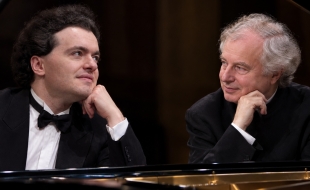
The entry now also mentions the reactions of European politicians and fellow musicians, many of whom had never heard of him while he was alive but later expressed admiration for his talent. It notes that in December 2024 Russian and international artists established the Pavel Kushnir International Foundation and Scholarship in Israel under the patronage of pianists Martha Argerich and Evgeny Kissin. For the 2025/26 academic year alone, thirteen students from Belarus, Russia and Ukraine received scholarships, among them a student at the Lucerne School of Music.
And finally, on 13 December 2025, Sergei Erzhenkov's ninety-minute documentary Kushnir, based on Pavel Kushnir's diaries, was released. This film answered a question I asked two years ago: would Russia ever produce its own Roman Polanski to tell the story of this pianist?
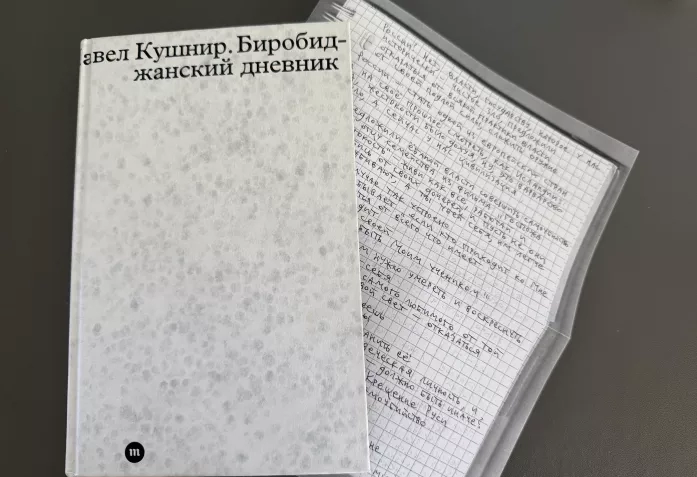
The Birobidzhan Diary survived by a miracle. Before his arrest, Pavel managed to send the notebook to his friend, the pianist Olga Shkrygunova, who lives in Berlin. Last year it was published by Meduza, edited by Dmitry Volchek. Kushnir kept the diary for three months. The first entry is dated 22 September 2022, the day after Russia announced its "partial mobilisation"; the last was written on 25 December. A touching detail: the book includes a reproduction of one page from the manuscript, tucked inside. I read the diary only recently, and it was this text that prompted me to remind you of Pavel Kushnir.
As my readers know, I tend to look for a Russian presence wherever I go. This time, unexpectedly, I found a Swiss one, and more than one.
I discovered, for example, that Kushnir regarded the American actress Jean Seberg as his role model. She became famous for playing Patricia in "our" Jean-Luc Godard's Breathless and died in Paris in 1979 under circumstances that remain unexplained and have never entirely ruled out FBI involvement.
I also discovered that Kushnir knew Simone Weil's writings remarkably well. Only recently, an exhibition in Geneva was dedicated to her memory.
Not to mention that Birobidzhan itself, built along the Trans-Siberian Railway: its construction in the late 1920s was overseen by the Swiss architect and Bauhaus director Hannes Meyer. This is how Pavel Kushnir described the town in a letter to Olga Shkrygunova: i want to send you a map of Birobidzhan. it was built almost entirely from scratch as a single project, like St Petersburg, but for shtetl Jews, so not under the sign of a cold capital but of a warm village, besides, the project was designed by a Swiss architect, a convinced communist, he left Switzerland for the USSR, so the spirit of idealism and панкобрь can never be driven out of this town.
(Панкобрь is Kushnir's own coinage, a deliberately invented word combining "pan" and "October", evoking the spirit of the October Revolution.)
This diary is unlike any other. Dates are not always indicated, the chronology is sometimes disrupted and occasionally even runs backwards. Personally, I find the abundance of obscenities jarring, and there are some particularly radical statements I would not endorse either; its punctuation is peculiar, when there is any at all, and so is its style. But these are details. At heart, this diary is the confession of a man in agony.
The reader witnesses Pavel Kushnir's agony: the agony of a man fully aware of his own helplessness, yet determined to go all the way. For three months, every single day, he expects a draft notice to arrive. Every day he remains free therefore feels exceptional: today i am still free, today they still have not given me a call-up notice.
We learn how terrified he is to go out into the streets to write anti-war slogans on lamp posts: fear is not yet the end; sometimes you can be very afraid, but still act.
We discover other solitary acts of courage, read about the persecution of those who dared to resist, and, immediately afterwards, encounter his bewilderment at those who did not: at 17.00 there was no one in the square: empty. cops drove past in cars, obedient emptiness
We read of his irreconcilable differences with his mother, who, after he died, refused to authorise an independent examination to establish its cause. Of his terrible loneliness: i feel very bad, i feel really bad. Of his understanding of the senselessness of a war that has divided everyone into "us" and "them". Of his inevitable reflections on the role of the Russian intelligentsia, leading him to this conclusion: The true vocation of the Russian intelligentsia is survival.
Of Russia itself: people have been driven out of the country, and those who remain in Russia have lost the desire to set people's hearts ablaze with the Word. Or else: we are all trying to survive while descending into moral bankruptcy.
And of his disappointment in his fellow Russians: a foreign agent's speech gets fewer than ten views; leaflets, posters are of no interest to anyone either.
And much, much more.
Politics and philosophy alternate with reflections on music: Bach's English Suites and Goldberg Variations, Scriabin's Vers la flamme, the Chopin mazurkas discussed in his own broadcasts and the Funeral March, Prokofiev, Rachmaninoff's Third Piano Concerto, Sergei Taneyev, Charles Ives... And observations such as this: there is in classical music a descending motif meaning: encounter with God.
There is nothing unusual, of course, in a professional musician writing about music. What is remarkable, though, is the breadth of his literary knowledge. In his pages Allen Ginsberg appears alongside Pushkin, Vysotsky alongside Orwell, Emmanuil Kazakevich alongside Kurt Vonnegut, Yuri Dombrovsky alongside Frank Herbert...
And then there is cinema, another of his great passions. Pavel dreamed of reviving a film club in his native Tambov, but never managed to do so. Dmitry Volchek's notes reveal that the very first title on the programme he had planned was Andrei Tarkovsky's Andrei Rublev, originally entitled The Passion According to Andrei.
... How could it happen that, in the twenty-first century, such an educated, honest and deeply sensitive man came to be seen as so dangerous to his own country that he died of starvation in prison? And was death really the only way left for him to be seen, and to be heard?
As you reflect on that far from rhetorical question, do listen to Rachmaninoff's Preludes performed by Pavel Kushnir. The Birobidzhan Diary is, for now, available only in Russian. I hope that is merely a matter of time.



Philippe Lüscher July 27, 2026
Sikorsky July 27, 2026
Jil July 27, 2026
Sikorsky July 27, 2026
Claudio Poloni July 27, 2026
Sikorsky July 28, 2026
Federica Brunelli July 30, 2026
AlexN August 06, 2026