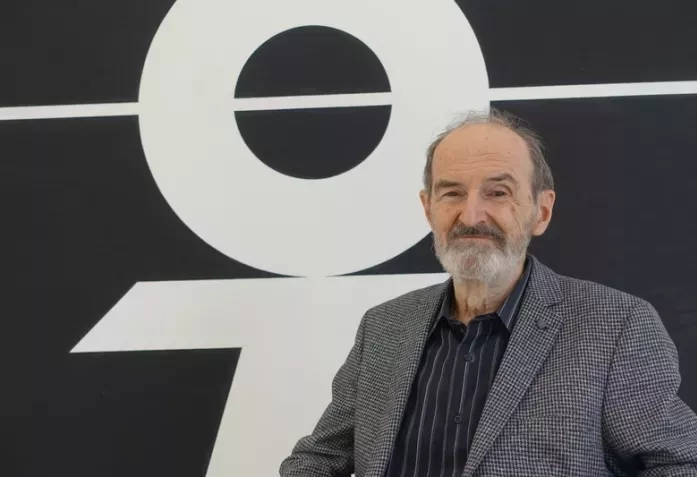
I already had the opportunity to present Erik Vladimirovich Bulatov, who celebrated his 80th birthday three years ago but continues to work actively and to exhibit. It is worth reminding that success did not come immediately to this graduate of the V.I. Surikov Art Institute in Moscow. For many years, he earned a living working at the “Malysh” Publishing house, illustrating children’s books in an excellent company of artists Ilya Kabakov and Oleg Vasiliev.
His works were first presented in a group exhibition in Moscow in 1957, and he had to wait another 31 years for a solo exhibition. Yet success eventually came, including financial stability: Bulatov is one of the most expensive contemporary Russian artists, with works selling at auctions for millions of dollars.
Although since 1992 Erik Bulatov and his wife Natasha have lived mostly in Paris, he continues to consider himself a Russian artist and regularly visits Moscow, where two retrospective exhibitions of his work were recently held: in 2014, at the Manege, and in 2015 at the Garage. I was delighted to have a conversation with Erik Bulatov after the opening of his current exhibition in Geneva.
Erik Vladimirovich, your fans wonder – why so few paintings, only 260 over your long creative career?
I would be very happy if I could work faster. But I simply cannot because what I want to do and what is necessary does not emerge immediately. The work begins when an image arises comes along – whether in my consciousness or subconsciously – but in any case, I see it clearly. And when I try to materialize it, it doesn’t work. Rarely does something succeed immediately. I have to spend a long time finding a way to express what I want to convey. I usually make many preparatory drawings in which I seek the concept of the image, because in a painting directly – it is a terrible torment. And in small drawings, it comes faster, although I have to make many until the moment comes when I see: this is it, I recognize it! Then I can start the large painting. By the way, I paint large paintings quite quickly. So the reason I don’t produce more is not that I do nothing… I do my best !
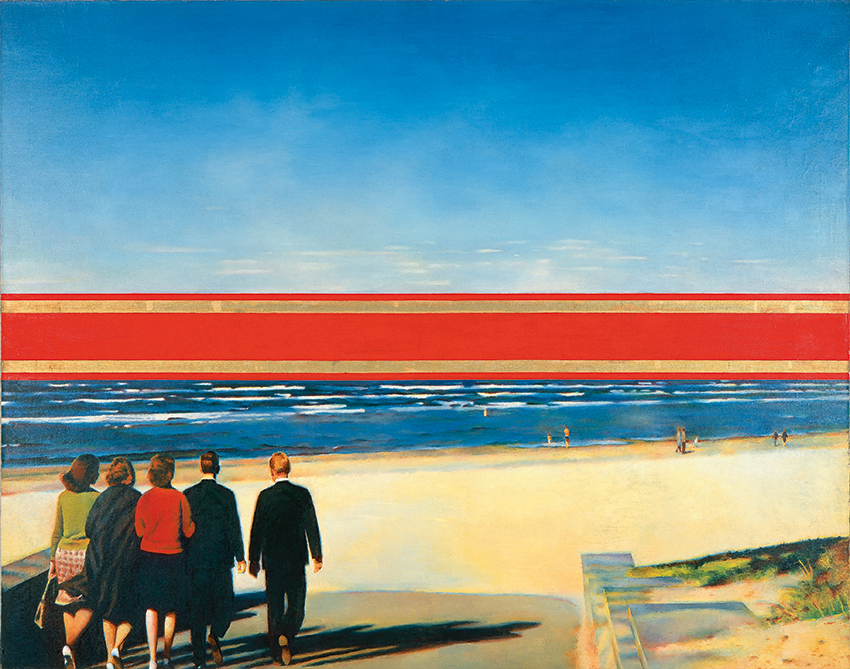
No one doubts that! And thank you for what you have already done and for what is yet to come. You have long and special ties with Switzerland: it was here, more specifically in Zurich, that your first solo exhibition took place in 1988, which actually launched your international career. Swiss museum collections (Basel, Bern) and private collections (Bern, Basel, Geneva, Zurich) hold many more of your works than the entire former USSR. When someone says “Switzerland” in your presence, what image comes to mind immediately?
Switzerland… (pauses) I don’t really know… It is my second homeland, I am very grateful to this country, and I always come here with the warmest feelings.
And don’t you want to paint something “Swiss”?
I tried! Lake Geneva left a very strong impression on me, the view on it from Lausanne, the swans, the mountains… Such beauty! But it didn’t work…
Maybe you should visit more often? Walk along the lake more?
Probably (smiles). But if we talk about the image of Switzerland, it is probably just the lake and the mountains.
Despite your love for Switzerland, you prefer to live in Paris, unlike many variously famous Russians who chose the Alpine country…
We never thought about staying in Switzerland; we simply came to work, it wasn’t an emigration. And no one invited us to stay. We were invited to Germany, to France, but we first chose New York, lived there for a year and a half, and then it became clear that our place was in Europe, our mindset is European, and America was something foreign. Then Paris seemed the most suitable city.
Well, a Russian artist settling in Paris is quite … traditional…
Yes, of course! (laughs) Russian artists have always aspired to Paris, and I dreamed of it since childhood.
You are a vivid example of the famous phrase “there is no prophet in his own country.” In Russia, you were recognized, understood (by those who understood), and appreciated only recently, much later than in the West. Since your case is, unfortunately, far from being unique, one can speak of a phenomenon. How do you explain this “peculiarity of the Soviet-Russian mindset”?
Oh, I don’t know… Although I’m not sure it is purely Russian; it’s probably something inherent to people in general and is also present in other national cultures. It is probably connected in some way to national cultural features, but I never reflected on how exactly. For me personally, of course, it was due to the Soviet system, not the Russian system, the Soviet ideology.
Are you resentful?
No, what is there to resent? I was prepared never to be able to show what I was doing, never to be able to live from it. So what happened was simply a gift of fate, a kind of happiness… I see it as a second destiny: the first ended, the second began.
In recent years, you visit Russia as an honored guest, as a national treasure. In your view, is this really a “new Russia,” or have only the slogans changed while the essence remained?
It cannot be said that only the slogans changed and everything else stayed the same. As long as the borders are open, as long as we can travel freely, it has nothing to do with the Soviet system. Usually, people who say the contrary did not experience it. I still remember the last Stalin’s years. Those who don’t know what it was like can still nurture illusions and fond memories of the Soviet system; I have none. There is a danger of nationalism, a threat of regression, and it is very unpleasant. But as I said, as long as the borders are open, there will be no return to the Soviet system. On the other hand, my last exhibition at the Manege showed me how much young people need art, how they are drawn to it! For me, it was a real jubilation; I did not expect it at all. Young artists, simply visitors, came to the exhibition – they approached me, asked questions, requested a lecture, listened attentively. I was simply amazed!
Many skeptics claim that young people want nothing, that art is over… That is not true! I understand that many may not need it, but many others do, and I have seen it with my own eyes.
It gives hope, doesn’t it?
Of course, because they are our future; thanks to them, I cannot fully share the skeptical view of what is happening in Russia today. Yes, the situation is difficult, the feeling that the country is surrounded by enemies creates a need to unite around the government, whatever it may be. Against this backdrop of external hostility, internal nationalism rises, the worst kind, the most Soviet. I consider Europe’s attitude towards Russia a very big mistake. Contacts, maximum communication – this is what can change people’s consciousness for the better, stimulate democracy, etc. Pushing Russia away provokes a natural reaction. That is where the danger lies.
Do you remember the story when the “defenders of believers’ feelings” stormed the Manege exhibition and began to destroy it? How should this be interpreted?
I consider the Church’s position generally very unpleasant; it plays a very harmful role in culture. The state should not interfere in such matters, and when it does, it provokes confusion. On one hand, an artist should not allow himself to commit acts that truly offend believers’ feelings – that is my deep conviction. If he does not like the Church’s behavior, he has the right to express his opinion, finding an appropriate way. But religion, faith – these are matters not to be mocked. In principle, if a creative person wants to say something in this complex and acute situation, he must act as an artist, finding an artistic form, an image that expresses his thoughts and feelings. In visual art, the image is primary, and words or their interpretation are secondary. And if an artist acts as a citizen, as a person living in this country with the right to speak, he must understand that he will bear full civil responsibility. He must not then shout that his mouth is being shut or hide behind art. A civic act must remain a civic act and be perceived as such.
But where is the line? We all know the famous phrase: “You may not be a poet, but you must be a citizen.” What do you do when everything is intertwined? Which boundary must not be crossed when expressing your civic position through art?
When an artist expresses his position through art, that itself is art. But when a civil act is carried out and called a “work of art,” that is something else. Yes, the boundary is complex, ambiguous, but it definitely exists, and the artist cannot fail to recognize it. Generally, such controversial situations arise because a young artist wants to attract attention by any means. The most direct and simple way is scandal. Fully aware that there will be a scandal, a person carries out an action under the guise of an artwork. This is dishonest, and the artist’s responsibility is very serious. Of course, the state should not interfere in matters of art, but it should not be deliberately provoked either, otherwise the responsibility becomes shared.
Consequently, when this artist is persecuted, condemned, or even imprisoned, one must defend him, even if unwillingly. But it must be done. That is precisely why an artist does not have the right to create such situations.
Do you follow young Russian artists? Do you come across anything that catches your attention?
Of course, there is a lot of interesting work. I have sympathies and antipathies, as is natural. I am in contact with some young artists, and I regret that my brief visits to Russia do not always allow me to expand these contacts. In general, cultural life in Russia is currently more interesting than, for example, in Paris.
Did you manage to visit the famous Serov exhibition at Krymsky Val?
Yes, I managed, and three times even. A remarkable exhibition! And here is a clear example of how much art is needed in Russia: hours-long queues in bitter cold…
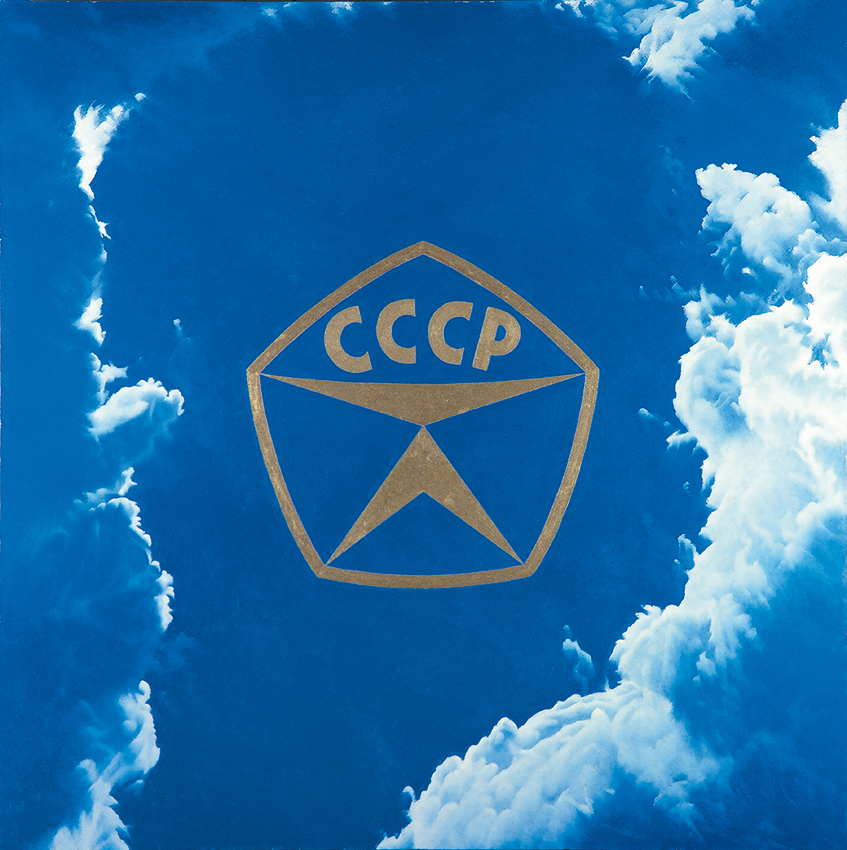
Despite rejecting everything Soviet, in a sense your works are a monument to that era, if only for depicting the Soviet “quality mark.” Why is that? You cannot get over it?
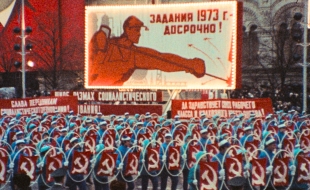
All these works were made during the Soviet era, and since then I have never returned to Soviet motifs. I think it is unnecessary. I never aestheticized that era; I simply tried to express it. The fact that my works live and create an impression only proves that I captured it. And if time is stopped, it is forever. If a painting is completed, it defines the time, gives it a name. If it isn’t, time passes unrecognized, as happened with our 1990s. And yet, what a unique, unexpected time it was! Such a thing had never happened before, and will never happen again. Young artists of those years, who were obliged to catch the moment, told me: “Of course, it was easy for you in Soviet times, everything was clear!” What was clear?! On the contrary, it was very difficult to dare to say something personal, in your own language. Not to be ashamed of oneself; but we were ashamed, thinking that anything real existed either in the past or abroad, and with us, nothing was right – neither language nor culture. A true artist should not pay attention to this; he should look to eternity.
You became famous for your large graphic works, and recently new subjects have entered your work – flowers, landscapes. Is there an explanation?
I work with the material that life gives me. And life changes.
So you recently began noticing flowers and little bridges, which you previously ignored while creating, so to speak, social landscapes, giving them titles like “Caution!” or “Do Not Lean”?
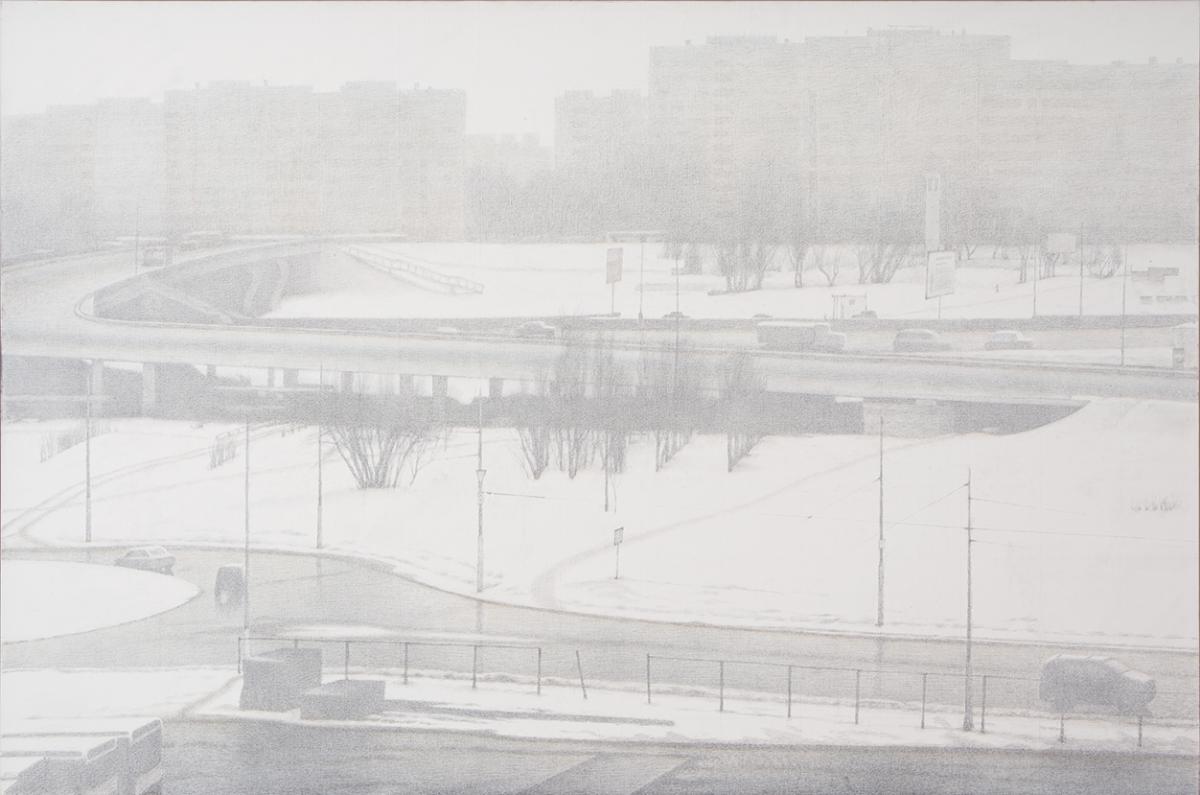
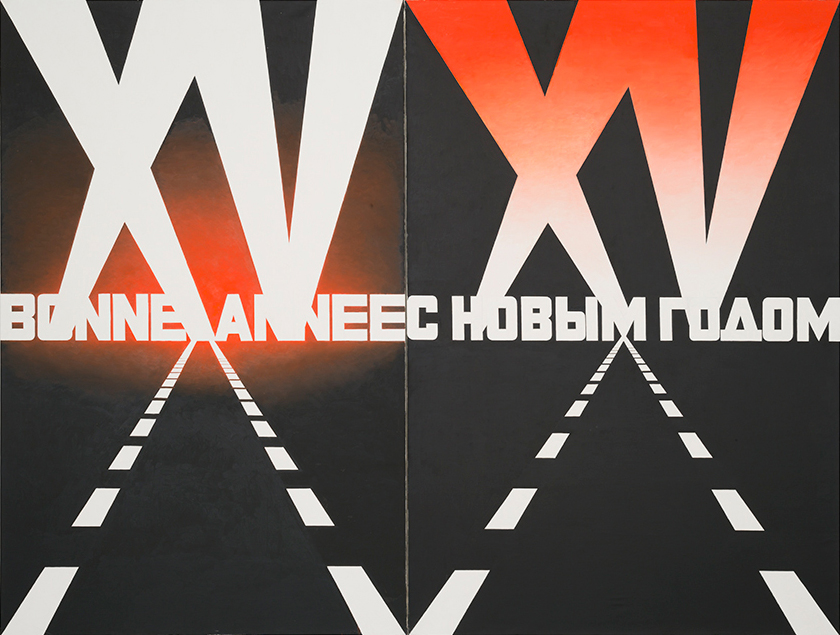
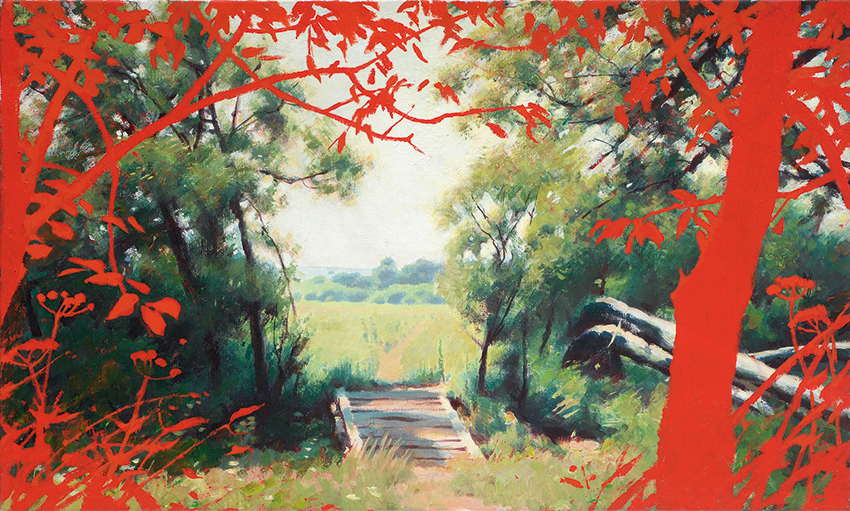
Perhaps. I always wanted simply to paint a Russian landscape. And I could not. And now it is still not entirely successful, but I try. However, I believe my modern “Moscow Courtyard” has worked. I am madly fond of Polenov’s “Moscow Courtyard”, an absolutely charming painting, representing Moscow as a village. I depicted a completely different courtyard – with modern buildings, with cars. The courtyard in which we live in Moscow. Naturally, this painting carries a completely different feeling than, for example, when I painted “Danger”, simply because I see no danger here. On the other hand, I have a painting called “Happy New Year,” where I tried to express both Russian and French danger - “Bonne année.” There is an expectation of some kind of explosion. The work was created on the eve of the terrorist attack.
A few years ago, I worked on a painting “Our Time Has Come,” where I tried to express today’s Russian situation, the transition from one era to another. So, in a sense, I continue my line, but perhaps differently.
When I carefully examine your paintings, I often feel that you paint looking backward, but at the same time with a focus on the future. What is your relationship with time in our instantaneous age, you who have lived a long life in which so much has changed?
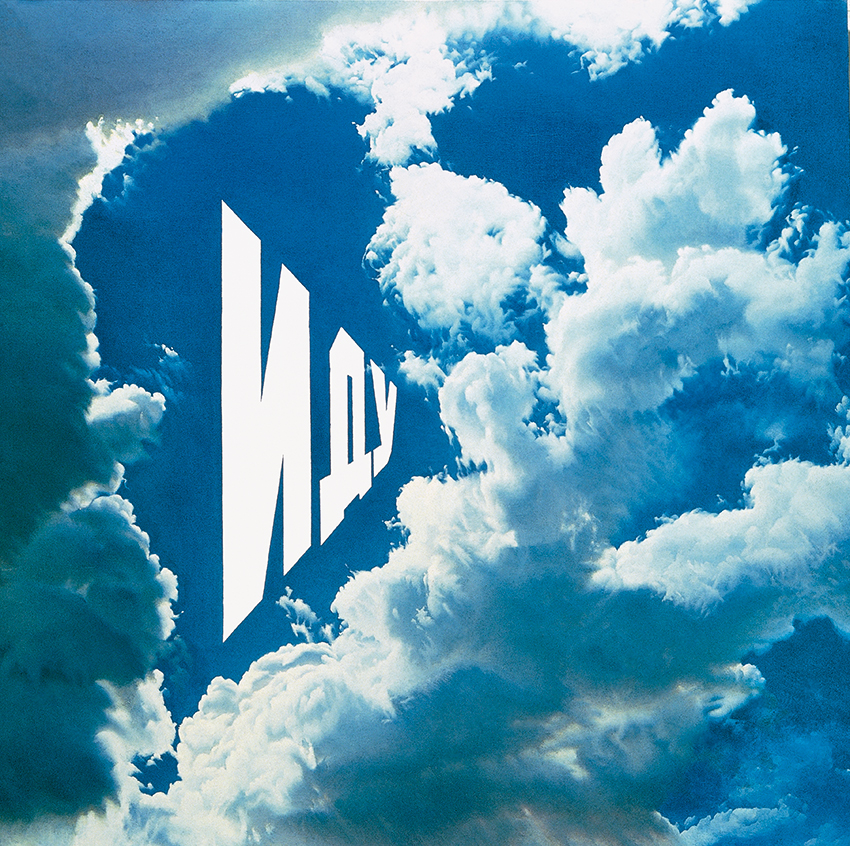
Perhaps that is the effect of age. Take, for example, the painting “Where to.” How do I know – where to? I don’t know; no one knows. I am only absolutely convinced that there, beyond the horizon, something exists, that nothing ends with death, that something new opens up, and this new thing will become central.
Editorial Note: On May 13, 2016 at the Georges Pompidou Center in Paris, Erik Vladimirovich Bulatov received the insignia corresponding to the title of Chevalier of the Order of Arts and Letters, awarded by the French Ministry of Culture.