Inna, Sasha, Oksana, Anna sont quatre jeunes femmes ukrainiennes. Originaires de deux villes de provinces issues de familles ordinaires, elles se distinguent très tôt par leur volonté d’indépendance et le désir de ne pas gâcher leur vie, de ne pas sombrer dans la banalité sans espoir de l’Ukraine post-soviétique.
A partir de 2008, cette « bande des quatre » élabore un féminisme nouveau, radical, spectaculaire. C’est ainsi que naît Femen (« cuisse », en latin). Seins nus et couronnées de fleurs, campées sur les talons aiguilles, elles transforment leurs corps frêles en instruments d’expression idéologique grâce aux slogans et dessins portés sur leur peau. L’humour, la mise en scène, le courage physique et leur capacité à choquer sont leurs armes.
En Ukraine d’abord, puis dans le monde entier, elles luttent pour la condition de la femme mais aussi contre la pauvreté, la discrimination, les dictatures, le diktat des religieux. En Italie, elles manifestent contre les agissements de Silvio Berlusconi en France, déguisées en soubrettes, contre Dominique Strauss-Kahn. Les filles escaladent des clochers et des ambassades, font irruption dans des studios de télévision et des bureaux de vote. Alors qu’elles se radicalisent au cours des années, elles font toute les quatre de la prison, sont poursuivies pour « hooliganisme » dans leur pays natal et sont interdites de séjour dans certains Etats. Mais grâce à une couverture médiatique extraordinaire, le mouvement fait des émules en France, en Allemagne et au Brésil. Le centre Femen France, nouvellement créé, se propose de former des activistes pour lancer d’autres actions de protestation dans le monde entier.
Ce livre raconte à quatre voix l’histoire de ces néo-féministes, leur incroyable épopée, leurs ambitions pour les femmes.
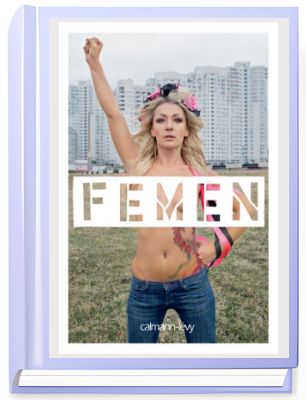
FEMEN. Avec la collaboration de Galia Ackerman. Editions Calmann-Lévy, 2013
About the author
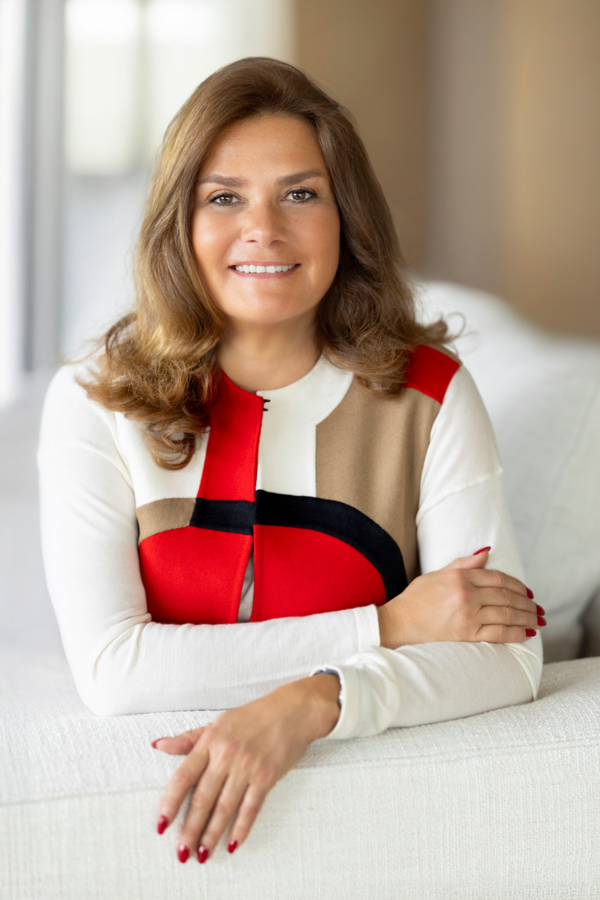
Nadia Sikorsky was born and raised in Moscow. She graduated from the Faculty of Journalism at Moscow State University and went on to complete her postgraduate studies there, earning a PhD in History. She spent 13 years at UNESCO, first in Paris and then in Geneva. After serving as Director of Communications at Green Cross International, founded by Mikhail Gorbachev, she launched NashaGazeta.ch in 2007, Switzerland’s first Russian-language online daily newspaper.
In 2022, Nadia Sikorsky was named to Le Temps’ Forum des 100, which brings together individuals who, in the newspaper’s view, have “significantly contributed to the success of French-speaking Switzerland”, from across public life, business, politics, science and culture.
After 18 years at the helm of NashaGazeta.ch, Nadia Sikorsky decided to devote herself to what had always held a special place in her work as a journalist: culture in all its diversity. This led to the creation of Russian Accent, a trilingual cultural blog in Russian, French and English, born in the heart of Europe, in Switzerland, which has become her second home and whose multiculturalism and multilingualism have helped shape the character of this new project.
At the heart of the project is the perspective of a European of Russian origin, drawing on more than 35 years of professional experience and a deep knowledge of both cultural traditions. Nadia Sikorsky sees her role as that of a cultural mediator between the two. The title of the blog, Russian Accent, reflects this idea: the accent is neither a linguistic barrier nor a political position, but a distinctive cultural imprint within a European context.