In den (Berner Oberländer) Bergtälern – pro oder contra Luchs (Wolf etc) – werden erbitterte Fehden ausgetragen, die quer durch ganze Dörfer, Sippschaften, Familien gehen. Jäger und Schafhalter gegen Naturschützer und Stadtromantiker stehen als Prototypen für die verfeindeten Lager. Ein Wilderer schickt die vier abgehackten, blutigen Pfoten eines Luchses ans zuständige Bundesamt. Die Boulevardmedien heizen die Stimmung an. Julius Leen, dreadlockstragender Zivi im Luchsprojekt, gerät zwischen sämtliche Fronten. Nicht nur die Stumpen der Granitschädel rauchen. Eine unheilvolle Bierwette führt zu einem Wettjagen.
Pressestimmen und Zitate
«Ein grossartiger Debütroman.»
Rico Bandle, Blick
«Wenig fehlt, um vom beachtenswerten Erstling zum frühen Meisterwerk zu avancieren.»
Charles Linsmayer, Der Bund
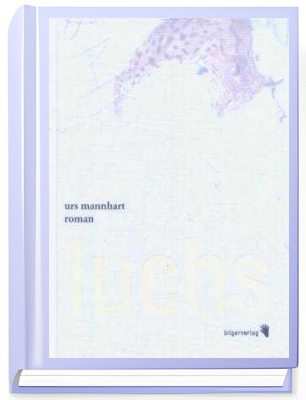
Urs Mannhart: "Luchs", Bilderverlag, 2004
About the author

Nadia Sikorsky grew up in Moscow where she obtained a master's degree in journalism and a doctorate in history from Moscow State University. After 13 years at UNESCO, in Paris and then in Geneva, and having served as director of communications at Green Cross International founded by Mikhail Gorbachev, she developed NashaGazeta.ch, the first online Russian-language daily newspaper, launched in 2007.
In 2022, she found herself among those who, according to Le Temps editorial board, "significantly contributed to the success of French-speaking Switzerland," thus appearing among opinion makers and economic, political, scientific and cultural leaders: the Forum of 100.
After 18 years leading NashaGazeta.ch, Nadia Sikorsky decided to return to her roots and focus on what truly fascinates her: culture in all its diversity. This decision took the form of this trilingual cultural blog (Russian, English, French) born in the heart of Europe – in Switzerland, her adopted country, the country distinguished by its multiculturalism and multilingualism.
Nadia Sikorsky does not present herself as a "Russian voice," but as the voice of a European of Russian origin with the benefit of more than 30 years of professional experience in the cultural world. She positions herself as a cultural mediator between Russian and European traditions; the title of the blog, "The Russian Accent," captures this essence – the accent being not a linguistic barrier, not a political position but a distinctive cultural imprint in the European context.