Après avoir traduit Eugène Onéguine, le chef-d'oeuvre d’Alexandre Pouchkine (1799-1837), André Markowicz a entrepris de rassembler autour de la fugure de celui qui reste le plus grand poète russe les poèmes écrits et souvent échangés par les amis. Bon nombre d’entre eux, emprisonnés et exilés, peu à peu conduits à la mort – comme Pouchkine lui-même – après le complot des décembristes (14 décembre 1825) contre le tsar Nicolas Ier, ont résisté à la tyrannie par la poésie.
Ce volume n’est pas seulement le roman vrai d’une génération, mais une manière nouvelle de faire émerger le continent perdu du romantisme russe. Si différent du romantisme français, il se caractérise précisément par cette lutte du poète contre le pouvoir, lutte qui a commencé de faire luire en Russie ce qu'au XXe siècle le poète Ossip Mandelstam (qui devait lui-même mourir en déportation) appela le «Soleil d’Alexandre».
A de très rares exceptions près, les oeuvres de ces poètes sont jusqu’ici restées inconnues et n’ont jamais été traduites en français.
Traducteur passionné, André Markowicz a notamment traduit pour la collection «Babel» d’Actes Sud l’intégralité de l’oeuvres romanesque de Dostoëvski, mais aussi le théâtre complet de Gogol et celui de Tchekov (en collaboration avec Françoise Morvan). Son travail a renouvelé la connaissance de nombreuses ouevres de la littérature russe.
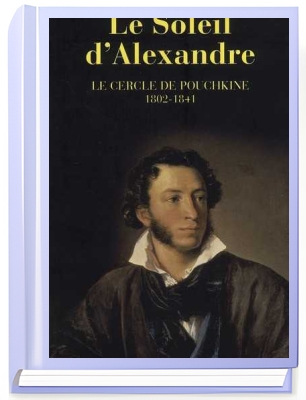
André Markowicz : «Le Soleil d’Alexandre. Le Cercle de Pouchkine, 1802-1841 ». Actes Sud, 2011.
About the author

Nadia Sikorsky grew up in Moscow where she obtained a master's degree in journalism and a doctorate in history from Moscow State University. After 13 years at UNESCO, in Paris and then in Geneva, and having served as director of communications at Green Cross International founded by Mikhail Gorbachev, she developed NashaGazeta.ch, the first online Russian-language daily newspaper, launched in 2007.
In 2022, she found herself among those who, according to Le Temps editorial board, "significantly contributed to the success of French-speaking Switzerland," thus appearing among opinion makers and economic, political, scientific and cultural leaders: the Forum of 100.
After 18 years leading NashaGazeta.ch, Nadia Sikorsky decided to return to her roots and focus on what truly fascinates her: culture in all its diversity. This decision took the form of this trilingual cultural blog (Russian, English, French) born in the heart of Europe – in Switzerland, her adopted country, the country distinguished by its multiculturalism and multilingualism.
Nadia Sikorsky does not present herself as a "Russian voice," but as the voice of a European of Russian origin with the benefit of more than 30 years of professional experience in the cultural world. She positions herself as a cultural mediator between Russian and European traditions; the title of the blog, "The Russian Accent," captures this essence – the accent being not a linguistic barrier, not a political position but a distinctive cultural imprint in the European context.