Bookshelf

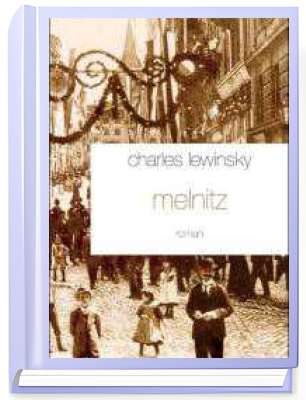
Charles Lewinsky: "Melnitz", Eds. Bernard Grasset, Paris, 2008

Traduit de l'allemand par Léa Marcou, avec le concours du Centre National du Livre.

Melnitz renoue vace la tradition du grand roman familial du XIXe sciècle tissé de bonheurs et de drames, de succès et d'échecs, d'amours et de convulsions, au gré de la grande Histoire qui vient sans cesse bousculer la petite. Le saga des Meijer, une famille juive suisse, court sur cinq générations, de la guerre franco-prussinne à la Deuxième Guerre mondiale.

1871: le patriarche Salomon, marchand de bestiaux, vit à Endingen, l'une des seules bourgades hélvétiques où les juifs sont autorisés à résider. A partir de ce berceau des origines, la famille commence son ascension sociale, sans jamais parvenir à s'affranchir du destin des exclus: ce sera Baden puis Zurich, puis l'entrée dans la modernité fracassée par la guerre de 14-18. La famille éclate: le syndicalisme militant aux Etats-Unis pour l'un, l'étude talmudique au fin fond d'une Galicie menacée par les Cosaques pour un autre, l'armée sous uniforme français pour un troisième. La roue de l'Histoire tourne...

1945: l'oncle Melnitz, revenu d'entre les morts, raconte. Lui qui sait tout - Melnitz, ou la mémoire - est le grand récitant de cette admirable fresque, hommage au monde englouti de la culture de de l'humour yiddish, tout de force romanesque salué comme un chef d'ouevre par une critique unanime, et devenue un best-seller immédiat dans tout les pays où elle a été publiée.

Charles Lewinsky est né en 1946 à Zurich. Après des études de littérature allemande et de théâtre, il débute son apprentissage de metteur en scène avec Fritz Kortner. Tour à tour dramaturge, scénariste, parolier ou metteur en scène, il est l'auteur de très nombreux spectacle primés. Son roman Johannistag lui vaut le prix de la Fondation Schiller en 2000.
About the author

Nadia Sikorsky

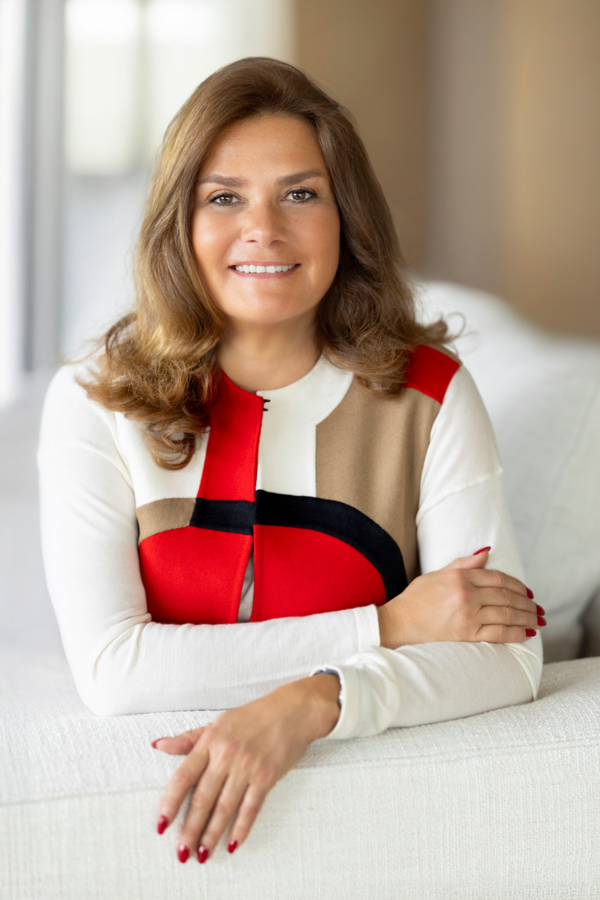
Nadia Sikorsky grew up in Moscow where she obtained a master's degree in journalism and a doctorate in history from Moscow State University. After 13 years at UNESCO, in Paris and then in Geneva, and having served as director of communications at Green Cross International founded by Mikhail Gorbachev, she developed NashaGazeta.ch, the first online Russian-language daily newspaper, launched in 2007.

In 2022, she found herself among those who, according to Le Temps editorial board, "significantly contributed to the success of French-speaking Switzerland," thus appearing among opinion makers and economic, political, scientific and cultural leaders: the Forum of 100.

After 18 years leading NashaGazeta.ch, Nadia Sikorsky decided to return to her roots and focus on what truly fascinates her: culture in all its diversity. This decision took the form of this trilingual cultural blog (Russian, English, French) born in the heart of Europe – in Switzerland, her adopted country, the country distinguished by its multiculturalism and multilingualism.

Nadia Sikorsky does not present herself as a "Russian voice," but as the voice of a European of Russian origin (more than 35 years in Europe, 25 years spent in Switzerland) with the benefit of more than 30 years of professional experience in the cultural world at the international level. She positions herself as a cultural mediator between Russian and European traditions; the title of the blog, "The Russian Accent," captures this essence – the accent being not a linguistic barrier, not a political position but a distinctive cultural imprint in the European context.

Events