
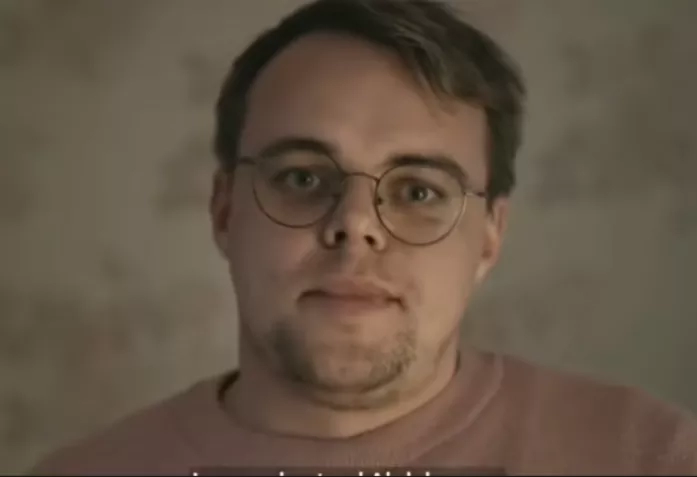
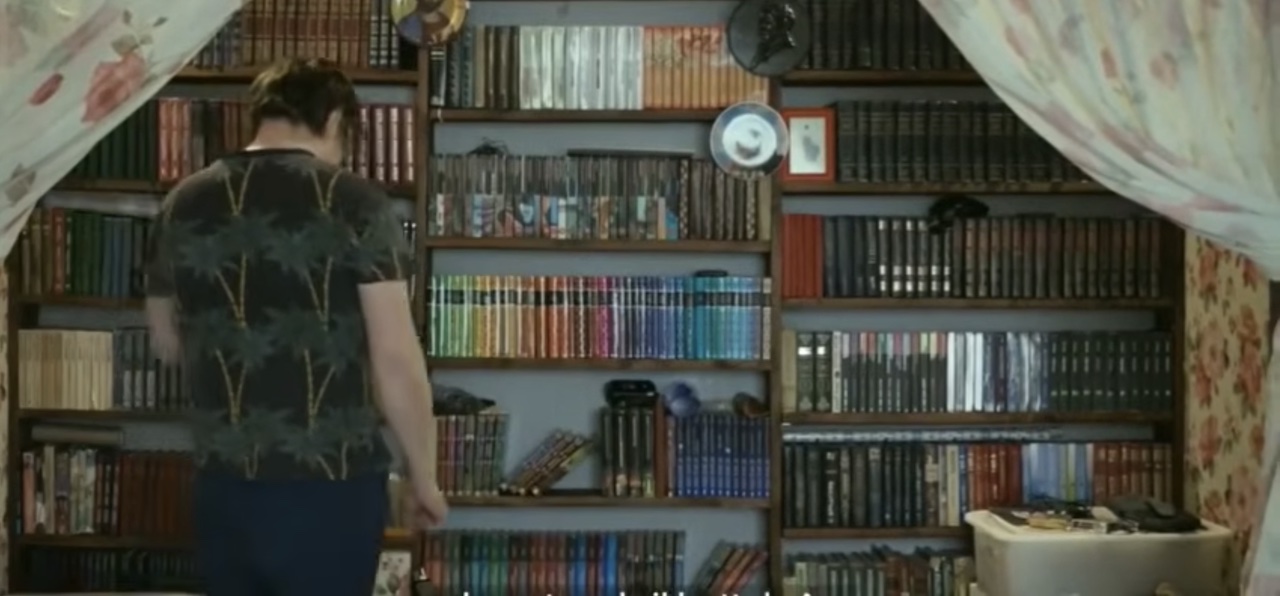
On 15 March this year, the film Mr Nobody Against Putin by Pavel Talankin and David Borenstein received the Academy Award for Best Documentary Feature, following prizes at the Sundance and BAFTA. Before that, I had not heard of the town of Karabash in the Chelyabinsk region, where the film takes place. In this town, considered one of the most polluted in Russia, ten thousand people live, and its defining feature is a copper smelting plant that has a devastating impact on both the environment and the population. But where there are people, there are schools, and at School No. 1, the largest in the town, Pavel Talankin himself, once a pupil there, worked until the summer of 2024. He did not work as a teacher, as many media outlets report, but as an activities coordinator and also as a videographer. That is, he did not teach any subject but organised various extracurricular activities and filmed them. In essence, he was a kind of organiser with a camera, who, in his own words, loved his pupils and sought to “expand the boundaries of their thinking”. Pavel had a mother, a librarian at the same school who spent most of her working time repairing books, as well as a dog named Nebraska and a parrot. He himself lived in a two-room flat “in the very centre of the town”. There were many books in the flat, 427 in total, and all of them were “neatly arranged by colour”: some might discern unmistakable rainbow colours on the central shelf.
(I must admit that this mention of the book covers colours was the first moment that unsettled me and created a sense of artificiality. The second was photographs of Pavel as a child, with a large pink inflatable rabbit or in a school suit and with a blue bow on his head, against a narrative of his awareness of his “difference from other boys”, a hint at a non-traditional sexual orientation, and the loneliness he experienced because of it. I will not comment on this causal link, but I have never seen boys with bows at school. Nor, for that matter, teachers in sweaters à la Versace, with gold thread and skulls.)
Life in a provincial town offers little variety or intensity of experience, but it remains bearable until February 2022, when the “special military operation” directly affected Pavel’s work: “few expected such interference in the educational process”, the viewer hears his voice-over. Following direct instructions from above, from the President of Russia, the school is abruptly reorganised: assemblies with the raising of the national flag to the sound of the anthem, “lessons of courage” devoted to the biographies of “heroes of the special military operation”, campaigns such as “A Letter to a Soldier”, and other propaganda-patriotic activities are introduced. Some, like the history teacher, zealously comply with government orders and are rewarded, while others simply comply out of habit, and Pavel’s mother philosophically explains the new reality by saying that “there have always been those who want to shoot”. Pavel must not only actively participate in all this new and unpleasant school life but also record it on film and then submit the footage to a state database. In other words, he unwittingly becomes a propagandist, and it is at this moment that he decides not to resign, as he had intended, but instead to use his position to preserve what is happening.
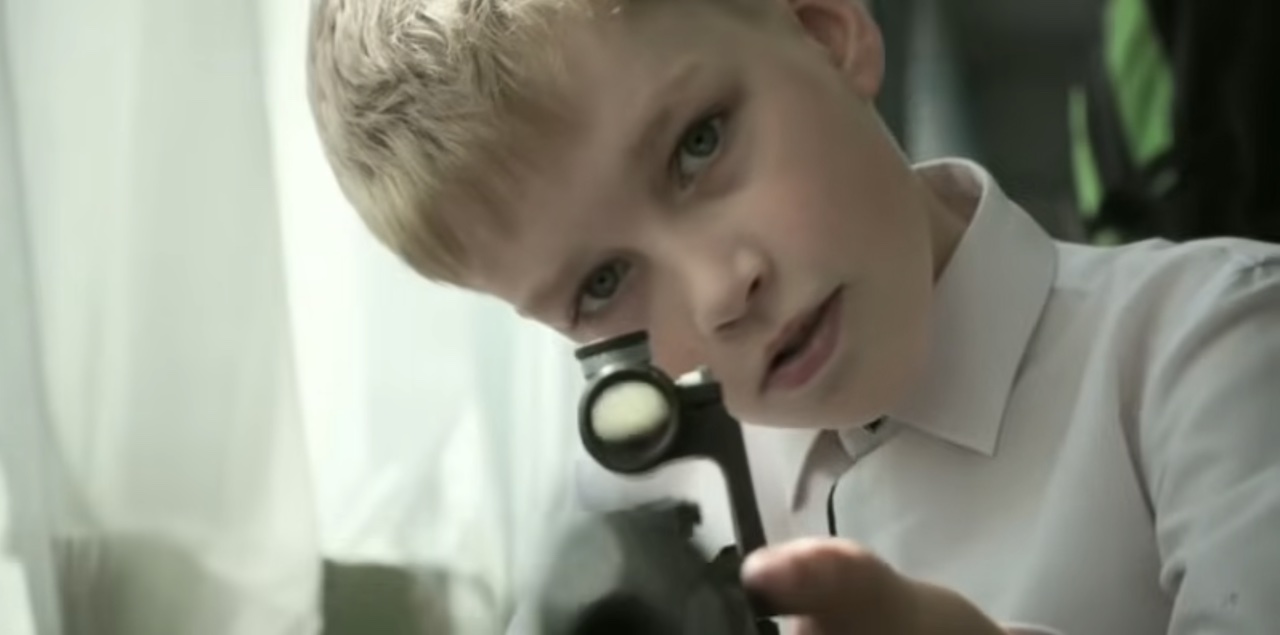
… Some episodes of the film raise doubts in my mind about their authenticity: Pavel’s disruption of the flag-raising ceremony and replacement of the Russian anthem with the American one performed by Lady Gaga; the presence in his school office, in a very prominent place, of the white-blue-white flag, a symbol of the anti-war movement that has been used since 2022 as an alternative Russian flag; the ease with which he established contact with an American director and left the country, while formally being subject to mobilisation restrictions and carrying such video materials. I do not exclude that a certain degree of fictionalisation has found its way into the documentary. I also partly understand Russian commentators who accuse Pavel of opportunism and self-admiration. But the film was not made for them. Pavel says directly: “I can show the world the abyss into which we are all sliding”, although he adds at the end that he would like it to be seen in Russia, in his home town, from which he would never have left “if we were a free country”. “Show the world”!
It is quite clear that other statements by Pavel, heard in the film and seemingly prompted by artificial intelligence, are also aimed at a Western audience, whether it the general viewer, the critic, or the member of a jury: “I love my job, but I do not want to become a pawn of the regime”, “Working for propaganda exhausts me”, “I cannot look at the letter Z on the windows of houses”. And the finale: “We embraced, dancing in the dirtiest town on earth, and one could feel the clean air of the Urals through the toxic fumes”. As for the persistent and, in my view, entirely unnecessary profanity in the film, I do not know whom it is intended for: a Western viewer will not understand it, as it is largely lost in translation, while a domestic viewer will be put off by Pavel’s evident inability to handle this particular layer of the Russian language, stripped of its expressiveness.
Of course, in Pavel’s home town his “anti-Russian film” has not been shown, at least not publicly. But news of it reached Karabash, and the Chelyabinsk website 74.ru closely followed his ascent to the cinematic Olympus and recorded the reactions of local residents, who were “deeply distressed by what had happened”: “The whole of Karabash is in shock – no one expected this from him”. “The teacher has left the South Urals, but his relatives remain, and residents do not rule out that the family may face retaliation for such ‘publicity’.” The regional Ministry of Education stated that ‘the situation is being assessed by the competent authorities’, the site reported on 31 January 2025. On 18 March, it reported that “the Commission of the Presidential Council for Civil Society and Human Rights appealed to the organisers of the Academy Awards and UNESCO over violations of minors’ rights in the film Mr Nobody Against Putin.”
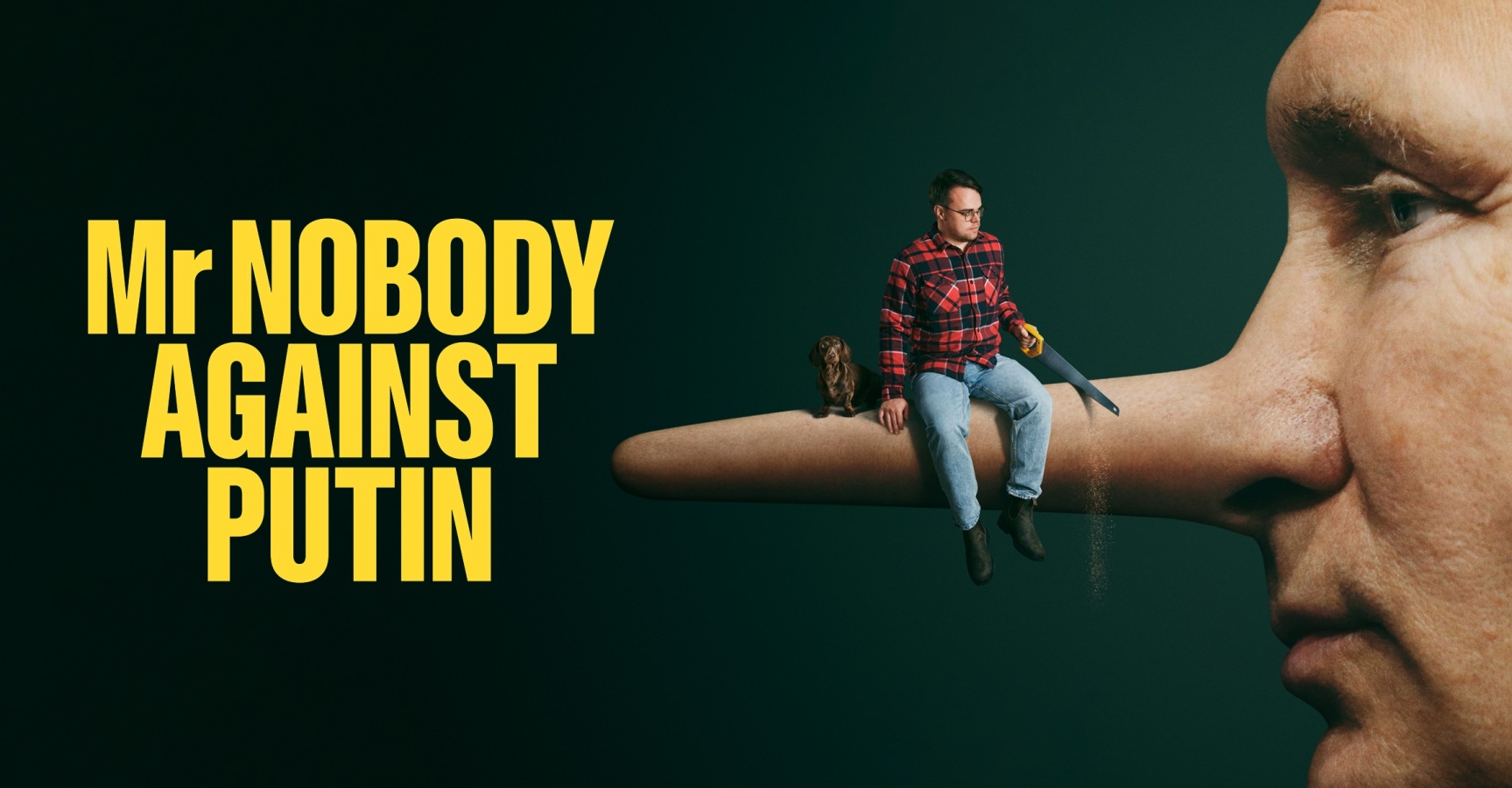
On Telegram channels, Russian bloggers call Pavel Talankin a traitor, a Vlasovite teacher, a “zhdun” (that is, someone secretly awaiting a change of regime in Russia), and a “whining not-my-war type”. There is also a version that he deliberately developed this activity in order to leave Russia and obtain political asylum. Even if such motivation existed, he has done what he set out to do, conveying clear evidence of the indoctrination of the younger generation, albeit with artistic and ideological simplifications. To receive an Oscar for this and to turn overnight from “Nobody” into a global celebrity is something he, I think, hardly expected. As for propagandistic falsehoods, Russia is not alone in this: the long nose of President Putin, on which Pavel Talankin sits in the film’s posters, became a symbol of lies thanks to the Italian Carlo Collodi and his Pinocchio, whose nose grew every time he lied. This famous character was Russified in 1936 by the writer Alexei Tolstoy as Buratino, with the long nose retained. Thus, the essence has not changed.
The film Mr Nobody Against Putin has already been released in Switzerland, so you will be able to form your own opinion and perhaps disagree with me.




Лазарь Фрейдгейм March 25, 2026
Sikorsky March 26, 2026
Семиреченский Игорь Игоревич March 27, 2026
Sikorsky March 27, 2026