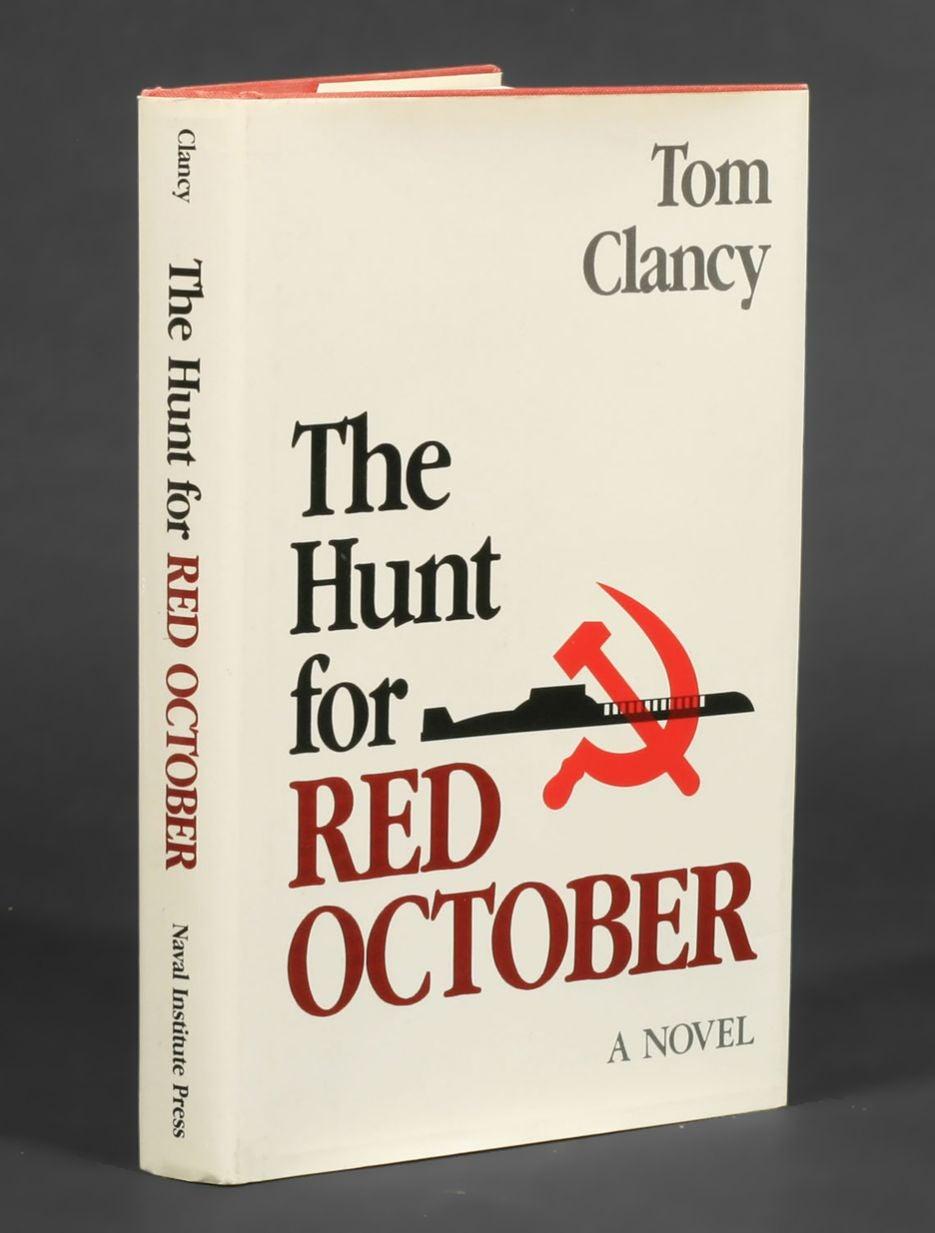
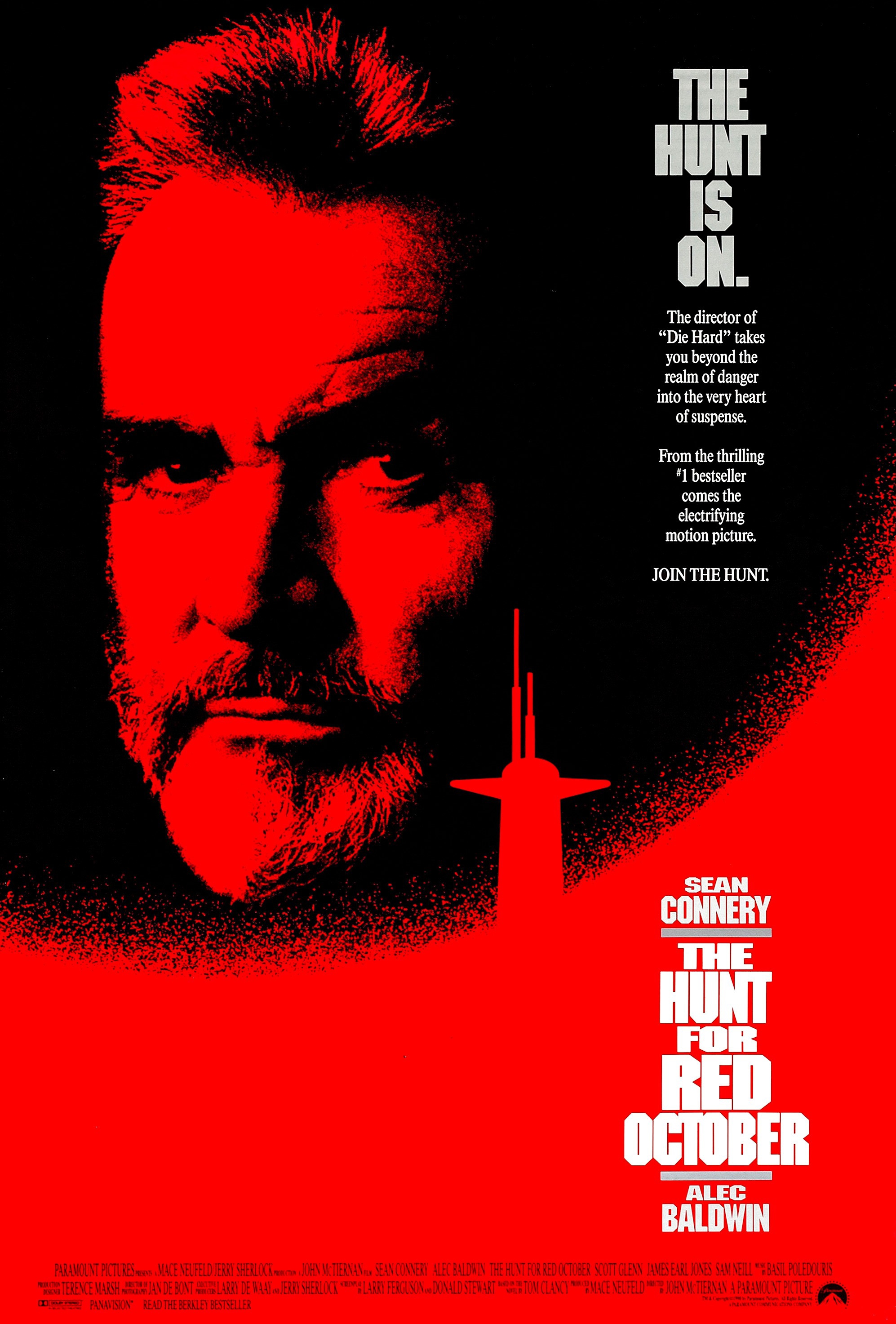
Some films age hopelessly. Others acquire new meaning with the passing years. John McTiernan’s The Hunt for Red October was released in March 1990, but is set in November 1984, the year in which Tom Clancy, then an unknown insurance agent, published his first novel with the US Naval Institute Press. It was the first work of fiction in the publisher’s history. The book became a bestseller, particularly after Ronald Reagan publicly described it as “the perfect yarn” and “unputdownable”. Thus was born the genre that would later become known as the techno-thriller, along with Jack Ryan, a CIA analyst destined to become the hero of an entire series of novels, films and even video games.
Those two dates, 1984 and 1990, matter greatly, because much changed in the six years between them. In the novel, the Soviet Union is ruled by the gravely ill Konstantin Chernenko. Mikhail Gorbachev is only months away from coming to power, and the collapse of the Soviet Union is seven years away, but readers could not, of course, have known that.
Audiences in 1990, on the other hand, already knew about the fall of the Berlin Wall, perestroika and glasnost. Gorbachev was still in power, the Cold War appeared to be drawing to a close, and hope that the Soviet Union might change had not yet been entirely lost. Although it observes every convention of the military-political thriller, the film proved to be not another tale of devious Russians and naive Americans, but a tentative attempt to recognise the humanity of a recent adversary. There was much to discover. And today, with thirty-six years of hindsight, considerably more.
It is November 1984. (Hello, Orwell!) Polyarny, a Soviet town approximately 30 kilometres from Murmansk, above the Arctic Circle, on the shores of the Barents Sea. During the Cold War, its naval base was one of the most important installations of the Soviet Northern Fleet. As a student, I spent a summer working as an intern at a Murmansk newspaper and can testify that even in July, the warmest month of that summer of 1987, the temperature never rose above 12 degrees Celsius. Imagine what it must be like in November. No wonder the film begins with this exchange in Russian:
“Cold this morning, Captain.”
“It is cold,” replies the main character in a delightful Scottish accent that he makes no attempt to conceal.
That main character is Captain First Rank Marko Ramius, commander of the Soviet Union’s newly launched, state-of-the-art nuclear submarine Red October, armed with ballistic missiles and equipped with an experimental silent propulsion system. Thanks to its so-called caterpillar drive, it can approach the American coast undetected and launch a nuclear strike before the enemy has time to respond.
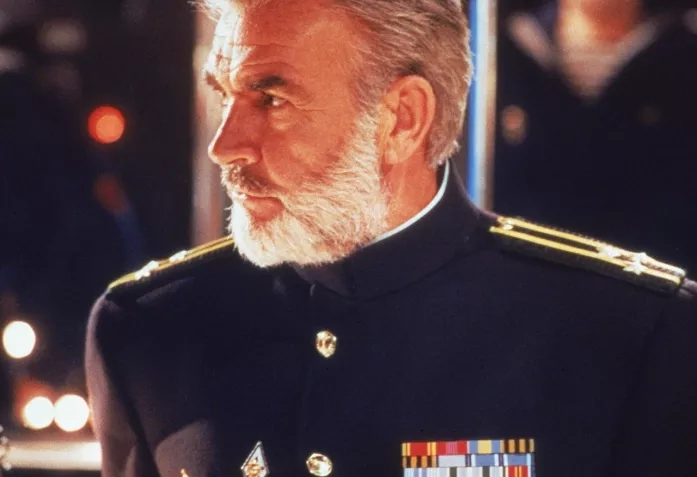
Marko Ramius, whom even the Americans regard as “a legend in the submarine community”, is played by Sean Connery. Is that not wonderful? The most famous British secret agent in cinema history, James Bond himself, has been made a Captain First Rank in the Soviet Navy! I read that the filmmakers had initially intended to give the role to the Austrian actor Klaus Maria Brandauer, but he withdrew just as filming was about to begin. The screenplay was urgently faxed to Sean Connery, but the first page, which explained that the story took place before Gorbachev came to power, failed to reach him. Connery read the script and turned it down: against the background of the changes then taking place in the Soviet Union, the story seemed implausible. The misunderstanding was cleared up, however, and a few days later he was on set. It is difficult to imagine what the film would have been like without him.
An interesting detail: Marko Ramius is a Soviet submariner, but he is not Russian. He is Lithuanian, which, in both the novel and the film, clearly shapes his attitude towards the Soviet system. This detail acquires particular significance when one remembers that the film was released on 2 March 1990, and that on 11 March Lithuania became the first Soviet republic to declare the restoration of its independence. The political motives are softened in the film, but this only brings into sharper focus the story of a man prepared to risk everything to deprive the Soviet Union of a weapon designed while denying the enemy the chance to retaliate. Rather than attacking the United States, he decides to seek asylum there, and in order to carry out his plan he is even prepared to kill the submarine’s political officer, responsible for ideological supervision on board. At the beginning of the film, Ramius finds him in his cabin: he has picked up his Bible without permission and is mockingly reading an underlined passage about Armageddon, the end of the world. It is on the word “Armageddon”, which sounds the same in Russian and English, that the Russian dialogue imperceptibly shifts into English, the language in which the Soviet sailors will speak for the rest of the film.
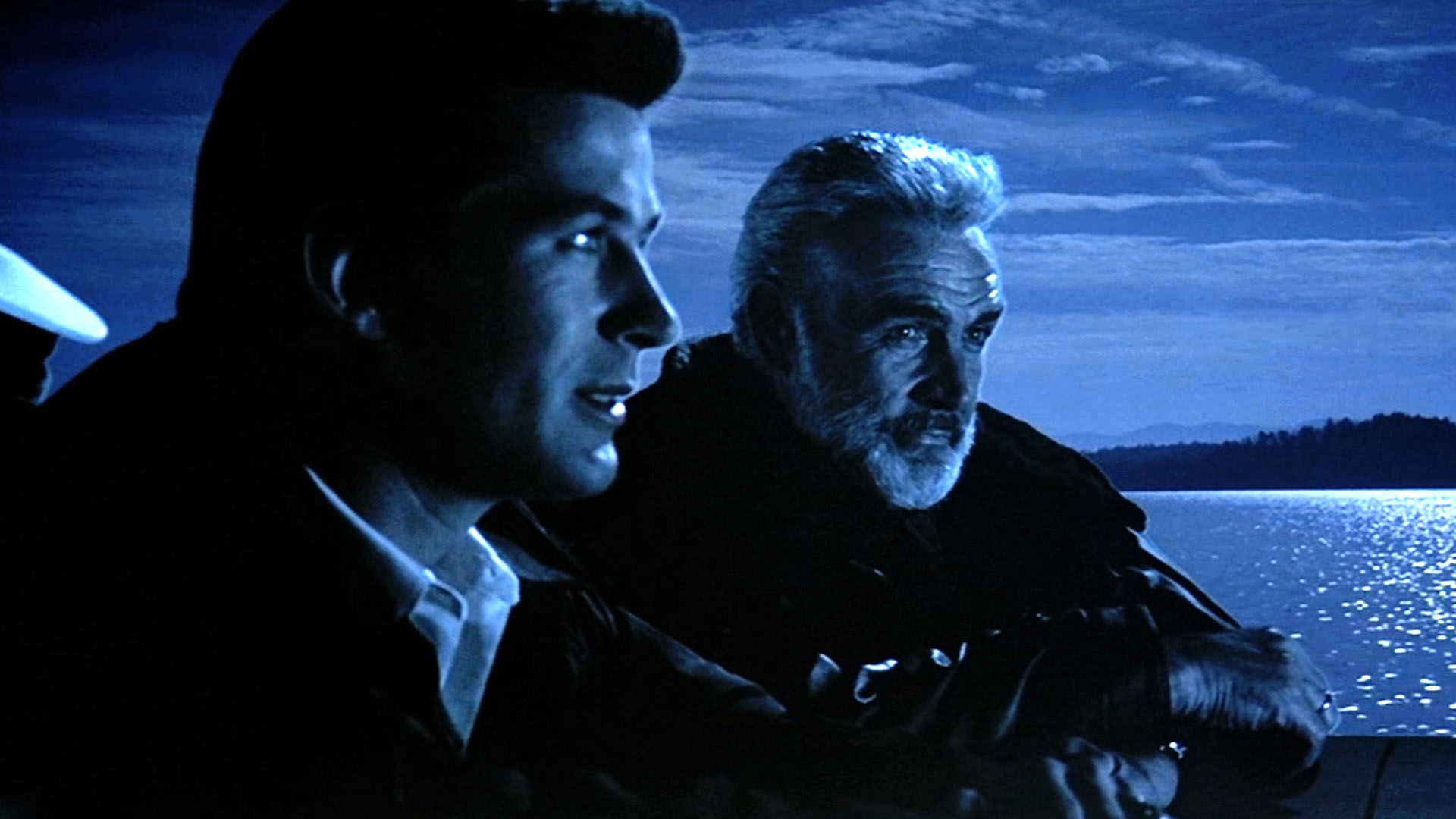
The Americans are prepared to believe that an attack is imminent. Only Jack Ryan, played by a young Alec Baldwin, advances the seemingly incredible theory that Ramius intends not to attack America, but to defect with the submarine. He has no proof. All he has is his knowledge of the captain’s biography, his ability to piece together disparate details and, most importantly, his willingness to accept that a Soviet officer might be guided not by madness or innate treachery, but by his own moral convictions. The scholarly analyst thus proves more perceptive than all the politicians, diplomats and military officers involved in the affair. To their credit, both Tom Clancy and John McTiernan portray the two sides as worthy adversaries. The Soviet ambassador Andrei Lysenko, interpreted by Joss Ackland, lies shamelessly in the office of the US National Security Advisor Jeffrey Pelt, while the latter, played by Richard Jordan, says of himself: “Listen, I’m a politician, which means I’m a cheat and a liar, and when I’m not kissing babies, I’m stealing their lollipops. But it also means I keep my options open.”
I should mention Basil Poledouris’s music. At first, I tried in vain to place what sounded so familiar: his Hymn to Red October so convincingly resembles an authentic Soviet patriotic song, although the Russian lyrics were written especially for the film. Incidentally, the film won an Oscar for Best Sound Effects Editing.
But the film’s greatest virtue lies elsewhere.
Unlike most Hollywood films made during the Cold War, The Hunt for Red October portrays its Soviet officers as neither caricatures nor mere scenery for American heroics. Most of them are educated, disciplined and courageous men who know their profession inside out. They love their country, although not all of them love the state they serve. They reflect, doubt, joke, dream and make decisions for which they may have to pay with their lives.
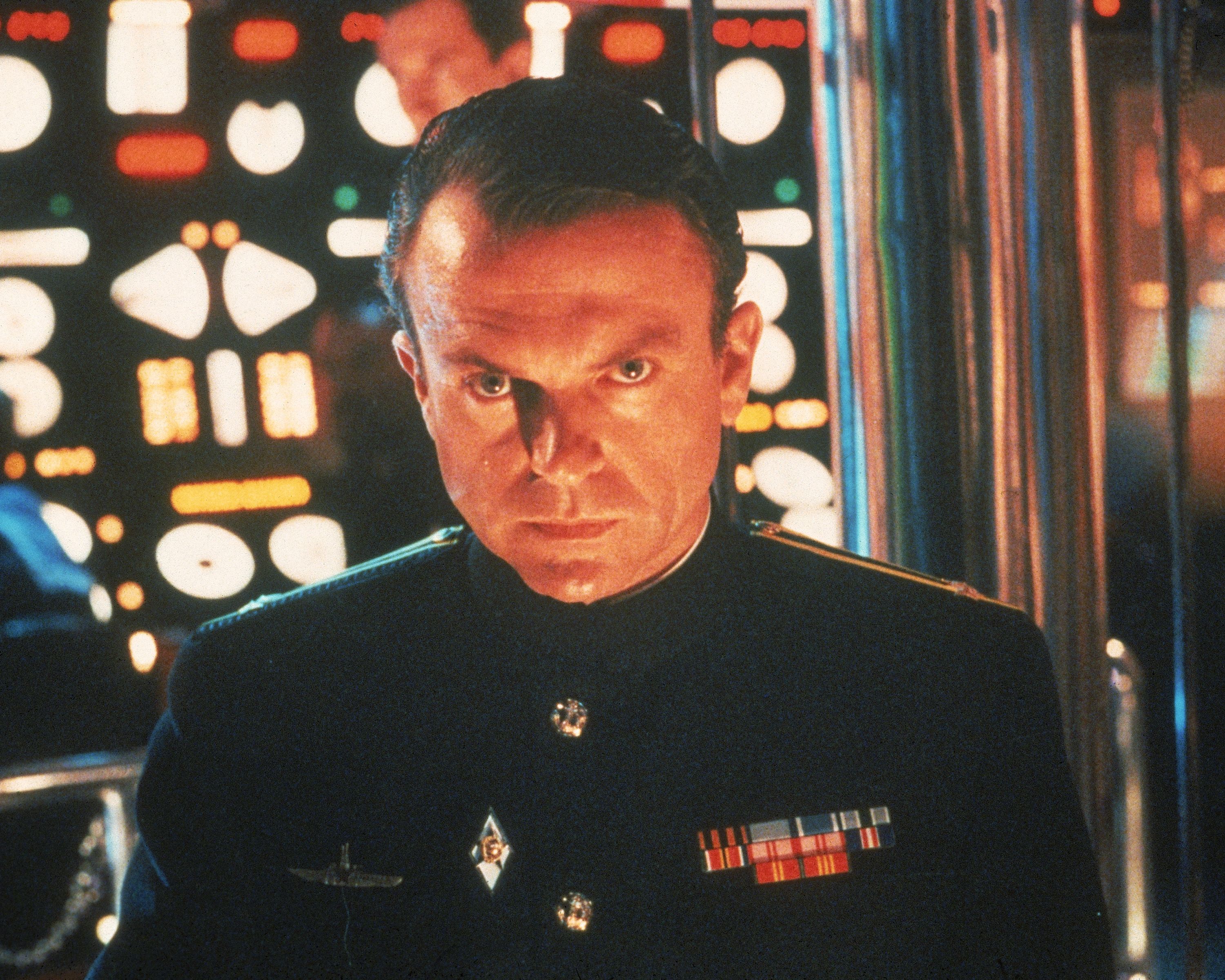
Ramius’s executive officer, Vasily Borodin, played by Sam Neill, dreams of settling in America, marrying a “round American woman”, raising rabbits and buying a house in Montana or Arizona, or preferably one in each. He would also like a pickup truck and perhaps even a recreational vehicle, so that he could travel from state to state without having to show any papers. The scene could have turned him into a ridiculous provincial, but it does not. His somewhat naive dream of an ordinary life becomes one of the film’s most human threads, and his death one of its most bitter moments.
Ramius entrusts his plan only to officers capable of understanding his decision and sharing the risk. The crew must remain in the dark: the sailors are told that the submarine is heading towards the American coast for exercises. Ramius wants to hand Red October over to the United States without implicating his own crew in an act of treason.
Here lies an important distinction between this film and a simplistic tale of escape to the West. Ramius is not seeking a better life for himself. He is not a defector selling secrets for money, but a man passing judgement on a system and prepared to die in order to carry out that judgement.
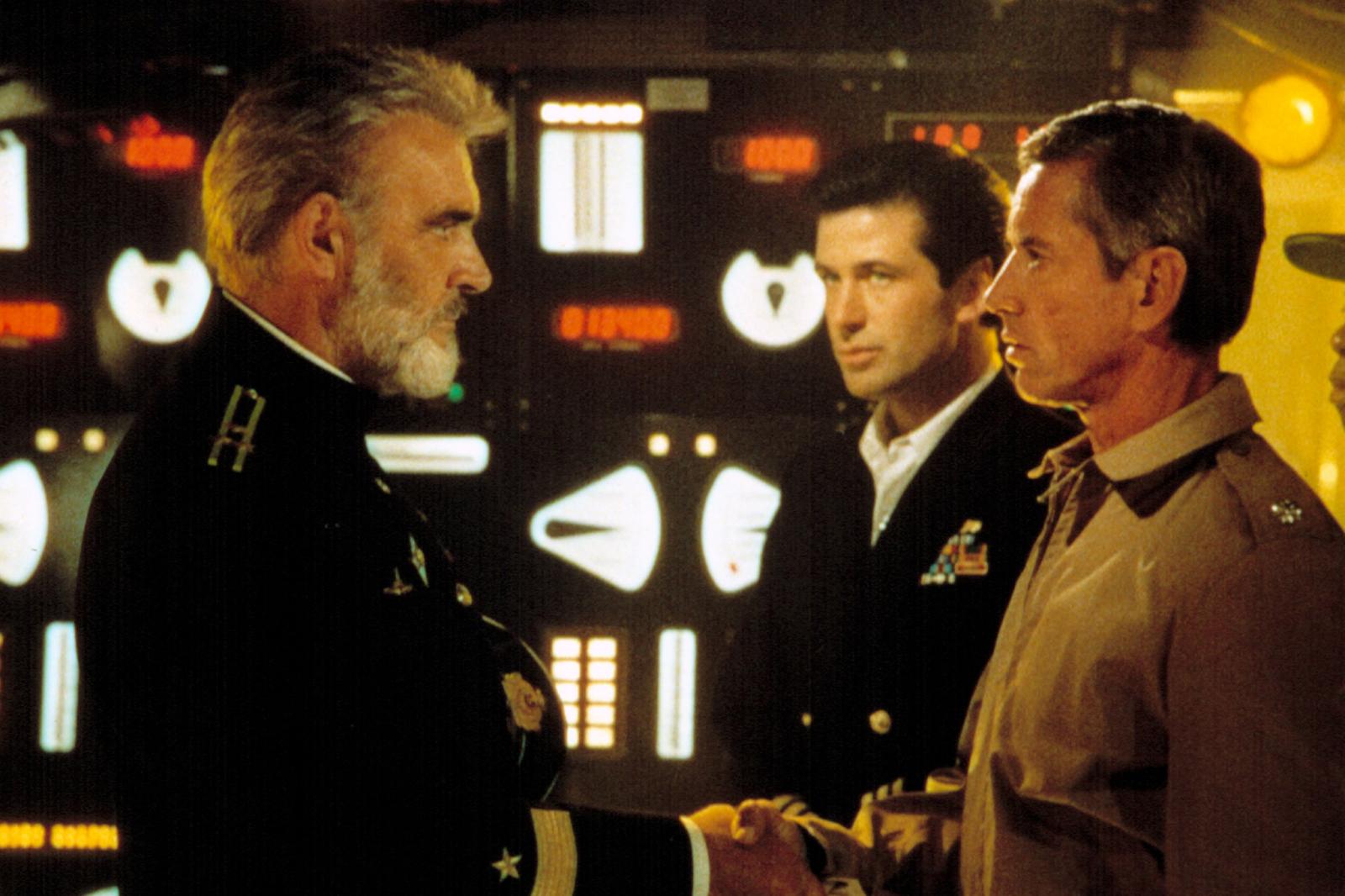
The true dramatic nerve of the film is the meeting between two captains: Marko Ramius and Bart Mancuso, commander of the American nuclear submarine Dallas, played by Scott Glenn. The scene begins in an atmosphere of extreme tension, with the two groups of men facing one another like opposing ranks. But as soon as Jack Ryan asks one of the Soviet officers for a cigarette and the man smiles as he hands it over, the tension eases and the human factor comes into play. It becomes clear that the two captains are professionals of equal stature. Neither serves merely as a foil to the other, and neither is granted an advantage simply because his country has been assigned the “right” side. Ramius can steer a vast submarine through a narrow underwater canyon, relying on his memory, his calculations and the precision of his crew. Mancuso can follow him, analysing every manoeuvre and divining the logic of a man he has never met. In a world where politicians deceive one another and admirals are prepared to order entire submarines destroy, professional competence becomes the basis of trust.
There is also a third commander in the film, Ramius’s former pupil Viktor Tupolev, played by the Swedish actor Stellan Skarsgård. He is given the task of finding and destroying his teacher. “We’re going to kill a friend, Yevgeny. We’re going to kill Ramius,” he says when asked about their orders. Tupolev is ambitious, abrasive and determined to prove that he has surpassed Ramius, but he too is not portrayed as an incompetent villain. He is a dangerous adversary precisely because he is also a professional and knows his former teacher’s methods all too well. The final confrontation is not between clever Americans and stupid Russians, but between men of the same school who have chosen different sides.
The Hunt for Red October is, of course, still an American film. The Soviet system represents a threat, the salvation of the world ultimately depends on the CIA and the US Navy, and the filmmakers leave no doubt as to which side history is on. Yet victory is achieved not by destroying the Soviet captain whom the Americans initially regard as their enemy, but by trusting Ramius and recognising him as their equal.
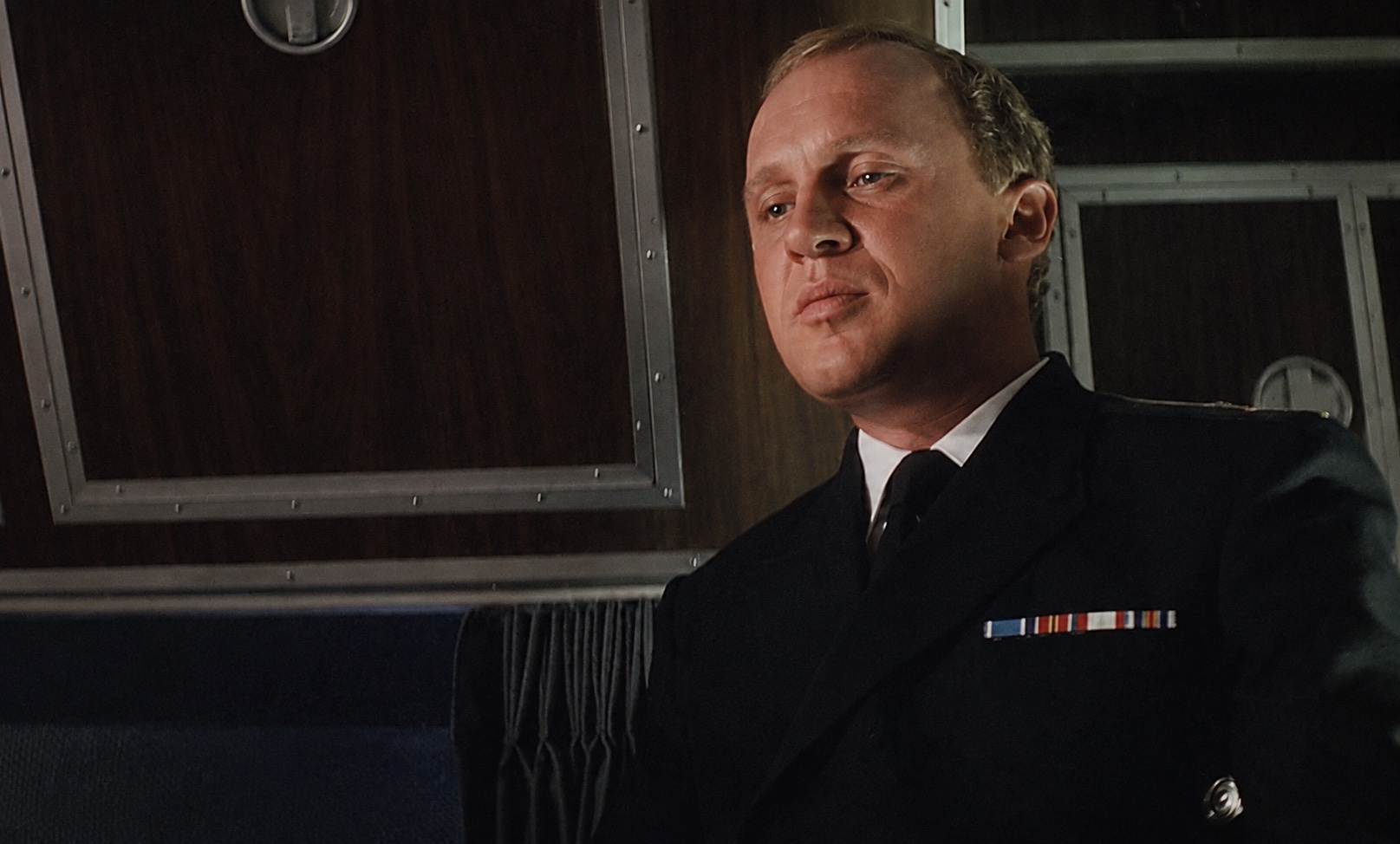
One last point. When I recently rewatched the film, I noticed a detail that had no significance in 1990. The political officer - interpreted by a British actor Peter Firth - who dies at Ramius’s hands at the beginning of the film is called Ivan Yurievich... Putin. In 1984, when Tom Clancy’s novel was published, and in 1990, when the film was released, the name Putin meant nothing to either American or Soviet audiences. Today, however, this coincidence gives the scene an almost indecently blunt political subtext: the first obstacle facing a captain who has decided to change course and break free of the system is a political officer named Putin.
The opening caption states that “nothing of what you are about to see... ever happened”. Reality, however, can sometimes be more inventive than cinema, allowing coincidences that any prudent screenwriter would surely reject.
... And ten years later, on 12 August 2000, Kursk sank. All 118 members of the crew died.