Yes, long-time friends Anastasia Volchok and Alexei Volodin performed together for the first time at Zurich’s Tonhalle in December 2024. “Alexei and I have known each other since school, but somehow we had never played together, so the upcoming concert will be our joint debut,” Anastasia, who initiated the idea, told me at the time. “I think we complement each other musically, and we wanted to give it a try.”
Articles tagged: #Russian musicians in Switzerland
I will not tell you about Evgeny Kissin. Not about what a brilliant musician he is. Nor about what a loyal friend he is. What a profound, principled, endlessly curious person he is, with a phenomenal memory not only for notes but for everything else. Nor about how modest he is, how undemanding in everyday life, how attentive to his family and friends, and how unfailingly he remembers birthdays and other occasions.
Introducing the program of Les Sommets musicaux 2026, which concluded last weekend in Gstaad, I mentioned that the presence of the Russian violinist Vadim Repin had not met with unanimous approval. The organizers received letters demanding explanations and, in some cases, calling for the cancellation of his concert. The position of the festival’s artistic director, the French violinist Renaud Capuçon, did not waver.
The forthcoming edition will be special for two reasons. First, it is an anniversary edition, the 70th in the festival’s history. It is worth recalling that the festival was founded in 1956 by the great violinist, conductor, and humanist Yehudi Menuhin, the son of a rabbi from Gomel, who was knighted in 1993 by Queen Elizabeth II. The festival came into being almost by chance.
A couple of weeks ago, I already wrote about the history of the “Symphonic Piano” festival, which is part of the Lucerne Symphony Orchestra’s season. Those who missed that post can find it here. As for me, I will now share my impressions, and I do so with great pleasure, as they are entirely positive.
Le Piano symphonique is probably the youngest of Switzerland’s many music festivals. It was born in 2022, a difficult year for European culture, at a time when so many things seemed to be disappearing forever, including the Zaubersee Festival, which had taken place in Lucerne over the previous ten years and was considered “Russian”, both because of the origin of its sponsors and because of the strong “Russian accent” of its programmes.
In all the photographs, Elisaveta Ilyinichna Leonskaya, whom the French-language press refers to only as a grande dame, is dressed in black, without a smile. I too imagined her as strict, unapproachable, withdrawn. Yet upon meeting her in person, this image dissolved within minutes. The main feature of Leonskaya’s face is her eyes. Large, blue, radiant, drawing one in. Next comes the smile, which hardly ever leaves her face.
About the author

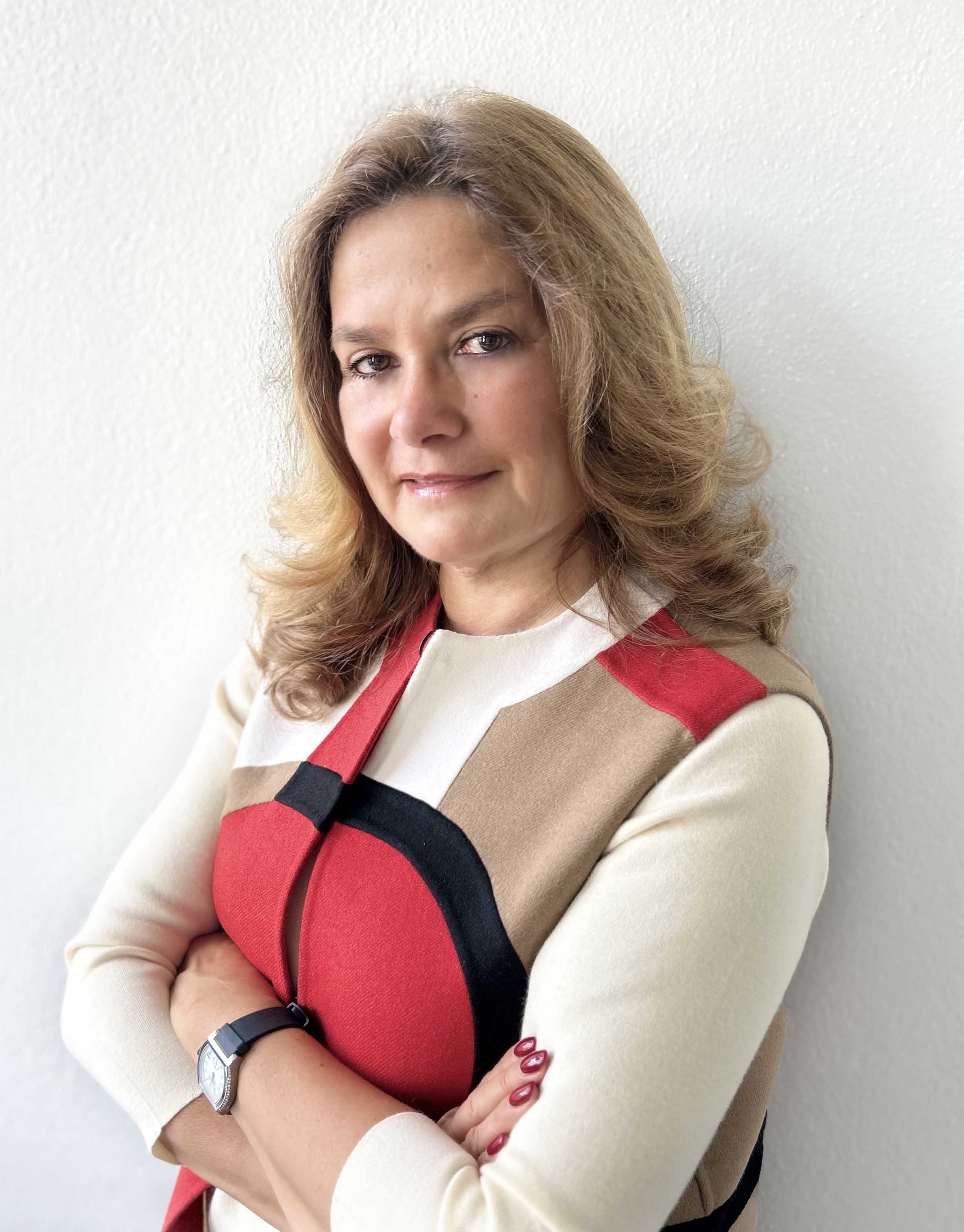
Nadia Sikorsky grew up in Moscow where she obtained a master's degree in journalism and a doctorate in history from Moscow State University. After 13 years at UNESCO, in Paris and then in Geneva, and having served as director of communications at Green Cross International founded by Mikhail Gorbachev, she developed NashaGazeta.ch, the first online Russian-language daily newspaper, launched in 2007.
In 2022, she found herself among those who, according to Le Temps editorial board, "significantly contributed to the success of French-speaking Switzerland," thus appearing among opinion makers and economic, political, scientific and cultural leaders: the Forum of 100.
After 18 years leading NashaGazeta.ch, Nadia Sikorsky decided to return to her roots and focus on what truly fascinates her: culture in all its diversity. This decision took the form of this trilingual cultural blog (Russian, English, French) born in the heart of Europe – in Switzerland, her adopted country, the country distinguished by its multiculturalism and multilingualism.
Nadia Sikorsky does not present herself as a "Russian voice," but as the voice of a European of Russian origin (more than 35 years in Europe, 25 years spent in Switzerland) with the benefit of more than 30 years of professional experience in the cultural world at the international level. She positions herself as a cultural mediator between Russian and European traditions; the title of the blog, "The Russian Accent," captures this essence – the accent being not a linguistic barrier, not a political position but a distinctive cultural imprint in the European context.
Recent comments