Bookshelf

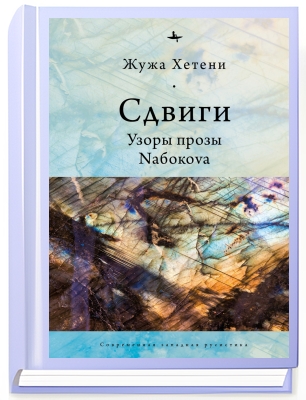
Жужа Хетени: «Сдвиги. Узоры прозы Nабокоvа», Academic Studies Press, Boston–Cпб., 2022

В книгу вошли интерпретации, предлагающие альтернативное прочтение текстов Набокова, ищущие в микроструктурах мотивов-узлов-узоров целостность мастерства писателя. Концепция эротекста, соединяя блаженство текстуального и сексуального отрывает анализы от прочтения литературы как копии жизни. Тропинки инициации Набокова ведут читателя к преодолению границ: граней Эго и мнимых норм, пределов пространства и времени, к порогу потусторонности – к экстазу. Писатель-полиглот смаковал слова, знал их физику и музыку, визуализировал словоформы, смешал гибриды-языки. Предаваясь ассоциациям, он оживлял вещи, и разоблачал пошлость клоунов-коммунацистов.

Сдвиги раскрывают скрытые слои, поддерживают напряжение, и создают новые качества. Под таким сдвигом можно понимать кризис идентичности в изгнании, полиглоссию и синестетизм автора, провокацию в сфере этики и эротики, зеркальные размножения и сны, и расшатывание роли автора. В сдвигах основ нормативности обнаруживается Набоков, предшественник постмодерна.

«В этой книге открылись некоторые закрытые ящики большого письменного стола Творчества Набокова, и хочется надеяться, что увиденное в них будет дальше жить и работать в Читателе — подобно тому, как фотография Машеньки, увиденная в выдвинутом ящике письменного стола, вызвала у Ганина взрыв воспоминаний и изменила его жизнь.»

Жужа Xетени (Hetényi Zsuzsa)— литературовед, удостоена престижного приза «Беллетрист» 2020 года, профессор кафедры русской литературы и русского языка Будапештского университета ELTE (Венгрия), доктор Венгерской Академии наук, эссеист, художественный переводчик. Рассказ автора о своей книге читайте здесь

About the author

Nadia Sikorsky

Nadia Sikorsky grew up in Moscow where she obtained a master's degree in journalism and a doctorate in history from Moscow State University. After 13 years at UNESCO, in Paris and then in Geneva, and having served as director of communications at Green Cross International founded by Mikhail Gorbachev, she developed NashaGazeta.ch, the first online Russian-language daily newspaper, launched in 2007.

In 2022, she found herself among those who, according to Le Temps editorial board, "significantly contributed to the success of French-speaking Switzerland," thus appearing among opinion makers and economic, political, scientific and cultural leaders: the Forum of 100.

After 18 years leading NashaGazeta.ch, Nadia Sikorsky decided to return to her roots and focus on what truly fascinates her: culture in all its diversity. This decision took the form of this trilingual cultural blog (Russian, English, French) born in the heart of Europe – in Switzerland, her adopted country, the country distinguished by its multiculturalism and multilingualism.

Nadia Sikorsky does not present herself as a "Russian voice," but as the voice of a European of Russian origin (more than 35 years in Europe, 25 years spent in Switzerland) with the benefit of more than 30 years of professional experience in the cultural world at the international level. She positions herself as a cultural mediator between Russian and European traditions; the title of the blog, "The Russian Accent," captures this essence – the accent being not a linguistic barrier, not a political position but a distinctive cultural imprint in the European context.

Events
Most read

On 17 June, people in the Italian capital will be reading Dostoevsky’s «White Nights». That is the premise of La tempesta silenziosa (The Silent Storm), an initiative conceived by the writer Alessandro Baricco and organised by Rome’s Department of Culture as part of the city’s Day of Remembrance programme.

Tickets for all nine performances of Verdi’s Nabucco at Milan’s La Scala, the last of which will take place on 9 June, sold out long ago. This is hardly surprising, given both the genius of the music and the level of the cast, led by Anna Netrebko as Abigaille.

A Russian accent in an Art Brut collection? I certainly did not expect to encounter one at the exhibition Écrits d’Art Brut at the Fondation Jan Michalski. It all began with a sheet of paper dated December 1938, covered with Russian, French and English words, which which evoked a vague sense of someone's tragedy, encoded in chaotic lines and symbols.