
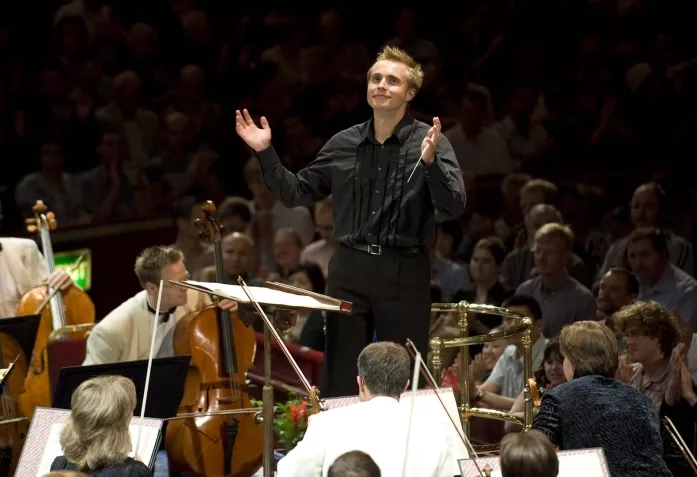
At the beginning of the year, I wrote about the forthcoming 70th anniversary edition of the Menuhin Festival Gstaad: its new Artistic Director Daniel Hope, its ambitious and wide-ranging programme, its impressive roster of living legends and rising stars, and the launch of the Summit, the first attempt by a classical music festival to host a forum dedicated to discussing the future. (Incidentally, for health reasons, Zubin Mehta will unfortunately be unable to participate in the festival’s opening concerts on 16 and 17 July. The programmes remain unchanged, and the musical direction of both performances will be jointly assumed by Pinchas Zukerman and Daniel Hope.)
Back in January, the festival still seemed a distant prospect. Yet six months have flown by, and now it is almost upon us. Opening night is only a couple of weeks away. If I owned a chalet – or even a modest flat – in Gstaad, I would probably spend all seven festival weeks there, so many concerts caught my eye in the festival brochure. Since that is not an option, I had to make a choice. It was difficult but not impossible.
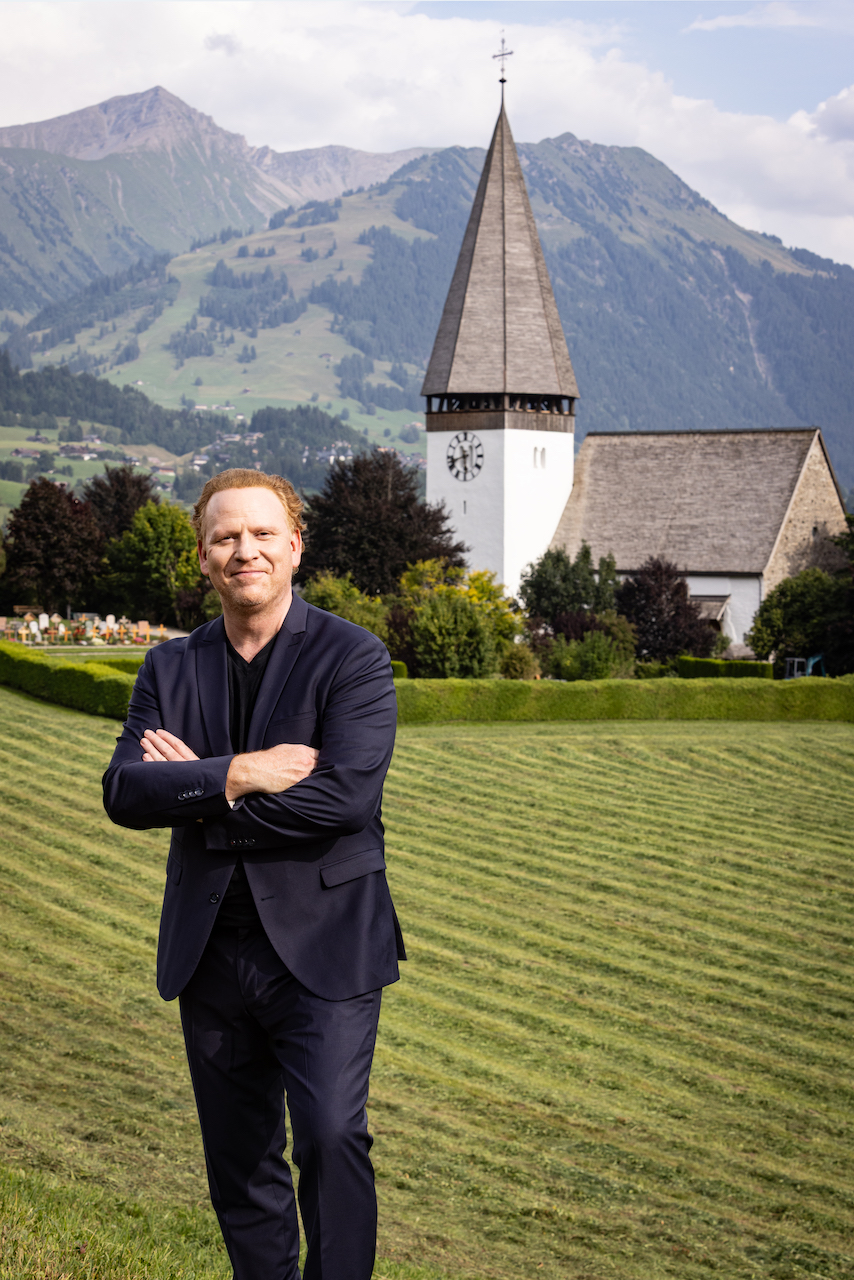
After much deliberation, I settled on the final weekend of August. It perfectly brings together the three pillars of the festival’s philosophy – legends, the younger generation and “family matters” – while also offering an attractive variety of genres, from symphonic and chamber music to vocal works and instrumental performances ranging from piano to saxophone. And, not least, there is a distinctly Russian flavour running through the programme.
Let me begin with the legends.
On Friday evening, 28 August, the Royal Philharmonic Orchestra will take the stage in the Festival Tent under the baton of Vasily Petrenko, whose interview I recently shared with you, alongside one of the greatest baritones of our time, Thomas Hampson. The programme is devoted entirely to Mahler: songs by Alma Mahler, the Rückert-Lieder and the Fifth Symphony. Hampson has long been recognised as one of the foremost interpreters of Mahler’s music. His engagement with the Austrian composer’s work spans several decades and has become one of the defining threads of his artistic life.
The following day offers an entirely different perspective. On Saturday morning, in Gstaad’s chapel, representatives of the very generation Daniel Hope is so keen to support will take the stage. Saxophonist Syra Pelliser and pianist Dmitry Batalov, recipients of the Swiss Kiefer Hablitzel / Göhner Musikpreis, have prepared a programme bringing together music by de Falla, Schulhoff, William Albright and the contemporary Finnish composer Sampo Haapamäki.
The very presence of a saxophone on the programme of one of the world’s leading classical music festivals reflects the organisers’ determination to venture beyond the traditional boundaries of the repertoire. It is worth noting that it was Switzerland – or, more precisely, its conservatoires – that brought together the saxophonist from Valencia and the pianist from Moscow. Syra Pelliser is currently studying with Lars Mlekusch in Zurich, while Dmitry Batalov is a student of Claudio Martínez Mehner in Basel. Mehner himself trained at the Moscow Conservatory before later serving as Dmitri Bashkirov's assistant at Madrid's Reina Sofía School of Music.
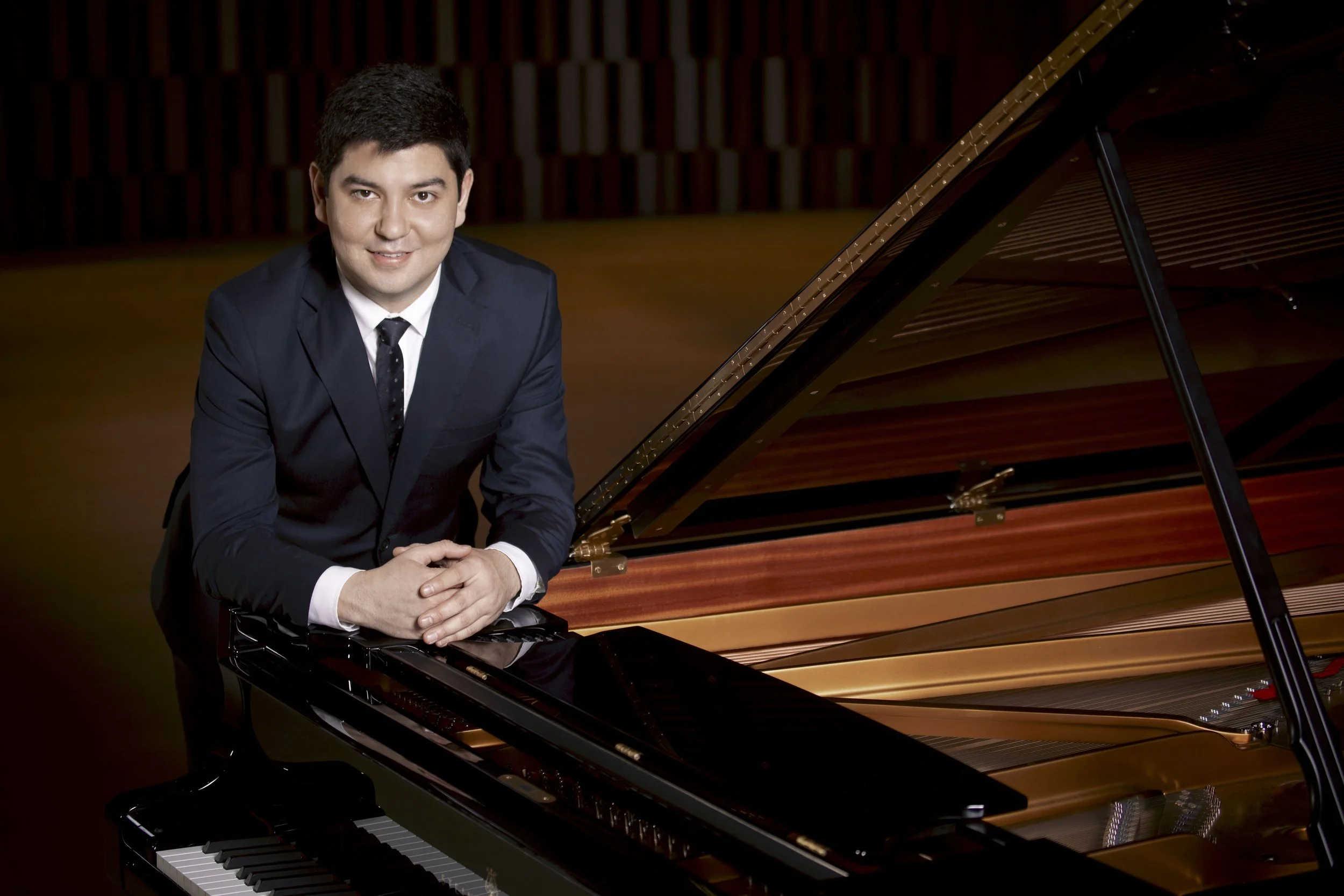
I am especially looking forward to the Royal Philharmonic Orchestra’s Saturday evening concert. The programme features Tchaikovsky’s Fifth Symphony and his celebrated Piano Concerto No. 1, with the Tashkent-born pianist Behzod Abduraimov, who has long been based in the United States. I have heard Behzod Abduraimov perform on several occasions, but the concert that remains most vivid in my memory took place at Geneva’s Victoria Hall on 9 March 2022. Just days after the outbreak of the war in Ukraine, when calls to boycott Russian culture were gathering momentum, he performed Rachmaninoff’s Second Piano Concerto with the Orchestre de la Suisse Romande under the baton of his fellow Uzbek Aziz Shokhakimov. It is one of my favourite works, and his interpretation moved me to tears.
I would particularly like to draw your attention to the rarely performed symphonic prelude to Edmond Rostand’s La Princesse lointaine by Nikolai Tcherepnin (1873-1945), also included in Saturday evening’s programme. The very pairing of a French playwright and a Russian composer evokes the era when Russian and European cultures engaged in a constant creative dialogue, enriching one another in the process.
Today, Tcherepnin’s name is known mainly to specialists, although at the beginning of the twentieth century he was one of the prominent figures of Russian musical life. The son of a distinguished St Petersburg physician whose patients included Dostoevsky, Tcherepnin was a pupil of Nikolai Rimsky-Korsakov, conductor of the Mariinsky Theatre, professor at the St Petersburg Conservatory and mentor to the young Prokofiev, who dedicated his Sinfonietta, Piano Concerto No. 1 and Scherzo for Four Bassoons to his teacher... Tcherepnin was also closely associated with Serge Diaghilev’s Ballets Russes and composed music for several of its productions, among them Le Pavillon d’Armide and Narcisse et Écho.
After the Revolution of 1917, the composer left Russia and spent the rest of his life in exile – first closer to home, in Tiflis, where he served as Director of the Conservatory, and later in Paris, where in 1925 he founded and headed the Russian Conservatory. Over time, his music, combining late-Romantic traditions with the refined orchestral palette of Russia's Silver Age, gradually faded into the shadow of more celebrated contemporaries. All the more reason to hear La Princesse lointaine, a truly magical work, performed by one of Britain's finest orchestras, celebrating its 80th anniversary in the 2026/27 season, under a conductor who continues to champion Russian repertoire and bring it to audiences around the world.
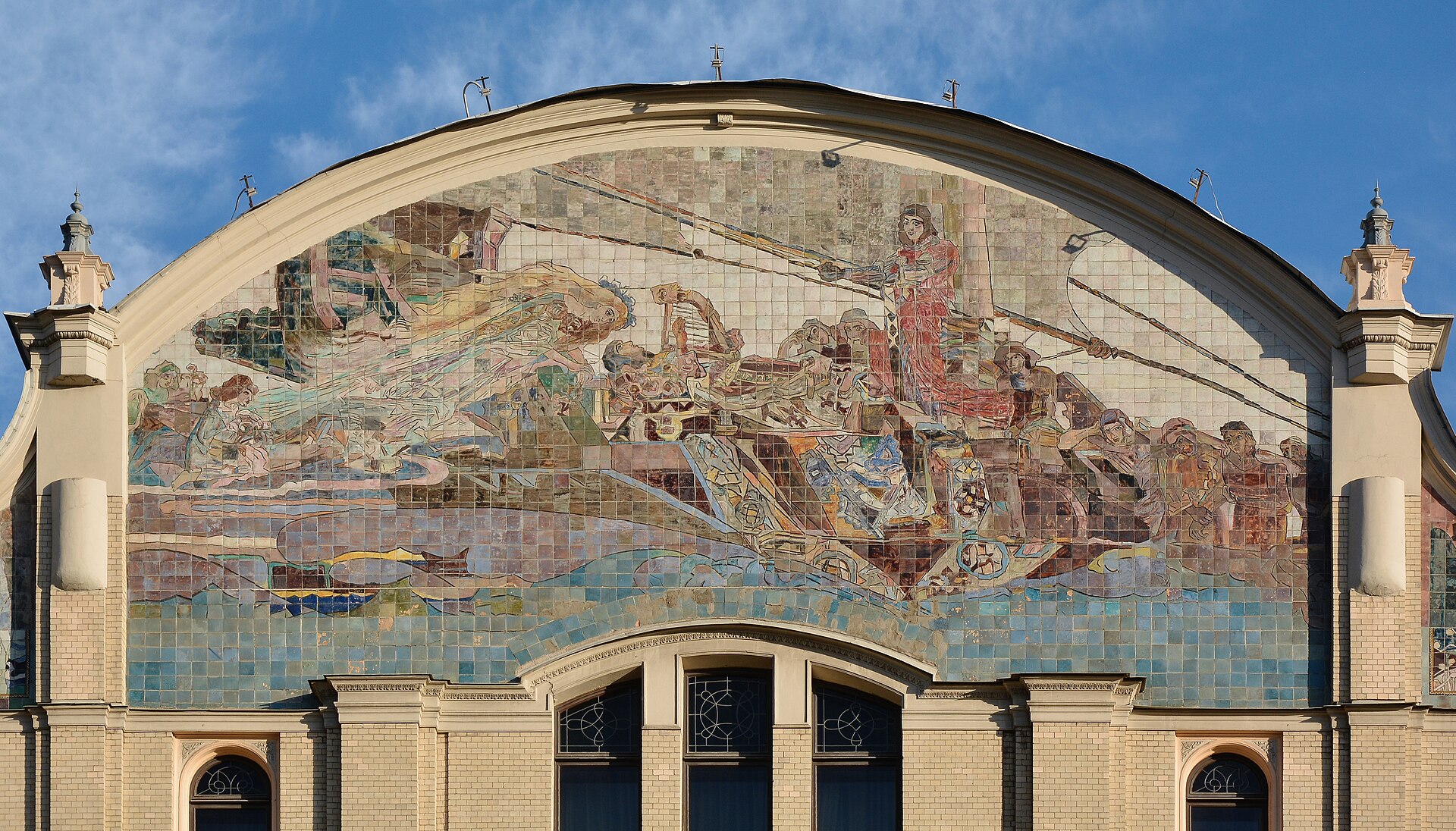
I cannot resist adding that in 1896 the great Russian artist Mikhail Vrubel created his panel The Princess of Dreams («Принцесса Грёза») – under that title, Rostand's play was staged in St Petersburg that same year in Tatyana Shchepkina-Kupernik's Russian translation. The panel was exhibited at the All-Russian Exhibition and afterwards remained in the possession of the industrialist and renowned patron of the arts Savva Mamontov. A majolica version produced at his ceramic workshop still adorns the façade of Moscow's Metropol Hotel.
The original, meanwhile, was transferred to the Bolshoi Theatre after the nationalisation of Mamontov's collection following the 1917 Revolution, only to be rediscovered in a storeroom in 1956. For many years it remained rolled up in storage at the Tretyakov Gallery, until a dedicated Vrubel Hall was created during the museum's reconstruction, where the work can still be admired today.
Finally, there is the third pillar of the festival's philosophy: family. Not only the musical family so dear to Yehudi Menuhin, but family in the most literal sense of the word.
On the morning of Sunday, 30 August, the Royal Philharmonic Orchestra will return to the Festival Tent, once again under the baton of Vasily Petrenko. Together, they will present Prokofiev's symphonic fairy tale Peter and the Wolf for children and adults alike. Daniel Hope's choice is no coincidence: this year the work celebrates its 90th anniversary.
Composed in 1936 for Moscow's Central Children's Theatre, to a text written by Prokofiev himself and read in Gstaad by Daniel Hope himself, it remains one of the most successful musical bridges ever built between the worlds of children and adults. The aim of Natalia Sats, the Moscow theatre director who commissioned the work, was to introduce young listeners to the sound of the orchestra. Prokofiev's solution was ingenious: he turned each instrument into a character in the story. The Bird is represented by the flute, the Duck by the oboe, the Cat by the clarinet, and the Hunters by the timpani and bass drum. As a result, the tale functions both as an engaging performance and as a first lesson in musical literacy. It is no surprise that it has long since become part of the world's cultural heritage and continues to bring together children, parents and even grandparents more successfully than many specially designed “family programmes”. And what could be more comforting than watching Disney's 1946 animated adaptation, the first screen version of Prokofiev's work, together – as a family?
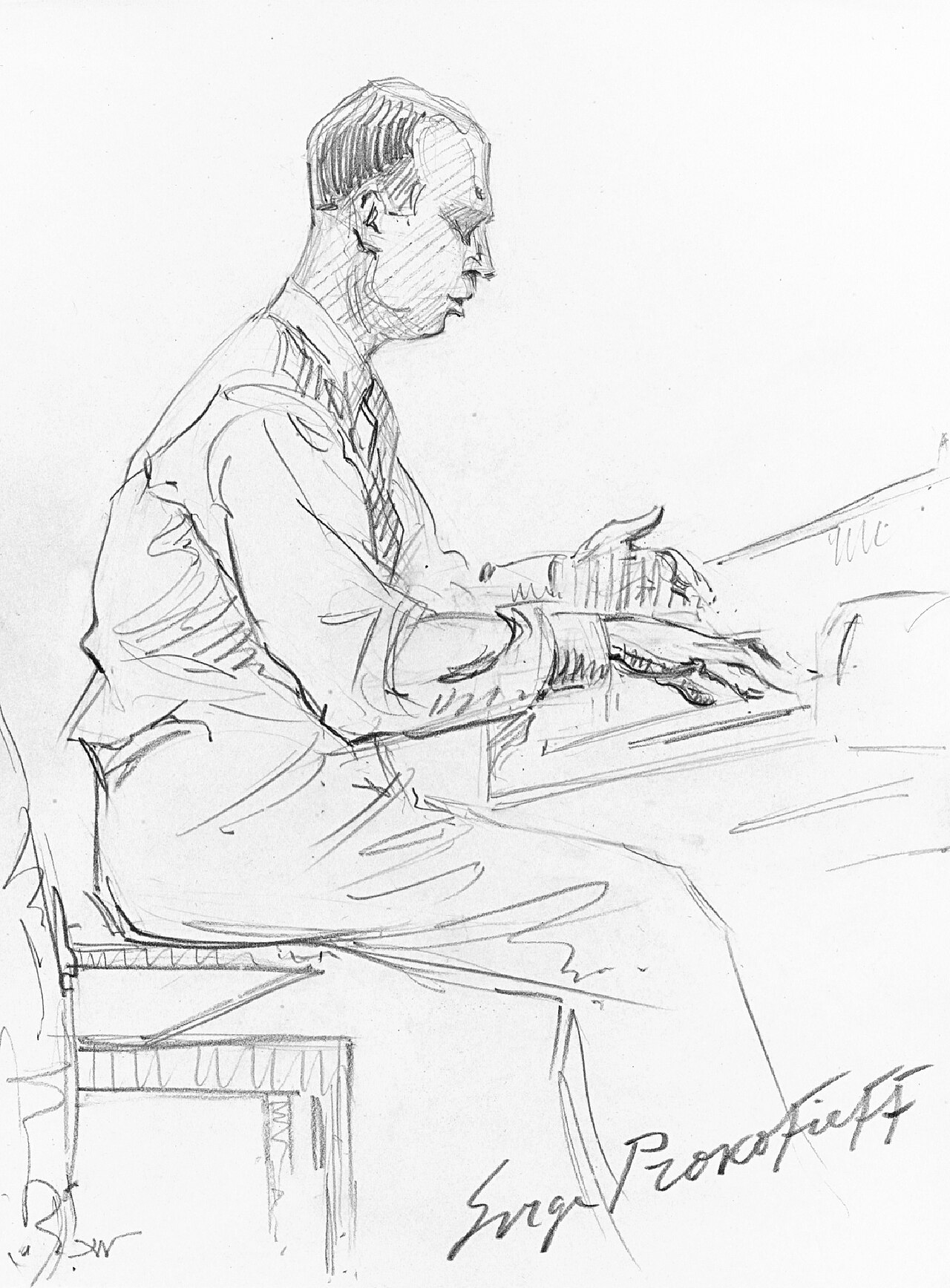
For nine decades, this tale has helped successive generations discover classical music, while giving the Menuhin Festival a perfect opportunity to remind us that a love of music often begins in childhood. Take my word for it: anyone who hears a good performance of Peter and the Wolf as a child will never forget that the Wolf is three French horns and a theme in G minor!
There is little doubt that the performance in Gstaad will be excellent, although the competition is formidable. Don't believe me? Here is just a partial list of recordings of Peter and the Wolf featuring narrators as varied as Natalia Sats (with the USSR State Academic Symphony Orchestra conducted by Yevgeny Svetlanov), Gérard Philipe (with the same orchestra but under Gennady Rozhdestvensky), Leonard Bernstein, both narrator and conductor, with the New York Philharmonic, Eleanor Roosevelt, with Serge Koussevitzky conducting the Boston Symphony Orchestra, Romy Schneider, with Herbert von Karajan conducting the London Philharmonic Orchestra, as well as the “trio” of Mikhail Gorbachev, Bill Clinton and Sophia Loren, accompanied by the Russian National Orchestra under the American conductor Kent Nagano. This last recording received a Grammy Award in 2004. The most recent recording known to me was made in 2025 by the Lausanne Chamber Orchestra under the baton of Renaud Capuçon, with the French actor Jean Reno as narrator. Perhaps one day we'll see it performed live?
Fairy tales, like Music, know no borders. So put down your phones, switch off your televisions, and come to Gstaad to rest your soul and gather your thoughts. As Daniel Hope puts it, "come up and slow down".
The full programme and remaining tickets are available at menuhin.ch.
P.S. Dear friends! The holiday season is here, and many of you are heading off on your travels. As a result, I’ll be slowing down the pace of my publications a little until the end of the summer. I wish you all a wonderful summer and a very enjoyable holiday season. But let’s not lose touch!




Federica Brunelli July 03, 2026
Sikorsky July 03, 2026
Claudio Poloni July 04, 2026
Sikorsky July 04, 2026