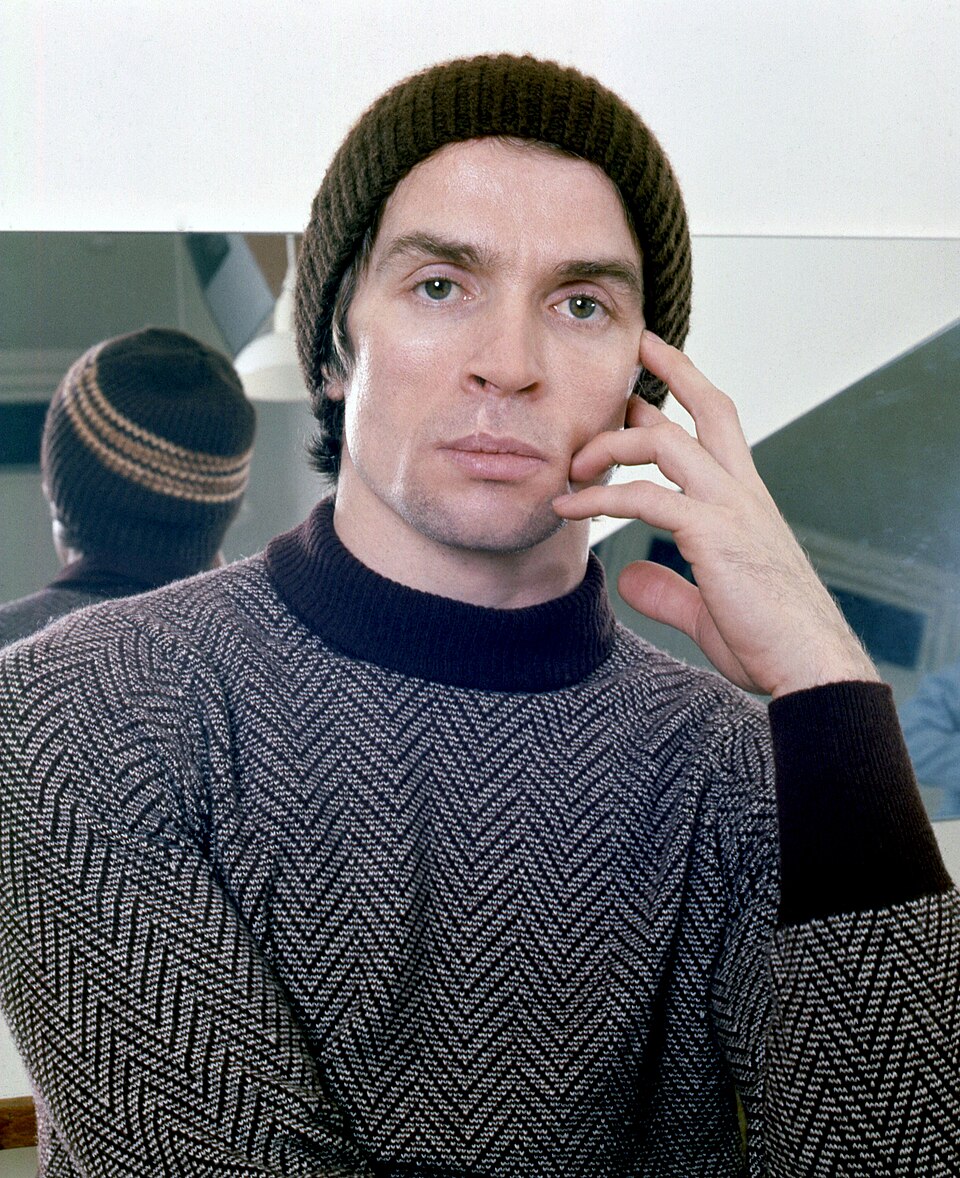
Even those far removed from ballet have surely heard of Rudolf Nureyev, the great dancer, a graduate of the Leningrad Choreographic college, who began his career on the stage of the Kirov Opera and Ballet Theatre, as the Mariinsky Theatre was then called. On 16 June 1961, while on tour in Paris, he was removed, by decision of the KGB, from the the Kirov Theatre company’s further London tour “for violating the regulations governing stay abroad”, but he refused to return to the USSR and requested political asylum, becoming the first “non-returnee” among Soviet artists. As a result, Nureyev was convicted in the USSR of “treason to the motherland” and sentenced in absentia to seven years of forced labour. He did not fade into obscurity in the West. His success was overwhelming, in particular thanks to his collaboration with the English ballerina Margot Fonteyn, which lasted 17 years. At the end of a performance of Swan Lake, which Nureyev staged in 1964 at the Vienna State Opera and in which he performed in a duet with Fonteyn, the audience gave such an ovation that the curtain had to be raised more than eighty times – this became a theatrical record.
From 1983 to 1989 Rudolf Nureyev directed the Paris Opera, where he staged several unforgettable productions and influenced an entire generation of dancers. At the end of his life he tried himself as a conductor, with the blessing of Herbert von Karajan and Leonard Bernstein – his debut in this role took place in June 1991 in Vienna. But before that he managed to visit his homeland: in 1987 he was granted a 72-hour visa to bid farewell to his dying mother, and two years later he performed the role of James in the ballet La Sylphide on the stage of the Kirov Theatre – in those years the political situation in the USSR was changing rapidly. Rudolf Nureyev died on 6 January 1993 from complications of AIDS. According to his wishes, he is buried at the Russian cemetery of Sainte-Geneviève-des-Bois near Paris; his tomb is covered with a colourful mosaic oriental carpet designed by the artist Ezio Frigerio, recalling Nureyev’s roots. In his autobiography, he wrote about his family: “We are Muslims”.
… This vivid and complex life is presented in the ballet Nureyev – director Kirill Serebrennikov, composer Ilya Demutsky and choreographer Yuri Possokhov named it exactly so, in English form, although in Russian the surname of the protagonist is written “Nuriev”, precisely reproducing the Tatar and Bashkir spelling. But one point is left without attention: Rudolf Nureyev was born on 17 March 1938 near the Razdolnoye station on a train heading to Vladivostok, where his father was serving. On a train! Perhaps this was a foreshadowing that his life would pass in constant motion?
The premiere of the ballet Nureyev took place on 9 December 2017 on the historical stage of the Bolshoi Theatre with an 18+ age restriction. It took place despite rumours of interference by the Ministry of Culture headed by Vladimir Medinsky, of a threat to postpone or even cancel the performance due to allegation of “gay propaganda”: there was much debate about whether the famous full-length photograph of a naked Nureyev taken by Richard Avedon would be shown. The leading role was then performed by Vladislav Lantratov, included on 7 January 2023 in the Ukrainian sanctions list as a person publicly calling for war and justifying it. Alongside him danced his wife Maria Alexandrova, who since 21 August 2024 has been acting rector of the Sevastopol Academy of Choreography, and Svetlana Zakharova, appointed on 20 September 2024 acting rector of the Moscow Academy of Choreography. At that time Kirill Serebrennikov had already been under house arrest since 23 August on suspicion of large-scale embezzlement. He remained under arrest when I saw the performance as part of the Golden Mask theatre award. (By way of anticipation, I should add that, released on 8 April 2019 under a travel ban, on 16 April Kirill Serebrennikov, together with Yuri Possokhov, came onto the stage of the Bolshoi Theatre to receive the award in the nomination “Best Ballet Production”.)
The opportunity to see this performance was a great stroke of luck: it was shown very rarely (in part because of the number of participants – almost 600 people were involved in the production), tickets were impossible to obtain (at an official price of 10,000–15,000 roubles, ticket scalpers sold them for one hundred or even two hundred thousand). But a friend at the Bolshoi Theatre said that I had to see it, and I flew to Moscow (at that time this was still possible).
Despite the years that have passed, I remember my impressions perfectly well. The performance overwhelmed me. I had never seen anything like it before, nor had the Bolshoi Theatre itself, for it was not simply a ballet performance, but a grand spectacle involving, in addition to dancers, three choirs and vocal soloists, plus elements of dramatic theatre. In short, a spectacle worthy of Rudolf Nureyev in the scale of both his talent and his extravagance. And the beautiful music of Ilya Demutsky – entirely “classical”, yet at the same time entirely contemporary, despite the use of musical quotations from ballets and Mahler’s Adagietto. And the absolutely stunning costumes by Elena Zaitseva. As for Avedon’s photograph, it was shown, but in such a way that without binoculars it was impossible to make out anything from the auditorium. So those who were interested looked. I also remember very well my reflections that evening in my favourite theatre, where I first came at the age of three and a half. At that performance, as at the premiere, the entire Moscow elite gathered, from oligarchs sponsors Roman Abramovich and Andrei Kostin to various high-ranking officials: the Golden Mask festival takes place with state support and regularly receives greetings from the President of Russia. Such a greeting was also delivered before the beginning of the performance that night. Consider this: the President of Russia greets a performance about a traitor to the motherland and an openly homosexual man, staged by a director under house arrest allegedly for theft. And this performance receives the main prize!
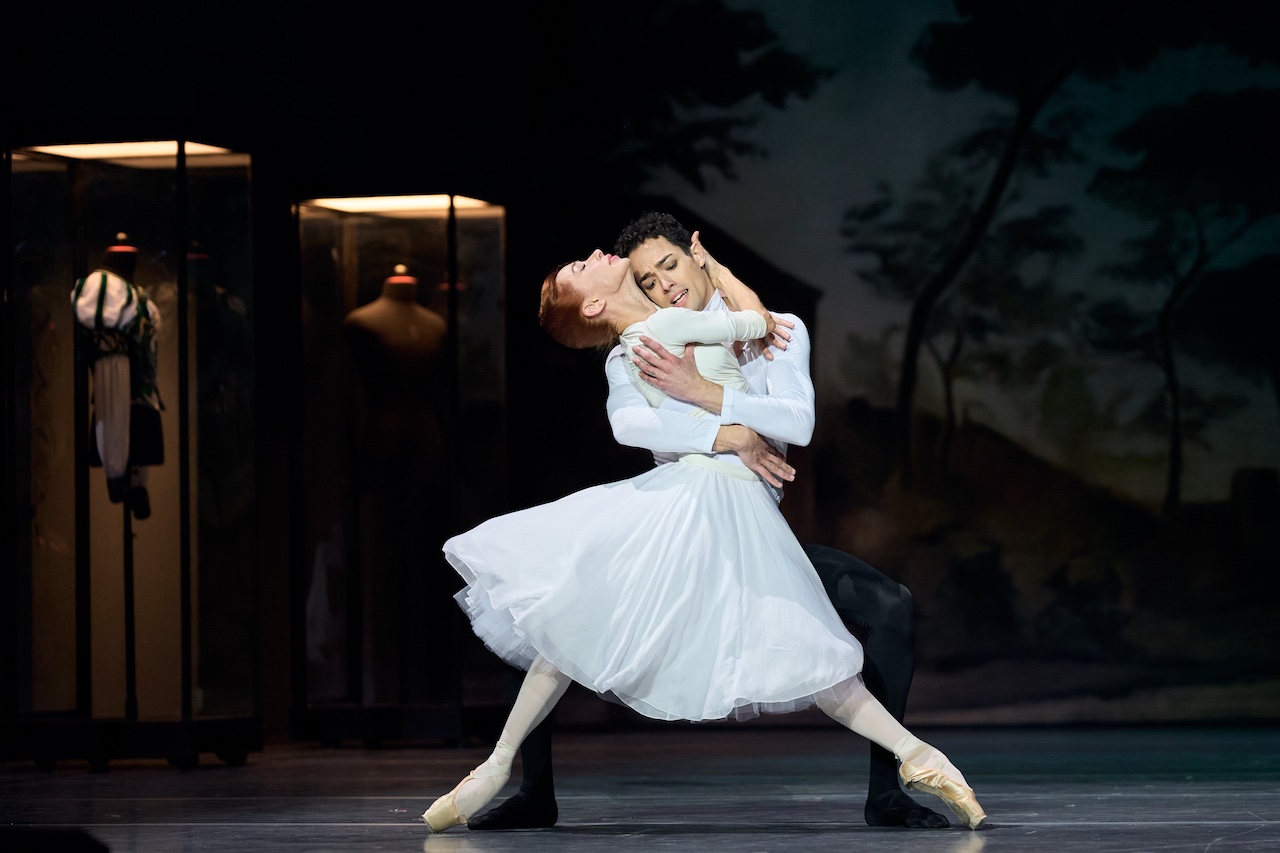
… After Kirill Serebrennikov condemned Russia’s invasion of Ukraine and left the country, already in spring 2022 the ballet Nureyev was removed from the repertoire of the Bolshoi Theatre. And on 5 December of the same year Federal Law No. 478-FZ introduced amendments to the law “On Information, Information Technologies and the Protection of Information”, completely banning propaganda of non-traditional sexual relations, gender reassignment and paedophilia in the media, the internet, advertising, books and cinema. I will not dwell here on the listing, separated by commas, as synonyms, of homosexuality and paedophilia, nor on what should be considered propaganda and what a reflection of the realities of life, but it was clear that this performance would not return to the Russian stage in the foreseeable future. And perhaps it will not return to the stage at all, for Kirill Serebrennikov himself said that there is no stage like that of the Bolshoi anywhere. Is the enormous work of so many talented people really to go to waste?
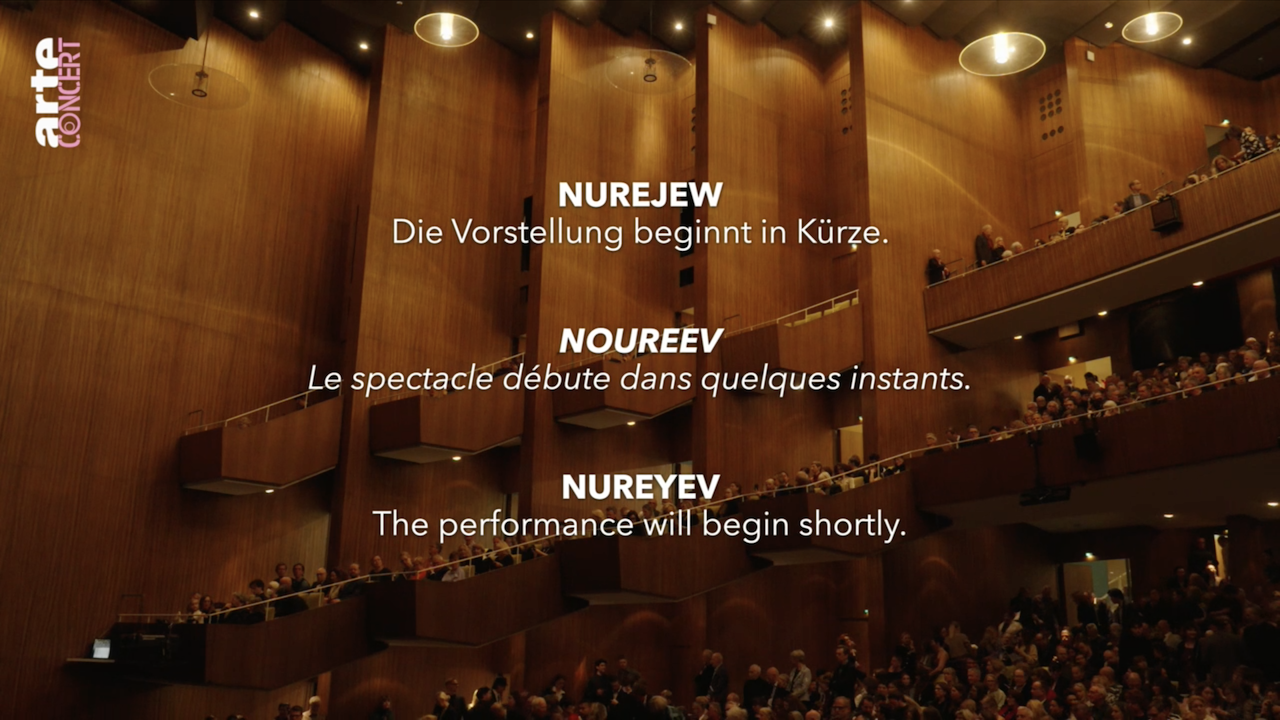
Never say never. The ballet Nureyev is now being performed at the Berlin State Opera. Even if with a smaller number of participants – it could not have been otherwise given the difference in stage dimensions of the Bolshoi Theatre (portal width: 21–23 m, stage depth: 25–30 m, height 28–30 m) and of the Berlin State Opera one (portal width: 14–16 m, stage depth: 20–22 m, stage height: 20–23 m). But otherwise, in my view, without losses. And with a lower age limit of 10+. And with that very Avedon photograph, without any tricks. But believe me, it is not the main thing at all. The main thing is a tribute to talent and labour, offered sincerely, vividly, with taste, and also with a sense of humour.
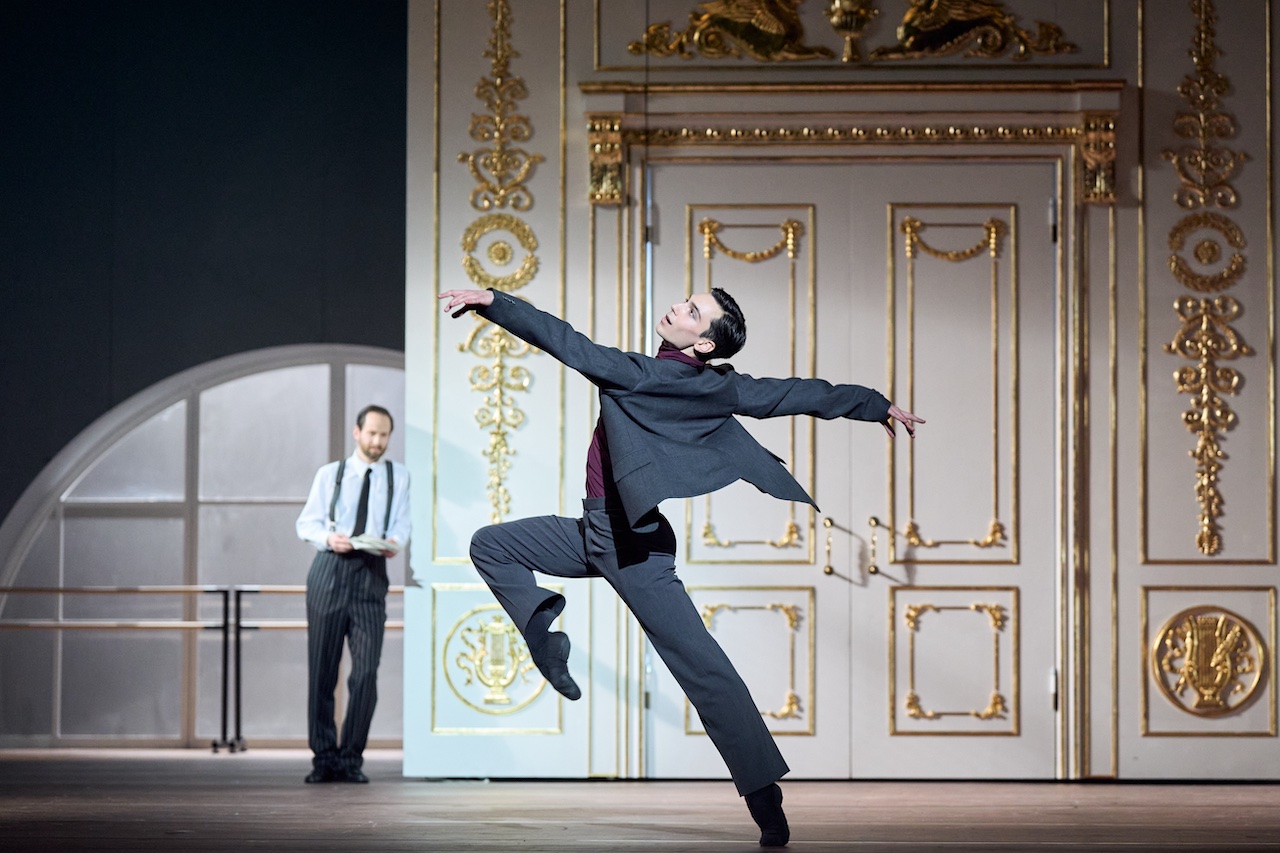
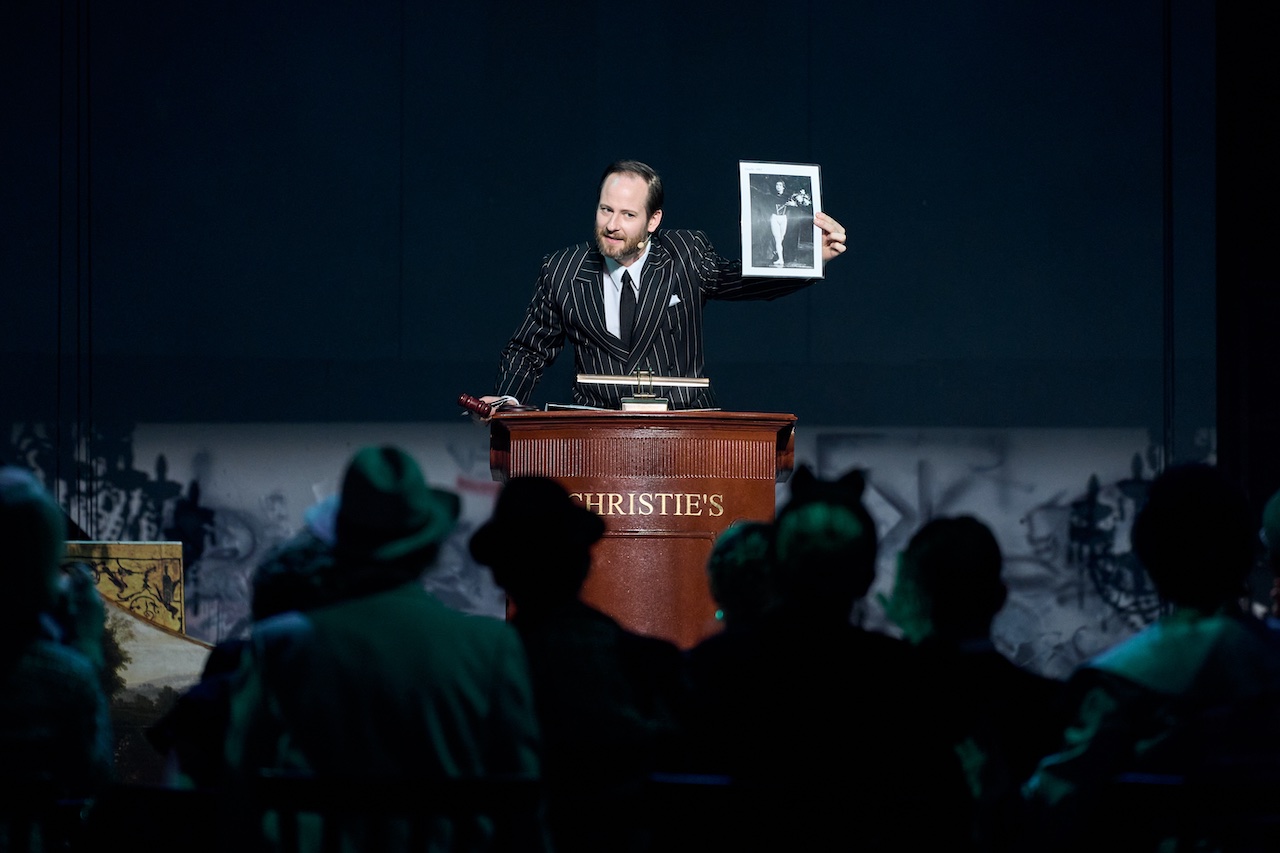
… At a Christie’s auction, the personal belongings of Rudolf Nureyev are being sold – this is how the performance begins. The auctioneer announces the lots, explains their provenance and names the starting prices. (In this role, which ties the whole performance together, as in all the others I have seen, Odin Lund Biron is magnificent – an American who came to Moscow in 2005 to study at the Moscow Art Theatre School-Studio and remained there. A participant in many film projects and theatre productions by Kirill Serebrennikov, in March 2022 he moved from Moscow to Berlin.) Sofas, chairs, lamps, carpets, gifts from the powerful of the day, including Jacqueline Kennedy, are carried away, thus gradually freeing the stage for the action. In the end the viewer’s attention is drawn to two portraits on the backdrop: on the left – Nicholas II, on the right – Agrippina Vaganova, the founder of Russian classical ballet, whose name is borne by the alma mater of Rudolf Nureyev, renamed in 1991 from a college into the Academy of Russian Ballet.
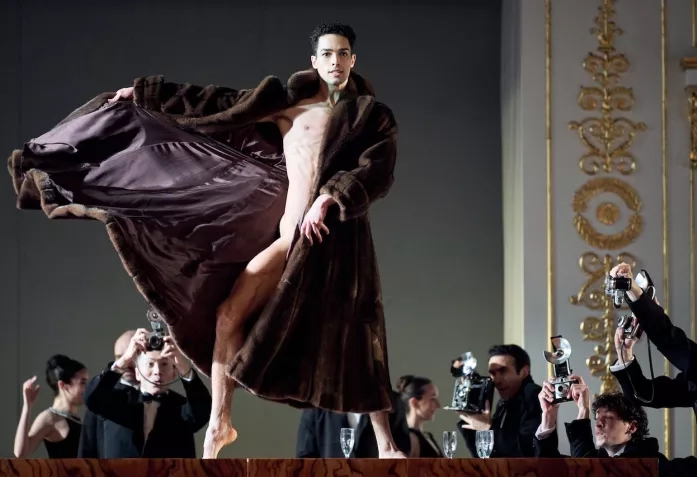
During the performance the portrait of the tsar is replaced by a portrait of Lenin, then Stalin, then Khrushchev… The choir sings a very Soviet-sounding song about the fact that “one does not choose one’s Motherland”. And Vaganova’s portrait just keeps hanging there. “The audience lives through the life of Rudolf Nureyev in David Soares’s wonderful performance, a Brazilian ballet artist who until March 2022 was a leading soloist of the Bolshoi Theatre and since then a principal of the Berlin State Ballet (they even resemble each other somewhat in appearance, both handsome). Together with him, at once fragile and unyielding, gentle and hard, we are transported to the class of Nureyev’s teacher Alexander Ivanovich Pushkin, who trained not only “Rudi”, but also Mikhail Baryshnikov and Alla Osipenko, also present in the performance, alongside other friends and partners of Rudolf Nureyev on stage and in life: Margot Fonteyn (performed by Yana Salenko), Natalia Makarova, Charles Jude, Erik Bruhn... We are present at that very historical photoshoot of Richard Avedon, persuading Nureyev not to pose, but to be himself, after which the artist remains in the costume of Adam, and a little later – at the sale of the photographs taken then, which ladies of late Balzacian age buy up for enormous sums. The table dance of the naked Rudolf Nureyev, performed by David Soares wearing only a mink coat, which causes sensitive ladies to faint, is a little masterpiece in its own right.
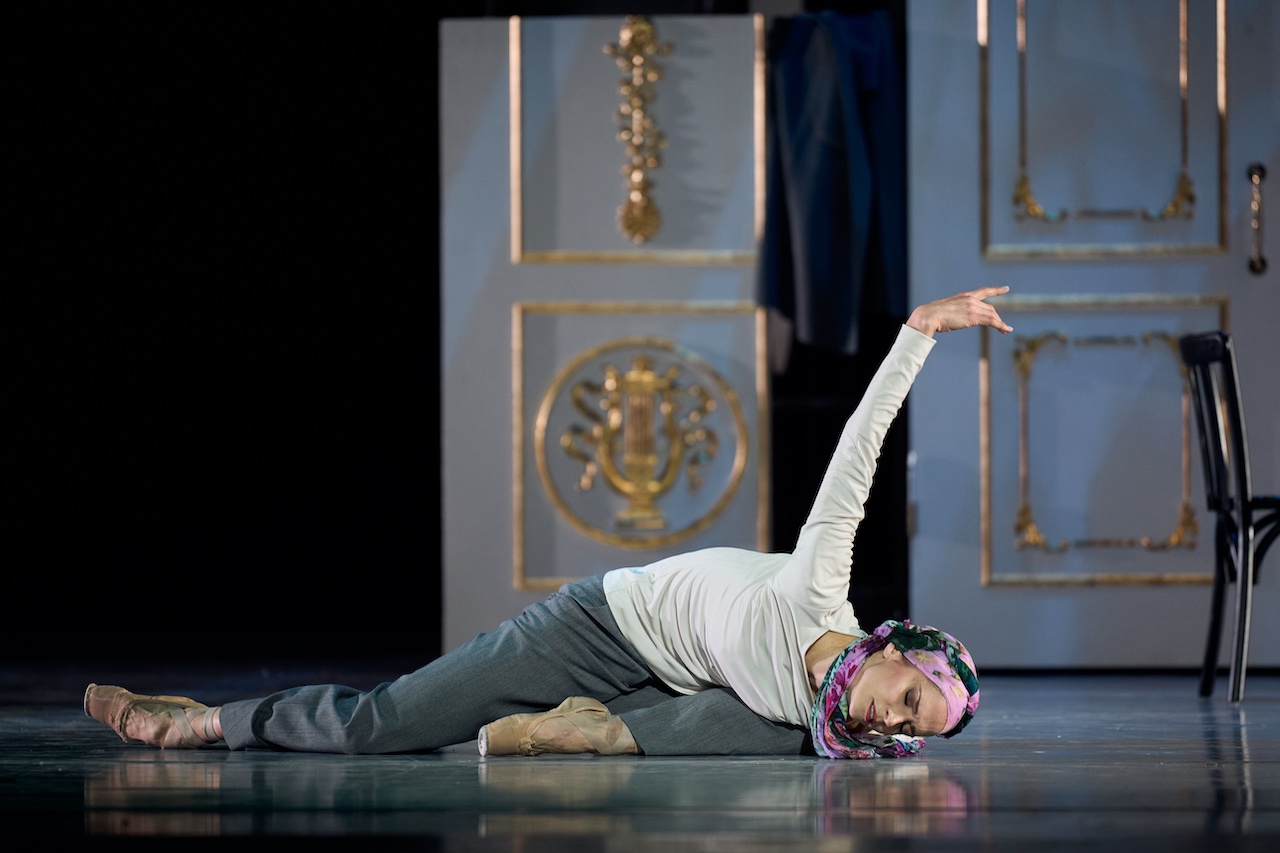
One after another, the costumes of Rudolf Nureyev go under the hammer – always exquisitely luxurious, their price only higher from the fact that they, according to the auctioneer, “still retain Rudi’s scent”. The costumes are taken from display cases and pass into the hands of buyers, while the audience watches with admiration as they come to life in fragments of the performances associated with them: Le Corsaire, Don Quixote, Giselle, Swan Lake, La Bayadère and others, which have forever entered the history of world ballet.
The “island of Nureyev”, in the Gulf of Salerno, near the Italian town of Positano, is also being sold at auction, and illustrated by the number Pierrot Lunaire – Rudolf Nureyev first performed this role in Glen Tetley’s choreography on the stage of the Royal Danish Ballet on 29 December 1976. What is the connection? It is not merely a connection, but a whole extraordinary tangle. The rocky island of Li Galli was indeed acquired by Rudolf Nureyev in the late 1980s. But its first owner, in 1922, was the choreographer and leading dancer of Serge Diaghilev’s Ballets Russes, Leonid Massine. On 18 May 1917, at the Théâtre du Châtelet in Paris, the premiere of his ballet Parade took place, to a libretto by Jean Cocteau, telling the story of a group of circus performers trying to lure the public into their booth before the show begins. The sets and costumes were created by Pablo Picasso, and the performance was conducted by the Swiss Ernest Ansermet. In the same year, Picasso painted his famous Harlequin – in white and blue tones, hat in hand, pensive, in a melancholic pose. The model for this masterpiece, a jewel of the Picasso Museum in Barcelona, was Leonid Massine. And twenty years later, in 1937, Le Corbusier stayed on his island and was persuaded by his host to build a villa there. You see, the Swiss accent appears here as well! But more seriously, it should be recalled that Diaghilev’s Ballets Russes were among the first true experiments in the synthesis of the arts, where dance, painting and theatre existed on equal terms. It is no coincidence that Pablo Picasso painted Massine both as a dancer and as the embodiment of the very idea of the artist – the Harlequin, that central figure of modernism, uniting play, mask and inner duality. Rudolf Nureyev brought this type of artist to its extreme: on stage he no longer portrays a role, but becomes an image himself, in which the boundary between the person and the stage disappears entirely.
The finale of the performance is incredibly moving: the mortally ill Rudolf Nureyev descends into the orchestra pit in a black tailcoat and a white turban. A beautiful oriental prince.
… The unchanging presence of Agrippina Vaganova’s portrait against the background of changing portraits of transient political figures, like the fate of Rudolf Nureyev himself and of the performance dedicated to him, is evidence that true art cannot be restrained either by administrative repression or by state borders. Slowly, with difficulty, with sacrifices, but it inevitably breaks free.
PS. Rudolf Nureyev performed at the Zurich Opera in 1966, and Kirill Serebrennikov has in recent years been a frequent guest at this theatre. What if they were to meet there? It is nice to dream about it, but for now, it’s off to Berlin, to Berlin!