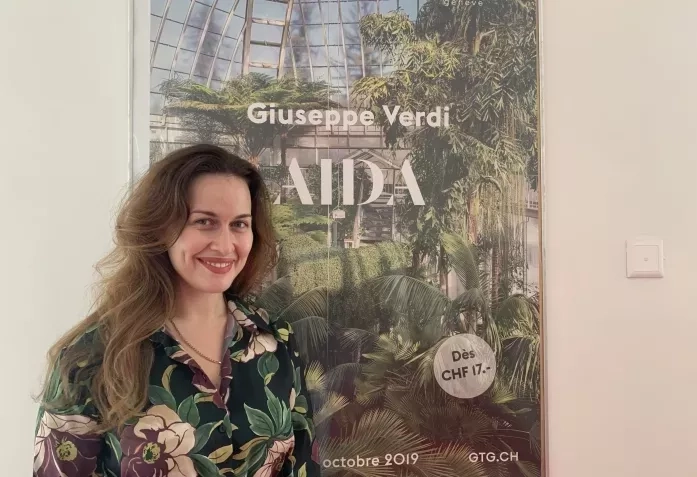
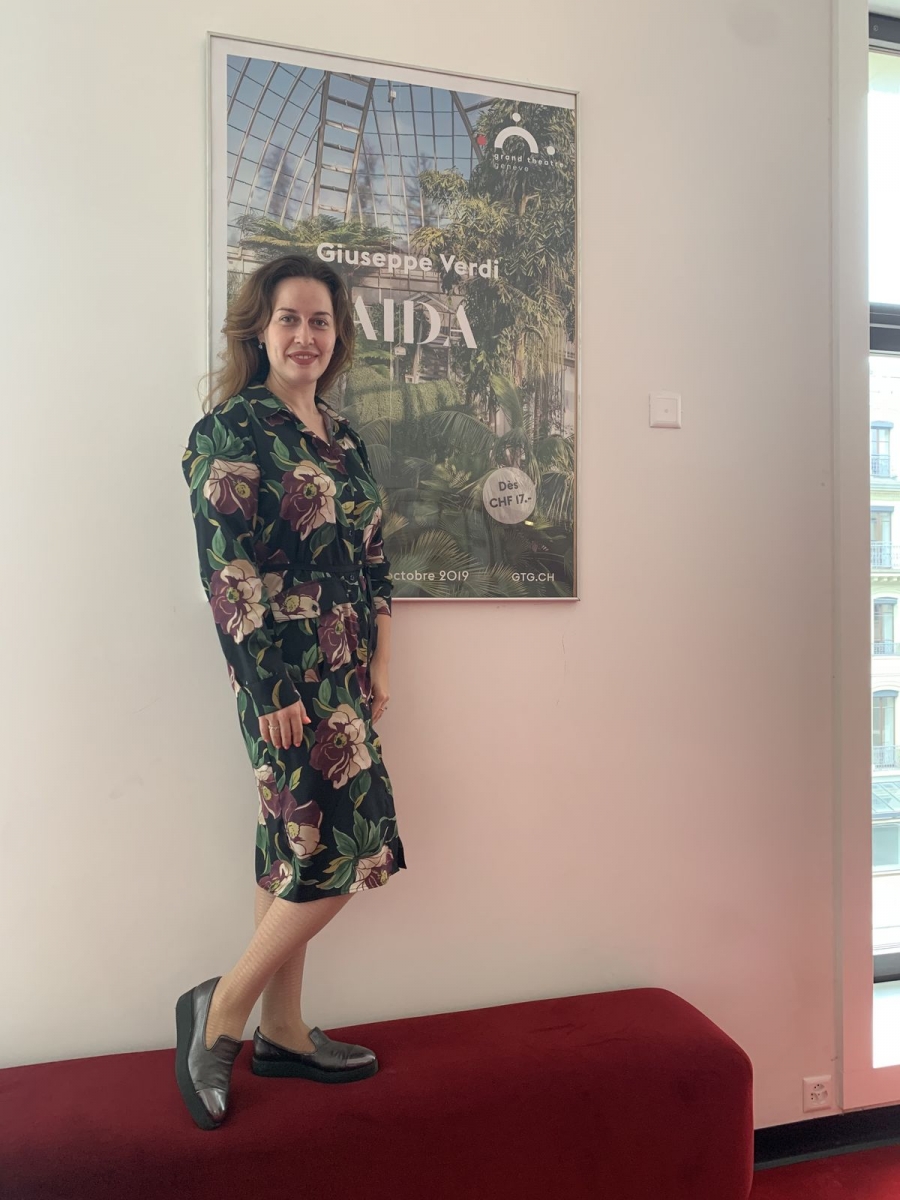
On 11 October, the Grand Théâtre de Genève will present the premiere of Verdi’s Aida, directed by British director Phelim McDermott. Russian soprano Elena Stikhina will make her debut on the Geneva stage in the title role. Nasha Gazeta had the opportunity to speak to her during rehearsals.
Elena, looking at your biography, one cannot help noticing the remarkable leap from Lesnoy, the town in the Sverdlovsk region where you were born and grew up, to the Moscow Conservatory. Did the fact that your professor at the Conservatory, Larisa Rudakova, also came from Lesnoy play a part? Or was it a rather extraordinary coincidence?
Both yes and no. Our town has a population of 50,000, perhaps even fewer now. After finishing music school, where I studied piano, I joined the music studio at our local Sovremennik Cultural Centre, where my teacher was Olga Sergeyevna Khrulyova. She had once worked as an accompanist for an amateur ensemble in which Larisa Rudakova began her career. So there was a connection. What really is interesting is just how many talented people have come from our little town. I personally know three singers who have established careers: Evgenia Muravyova (from the nearby town of Nizhnyaya Tura), Elena Bezgodkova and myself. And then there is Alexander Popov, the four-time Olympic swimming champion. (We might add: six-time world champion, 21-time European champion, multiple world and European record holder, Honoured Master of Sport of the USSR, recipient of an order of merit and honorary member of the International Olympic Committee. – NG)
It's wonderful that a small town offers so many opportunities for children to develop their talents. Does the local administration deserve some credit for that?
In the past, it was simply customary for children in our town to take up music or sport. The town's small size helps: you can get from one end to the other by bus in twenty minutes. Children can try different activities and choose whatever appeals to them. Or perhaps people in our town are particularly determined!
Was it difficult to get into the Moscow Conservatory?
I applied without really knowing how things worked! I finished secondary school at seventeen and needed to go on to higher education, but I didn't even know that you were supposed to have studied at a music college before applying to the Conservatory. Because I hadn't done that, and because I was so young, when my mother and I arrived in Moscow to submit my application, they offered me a place on a two-year preparatory course. Afterwards, I moved on to the main course and completed my studies there. Of course, getting into the Moscow Conservatory was a tremendous stroke of luck.
After such an excellent education at one of the country's most prestigious institutions, why did you need another two years of study, this time with Makvala Kasrashvili at the Galina Vishnevskaya Opera Centre?
You know, the beginning is always the hardest part. It's not easy to find your path straight away. After graduating from the Conservatory, I auditioned for various Moscow opera houses, but I was too young for the main soprano repertoire, probably not quite ready, and there were no vacancies anyway. But it all turned out for the best. Those two years at the Centre taught me a great deal, and most importantly, it was then that I finally became certain that singing was what I really wanted to do.
After receiving such a first-rate education in the capital, you left for the Primorsky Opera and Ballet Theatre in Vladivostok. We should point out that this was before Valery Gergiev, and with him the federal government, turned their attention to the city's musical potential. In other words, it was hardly the most prestigious place to work at the time.
While studying at the Galina Vishnevskaya Centre, I was very active on the concert stage and worked with a Russian-German ensemble of young performers. But my dream had always been to work in an opera house. (Now that I've achieved that dream, I find myself missing the chamber repertoire, which is also very important for a singer.) After auditioning for various opera houses, I accepted an invitation from Vladivostok and began there with the role of Nedda in Leoncavallo's Pagliacci. The theatre had only just opened and didn't even have a proper resident company yet.
In 2013, you took part in an international opera masterclass in Switzerland. What was that experience like?
There is a German mezzo-soprano, Verena Keller, who actively supports young performers. Every year, she organises a masterclass lasting two or three weeks in Sigriswil, in the canton of Bern. She teaches there herself and also invites conductors and stage directors. Incidentally, that was where I worked on the finale of Aida. As part of the masterclass, we gave several concerts in different towns to show what we had achieved. It was a very valuable experience.
You had another Swiss experience, at Theater Basel.
Yes, in the 2016–2017 season I sang Leonora in La forza del destino there. The casting director of Basel Opera had attended a performance of Tosca in which I appeared at a festival near Munich and invited me to audition. There was a lot of competition, but I was well prepared and was offered a contract. Incidentally, that was also where I met my current agent.
So Switzerland seems to be good for you! I hope that continues. But let's return to Russia for a moment. The move from the Primorsky Theatre to the Mariinsky was no less dramatic than the move from Moscow to Vladivostok. How did it happen?
It wasn't really a direct move. I left the Primorsky Theatre first and only later joined the Mariinsky. I left for practical reasons: I had started touring, and travelling anywhere from Vladivostok was extremely difficult. I resigned from the company but continued to return for a while as a guest soloist. I came to the Mariinsky while they were preparing a concert performance of Don Giovanni, to gain some experience. At the time, the theatre had also begun working on Salome, and I was invited to take part. I started learning the role, despite many people advising me against it. I decided to take the risk, and at the dress rehearsal Valery Abisalovich Gergiev heard me sing and cast me in the premiere.
The risk clearly paid off, since the role earned you nominations for the Onegin, Golden Soffit and Golden Mask awards. Your appearance as Aida in Geneva, however, will be a debut. Without giving away any of the director's secrets, what should audiences expect? Yet another transposition of the action?
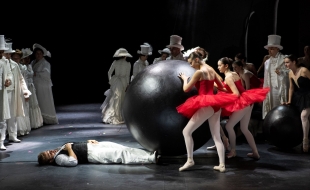
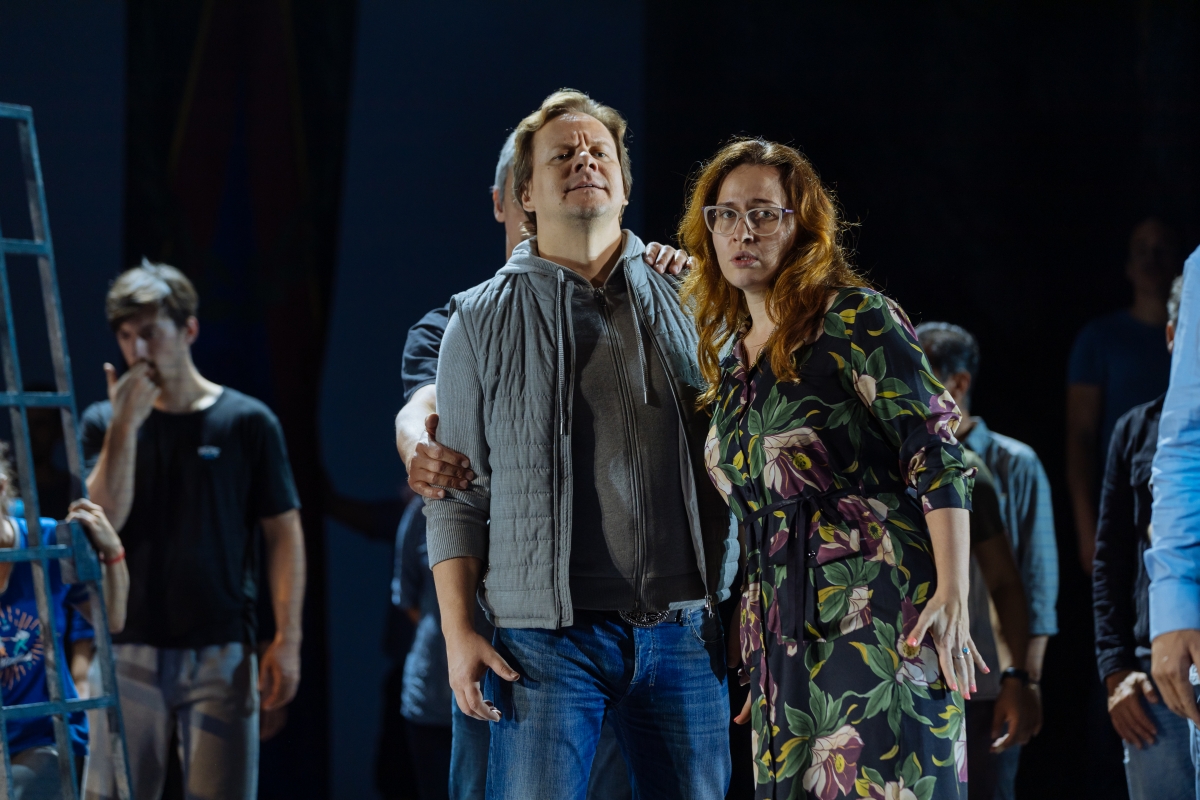
No! It's a fairly classical production, although not in the Zeffirelli style. There is no recreation of ancient Egypt on stage, no horses, and they aren't even covering me in black make-up. My hair will be curled, though. The action isn't set in the present day; it's more or less outside time.
So the emphasis is on the timeless themes of love, loyalty and betrayal. Wonderful! And how are you getting on with your fellow performers?
Wonderfully! My main partner is the excellent Korean tenor Yonghoon Lee, who sings Radamès. But all the other performers are of the highest calibre too. The casting has been done extremely well.
That's encouraging. But let's turn to a broader question. Opera audiences are ageing and, sadly, gradually disappearing. Every opera house is trying to attract a new audience, sometimes without being too particular about the means it uses. Is it possible to make opera more accessible while preserving the genre's traditions and maintaining the quality of productions?
Of course it is! In the summer of 2019, I sang the title role in Cherubini's Médée at the Salzburg Festival, in a production by the young director Simon Stone. He also works in straight theatre and cinema. It was a very modern production, with the action brought into the present day, video projections and so on. But everyone who came to see it was completely drawn into the action, even though the opera itself isn't exactly one of the greatest. Simon took this less-than-outstanding musical material and created an astonishing production. He filmed the events leading up to the opera's story, making it easier for the audience to follow what was happening. A production like that can attract young people without compromising the music in any way. In general, I believe that only talent can draw an audience, both the director's and the performers'. If someone comes to the theatre and what they see gives them goosebumps, they will certainly come back.
You took part in José Carreras's farewell tour. What is it like to stand on stage alongside a living legend?
Indescribable! Just imagine: a little girl from a small town watching the Three Tenors concerts on television. They seemed just as unattainable as Hollywood stars. You knew they existed, but there was no way you could ever get close to them. So when, in 2016, I won the Audience Prize and a special prize, the Culturarte Prize, at the Operalia competition in Guadalajara, Mexico, and was offered two concerts with Carreras, I was simply overwhelmed. First, I'd had the shock of seeing Domingo in person at the competition, and then came this! In fact, everything I'm doing now, everywhere I find myself, feels like a wonderful dream.
Since you've mentioned Plácido Domingo, what do you, as an attractive young singer at the beginning of her career, think of the ugly scandal surrounding him, sparked by accusations of sexual harassment made by several women?
It's outrageous. I can hardly find the words. It seems to me that all this is part of a strange fashion that has already claimed a number of well-known people as its victims. I don't know what to make of it, but I don't understand why events from many years ago, suddenly brought to light, are given so much prominence. How can they be proved? What are these people trying to achieve? And above all, what have art, music and audiences done wrong? I've met Plácido Domingo several times in different circumstances, but I've never noticed anything resembling what he's being accused of. To me, he's an absolutely lovely person. I think we'll never know the whole truth, but the unpleasant whiff of scandal, as they say, will linger. Unfortunately.
You stood in for Sonya Yoncheva in Médée in Salzburg, Anna Netrebko in Eugene Onegin in Paris and Maria Guleghina in Tosca in Vladivostok. Aren't you tired of replacing other singers? And doesn't it bother you when people call you, say, 'the next Netrebko', rather than simply recognising you as Stikhina in your own right?
Replacing someone is perfectly normal. Anyone can fall ill, and for a young singer it can be an opportunity. As for whether it bothers me, believe me, simply hearing my name mentioned alongside those great names gives me enormous pleasure. I'm absolutely delighted. As for the rest, time will tell. You just have to work hard and live your own life.
What would you like to say to our readers who are coming to the premiere of Aida on 11 October?
That they enjoy it so much they'll want to come back on the 13th and on all seven of the other evenings when the opera is being performed! Come prepared, read up on the story beforehand, switch off your mobile phone, forget everything that's happening outside the auditorium and simply enjoy yourselves!