
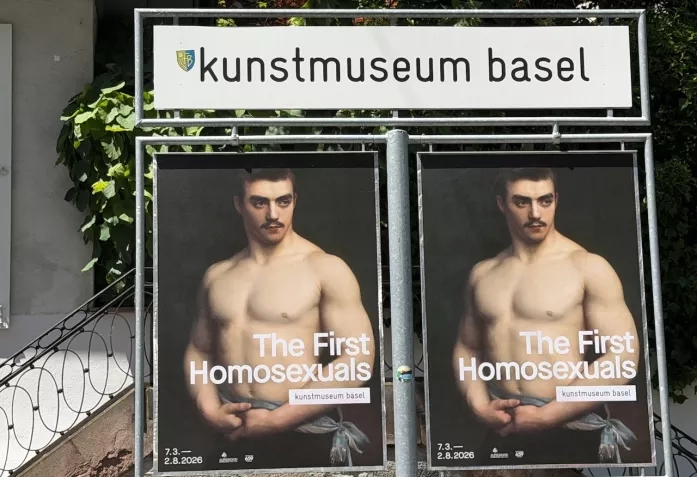
I must admit that I am among those who believe that both religion and sexual life belong primarily to the private sphere, since both are, above all, matters of personal choice and personal experience. Yet both have long since entered the public arena, becoming subjects of public debate, political controversy, academic research, demonstrations and even legislative change. The Basel presentation is a reworked version of the project first shown at Wrightwood 659 in Chicago by Alphawood Exhibitions. Curators Rahel Müller and Len Schaller adapted it for Kunstmuseum Basel, based on the original concept developed by Jonathan D. Katz and Johnny Willis. More surprising is something else: The First Homosexuals: The Birth of New Identities, 1869–1939 turns out not to be quite what one might expect from its title. The first surprise begins with the exhibition poster itself, which features a portrait of Maurice Deriaz painted by the French artist Gustave Courtois in 1907.
Chances are that this name means little to most readers. Maurice Deriaz (1885–1974) was a Swiss athlete, Greco-Roman wrestler, strongman and bodybuilder from the village of Baulmes in the canton of Vaud. A multiple wrestling champion and record holder in one-arm weightlifting, he earned the nicknames Le Lion Suisse (“The Swiss Lion”) and even Roi de la beauté plastique (“King of Physical Beauty”). Yet it is not his sporting career that matters here. What matters is that he became one of the favourite models of Gustave Courtois (1852–1923), who portrayed him repeatedly. In addition to the 1907 portrait displayed in Basel, Deriaz posed for Hercule aux pieds d'Omphale (Hercules at the Feet of Omphale, 1912) and Persée délivrant Andromède (Perseus Rescuing Andromeda, 1913). He later donated all three works to his native Baulmes.
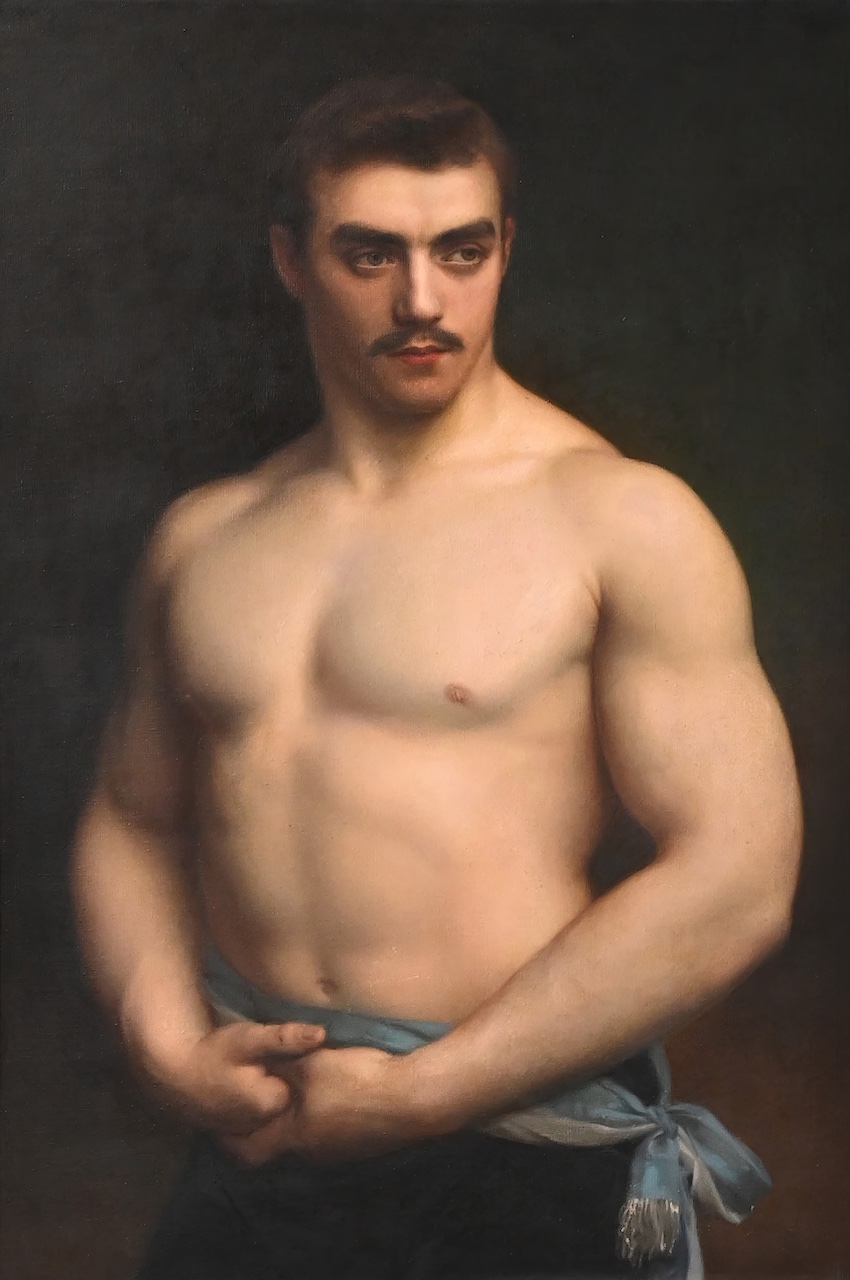
The portrait chosen for the exhibition poster clearly serves as a symbol of a changing ideal of male beauty. If late nineteenth-century homoerotic art favoured slender, almost androgynous youths, the early twentieth century increasingly celebrated a very different figure: strong, muscular and emphatically masculine. The image immediately challenges the expectations of visitors drawn by a title such as The First Homosexuals, only to find themselves face to face with a Swiss wrestler whose torso resembles that of a classical hero. It is an astute curatorial decision, announcing one of the exhibition’s central arguments from the outset: many of our contemporary assumptions about what the “first homosexuals” should have looked like bear little resemblance to historical reality.
Same-sex relationships existed long before the word “homosexual” came into being. They were known in ancient Greece and Rome and found expression in the art of many cultures and periods. Yet it was only in 1869 that the Hungarian writer Karl Maria Kertbeny coined the terms “homosexual” and “heterosexual”. The curators have chosen that date as the starting point of their story.
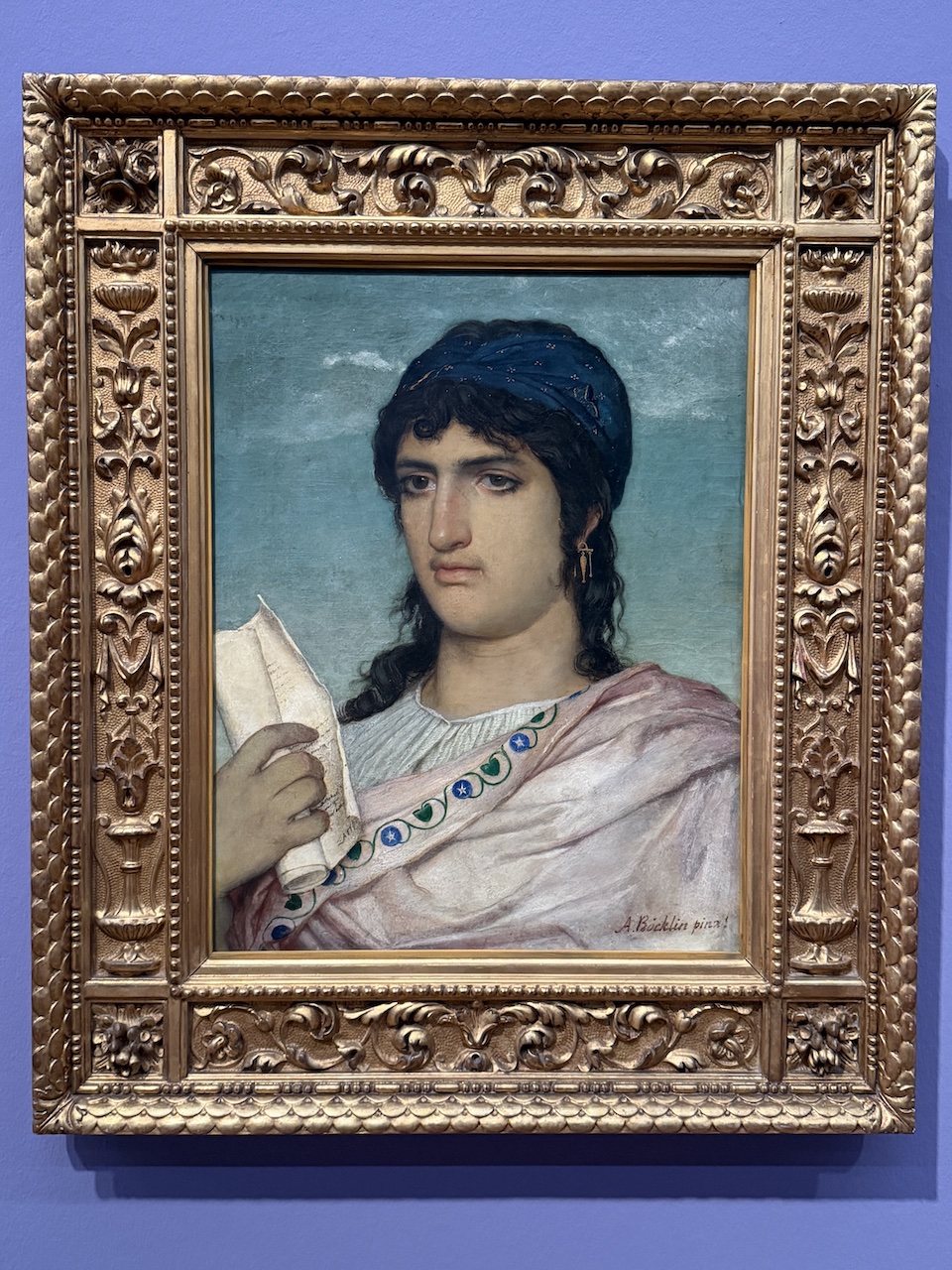
In reality, however, the exhibition begins much earlier, with a line by the ancient Greek poet Sappho: “Someone, I say, will remember us in time to come.” Sappho lived on the island of Lesbos in the seventh and sixth centuries BC, celebrated love between women and, without knowing it, inspired an entire cultural vocabulary, from the word “lesbian”, derived from her native island of Lesbos to the adjective “Sapphic”, formed from her own name. Her portrait by the Swiss painter Arnold Böcklin, creator of the famous Isle of the Dead that inspired Rachmaninoff, greets visitors in the very first gallery.
Sappho’s words set the tone for the entire exhibition. This is not merely a story about sexuality. It is also a story about people who, for centuries, were overlooked, ignored, or simply lacked the words with which to describe themselves. In that sense, Sappho’s words proved prophetic. Only fragments of her poetry survive, yet she herself never disappeared from humanity’s cultural memory.
Visitors encounter another surprise in the first room: Albrecht Dürer’s woodcut Männerbad (The Bath House), created in 1496–1497, almost four centuries before the word “homosexual” was coined. To a modern viewer, the group of semi-nude men gathered in the bath may appear unmistakably homoerotic. Yet here the exhibition raises one of its central questions: do we have the right to apply concepts that emerged in the nineteenth century to people who lived in the fifteenth? The curators, as far as I can tell, answer with caution. They do not claim that Dürer was depicting homosexuals in any modern sense of the word. Rather, they demonstrate that same-sex desire, male intimacy and erotic tension existed in art long before there were specific words or social categories to describe them.
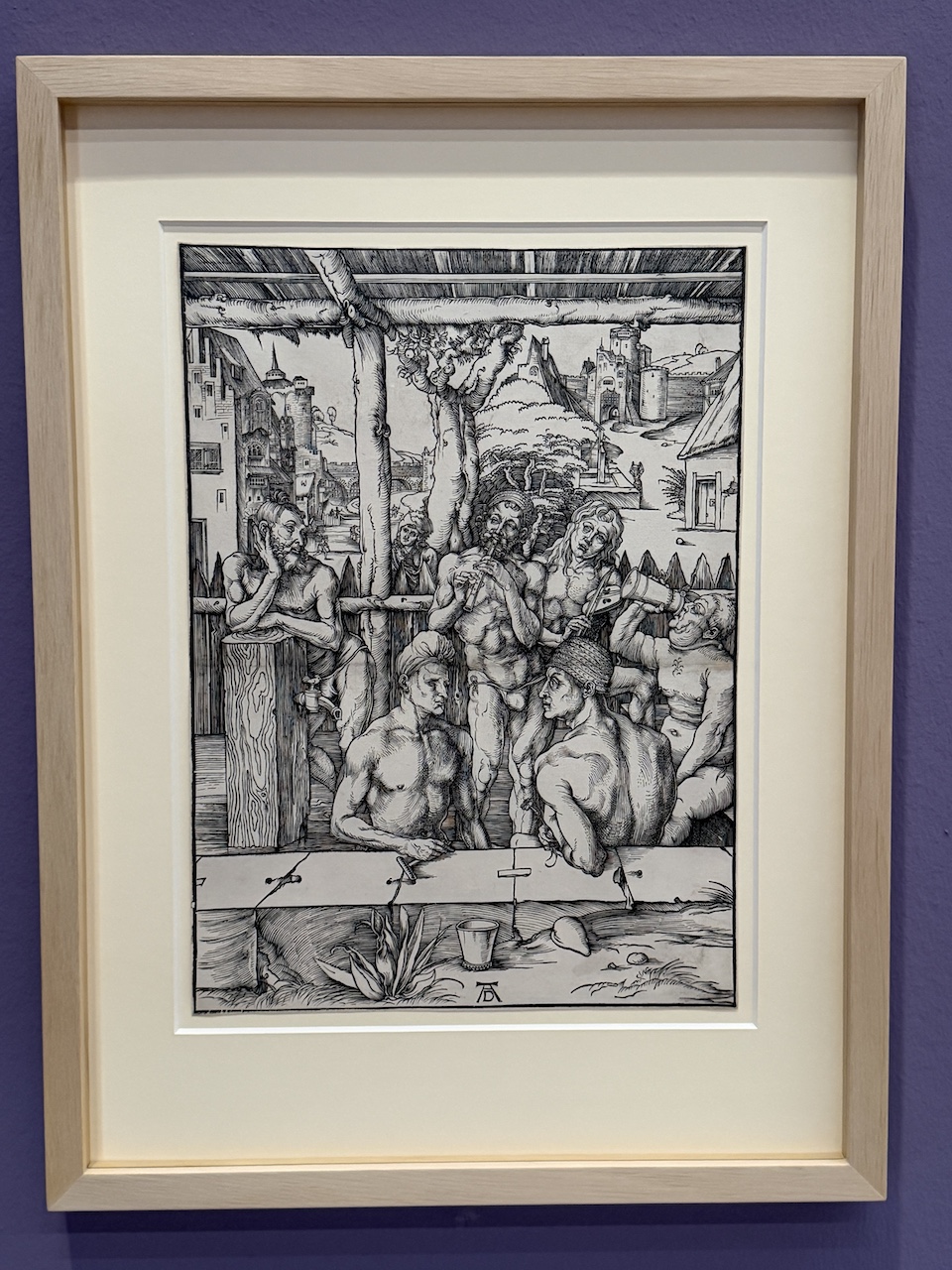
Moreover, the woodcut contains another detail worth noticing. Among the bathers one can easily identify a flute player, while nearby several men appear far more absorbed in one another’s company than in the bathing itself. What is striking is that, for the late fifteenth century, the scene feels not provocative but matter-of-fact. This points to one of the exhibition’s most compelling ideas: the history of sexuality is not always a history of prohibition. Quite often, it is the history of how later societies began to classify and regulate experiences that had previously existed without rigid definitions.
One of the exhibition’s most fascinating sections explores the history of visual codes. At times when speaking openly about such matters was impossible or dangerous, art developed its own language of allusion. Violets evoked Sappho, the myth of Narcissus, explored in several of the works on display, acquired unexpected meanings, scenes of friendship could conceal romantic relationships, and joint portraits became discreet declarations legible only to those who knew how to read them.
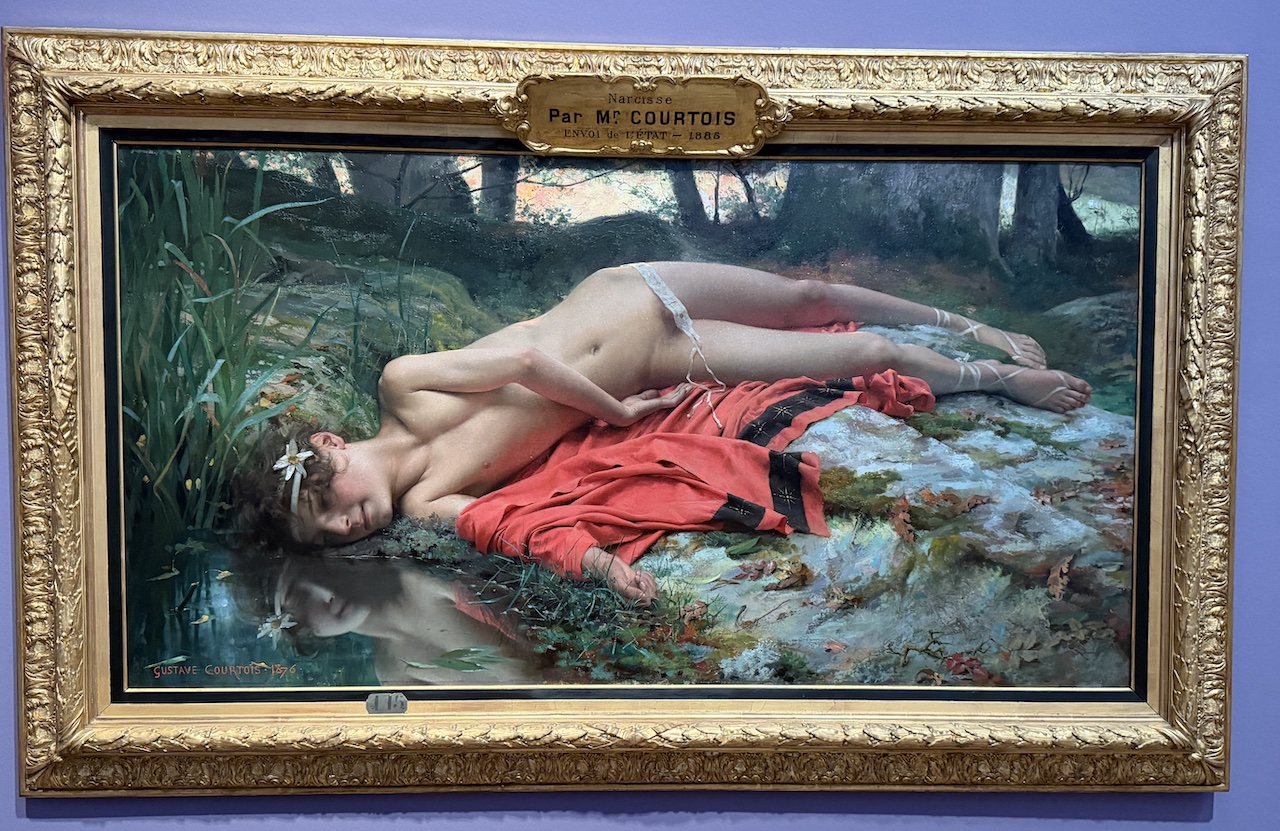
Gradually, the exhibition moves far beyond the subject of sexuality itself. It shows how ideas of human identity were transformed at the turn of the twentieth century. Theories of a “third sex” emerged, the first attempts were made to conceptualise transgender identities, and distinctions began to be drawn between sex, gender and sexuality. Many questions commonly regarded as uniquely modern were already being debated more than a century ago.
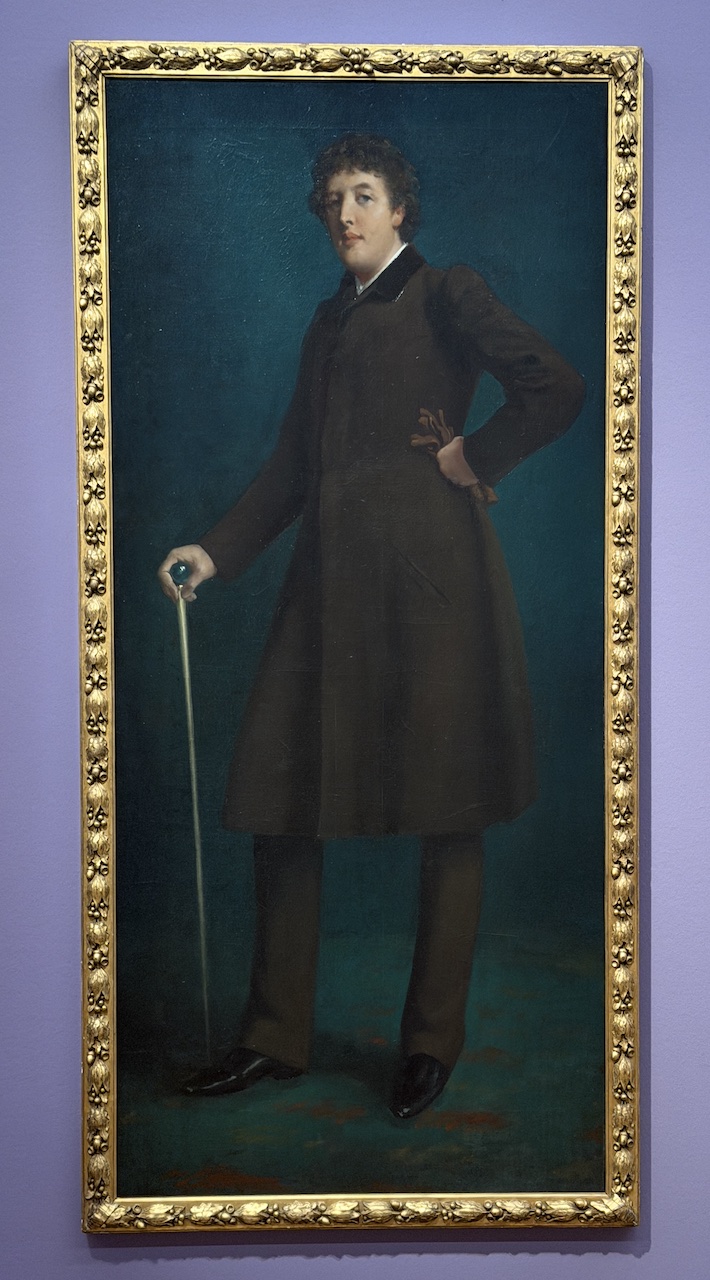
The exhibition also features a number of well-known figures. Among them is a striking portrait of the young Oscar Wilde by the American artist Richard Garnett Harper Pennington, painted before the famous trial and imprisonment that would transform Wilde into one of the enduring symbols of resistance to the persecution of homosexuals. Nearby hangs a portrait of Walt Whitman by Herbert Gilchrist. Many scholars believe Whitman was homosexual, although he never publicly identified himself as such and left no unambiguous testimony concerning his private life.
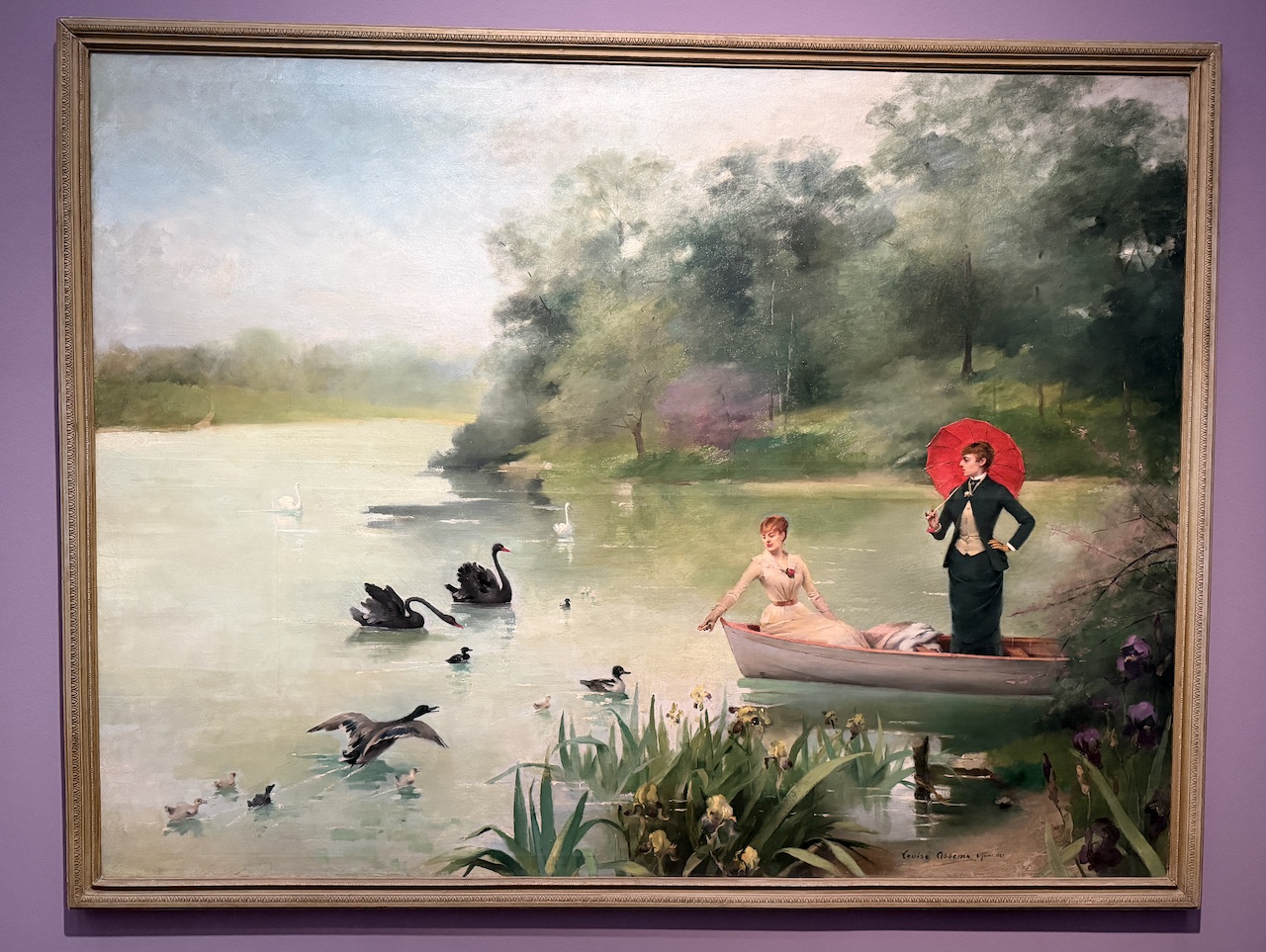
Even more unexpected is the presence of Sarah Bernhardt. In a painting by the French artist Louise Abbéma, the artist herself, dressed in male attire and carrying a red umbrella, shares a boat with the celebrated actress Sarah Bernhardt on the lake in the Bois de Boulogne. Abbéma and Bernhardt remained close for decades, giving rise to endless speculation about the nature of their relationship. Yet no convincing evidence of a romantic attachment has ever emerged. Here the exhibition raises another important question: the past does not always fit neatly into contemporary categories, and the urge to impose modern labels on historical figures often tells us more about ourselves than about them.
To my surprise, the exhibition also has a distinctly Russian dimension.
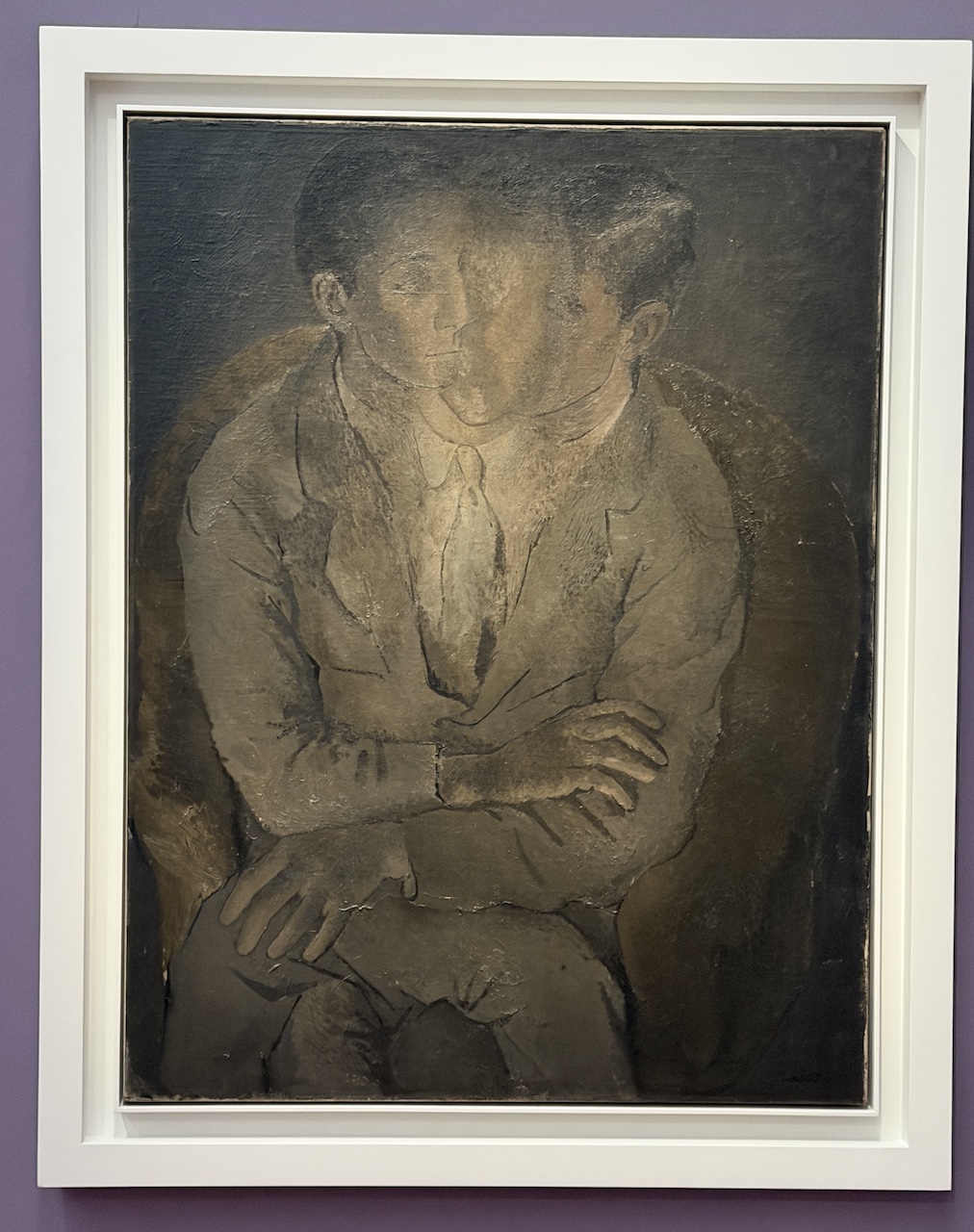
One of the most powerful works on display is Pavel Tchelitchew’s Untitled (Seated Man, Multiple Images) (1927). Born in the Kaluga province of the Russian Empire, Tchelitchew left Russia after the 1917 Revolution and went on to become a significant figure in both European and American modernism. After moving from Berlin to Paris in 1923, he joined Sergei Diaghilev’s circle and became acquainted with Gertrude Stein. On the eve of the Second World War, he emigrated to the United States with his partner, the American poet Charles Henri Ford, and became an American citizen in 1942. It was there that Tchelitchew achieved international recognition, not only as a painter but also as a designer of sets and costumes, notably for productions by George Balanchine. The work shown in Basel is an enigmatic portrait in which a face appears to split and dissolve into several simultaneous images. Today it is difficult not to read it as a metaphor for multiple identities, one of the central themes running through the exhibition.
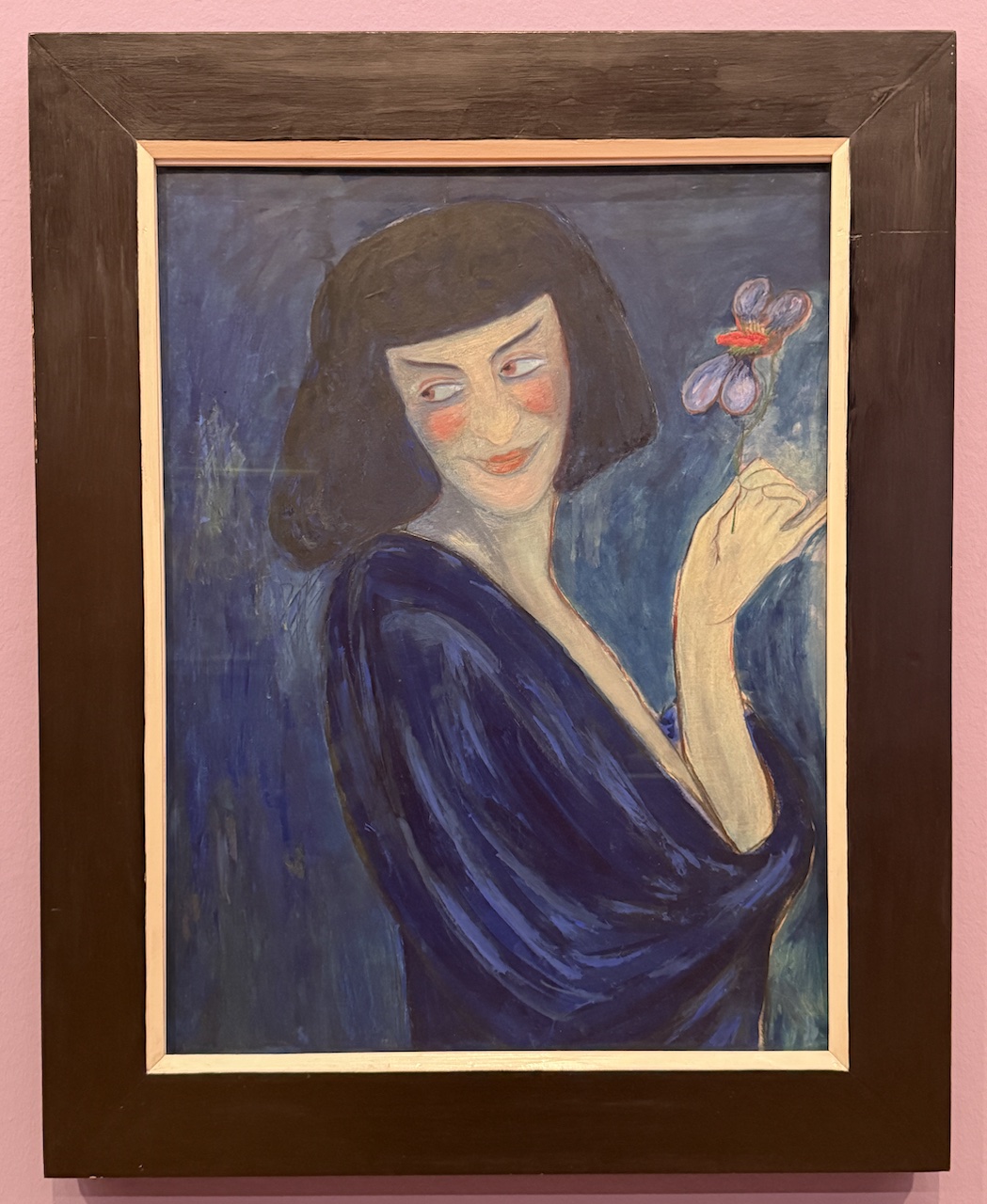
Nearby is Marianne Werefkin’s 1909 portrait of the dancer Alexander Sacharoff. Born in Mariupol under the name Alexander Zuckerman, Sacharoff became one of the pioneers of modernist dance in Europe. Together with his partner and later wife, Clotilde von Derp, he developed a style he called “abstract pantomime”. Their partnership became famous not only for its innovative choreography but also for its constant play with gender roles. Sacharoff frequently appeared on stage in extravagant costumes, while the couple deliberately blurred conventional distinctions between masculine and feminine. Contemporaries regarded them as one of the most celebrated dance couples of the first half of the twentieth century, and their stage persona came to embody the androgynous ideal of the age. By the way, the portrait’s creator, Marianne Werefkin, born in Tula and later one of the leading figures of German Expressionism, whose artistic legacy is now closely associated with the Swiss town of Ascona, was a witness at their wedding!
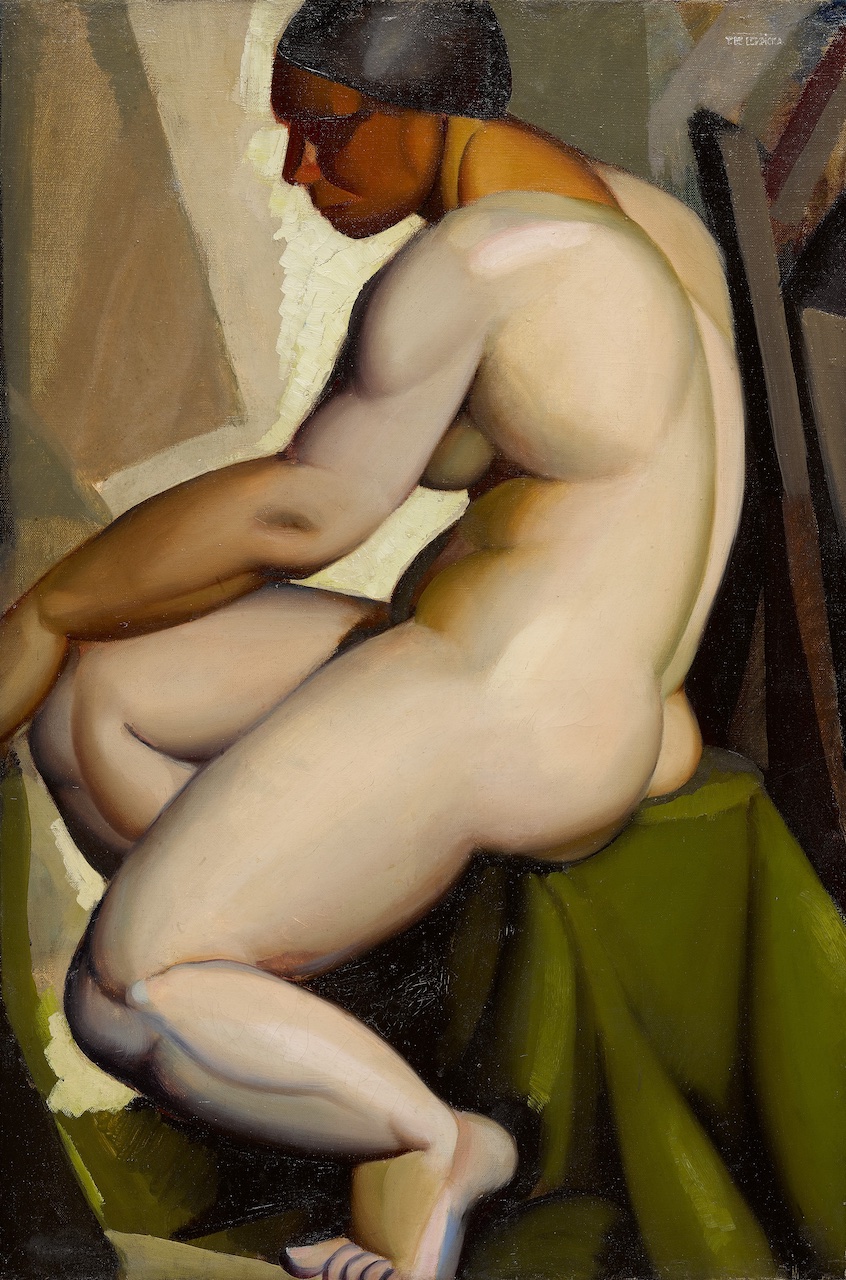
Born Maria Borisovna Gurvich-Gurskaya in Warsaw, then part of the Russian Empire, Tamara de Lempicka (1898–1980) spent several years in Petrograd, where she lived through the Russian Revolution and married a prominent Polish lawyer with whom she later moved to Paris. It was there that she reinvented herself as Tamara de Lempicka, one of the most recognisable figures of Art Deco. One detail in the painting on display in Basel deserves particular attention: the figure in Nu assis de profil (1923) is unusually muscular, openly challenging conventional ideals of femininity.
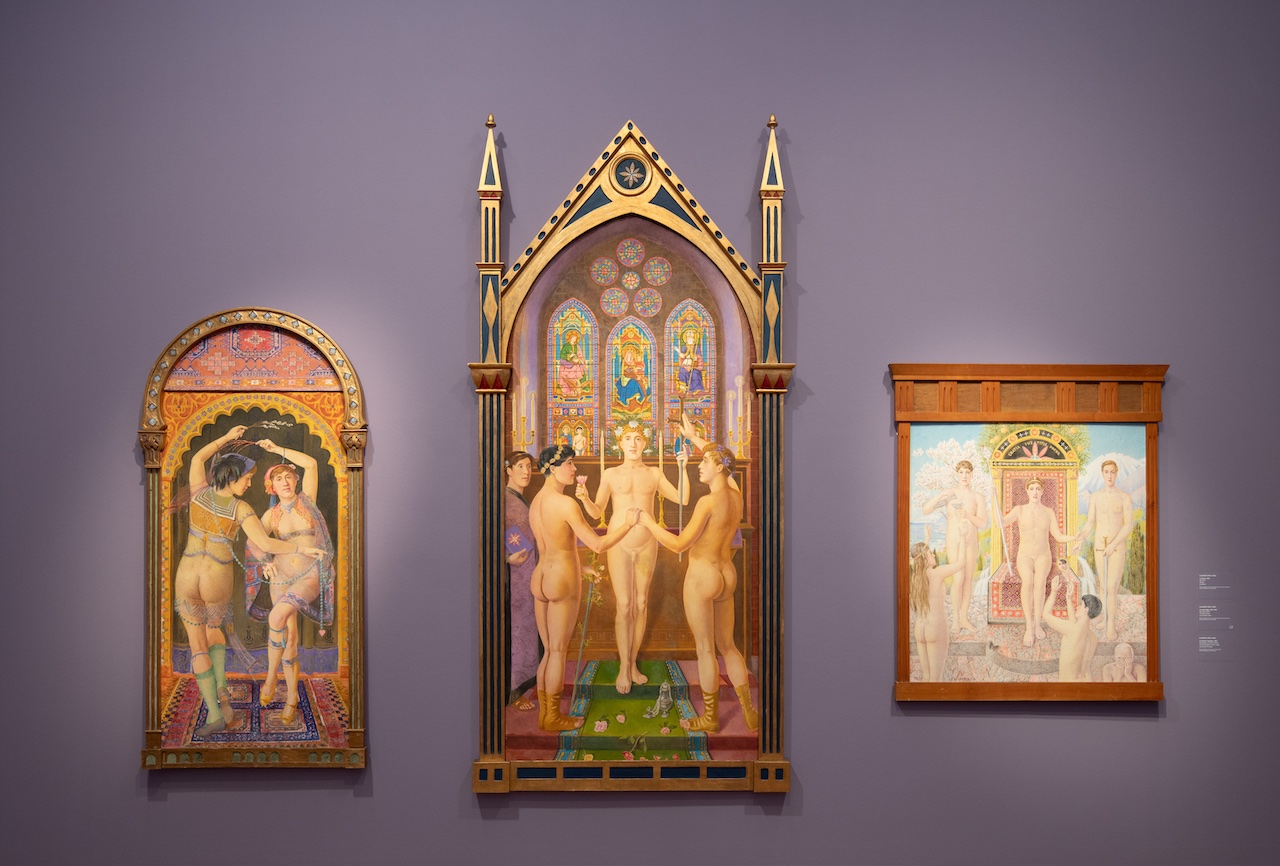
Another fascinating figure featured in the exhibition is the artist and mystic Elisar von Kupffer (1872–1942). Born into a Protestant family in what is now Estonia, he studied at Saint Petersburg University. Together with his lifelong companion Eduard von Mayer, he first settled in Germany and later moved to Italy, which the couple left in 1915 amid growing hostility towards Germans during the First World War. They eventually settled in the Swiss canton of Ticino, obtained Swiss citizenship in 1922 and remained there for the rest of their lives. It was in Ticino that von Kupffer began work in 1920 on a monumental panoramic cycle originally known as Klarwelt. Five years later, he and von Mayer acquired land in Minusio, near Locarno, where they built a “Temple of Clarism”, a sanctuary dedicated to the religious and philosophical doctrine they had developed, which combined art, mysticism and the pursuit of androgynous harmony. The name Sanctuarium Artis Elisarion derives from the pseudonym adopted by von Kupffer himself – Elisarion.
The Basel exhibition includes Elisarion's remarkable triptych, which may test the tolerance of some religious visitors. Here, Christian iconography merges with overtly homoerotic imagery, entirely in keeping with Clarism’s ambition to reconcile the spiritual and the physical, the masculine and the feminine.
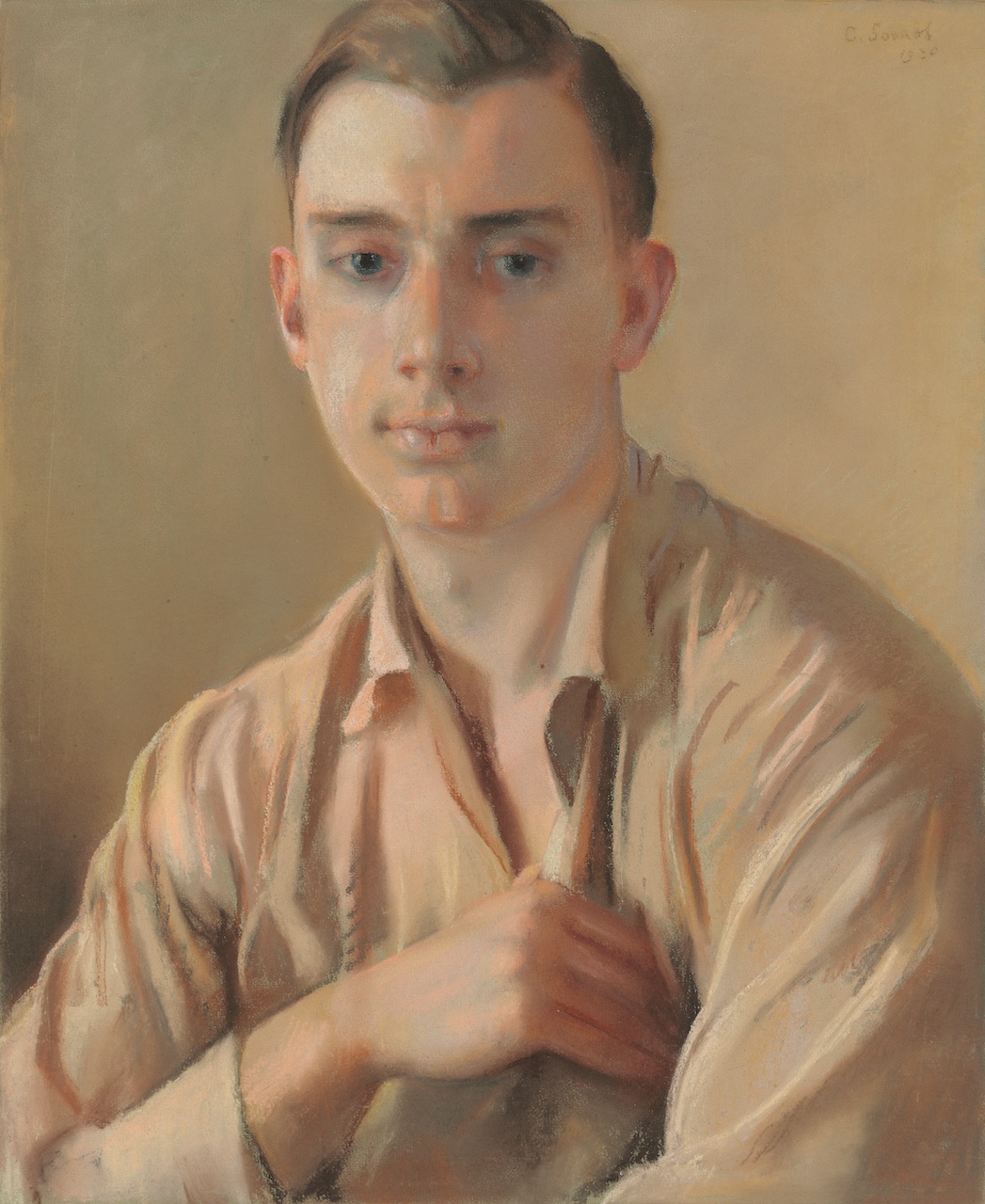
Finally, it is impossible to overlook Konstantin Somov’s 1933 portrait of Boris Snejkovsky. One of the leading artists of the Mir Iskusstva (World of Art) movement, Somov was never particularly secretive about his homosexuality, something relatively unusual for a man of his generation. Having died in Paris in 1939, he escaped both the Nazi occupation of the French capital and the persecution that followed the tightening of Paragraph 175 of the German Criminal Code, under which men could be imprisoned or sent to concentration camps for same-sex relations. According to various estimates, around 50,000 men were convicted under the Nazi regime, while between 5,000 and 15,000 were deported to concentration camps, where they were forced to wear the pink triangle, a symbol later reclaimed by the LGBT rights movement.
Boris Snejkovsky, whose athletic build reflected his enthusiasm for boxing, was Somov’s close friend and companion during the artist’s final years. As far as I know, he is not known for anything else. The portrait is characteristic of Somov’s late work. During the final years of his life, he painted a whole series of portraits of young men from his circle. For art historians, these portraits are valuable not only as works of art but also as rare documents of the private lives of homosexual members of the Russian émigré community in Paris during the 1920s and 1930s. There is nothing overtly demonstrative about the portrait of Boris Snejkovsky yet works such as this allow us to see individual lives behind broad historical categories.
The lives of all the Russian figures represented in the exhibition intersect with Russian history in striking ways. As you may have noticed, all of them ultimately left Russia. In the Russian Empire, sexual relations between men were a criminal offence. Following the Revolution of 1917, they were decriminalised, but in 1934 the situation changed dramatically. That year, the Soviet authorities introduced Article 121 of the Criminal Code of the Russian Soviet Federative Socialist Republic, criminalising sexual relations between men and providing for prison sentences of up to five years, or up to eight in aggravating circumstances. The law served not only to prosecute homosexuals but also as a convenient instrument of political pressure. By some estimates, tens of thousands of people were convicted under it in the decades that followed. Article 121 was abolished only in 1993, after the collapse of the Soviet Union. Yet the story did not end there. In recent years, the Russian authorities have once again tightened restrictions affecting the LGBT community. First came the law against so-called “propaganda of non-traditional relationships”; later, Russia’s Supreme Court designated the non-existent “international LGBT social movement” as an extremist organisation.
This succession of periods of relative freedom and renewed repression illustrates just how precarious the position of sexual minorities has remained, even in the twenty-first century.
And what about Switzerland? Today, the country is widely regarded as one of Europe’s more liberal societies. Yet the documents displayed in the exhibition remind us that Switzerland's path to this point was a long one. Well into the nineteenth and early twentieth centuries, police forces compiled lists of men suspected of homosexuality, while those who spoke openly about their identity often found themselves facing social condemnation and administrative pressure.
One display case contains the autobiography of the Zurich entrepreneur Jakob Rudolf Forster (1853–1926), who was probably the first Swiss citizen to openly acknowledge his homosexuality and publicly defend the right to live as such. Another contains a police register from Basel listing warme Brüder (“warm brothers”), a colloquial term used at the time for men suspected of homosexuality. The very existence of such a document is a reminder that sexual minorities in Switzerland, too, spent decades under official scrutiny. Only gradually did the country move towards equal rights. In 2021, Swiss voters approved same-sex marriage in a national referendum, and since July 2022 such marriages have been legally recognised throughout the country.
The issues explored by this exhibition are far from belonging to the past. In nearly sixty countries around the world, the struggle for the right to love a person of the same sex remains a contemporary reality. The latest example comes from Niger. In June 2026, the country introduced criminalised same-sex relations for the first time in its history. Previously, such relationships had been subject to social condemnation but not criminal prosecution. Under the new Criminal Code, same-sex relations are punishable by prison sentences of between five and ten years, while in certain circumstances penalties may reach twenty years.
Against this backdrop, the exhibition in Basel becomes more than a reflection on the past. It serves as a reminder that history is rarely linear. Periods of freedom are followed by periods of restriction, and rights that appear secure may turn out to be only one stage in a much longer process. That is why the story of the “first homosexuals” feels so strikingly contemporary today.







Bernard IVA June 26, 2026
Sikorsky June 26, 2026