
Wizard vs. Mage : When a Word Flatters Power
A wizard will suddenly arrive
in a blue helicopter
and show a film for free…
This little song from the iconic Soviet cartoon about Cheburashka, an animal unknown to science, has been stuck in my head for several days now, ever since I watched – not for free! – a film about Vladimir Putin. Like any Soviet child of my generation and those that followed, I have known this song by heart since childhood, but only now did I stop to think about the helicopter. Even small children know that wizards do not travel by helicopter. They prefer flying carpets, the geese-swans of Russian fairy tales, broomsticks, flying ships, or simply teleportation, to avoid bothering with technology. And besides, a wizard is not quite the same thing as a sorcerer, which is closer to mage. Can you feel the difference in connotation?
The title of both the film and the book is rendered in Russian as volshebnik (“wizard”), a word that almost always carries a positive meaning: someone who does good and performs miracles. The original French mage is more neutral. It denotes a person who possesses secret knowledge or the art of influence, and it implies neither moral purity nor good intentions. The Russian “wizard” is a promise of wonder and light. The French mage is not a promise, but a warning. We are not dealing with a kindly storyteller, but with someone who knows how to turn reality into illusion and govern people through invisible levers. For such a figure, a helicopter, even a military one, is a perfectly fitting mode of transport. Just look at how many of them recently descended on Davos for the World Economic Forum. In my view, this nuance is the source of the differing readings of Giuliano da Empoli’s novel, and of the film based on it, depending on whether one is Russian-speaking or not. It is also at the root of the criticisms aimed at the authors, whom some accuse of trying to whitewash today’s Russian authorities by presenting Putin as a “wizard” in the Russian sense of the word.
A French researcher of Russian origin, Anna Colin Lebedev, confessing that she understands nothing about cinema, tore the film to shreds and concluded that it was “perhaps the best gift the Kremlin could have wished for.” Her remarks were relayed by the Swiss journalist and international affairs specialist, although he found it difficult to evaluate their pertinence since he had neither read the book nor seen the film. How could one not recall the phrase, “I haven’t read Pasternak’s novel, but I condemn it!”, which appeared on the front pages of Soviet newspapers and was repeated at all manner of meetings in the autumn of 1958, after Boris Pasternak’s novel Doctor Zhivago earned its author the Nobel Prize in Literature! Others, too, reposted her remarks, including people whose social media avatars belong to individuals I respect and who speak Russian fluently. Viewers who do not speak Russian, by contrast, tended to be far more restrained in their reactions.
I have also come across angry statements directed at the British actor Jude Law, who plays Vladimir Putin, and who, in the opinion of their authors, has “stooped low” and will “never wash it off.” This is simply absurd, because by that logic Charlie Chaplin and Anthony Hopkins would have had to “wash themselves off” for Hitler, Ralph Fiennes for Amon Göth, Ben Kingsley for Adolf Eichmann, or August Diehl for Josef Mengele, about whom I recently wrote, and Russell Crowe for his portrayal of Hermann Göring in Nuremberg, a film I intend to write about separately. The list could go on, but let us go back a few years instead.
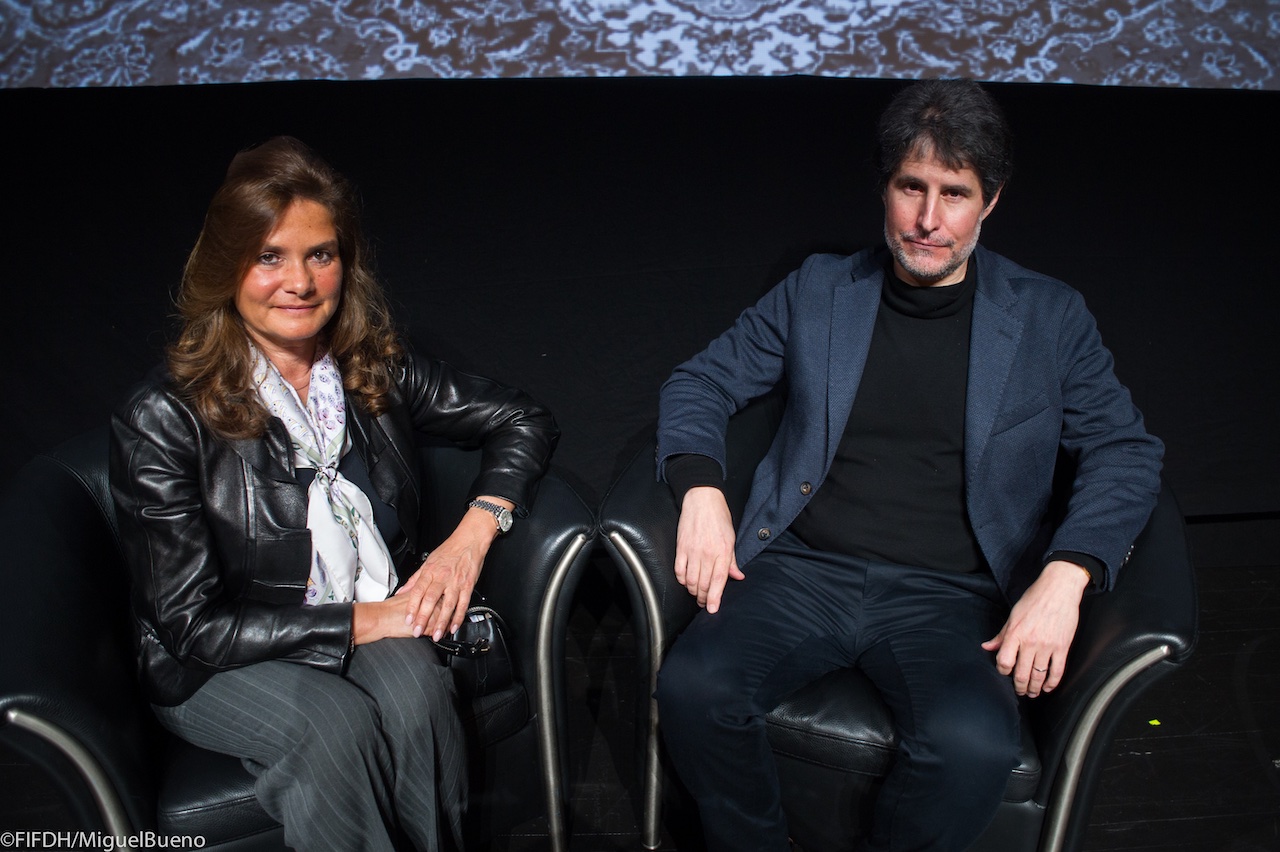
In April 2022, when the war in Ukraine had only just begun and there was still hope it would end any day, Giuliano da Empoli’s novel could not have been more timely. It offered a psychological portrait of Vladimir Putin “compiled” by an insider, Vadim Baranov, whose prototype was Vladislav Surkov, the former chief ideologue of the Russian president’s administration. Professional recognition came first, with the Grand Prix of the Académie française and a place on the shortlist for the Prix Goncourt. Then came popular acclaim: at the time, everyone who took any interest in politics was talking about this book. In the autumn of that same year, I had the opportunity to meet Giuliano da Empoli and conduct the first interview with him for a Russian-language outlet. It was then established that the main character is indeed Putin, and not Surkov-Baranov, weaving his web in the shadows. Later, we appeared together at the FIFDH festival and at the Diplomatic Club of Geneva. Everyone wanted to hear the man who had climbed inside Putin’s head. So I studied the book in depth.
When I learned, a little less than two years ago, that it would be adapted into a film with Jude Law in the leading role, I was surprised and even slightly disappointed. The transition of a handsome, talented actor from “The Young Pope” to a young Putin did not strike me as a seamless one, even though both characters ultimately attain supreme power within their respective spheres of influence. Nor did I think it likely that a successful screen adaptation could be made of a book that contains relatively little action but a great many thoughts. My concerns proved fifty per cent justified. Jude Law has clearly worked hard, and successfully, to capture the Russian president’s characteristic gestures, facial expressions, and gait. But the fact that the film is weaker than the book is undeniable. That is usually the case. There are something like fifteen screen adaptations of War and Peace, but is any one of them truly equal to the novel? This shortfall did not prevent audience at the Venice Film Festival from giving the film a twelve-minute standing ovation after its premiere on 31 August 2025. Even then, however, it was far from universally liked, although even the Russian president’s press secretary, Dmitry Peskov, urged people to treat it “with understanding.” I can well imagine that some viewers disliked the film precisely because of this “although.”
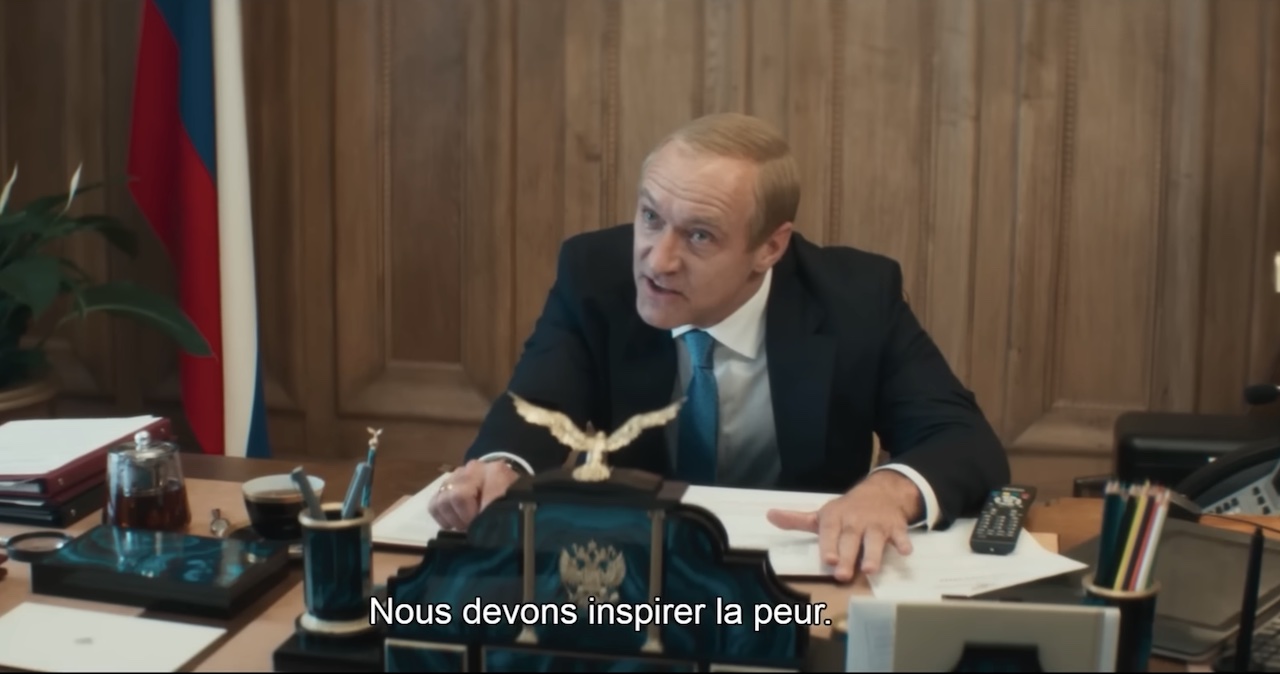
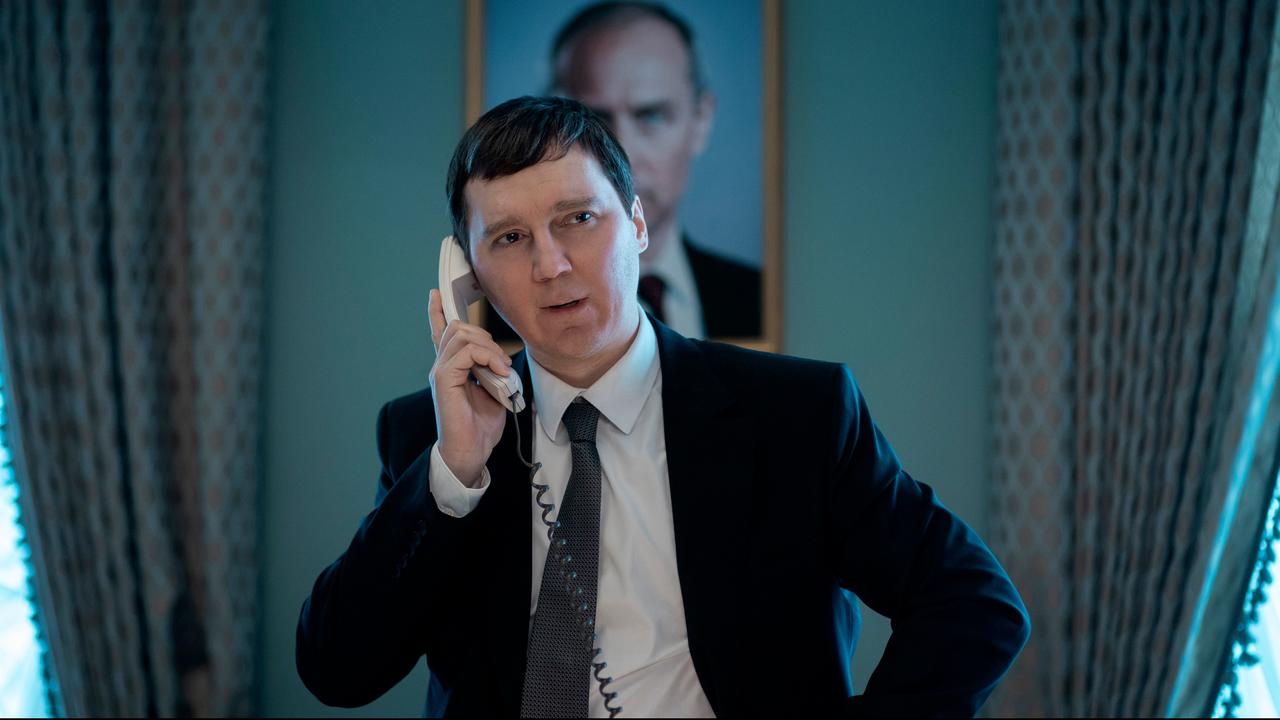
Here is a partial list of the main complaints about the film, beyond those already mentioned: its pseudo-documentary style; its blending of real and fictional characters (Igor Sechin, Yevgeny Prigozhin, Eduard Limonov, and Mikhail Khodorkovsky, who, for some obscure reason, is renamed Dmitry Smirnov, all portrayed by actors from different countries, yet physically quite close to their real-life counterparts); the blandness of the “mage’s adviser” (Surkov-Baranov, played by the American actor Paul Dano); a contrived love story; a fragmented presentation of recent Russian history; and an ending altered from the book, with a bullet to the back of the head. Yes, all of this is there, as is sometimes excessive fascination with Moscow, for a film shot in Latvia. All of this is present, and it weakens the effect one might otherwise expect, given that Olivier Assayas wrote the screenplay together with Emmanuel Carrère, the son of Hélène Carrère d’Encausse, France’s leading Russia specialist, who met President Putin in person in 2000. The main charge, however, remains the same: that the film plays along with the Kremlin and constructs an image of President Putin that some may find appealing.
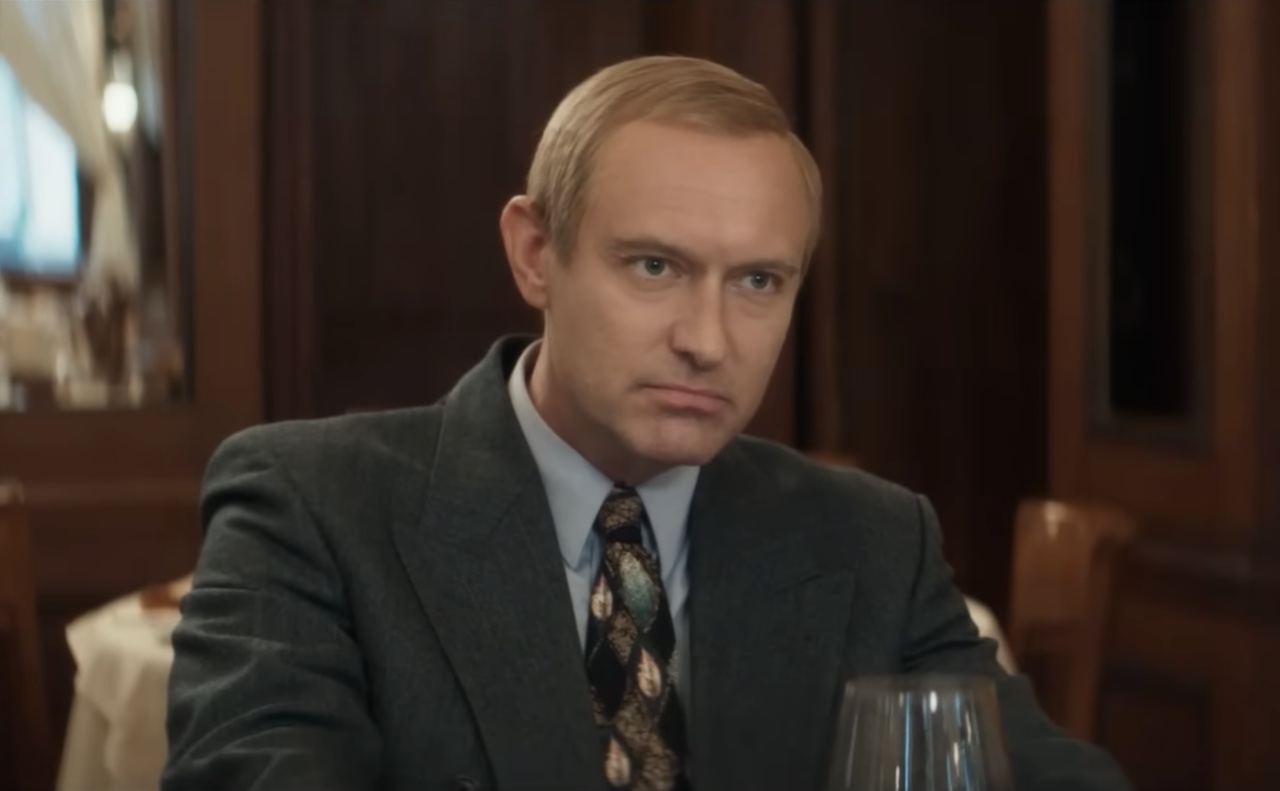
I watched this film with a twenty-three-year-old Swiss man of Russian origin, born and raised in Switzerland at a time when Putin was already in power, and who, until 2022, travelled regularly to Russia. The young man watched with interest, learned a great deal, and came to understand much about the “wild nineties,” about how the current president came to power and, transforming before our eyes, has managed to stay there, slipping out from under the control of those who raised him to the throne, and with equal ease promising to “take them out in the shitter,” whether they are new enemies or former friends. He saw that in a duel between two evils, the “mere” manipulation of public consciousness through the media and social networks, and outright violence, it is violence that wins. Contrary to the rules of arithmetic, a minus times a minus does not produce a plus here. He saw, finally, how the vertical of power was built, founded on fear and corruption. He found nothing appealing in the portrayal of Putin in the film.
And as for the fact that Putin is not portrayed as a caricatured idiot, well, he is not an idiot. That is precisely what makes him dangerous. Those who do not understand this, or refuse to acknowledge it, are burying their heads in the sand. The fact that power, or at least proximity to it, acts as a powerful stimulant, and not only in Russia, is also undeniable. The film quotes, in this regard, a line of striking accuracy from the book: “The only real privilege in Russia is proximity to power. <...> This privilege is the antonym of freedom; it is, rather, a form of servitude.” By the way, Lenin was not an idiot either, considering cinema the most important of the arts because of its mass appeal. There is no doubt that more people will watch the film than have read, or will read, the book, and if it makes them think, then in my view the goal has been achieved. And if someone, especially among viewers of the younger generation, learns from the film of the existence of the Russian writer Yevgeny Zamyatin and goes on to read his novel We, then all the better.
If anyone still has doubts about Giuliano da Empoli’s views, I would recommend his political essay published last year, The Hour of the Predators (L’Heure des Prédateurs), which has already been translated into English. Here is just one sentence from it: “Ukraine is today the first victim of the sinister strategy described by Surkov.”