Bookshelf

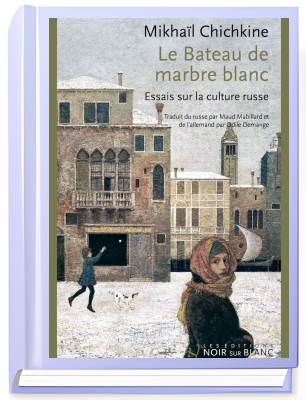
Mikhaïl Chichkine : Le Bateau de marbre blanc. Les Editions Noir sur blanc, 2 octobre 2025. 336 pages • 25 Euros • 30 CHF

Traduit du russe par Maud Mabillard et de l’allemand par Odile Demange

À quoi sert la littérature, si elle n’a pas pu empêcher le Goulag, ni l’invasion de l’Ukraine par la Russie ? Voici la question fondamentale que pose Mikhaïl Chichkine dans ce recueil de textes consacrés à de grands écrivains (Dostoïevski, Gogol, Tchekhov…) et musiciens russes (Prokoviev, Rachmaninov, Chostakovitch).

À travers un kaléidoscope de personnages, d’événements et de symboles, Chichkine nous raconte « l’âme russe » qui, comme il le rappelle, est un concept inventé par un voyageur allemand. Plusieurs essais évoquent la confrontation entre l’artiste et le pouvoir, ou encore la question, cruciale pour l’auteur, de l’émigration : peut-on emporter son pays avec soi, et peut-on créer hors de la Russie, quand on est russe ?

Dans Le Bateau de marbre blanc, Chichkine montre que l’écrivain, le peintre, le musicien, pressent ce qui va arriver dans le futur. Le carré noir de Malevitch constitue sa vision du xxe siècle qui s’ouvre : la Première Guerre mondiale, la guerre civile, le Goulag. Aujourd’hui, le pouvoir despotique en Russie tente de briser la culture de son propre pays ; mais la littérature russe continue à vivre, par les textes, et à faire entendre des voix dissidentes.

 Né à Moscou en 1961, Mikhaïl Chichkine vit en Suisse depuis 1995. Il est le seul écrivain à avoir reçu les trois grands prix littéraires de son pays, pour ses romans La Prise d’Izmail, Le Cheveu de Vénus (Fayard, 2003 et 2007) et Deux heures moins dix (Noir sur Blanc, 2012). Considéré comme l’un des auteurs les plus importants de la littérature russe contemporaine, Chichkine s’oppose au régime de Poutine depuis l’annexion de la Crimée en 2014. Il publie aujourd’hui des tribunes dans les plus grands journaux internationaux : le New York Times, The Guardian, la Frankfurter Allgemeine Zeitung, Le Monde… En 2022, il a reçu le prix Strega Européen.
About the author

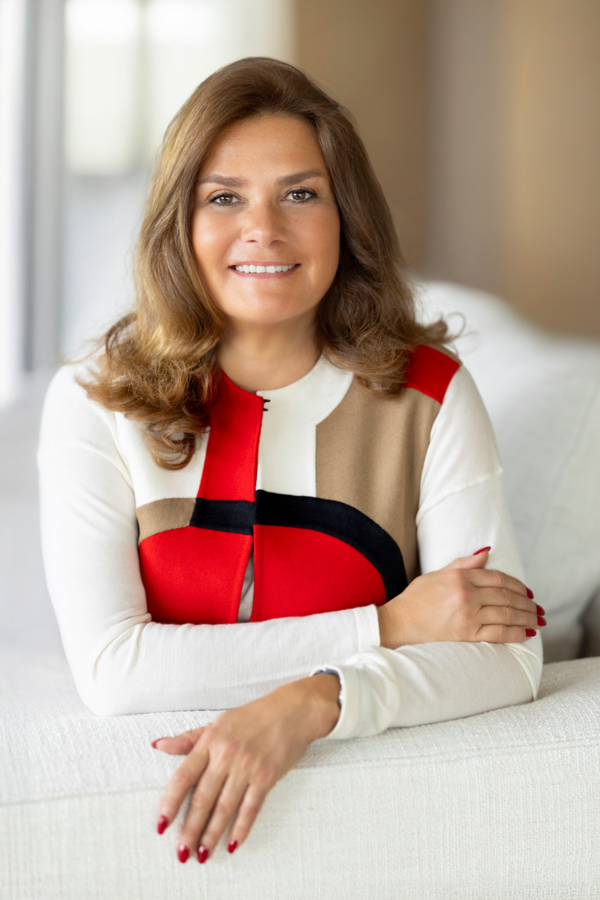
Nadia Sikorsky

Nadia Sikorsky grew up in Moscow where she obtained a master's degree in journalism and a doctorate in history from Moscow State University. After 13 years at UNESCO, in Paris and then in Geneva, and having served as director of communications at Green Cross International founded by Mikhail Gorbachev, she developed NashaGazeta.ch, the first online Russian-language daily newspaper, launched in 2007.

In 2022, she found herself among those who, according to Le Temps editorial board, "significantly contributed to the success of French-speaking Switzerland," thus appearing among opinion makers and economic, political, scientific and cultural leaders: the Forum of 100.

After 18 years leading NashaGazeta.ch, Nadia Sikorsky decided to return to her roots and focus on what truly fascinates her: culture in all its diversity. This decision took the form of this trilingual cultural blog (Russian, English, French) born in the heart of Europe – in Switzerland, her adopted country, the country distinguished by its multiculturalism and multilingualism.

Nadia Sikorsky does not present herself as a "Russian voice," but as the voice of a European of Russian origin (more than 35 years in Europe, 25 years spent in Switzerland) with the benefit of more than 30 years of professional experience in the cultural world at the international level. She positions herself as a cultural mediator between Russian and European traditions; the title of the blog, "The Russian Accent," captures this essence – the accent being not a linguistic barrier, not a political position but a distinctive cultural imprint in the European context.

Events
Most read

What can one expect from a film about real people whose fate we already know? Quite a lot, as it turns out. Over three and a half hours, the viewer follows the protagonists of Rays and Shadows, Xavier Giannoli’s latest film, along the road to hell paved with good intentions, or, more precisely, along the path from the pacifist illusions of the post-war period to active collaboration during the Nazi occupation of France.

For the first time in my journalistic career, I want to tell you about a concert I have no intention of attending. And the reason, of course, has nothing to do with the brilliant composers whose works appear on the programme, nor even with the performers. The problem is the “packaging”, which deeply shocked me.

A tribute in ballet form to the great Russian dancer, created by Kirill Serebrennikov, Yuri Possokhov and Ilya Demutsky, is currently being performed on the stage of the Berlin State Opera. But it was conceived for the stage of the Bolshoi Theatre in Moscow, where I had the good fortune to see it several years ago. So I can compare my impressions.