Bookshelf

Serhiy Jadan: L’Internat. Editions Noir sur Blanc, 2022, 272 pages • 22,50 Euros • 29 CHF

Traduit de l’ukrainien par Iryna Dmytrychyn

Dans le Donbass en guerre, en janvier 2015, un jeune prof décide d’aller chercher son neveu de 13 ans dans l’internat où il étudie, à l’autre bout de la ville. L’école, où l’adolescent a été parqué par sa mère, a été visée par des tirs et les élèves n’y sont plus en sécurité. L’homme met une journée entière à traverser la ville, devenue zone de guerre, et à atteindre l’établissement. Le retour à la maison est une véritable épreuve. Les deux protagonistes se retrouvent au milieu des combats, plongés dans un brouillard laiteux. Des troupes paramilitaires et des chiens errants traversent les ruines ; des hommes en état de choc, désorientés, titubent dans ce paysage urbain apocalyptique. La ligne de front se rapproche de plus en plus de la maison familiale…

Serhiy Jadan décrit avec force comment un lieu familier peut se transformer en quelques heures en un territoire étranger et menaçant. Ses personnages restent décidés, envers et contre tout, à lutter contre la peur et la destruction. Dans L’Internat, Jadan nous fait découvrir les prémices du conflit actuel en Ukraine.

Serhiy Jadan est né en 1974 dans la région de Louhansk, dans l’est de l’Ukraine. Il est l’écrivain le plus populaire de la génération post-indépendance en Ukraine. Chanteur de rock, auteur de douze recueils de poèmes et de plusieurs romans, il a reçu de nombreux prix littéraires, notamment le prix Jan Michalski de littérature 2014 et le prix Brücke-Berlin 2014 pour La Route du Donbass (Noir sur Blanc, 2013), ainsi que le prix de la Foire du livre de Leipzig 2018 pour L’Internat. Il est également l’auteur de Anarchy in the UKR, suivi de Journal de Louhansk (Noir sur Blanc, 2016). Très engagé pour l’indépendance de son pays, Jadan vit aujourd’hui à Kharkiv. En 2022, il a reçu trois prix prestigieux : le Prix de la paix des libraires allemands, le Prix de littérature de la BERD et le prix Hannah-Arendt pour la pensée politique.
About the author

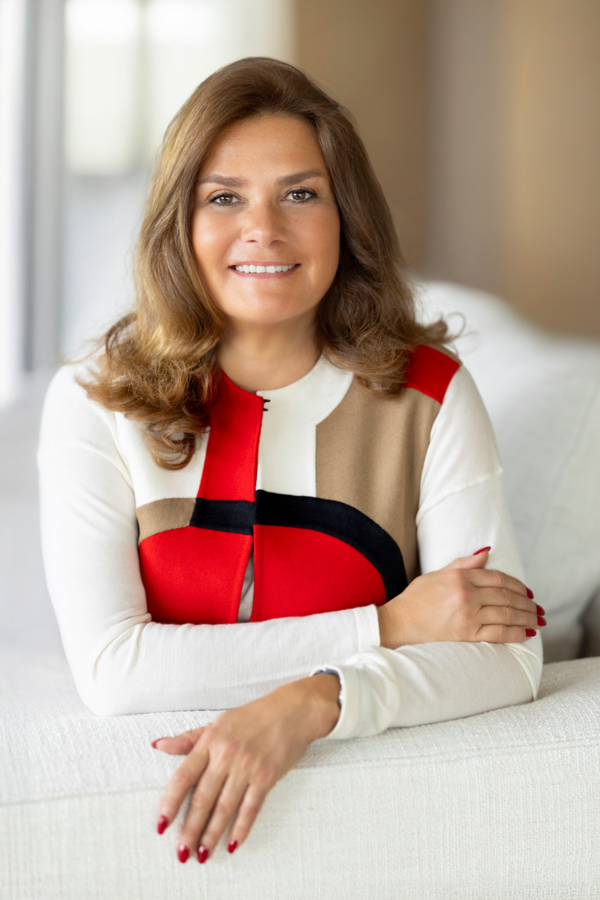
Nadia Sikorsky

Nadia Sikorsky grew up in Moscow where she obtained a master's degree in journalism and a doctorate in history from Moscow State University. After 13 years at UNESCO, in Paris and then in Geneva, and having served as director of communications at Green Cross International founded by Mikhail Gorbachev, she developed NashaGazeta.ch, the first online Russian-language daily newspaper, launched in 2007.

In 2022, she found herself among those who, according to Le Temps editorial board, "significantly contributed to the success of French-speaking Switzerland," thus appearing among opinion makers and economic, political, scientific and cultural leaders: the Forum of 100.

After 18 years leading NashaGazeta.ch, Nadia Sikorsky decided to return to her roots and focus on what truly fascinates her: culture in all its diversity. This decision took the form of this trilingual cultural blog (Russian, English, French) born in the heart of Europe – in Switzerland, her adopted country, the country distinguished by its multiculturalism and multilingualism.

Nadia Sikorsky does not present herself as a "Russian voice," but as the voice of a European of Russian origin (more than 35 years in Europe, 25 years spent in Switzerland) with the benefit of more than 30 years of professional experience in the cultural world at the international level. She positions herself as a cultural mediator between Russian and European traditions; the title of the blog, "The Russian Accent," captures this essence – the accent being not a linguistic barrier, not a political position but a distinctive cultural imprint in the European context.

Events
Most read

What can one expect from a film about real people whose fate we already know? Quite a lot, as it turns out. Over three and a half hours, the viewer follows the protagonists of Rays and Shadows, Xavier Giannoli’s latest film, along the road to hell paved with good intentions, or, more precisely, along the path from the pacifist illusions of the post-war period to active collaboration during the Nazi occupation of France.

For the first time in my journalistic career, I want to tell you about a concert I have no intention of attending. And the reason, of course, has nothing to do with the brilliant composers whose works appear on the programme, nor even with the performers. The problem is the “packaging”, which deeply shocked me.

A tribute in ballet form to the great Russian dancer, created by Kirill Serebrennikov, Yuri Possokhov and Ilya Demutsky, is currently being performed on the stage of the Berlin State Opera. But it was conceived for the stage of the Bolshoi Theatre in Moscow, where I had the good fortune to see it several years ago. So I can compare my impressions.