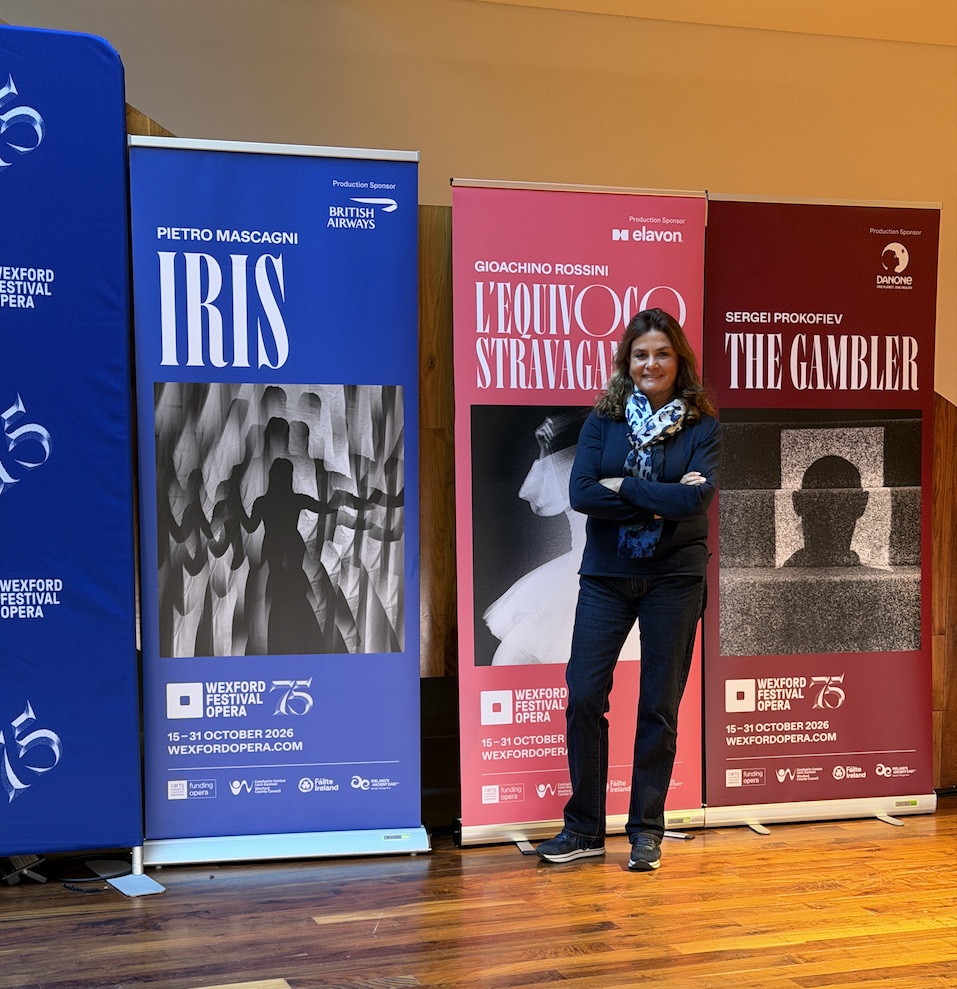
Wexford: Opera Fever

Wexford Festival Opera, celebrating its 75th anniversary this year, had until now been something of an enchanting legend to me. After all, it is hard to imagine a town of just over 20,000 people transforming itself, year after year for three-quarters of a century, into one of Europe’s opera capitals. And yet it is real.
Wexford lies on Ireland’s south-eastern coast, beside the Irish Sea. The weather changes so rapidly that you can experience almost every season in a single day. Dazzling sunshine suddenly gives way to torrential rain, followed by an icy wind that makes you wish you had brought a winter coat. Within a few days, I had become convinced that the Irish weather was a perfect match for the variety of the festival programme: sunny, sparkling Rossini, feverish Prokofiev and tragic Mascagni. Three operas, utterly different in musical language and mood, none of which I had ever seen on stage before.
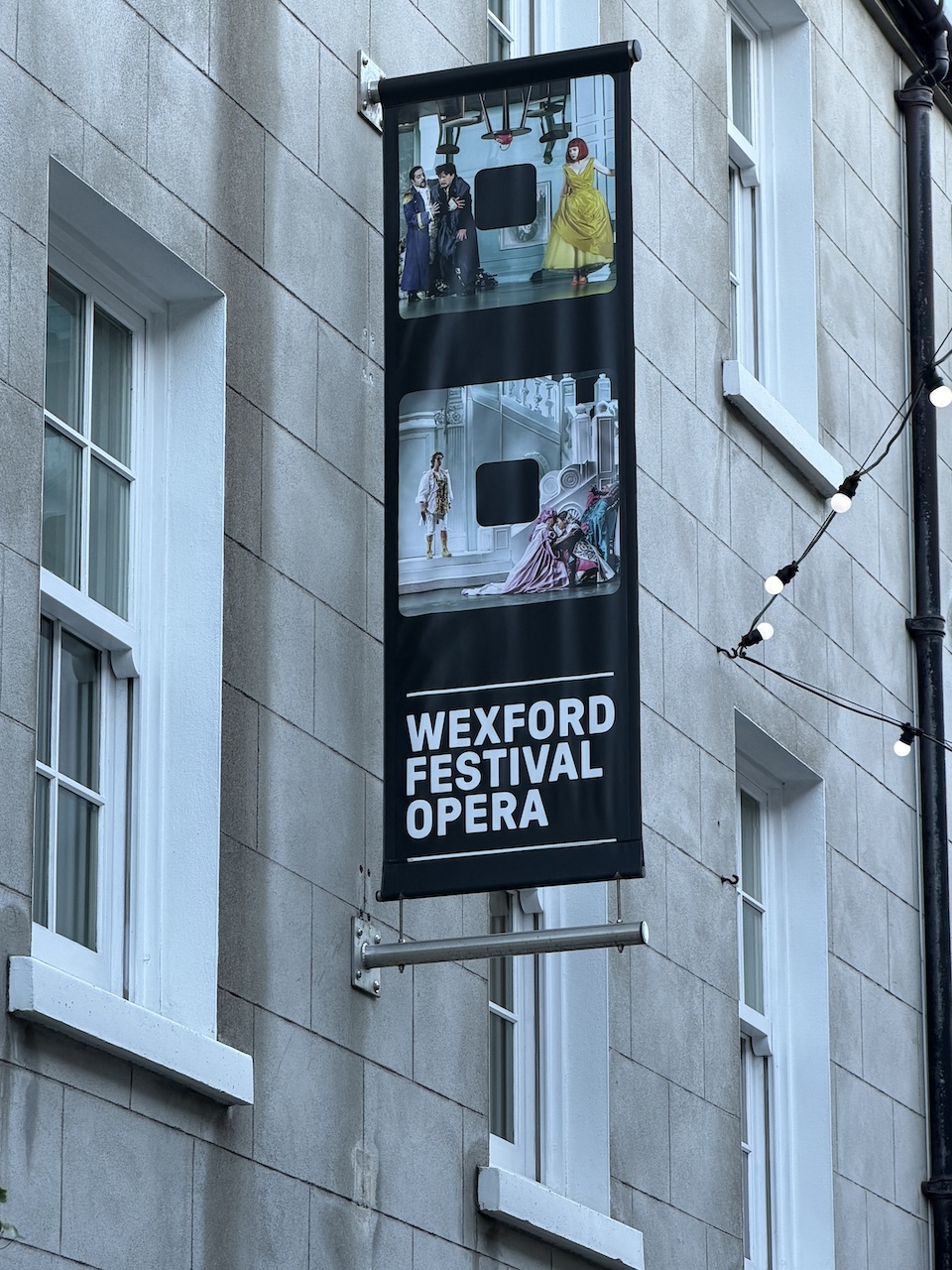
The town itself feels cosy and a little old-fashioned, hardly the setting one would expect for an international cultural event of such prestige. Yet the festival has been held here since 1951, thanks to the enthusiasm of local music lovers led by Dr Tom Walsh. From the outset, its distinguishing feature was its choice of rarely performed works. Why compete with the great opera houses by offering audiences yet another La Traviata or La Bohème, when the history of opera is full of wonderful music that hardly anyone knows? The idea worked: the festival has not only outlived its founders but grown into an event of international importance, while retaining exceptionally close ties with the town to which it owes its existence.
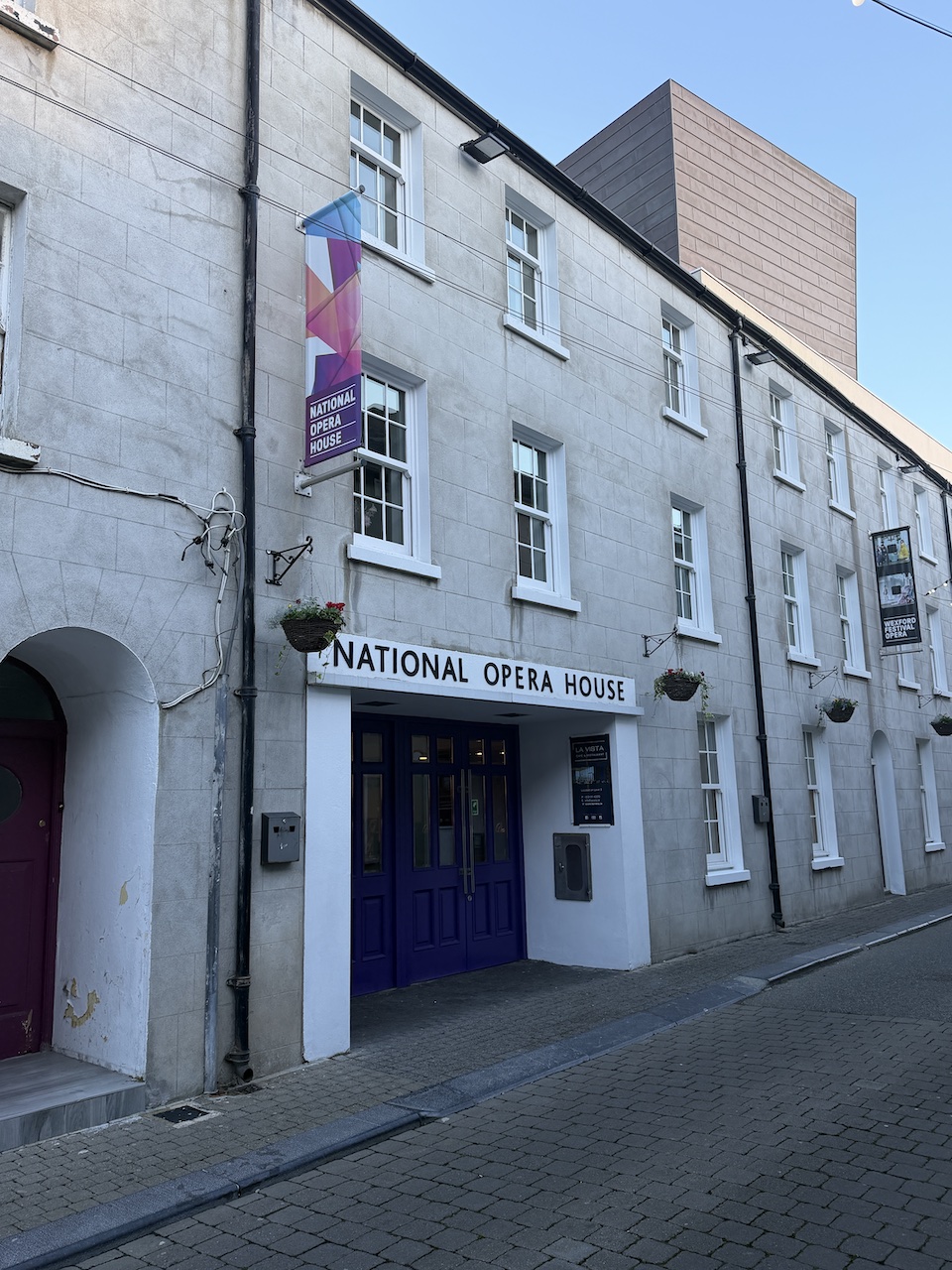
When I arrived, I decided to find the opera house first, so that I would not get lost that evening after dark. ‘It’s very close,’ the hotel concierge told me. ‘Turn left, then left again, and you’ll see it on your left.’ Following his directions, I made my way through the narrow streets and duly found the National Opera House: a modest two-storey building surrounded by others of much the same height. But where were the columns, the pediment, Apollo’s quadriga? Where were all the familiar trappings of a European opera house? Appearances, however, proved deceptive. Behind the unassuming façade lies a splendid modern theatre, built in 2008 on the site of the old Theatre Royal, which had served the festival for more than half a century. The architects deliberately preserved the historic character of the street, concealing behind it a large auditorium with magnificent wooden panelling and a modern stage.
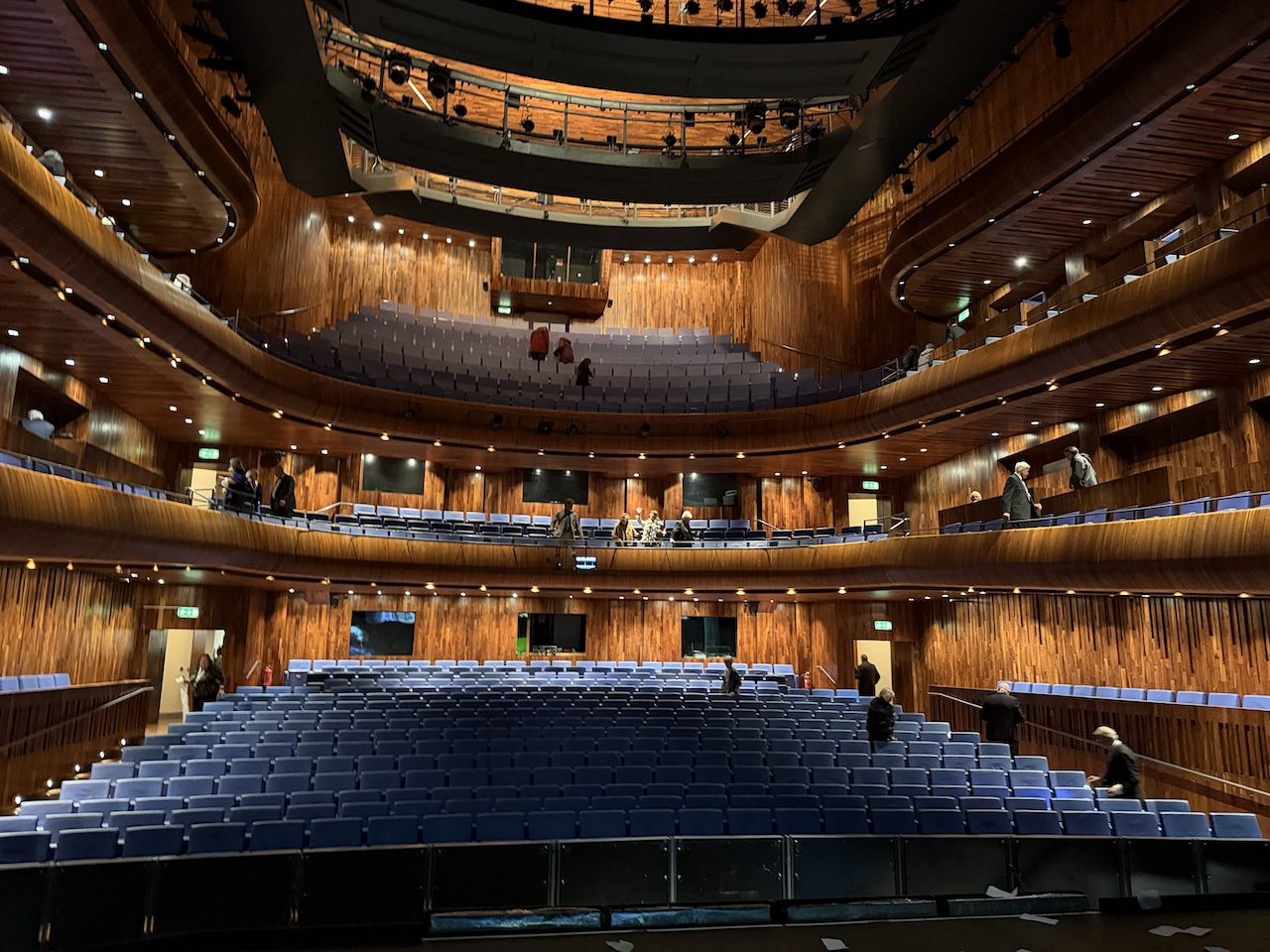
The audience surprised me just as much. In Wexford, going to the opera is clearly a special occasion: ladies in evening gowns, men mostly in dinner jackets, and none of that studied casualness which in recent years has become almost obligatory among theatregoers. Before every performance, the Irish national anthem is played, and the audience not only stands but sings along. I had never seen anything quite like it, except perhaps at the ceremonial opening of the season at La Scala in Milan.
Admittedly, as I looked around at the elegantly dressed spectators, I could not help noticing that most belonged to the older generation. It is a problem familiar to many opera houses: how do you attract young people without abandoning your traditions and artistic principles? Judging by the enthusiasm with which the town prepares for each festival, people here are doing more than simply discussing the problem.
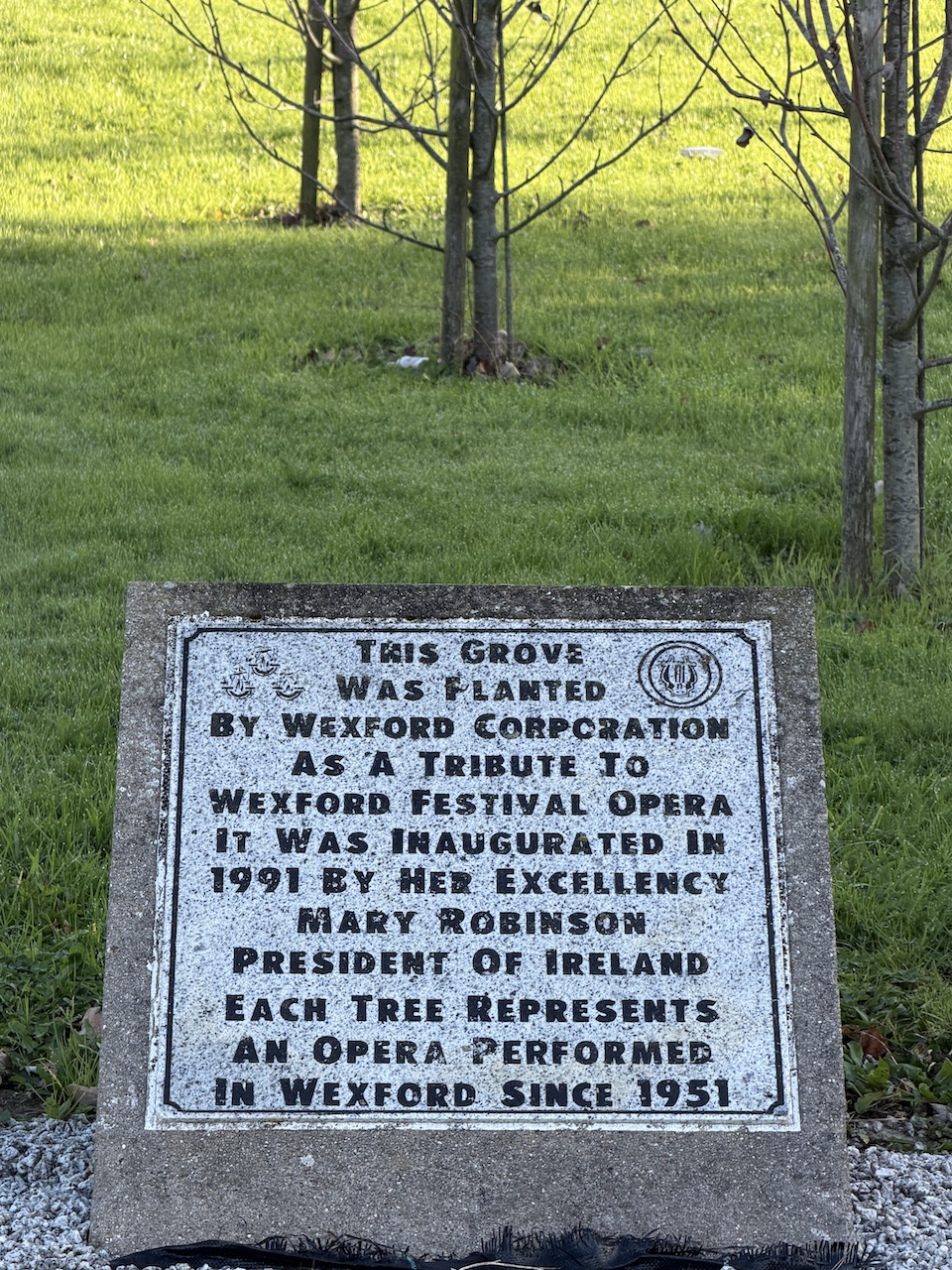
The place opera occupies in the life of this small Irish town is reflected even in an unusual grove planted in honour of the festival: each tree is dedicated to one of the operas performed here since 1951. The Opera Grove was formally opened in 1991 by Ireland’s then president, Mary Robinson, while the country’s current president, Catherine Connolly, is the festival’s patron. Ahead of its 75th anniversary, the festival announced a new partnership with British Airways. It is a sign of its international importance, an opportunity to attract new audiences and a source of much-needed financial support. Commemorative plaques and illustrious names are all very well, indeed splendid, but if opera is to go on living, it also needs money.
Speaking of money. Curiously enough, it is the thread connecting the three main productions of this anniversary festival. In Rossini, money and an advantageous marriage set a merry, almost madcap intrigue in motion. In Prokofiev, money becomes an obsession that comes to rule people’s lives. And in Mascagni, the young Iris’s poverty leaves her defenceless against the cruelty and greed of those who have it.
Sunny Rossini
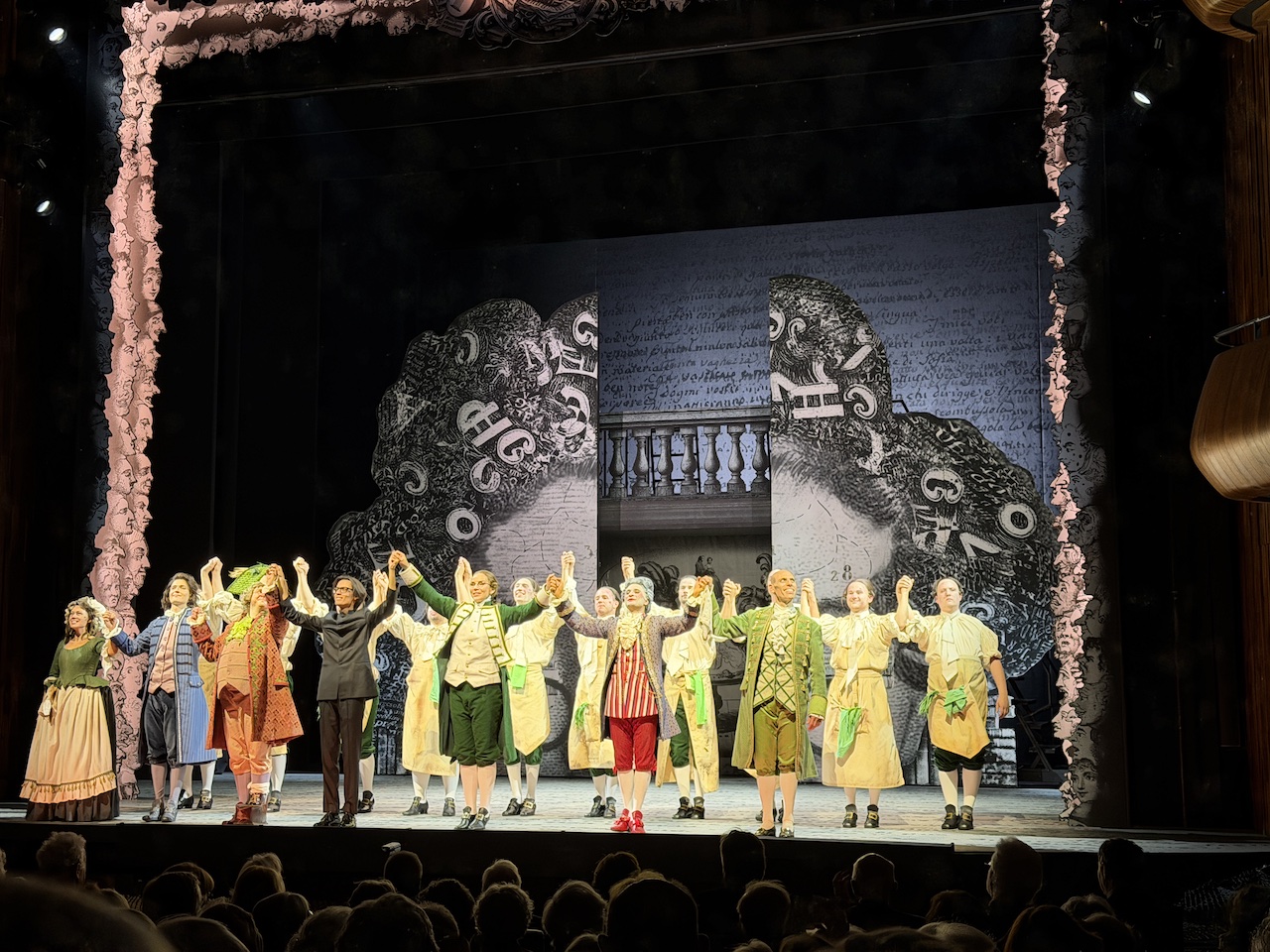
I shall begin with the comedy, especially as the audience chose it as an anniversary present to themselves. For the first time in the festival’s history, opera lovers were invited to vote for one of the works on the programme. Voters from thirty countries opted for Rossini’s L’equivoco stravagante (The Bizarre Misunderstanding), which had already been staged here in 1968.
Rossini was only nineteen when the opera was first performed in Bologna in 1811, but the musical inventiveness and exuberance of the future composer of The Barber of Seville were already there in abundance. The libretto, however, proved so risqué that the production soon ran into trouble with the censors.
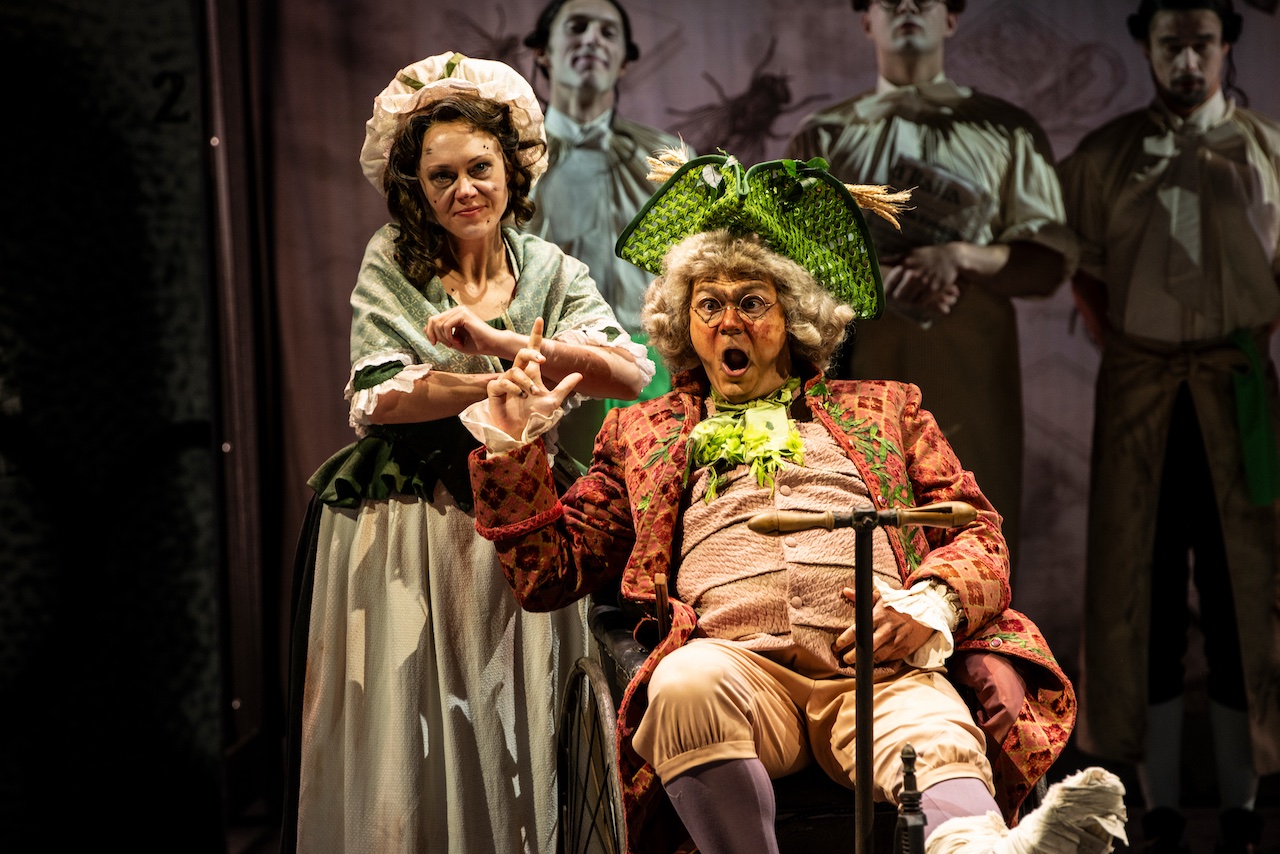
at O’Reilly Theatre National Opera House Wexford © Photo Padraig Grant
The plot is certainly piquant. To prevent Ernestina’s marriage to the foolish Buralicchio, a match that suits her wealthy father Gamberotto but not Ernestina herself, friends of Ermanno, who is in love with her, spread a rumour that she was actually born a boy named Ernesto, who had been castrated in childhood to preserve his high singing voice. The practice still existed in those days, and it is easy to imagine what scope such a story offered for comic misunderstandings.
The opera might well run into trouble with the censors today as well, though for an entirely different reason. Whereas in the nineteenth century it was the very plot involving the castration of boys for a singing career that caused outrage, today controversy might arise over possible associations with transgender identity. Of course, the historical practice of forcibly castrating children and modern gender reassignment operations performed with the person’s consent have entirely different purposes and circumstances. But jokes about such matters can provoke fierce reactions nowadays, much to Rossini’s probable astonishment.
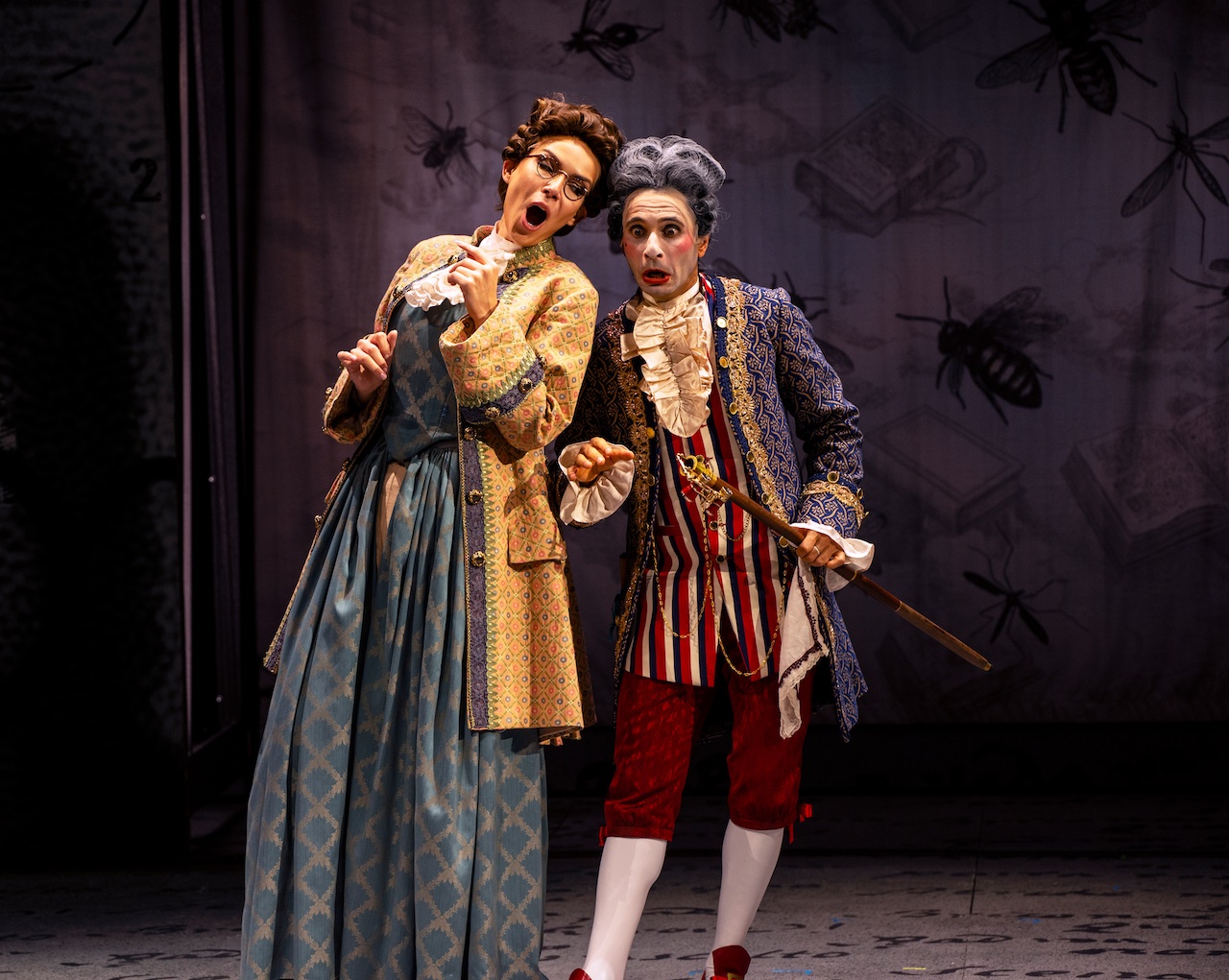
Ernestina / Maria Barakova and Buralicchio / Gurgen Baveyan in L’equivoco stravagante by Gioachino Rossini
at O’Reilly Theatre National Opera House Wexford ©Photo Padraig Grant
Fortunately, in Max Hoehn’s production, the story remains a cheerful piece of theatrical mischief, without insults or political declarations. And Rossini’s music is so infectious that any such reflections soon give way to the simple, genuine pleasure of watching the performance. How badly we miss that feeling in so many contemporary productions! The need for joy, for a chance to forget our cares and sorrows for even a couple of hours, is shared by every generation. It is no coincidence that in 1942, while evacuated to Kuibyshev during the war, the Bolshoi Theatre chose to stage Rossini’s The Barber of Seville, a work from ‘Fascist Italy’.
Conductor Riccardo Bisatti has an excellent feel for Rossini’s headlong pace, while Darko Petrovic’s sets and Massimo Carlotto’s extraordinarily colourful costumes turn the production into a real celebration. Particularly impressive are the tall, statuesque Russian mezzo-soprano Maria Barakova as Ernestina and the baritones Stefan Astakhov as Gamberotto and Gurgen Baveyan as Buralicchio. All three not only sing splendidly but have an unmistakable gift for comic acting. The Polish tenor Sebastian Mach, singing Ermanno, did not quite measure up to them, in my view.
Mascagni’s Icy Wind
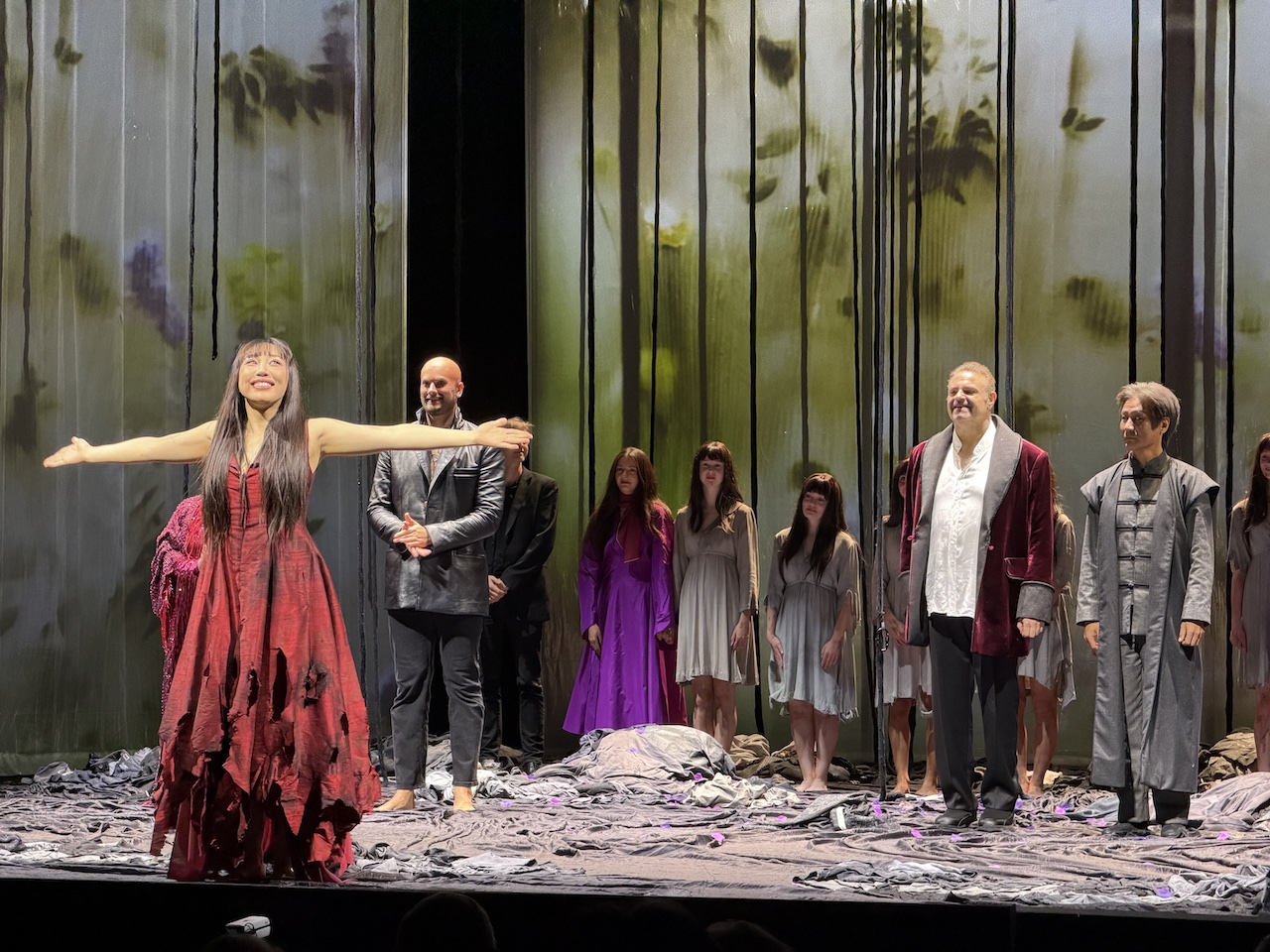
After all that sunny, carefree Rossini came the shock of Mascagni’s Iris. I confess that I had not expected to be so deeply affected by an opera rarely seen on stage today. Yet the music proved extraordinarily beautiful, while Rosetta Cucchi’s production was elegant and poetic, though deeply cruel in its subject matter.
Iris was first performed in Rome in 1898, six years before Puccini’s Madama Butterfly, with which it inevitably invites comparison. The similarities are limited to the setting, Japan, and the librettist, Luigi Illica. The fates of the two heroines are fundamentally different. Cio-Cio-San falls victim to a love that proves false, whereas the young Iris, who lives with her blind father, is utterly defenceless against people for whom her beauty is merely an object of desire and a possible source of profit.
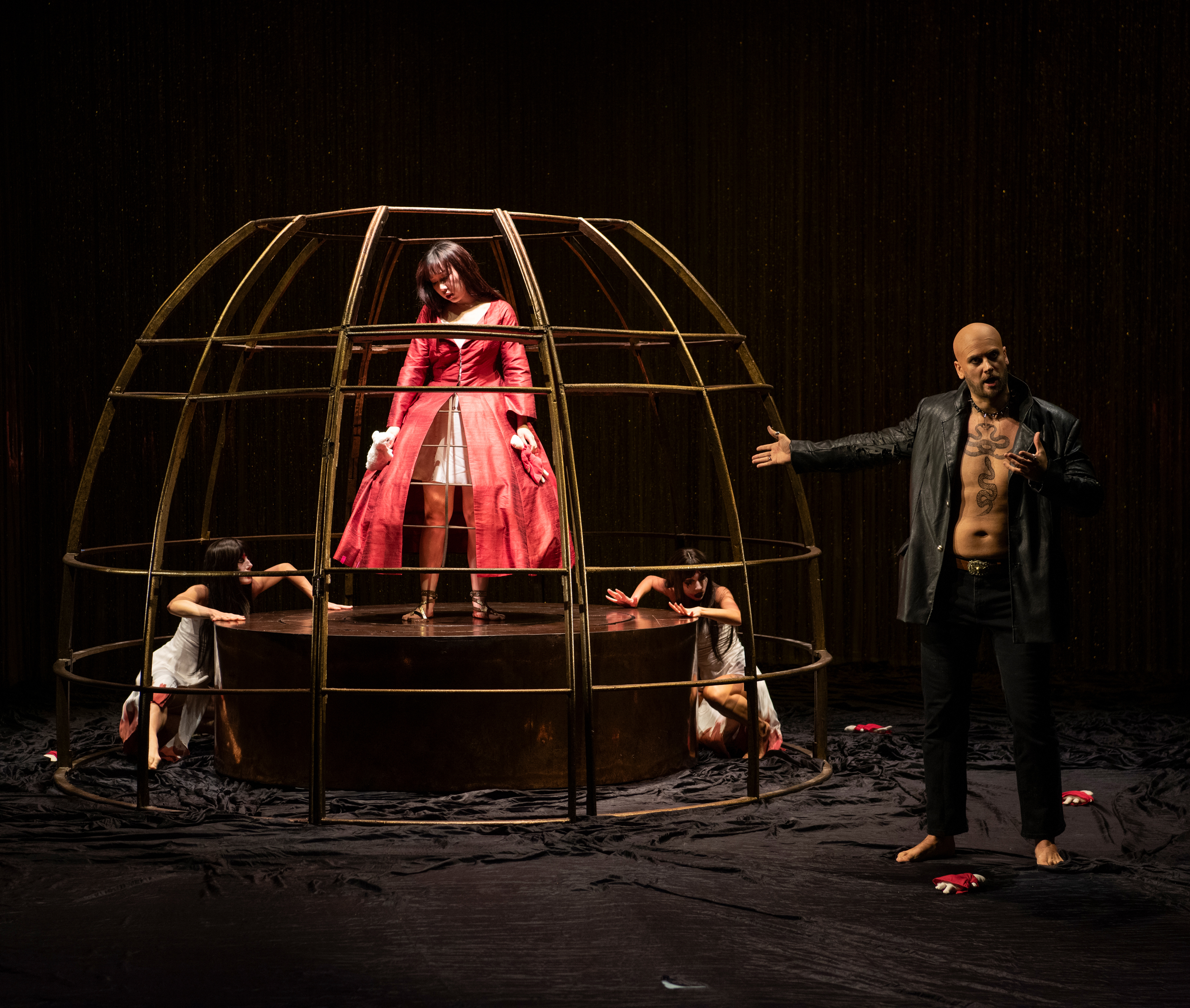
It would have been easy to turn the story of this unfortunate girl into yet another manifesto against violence towards women. Cucchi, however, takes a different approach. Her production, conceived in a broadly classical aesthetic, needs no slogan-like declarations to make the audience feel the injustice and cruelty of what is happening. The Japanese world is stylised, almost fairy-tale-like, and the casting of singers of Asian origin in several leading roles, notably the Chinese soprano Leyla Gu as Iris and the South Korean bass Jihoon Kim as her blind father, gives the production an added visual coherence.
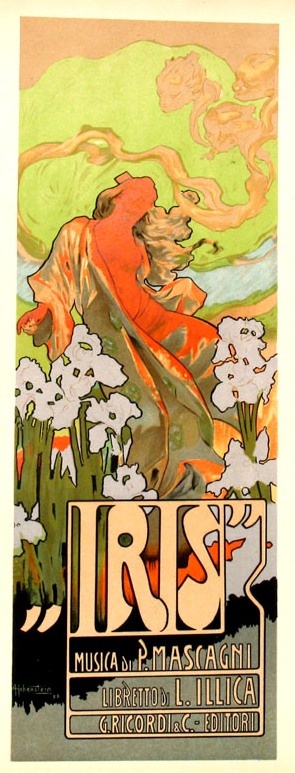
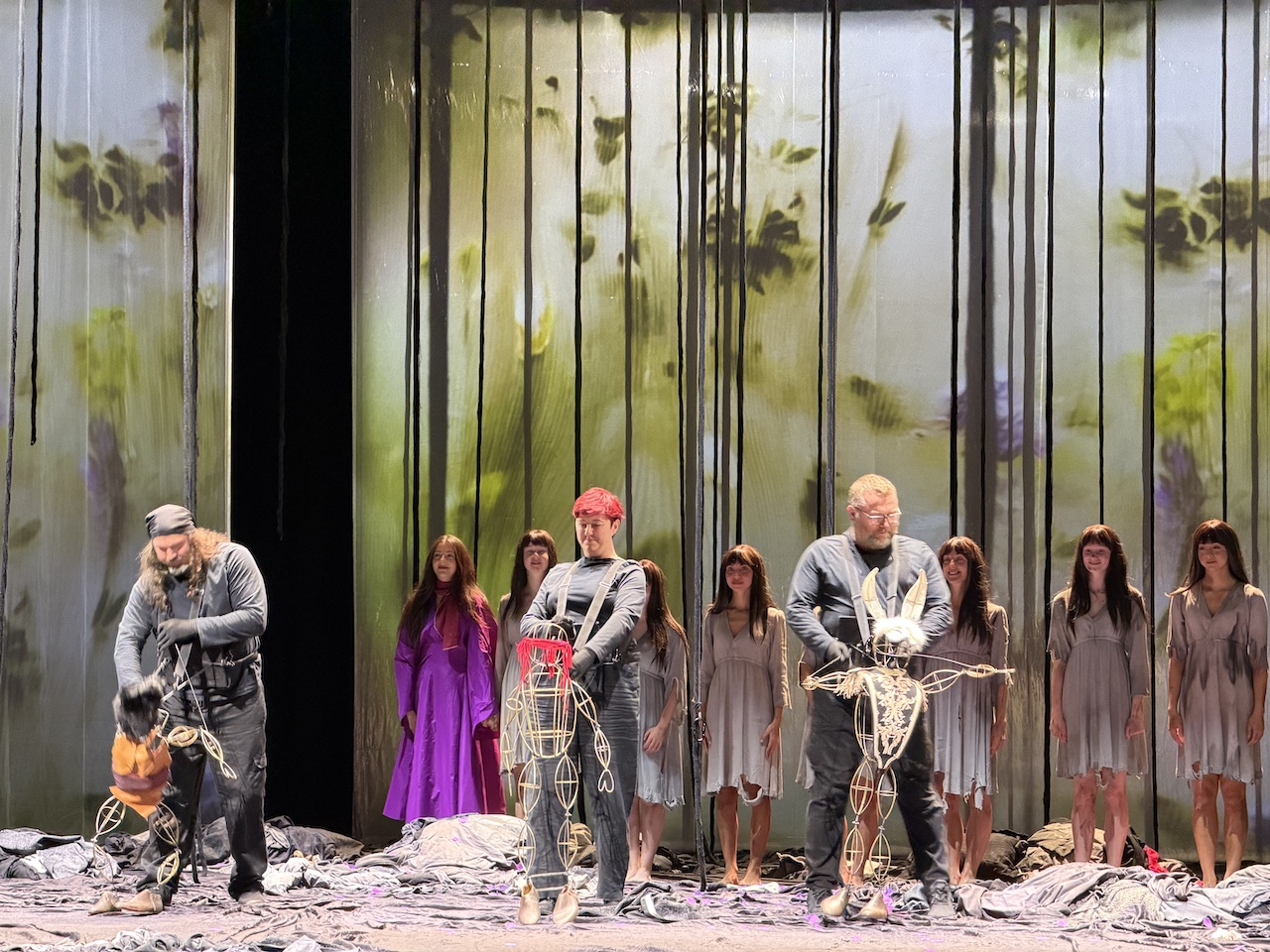
A ‘classical aesthetic’ does not mean an absence of modern visual techniques. The director uses photographs, lighting and modern video projections, as well as skeletal puppets manipulated by puppeteers using rods and strings. Together, these elements create a poetic stage picture rich in symbolism, somewhat reminiscent of the poster designed for the first production of Iris by Adolfo Hohenstein, a German artist born in St Petersburg who later became one of the pioneers of the Art Nouveau style known in Italy as Liberty.
The orchestra under Francesco Cilluffo reveals all the richness of Mascagni’s score, while the singers create characters who genuinely move us and stay with us for that very reason.
There is an interesting story behind this production. In 1995, Rosetta Cucchi first came to Wexford to work as a répétiteur on Iris. Thirty-one years later, she has returned to the same opera, this time as its director and as artistic director of the entire festival. ‘The circle has closed,’ she wrote in her welcome to the anniversary programme. She also explained her conception: for her, Iris is not so much the story of a victim as the story of innocence confronting the brutality of the world. And in her interpretation, the final Hymn to the Sun signifies more than the arrival of a new day. ‘It is the sunrise of Iris herself,’ the director writes.
There is another aspect of Mascagni’s musical legacy that has a distinctly contemporary resonance. The composer openly collaborated with Mussolini’s Fascist regime, although according to some accounts he criticised Mussolini in private conversations. After the war, his public stance cost him his reputation: performances of his works were banned in liberated Rome. When Mascagni died in August 1945, the management of La Scala debated whether it was possible to honour the artist without paying tribute to the man. A familiar question, is it not? Cavalleria rusticana, however, survived all the political upheavals, while the composer’s other operas, including Iris, written long before Mussolini came to power, are gradually returning to the stage.
For all my admiration for Iris and my enjoyment of Rossini, the highlight for me was Sergei Prokofiev’s The Gambler, directed by Ivan Popovski. One cannot help noting the courage of the Wexford Festival in deciding, in the present circumstances, to include an opera by a Russian composer based on a novel by a Russian writer, and even to invite a director who continues to live and work in Moscow to stage it.
The history of the opera’s creation deserves a story of its own. The young Prokofiev turned to Dostoevsky’s novel, written in 1866, and wrote the Russian libretto himself, preserving much of the writer’s dialogue. This was possible because the novel is relatively short, just 150 pages. He completed the first version in 1916 and the orchestration in 1917. (Ten years later, Prokofiev decided to revise the opera, producing a second version.) The stage history of the work, which was immediately accepted for production by the management of the Mariinsky Theatre, was far from straightforward: preparations dragged on, and the revolutionary events of 1917 finally put an end to the production. The Gambler did not reach the stage until 1929, at La Monnaie in Brussels, in its revised version and sung in French. Interestingly, it had been staged in Wexford before, back in 1973, but in English. Thus the opera acquired, almost by accident, a multinational and multilingual stage history entirely in keeping with its characters.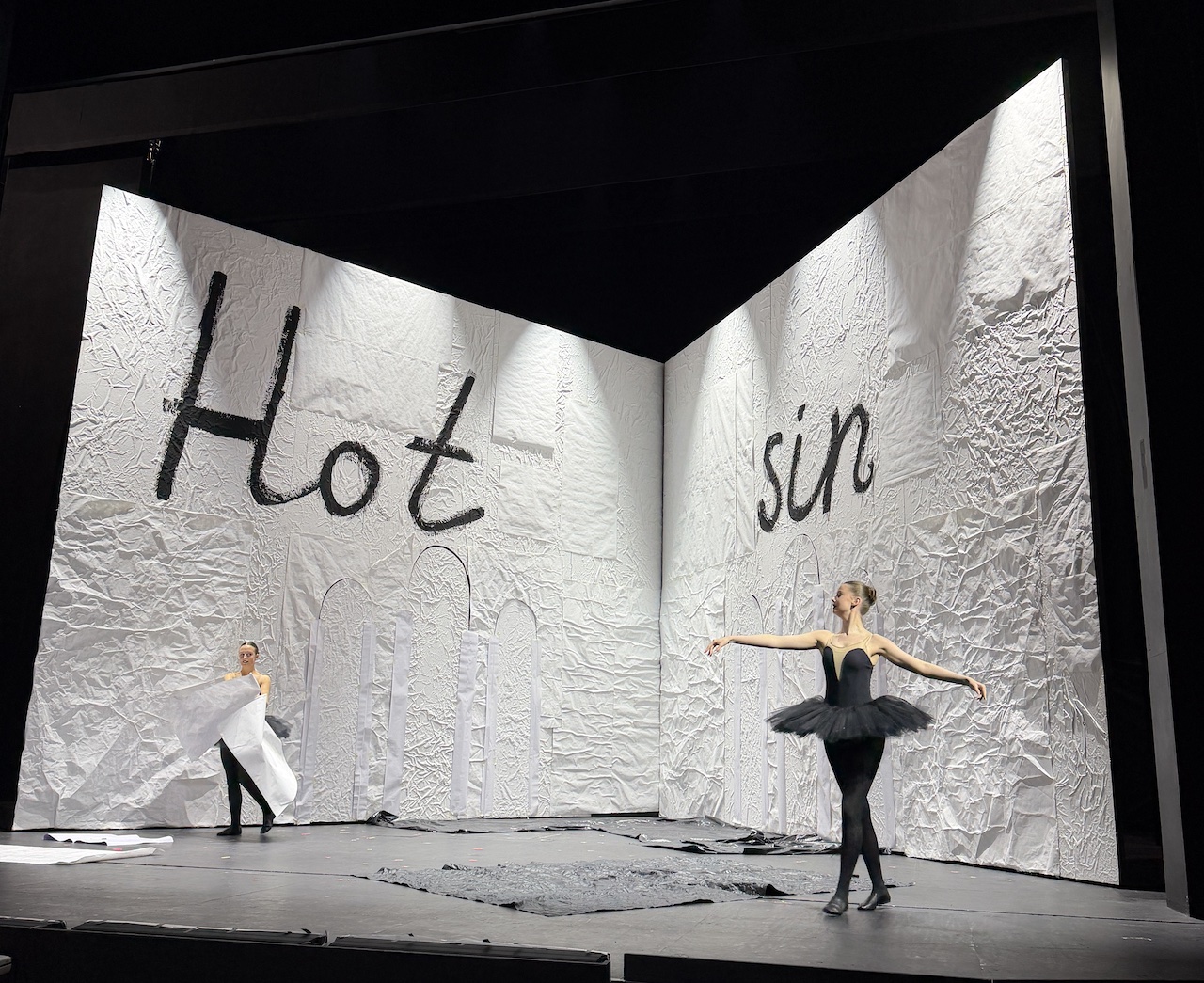
Unlike a conventional opera, with its arias, duets and spectacular finales, The Gambler is an almost continuous musical drama in which the characters seem to have no time to catch their breath, let alone reflect on what is happening. In Wexford, I had the chance to talk about how Prokofiev achieves this effect with the production’s musical director, conductor Valentin Uryupin. I shall soon share a recording of our conversation, but for now, something else.
Rereading The Gambler on my way to Wexford, I was struck by how relevant it remains, starting with the very first pages, where Alexei Ivanovich ‘took up L’Opinion Nationale and began reading a horribly abusive attack on Russia’. And what about his reflections on lawyers who had begun defending criminals on the grounds of temporary insanity and loss of memory? ‘He killed him,’ they say, ‘and has no memory of it.’ Or his remarks about Russians abroad: ‘They sit, not daring to open their lips, and almost ready to deny they are Russians.’ It is worth remembering that The Gambler appeared in 1866, just ten years after the end of the Crimean War (1853–1856), which ended in Russia’s defeat.
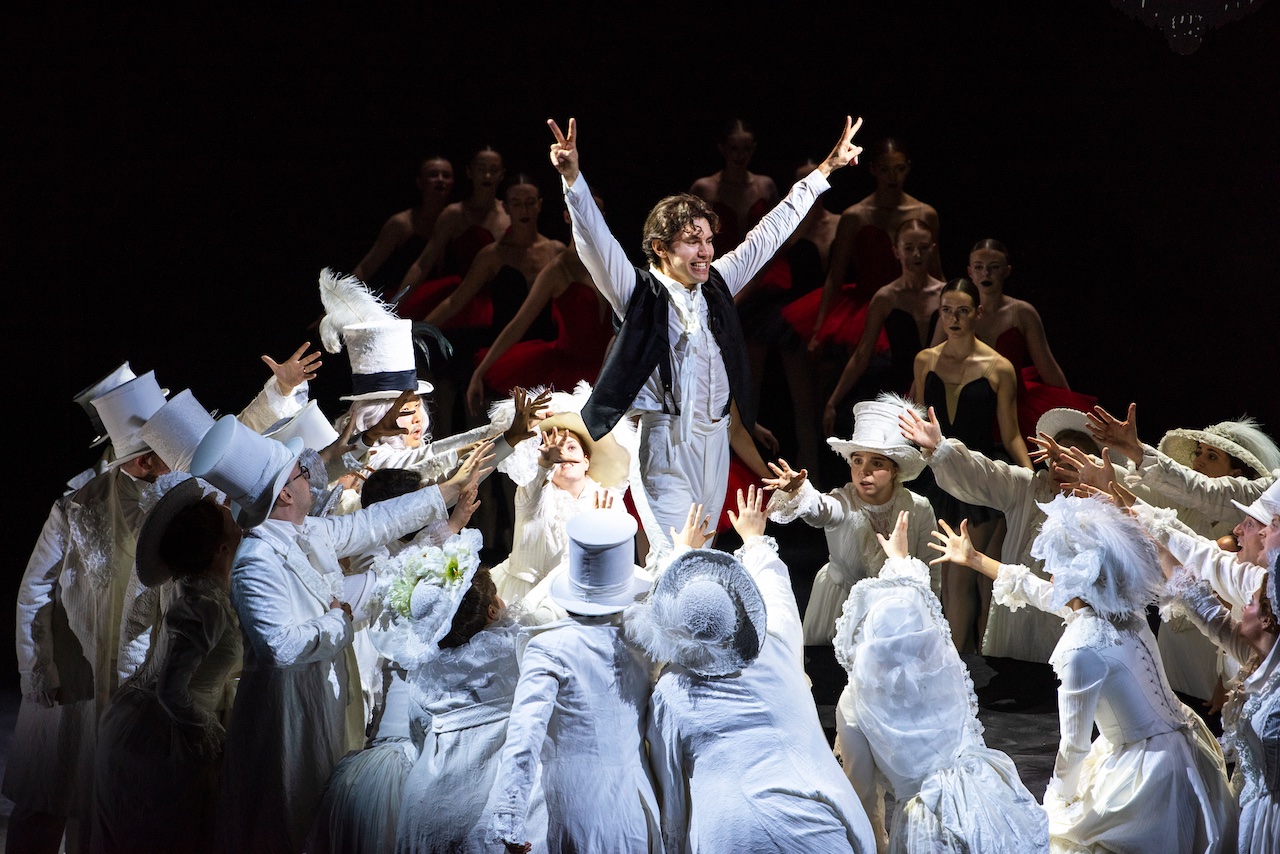
Alexei / Igor Onishchenko in The Gambler by Sergei Prokofiev at O’Reilly Theatre National Opera House Wexford © Photo Padraig Grant
I was curious to see how successfully the creators of the production would convey the spirit of Dostoevsky, who knew all about the passion for gambling from personal experience. He played roulette in Divonne, not far from Geneva, where I live, and in Geneva itself went through periods of severe financial hardship. At the same time, The Gambler, in which the influence of Pushkin is clearly felt, is not only a tragic novel but an extraordinarily funny one, with Dostoevsky’s humour at times strikingly reminiscent of Gogol’s. Conveying all this in both music and stage action is no easy task.
I have known the director Ivan Popovski for many years. Macedonian by birth, a pupil of Pyotr Fomenko and now himself a teacher at GITIS, the Russian Institute of Theatre Arts, he has built a successful career at Moscow’s Pyotr Fomenko Workshop Theatre. His production of A Midsummer Night’s Dream won Russia’s most prestigious theatre award, the Golden Mask, for Best Large-Scale Drama Production in 2016. But Popovski is equally at home in musical theatre. He has worked at the Galina Vishnevskaya Opera Centre in Moscow, and in 2005 he staged Prokofiev’s War and Peace at the Bolshoi Theatre.
In 2017, I managed to bring his A Midsummer Night’s Dream to Geneva. Those who saw it still remember it, and some of the theatrical devices used in Wexford seemed familiar to me, though no less effective for that.
For example, Alexei, played alternately by the tenors Igor Onishchenko and Taras Prysiazhniuk, who give very different but equally compelling performances, bursts straight into the auditorium before the performance has properly begun, announcing that he has won two hundred thousand! Some spectators do not immediately realise that he is an operatic character and start talking to him. Thus, even before the action has fully moved onto the stage, the audience is caught up in the excitement of this fantastic win.
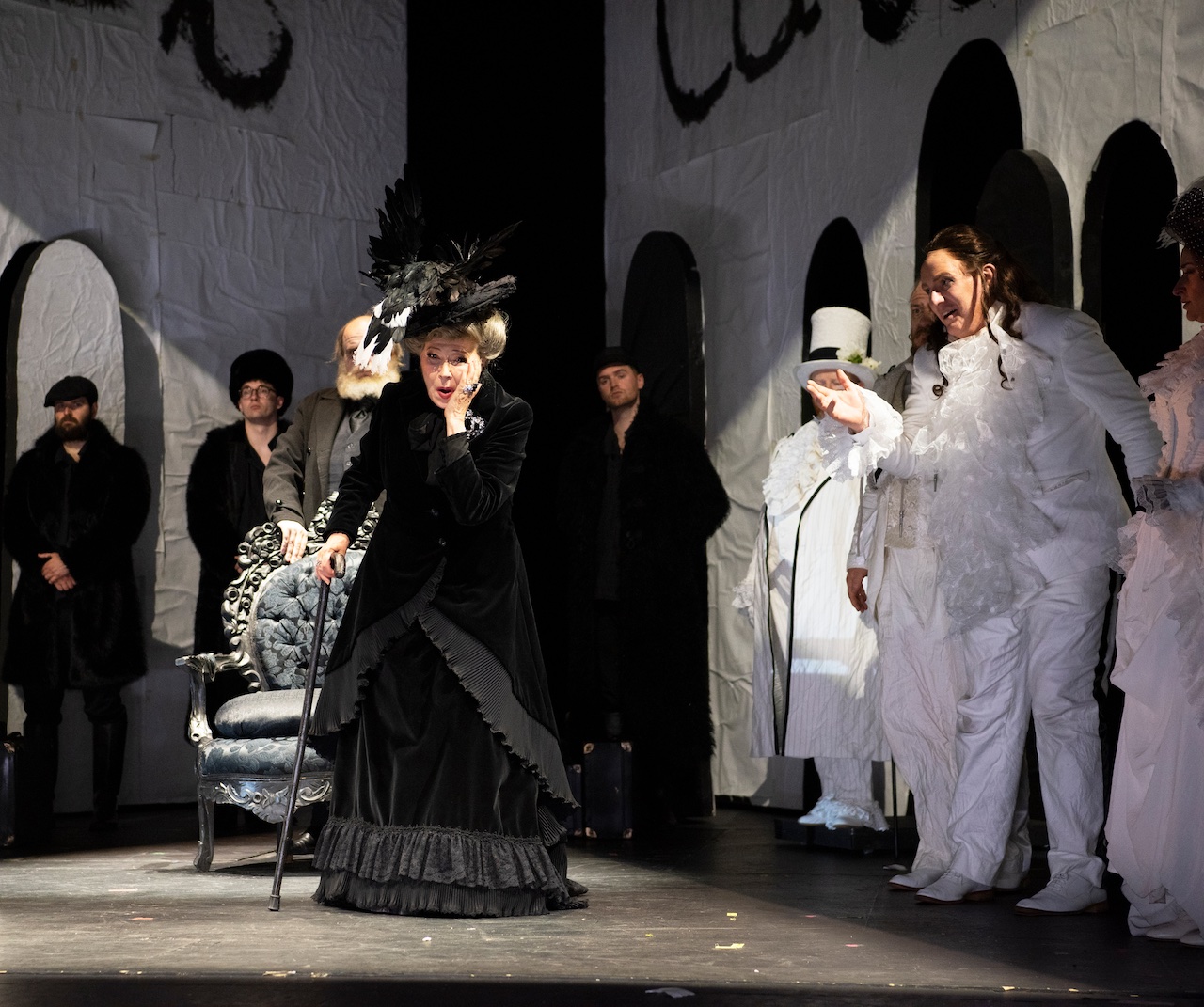
© Photo Padraig Grant
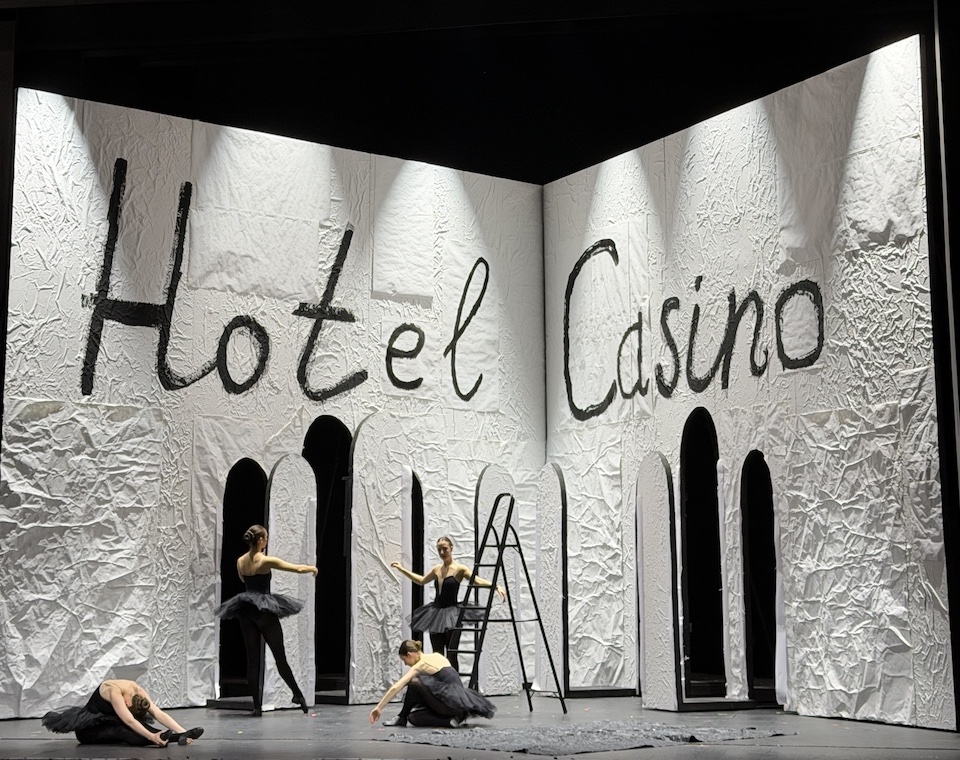
There is no curtain. As the audience enters, it sees white walls on stage bearing the words Hot sin. Then ballerinas in black tutus appear, armed with a ladder and black paint, and begin adding letters. Hot sin becomes Hotel Casino. The wordplay is not only witty but remarkably apt: sin acquires a thoroughly respectable signboard, behind which anything can be concealed.
And the black tutus immediately bring to mind the black swans of Swan Lake, of course. Except that here, as the action unfolds, they are joined not by white ones but by red ones: black and red are the colours of roulette. The casino scene, choreographed by Luisa Baldinetti with the dancers from Wexford School of Ballet and Performing Arts, is sensational!
More generally, black and white dominate the stage world created by designer Maria Tregubova. All the principal characters are dressed in white, with the sole exception of Grandma, who appears in black. In life, too, we are increasingly urged to divide the world into black and white, people into good and bad, into those who are with us and those who are against us. And it can be only a short step from such divisions to bloodshed. It is no coincidence that red gradually intrudes upon this austere colour scheme: the colour of gambling, danger and perhaps blood, which is the same colour in all of us. The roulette balls, harmless enough at first, gradually grow larger until one of them reaches the size of a cannonball. As the action unfolds, it becomes ever clearer that what we are watching is not simply a game, but a force capable of destroying everything around it, far beyond the casino in the fictional town of Roulettenburg.
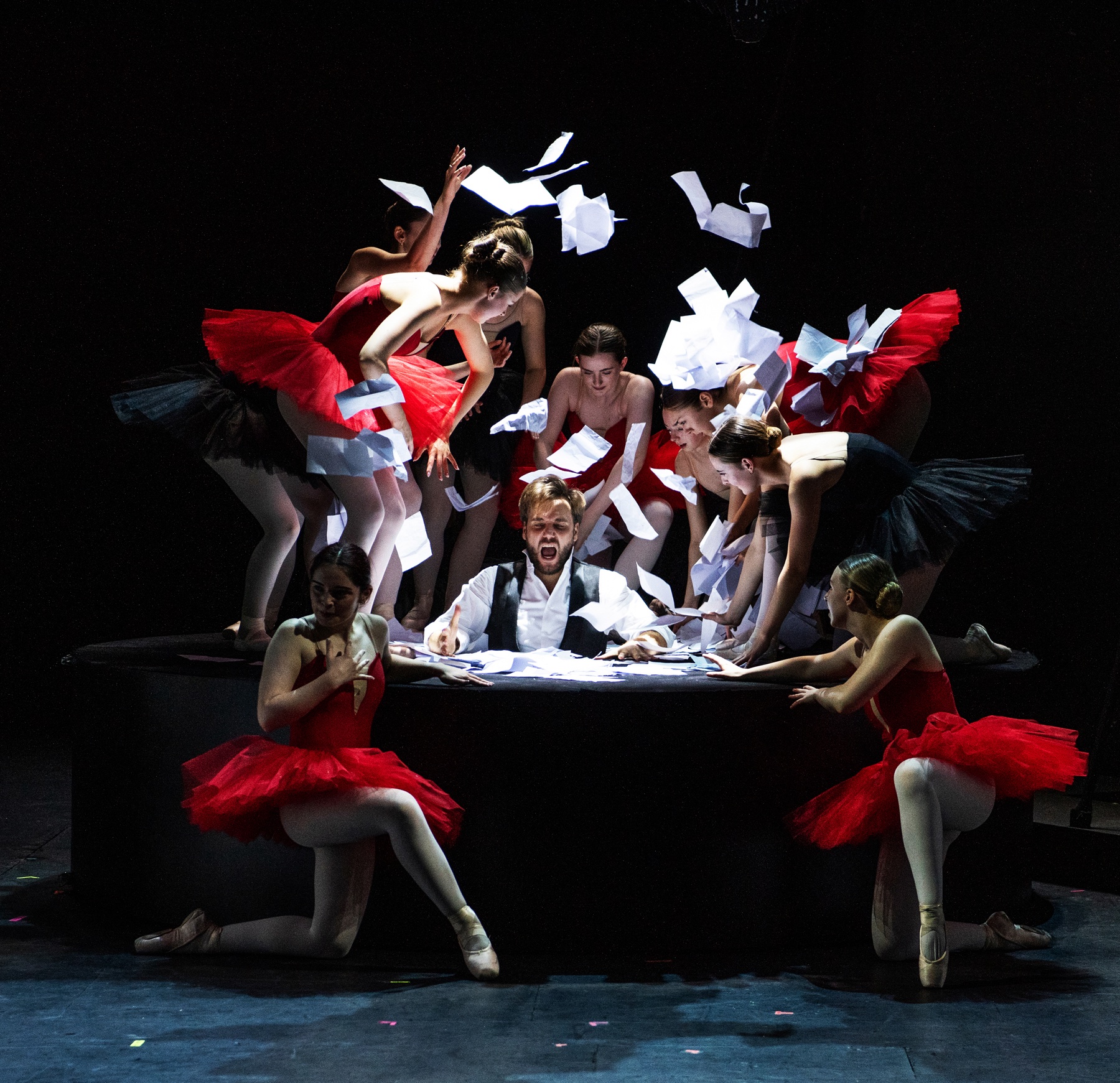
at O’Reilly Theatre National Opera House Wexford © Photo Padraig Grant
In Popovski’s production, Grandma, sung by the American soprano Clarry Bartha, is one of the most striking characters. But whereas in Dostoevsky she is carried about in a chair by her servants, here she not only walks but even dances, although her enormous armchair follows her everywhere, as if to remind us of her position and her power over those around her. At one point, her servant Potapytch, vividly portrayed by the Scottish baritone Ross Cumming, seats himself in it, holding a staff resembling a sceptre in one hand and a roulette ball transformed into an orb in the other. Sceptre and orb, of course, are the traditional emblems of Russian imperial power. This little stage tableau evokes so many historical associations that perhaps they are best left unexplained. As, indeed, is the appearance in the finale of the Russian church that Grandma had promised to build in St Petersburg. How often have we seen Russians who thoughtlessly squander enormous fortunes abroad then try to atone for their sins through generous donations to churches back home!
Popovski pays close attention to the literary original, but is not afraid to exaggerate certain character traits to grotesque effect. Just look at the Marquis de Grieux, played by the Irish tenor Gavan Ring, with his absurdly enormous ruff! This is entirely in keeping with Dostoevsky’s attitude towards the novel’s French characters, whom he portrays in a far from flattering light and condescendingly refers to as ‘little Frenchmen’. Alexei Ivanovich has plenty to say about Germans and ‘little Poles’ too, not to mention the Russians themselves, who boast of being ‘heretics and barbarians’ and take pride in having foreigners confirm that description.
To these ‘national stereotypes’ are added some ‘universal’ ones. In any country, an ageing man counting on a substantial inheritance, chasing after a young gold-digger while turning a blind eye to her dubious reputation, is both ridiculous and pitiable. In Ivan Popovski’s production, the General, sung by the Moldovan bass Alexei Botnarciuc, and Mademoiselle Blanche, played by the American mezzo-soprano Hilary Ginther, make a splendid pair!
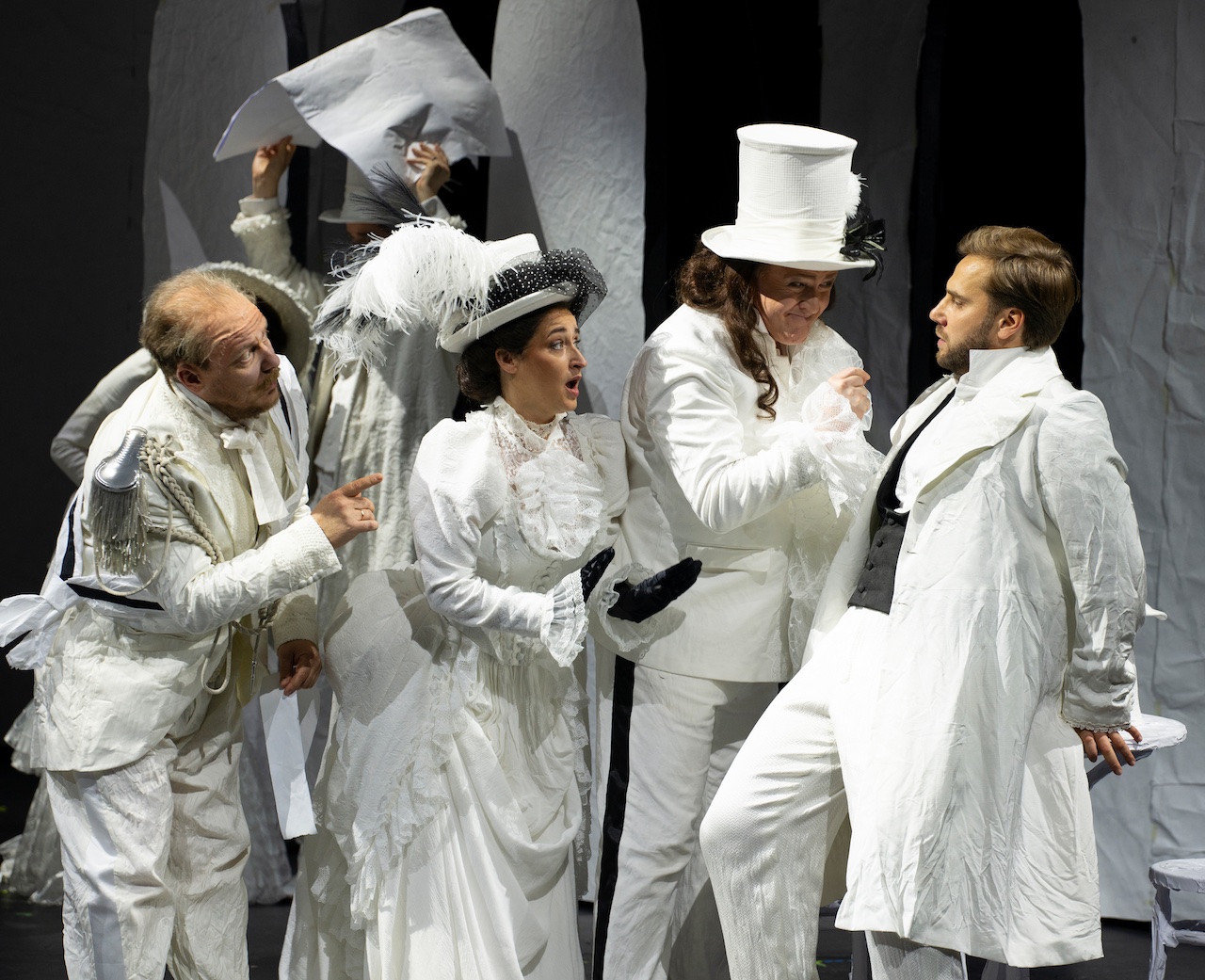
at O’Reilly Theatre National Opera House Wexford © Photo Padraig Grant
Perhaps the only people Dostoevsky treats with a degree of respect, through Alexei Ivanovich, are the English. Mr Astley is particularly interesting in this respect. He is played by the Irish baritone Rory Musgrave, clearly one of the audience’s own favourites, judging by the ovation at the end of the performance. In one of the final scenes, sitting on a bench beside Alexei Ivanovich, he warns him of his inevitable ruin and urges him to give up gambling and return to Russia. How could one not be reminded of the scene at Patriarch’s Ponds at the beginning of The Master and Margarita? And Musgrave’s Russian, spoken with the faintest English accent, somehow makes his character even more convincing.
The foreign singers’ remarkably good Russian deserves special mention. They worked on their pronunciation with Lyubov Orfenova, a coach with the Bolshoi Theatre’s Young Artists Opera Programme. I have known Lyubov Anatolyevna since I was born: we lived in the same apartment building in Moscow. Here in Wexford everyone calls this professional of the highest calibre simply Liuba, with respect and affection.
As I reread Dostoevsky and watched the performance, I could not help thinking of another great Russian work about gambling: Tchaikovsky’s The Queen of Spades, based on Pushkin’s story of the same name, which Dostoevsky called ‘the pinnacle of fantastic art’. Pushkin and Dostoevsky give us not only protagonists obsessed with gambling, but also two remarkable old women whose deaths are eagerly awaited by those around them. Except that Pushkin’s Countess, ‘the old witch’, as Hermann calls her, dies, while Dostoevsky’s Grandma, also ‘the old witch’ in Alexei Ivanovich’s words, on whom the hotel staff have bestowed the title of princess, arrives in person, to the horror of her prospective heirs, and even heads off to play roulette. Of course, Hermann is not Alexei, and Pushkin’s Countess bears little resemblance to Dostoevsky’s energetic Grandma, who gambles away her fortune and has no way of recovering it ‘at the price of a single rendez-vous’, as the Countess once acquired the secret of the three cards in Tchaikovsky’s opera. Yet the resemblance between the protagonists becomes particularly striking when they begin to believe that chance can be made to obey their will.
There are more specific parallels, too. In Pushkin, Tomsky recounts the Countess’s Parisian past, while in Dostoevsky, Mr Astley tells Alexei about Blanche’s earlier life.
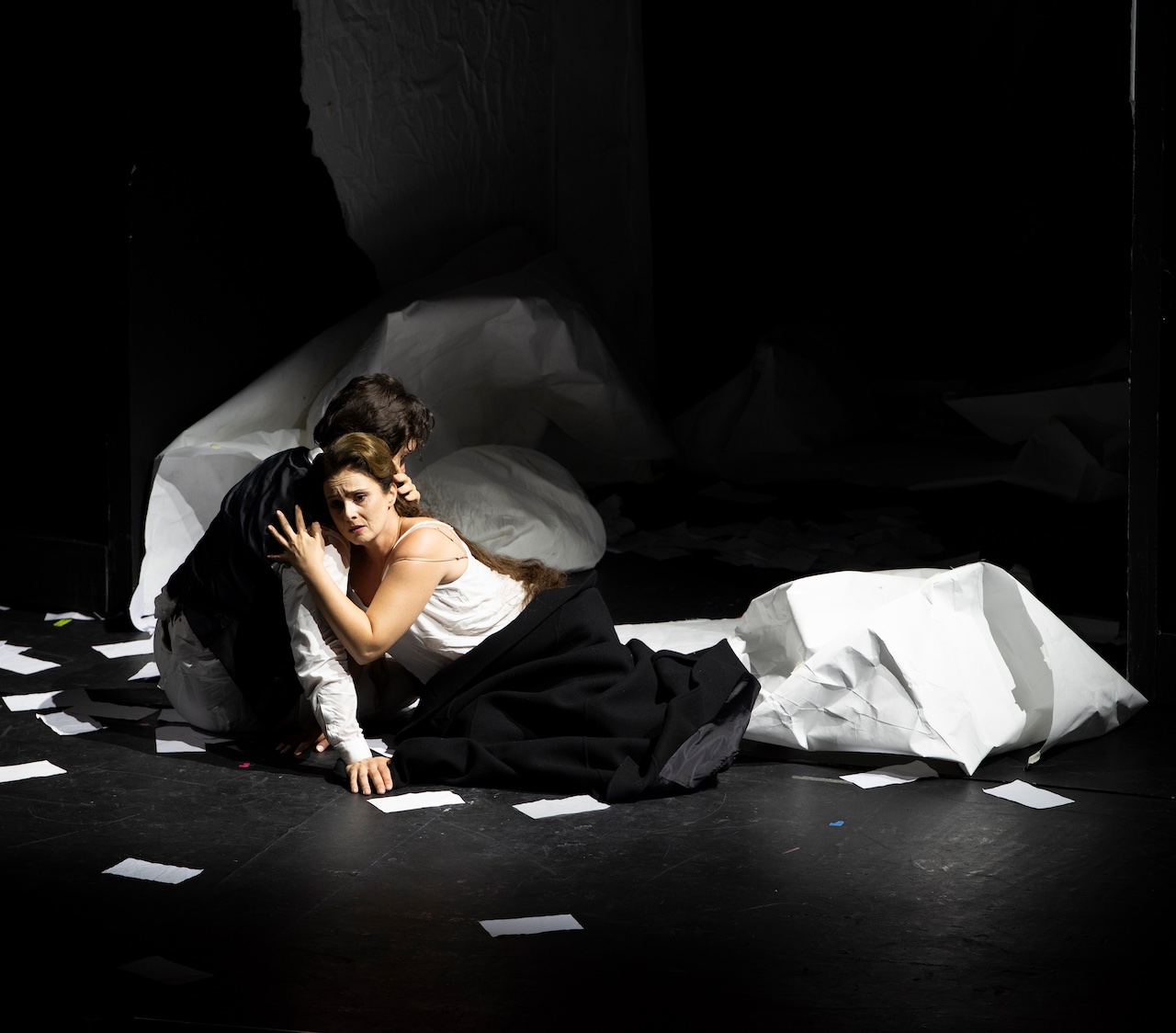
©Photo Padraig Grant
But perhaps the most terrible thing happens to love. In Pushkin, Hermann, obsessed with the secret of the three cards, uses Liza from the outset to gain access to the Countess, while in the opera, having obtained what he wants, he forgets about her. Alexei, in both Dostoevsky and Prokofiev, is convinced that wealth will enable him to win Polina, yet proves incapable of understanding her even when she is right beside him. The scene after their night together, when Polina demands her fifty thousand from Alexei, struck me as one of the most tragic in the production, even though Dostoevsky’s heroine is far less romanticised than Pushkin’s Liza and quite pragmatic. My applause goes to the Georgian soprano Sophie Gordeladze. All the more surprising, then, to hear some members of the audience laughing. Apparently, they had missed something.
For all its fantastical elements, Popovski’s production makes no attempt to bring Dostoevsky artificially up to date by dressing his characters in recognisably contemporary clothes or burdening them with heavy-handed political allusions. On the contrary, the director trusts the writer, finding stage images that reveal how little human nature has changed. Perhaps that is precisely why his Gambler makes such a powerful impression.
In Conclusion
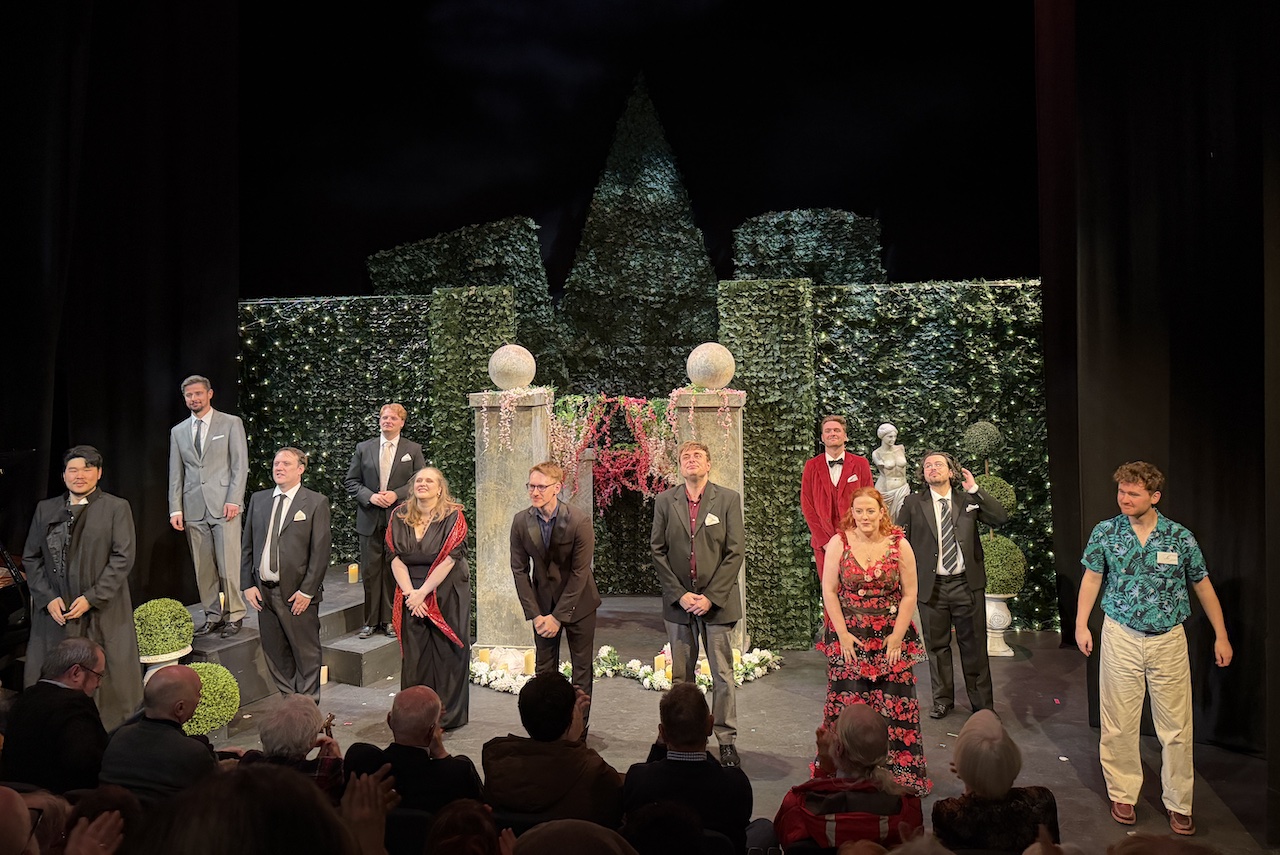
Besides the three main productions, the festival programme included two ‘pocket operas’: Much Ado About Nothing by Charles Villiers Stanford and The Rose of Castile by Michael William Balfe. I managed to see only the first, and in doing so discovered an Irish composer, largely forgotten today, who made a significant contribution to British musical culture. Much Ado About Nothing was first performed at Covent Garden in London in 1901 and had already been staged in Wexford in 1964. So the festival continues to explore the forgotten operatic repertoire, including Ireland’s own musical heritage.
There is one more thing I particularly want to mention. The Wexford Festival Orchestra is not a permanent ensemble whose musicians work together throughout the year. Yet in a short space of time they had to master three utterly different and highly demanding scores: the swift virtuosity of Rossini, the intense drama of Mascagni and Prokofiev’s relentless musical momentum. And they rose to the challenge magnificently.
So my applause goes not only to the singers and production teams, but also to the entire orchestra and to the three conductors, Riccardo Bisatti, Francesco Cilluffo and Valentin Uryupin, each of whom succeeded in revealing a completely distinctive musical world. And not a single false note, either literally or figuratively.
… It seems Wexford’s opera fever is contagious. At any rate, I already know that I shall certainly be back.