
Marisol – Sea and Sun at Kunsthaus Zürich

Strictly speaking, however, the name Marisol originated in the Spanish-speaking world as a contraction of María de la Soledad (“Mary of Solitude”, one of the titles of the Virgin Mary). Only later did it come to be read as a combination of mar (“sea”) and sol (“sun”), and it was this beautiful association that made the name especially popular. It suits the artist remarkably well: Marisol spent a total of eight months underwater and created a world of vivid images seemingly drenched in sunlight.
Marisol is usually described as an American artist of Venezuelan descent. She herself, however, offered a far more intriguing definition of her identity:
“I am the Venezuelan, born in France, living in Italy – that has an English car with North American plates and Swiss insurance – and they want to ask me what nationality I am...”
Many people in Switzerland, I suspect, could introduce themselves in much the same way: born in one country, holding the passport of another, working in a third, speaking several languages and unable to answer the question “What nationality are you?” in a single word.
The accuracy of Marisol’s description becomes clear even from the briefest encounter with her biography.
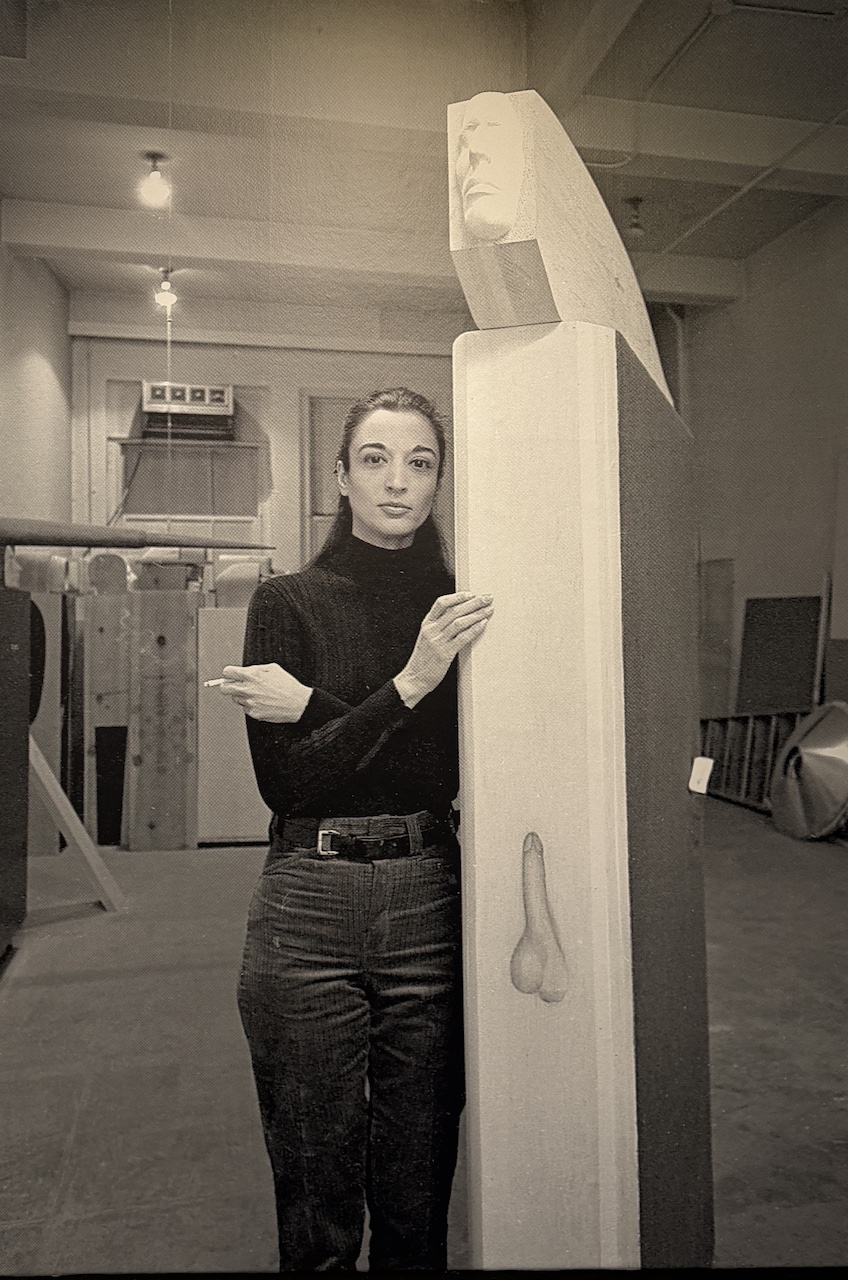
She was born in Paris in 1930 into a wealthy Venezuelan family and spent her childhood between Europe, Venezuela and the United States. At the age of eleven, she experienced a devastating tragedy: her mother took her own life. The child’s response was… silence. For more than a decade, she spoke only when absolutely necessary.
In 1949, Marisol enrolled at the École des Beaux-Arts in Paris, but soon moved to New York, where she studied, among other places, with Hans Hofmann. As her biographers note, however, much of her artistic education was self-directed. She quickly developed a distinctive visual language that fused American Pop Art with European Nouveau Réalisme.
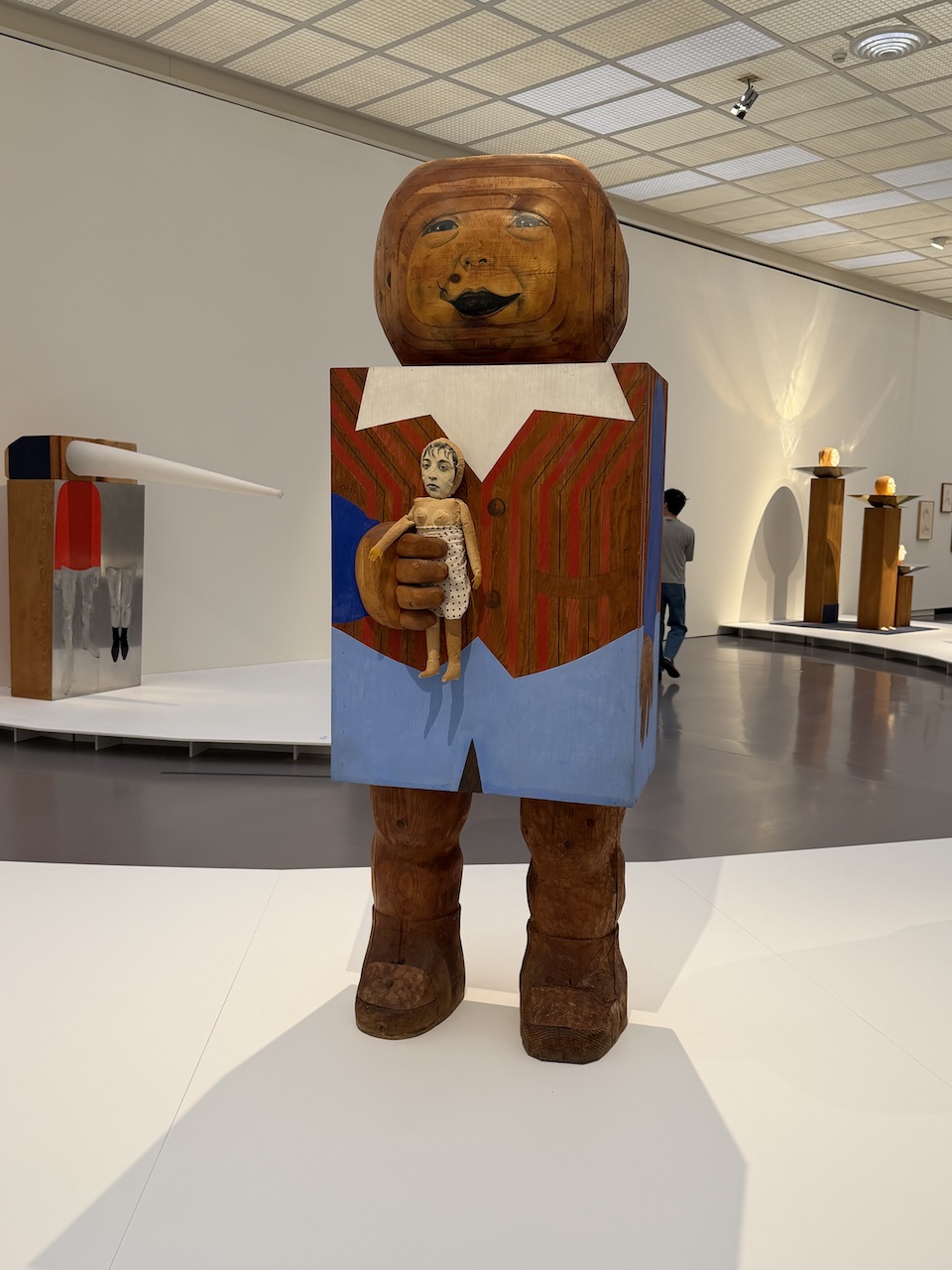
Marisol’s first solo exhibition took place in New York in 1957, but real success came only after her shows at the Stable Gallery in 1962 and 1964. At the gallery of the renowned collector and dealer Sidney Janis, her works were shown alongside those of Roy Lichtenstein, Claes Oldenburg, Andy Warhol, Daniel Spoerri, Jean Tinguely and Niki de Saint Phalle. They attracted just as much attention as those of her celebrated colleagues: her sculptures appeared repeatedly on the covers of Time magazine and other major publications, while Andy Warhol, a close friend who also featured Marisol in several of his films, called her “the first girl artist with glamour”.
Feminists might see those words not so much a sincere compliment to a fellow artist as a patronising pat on the shoulder for an attractive young woman artist. I do not.
In America, Marisol has never really been forgotten. After her death in 2016, the greater part of her artistic legacy became part of the Buffalo AKG Art Museum in Buffalo, New York. But why, unlike the artists mentioned above, has she remained so little known in Europe, with the possible exception of Denmark, where the Louisiana Museum of Modern Art, about 35 km north of Copenhagen, hosted a major exhibition of her work last autumn? Several explanations come to mind.
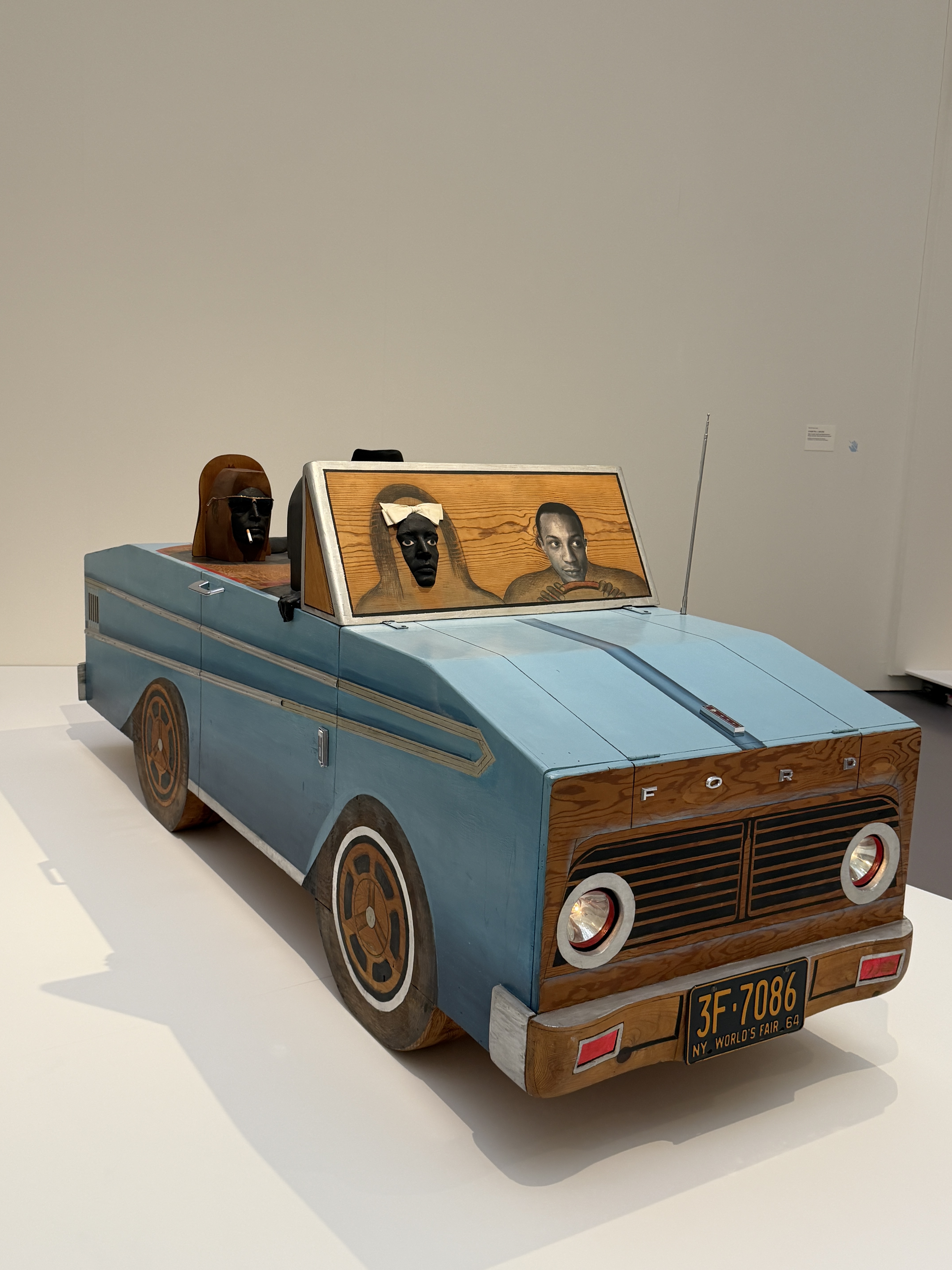
First, Marisol never founded an artistic movement of her own. Nor did she create one or two works that became universally recognised cultural icons, like Warhol's Campbell's Soup Cans, Lichtenstein's comic-book paintings or Tinguely's kinetic machines.
Second, she gradually withdrew from public life. Unlike Andy Warhol, a brilliant architect of his own myth, Marisol, always shrouded in an air of mystery, had by 1968 all but disappeared from the public eye.
Third, she never attempted to turn herself into a brand. She made no effort to cultivate a personal legend, a striking contrast with Warhol, who transformed his own persona into a work of art.
Time, it seems, has been kinder to Marisol. The exhibition at Kunsthaus Zürich spans five decades of her career, revealing the remarkable blend of cultures that defines her work, a sense of humour that often borders on satire, and a sharp social conscience.
Immediately to the right of the entrance stands a flat wooden sculpture depicting a family. Titled The Hungarians, it was created in 1955 and is not only one of Marisol's earliest sculptures but also the first in which she incorporated a found object. The figures stand on a metal cart mounted on the wheels of a baby carriage.
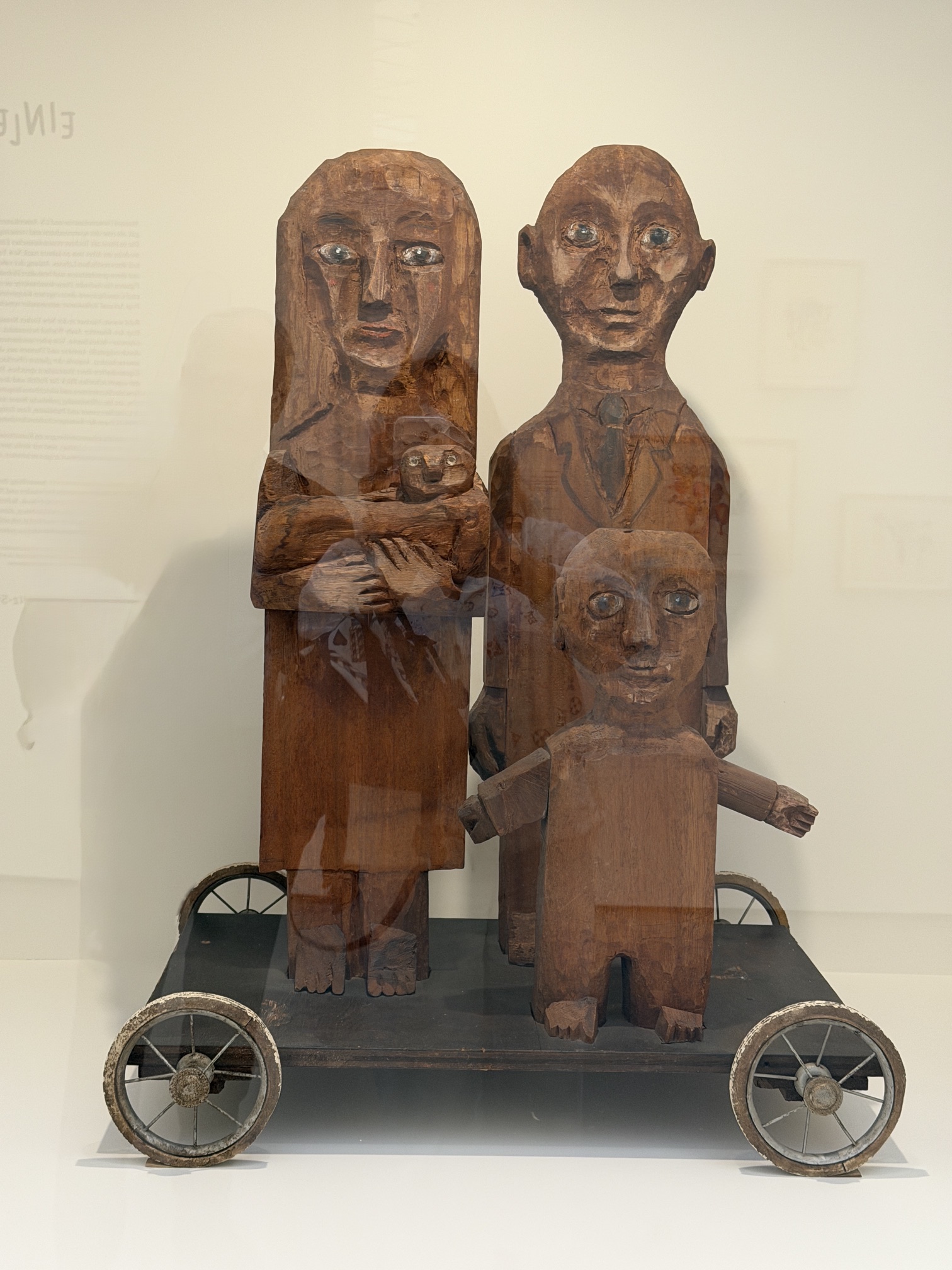
I was still wondering what could possibly connect a Venezuelan-American artist with Hungary when I came across the following wall text:
"Following World War II, during which more than half a million Hungarian Jews were killed or forced to flee the country, Hungary remained under a Soviet-aligned communist regime until 1989. After the brutal suppression of the Hungarian Uprising in 1956, several hundred thousand people left the country, around 40,000 of whom emigrated to the United States.
Although The Hungarians slightly precedes this post-Revolution influx, this historical context suggests the family represented has suffered either Nazi or Soviet persecution. In a style influenced by American folk art, Marisol places her subjects on a rolling cart, suggesting the immigrant experience of mobility, vulnerability and displacement."
There, I thought, was my Russian connection.
I admired the curators' restraint, but I should perhaps add that the Hungarian Uprising was crushed by Soviet troops, which entered Budapest in November 1956. According to various estimates, around 2,500 Hungarians were killed and more than 200,000 were forced to flee the country.
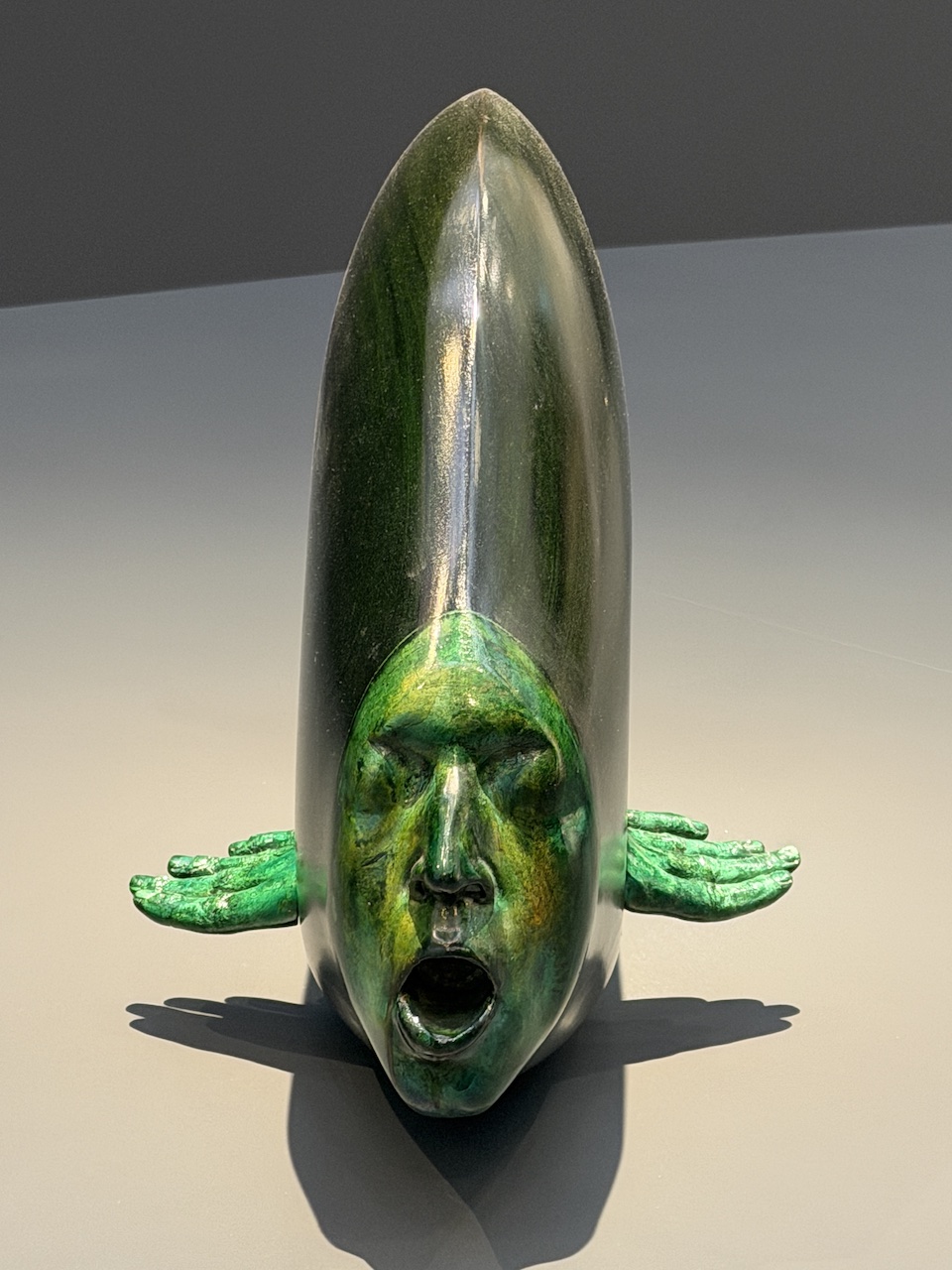
The rest of the exhibition offers a glimpse into Marisol's world, or rather, her many worlds, revealing what fascinated and moved her.
Water, and the sea in particular, clearly held a special place in her life. By her own account, she took up scuba diving after being inspired by Jacques-Yves Cousteau's films. Between the late 1960s and the mid-1970s, she spent a total of some eight months underwater, diving to depths of up to 71 m and remaining below the surface for as long as 45 minutes.
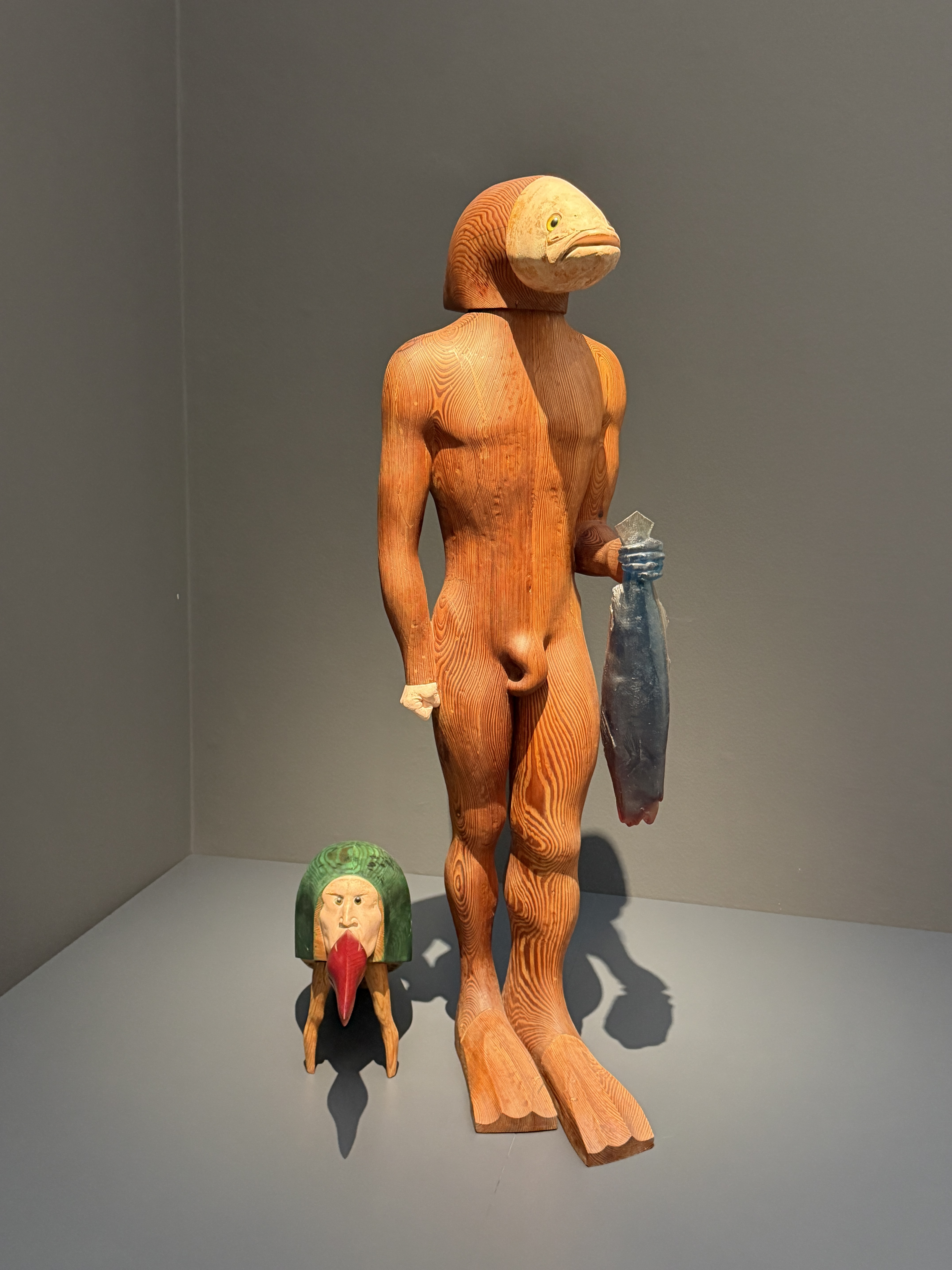
Using footage shot in Mexico and Israel in the late 1970s, Marisol hoped to make a documentary, a project that was never realised. Yet it was not the underwater world that fascinated me most, but the fish that populate the exhibition. Nearly all of them have human faces, sometimes Marisol's own. As for Fishman, whose title can equally be understood as The Fisherman or The Fish-Man, I was utterly captivated. I immediately renamed him The Gentleman with the Dog. Chekhov would surely have appreciated the joke: in Marisol's world, even the dogs have fish heads.
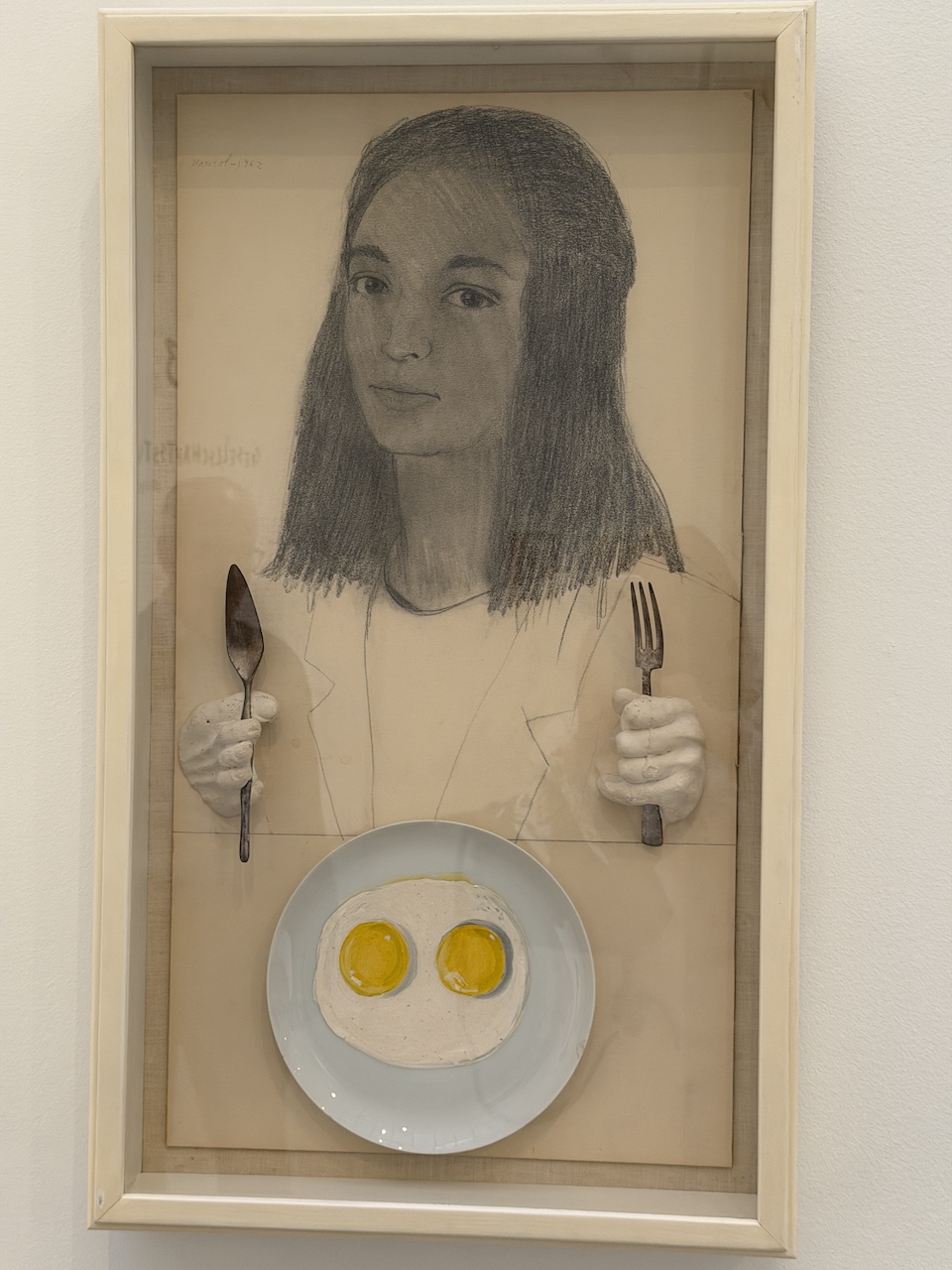
Marisol's exuberant sense of humour needs no explanation. One need only look at Tea for Three, or at this Self-portrait with its intriguing detail. Depending on your imagination – and perhaps your state of mind – you may see a smiley face, a pair of sunny-side-up eggs... or something considerably less innocent.
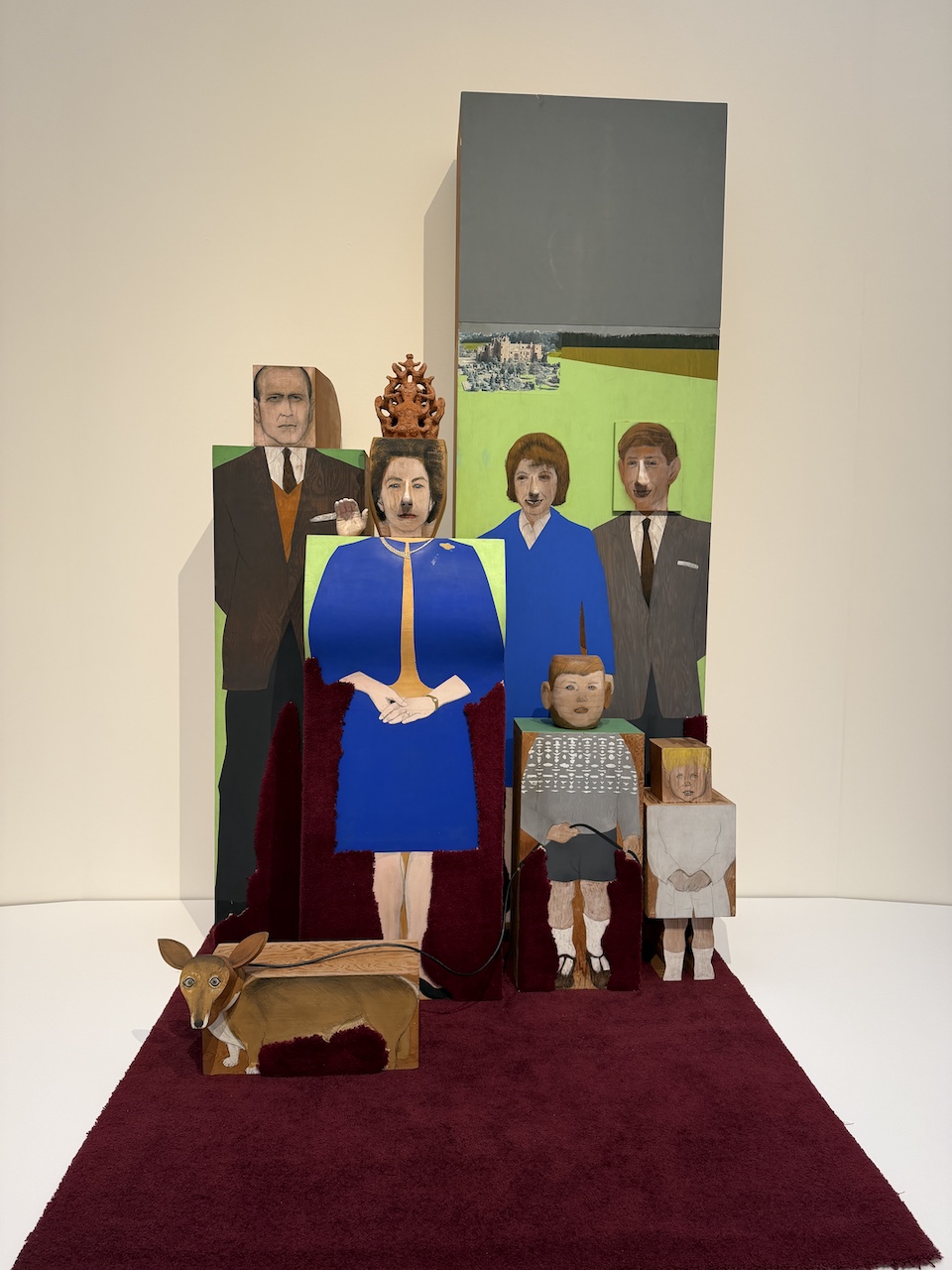
I have little doubt that, once you reach the gallery devoted to public figures, you may well find yourself lingering there for quite some time: even without looking at the labels, you are almost certain to recognise the figures. During my visit, not a single visitor seemed able to resist posing for a photograph beside the legendary Western actor John Wayne or the British royal family led by the late Queen Elizabeth II, complete with her beloved corgis, of course.
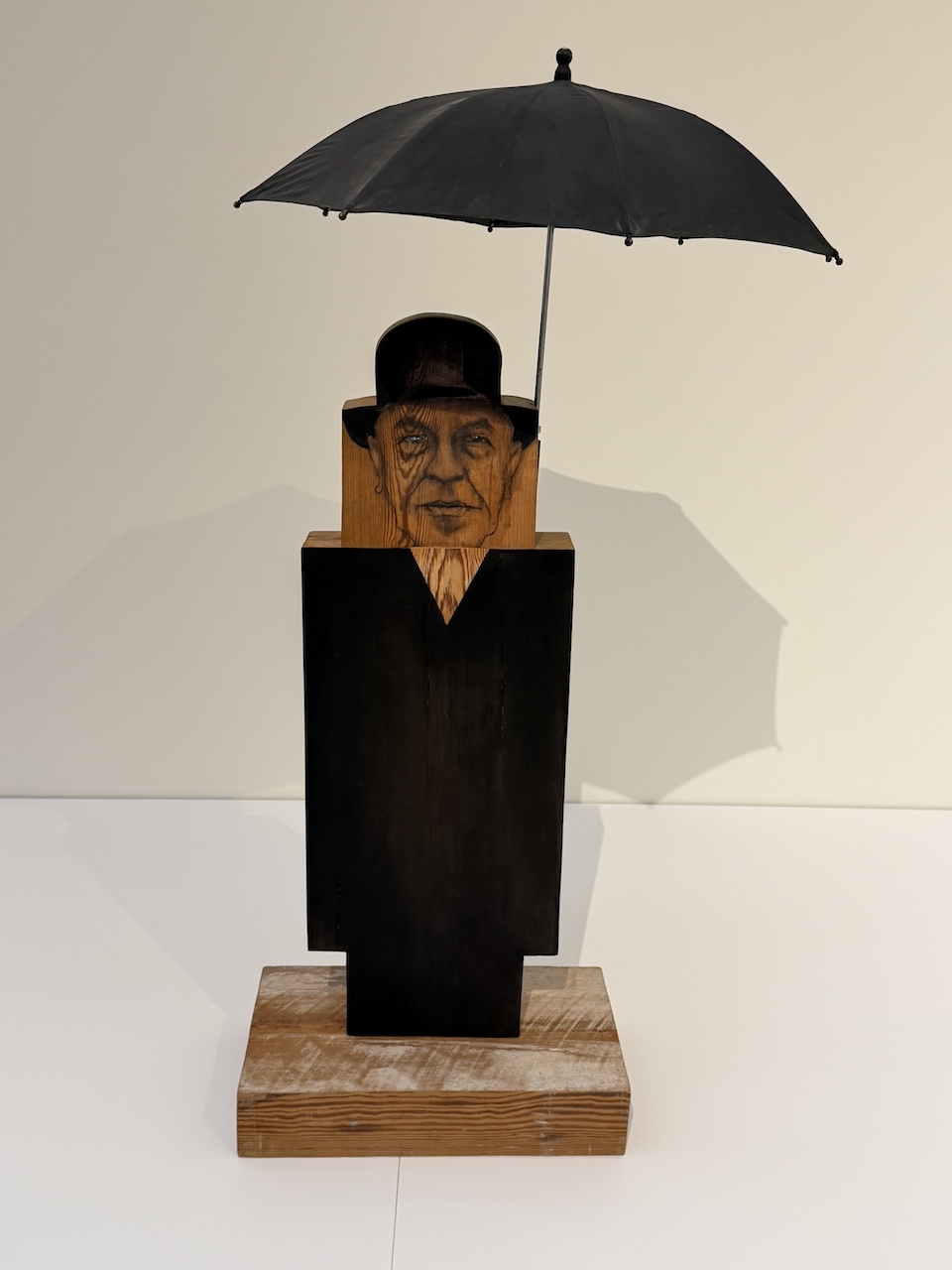
My own attention, however, was drawn elsewhere. Less colourful perhaps, but profoundly moving, these are Marisol's wooden monuments to the people who shaped her both as an artist and as a human being. They include President Abraham Lincoln; Archbishop Desmond Tutu, Nobel Peace Prize laureate, theologian, anti-apartheid campaigner and human rights activist; the Native American photographer Horace Poolaw, whose sculpture stands on a cart assembled from New York police barricades bearing the words Police Line Do Not Cross; René Magritte, Pablo Picasso and Georgia O'Keeffe; and finally Marisol's father, who raised his daughter alone after the death of her mother.
Carved from dark wooden blocks, these sculptures achieve something extraordinary. They combine an almost photographic likeness with touches of caricature, creating psychological portraits of remarkable depth. I simply could not tear myself away.
The exhibition remains at Kunsthaus Zürich until 23 August before travelling to Museum Boijmans Van Beuningen in Rotterdam (9 October 2026 to 29 March 2027) and then to Museum der Moderne Salzburg. If you have the opportunity to see it in any of these venues, do not miss it.
One last thing. I would have loved to show you every single work on display in Zurich, but no article could possibly contain them all. So here are a few more. Enjoy.