
A Russian Mystery at the Fondation Jan Michalski
The Lausanne Collection de l’Art Brut, founded by Jean Dubuffet, is celebrating its 50th anniversary this year. To mark the occasion, part of the collection is currently on display at the Fondation Jan Michalski in Montricher.
The French painter and sculptor Jean Dubuffet (1901-1985) not only lived a long life, but was also extraordinarily prolific: in total, he created nearly 10,000 works, many of which are held in the world’s leading museums. What is perhaps less widely known is that he did not find his vocation immediately. After completing his studies at the Académie Julian in Paris, Dubuffet returned to his native Le Havre and spent seventeen years immersed in the family wine business.
It was only in 1942 that he returned to painting, and two years later his first solo exhibition took place at René Drouin’s gallery in Paris. Later, in the 1960s, he began experimenting with music and sound, even making several recordings, but painting remained central to his life. In Paris, he became close to the Surrealists, yet, being little inclined to accept traditional standards of beauty, Dubuffet entered art history above all as the founder of Art Brut, a form of creation that emerged outside established artistic norms. Essentially, it is the work of self-taught creators, often people with psychiatric disorders, who either rejected accepted aesthetic conventions or simply knew nothing of them, and who used whatever materials were available.
Jean Dubuffet is known to have been deeply impressed by Hans Prinzhorn’s book Artistry of the Mentally Ill, published in 1922. This first work by the German psychiatrist was also one of the earliest attempts to analyse the creations of people with mental disorders. Richly illustrated with patients’ drawings, the book testified to the author’s respect for them, although Prinzhorn refrained from making an aesthetic judgement on these works and avoided the term “art”.
Be that as it may, in 1945 Jean Dubuffet introduced the term Art Brut to describe the collection he was assembling from works created by psychiatric patients, children, and representatives of non-European cultures then described as “savages”. In this creativity, free from cultural and social conventions, he saw “a completely pure, raw artistic operation, reinvented in all its phases by its author, solely from his or her own impulses”, as the website of the Collection de l’Art Brut states. Interestingly, in that same first post-war year, the artist undertook a research journey not through his native France, but through Switzerland, where he met artists, writers, and psychiatrists. The works discovered then became the nucleus of the future collection.
Initially, the collection found shelter in the basement of the Drouin gallery, and in 1949 it was already being exhibited in its rooms, accompanied by a manifesto written by Dubuffet under the title L’Art Brut préféré aux arts culturels (Art Brut Preferred to Cultural Art). Then came a decade of exile in New York, followed by a return to Paris. In 1964, the first issue of the L’Art Brut fascicles appeared, an editorial series created by Jean Dubuffet and devoted to the authors represented in the collection. The artist himself worked on the first eight issues, and publication continues to this day. I have a friend who owns every issue published so far!
In 1971, Jean Dubuffet donated his entire Art Brut collection, comprising around 5,000 works, together with his archive, to the city of Lausanne. In 1975, the Geneva publishing house Albert Skira brought out the first book devoted to Art Brut, written at Dubuffet’s request by the Lausanne art historian Michel Thévoz. A year later, Mr Thévoz became the collection’s first curator, after it had found its home in the wing of the Château de Beaulieu in Lausanne. Thus was born the world’s first public museum devoted entirely to Art Brut, with more than 800 works on permanent display. Remarkably, it was only in 2018 that the museum ventured to organise its first travelling exhibition: Art Brut. Swiss Made, devoted to Art Brut in Switzerland, was shown at the Museo contemporaneo d’arte in Ascona and at the Kunstmuseum Aarau. And now visitors to the Fondation Jan Michalski in Montricher can discover some of its treasures, many of which had never previously been exhibited.
The mission of this foundation, a unique place created by Vera Michalski-Hoffmann at the foot of the Swiss Jura, is “to foster literary creation, encourage the practice of reading, and give all forms of writing to be read, seen, and heard”.
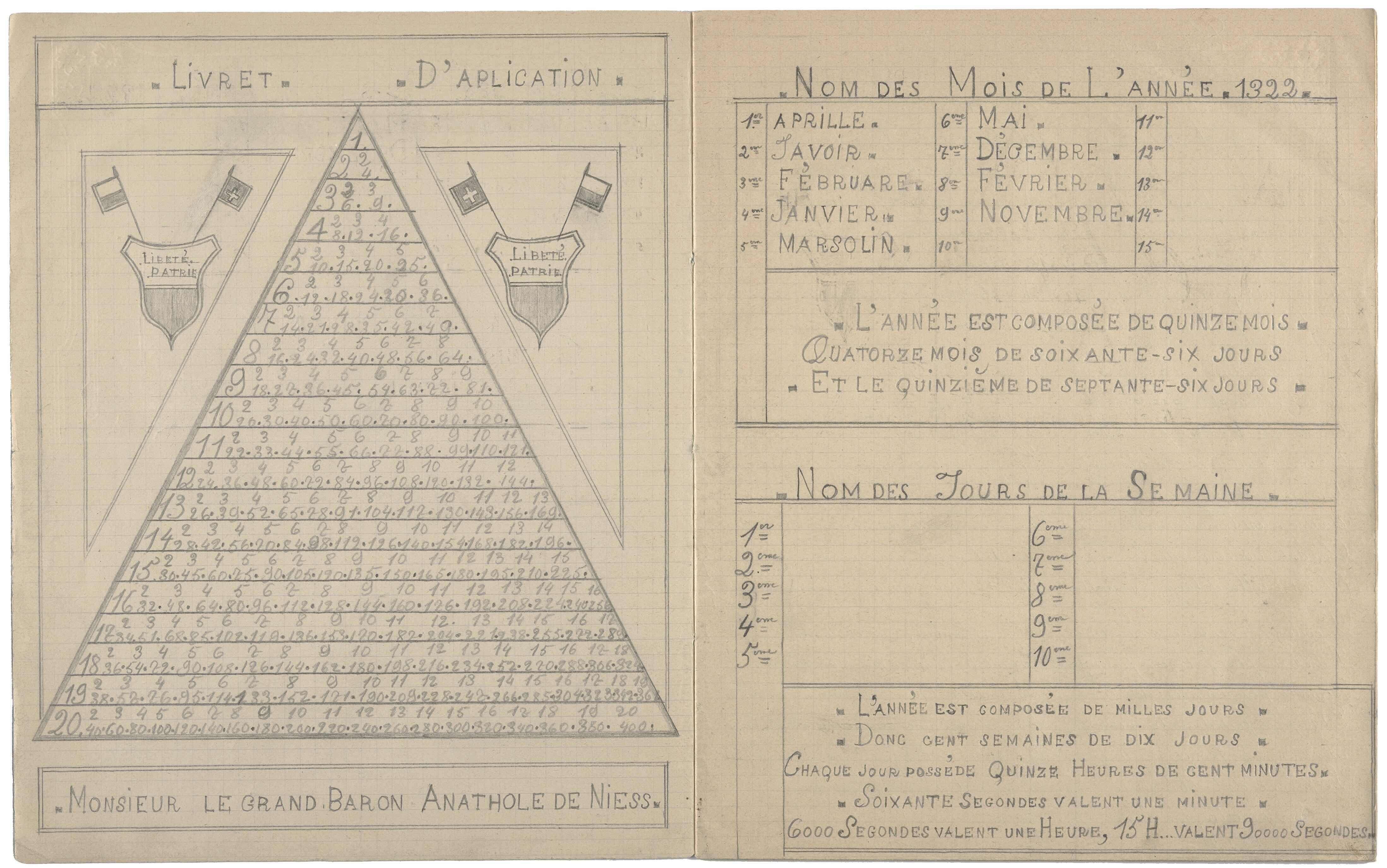
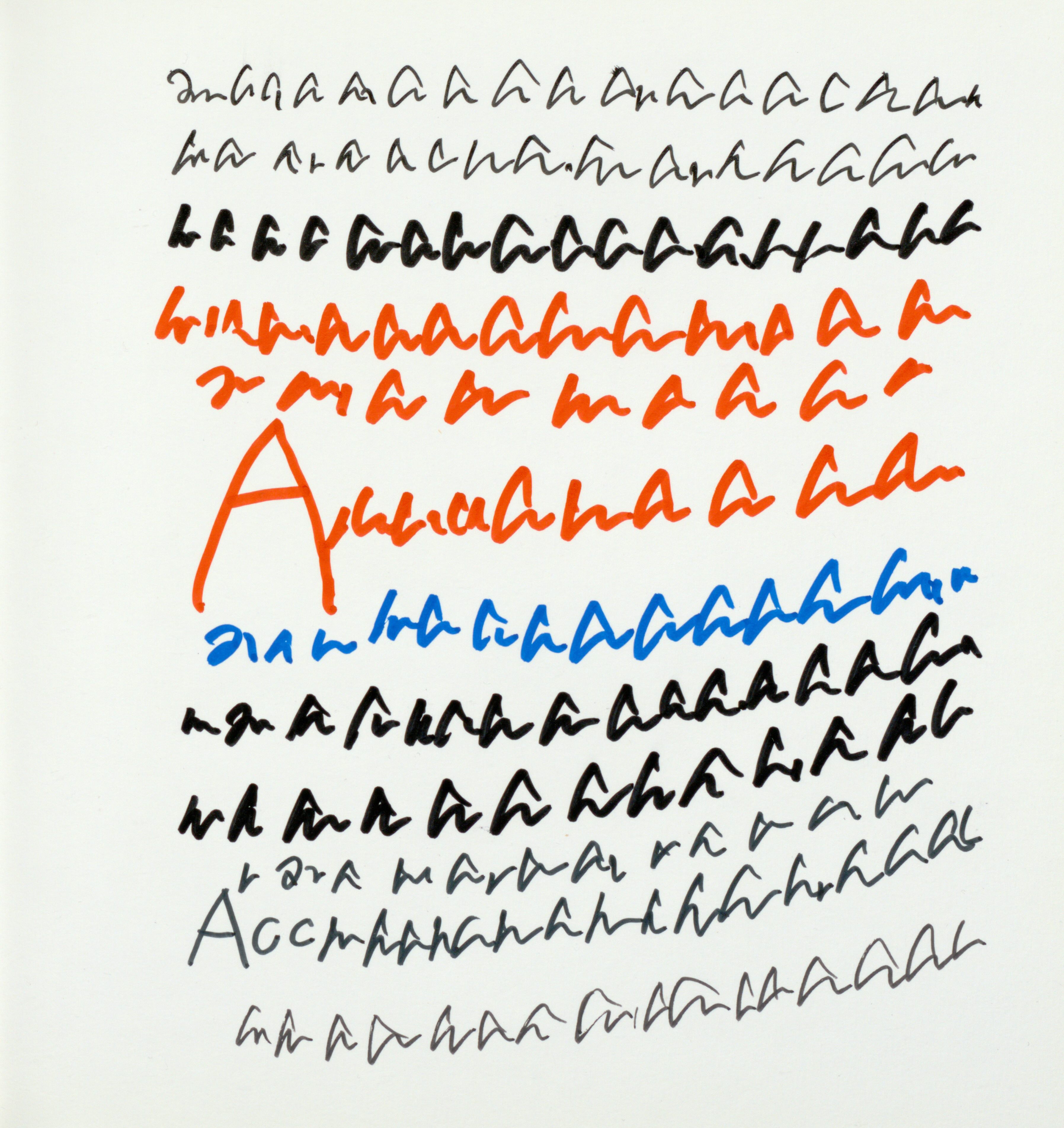
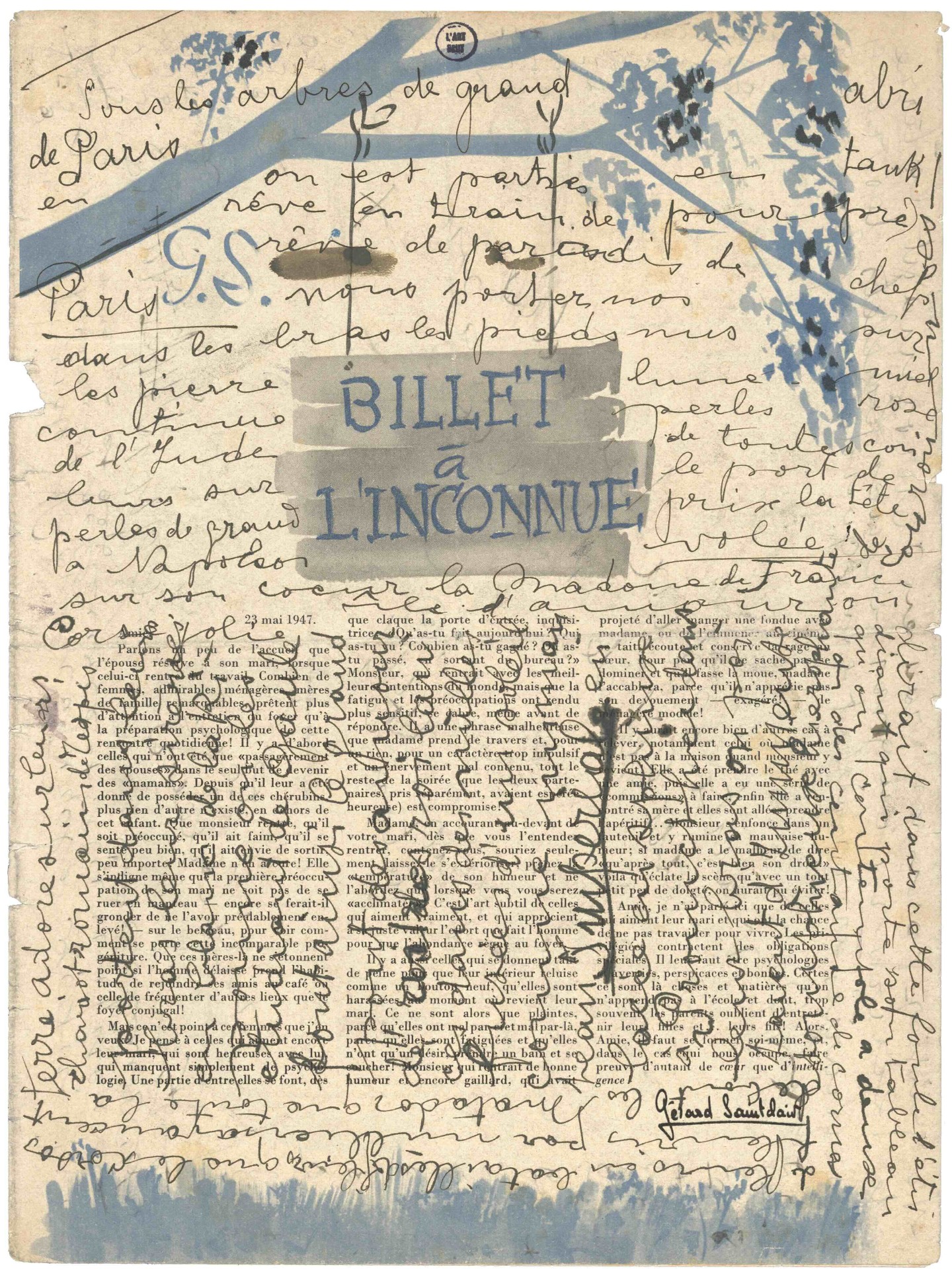
In this case, the emphasis is above all on reading and seeing. It is logical that, for the exhibition held within its walls, the Fondation’s team selected works featuring, in one form or another, drawings and writings from notebooks, almost always untitled. “Sometimes illegible, invented, at times interwoven with drawings, these forms of writing, expressive both formally and poetically, trace a territory of power and freedom,” the exhibition’s curators emphasise. For the poster, they chose a 2015 work by Pascal Vonlanthen, born in 1957 and still alive today. The artist gave it no title, but I would call it Variations on the Letter “A”.
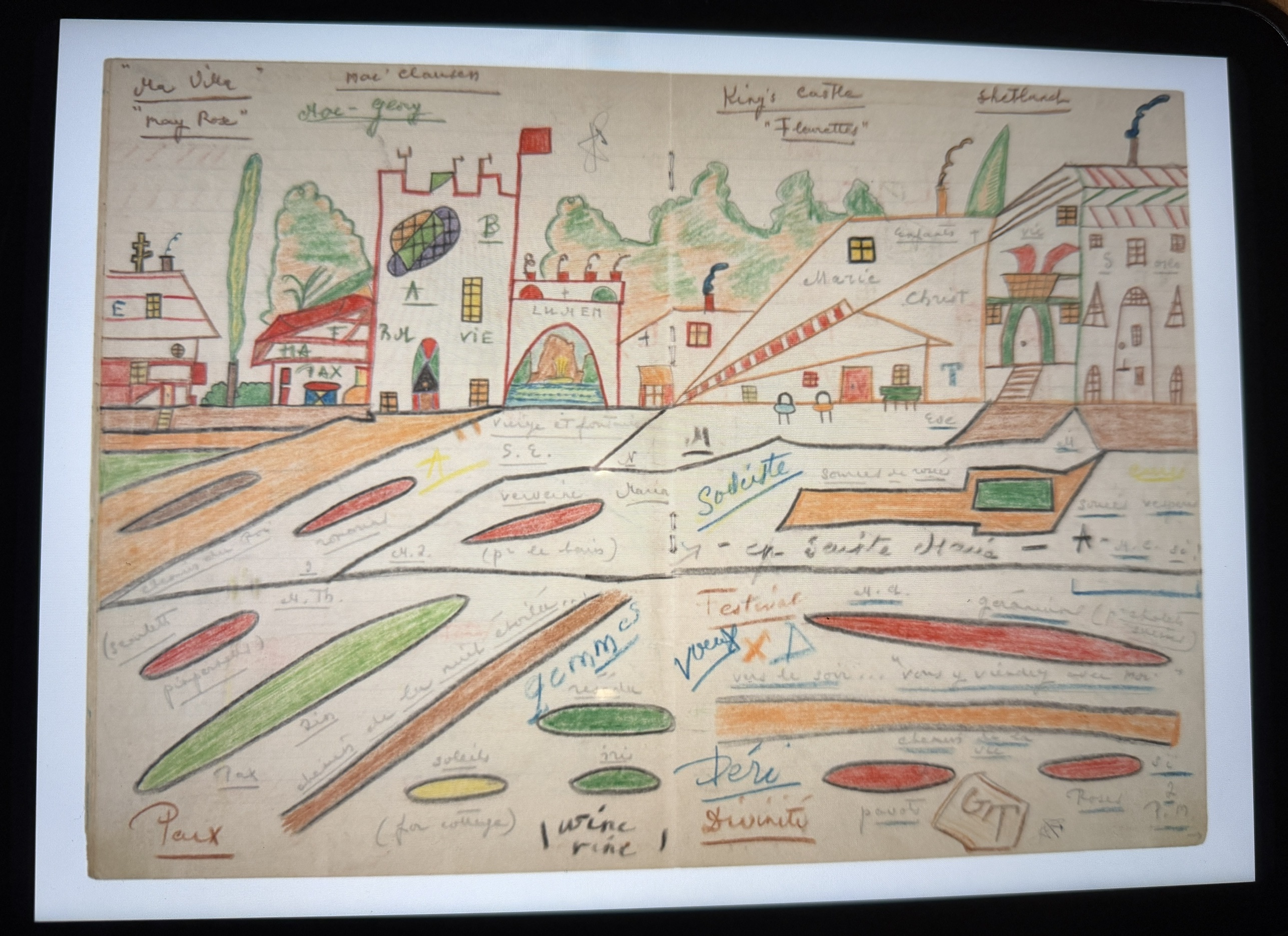
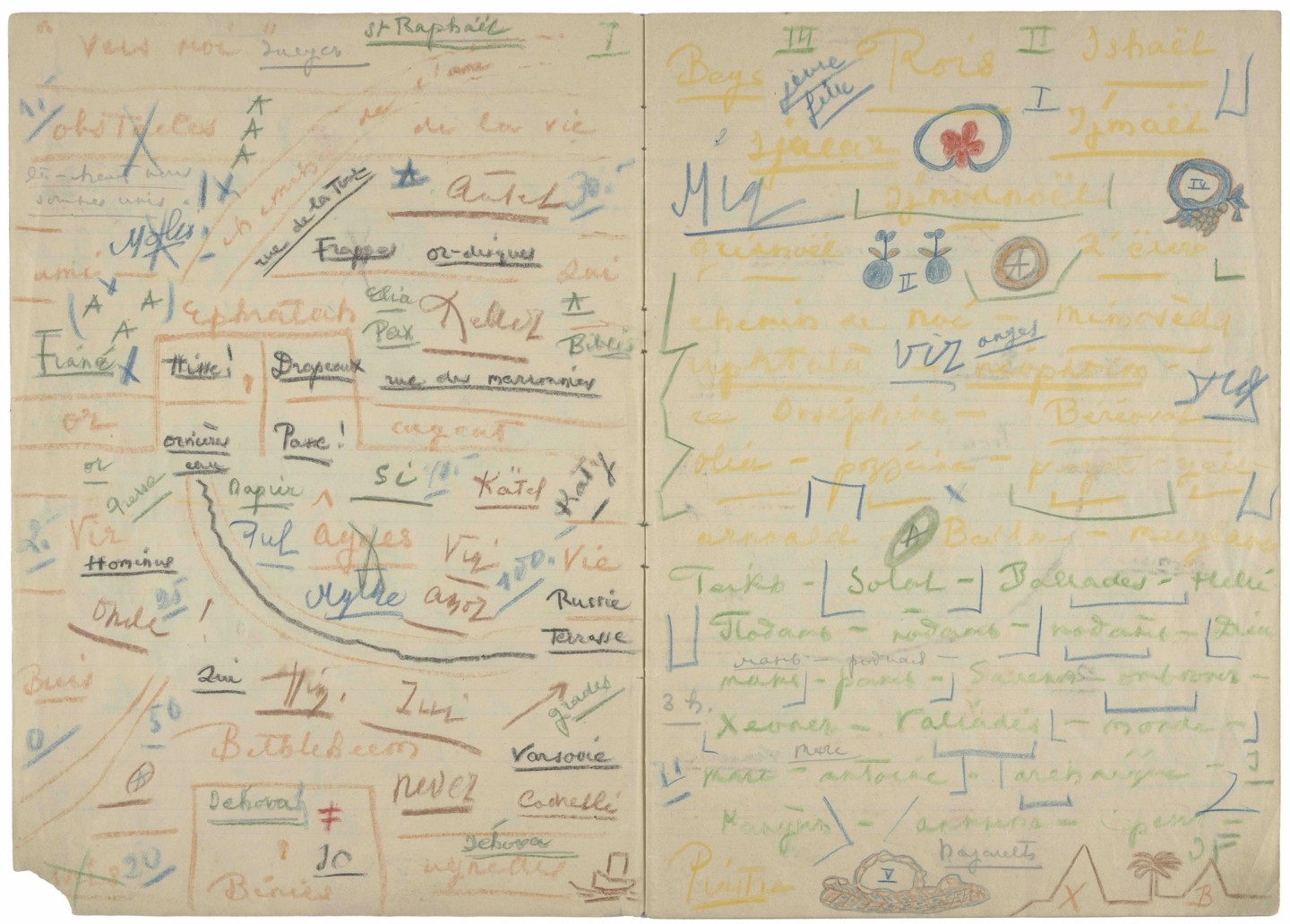
I admit it: I certainly did not expect, among all those names that meant nothing to me, suddenly to see… Schischkoff. Just like that, with no first name, no dates, only a sheet of paper with a fold down the middle, clearly torn from a notebook. But it was dated: December 1938. On this little sheet are drawings in graphite and coloured pencil: flowers, berries, a little boat, a palm tree between pyramids… Various zigzags and strokes. And words, words, words in Russian, French, and English, suggesting that the author was an educated person and probably belonged to a cultivated milieu: Russie, Катя, подать – надеть, never, St Raphael, Jehovah, anges, amor, Varsovie. And several times, in different colours, the Latin word vir, meaning “husband”, “man”, but also possibly “hero”. So who was the author? And what obsessive thought lay hidden behind this seemingly chaotic collection of words?
For someone who, like me, received a classical Soviet education, the surname “Shishkov” – which looks much longer in some transliterations, since some Russian sibilants require three Latin letters – immediately brings one association to mind: Pushkin. “Our everything”, as Russians say. Eugene Onegin, Chapter VIII, stanza XIV, ending:
All was quiet, simple in her,
She seemed the faithful image
Du comme il faut… (Shishkov, forgive me:
I do not know how to translate.)
This is how Pushkin concludes his description of Tatyana, already married to Gremin, at a ball in St Petersburg. Describing what he saw as the ideal society woman, Pushkin uses a French expression while addressing Alexander Shishkov (1754-1841), philologist, statesman, admiral, and president of the Russian Academy, who advocated purifying the Russian language of borrowings and called for foreign words to be replaced by native Russian ones. With this ironic aside, the poet made it clear that the Russian language of the time simply had no exact equivalent for this French concept of comme il faut.
Naturally, I wanted to know more about the mysterious owner of the notebook, whoever he or she might be. But how? “Very little is known about Mlle Schischkoff,” Aurélie Baudrier, a member of staff at the Fondation Jan Michalski, replied to my enquiry, sharing with me the information received from the Collection de l’Art Brut:
“Schischkoff (dates unknown)
The work attributed to ‘Mlle Schischkoff’ is a notebook of writings and drawings dated 1938 and produced at the Cery psychiatric hospital in the canton of Vaud (Switzerland). Each page contains compositions combining texts with figurative or abstract drawings, executed in coloured pencil or graphite. The religious dimension is obvious, and biblical references recur throughout.
The author most often depicts houses, churches, and landscapes, drawn with a lively, assured line and invariably accompanied by writing. Names of saints, cities, proper names, and biblical terms are placed across the page and sometimes linked by lines and arrows within dynamic graphic compositions. At times, an entire page consists solely of a dense list of words separated by dashes. Ornamental motifs and symbols also punctuate several pages of this enigmatic cycle. An Orthodox cross is also represented in the notebook, which would suggest that ‘Mlle Schischkoff’ may have been of Russian or Balkan origin.”
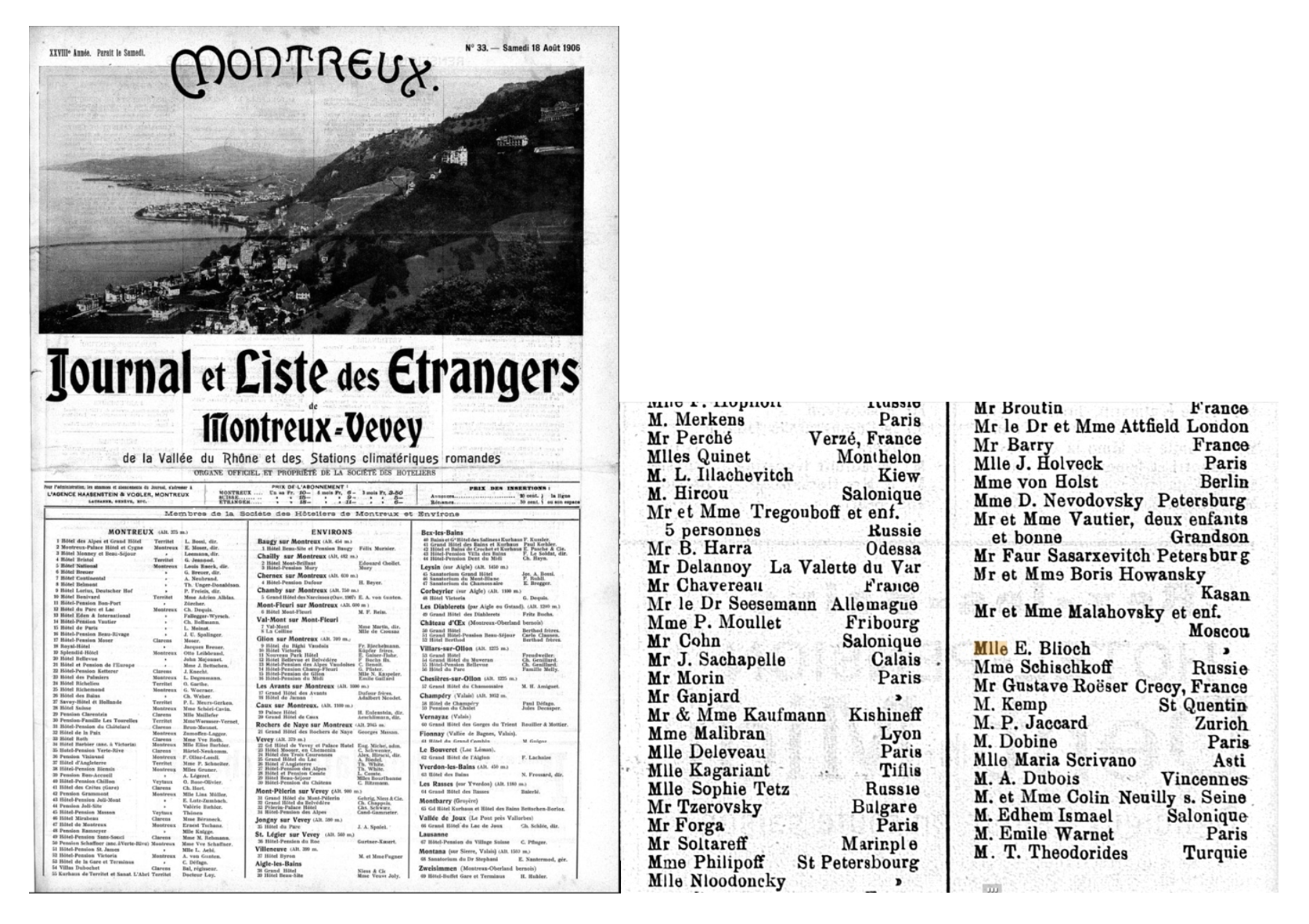
This information seemed insufficient to me. In the Journal et liste des étrangers à Montreux, Vevey, dans la vallée du Rhône et les stations climatiques de la Suisse romande and in the Revue littéraire et sportive de Leysin for 1906, I found a mention of “Madame Schischkoff from Russia”. There was nothing surprising in this. Even before the Bolshevik Revolution of 1917, Leysin was world-renowned for its pure mountain-air treatments and its sanatoriums for tuberculosis patients. The Russian Charitable Society of Leysin, founded between 1907 and 1910 to help wealthy visitors from the Russian Empire, had to adapt its mission after 1917. It then played a crucial role by offering financial support to new émigrés, often impoverished and stripped of their former social status, as well as providing them with a place to meet and a library.
At that point, the trail went cold. Yet I am not used to stopping halfway, so I decided to contact the Cantonal Archives of Vaud. Who knows…?
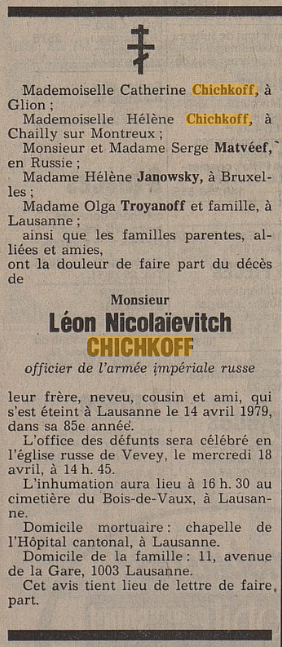
I was extraordinarily lucky. My letter reached the archivist Gilles Jeanmonod, who proved to be not only an excellent professional, but also a man of rare kindness. “Initial research in various sources available at the Cantonal Archives of Vaud indicates that this person was probably Catherine Schischkoff, a Russian national born on 11 February 1900 and hospitalised at the Cery Asylum from 2 September 1935 to 1 May 1962. This woman belonged to a Russian refugee family settled in the canton of Vaud.” Attached to the letter was a photograph of the death notice of Catherine Schischkoff, published in the Feuille d’Avis de Lausanne, the predecessor of today’s 24 heures.
The thread began to unwind, and Gilles Jeanmonod was able to continue disentangling this skein, more than a century old. A few days later, I received another message from him: “I shall continue, in a few lines, the brief history of the Schischkoff family, which settled in Switzerland as early as the 1910s. I do not know whether it was the state of health of one of the daughters, Hélène, that led to the family’s move to Switzerland before the Revolution, or the Revolution itself.”
As a result of our correspondence and Mr Jeanmonod’s further research, the following picture emerged.
The Schischkoff family consisted of:
- the mother, Catherine Schischkoff, already mentioned in my first letter, born in Moscow on 21 November 1868 and deceased in Lausanne in 1953;
- Léon Shishkov, born in Moscow on 18 August 1894, naturalised Swiss in 1931, and deceased in Lausanne in April 1979;
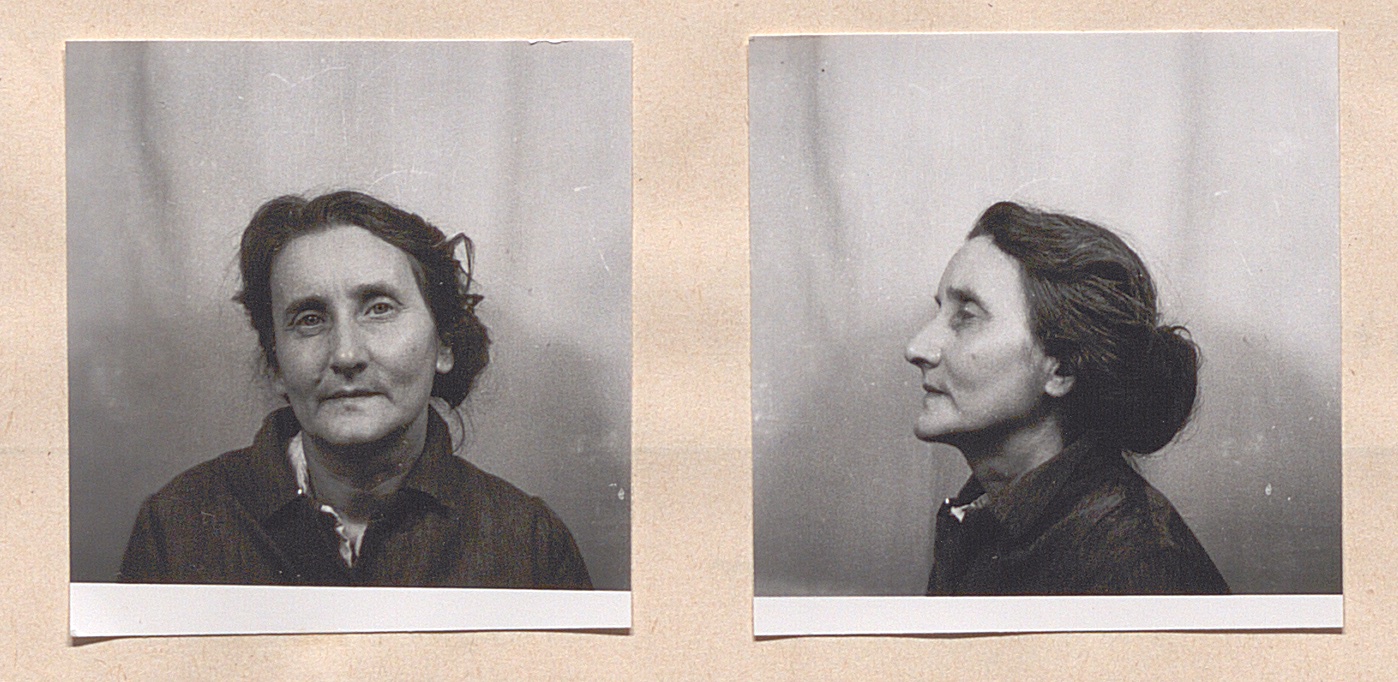
- Catherine Schischkoff, born in Moscow on 11 February 1900, hospitalised at the Cery psychiatric hospital from 2 September 1935 to 1 May 1962, and the author of the notebook of writings and drawings dated 1938. She died in Lausanne on 30 January 1984;
- Hélène Schischkoff, born in Moscow on 10 March 1902, hospitalised at the Cery psychiatric clinic from 20 July to 4 December 1953 and from 24 February to 28 March 1960, and later at the Bellevue psychiatric hospital in Yverdon. She died in Montreux on 24 April 1979.
None of the Schischkoff women had a professional occupation. The husband of Catherine senior, and the father of the three children, remained in Russia.
It was finally possible to establish the name and at least the dates of the author of the notebook presented in the Fondation Jan Michalski exhibition: Catherine Schischkoff (11 February 1900 – 30 January 1984). It is unlikely that much more can be discovered, since the circumstances surrounding the preservation of medical archives at the Cery psychiatric hospital led to only her sister Hélène’s file being preserved.
It then emerged that Tikhon Troyanov, the most senior Russian-speaking lawyer in Geneva, had known Léon Shishkov. He confirmed that this family was indeed related to the very Admiral Shishkov whom Pushkin addresses in Eugene Onegin. He also shed some light on the family tragedy: according to his recollections, Catherine Schischkoff’s husband, an officer in the Tsarist army, received permission after the Revolution to visit his wife and children in Lausanne, on his word of honour that he would return. Evidently not trusting an officer’s word, the representatives of the new regime took two of his friends who remained in Russia hostage, just in case. Naturally, Shishkov returned – he had given his word, after all.
What happened afterwards, Tikhon Troyanov did not know. Having consulted Hélène Schischkoff’s file from the Bellevue psychiatric hospital in Yverdon, where she stayed from 17 April to 1 May 1970 and from 3 May to 31 July 1970, Gilles Jeanmonod learned from the biographical note it contained that Hélène had barely known her father, “shot in Moscow in 1931 by the Bolsheviks”. During the Revolution, “she took refuge in Switzerland with her mother and elder sister”.
... The exhibition Art Brut Writings (Écrits d’Art Brut) runs at the Fondation Jan Michalski until 30 August 2026, so you still have time to visit it and take a close look at these strange works by unknown artists. I have the feeling that sad stories lie hidden behind each of them; one only has to pull gently on the thread…