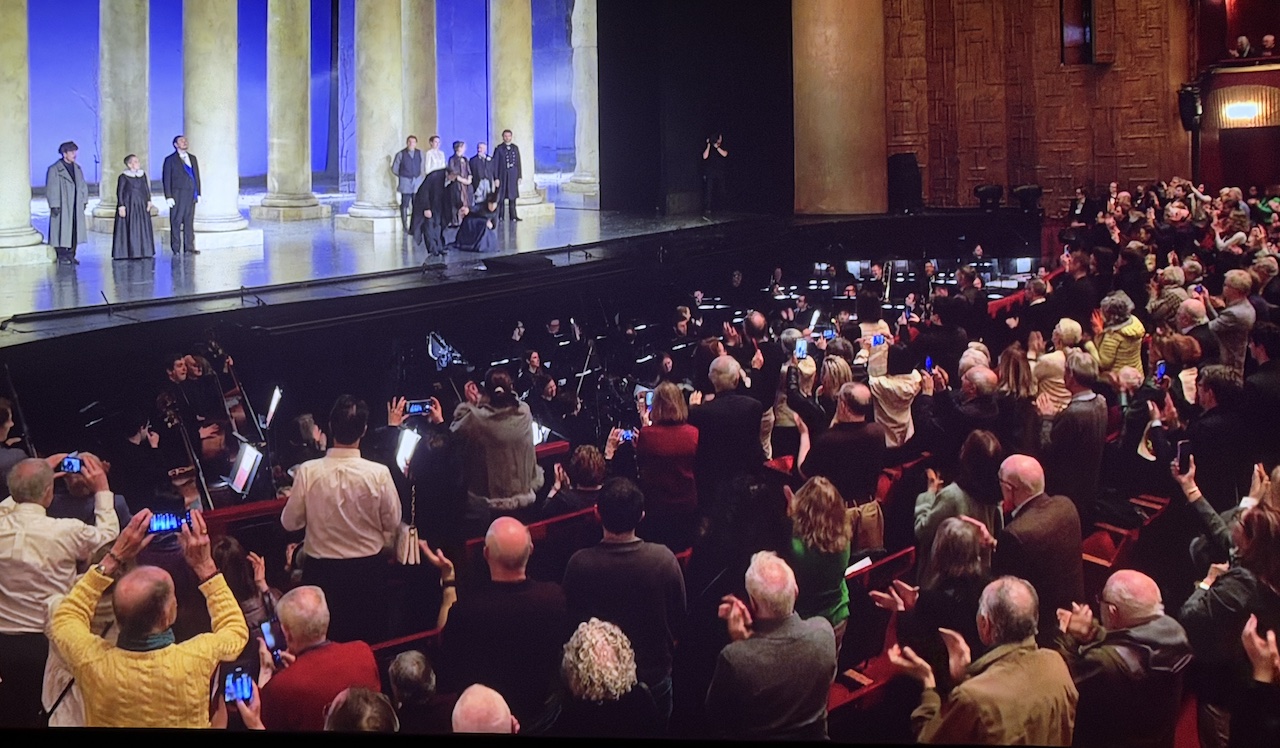
Four Hours with Pushkin and Tchaikovsky
As someone who deeply loves live theatre, I ignored live broadcasts offered by the world’s leading opera houses for many years. It was the New York Metropolitan Opera that pioneered this format, and only a few years ago the Bolshoi Theatre in Moscow was still among them. My attitude changed during the coronavirus pandemic, when live performances were suspended and the Met’s General Manager Peter Gelb launched the Nightly Met Opera Streams programme, free online presentations of archival performances. The programme lasted 16 months and drew over 20 million views, and I personally watched a great many extraordinary productions – they were, quite literally, an emotional lifeline.
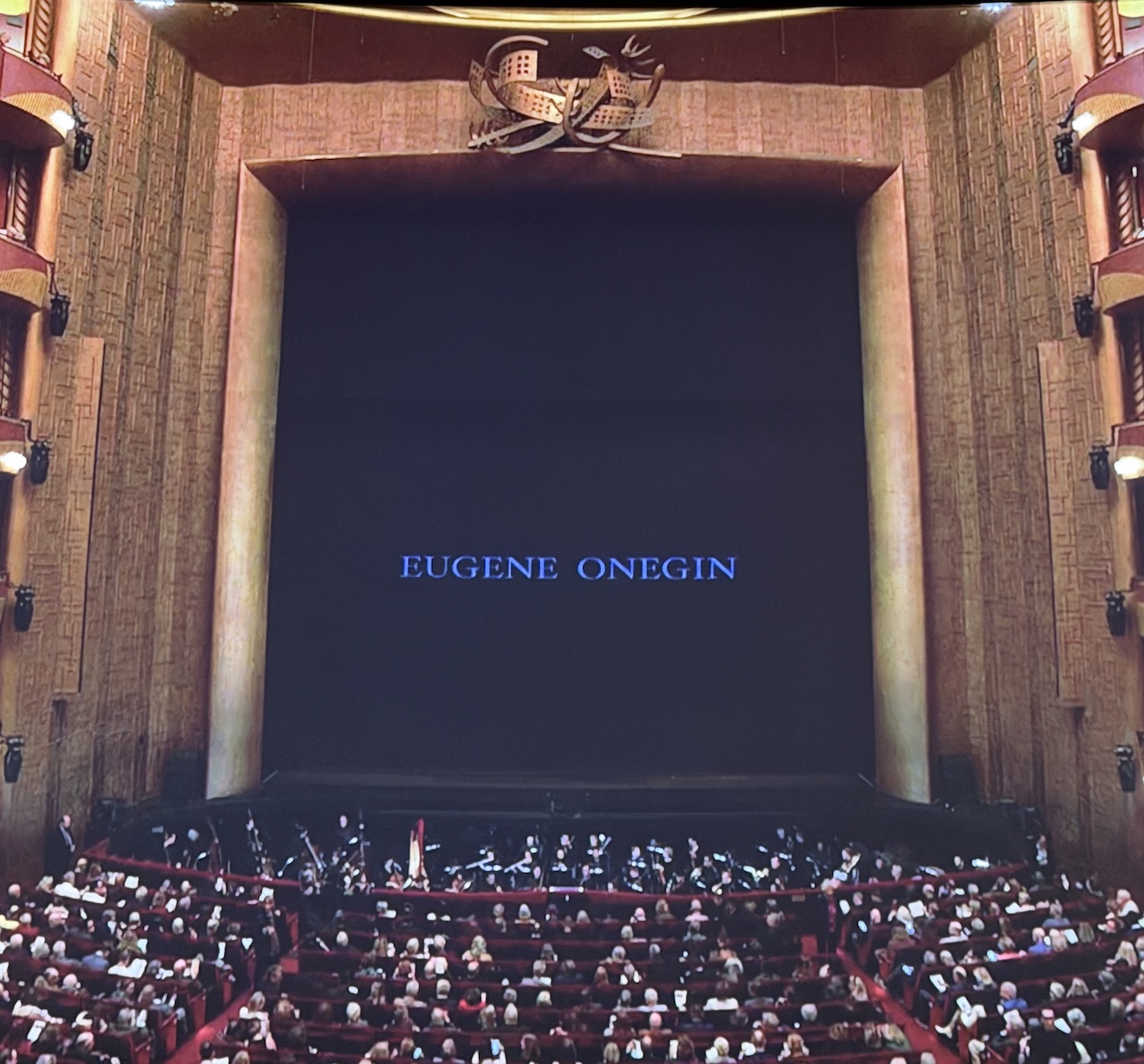
Whenever I am in New York, I make a point of going to the Metropolitan Opera. Whatever is on, the quality is guaranteed. But one cannot keep flying back and forth to New York, so in recent years I have tried not to miss the live broadcasts, which will celebrate their twentieth anniversary in 2027. The festive mood is enhanced by the glass of champagne included in the ticket price, or not champagne, depending on one’s taste. These broadcasts have their own charm. In addition to the performance itself, the audience can go behind the scenes, watch set changes between acts, listen to interviews with the artists conducted by their colleagues, and sometimes learn about upcoming productions. Last Saturday, for instance, the presentation was hosted by Joyce DiDonato. The celebrated American singer not only presented Tchaikovsky and Pushkin’s masterpiece and her colleagues beautifully but also shared with the global audience the serious financial difficulties faced by the theatre, among whose principal sponsors is the Swiss company Rolex, and called on music lovers to support it. This did not come as news to me: a few weeks earlier, the theatre had announced its intention to sell, without the right of removal from the building, two Marc Chagall panels that have adorned its foyer since 1966. How sad.
What remains to be said about Eugene Onegin, an opera I know by heart and have seen in countless interpretations? Most recently, at the Paris Opera, in a production by Ralph Fiennes, which I described in detail, so I will not retell either the plot or the history of its creation. Still, I found myself wanting to see it again, especially after learning the cast, and once I had seen it, I wanted to write about it as well.
It is well known that Peter Gelb, who has been the General Manager of this renowned opera house for twenty years, began as an assistant to the famous American impresario Sol Hurok, born Solomon Israilevich Gurkov, and in 1980 became the manager of Vladimir Horowitz. He was also among the first in the musical world to take a firm stance on the war in Ukraine. Within days of the invasion, the Met orchestra and chorus performed the Ukrainian national anthem before a scheduled performance, and two weeks later the theatre organised a benefit concert in support of the country under attack. At the same time, in cooperation with the Polish National Opera, Gelb created the Ukrainian Freedom Orchestra, bringing together Ukrainian musicians from within the country and abroad. (It is worth noting that the orchestra was led by his wife, the conductor Keri-Lynn Wilson, and in August 2022 President Volodymyr Zelensky awarded him the Order of Merit of Ukraine). Meanwhile, he terminated his contract with Anna Netrebko, who later succeeded in recovering part of the penalties through the courts. There was no blanket ban on Russian artists, however. The theatre continues to work with them and to stage works by Russian composers, as the present production of Onegin clearly shows. I do not know whether Mr Gelb regrets having acted too hastily in the Netrebko case, but he reaffirmed his position during the broadcast interval, stating that while Russian language and culture are effectively impossible in Ukraine today, they should not become hostages of Putin in New York. He also reminded viewers that the theatre shop sells kitchen magnets bearing the slogan “Cancel Putin, not Pushkin”.
The presentation of Eugene Onegin on the Met’s website is full of superlatives. Pushkin’s role in Russian literature is compared to Shakespeare’s in English literature, and the music is described as follows: “Tchaikovsky’s universally beloved lyric gifts are at their most powerful and multilayered in this opera. Rich ensembles and buoyant dance numbers punctuate the work, and the vocal solos are among the most striking in the repertory: Anyone who can remember the first stirrings of love will be moved by Tatiana’s Letter Scene, in which she rhapsodically composes a letter to Onegin in an outpouring of gorgeous melody. This is rivaled in popularity by the tenor’s moving farewell to his young life in Act II, while Onegin’s Act III narrative on the pointlessness of life borders on Wagnerian.”
I felt confident the production would be visually striking when I saw that Chloé Obolensky was involved. The 84-year-old artist of Greek origin bears the surname of her husband, a descendant of a Russian princely family, and is known worldwide for her vivid work. Her costumes for Aida in Franco Zeffirelli’s production at La Scala have become legendary. The Russian repertoire holds a special place in her career, including The Cherry Orchard with Peter Brook in London, The Queen of Spades in Amsterdam, Paris and later at the Bolshoi Theatre in Moscow, as well as Chekhov’s The Seagull at the Maly Theatre in Saint Petersburg and Dostoevsky’s Demons in Paris, all in collaboration with Lev Dodin. This is not her first Eugene Onegin, either. She designed the costumes for Martha Fiennes’s 1999 film Onegin: A Love in St Petersburg, in which Ralph Fiennes played the title role, and in 2011 she worked on the opera at the Metropolitan Opera with Deborah Warner.
The current production is also directed by the English director Deborah Warner. A seasoned professional and recipient of major awards, whose career began at the Royal Shakespeare Company, she has long been an authority in the operatic world as well. I had reason to expect a distinctive reading of Eugene Onegin from her, since she is known to explore issues of gender in her work while refusing to subscribe to a programmatic feminism or any political ideology – her groundbreaking decision to cast the Irish actress Fiona Shaw as Richard II caused quite a stir.
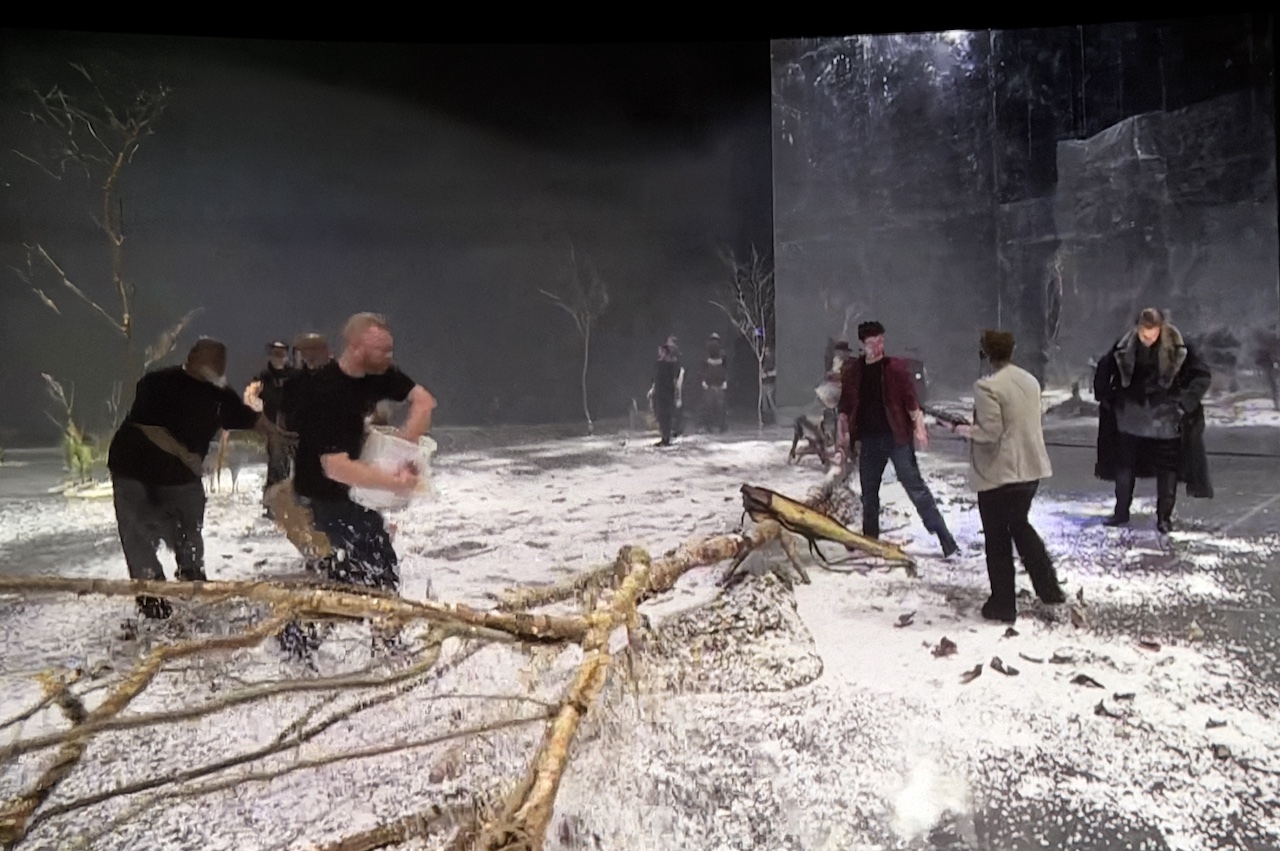
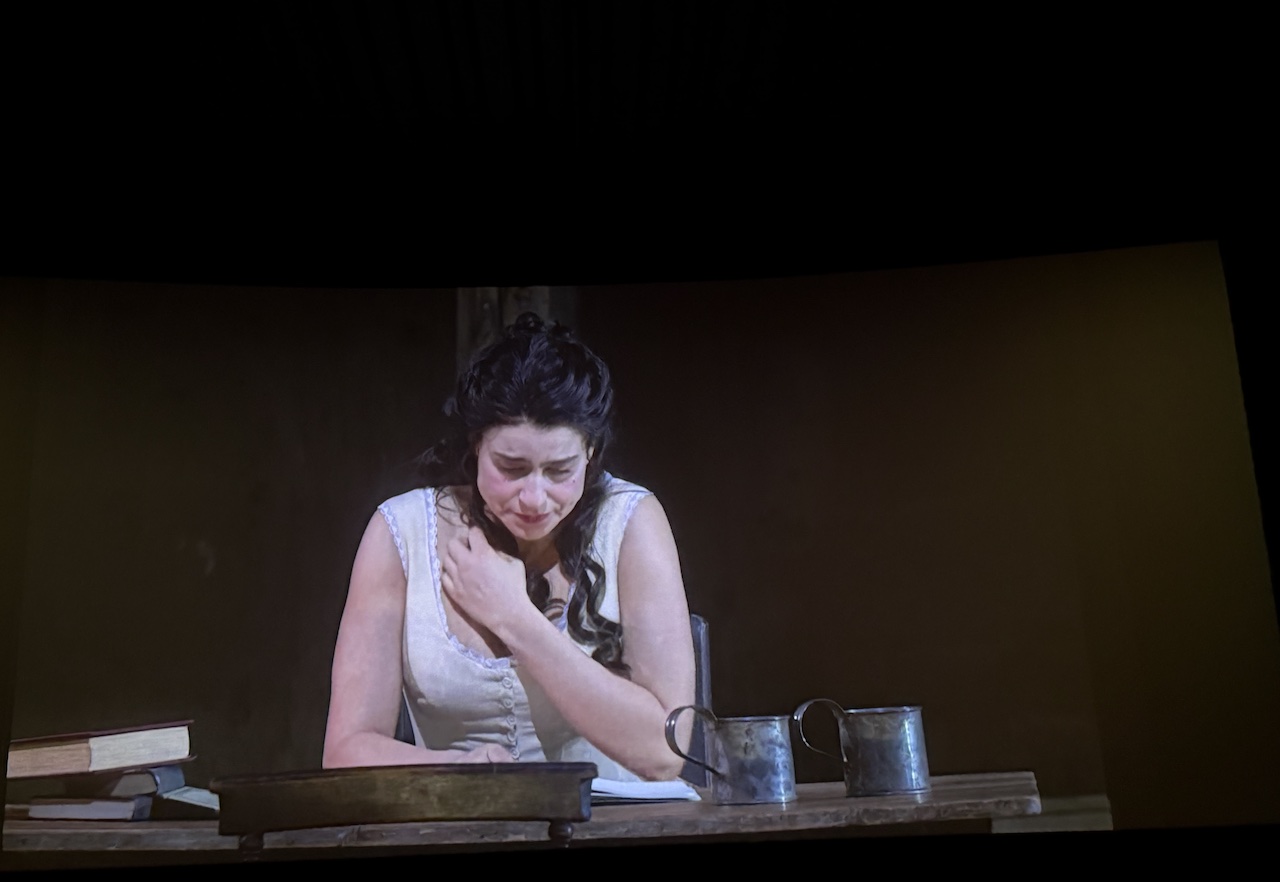
Fortunately, Tatiana as performed by Asmik Grigorian is not a militant feminist, but simply a decent woman, initially young, romantic and impetuous, and in the final act a woman tempered by experience who consciously stands by her choice. The soprano, who needs no introduction, was born in Vilnius to singer parents Irena Milkevičiūtė and Gegam Grigorian. She remarkably combines a fragile appearance with a powerful, expressive voice and strong acting ability. I initially felt she slightly overemphasised the sadness, as if constantly on the verge of tears, something particularly visible on the big screen, but the final act convinced me that this iconic role has been fully understood and deeply felt by the singer, who first performed Tatiana in 2012 in her native Vilnius. As she said in an interview: “What I love is how he [Tchaikovsky ]shows the inner journey Tatiana takes from being a young, inexperienced girl who falls in love with entirely the wrong person to a woman who knows what she wants and makes decisions for herself. And for me now at 44 years old, I feel that I still have enough lyrical colors in my voice for the youthful music and the Letter Scene, which is such a masterpiece. But I also have the power to sing the final scene, which is much more dramatic. It’s really one of my favorite Tchaikovsky operas. In every scene, I think, ‘My God, how many years have passed since this opera premiered, and yet nothing has changed? People still say these exact same things to each other.’”
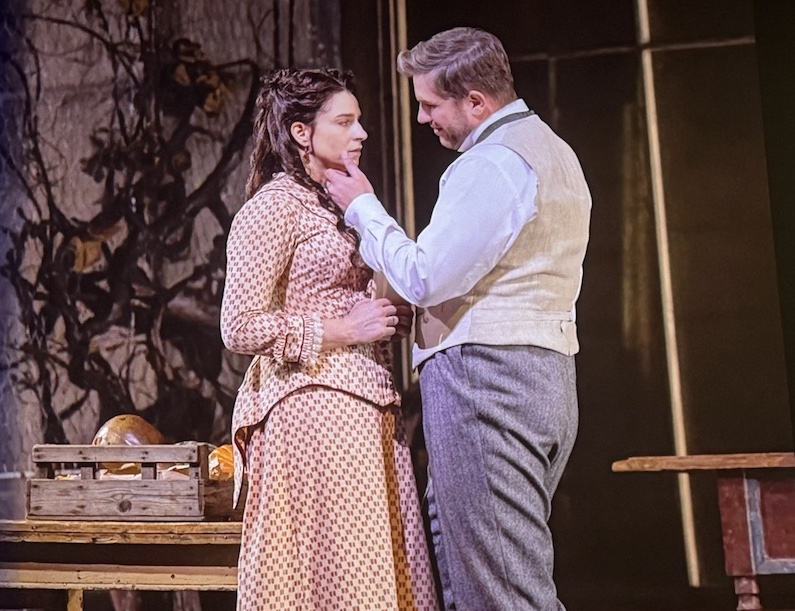
I cannot help paying a compliment to Chloé Obolensky. The fact that we are seeing the same heroine is underscored even by the colour of her costumes. A light dress with a raspberry-coloured pattern in the first act echoes the rich raspberry gown at the Petersburg ball, though without the traditional beret. In the final scene with Onegin, the attentive viewer will immediately recognise the outfit from Ivan Kramskoi’s Unknown Woman, the very embodiment of elegance in cool blue tones.
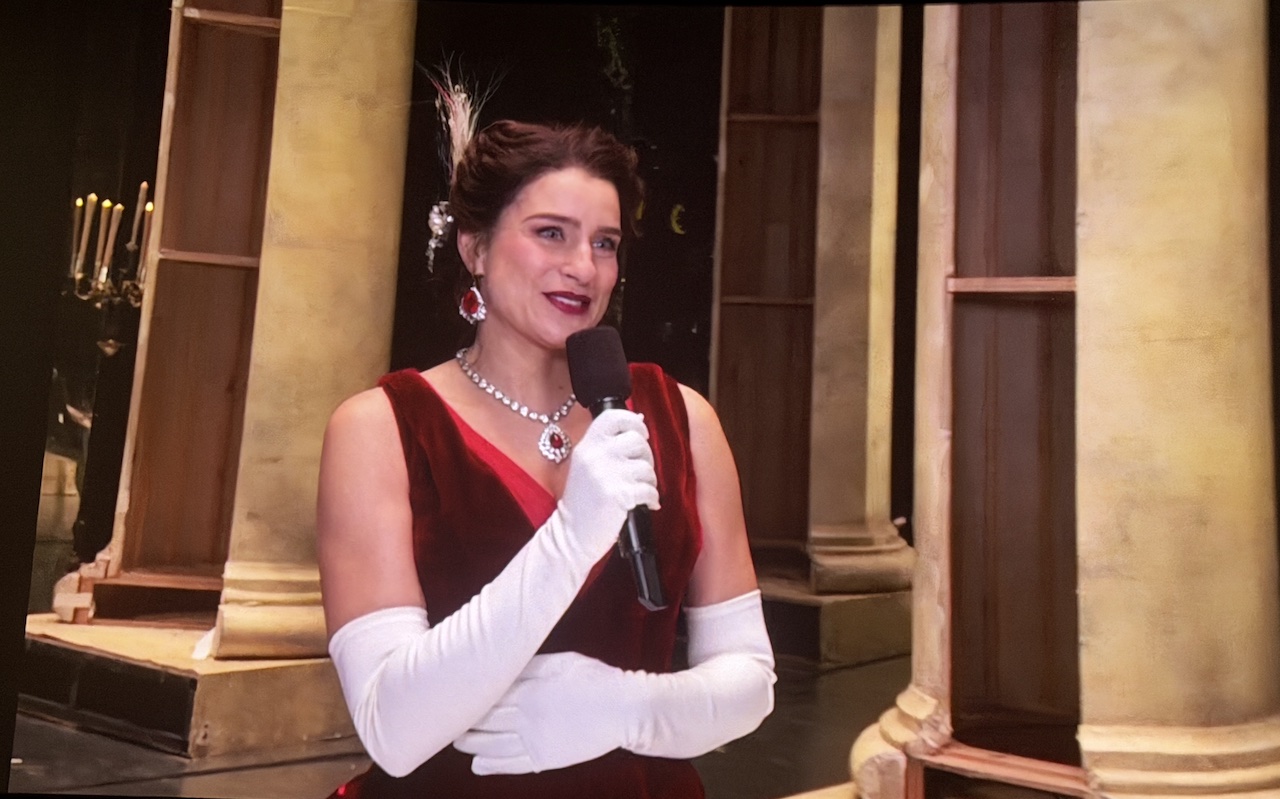
I heard the baritone Iurii Samoilov (Onegin) for the first time. He grew up in Yuzhne, a small port city in Ukraine. In 2011, he graduated with honours from the National Music Academy in Kyiv, which until recently bore the name of Tchaikovsky. At the same time, he pursued postgraduate studies at the Dutch National Opera Academy and became a member of Opera Studio Nederland in Amsterdam. His European operatic debut came in 2010, when he sang Plutone in Monteverdi’s L’Orfeo, directed by Pierre Audi at the Stadsschouwburg Amsterdam. This was followed by a role in Rimsky-Korsakov’s The Invisible City of Kitezh, directed by Dmitri Tcherniakov at the Dutch National Opera, and in 2022 he made his debut at the Met in La Bohème.
This was his tenth Onegin, but his first participation in a live broadcast from New York. At first, he puzzled me, with a somewhat slack, almost careless gait and somewhat forced smiles. But everything gradually fell into place, and in the interval interview he explained that he does not like the character of Onegin, finding him emotionally underdeveloped and therefore deserving of his fate. He said all this while holding a half-eaten apple, with which he had left the stage after the scene in which he responds to Tatiana’s letter, turning the apple in his hand. I had assumed the apple was merely a prop, meant to hint at the forbidden fruit!
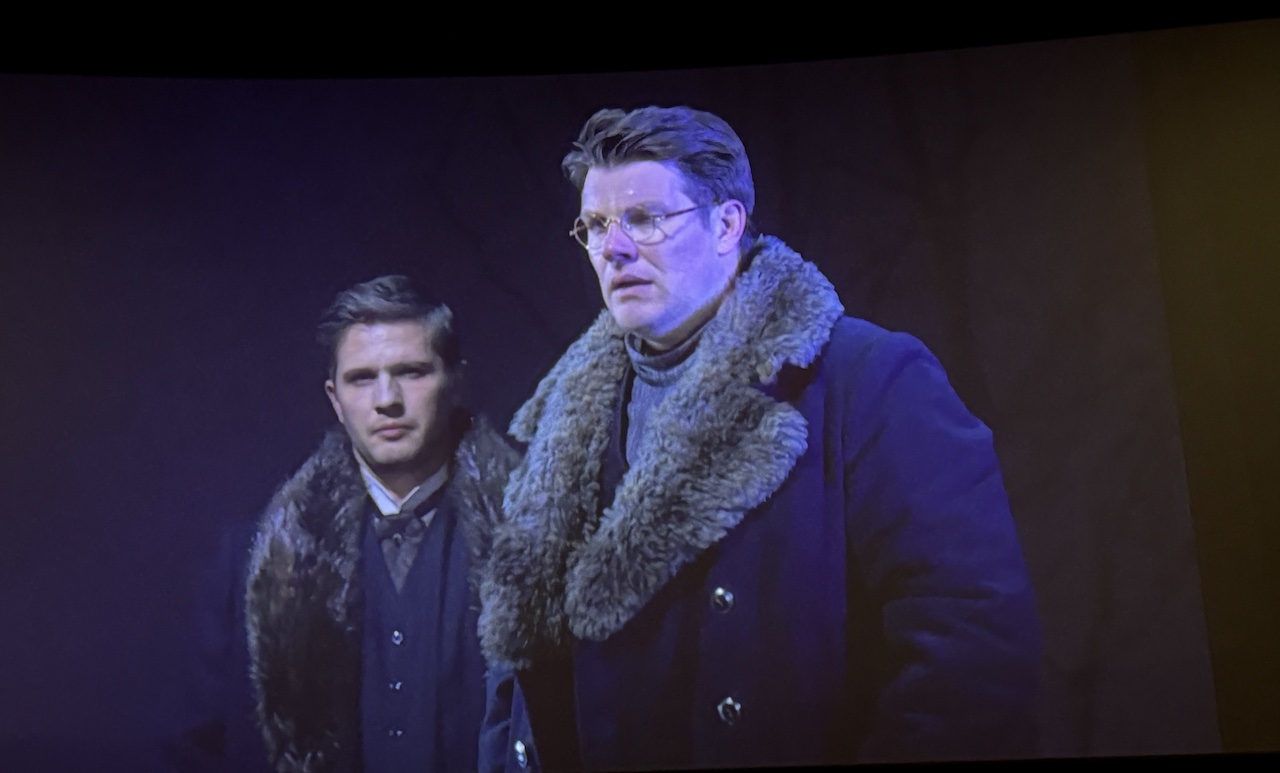
I was completely charmed by the two operatic “grandmothers”, the mezzo-sopranos Elena Zaremba as Larina and Larisa Diadkova as Filippievna. Both were superb and wonderfully expressive. And youthful! Amusingly, in their interval interview, much like their characters in the first act, they reminisced about their youth. Larisa Diadkova, who has appeared at the Met in twelve roles, spoke about her first New York production, Andrea Chénier in 1996 with James Levine, Luciano Pavarotti and Juan Pons, while Elena Zaremba recalled her Met debut as Azucena in Il Trovatore 27 years ago, without a single stage rehearsal!
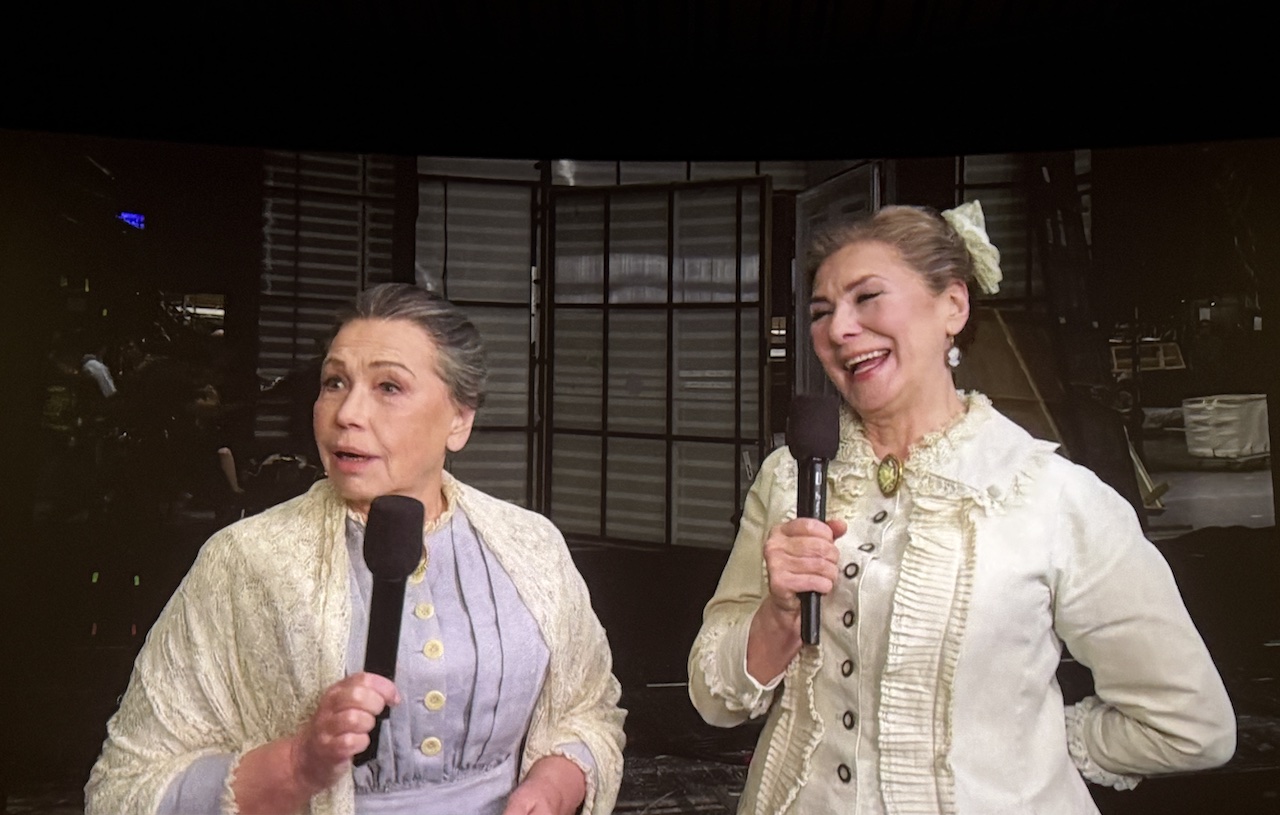
Time passes and singers’ roles evolve. In 2007, Elena Zaremba sang Olga at the Met in one of the first international live broadcasts, and today that role is performed by another Russian singer, Maria Barakova. Born in Kemerovo, she trained at the Novosibirsk Music College and the Gnessin Russian Academy of Music in Moscow. A prize winner of the International Tchaikovsky Competition in 2019 and recipient of the Russian opera award Casta Diva in the Rising Star category in 2023, she made her Met debut in 2022 as Sonetka in Shostakovich’s Lady Macbeth of Mtsensk. Tall, strikingly beautiful, with a fine voice and strong stage presence, she is light and charming, exactly as Olga should be.
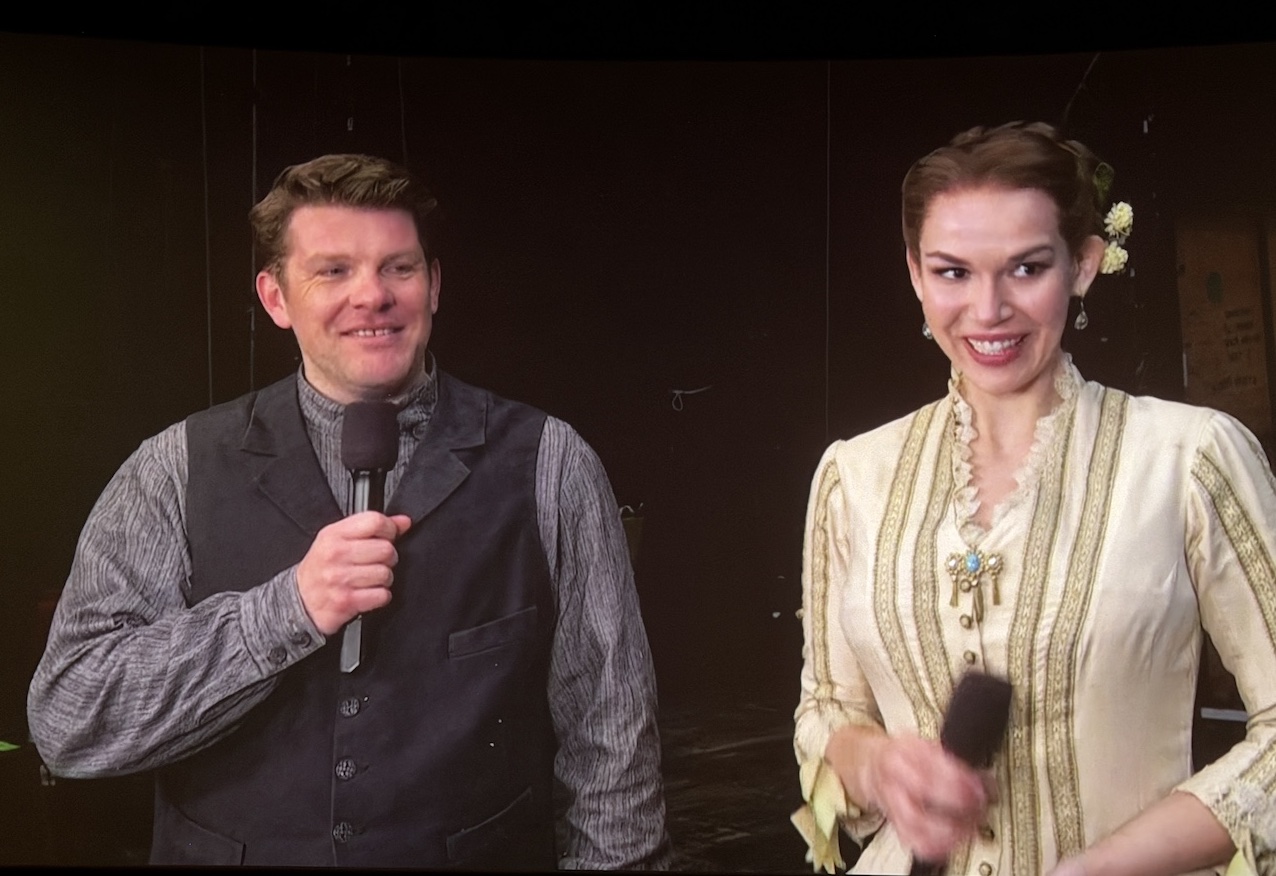
For the second time in recent months, I heard I heard Alexander Tsymbalyuk as Prince Gremin. The audience’s affection for him in New York, where he debuted as Ferrando in 2010, and the impact of his famous aria “Love knows no age”, were evident in the fact that he was not allowed to finish it. The final low note came only after an unplanned pause caused by a storm of applause!
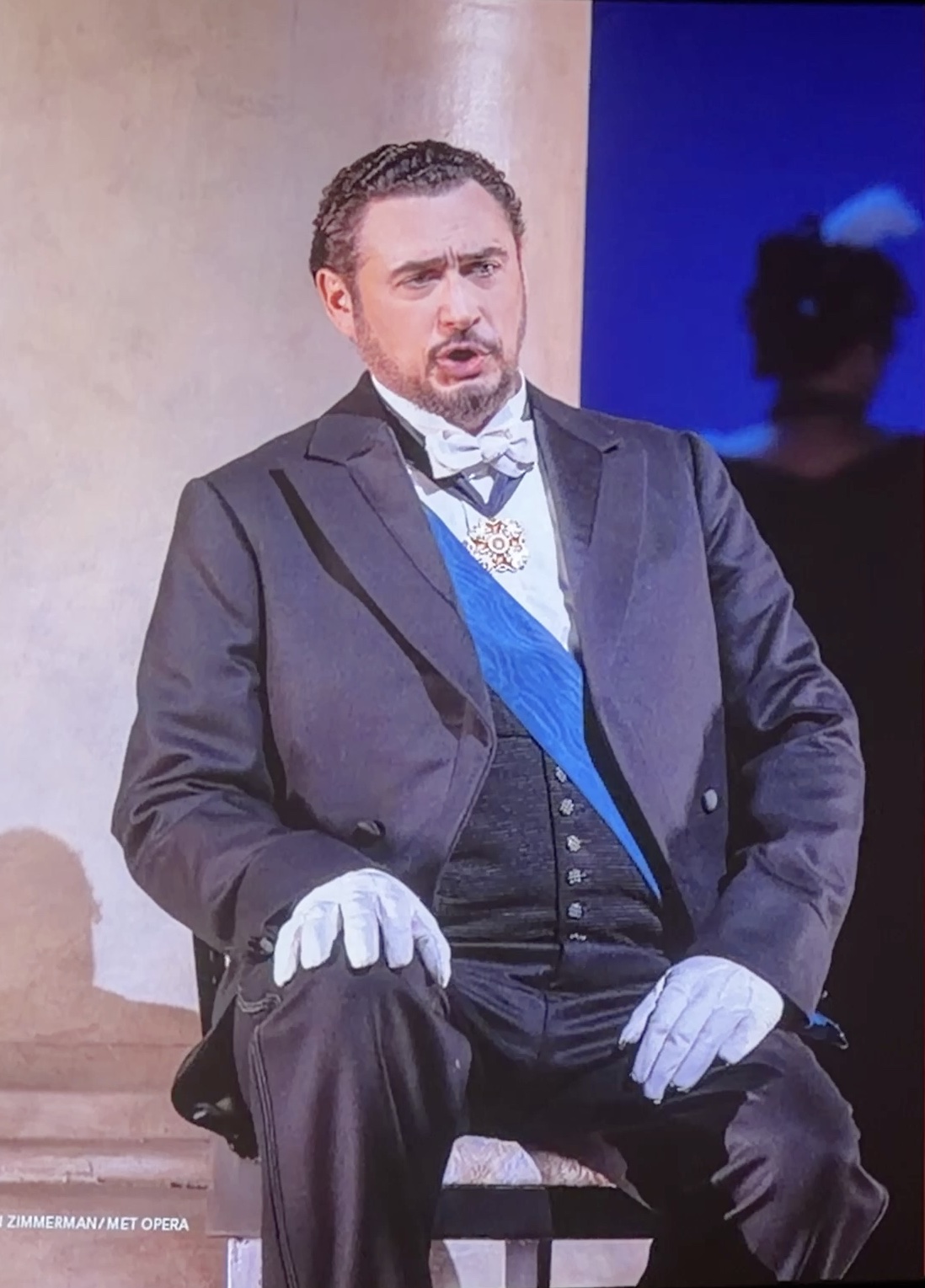
Regular readers may notice that I have left Lensky to the end, although it is usually the performer of this role who interests me most. For the French tenor Stanislas de Barbeyrac, born in Annecy near Geneva and who made his Met debut as Don Ottavio in Don Giovanni in 2019, this was his first Lensky. I can only imagine how difficult it must have been for him as the only non-Russian-speaking principal in the cast. The softening of hard Russian consonants and the tendency to turn “u” into “yu” grated on my ear, but this can be attributed to the notorious insurmountable difficulties of the Russian language. Overall, the comparison with the Ukrainian tenor Bohdan Volkov in the Paris production was clearly in the latter’s favour. Stanislas de Barbeyrac made a great effort but seemed to me not quite lyrical enough for the role, though he warmed up as the evening progressed, and the applause after the aria “Kuda, kuda…” was well deserved. As for his appearance, that is a matter for the director. As is the question of why Lensky twice throws Olga to the floor at the Larins’ ball. Is that how a poet and a well-bred young man behaves, even when distressed?
Two further staging details struck my critical eye. First, after lecturing Tatiana on the need for self-control and rejecting her love, Onegin kisses her on the lips. If it is truly brotherly love, a kiss on the cheek would suffice. This is, however, echoed in the final scene, when Tatiana gives him a similarly authoritative farewell kiss. Second, at the Gremins’ ball Onegin carries a bottle and pours himself champagne. At aristocratic gatherings in Saint Petersburg, such self-service would not have been practised. But three such details in an entire production are negligible, and I am sure most viewers did not notice them.
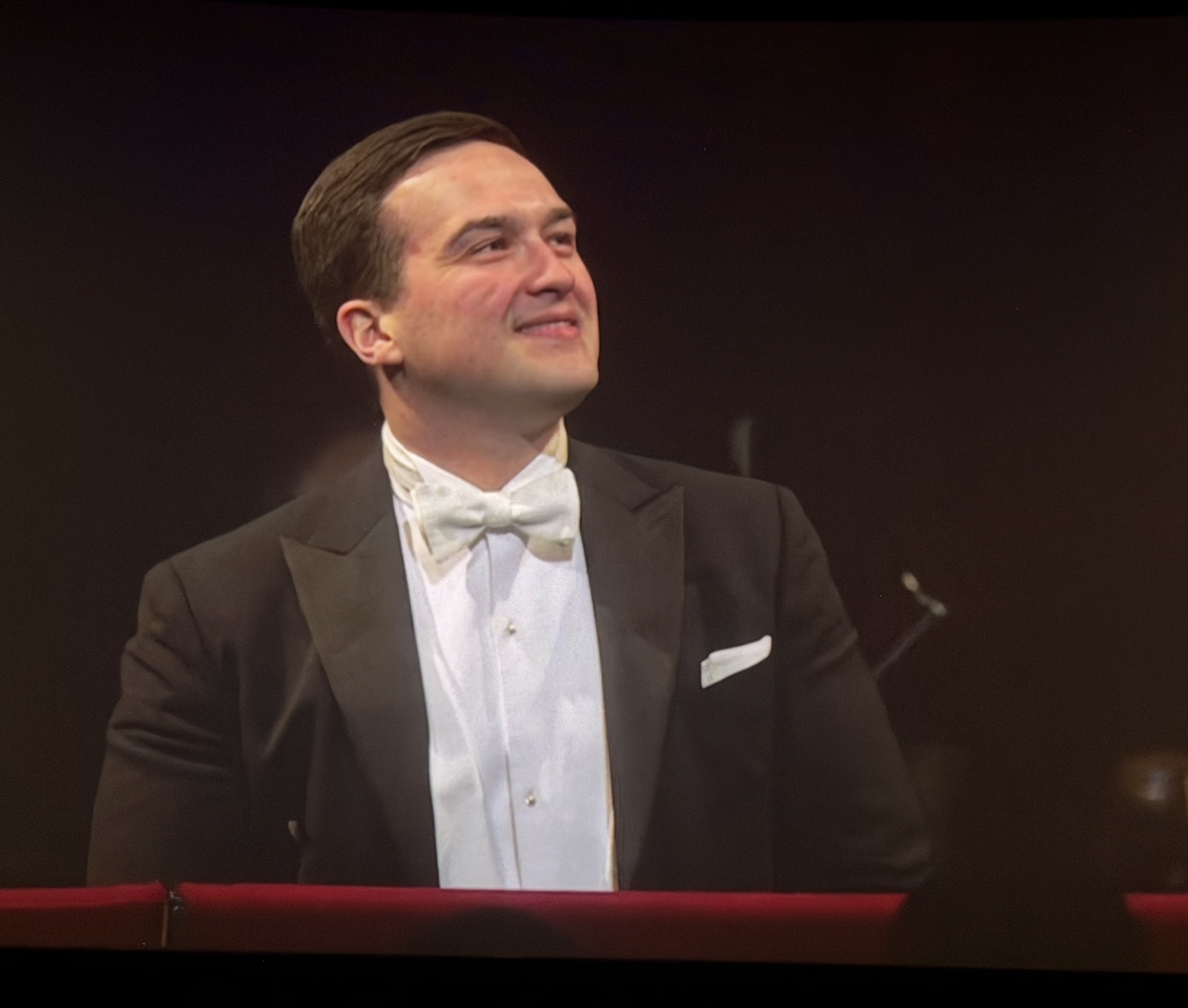
And the orchestra? As always, it was superb. I saw the production’s musical director, the 32-year-old Russian conductor Timur Zangiev, for the first time, and this was his Met debut, although he has conducted Onegin before, notably in January 2023 at the Bavarian State Opera. In my view, this graduate of the Moscow Conservatory, a student of Gennady Rozhdestvensky, who in the summer of 2022 became principal guest conductor of the Mikhailovsky Theatre in Saint Petersburg, handled the complex task brilliantly.
Four hours passed unnoticed. My thanks to everyone involved in the production for conveying, without any “improvements”, the depth of Pushkin’s text and the beauty of Tchaikovsky’s music. Sheer joy.