Evgeny Kissin: “My Only Criterion Is Love”

There is much gossip about Kissin, as about any celebrity. Some create legends and myths, others debunk them. In the case of Evgeny, a personality not only well known but also highly unconventional, the range of “diagnoses” is extremely wide, from “a man not of this world” to “an ordinary autistic person”. As is often the case, those who speculate most energetically, in both categories, are people who have never personally spoken with the musician, so it is unclear on what their supposed knowledge is based.
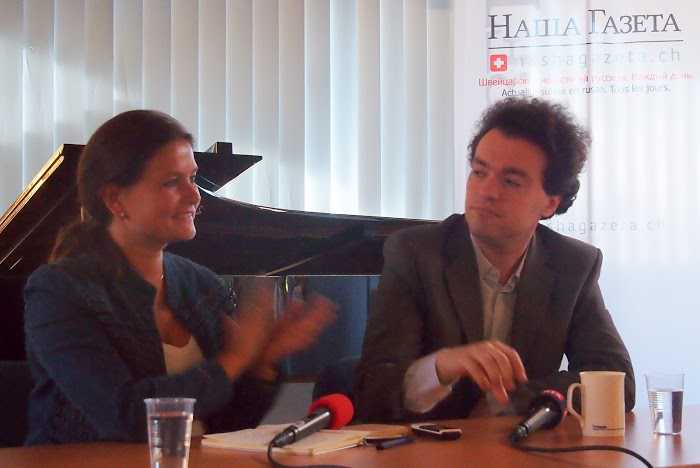
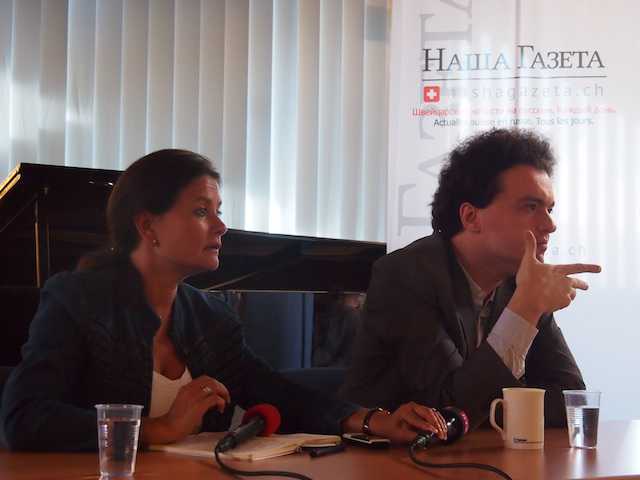
In my view, the best way to free Evgeny Kissin from all the “images” that surround him is to let him speak for himself. Which is precisely what I did last week in Verbier, with the greatest pleasure, in the presence of numerous admirers of the pianist and simply curious members of the public who filled Chalet Orny to its full capacity. (We asked the organisers to look for a larger venue next time. They promised to build one.) So then, the floor is yours, Zhenya, Evgeny, Evgeny Igorevich.
Evgeny, you first came to Verbier in 1994, for the very first festival. How did that happen? Who invited you?
I remember perfectly that in January 1994 I gave a solo recital in Tel Aviv, in Israel, in aid of the Arthur Rubinstein Foundation. I was friends with the late founder and director of the Foundation, Jan Bystřický. During my stay in Tel Aviv, I was contacted by the director of the Israel Philharmonic Orchestra, Avi Shoshani, who was also at that time an adviser to the director of the Verbier Festival. He told me about the Festival and invited me to come. That is how it happened.
What memories do you have of that first visit to Verbier?
I remember that our family were accommodated in a chalet that belonged to Nastassja Kinski.
Not bad! And what did you play then, do you remember?
A solo recital. Let me think… I believe it was the same programme as six months earlier in Tel Aviv: Schumann, Schubert, Chopin, Liszt.
There is a legend that you began playing before you were two years old: you were sitting in a playpen, listening to your sister practise, and then you went up to the piano and played Bach. Is that true?
Almost.
Details, please!
It is possible that I began listening to my sister practising even before I was born. She is ten and a half years older than I am. During the first eleven months of my life I listened to her while standing in the playpen, and then, at eleven months, I sang the subject of a Bach fugue that she was working on at the time.
No comment!
After that I began singing, by ear, everything I heard from my sister, from the records we had at home, from the radio. When I had grown tall enough to reach the keys while standing on the floor, I was two years and two months old. I began playing by ear, first with one finger, and then with all ten. That is how it was.
Incredible! But seriously, you do indeed possess a phenomenal memory. You memorise not only musical scores, but also poems, letters, entire philosophical treatises…
I memorise only what I like!
Of course, but still!
For example, in the eighth or ninth year at school I learned my chemistry textbook by heart in order to get a top mark. The next day I had completely forgotten everything and do not remember a single word.
What a selective memory. Did you develop it, or is it a natural gift?
I have never done anything specifically to develop my memory, but I am certain that some things do contribute to it. Of course it is a natural gift, but it is also true that the more we memorise, the more we develop our memory, whether it is music, literature, or something else.
I am sure you remember perfectly your first meeting with Anna Pavlovna Kantor, your lifelong teacher. You were five or six years old then.
Yes, almost six. One of my mother’s friends and colleagues, who had taught piano for many years at a children’s music school, was married to the well-known Moscow pianist and teacher Evgeny Lieberman. They both had known me since birth. When I was five, Lieberman tried to work with me, but nothing came of it because, as he himself said, teaching children was not his speciality.
He then told Anna Kantor about me. She was one of the finest teachers of children in Moscow, and he arranged a meeting without telling my parents, who at that time did not want me to become a musician. Since my sister was already studying music, they knew very well how hard that work was and thought I would do something else.
For example?
They thought I would go to a school near our home where English was taught intensively, five times a week.
So, the meeting with Anna Pavlovna…
Yes, the meeting was arranged, and my parents took me to the Gnessin Music School. I remember perfectly that I was wearing a short-sleeved shirt with little dogs and butterflies on a red background. We waited a little in the corridor, and then Anna Pavlovna appeared from the right, dressed all in green, with her left leg bandaged. She had broken it several months earlier and it was taking a very long time to heal.
I do not remember what happened next, but Anna Pavlovna told me so many times that…
What is her version?
I began to play for her by ear, from memory. At that time listening to music and reproducing it were my two favourite occupations. I played Chopin’s Ballade, Liszt’s Twelfth Rhapsody, the very one I played here a few days ago, excerpts from Tchaikovsky’s The Nutcracker. Then my mother told Mrs Kantor that I also liked to improvise, to play my own music.
Indeed, I liked, so to speak, to describe the surrounding world in music. Anna Pavlovna asked me to play a dark forest and the sun rising above it, birds singing, and so on. I played. She praised me and asked me to repeat it, and I replied that I did not remember. She did not believe me and asked whether I could play differently about the same dark forest, thinking that I would repeat myself. Instead, I played something completely new.
She then invited two other teachers. They listened to me, and one of them, a very kind woman who taught solfège, told my mother that I should be taken to a speech therapist, at that time no one except my parents could understand a word I was saying.
In the end I was admitted to the Gnessin School, where I studied for twelve years. Over those years our family grew very close to Anna Kantor, who never had a family of her own and devoted her entire life to her pupils.
And since then you have not parted, she became a member of your family. What is her role in your life today?
Earlier Anna Pavlovna travelled with me a great deal, but unfortunately everything comes to an end, she is now ninety years old. After her mother’s death Anna Pavlovna moved in with her best friend, Elena Efrussi. They lived together for thirty years, and when Elena Samoilovna also passed away, Anna Pavlovna came to live with us. That was twenty-two years ago. When I was little and lazy about practising, Elena Samoilovna, the older and wiser friend, used to tell Anna Pavlovna: “Have more faith in him!”
That should encourage so many parents! If even you were lazy!
You know, great talent does not always help. At least that was the case with me. In the first years of my studies everything came to me so easily that I simply did not feel the need to work. I practised for twenty minutes a day, and the rest of the time I played by ear for my own pleasure.
And that did not count as practising?
Of course not, it was not practising. And later, when Anna Pavlovna asked me during a lesson, “Did you practise a lot?”, I would say yes. “How many times did you play it?” “Twice!”
But later, when I was already in my late teens, the well-known Moscow critic Gennady Tsypin wrote an article about me which was published in the most important musical journal, Muzykalnaya zhizn, and was later included in his book about prominent Russian pianists. Overall his article was very positive, but at the end he made several critical remarks about my playing. In the book version he concluded in roughly the following spirit:
“It gives the impression that up to now everything in piano playing has come easily to Kissin. At times, perhaps even too easily. Hence both the strengths and the weaknesses of his art. Today one sees above all what comes from his unique natural gift. And that is wonderful, of course, but only for the time being. In the future something will inevitably have to change. What? How? When? Everything depends on that.”
And there came a moment when I felt in my very skin that in order to play well one has to practise a great deal.
Do you still consult Anna Pavlovna?
When I am preparing a new programme, I play it for her.
And how do you prepare a new programme? What influences your choice of one work or another?
My only criterion is love. Fortunately, the piano repertoire is vast, and I can only hope to live long enough to play everything I wish to play, and at the level I would like. First I choose what I want to play, and only then do I begin to think about which works, and in what order, will combine best with one another. Sometimes I return to older works from my repertoire, but more often I try to renew it, because there are so many works I would like to play.
You left the Soviet Union in 1991. If I am not mistaken, one of the reasons was that the then Minister of Defence set out to conscript you into the army…
It was not the reason for my departure, but the reason why for five and a half years I did not perform in Russia. I do not know about the minister, perhaps it came from lower-ranking officials. At that time all men had to go into the army at the age of eighteen. When I was approaching that age, several well-known musicians wrote a letter to the relevant authorities requesting that I be granted a deferment in order to continue my studies.
I left Russia at the end of 1991, and in February 1992, at the very beginning of the history of what was then called the new democratic Russia, I received a draft notice, which our neighbours took out of the letterbox. On it was stamped: “Deferment revoked.”
So much for the new Russia…
I tried to do something about it, because I very much wanted to perform in my native country. At one point my name was added to a list of particularly gifted young artists who were granted a deferment from military service. But then draft notices began to arrive again at our home address, even when the deferment had not yet expired. I think the officials were simply waiting for a bribe.
Later I received the highest Russian award in the field of the arts. Those responsible appealed to the government asking that I be allowed to come to Russia to receive it and give a couple of solo recitals. The only thing they were able to obtain was a one-year deferment. Officials from the Ministry of Defence explained that they would gladly exempt me from military service permanently, but the legislation did not allow them to do so.
In the end a special Triumph Prize ceremony was organised in my honour in the summer of 1997. The Minister of Defence was invited to attend. I delivered a long speech in which I mentioned the one-year deferment I had received shortly before. The entire audience burst out laughing, and all the television cameras turned towards the minister, who smiled shyly. After the ceremony many people approached him, saying, “How can you not be ashamed! Can you really not release him once and for all!” To which he replied, laughing, “Give him another prize, and we will give him another deferment.”
Most musicians at your level work with one major agency that handles their affairs. You, however, prefer to have different agents in different countries. Why?
For the same reason, and I have only just realised this, for which I prefer to play solo rather than with an orchestra or in chamber ensembles. I like to keep everything in my own hands. It is more convenient that way.
Literature plays a very important role in your life…
As in the life of Russia as a whole! As Pushkin wrote, “In Russia the poet is more than a poet.”
That is true. Here in Verbier the audience has had the opportunity to hear you recite in different languages. How do you find the time to read, and what are you reading at the moment?
I read at any free moment, sometimes at the expense of my own health. For example, having returned from dinner yesterday, I began reading Viktor Astafyev’s novel The Sad Detective, written in the 1980s, at that time I had only read excerpts from it. And I read until four in the morning. A very talented writer, as I realised last night, but a very unpleasant man with racist views.
Politics has also recently begun to occupy an increasing place in your life.
I have only recently begun to speak out, but I have been interested in politics since my youth. Or rather, in certain aspects of politics. Gustav Mahler used to be irritated by people, including fellow musicians, who said that something did not concern them. And he proudly declared that everything concerned him, Gustav Mahler. Without comparing myself to anyone, I too cannot remain indifferent to the various problems of our planet, which is becoming smaller and smaller. Even if, unfortunately, there is very little I can do to help. Or perhaps nothing at all.
At the same time, I have never been interested in political intrigues, in all the sordid stories that are, unfortunately, inseparable from politics. But like you, I grew up in Russia at a very interesting time, a time of great change. I followed the changes that were taking place, changes that were unimaginable to me and to people of my circle. However, I was always aware that many creative figures in twentieth-century politics ended up on the wrong side. Some, like Ezra Pound, Knut Hamsun and Walter Gieseking, supported the Nazis. Others, like Theodore Dreiser, Heinrich Mann, Leon Feuchtwanger and many more, sympathised with communism.
Some later regretted it, Feuchtwanger, for example.
That is true. I can probably understand the reasons for this phenomenon: creative natures are inclined towards idealisation. But I was also always aware that well-known figures, including well-known artists, bear a great responsibility. They must express their opinions on political and social issues cautiously, precisely because of their fame. For that reason I avoided speaking publicly about political matters for a long time.
Do you believe that a person always has a choice? Even in a totalitarian society?
That depends on what a person is prepared to risk. If it is their own life, then yes. Personally, I would probably risk my life to save another person’s life in exceptional circumstances. But, to be honest, if I were living in the worst form of a totalitarian society, I would not risk my life for any other reason.
A few years ago you taught yourself Yiddish, began reading in it and even organising literary evenings. Why?
As a child I spent my summers with my maternal grandparents at their dacha, which they had built about fifty kilometres from Moscow. They often spoke Yiddish. Recently I wrote a poem about that, also in Yiddish. It will soon be published on one of the blogs of the newspaper Forverts, which is published in New York in Yiddish by the wonderful writer Boris Sandler, with whom I became very close several years ago.
As a child I learned a few words in Yiddish, and since then a nostalgia for the language has remained in my soul.
When changes began in the USSR, the changes I mentioned earlier, they also affected national movements throughout the country. It was precisely these movements that led not only to the collapse of the regime but of the entire empire. At that time I had friends in Georgia and Armenia. I have always loved those countries, their people and their culture. At a certain point I felt ashamed that my friends knew the languages of their peoples, and I did not know mine.
It is worth noting that even in Soviet times Georgia was the republic that treated Jews most liberally, and in the 1990s it became the first country where Hebrew began to be taught openly. In the USSR it had been the only language officially “out of bounds”, since from the early 1920s it had been considered the language of reactionary religious groups. Or rather, it was taught in certain specialised institutions, only Jews were not admitted to them.
So my Georgian friends would say, we will learn Hebrew and then we will teach you. It was funny… and shameful.
And why did you decide to learn Yiddish rather than Hebrew?
Because of childhood memories.
You have received numerous awards from many different countries. Are there any among them that are especially dear to you?
The Triumph Prize of 1997, which I mentioned earlier. Not only because it is awarded to the finest representatives of Russian culture, but also because it was a special event. Normally the ceremonies take place at Russian Christmas, and the results are announced about a month in advance. When I learned of the award, I realised that because of a recording in London with James Levine I would not be able to attend. So a separate ceremony was organised in my honour, and there I met for the first time outstanding colleagues who were either laureates of the prize or members of its jury. It was my first visit to Russia after more than five years’ absence.
The second award that is very important to me is the honorary doctorate of the Hebrew University of Jerusalem. That too was a special moment in my life.
Life is neither black nor white. The history of the Jewish people is rich and complex, and therefore most, if not all, Jews who were born and live outside Israel cannot but have a “double identity”. In my case, Russian and Jewish. That is to say, of course, a sense of belonging to Russia, the country where I was born and grew up, whose culture I absorbed with my mother’s milk, and to Israel, my historical homeland, the country of my people. I have not only no regrets about this, on the contrary, it enriches my existence.
Without doubt. You have Russian and British passports and flats in several countries. Where do you feel at home?
Unfortunately, nowhere. When I am in Moscow, I naturally feel that it is my native city. However, it has changed so much over these almost twenty-two years that I cannot truly feel at home there. In my case the concept of home does not apply to any city or country. Yes, of course, I feel a very strong connection with Jerusalem, but again, I am not at home there either. My dream is to die in Moscow and to be buried in Jerusalem. The last thing I would like to see before my death is the courtyard of the building where I grew up.
Let us not rush things! Because of a fungal infection on your finger you cancelled your last appearance at the Verbier Festival, and we were deprived of witnessing a historic event, your first joint performance with Maxim Vengerov. How is it that, having known each other for so many years, you have never played together?
You know, I recently realised that sometimes certain moments in a musician’s life, indeed in the life of any creative person, seem far more mysterious to an outside observer than they really are. Why have I never played with Maxim Vengerov? There is no particular reason, it simply never happened.
So there is still hope?
Of course, certainly. We have already exchanged several emails and decided that we have reached a moment in our lives when we can create something good together. We met when Maxim was twelve and I was fourteen, and we have always admired one another’s playing. So we are planning something for the 2015–16 season. Not in Verbier, but performances in the United States and in European cities. Possibly also a trio with Misha Maisky and Alexander Knyazev, who has performed in Verbier twice before, studied at the same school as I did, and whom I have always admired.
What continues to attract you to Verbier, given that over the twenty years of the festival’s existence you have missed only two editions?
Every time the car bringing my family from Geneva airport or from the station stops here, and we open the door and step out, I cannot help thinking with admiration: what clean air! Like nowhere else in the world! And of course, the wonderful Martin Engstroem immediately understood, and mentioned in one of his interviews during the second edition of the festival, that he had struck upon something that corresponded to musicians’ needs.
We can all stay here longer than usual, for ten days or even more. We can come with our families, stay not in hotels but in private flats or houses, combine work and rest. Plus the beauty and the fresh air. And, of course, one another’s company, the opportunity to play chamber music together. It was here, incidentally, that I first played chamber music with some of my remarkable colleagues, for example James Levine. And sometimes that first experience became the only one, as with Isaac Stern or Thomas Quasthoff. All of this is very attractive to us, which is why many musicians come here if not every year, then regularly.
There is a family atmosphere here, which cannot be said of the splendid and famous Salzburg Festival. It is very prestigious, and I take part in it with pleasure, but it has acquired a somewhat snobbish reputation, one need only compare how differently the audiences dress.
Several questions from the audience:
When you play, to what extent do you try to understand what Chopin would have wished to hear?
I am not an atheist, but what I am about to say I can only take with a sense of humour. About twenty years ago, after a concert in Italy, a short woman came up to me and said: “I am a medium. Mr Chopin was with me this evening and said that tonight you played his music better than anyone.” At such moments one recalls the words from the Bible: do not believe those who communicate with the dead, even if they prophesy.
Now to your question. Of all the great composers, only Igor Stravinsky believed that, if not all music, then at least his music should be performed in one single way, leaving no room for interpretation. Yet even he, strangely enough… A few days ago I gave an interview for Russian television, conducted by one of the festival participants, Dmitry Sitkovetsky. When I mentioned Stravinsky and his attitude, Dmitry remarked that Stravinsky liked to strike a pose and sometimes said things he did not himself believe. Dmitry mentioned the concertmaster of the Boston Symphony Orchestra who, after retiring, recounted how he had played The Soldier’s Tale under Stravinsky’s own direction. During one of the rehearsals Stravinsky said: “Give it a bit of gypsy flavour here!”
As for the other great composers, we know, for example, that Sergei Rachmaninov greatly admired the way Vladimir Horowitz and Walter Gieseking performed his Third Concerto. Yet we also know from recordings that those two interpretations differed greatly from one another. Moreover, if one listens to Rachmaninov performing his own music, one notices that he himself sometimes did not observe his own metronome markings. The same applies to recordings of Claude Debussy playing his own music, he too did not always follow some of his own indications. I think this shows two things. First, great composers could not have been narrow in their vision. Second, understanding how a composer would have wished his music to be performed is a matter of taste.
Recently I spoke with the teacher and pianist Felix Gottlieb, who used to play the harpsichord a great deal. He has studied Bach seriously, read a huge number of books, including in German, and listened to countless recordings. I asked him: since Bach wrote for the harpsichord, and we play his music on the piano, which of course sounds different, what are we allowed to do? What are the limits we must not cross? And he replied that this was not the way to think, in terms of what is allowed and what is not. It is a matter of taste.
A performance must always be convincing. When the wonderful Russian pianist Tatiana Nikolayeva played Shostakovich’s Twenty-Four Preludes, and she was their first performer, Dmitry Dmitrievich said: “I never suspected I had written such good music.”
A contrary example. The famous Borodin Quartet began to play one of Shostakovich’s quartets for him. At the very beginning, the cellist decided it would be better to play one note pizzicato rather than arco, as written in the score. As soon as they began, Shostakovich stopped them and, in his unbelievably delicate manner, said: “Excuse me, it says arco there.” The musician replied: “We know, Dmitry Dmitrievich, that it says arco there, but perhaps it would be better to play that note pizzicato.” To which Shostakovich answered: “Yes, that would of course be better, but please play arco.”
Listening to your live performances or recordings, we sense how deeply you feel the music…
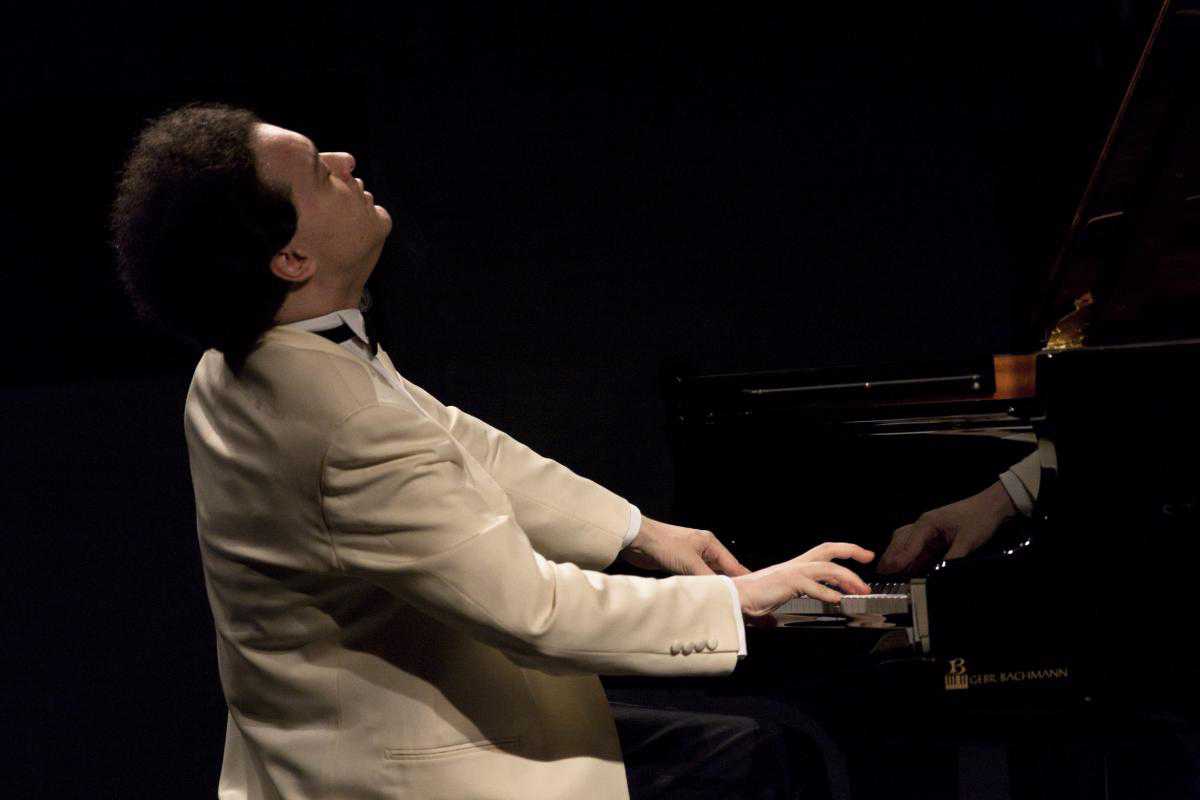
There are different manners of performance: more emotional, more intellectual. Both have the right to exist, but it is impossible to perform music without feeling it. I began playing at the age of two years and two months because by nature I had a sense of music and wanted to share it.
You know, people have long been asking me who I would have been if I had not become a musician. At first I could not find an answer, because I could not admit such a possibility. Then I was asked the same question several more times and, having thought about it, I reached a conclusion that may surprise you. I decided that, had I not been a musician, I would have become a tour guide or an independent journalist. And then, after thinking about it further, I understood why, I understood what unites these three professions. All of them, a musician, a guide and an independent journalist, share with others what they love, what is dear to them. And after reflecting further, I understood why from early childhood I loved playing before an audience so much: there has always been in me a need to share with others what I love, in other words, to share my feelings. For the same reason, as a hobby, I so enjoy reciting poetry.
You have said that as a child you composed music. Do you continue to do so? Will we ever attend a concert entitled “Kissin plays Kissin”?
Indeed, having begun to play by ear, I immediately started improvising my own music. Once I learned to read music, I began to write it down. As soon as I learned something new, I would immediately apply it to my music. At my first public concert, I was seven years old, I performed four of my own compositions. On the programme for our school concert in the Grand Hall it read: “Kissin. Four Pieces. Performed by the composer.” And I remember that after finishing I went out into the hall and, walking between the rows, heard a man’s voice say: “There he is, the composer.” I remind you, I was seven years old and very small.
Later I tried writing for other instruments. They have always interested me, I adore reading about them. I tried composing in different styles. And then there came a moment when I simply did not know what to do next, and this coincided with the beginning of my active concert career. It is clear to me that what I do at the piano represents far greater value than anything I might compose.
You know, Sergei Prokofiev was a fine pianist, but when someone suggested that he give a recital of his own works, he replied: “Yes, but that would cost half a sonata.” In my case, it is the opposite. That is why I always refuse to sit on competition juries, those two weeks can be put to better use.
What do you feel after a concert, when you have already given so much of your soul and the audience demands more and more, and you see before you that black applauding void?
First of all, it is not a black void. These are people for whom I do what I have devoted my life to. When the programme ends and the audience asks for more, those are the happiest moments of my life. Once, in the early 1990s, I played a Chopin programme in Berlin, and the audience would not let me go until I had played eight encores. Then I addressed the audience in my poor German, which I never do, to say: “Thank you very much, you cannot imagine how happy I am right now!”
When the programme ends and the audience asks for more, those are the happiest moments of my life. And once it was even better. In the beautiful ancient city of Bologna, in the middle of my Italian tour, I recall with some embarrassment that I went on stage not very inspired. But the concert went well. After playing the four planned encores, I began to play from memory, and the listeners kept asking for more. After midnight a fireman came on stage and said: “That’s enough! This is a municipal building, I am closing it!” By that point I had already played thirteen encores, and that hour when I played from memory was one of the happiest hours of my life, I was, as we say in Russian, in seventh heaven.