
A Ticket to Kissin
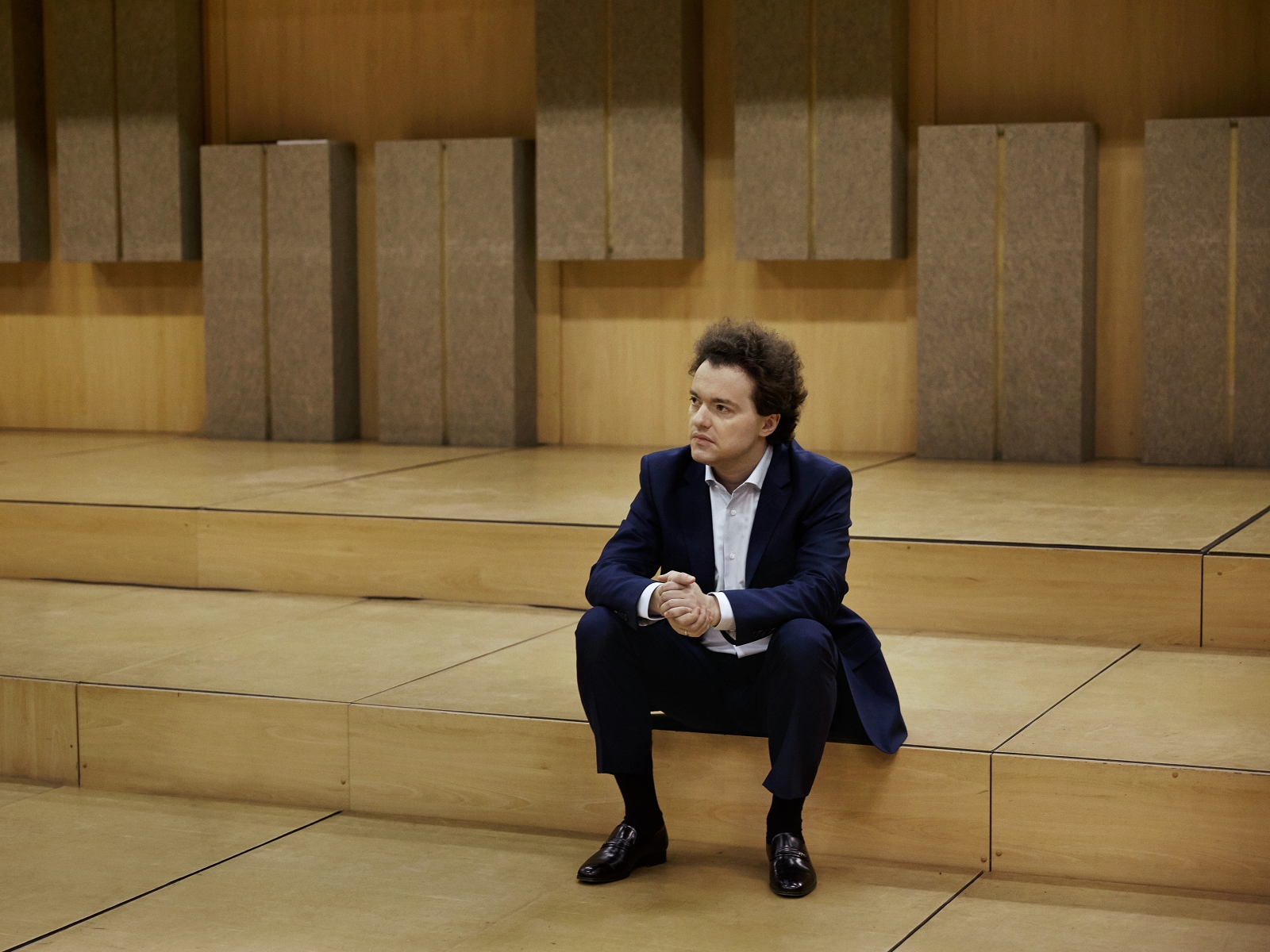
I will not tell you about Evgeny Kissin. Not about what a brilliant musician he is. Nor about what a loyal friend he is. What a profound, principled, endlessly curious person he is, with a phenomenal memory not only for notes but for everything else. Nor about how modest he is, how undemanding in everyday life, how attentive to his family and friends, and how unfailingly he remembers birthdays and other occasions. Nor about what an indefatigable worker he is and what it costs him to maintain such quality in every performance and indeed his place on the musical Olympus for more than forty years. Nor will I comment on the fact that the musician who brought worldwide renown to the Russian pianistic school was entered on 19 July 2024 into the “Register of Foreign Agents” of the Ministry of Justice of the Russian Federation under No. 835.
Instead, I shall speak about the programme of the forthcoming recital at the Tonhalle in Zurich. Alongside the performer, the poster features four names: Beethoven, Chopin, Schumann, Liszt. What is the connection between Piano Sonata No. 7, Mazurkas, Kreisleriana, and Hungarian Rhapsody No. 12? If I were asked to write an essay on such a subject, I would call it “From Inner Conflict to the Virtuosic Mask: The Romantic Evolution of the Pianistic ‘Self’”. Let us see why.
One may speak of evolution already by virtue of the programme’s chronological structure; yet the point lies not so much in the dates of composition of the individual works as in the historical logic of stylistic development – from Beethoven’s late Classicism to Liszt’s late Romanticism, with “stops” at the Romantics of the 1830s, in this case Chopin and Schumann. But this is only the external aspect; something more essential lies beneath.
Piano Sonata No. 7 in D major, Op. 10 No. 3 was written by Beethoven in 1796–1798 and dedicated to Countess Anna Margarete von Browne, the wife of one of his patrons. Romain Rolland, in his biography of Beethoven, observed that in it “personal grief becomes a shared human experience”; Maxim Gorky was particularly fond of the second movement, Largo; and the Russian music critic Wilhelm von Lenz, author of the substantial study Beethoven et ses trois styles, published in French in 1852 in Saint Petersburg, described it as “the most symphonic” of all the composer’s sonatas. Still classical in form, yet already marked by a pronounced subjective dramaturgy, this sonata serves as a kind of point of departure for Romantic pianism.
Frédéric Chopin composed his now celebrated Mazurkas from 1825 until his death in 1849. In total, 58 mazurkas were published, including 45 during the composer’s lifetime. It is often suggested that one of the motivations for writing them on the basis of the Polish folk dance (in Polish, mazur) was the Polish national liberation movement, culminating in the Polish Uprising of 1830, which ended in defeat. The debate continues to this day: some rely on Franz Liszt’s article of 1852, which emphasised the influence of Polish folk music on Chopin, while others refer to Béla Bartók’s article of 1921, in which he concluded that Chopin did not in fact know authentic Polish peasant music. Both sides, however, agree that the late mazurkas are no longer dances in the literal sense, but miniature scenes that only appear simple in form while in reality reflecting an intense inner monologue. For this recital, Evgeny Kissin has chosen four mazurkas — Nos. 27, 29, 35 and 51.
It is amusing that the famous violinist Fritz Kreisler, who arranged Mazurka No. 45 in A minor, Op. 67 for violin and piano, has nothing to do with Schumann’s Kreisleriana, as one might assume from the similarity of names. Schumann’s Kreisleriana was dedicated to Chopin, and the Kreisler in question is the Kapellmeister from E. T. A. Hoffmann’s Fantasiestücke in Callots Manier. Biographical sources tell us that the actual composition of the work took Schumann only four days, while its revision extended over several months.
Even a less experienced listener will sense that Chopin and Schumann belong to the same generation, although specialists point out that, whereas the mazurkas represent a turn towards intimate musical expression with a national colouring, Kreisleriana already embodies mature Romantic psychological intensity, with its fragmented form and literary associations.
Following this logic, one may say that Hungarian Rhapsody No. 12, from Liszt’s nineteen Hungarian Rhapsodies, published in its final version in the mid-nineteenth century, represents a kind of culmination of the process – both in terms of concert theatricality (in contrast to introverted intimacy) and in the brilliant transformation of national material into a dazzling finale. In Liszt’s own words, he “drew his wealth… from the very heart of the Gypsy orchestras”. It should be added that Liszt not only openly acknowledged the sources of his inspiration but also wrote, in French, a book about the Hungarian Gypsies and their music, Des Bohémiens et de leur musique en Hongrie, first published in 1859 and substantially revised in 1881. Interestingly, in Hungary this work was perceived as an insult: if the first edition damaged Liszt’s relations with Hungarian nationalists, the second provoked indignation among those who were considered liberal European thinkers. Why? Because a man who did not live in Hungary and who wrote in French was seen as having overestimated the role of Romani musicians and as having raised the question “Who owns cultural identity?” – a question that stood no less sharply in the mid-nineteenth century than it does today.
Friends, thank you for reading these notes to the end. I am certain you will forget them – and quite rightly so! – as soon as Evgeny Kissin’s fingers touch the keys of the piano: the remaining tickets for his recital are available here.