
Two Strausses and Prokofiev: “Moments Whirl a Waltz”
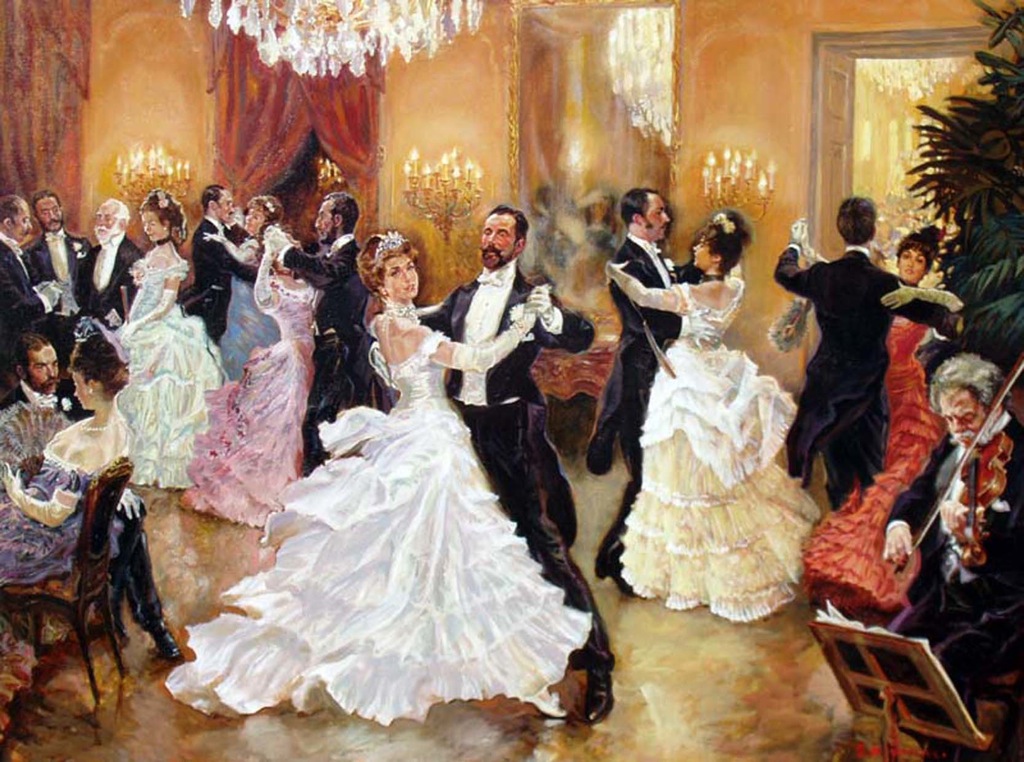
One can easily get lost among all these Strausses! Bearers of this widespread German and Jewish surname have distinguished themselves in the most diverse fields; a few examples are enough to prove it. American businessman, philanthropist and naval officer Lewis Strauss (1896–1974) became one of the central figures in Christopher Nolan’s film Oppenheimer. Isidor Straus (1845–1912), a German-American entrepreneur, founded the major American department store chain Macy’s and served in the U.S. House of Representatives before dying in the sinking of the Titanic. Born in a Jewish family in Bavaria in 1829, young Löb Strauß emigrated to the United States at the age of 18, changed his first name to the “more Jewish” Levi (Americans began pronouncing it “Levi” with a long i, like in ribeye), replaced the German ß in his surname with a double S, and entered history as the inventor of jeans, the founder of Levi Strauss & Co. The famous French ethnographer, sociologist, and anthropologist Claude Lévi-Strauss (1908–2009) was the grandson of composer Isaac Strauss (1806–1888) from Alsace. An anecdote is associated with this not-so-well-known Strauss: his name was first mentioned in the press in 1842, when this Paris Conservatory violin graduate conducted orchestras at the fancy-dress balls of the Opéra-Comique. Someone confused him with the celebrated Viennese composer Johann Strauss, and this mix-up prompted Hector Berlioz to write an article untangling the “two Strausses.”
Let me follow the French composer’s example and, to avoid confusion, identify the three Strausses of classical music relevant to the upcoming concerts of the Orchestre de la Suisse Romande. First, Johann Strauss I (1804–1849), founder of the Strauss musical dynasty, Austrian composer, violinist, and conductor. Second, his son Johann Strauss II (1825–1899), the most famous of the brothers, known as the “Waltz King,” author of countless dance pieces and operettas such as Die Fledermaus. And third, Richard Strauss (1864–1949), German composer of the late Romantic era, a disciple of Wagner, creator of symphonic poems (for example, Thus Spoke Zarathustra) and operas such as Der Rosenkavalier, Ariadne auf Naxos, Salome, Arabella…
It is works by the last two Strausses – Johann Jr. and Richard – that we will hear in Geneva and Lausanne. These two composers differed from each other not only in lifestyle but in musical style as well: Richard’s music is as far from Johann Jr.’s Viennese waltzes as… well, no comparison quite does the job. At least with the third composer there is no confusion: we have only one Sergei Sergeyevich Prokofiev! Having sorted out the authors, we may turn to their works and the performers.
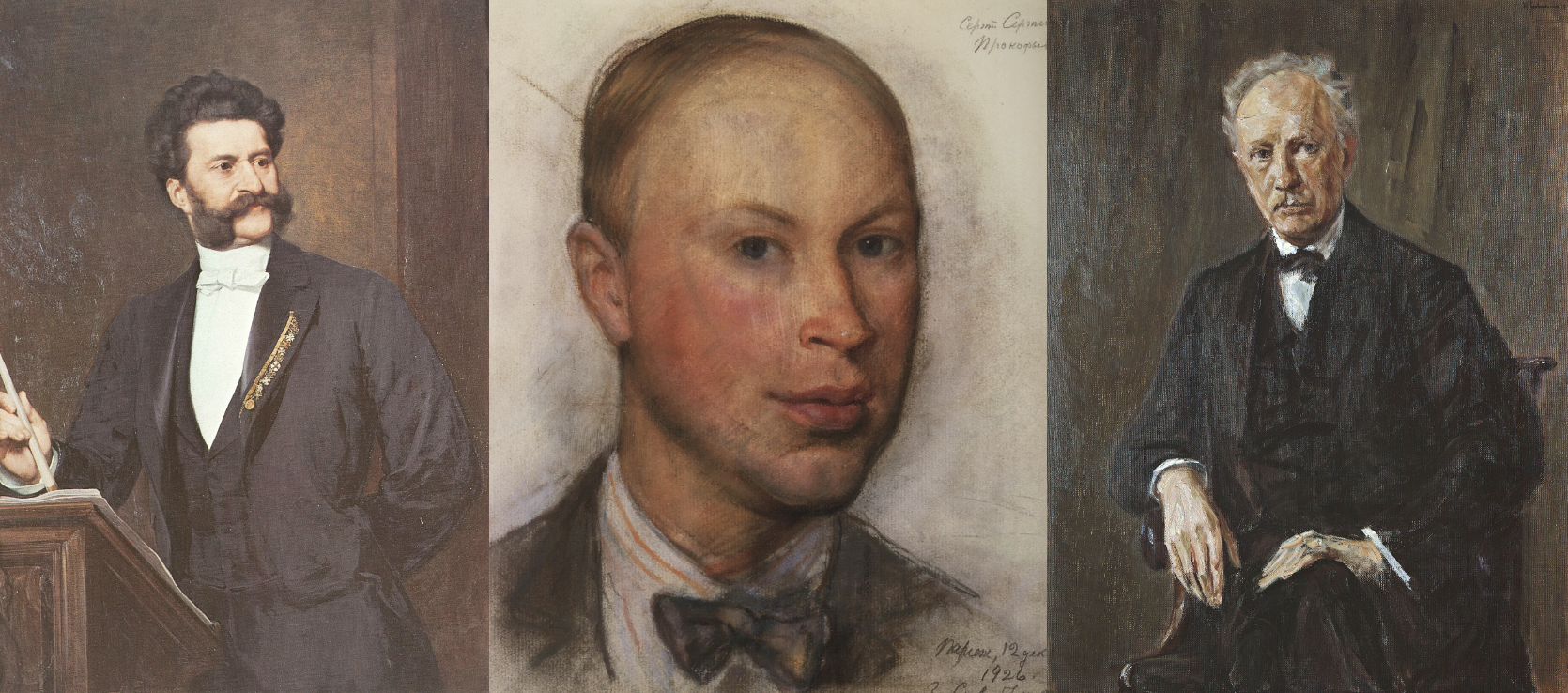
The New Year’s programme of the Orchestre de la Suisse Romande is put together in a way only a festive programme can be. Where else would a concert open with an encore piece? Yet this is precisely what gives it its charm: from the very first notes of An der schönen blauen Donau (“On the Beautiful Blue Danube”) by Johann Strauss II – traditionally played as an encore at the Vienna Philharmonic’s New Year’s Concert on 1 January in the Golden Hall of the Musikverein – it is simply impossible not to succumb to the holiday spirit!
Hard to believe, but this exquisite waltz was originally composed for the Vienna Men’s Choral Society, and it was the instrumental version, performed by the author at the 1867 Paris Exposition Universelle, that made it famous. On 31 May 2025, in honour of the 200th anniversary of Strauss’s birth and the 50th anniversary of the European Space Agency, a recording of The Blue Danube performed by the Vienna Symphony Orchestra was broadcast into outer space via a 35-metre antenna in Spain. At the same time, a live performance was shown on giant screens in Vienna, Madrid and New York. The waltz, already considered the unofficial anthem of Vienna and its capital, may now truly be called cosmic! In fact, why only “now”? Stanley Kubrick had already used it in his 2001: A Space Odyssey in 1968.
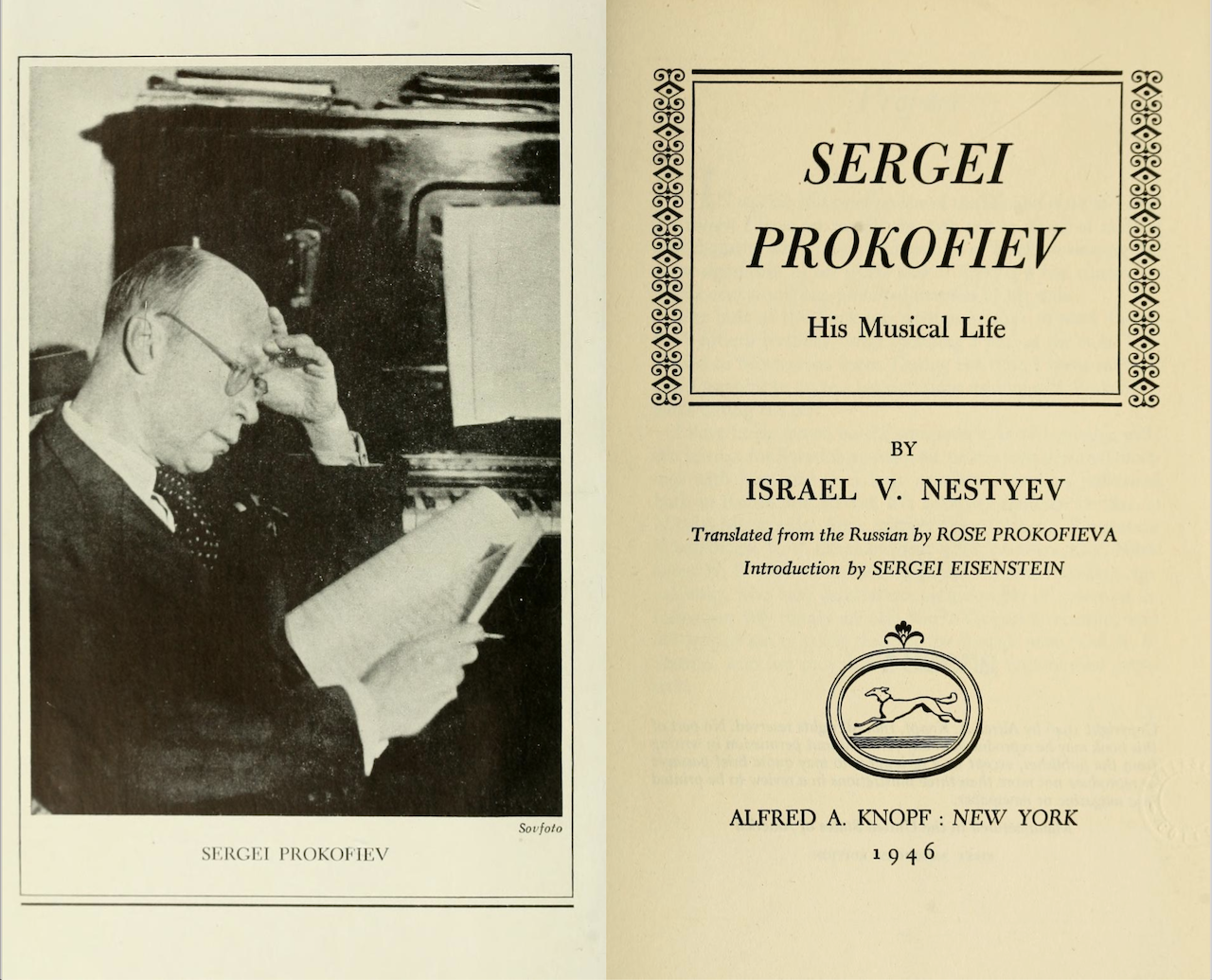
Having established a link between Strauss’s waltz and the European Space Agency, let me mention an even more obvious connection between Sergei Prokofiev’s Piano Concerto No. 3 in C major, Op. 26, and the Orchestre de la Suisse Romande: in 1923, Prokofiev himself performed the concerto with this very orchestra under the baton of Ernest Ansermet! At the time he looked almost the same as in Zinaida Serebriakova’s famous 1926 portrait.
Prokofiev worked on this concerto, now one of the pillars of the piano repertoire, for many years. Conceived in 1916, it was completed in October 1921 in the French Brittany. The premiere took place that December with the Chicago Symphony Orchestra under Frederick Stock, the soloist being the composer himself. But… it fell flat: a critic from the Chicago Herald called Prokofiev’s piece “a futurist painting composed of noises.” Ah, those “noises of time”… The Paris premiere on 22 April 1922, with Prokofiev again as soloist and Serge Koussevitzky conducting, was more successful. In Prokofiev’s archive, the poem “Third Concerto” by Konstantin Balmont has been preserved. Written under the impression of the early performances in France, it too contains a waltz! Unfortunately, I failed to find an “official” translation, so here is one by ChatGPT. Honestly, it is not too bad!
A jubilant blaze of a crimson flower’s fire,
The keyboard of words is flashing with its lights,
So tongues of flame leap up in sudden flights—
A molten river heaved in glowing ire.
Moments whirl a waltz. The centuries’ gavotte
Begins; a savage bull, by foes entangled,
Breaks all the bonds at once and, wildly angled,
Stands, lowering horns. And yet a tender note
Calls softly from afar. From little shells
Children have raised a castle, light and fair,
Its opal balcony delicately there—
But then the tide explodes and all dispels.
Prokofiev! Music and youth in fullest bloom,
Your orchestra has dreamed of summer’s chime—
And the invincible Scythian beats the sun’s great drum.
(Allow me to note in passing that this important assessment of Prokofiev’s work was not discovered by me, of course, but by Israel V. Nestyev, a little-known Soviet musicologist who graduated from the Moscow Conservatory in 1937. His parents, sister and five other relatives were executed by the Nazis near Kerch in December 1941. Nestyev, himself wounded in the war, defended his thesis on Prokofiev’s creative path in 1945. His monograph, completed in 1941 and forming the basis of the thesis, was published in English and French in 1946 and remains a source for researchers to this day, while the Russian edition appeared only in 1957. In between, the author of this monumental research was dismissed from all his positions during the campaign against “rootless cosmopolitans” and returned to teaching Western music at the Moscow Conservatory only after Stalin’s death.)
In the USSR, the Third Concerto was first performed on 22 March 1925 in Moscow by Samuil Feinberg with the Orchestra of the Theatre of the Revolution under Konstantin Saradzhev. In 1927 it was performed in the Great Hall of the Moscow Conservatory by Prokofiev himself, accompanied by Persimfans – the world’s first major symphony orchestra without a conductor, founded by violinist Lev Tseitlin and active from 1922 to 1932.
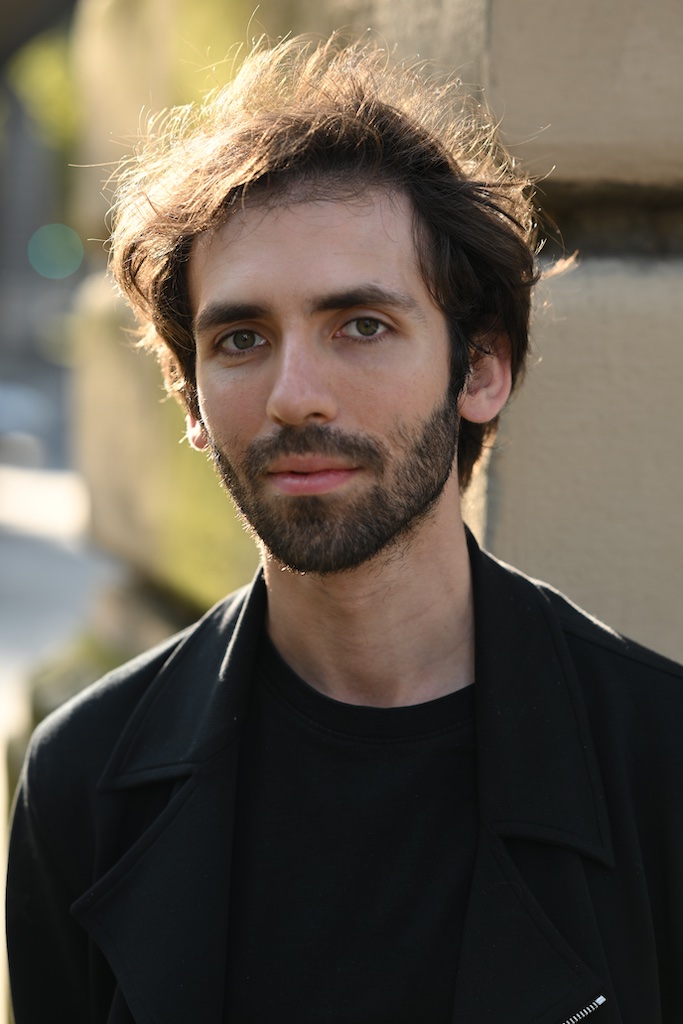
In Geneva and Lausanne, we will hear Prokofiev’s Third Concerto performed by the French pianist Alexandre Kantorow, a former student of Rena Shereshevskaya. Despite his youth – he was born in 1997 – he has already made musical history twice: in 2019, when he became the first Frenchman to win the First Prize, Gold Medal and Grand Prix at the XVI International Tchaikovsky Competition; and in July 2024, when he performed Ravel’s Jeux d’eau at the opening ceremony of the Paris Olympic Games for a worldwide audience.
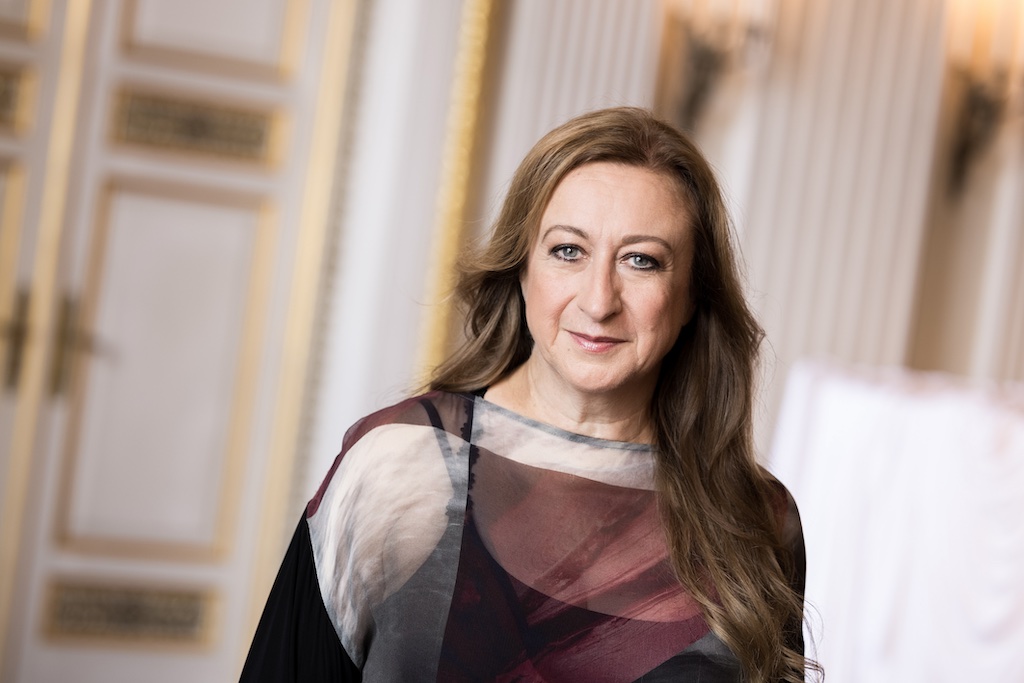
On both evenings the Australian conductor Simone Young, born in Sydney to an Irish father and a Croatian mother, will conduct the Orchestre de la Suisse Romande. In 1993 she became the first woman to serve as chief conductor of the Vienna State Opera orchestra, and ten years later of the Hamburg Philharmonic. Since 2022 she has headed the Sydney Symphony Orchestra, and last summer she made her debut at the Bayreuth Festival, conducting the Ring. I do not know what Wagner might have thought of this, but the OSR’s leadership has long championed women musicians – something I particularly noted when presenting the current season last spring.
She will also conduct the second half of the programme, devoted entirely to Strauss – Richard this time – and his dances. According to biblical legend, the first performer of the Dance of the Seven Veils was Princess Salome, whose stepfather Herod was its first spectator. During the sensuous dance, she cast off one veil after another until she stood naked. Today this would hardly shock anyone, but at the premiere of Salome at the Dresden Court Opera, German soprano Marie Wittich initially declared, “I will not sing this – I am a respectable woman.” She later reconsidered, and not in vain: the premiere on 9 December 1905 was a triumph, with 38 curtain calls, and the dance itself was performed by a ballerina from the Dresden troupe. The opera, decried as unperformable and immoral by singers and sharply criticized in the press, eventually secured its place in the repertoire. But only eventually: British censors banned it for decades from London stages; Kaiser Wilhelm II prohibited it in Berlin; and the board of the Metropolitan Opera withdrew it after one public rehearsal and a single performance amid fierce protests from church and press. As you see, our generation has invented nothing new!
The opera Der Rosenkavalier, whose two Waltz Suites will conclude the programme, premiered in 1911, also in Dresden. And again, controversy erupted: critics accused Strauss of every sin imaginable – stylistic eclecticism, bad taste, even “flight from modernity.” But once more the public thought otherwise, and the premiere remained in memories as “Europe’s last carefree theatrical celebration before the war.” A waltz, evocative of the old Europe on the eve of the First World War, runs through the entire opera as its leitmotif.
I am certain that listeners will appreciate the chance to set aside, if only for a couple of hours, the worrying realities of today’s Europe and immerse themselves in the joyful world of beautiful music – a world without borders and without need of translation.
A practical reminder: remaining tickets for the Geneva concert are available here, and for the one in Lausanne here.