
“The Angel of Death” on Swiss Screens
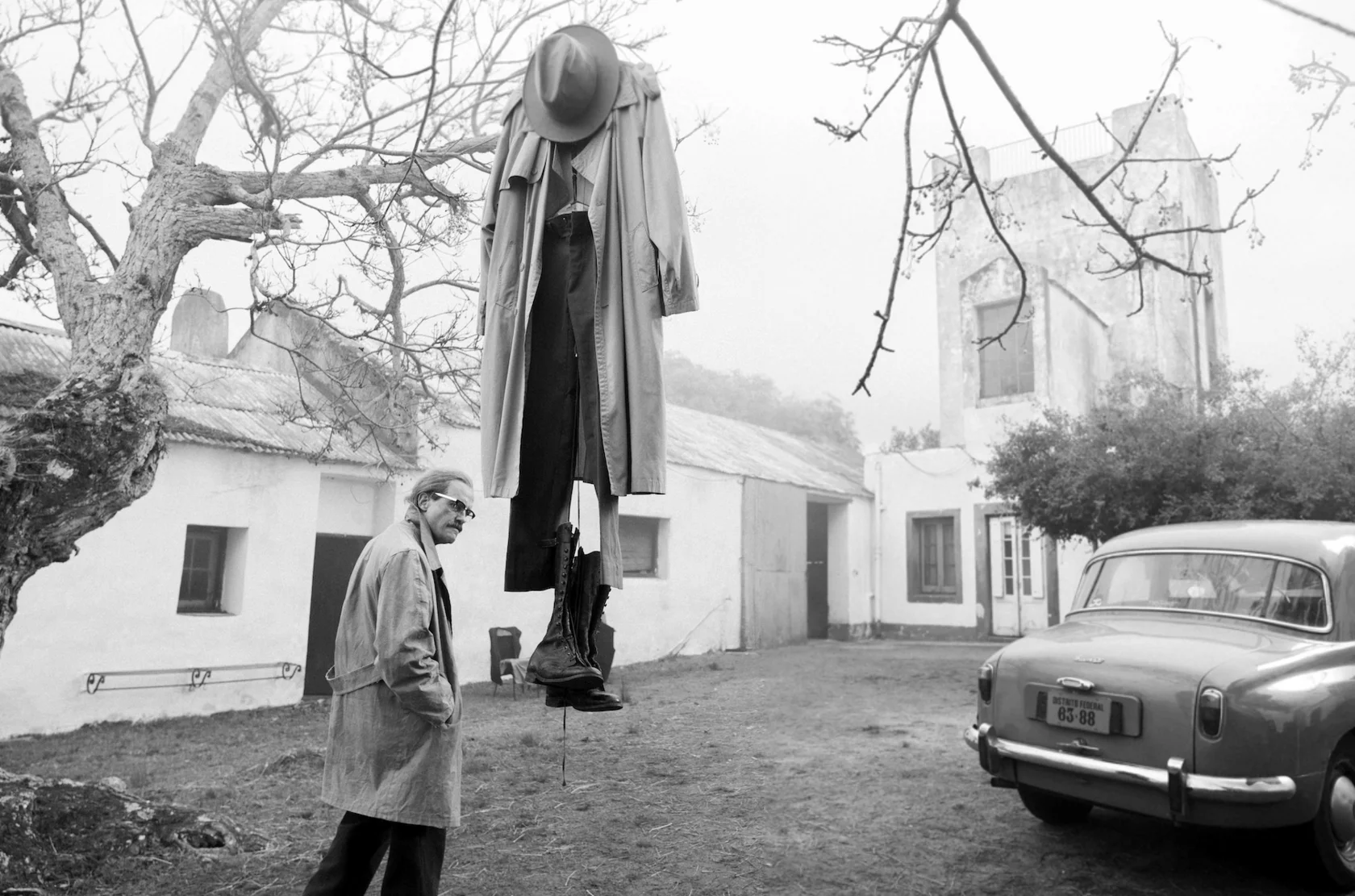
… In the small auditorium of Geneva’s Grütli cinema, there are barely forty spectators. Surprising that so few have come, for this film – though screened out of competition at Cannes – was hailed there as one of the most striking and provoked some of the most impassioned debate. Perhaps the public has grown weary of terrifying truths? Perhaps the parallels the director draws with our own era are too evident? Perhaps History’s accusing finger points today too directly at the faces of the viewers?
There is no longer any need to introduce Kirill Serebrennikov, to Russian-speaking readers or to others: this Russian director of television, film and theatre, laureate of his country’s highest professional awards, Chevalier of the Légion d’honneur and Commander of the Ordre des Arts et des Lettres in France, is well known across Europe. Switzerland is no exception: I followed the arrival of his films on local screens, as well as his stagings of Così fan tutte and Idiot at the Zurich Opera House. Opposed to Russia’s invasion of Ukraine in 2022, Serebrennikov left his country on 28 March 2022, immediately after a suspended sentence in a fabricated case was annulled and his criminal record cleared.
In my opinion, The Disappearance of Josef Mengele, whose shooting began in June 2023 and took place in Uruguay, Brazil, Mexico and Germany, is Serebrennikov’s finest and strongest film to date, and the first he has made without the Russian language (replaced by German, Spanish and Portuguese) and without Russian actors. Yet the remarkable performer in the leading role is not unknown to Russian audiences: the German actor August Diehl played Woland in Mikhail Lokshin’s The Master and Margarita. But the creature born of Mikhail Bulgakov’s imagination is a far cry from the real devil. Such a being could not be invented.
The film opens in a Brazilian university, where medical students, under the guidance of an elderly professor, examine a skeleton – an ordinary scene. Except the skeleton is not ordinary: according to the professor, it belonged to Josef Mengele, who supposedly died in a motorcycle accident in 1943. Alas, the respectable professor is mistaken: Mengele did not die. He survived and carefully erased his traces. He is one of those whom nothing engulfs.
None of the young, likeable Brazilian students know this name. It is likely unfamiliar as well to Swiss, French, Spanish, English or German students – the film’s production was supported by companies from the last four countries, as evidenced by the long list of names appearing before the story begins. It shows how many professionals in the world of cinema judged the subject chosen by Serebrennikov to be essential.
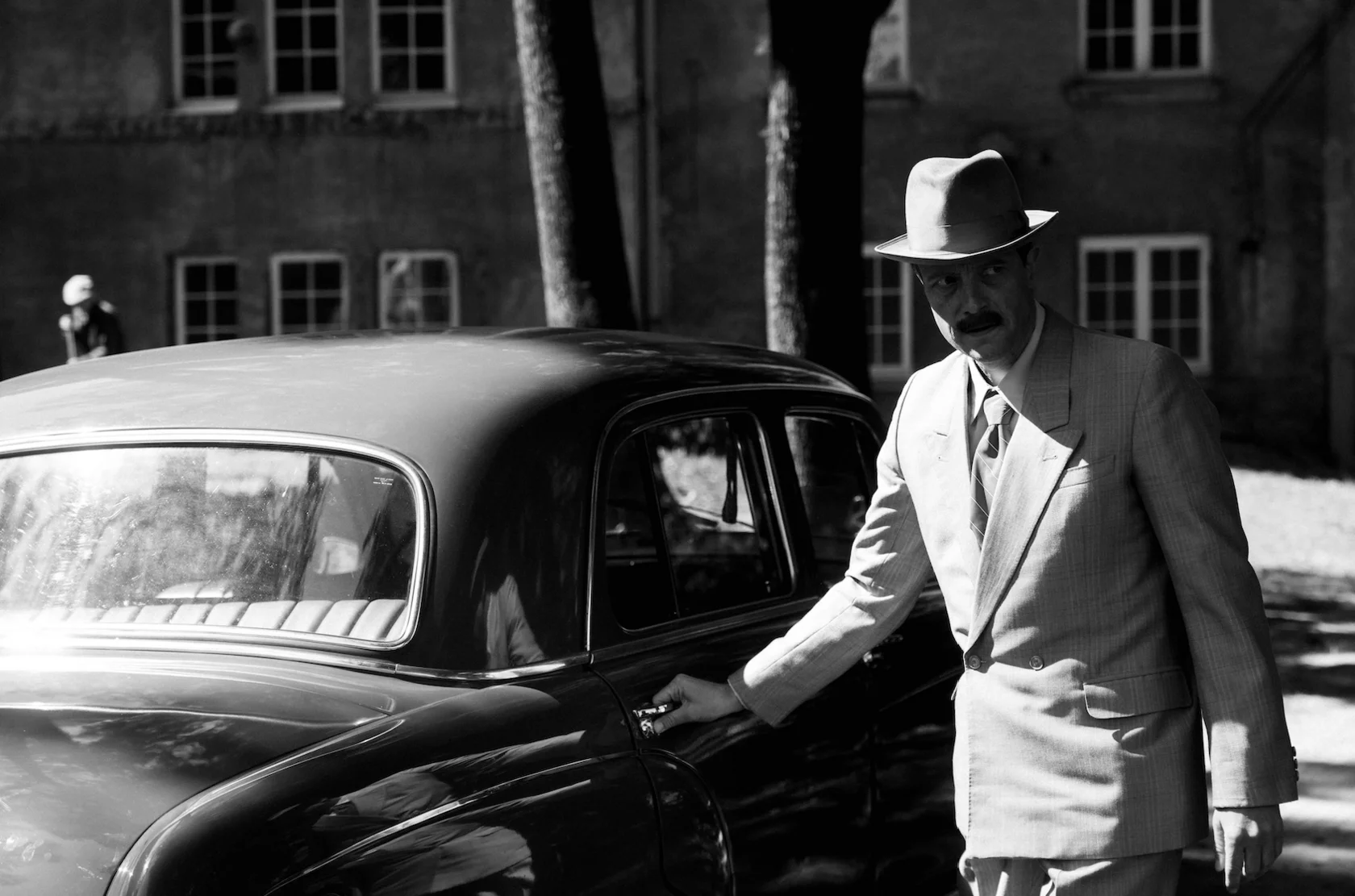
Wikipedia provides detailed information about Josef Mengele, the German physician and scientist who carried out “medical” experiments on Auschwitz prisoners – it was these unfortunates who gave him the name “Angel of Death of Auschwitz,” Todesengel von Auschwitz. The film, inspired by the eponymous documentary novel by the French author Olivier Guez – winner of the 2017 Prix Renaudot and available also in English and Russian – reflects all the essential elements of the ignominious biography of this sadist, born into a wealthy family that remained loyal to the Führer even after the Second World War, as well as the details of his “scientific career.” The viewer sees him personally greet the convoys arriving at the camp and decide who will be sent to labor, who will serve his experiments, and who will be dispatched directly to the gas chamber. One sees also how his gaze picks out twins in the crowd – the special focus of his interest: it is known, for instance, that he attempted to create Siamese twins by sewing together a Roma pair. The viewer also glimpses an orchestra of Romanian musician-dwarfs – physiological anomalies formed another of Mengele’s obsessions. Fortunately, we hear only recounted, and do not see, his dissections of living infants, his castrations of men without anesthesia, and his unimaginable trials inflicted on women to test their endurance. The atrocities committed against defenseless human beings – Mengele’s victims numbered in the tens of thousands – strike even harder because of the clinical sterility of the “examination rooms” and the immaculate whiteness of the coats worn by him and his assistants, which seem to have deceived delegates from the Red Cross, who acknowledged their “powerlessness” only many years later.
After the fall of the Third Reich, Mengele took refuge in Argentina, Brazil and Paraguay, under the identities of Gregor, Peter or Don Pedro. This twenty-four-year flight is the film’s central theme: a flight from himself and from justice. But this devil in human form bears nothing of Mikhaïl Lermontov’s romantic “fallen angel, a demon steeped in sorrow”: Mengele is nothing but repugnant cynicism in its purest form. He wanders the world always accompanied by a reproduction of Albrecht Dürer’s engraving Knight, Death and the Devil, hung on the walls of each of his temporary refuges, and by the strains of Wagner’s Tristan spinning on a record. He fancies himself a patriot of a strong Germany and its culture. I hope no one will be tempted to reproach Dürer or Wagner for having been chosen by a criminal as his companions. But so pay attention to the music of the contemporary Russian composer Ilya Demutsky, which enters the soundtrack whenever Wagner falls silent, sustaining with remarkable force the constant tension in which Josef Mengele exists.
Despite the pursuits, the changes of appearance, name, address and hiding place, there is nothing of the detective genre in this film, nor is there the slightest psychological complexity in its protagonist, this anti-hero. Throughout the film, shot in black and white with only a few touches of color, Mengele remains entirely true to himself: his convictions never waver; he continues to believe in his own righteousness, in his “duty fulfilled,” in the “salutary purification” of his homeland and all of Europe of Jews, and even of Auschwitz being “a highly profitable enterprise.” In vain does his only son, Rolf (played by Max Bretschneider), attempts to extract from him, at the end of his life, the truth, a confession, a remorse – he will obtain none.
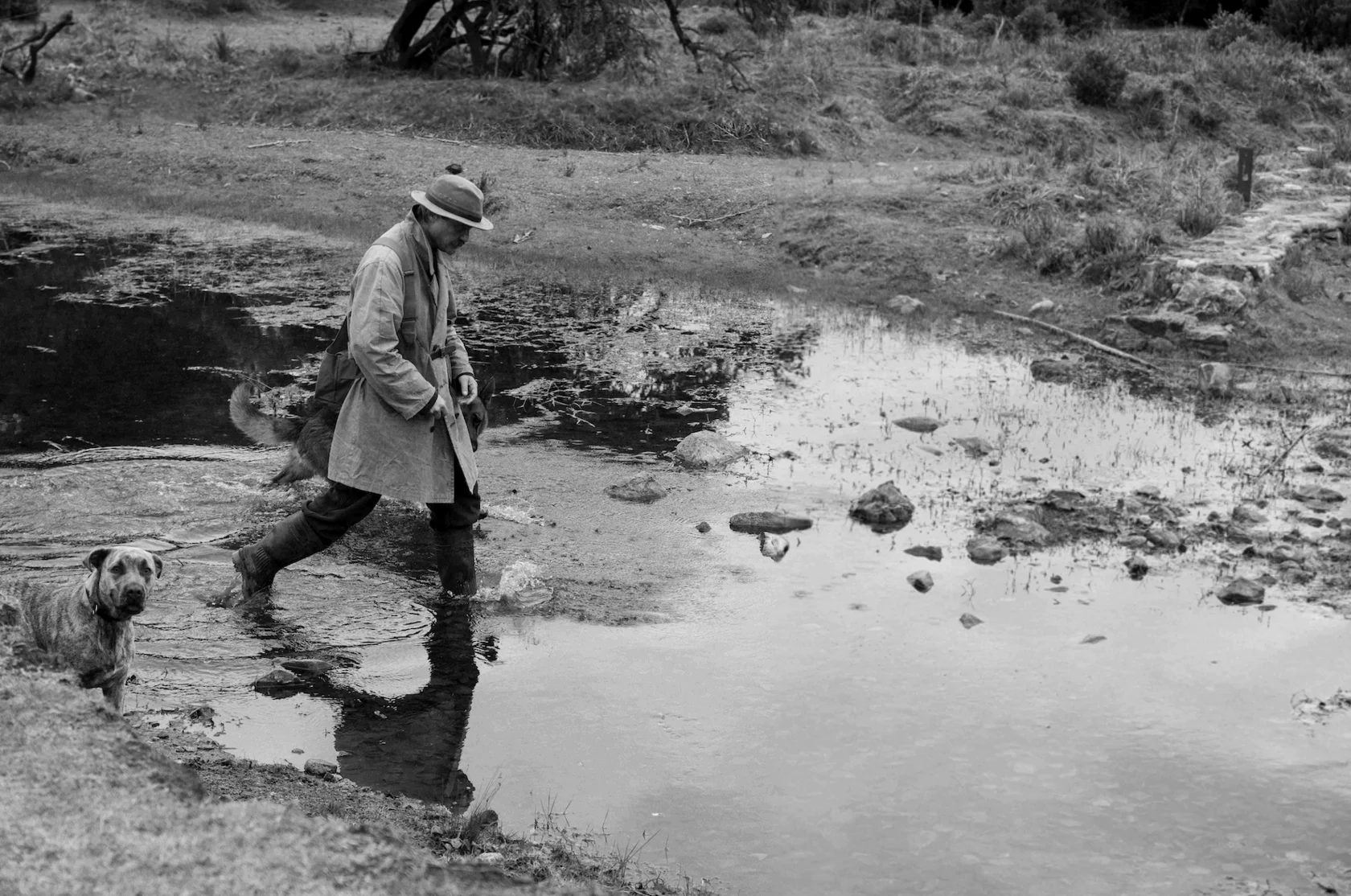
Thanks to the immense talent of August Diehl and the excellent work of the makeup artists, Mengele transforms before our eyes: from a well-groomed, self-assured scientist, almost attractive with his Aryan beauty, he becomes a bilious, hateful, paranoid and ultimately decrepit old man. The scene in which, after bathing, he walks naked (thankfully seen only from behind) into the garden and approaches a wall is particularly powerful: one almost expects someone to shoot him, as he himself once shot his victims at the end of his experiments. But no – the punishment exists only in his mind: countless “bleeding boys,” who persecuted Pushkin and Mussorgsky’s Boris Godunov, appear to him, some with natural deformities, others wearing the yellow stars sewn onto their rags. At times he even thinks he sees agents of Mossad – always at his heels, allowing him no rest, ready to bring upon him the fate reserved for another monster: Adolf Eichmann. As you surely know, this architect of the logistics of the “final solution” managed to escape the Nuremberg trials, but was eventually traced and captured by Mossad agents on 11 May 1960 in Buenos Aires, where he had lived for ten years under the name Ricardo Klement, and was exfiltrated to Israel, where he was sentenced to death and executed after a historic trial held in Jerusalem.
Kirill Serebrennikov restores with subtlety and precision the historical truth, which is unfortunately not synonymous with historical justice: his anti-hero dies a natural death, never answering for his crimes. And not because he was “lucky”: very real people helped him –family members, out of loyalty; a young Hitler Youth named Wolfgang, out of ideology; a Hungarian couple, out of material interest. All those who help Crime escape Punishment become its accomplices and assume collective responsibility. As long as there are individuals who profit from the suffering of others, our world will not improve; Evil will not disappear – it will merely lie in wait, hidden in the shadows. This, to me, is one of the film’s essential lessons.
And yes, it is profoundly frustrating, sitting in the movie theatre, not to witness the deserved punishment catching up with Mengele: one must wait for him to die of his own accord, alone, surrounded only by stray dogs, and one leaves the cinema with a bitter aftertaste of injustice in the absence of the longed-for triumph of Good. But Mengele nevertheless received a form of punishment: his name has become a common noun, a synonym for Evil. May that name be cursed, now and forever.
PS: Kirill Serebrennikov’s film can still be seen at Geneva’s Grütli cinema on November 25th, for other screenings please check local listings. To my knowledge, no theatrical release in Russia is planned so far.