
Vladimir Jurowski: "Music can afford to be apolitical, but the musician cannot"

On September 15-19, 2025, a festival entitled "Macht Musik" – "Making Music" – will take place in Basel, an event that positions itself as "a festival dedicated to the freedom of art under dictatorship." On opening day, the principal conductor of the Berlin Radio Symphony Orchestra (Rundfunk-Sinfoniorchesters Berlin, RSB), Vladimir Jurowski, representative of an illustrious Russian musical dynasty, will take his place at the podium. I offer you an exclusive interview with him; I hope it will answer several questions from my readers. We began in andante and moved to a candid conversation about his career, his relationship with Russia, and his views on the role of artists during times of political crisis.
Vladimir, you moved to Germany with your parents at age 18. Do you not regret being unable to complete your professional training in Russia, many still being convinced that it's the best there?
I regret it partly, yes, partly no. When I left the USSR, I was still studying in the theoretical department of the Merzliakov College [College attached to the Moscow State Conservatory – N.S.] and I was planning to enter the theoretical department of the Conservatory. I regret not having finished the program of the theoretical department of the College, because with my form analysis teacher, Viktor Pavlovich Fraionov, I would have also studied polyphony in the 4th year. Subsequently, several other Moscow pedagogues and professors were greatly missed in Germany.
Concerning conducting training, on the other hand, I'm very happy not to have received it in Moscow, because at that time, the conducting school in the USSR was already beginning to have problems. In Berlin, I had the chance to meet Professor Rolf Reuter, a man who had absorbed the entire romantic school, the whole 19th century and the first half of the 20th; from him I received a powerful charge of this culture that I still carry within me. But much of what I had first received at the Moscow music school, then at the college, also remained in me. So I don't regret for a second that we left but, if we could repeat history without risking ending up in the Soviet army, I would still have liked to do my fourth year at Merzliakov College and study at least a few years at the Conservatory as a theorist.
Your career developed rapidly: as early as 1995, at only 23 years old, you made your international debut at the Wexford Festival with Rimsky-Korsakov's May Night, then shortly after at Covent Garden, with Nabucco. How did you experience such success and how do you explain it?
These are two different questions. How did I experience it? Quite well, it seems to me, without too much difficulty, although it's impossible to live through this kind of thing completely without difficulty, because it's really a shock to the system and I wasn't prepared for it. What helped me cushion such an entry into the profession was that, shortly after the Wexford Festival whose seriousness I had initially underestimated, I received an invitation in Berlin to participate in the competition for the position of second conductor and assistant to the principal conductor at the Berlin theater Komische Oper – a competition I won, thus obtaining a trial performance, which I conducted in January 1996, after which they took me into the company. In February, I was urgently to Covent Garden, as a replacement, then in summer I made my debut at the Rome Opera. There was a strong danger that I would "pass from hand to hand"; but what saved me was that I then considered entry into the company as the most important event of my career – more seriously than these "accidental" debuts at Covent Garden or the success at Wexford. It was very pleasant, but in a certain way a bit strange... and as if it concerned someone else.
Thanks to work in the company, I had the possibility of controlling my career, not accepting certain proposals, referring to work in my theater, where I worked until August 2000 and where, in the first or second season – I don't remember exactly which – I conducted 85 performances. All this having practically no professional preparation, apart from five years in the Conservatories of Dresden and Berlin, as well as several assistantships with my father!
For me, it was THE real school of the young fighter and the real forge in which I mastered the profession. It seems to me that I did it correctly, although the crisis still came later, somewhere around my fourth year; it always comes sooner or later, the crisis, but it wasn't so hard; it didn't transform into burnout syndrome or, worse still, into depression, whereas it could have... When one rises too early very high, one can fall quite painfully or simply completely lose the taste for further development, because one imagines that one has already experienced everything, seen everything, heard everything, felt everything and nothing rejoices you anymore.
In Switzerland, you are a rather rare guest...
I've had occasional performances in Zurich, at the Tonhalle, I also had an experience at the Zurich Opera where, with director Barry Kosky, we mounted Franz Schreker's opera Die Gezeichneten, a very unusual, strange work; but the show was good, it seems to me. I came to Switzerland as a guest with different orchestras, including with "my" London Philharmonic Orchestra – we played in Geneva in the famous Victoria Hall; in Basel, I came once with the European Chamber Orchestra, in 2009...
I think that's enough for the introduction; let's now move to the main subject of our conversation: this Basel festival, art under the conditions of dictatorship and the role of the artist in critical moments of history. Your position – total rejection of the war in Ukraine – is perfectly clear. But you too didn't understand right away that things could end in war, remaining thus at the head of the Russian State Orchestra Evgeny Svetlanov even after the annexation of Crimea, and working very actively in Russia in general. How did your view of what was happening evolve?
Indeed, I continued to work regularly in Russia until July 2021. But we must take a step back.
I received from the Ministry of Culture the invitation to head the Orchestra in November 2011 – these were my last weeks at the Bolshoi Theatre where, with Dmitri Tcherniakov, we were celebrating the opening of the just-renovated historical stage with a production of Ruslan and Ludmila. Until then, I had only come to Russia as a guest, I had had a long period of creative friendship with the Russian National Orchestra, which had begun in 2002, but I had never seriously considered activity as artistic director on Russian territory... and especially when it involved an orchestral block such as the Svetlanov Orchestra – a state orchestra. That's why I first doubted greatly that it would work, so much so that I asked Minister Avdeev to conclude the first contract as a trial, for three years.
In 2014, it therefore became necessary to break this contract, or to continue. It was precisely then that the Crimea coup occurred.
I remember very well those days and my arrival in Russia shortly after that, because we had our usual concerts with two programs. In one program, we played Schoenberg's A Survivor from Warsaw and Beethoven's Ninth Symphony; in the other, Brahms' German Requiem and Bernd Alois Zimmermann's "ecclesiastical action" Ich wandte mich und sah an alles Unrecht, das geschah unter der Sonne. Both programs suited very well the events that were happening; so, before the performance, I asked the audience not to applaud at the end of A Survivor from Warsaw so that we would move to Beethoven's Ninth Symphony "attacca", that is, without pause. As a tribute to people who "continue to perish," as I said then, "not far from our threshold, in peacetime."
And this passed?
Yes, this passed. People understood everything; no one applauded. And then Katia Biriukova wrote in the Kommersant newspaper that Jurowski had conducted Beethoven and Schoenberg and before that had given a speech in which he "condemned the events of the Maidan." Which I had not actually done, but it was a rather direct interpretation of my words, and there too nothing happened. There was a third episode when Vladimir Ilyich Tolstoy (great-great-grandson of Leo Tolstoy, director of the Tolstoy museum in Moscow, at that time advisor to the President of Russia for culture) came to see me at rehearsal in the Great Hall of the Moscow Conservatory and asked me very politely, very courteously, if everything was going well, how the work was going, if I was satisfied with everything. I said I was very satisfied with work with the Orchestra, that it seemed to me that it needed the work we were conducting, and I would have liked to continue it. He then asked me if I didn't want to adopt Russian citizenship, which I had never had because I had left with a Soviet foreign passport and had immediately obtained German citizenship. There, a red-light bulb lit up in my brain, and I immediately began to remember the stories about how Sergei Prokofiev had been lured to the Soviet Union, etc. So, I refused the offer with the same politeness, the same courtesy with which Vladimir Ilyich spoke with me. And this was accepted without condition. I remember very well the conversation that followed with Grigori Gavrilovich Levontine, the director of the State Orchestra, to whom I said that if the orchestra was asked to go to Crimea and give a concert there, I couldn't prevent it, but I wouldn't set foot there. This too was understood and accepted.
Moreover, starting with the troubles of Bolotnaya Square in autumn 2011, a political opposition to the regime was acting actively in the country – first led by Boris Nemtsov, then, after his assassination, by Alexei Navalny. And there, you see, in this situation, not only did I not understand why I should leave, but on the contrary, I considered that I should stay, that I should continue to work, because I saw that two currents were fighting in the country: the odious imperial, KGB, post-Soviet current, and this other, healthy, progressive one, for which one could and should fight. I saw in it my duty as a musician and as a citizen, and my work brought me joy, because I felt that a large number of people – not only my friends, but also simply people who came to our concerts – needed these concerts, like a source of fresh air, and we gave them this fresh air at that time. Good relations with my musicians also played an important role in my desire to continue work in Moscow after 2014.
We must also recall our festival with the Svetlanov Orchestra, in 2015, dedicated to the 70th anniversary of the end of the war. I demanded that the posters read "For the 70th anniversary of the end of World War II," and not of the Great Patriotic War. In one of my verbal introductions to the concerts of this Festival, I said that the simultaneous attack and partition of Poland from both sides by fascist Germany and the Soviet Union had determined the beginning of World War II; and there, I remember very well the reaction of several very sour, very official faces in the front rows of the orchestra seats. But again, there were no consequences; they didn't touch us. That's why I continued to work there, as long as I felt I could.
Vladimir, many have long said that Russia was "sick" and tried to "cure" it. When did you understand that the illness was incurable and that the "patient" absolutely did not want to heal?
I understood it at the very last moment. We have now forgotten that 2020 had been marked by the pandemic, yet it was nevertheless an important turning point that, on one side, erected new borders, and on the other seemed to erase many old borders. People, finding themselves in forced confinement, turned very actively toward each other, toward communication and toward art, and they were rewarded for it. I remember that arriving in Russia after the beginning of the pandemic had become pleasant again, because all these political quarrels were forgotten; it even seemed that everything would reset to zero and that a completely different, new era would begin. But already during 2021, this apparent reset dissipated, and I felt that it was very, very stifling in the country; that there simply was no more air.
The targeted information barrage, the brainwashing, the endless, humiliating and degrading discussions about Ukraine and Ukrainians on Russian television seemed truly terrifying to me. And so in July 2021, I gave my last concert as artistic director; I threw this burden off my shoulders, deciding that now I would simply return to my initial path, as it had been in the 2000s, when I came once or twice per season and gave concerts as a guest. And we indeed agreed with the orchestra; it was in this new capacity that I arrived in January 2022 already. We then played, I remember, Shostakovich's 15th Symphony and Bartók's The Miraculous Mandarin; we went to give a concert in Samara, where we performed among others Haydn's Symphony No. 45 The Farewell. And so, these "Farewell" really became my definitive farewell to Russia. The next time, I was supposed to come in June 2022 to the Svetlanov Orchestra's summer festival, but I no longer came.
Then, seeing that the three scheduled conductors were refusing to come – Vasily Petrenko, Andrei Boreiko and me –, the Moscow Philharmonic mounted a brilliant diplomatic coup by announcing that the Tchaikovsky Concert Hall where the Festival was to be held would close for urgent summer repairs and that the Festival therefore had to be cancelled. Thus, my disappearance from Russian cultural life occurred in a very strange way, diminuendo molto subito.
The moment when, under your direction, the Berlin Radio Symphony Orchestra, instead of Tchaikovsky's Slavonic March initially announced in the program of the concert in Berlin the quasi day after the start of the war, performed Ukraine's anthem, Shche ne vmerla Ukraina, to the melody of composer Mikhail Verbytsky, then his Symphony Overture No. 1, made a lot of noise. Your gesture was understandable, but it was commented on in different ways – to the point of claiming that, in this way, you had played into the hands of those who called and call for the cancellation of Russian culture...
To those who perceived it thus, I will say they deserved it, because they analyzed very inattentively and stupidly what I did. The fact is that the program of this concert consisted entirely of works drawn from Russian music. There were two compositions by Tchaikovsky – the Fifth Symphony and the Slavonic March –, Anton Rubinstein's Cello Concerto and the premiere of the Cello Concerto by Dmitri Smirnov, a remarkable Russian composer, who died during the COVID pandemic in England. This Concerto had been written well before the premiere date and had been initially dedicated to Mstislav Rostropovich; but Rostropovich had never played it. This Concerto is written as a sort of parodic variation on the history of the Russian State, heard through the prism of four anthems that have existed throughout its history. And the reason why Tchaikovsky's Slavonic March (between us, not his best composition) appeared in our concert program, is precisely that at the end of this march Tchaikovsky quotes the first of these four anthems: God Save the Tsar. In general, I had inserted this work in the concert exclusively for didactic reasons, and for the same didactic reasons I then removed it, understanding that this composition by Tchaikovsky, obviously written for political, opportunistic reasons, could not be played before the public in current circumstances. But the Fifth Symphony, of course, remained, so that in the end we sacrificed neither Tchaikovsky, nor Rubinstein, nor Smirnov. And we also presented to the public Mikhail Verbytsky, whose music was known and appreciated by Tchaikovsky.
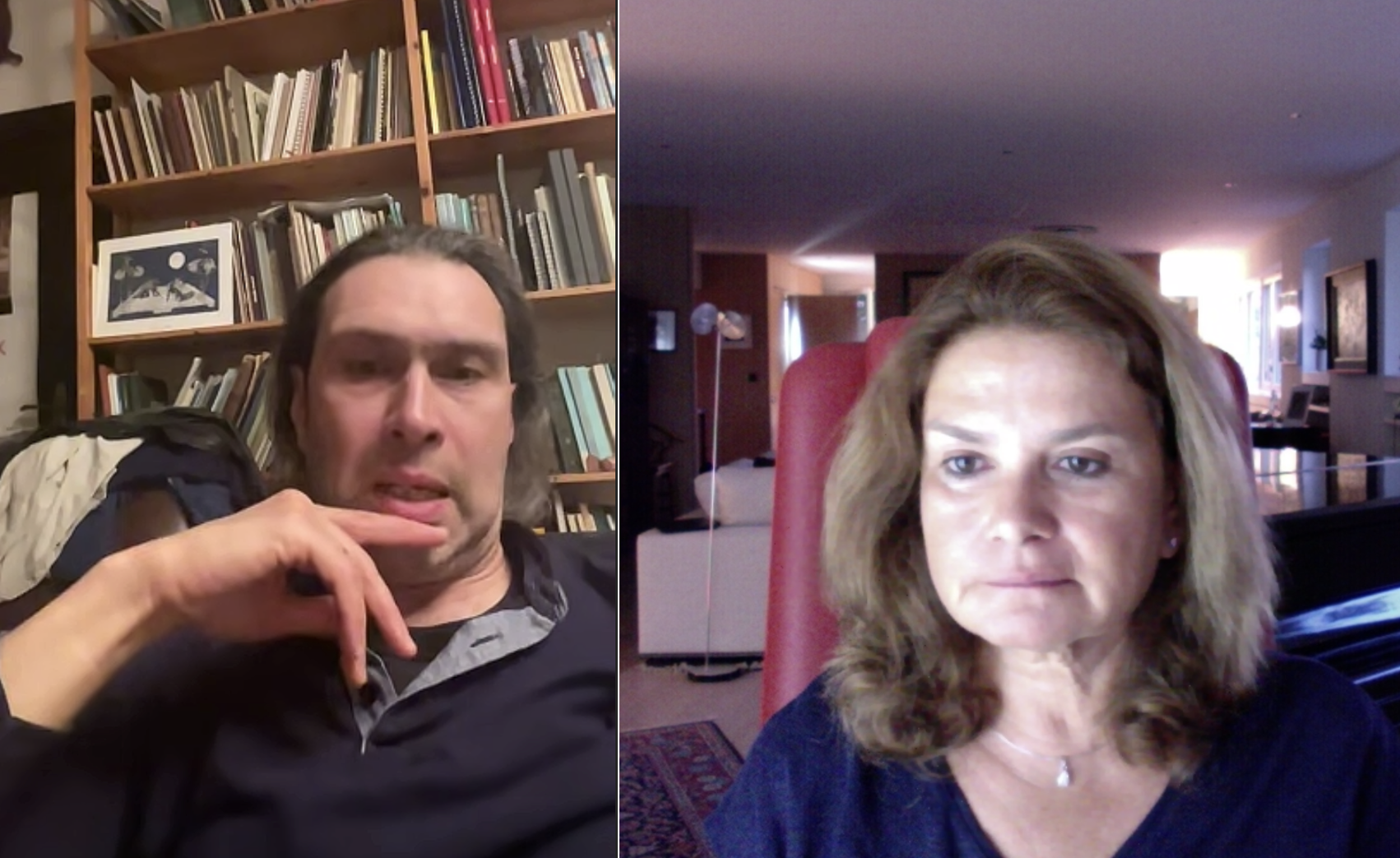
Since the beginning of the war, discussions have not ceased about how to treat Russian culture and, especially, Russian artists: let them enter Europe or not let them? Demand of them that they take a public anti-war position or be content with the absence of public support for the war? And, as always in moments of crisis, the world appears to many in black and white; the variants of behavior of Russian artists are reduced to two: conformism or rebellion. Do you think there are other variants and should we in general demand something from artists?
I remember having said, speaking with journalists from the New York Times, that music can afford to be apolitical, but the musician, living in a concrete country, in a concrete space, at a concrete moment, cannot, from my point of view. So the whole question is to know to what extent NON-participation in the war of aggression against a neighboring state or in the propaganda of this war can be equated with rejection, or even active resistance to them. That's the question of questions. And yet another: WHY, FOR WHAT REASON does such or such an artist avoid taking an active position on such or such a political question. What hides behind this? Indifference and cynicism or fear of repression against oneself and one's loved ones... And it seems to me that we cannot give a standard answer to this question, but that we must give concrete answers each time; examine each case separately.
What saddens me greatly is that the Western world, which had so actively employed itself in the cancellation of Russian culture although it has no direct relation to the war in Ukraine or to President Putin's activity; that this same world now begins, limply, but quite obediently, to crawl toward the appeasement of dragons, of cannibals. Because all these daily discussions about the fact that we must negotiate with Russia nicely; that peace in Ukraine depends on the will for peace of the Ukrainians themselves... all this is from my point of view a repugnant lie – especially when, against the background of these discussions, in Ukrainian cities, civilians continue to die each day and each night under Russian drones and missiles! Despite all concern for objectivity, let's not forget that there is an aggressor and there is a victim; that we cannot equate them in rights!
Art in general and music in particular have, in all eras, been used as a means of propaganda by some and as an expression of protest by others. We who were born in the USSR know this better than others. There even exists the opinion according to which the best works – whether in music or literature – were born precisely under the conditions of persecution of their authors and, being the expression of very personal feelings, became the reflection of the era. Do you know of compositions created during the last three and a half years that will remain in the history of music?
Not yet. But this is very probably linked to the simple fact that, firstly, all the music being created today is not known to me. Secondly, I agree with Esenin [the Russian poet Sergei Esenin – NS] in saying that "put face to face one does not see the face": a certain distance in time is needed to distinguish the true value of such or such a work. I have encountered some compositions created by authors as a response to all the tragic events of these last three years and which pleased me greatly, but I have also encountered others that seemed to me too "poster-like," too direct, without nuance. And I would like a certain time to pass; for these compositions to perhaps be played once more, perhaps already outside the military context, so as to be able to look at them with hindsight. And only then can we say: this composition will remain, and that one will not.
But from my point of view, "war" compositions at the level of Shostakovich's Symphony No. 8 or Prokofiev's Symphony No. 6, can no longer appear today.
Why?
Once again, from my point of view, this is the inevitable consequence of the development that European music has gone through over the last 50-60 years. These creative statements, deeply personal, but at the same time public, to which Prokofiev, Shostakovich, Britten, Weinberg, even still Bernd Alois Zimmermann and Alfred Schnittke resolved in their music, each in the context of his life, his creation and his political views, were only possible in the 20th century. The art of the 21st century, in my opinion, is already of another nature; this dramatic pathos, this intensity of passions, this epic scale to which the artists of the past century resolved are foreign to it. It seems to me that people now are ashamed of this kind of "strong," emotional statements. From time to time very strong anti-war shows emerge, and poems, and visual artworks that denounce war... But music, contemporary academic music, it seems to me, at a moment in its development after World War II, consciously renounced the tools (I speak, of course, not of musical instruments, not of orchestral instruments, but of creative methods) that would be necessary for this kind of socio-political statements by means of sounds. And writing music "in the Shostakovich manner" today is also a completely sterile affair doomed to failure...
Unfortunately, in April 2020, Alexander Vustin left us. It seems to me that Vustin was one of the few composers who today would have been able and would have possessed sufficient musical instrumentarium to write worthily about this war. Not sentimentally, but also not in too detached a manner. He would have written something very personal and such that it would really touch straight to the heart.
Let's talk about the program of your concert that will open the festival in Basel. It's obvious that the works for it were not selected by chance: Memorial to Lidice – symphonic work by Czech composer Bohuslav Martinů, written in 1943 in memory of the burned inhabitants of the village of the same name; Meditation on an Ancient Czech Chorale of Saint Wenceslas by Josef Suk, dedicated to the country's leader, killed on the temple steps on the order of his own brother. Everything is clear. But the little-experienced Swiss listener might be surprised by the inclusion in the program of this concert, having as theme "Music against injustice and violence," of Arnold Schoenberg's Ode to Napoleon Bonaparte. As you know, in Switzerland, the attitude toward Napoleon is, to put it gently, ambiguous.
We simply need to remind them that this work was written by Schoenberg in 1943 to verses by Lord Byron and that it is precisely a strongly anti-Napoleonic pamphlet and at the same time anti-Hitlerian. Like many intellectuals of his era, Byron was first a true admirer, a fanatic, one could say, of Bonaparte. But, like Beethoven, he completely lost his sympathies, his love and, in a way, his interest for his idol after he first declared himself emperor, then lost the war of 1812, and especially: after he attempted to retake power by force – that famous return to the throne for a hundred days, – after which he ended his career without glory on the island of Elba, where he was finally exiled. And Byron mocks him – quite cruelly moreover, from my point of view.
Let's recall some verses, in original:
But thou forsooth must be a king,
And don the purple vest,
As if that foolish robe could wring
Rememberance from thy breast.
Where is that faded garment? Where
The gewgaws thou wert fond to wear,
The star -- the string -- the crest?
Vain froward child of empire! say,
Are all thy playthings snatched away?
There, that's it! And Schoenberg used this poem to create his own version of the "dictator," because precisely three years before that Charlie Chaplin's film The Dictator had come out on screens, one of the greatest masterpieces of cinematographic satire, which settles scores with Hitlerian dictatorship, and basically with all dictatorship. The result was an anti-Hitlerian musical pamphlet, but written in refined Aesopian language. Schoenberg used Byron's text, which mocks Napoleon and his thirst for power, and at the end offers as a positive example the leader who consciously renounced pretensions to power – George Washington. It was Schoenberg's tribute to the country that had become for him a second homeland, the United States of America.
It seems ironic to me that we're playing this ode precisely now, when the current American president has returned to the throne already for a second term and is trying to change the Constitution to stay there for a third. Of the current president of the Russian Federation, I won't even speak.
And to conclude – a few words about Dmitri Shostakovich's Symphony No. 11 "1905," recalling the terrible Bloody Sunday of Russian history, with which the concert in Basel will end. Some still today justify the silence of many Russians by fear of the famous Russian revolt – "senseless and merciless," according to Pushkin –, and say it's better to wait for everything to dissolve in one way or another...
Shostakovich did not write his symphony about the senseless and merciless Russian revolt. He wrote a symphony in memory of people who had the courage to go to the barricades for their freedom. He did not count himself among these people, and it's very important to understand that he considered himself in his way as part of the lost generation, unlike the people of his parents' generation, who had actively participated in the events of 1905 and 1917 and many of whom could be considered by him as heroes. This symphony is about – allegorically too – the Hungarian uprising of 1956 and the Berlin uprising of 1953; and if we interpret it in the perspective of the future, it turns out that it also speaks of the Prague Spring of 1968, and of Tiananmen Square in 1986, and of the Maidan of 2014...
You know, recently a Shostakovich diary was found, which is now with musicologist Olga Digonskaya and awaits publication. Olga Digonskaya came this year to the Shostakovich festival and symposium in Leipzig and Goritz (Germany) and gave a lecture on this subject. People who had heard it told me about it orally. So, in this diary that Dmitri Dmitrievich kept approximately precisely during the period of creation of Symphony No. 11, completed in 1957, he speaks of himself and his attitude toward this work. He says in these words (I quote from memory):
"Did Pushkin dishonor himself with the poem Anniversary of Borodino? A certainly dreadful poem; but by many of his other poems, Pushkin probably rehabilitated himself. As for me, as long as I have not written works glorifying the Finnish war of 1939-1940, the 'liberation' of Western Belarusians and Ukrainians in the 1930s, the 'aid to the German people' of June 17, 1953, the 'aid to the Hungarian people' of October 24, 1956, the execution of Imre Nagy, the odious, repugnant liquidation of Pasternak... There, as long as I have not written works glorifying all that, it seems to me that I am clean before the People and before God. The Fall of Berlin and A Great Citizen and other horrors of this kind have, certainly, spoiled me a bit, but all the same, it's not Anniversary of Borodino. Shame on you, Pushkin! You lived at the beginning of the 19th century, and not in the era of the victorious march of progressive humanity from socialism toward communism... I am 52 years old. That's a lot. I will not see free and happy Russia. I will not live until then. But if that happens, beautiful Russia of the future, I would like to be remembered, especially for Symphony No. 11 and a series of other compositions... And in general after the composition of Symphony No. 11 one can die. I can no longer create anything better. By its force of denunciation, Symphony No. 11 has no equal in all musical literature."
In my opinion, we could not imagine a better conclusion to our interview. I had only to thank Vladimir Jurowski and wish him a successful concert in Basel during the festival which passes, as far as I know, unnoticed in French-speaking Switzerland and whose program can be consulted here: https://machtmusik.ch/#programm