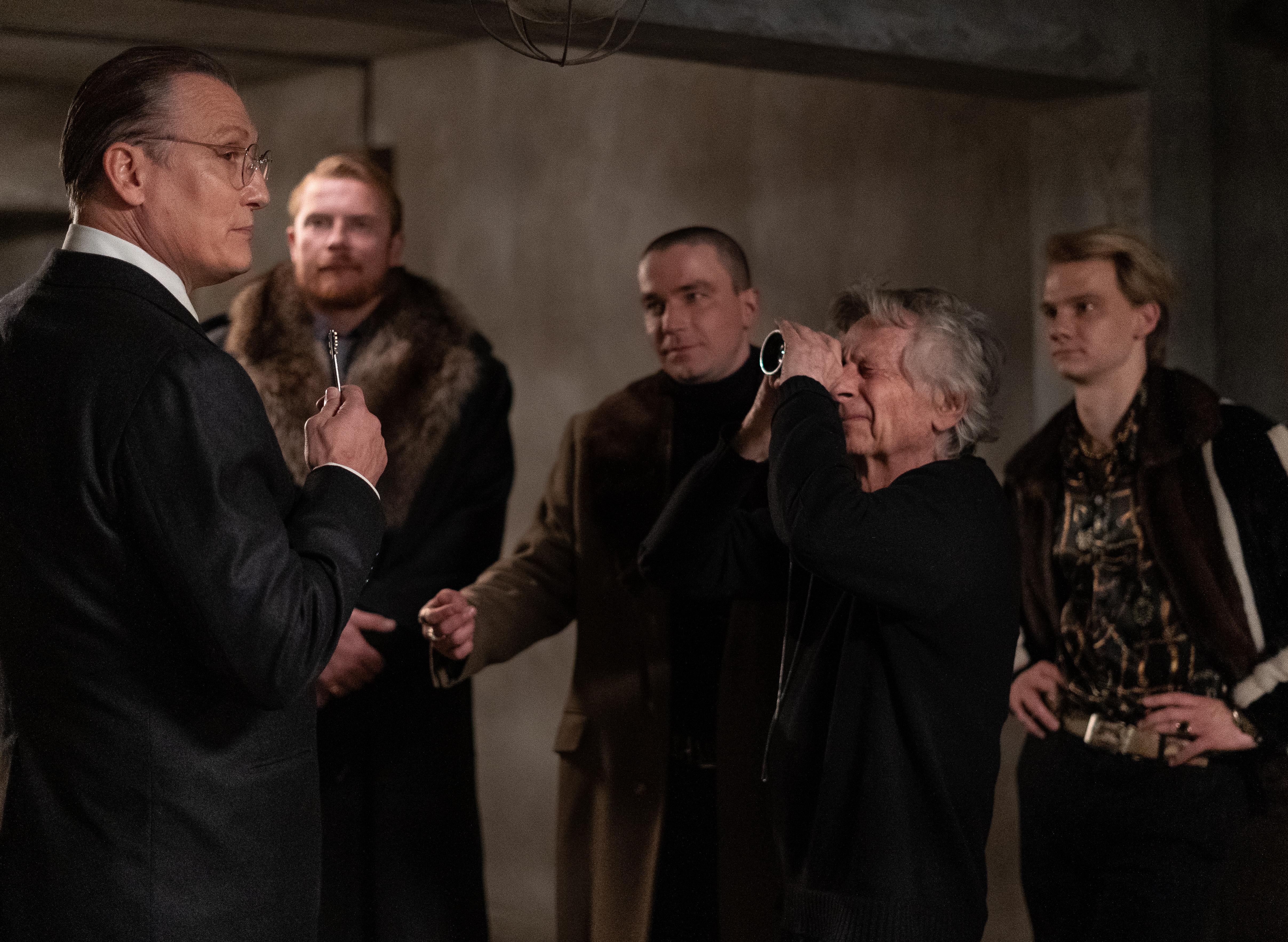
The Secrets of the Gstaad Palace
Since 2009, that is to say almost since the very beginning of Nasha Gazeta, I have been following the sad saga of the celebrated Franco-Polish filmmaker Roman Polanski. On September 26 of that year, police arrested him almost on the red carpet of the Zurich Film Festival, where he was due the following day to receive an award for his contribution to the arts. The ceremony was postponed. Back in 1978, accused of having raped a thirteen-year-old girl, Polanski had left the United States for London and then for France. It later emerged that the case had never been closed and that an arrest warrant issued by an American court more than thirty years earlier was still valid. As a result, Swiss police placed him in detention. Although he was subsequently released, Polanski has not felt welcome in Switzerland ever since. This is also why he declined to take part in the Locarno International Film Festival in 2014.
The choice of location for his latest film, The Palace, is therefore hardly accidental. It was in Gstaad, one of Switzerland’s most fashionable mountain resorts, that the director spent nearly a year under house arrest while awaiting the course of justice. One might even think that his satire of local society represents a small act of revenge. If that is the case, no one could accuse him of not knowing his subject well.
Filming, which thus took place in Gstaad, was completed swiftly, between February and June 2022. The premiere was held out of competition at the 80th Venice Film Festival in 2023, where the film received a three-minute ovation. On September 28 of the same year it was released in Italy, and on October 3 it was screened at the Zurich Film Festival. It was subsequently shown in Poland, Russia, Hungary, Lithuania, and Bulgaria. At the same time, no distributor could be found in the United States or Great Britain. It is possible that their experts simply did not like the film: a Time Out critic called it “Eurotrash hotel farce, an absolute stinker.” Perhaps it was rejected for moral reasons, as art critics sometimes imagine themselves to be puritans. That said, according to Swiss public broadcaster RTS, when the film was screened in Gstaad at the end of 2023, it attracted a record number of viewers to the local cinema. Apparently, local residents have a good sense of humor and understand that one should not blame the mirror, that is to say the filmmaker, when things look ugly, and so on, as in Gogol’s famous text.
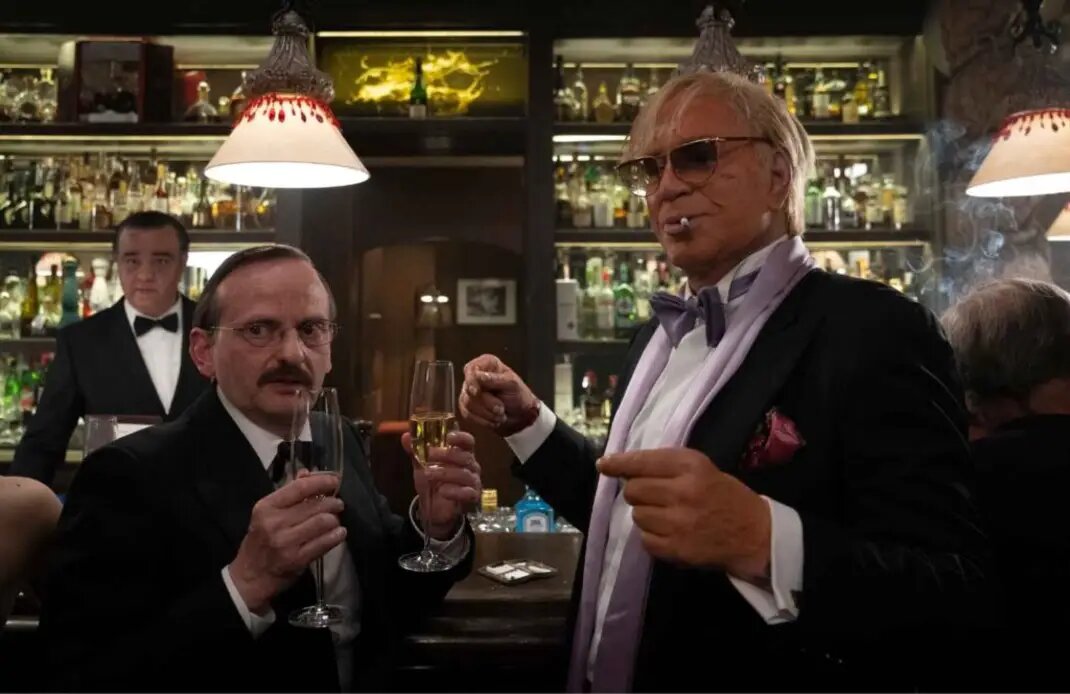
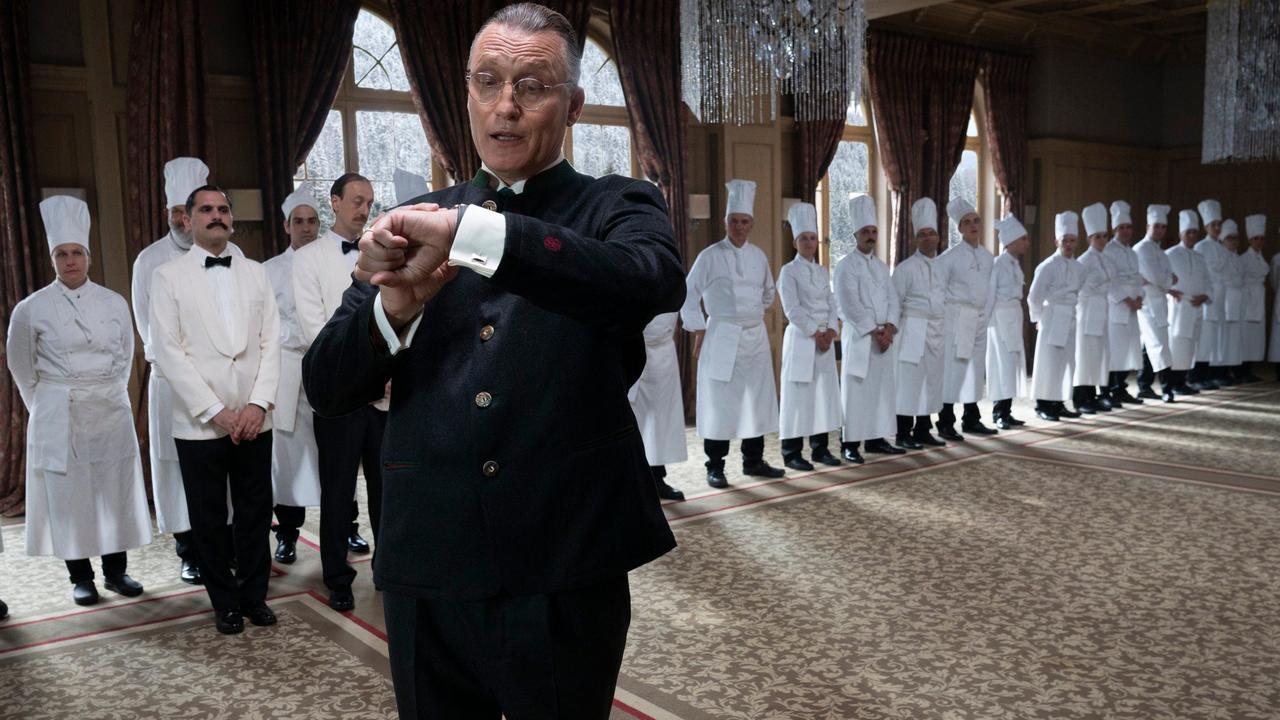
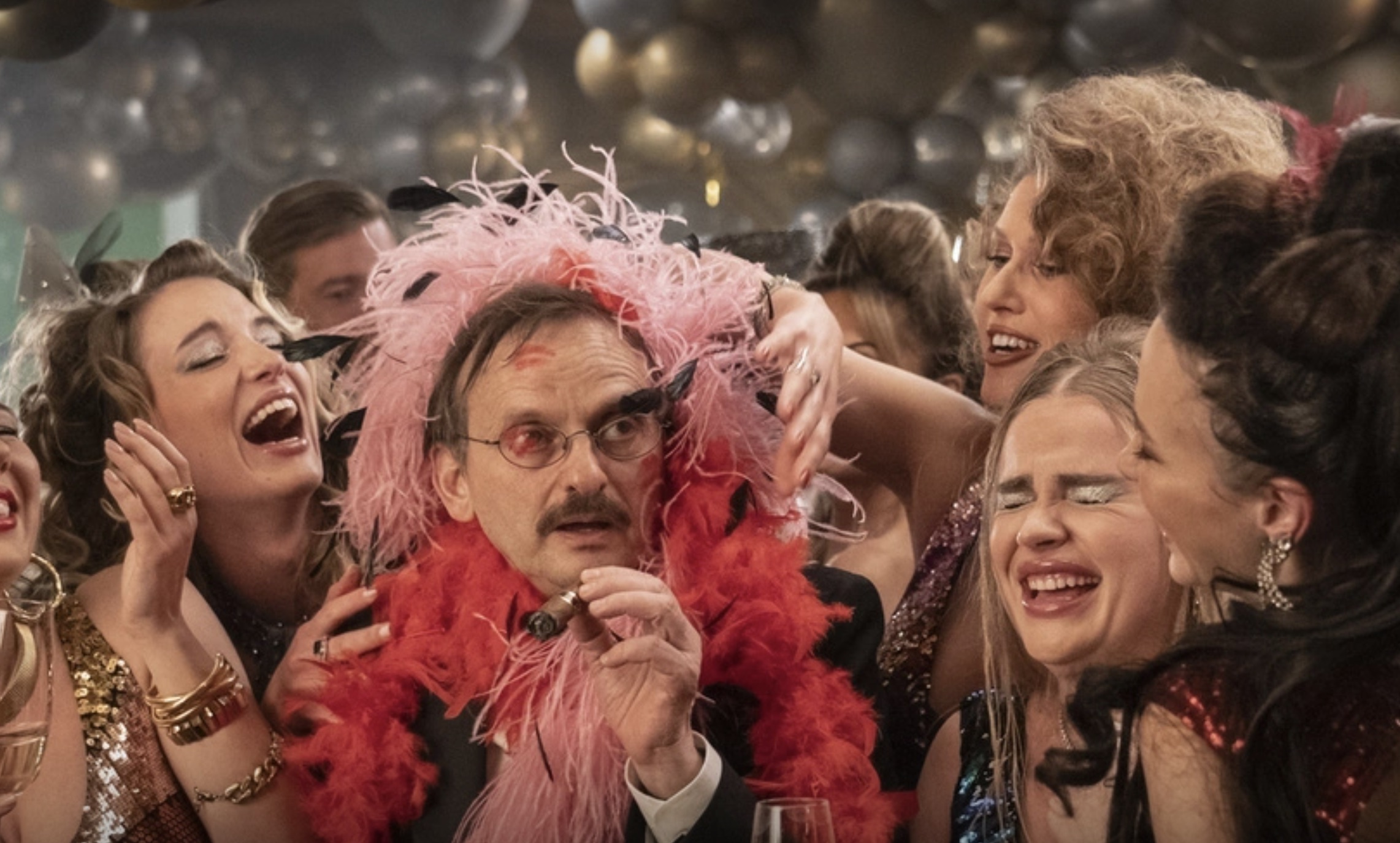
In general, and in my humble opinion, the film draws heavily on Gogol, quite apart from its use of “speaking names” such as Bill Crush. Just as in The Government Inspector, where the entire nobility of a provincial town is presented to the audience, here it is international high society that is put on display. The diversity of guests at the resort’s most luxurious hotel is as international as the actors portraying them. The German actor Oliver Masucci is magnificent as the hotel manager Hansueli Kopf. French star Fanny Ardant plays a marquise who does not disdain the company of a Polish plumber, recognizable thanks to old Swiss People’s Party (UDC) posters that have lost none of their relevance. Englishman John Cleese is splendid as the ninety-seven-year-old American billionaire Arthur William Dallas III, who comes to Gstaad to celebrate the first anniversary of his marriage to his voluptuous twenty-two-year-old wife Magnolia. Alas, the gentleman’s heart fails him at the most “romantic” moment, which does not prevent the happy bride from doing everything necessary to secure the inheritance.
The Portuguese actor Joaquim de Almeida is highly convincing as the cosmetic surgeon Dr. Lima, whose wife suffers from Alzheimer’s disease, probably the best possible way for her to rid of the aging socialites who torment her husband. The Uruguayan artist Luca Barbareschi (who produced the film) is incomparable as the former porn star Bongo. No less impressive is former American professional boxer turned film star Mickey Rourke, who plays a confirmed con artist refusing to acknowledge the son he fathered in a Czech town, despite the fact that the boy looks exactly like him. Naturally, among the guests there are also Russians, wealthy men, portrayed in particular by Alexander Petrov, and their flashy and cheap female companions, arriving at the Gstaad Palace with suitcases full of dollars. Some critics, incidentally, reproached the filmmaker by saying that “there are no Russians like that anymore.” That may be true. But, on the one hand, the action takes place on the eve of the year 2000. On the other, now that it has become more difficult to establish relationships with European banks, is it really unthinkable that such figures might reappear?
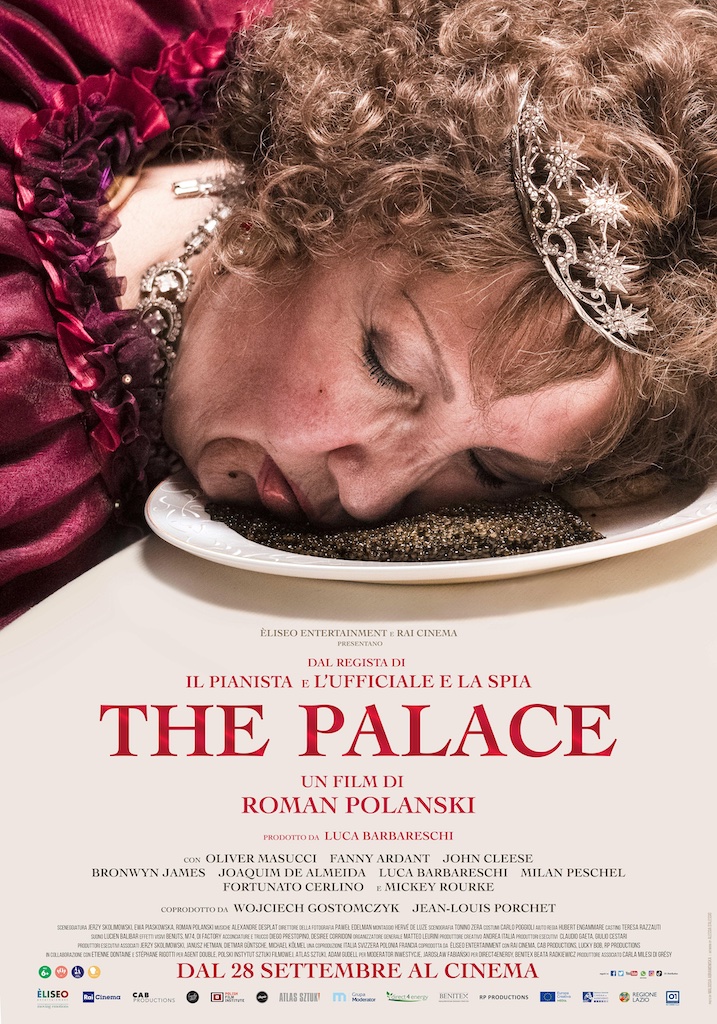
The Russian ambassador and his wife are also easy to recognize. In fact, it is the wife who appears on the film poster, her face collapsed into her plate. When descending into the bunker to collect the precious suitcases, His Excellency her husband had asked her to “keep control,” but she was unable to prevent herself, as sometimes happens.
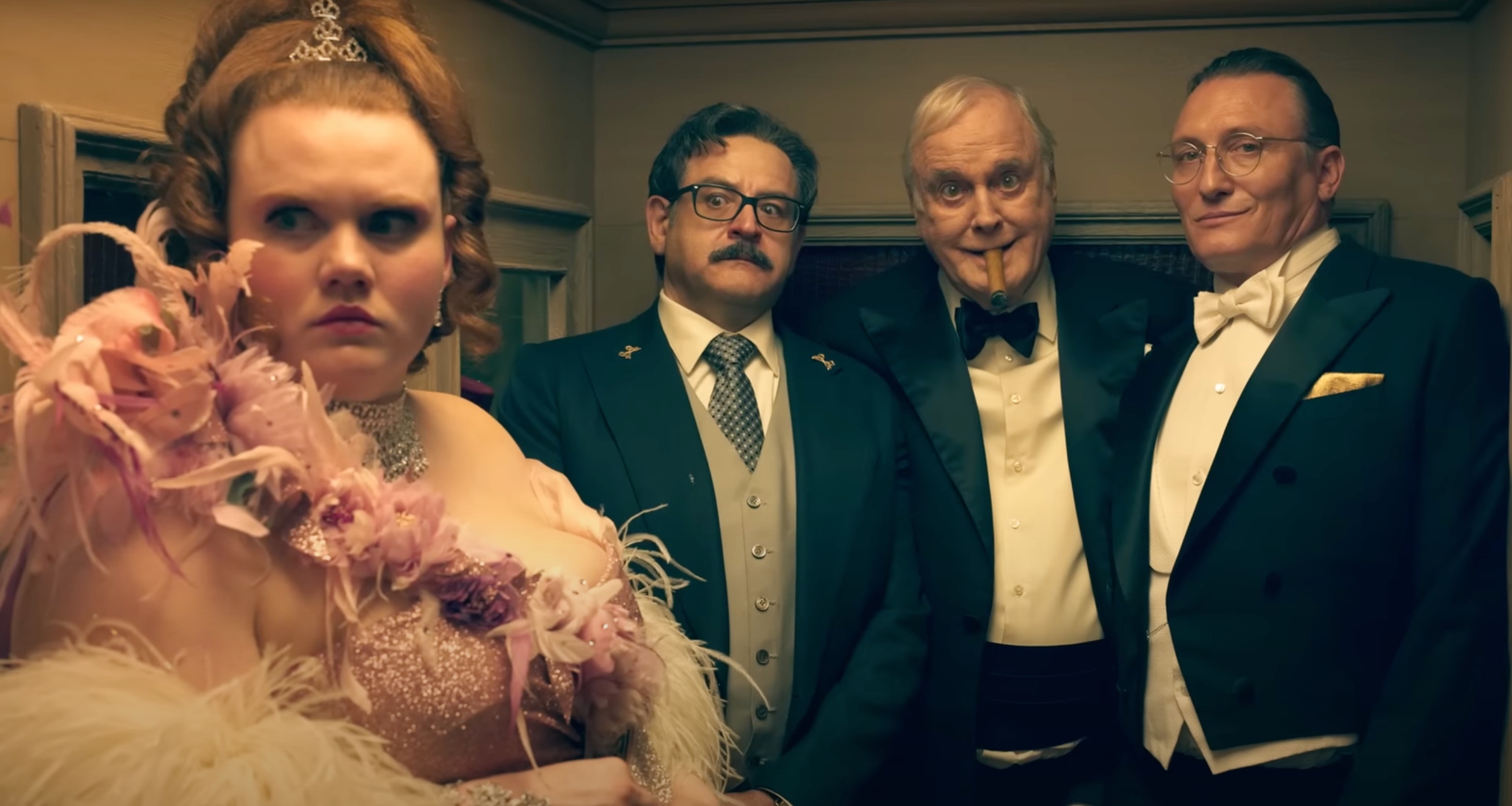
Knowing Gstaad and its glittering society fairly well, I laughed heartily while watching the film, until Boris Yeltsin appeared on screen, announcing that he was stepping down and handing over power to Vladimir Putin. Today, twenty-four years later, Vladimir Putin is still “on television.” Little has changed at the Gstaad Palace as well, where the red carpet will always be rolled out for wealthy Russians and all their wishes fulfilled, even the most absurd ones. The prestige of Swiss service obliges.